


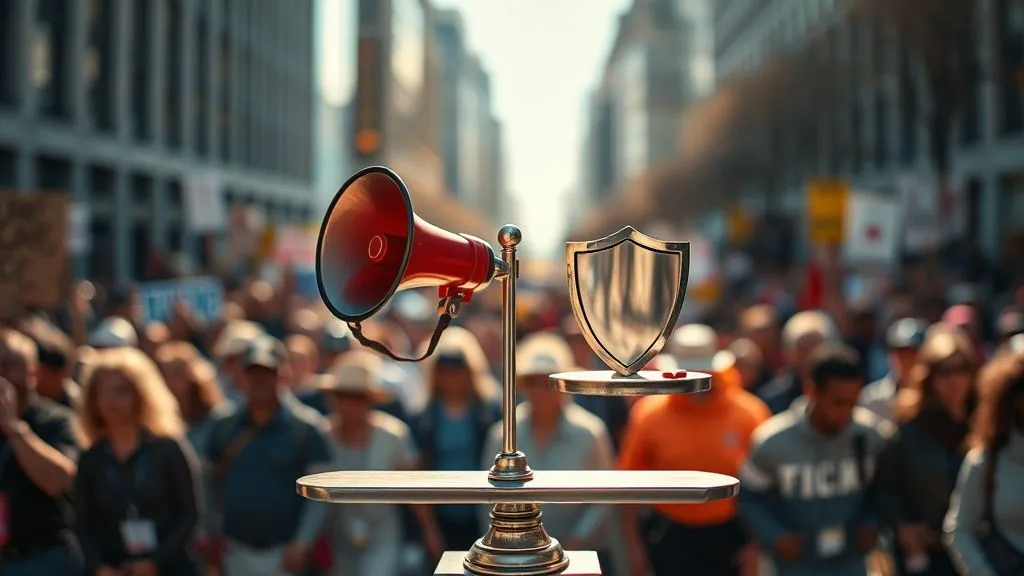
Introduction: Balancing Free Speech and Public Safety During Protests
For over two decades working intimately with constitutional law, particularly fundamental rights, I've witnessed firsthand the profound societal impact when the delicate equilibrium between free speech and public safety is disrupted during protests. It's a tension as old as democracy itself, a continuous push and pull that tests the very fabric of our legal and social systems. I've advised municipalities, observed court proceedings, and analyzed legislative responses, and what consistently emerges is the complexity of this challenge – a challenge often compounded by a lack of clear understanding and proactive strategies.
The core problem isn't just about managing crowds; it's about upholding fundamental liberties while simultaneously safeguarding communities from potential harm, disruption, or even violence. When protests escalate, or when restrictions are perceived as arbitrary, trust erodes, and the very rights we seek to protect become vulnerable. This creates a volatile environment where legitimate grievances can be overshadowed, and essential public services can be jeopardized. It's a tightrope walk for law enforcement, legislators, and citizens alike, fraught with legal pitfalls and societal consequences.
In this definitive guide, I will draw upon years of constitutional expertise to unpack the legal frameworks, practical strategies, and ethical considerations crucial for effectively balancing free speech and public safety during protests. We'll explore the constitutional underpinnings, examine real-world case studies, and provide actionable insights for all stakeholders – from policymakers to protest organizers. My goal is to equip you with a nuanced understanding and a robust framework to navigate these challenging situations, fostering environments where rights are respected, and public order is maintained.
The Constitutional Bedrock: Free Speech and Assembly Rights
Understanding the First Amendment
At the heart of the discussion around protests lies the First Amendment to the U.S. Constitution, which robustly protects freedoms of speech, peaceable assembly, and the right to petition the government for a redress of grievances. These aren't mere suggestions; they are fundamental pillars of our democratic society, designed to ensure that citizens can express dissent, advocate for change, and hold their government accountable. As a constitutional lawyer, I've always emphasized that these rights are not absolute but are afforded the highest level of protection, making any government restriction subject to stringent judicial review.
The right to free speech encompasses more than just spoken words; it extends to symbolic acts, expressive conduct, and the right to remain silent. Similarly, the right to assembly means people can gather publicly to express their views. However, this doesn't mean protests can occur anywhere, anytime, or in any manner. The government can impose 'time, place, and manner' restrictions, which we'll delve into shortly, provided they meet strict constitutional criteria. This delicate interplay forms the initial layer of complexity when considering balancing free speech and public safety during protests.
For a foundational understanding, I often direct my clients to the comprehensive resources available on the First Amendment. For instance, the Legal Information Institute at Cornell Law School provides an excellent overview of the constitutional text and its judicial interpretations.
The Scope and Limits of Protected Speech
While the First Amendment offers broad protections, it's crucial to understand that not all speech is absolutely protected. Over decades, the Supreme Court has carved out specific, narrow categories of speech that receive less, or no, constitutional protection. These include:
- Incitement to Imminent Lawless Action: Speech that is intended to and is likely to produce imminent lawless action (Brandenburg v. Ohio).
- True Threats: Serious expressions of an intent to commit an unlawful act of violence against a particular individual or group.
- Fighting Words: Words that by their very utterance inflict injury or tend to incite an immediate breach of the peace (though this category is now very narrowly interpreted).
- Obscenity: Speech that appeals to a prurient interest, is patently offensive, and lacks serious literary, artistic, political, or scientific value.
- Defamation: False statements of fact that harm another's reputation.
"The most stringent protection of free speech would not protect a man falsely shouting fire in a theatre and causing a panic." - Justice Oliver Wendell Holmes Jr. This iconic quote highlights that while speech is vital, it is not without limits when it directly and immediately endangers others.
It's important to stress that merely offensive, unpopular, or even hateful speech, if it doesn't fall into one of these narrowly defined categories, is generally protected. The marketplace of ideas thrives on robust and sometimes uncomfortable debate. My experience has shown that misinterpreting these limits can lead to unconstitutional restrictions on legitimate protest.
Public Safety Imperatives: Defining the State's Role
Legitimate Governmental Interests
While individuals possess fundamental rights, the government also has a compelling interest – and indeed, a duty – to protect the safety and welfare of all its citizens. This duty includes maintaining public order, preventing violence, protecting property, ensuring access for emergency services, and facilitating the free flow of traffic. These are not trivial concerns; they are the bedrock of a functioning society. When protests occur, particularly large-scale ones, these governmental interests become acutely relevant.
From my perspective, the challenge for public officials and law enforcement is not to choose between free speech and public safety, but to find a way to uphold both simultaneously. This requires proactive planning and a clear understanding of what constitutes a legitimate threat to public safety versus mere inconvenience or disagreement. For example, blocking a hospital entrance clearly poses a public safety risk, whereas blocking a street for a short period during a permitted march may not.
Defining 'Public Safety' in Context
The term 'public safety' can be broad, and its interpretation is often where constitutional conflicts arise. For a restriction to be valid, the public safety concern must be real, significant, and directly addressed by the proposed action. It cannot be used as a pretext to suppress unpopular speech. I've often seen instances where vague appeals to 'public safety' have been used to justify overly broad restrictions that ultimately fail constitutional scrutiny.
Proportionality is key: the measures taken to ensure public safety must be proportionate to the actual risk. A minor disruption should not be met with excessive force or blanket bans. Law enforcement's role is not to prevent protest, but to facilitate it safely, while intervening only when necessary to prevent imminent harm or widespread disorder.
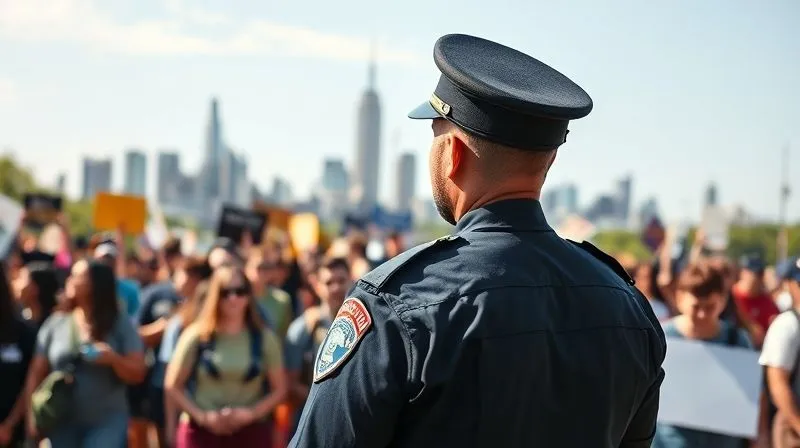
Navigating the Legal Framework: Time, Place, and Manner Restrictions
The O'Brien Test and Its Application
When the government seeks to regulate expressive conduct or speech, particularly in public forums, it often does so through 'time, place, and manner' restrictions. For these restrictions to be constitutionally permissible, they must satisfy a four-part test, often referred to as the O'Brien test (derived from United States v. O'Brien), though it has evolved through subsequent cases like Clark v. Community for Creative Non-Violence. The restrictions must be:
- Content-Neutral: They must not be based on the content or viewpoint of the message. A ban on all amplified sound after 10 PM is content-neutral; a ban on amplified political speech after 10 PM is not.
- Narrowly Tailored: They must be designed to serve a significant government interest without burdening substantially more speech than necessary. They don't have to be the 'least restrictive means,' but they must be a reasonable fit.
- Serve a Significant Government Interest: There must be a legitimate and important reason for the restriction, such as public safety, traffic flow, or noise control.
- Leave Open Ample Alternative Channels for Communication: Individuals must still have other reasonable ways to communicate their message.
For example, a city ordinance prohibiting loud amplified sound in a residential area between 10 PM and 7 AM would likely be deemed constitutional. It's content-neutral, narrowly tailored to the interest of residential peace, serves a significant government interest (quiet enjoyment of homes), and leaves ample alternative channels for communication during other hours or through other means. Conversely, a blanket ban on all signs over a certain size, regardless of content, might be too broad if not justified by a compelling safety concern.
Common Pitfalls and Constitutional Challenges
My work has frequently involved challenging restrictions that fail one or more parts of this test. The most common pitfall for governments is imposing content-based restrictions, which are presumptively unconstitutional and subject to strict scrutiny – a much higher legal bar. If a regulation targets certain messages or viewpoints, it almost certainly won't stand.
Another common issue arises when regulations are vague or overly broad. A vague ordinance might not provide clear guidance on what conduct is prohibited, leading to arbitrary enforcement. An overly broad one might prohibit too much protected speech in an attempt to regulate a smaller, unprotected category. Both can create a chilling effect on legitimate expression, where individuals self-censor out of fear of prosecution.
"The essence of constitutional free speech protection is that the government cannot pick and choose which messages it prefers. Regulations must be about the 'how,' not the 'what' of expression." - An insight I've shared countless times, emphasizing the core principle of content neutrality.
Understanding these nuances is vital for both authorities drafting regulations and citizens asserting their rights. The ACLU's 'Know Your Rights' guides are an excellent resource for protestors to understand the practical implications of these legal frameworks.
Proactive Planning and De-escalation Strategies
The Importance of Dialogue and Engagement
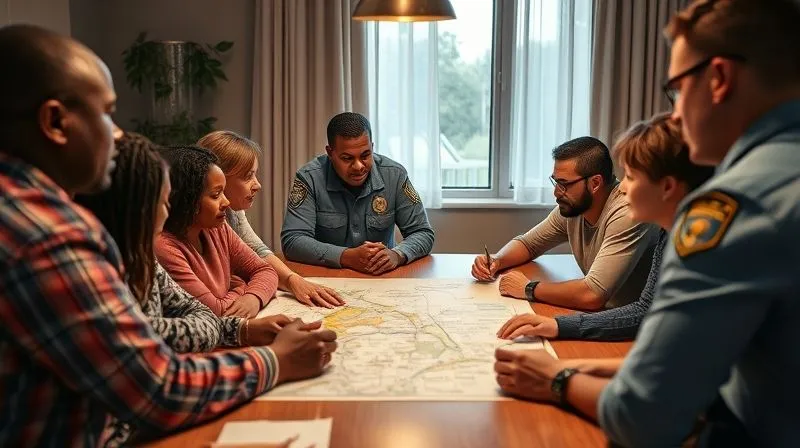
In my experience, one of the most effective tools for successfully balancing free speech and public safety during protests is proactive dialogue and engagement between all stakeholders. This means authorities – police, city officials, event planners – communicating openly and respectfully with protest organizers well in advance. The benefits are numerous:
- Builds Trust: Open communication fosters mutual respect and reduces suspicion.
- Clarifies Expectations: Both sides understand the legal boundaries, logistical constraints, and safety protocols.
- Reduces Misunderstandings: Many conflicts arise from miscommunication or assumptions. Dialogue can preempt these.
- Facilitates Logistics: Organizers can plan routes, sound systems, and medical support with official guidance, and authorities can allocate resources effectively.
- Identifies Potential Flashpoints: Early discussions can reveal concerns that, if unaddressed, could escalate.
I've seen situations where a simple pre-protest meeting transformed a potentially volatile event into a peaceful and well-managed demonstration. It's about collaboration, not confrontation, whenever possible.
Tactical Approaches for Law Enforcement
For law enforcement, effective protest management has shifted significantly over the years. The focus is increasingly on de-escalation, facilitation, and minimal use of force. This isn't just a best practice; it's often a constitutional imperative.
Actionable Steps: De-escalation in Practice
- Establish Clear Communication: Use trained liaisons to communicate directly with protest leaders. Provide clear, audible instructions to crowds before taking any action.
- Maintain a Low Profile: Whenever possible, avoid confrontational gear or excessive force displays that can escalate tensions. A 'soft presence' can be more effective than a militarized one.
- Facilitate, Don't Obstruct: Focus on ensuring the protest can proceed safely, rather than looking for reasons to shut it down. Clear routes, manage traffic, and provide water stations if feasible.
- Isolate Disruptive Elements: Rather than dispersing an entire crowd, identify and address specific individuals or small groups engaging in unlawful activity.
- Use Graduated Response: Employ the lowest level of force necessary. De-escalation training emphasizes verbal commands, non-lethal tools, and only resorting to physical force when there's an imminent threat.
Case Study: City X's Proactive Protest Management
Case Study: City X's Proactive Protest Management
City X, a major metropolitan area, faced a series of large-scale, politically charged protests. Instead of solely relying on reactive crowd control, the city's police department, in collaboration with the mayor's office, initiated a robust pre-protest dialogue program. They established a dedicated liaison unit that met with protest organizers weeks in advance to discuss routes, sound permits, and safety protocols. During the protests, these liaisons maintained open channels of communication, quickly addressing minor issues and clarifying expectations. Law enforcement adopted a 'soft presence' approach, focusing on facilitating the protest rather than confronting it, while maintaining clear perimeters for public safety. This strategy, which I've seen implemented successfully in similar contexts, resulted in several large demonstrations concluding peacefully, with minimal arrests and no significant property damage, despite initial fears of escalation. It demonstrated that proactive engagement significantly reduces the likelihood of conflict and upholds both rights and safety.
The Role of Technology and Intelligence in Protest Management
Ethical Considerations of Surveillance
In the digital age, technology offers powerful tools for protest management, but it also introduces significant ethical and constitutional challenges, especially concerning surveillance. While intelligence gathering can be crucial for ensuring public safety – for instance, identifying credible threats of violence – it must be carefully balanced against privacy rights and the potential for chilling legitimate speech. I've consistently argued that any use of surveillance technology during protests must be:
- Legally Justified: Based on clear statutory authority and, where applicable, warrant requirements.
- Proportionate: Commensurate with the actual threat and not overly broad.
- Transparent: Policies on surveillance should be publicly accessible.
- Non-Discriminatory: Not used to target specific groups based on their viewpoints or identities.
The indiscriminate collection of data on peaceful protestors, for example, can have a profound chilling effect, discouraging individuals from exercising their First Amendment rights out of fear of being monitored or cataloged.
Using Data for Predictive Analysis and Resource Allocation
Beyond surveillance, technology can be harnessed for more constructive purposes. Data analytics can help predict crowd sizes, identify potential bottlenecks, and optimize resource allocation for emergency services and traffic management. For example, analyzing past protest patterns, social media sentiment (publicly available information), and event schedules can help authorities anticipate needs, rather than react to crises.
"Intelligence should be a tool for protection and facilitation, not for suppression. Its ethical application means using data to enhance safety and uphold rights, not to infringe upon them." - A principle I advocate in discussions on law enforcement technology.
However, even with these beneficial applications, the data itself must be handled ethically, ensuring accuracy, avoiding bias, and protecting individual privacy. The line between proactive safety measures and invasive surveillance is thin and requires constant vigilance to maintain constitutional integrity.
| Technology | Benefit for Public Safety | Benefit for Free Speech |
|---|---|---|
| Body-worn Cameras | Increased accountability, evidence gathering, de-escalation aid | Deters excessive force, protects against false accusations, provides objective record |
| Drone Surveillance | Crowd monitoring, traffic management, aerial assessment of hazards | Raises privacy concerns, potential for chilling effect, requires strict policy for use |
| Social Media Monitoring (Public Data) | Intelligence on protest plans, de-escalation opportunities, threat assessment | Risk of profiling, potential for misinterpretation of intent, careful distinction between public & private data |
Accountability and Oversight
Independent Review Boards and Civilian Oversight
Ensuring accountability for actions taken during protests is paramount for maintaining public trust and upholding constitutional rights. Independent review boards and civilian oversight mechanisms play a critical role here. These bodies, often composed of community members and legal experts, provide an external check on law enforcement conduct, investigate complaints, and recommend policy changes. My experience has consistently shown that jurisdictions with robust civilian oversight tend to have higher levels of public trust and fewer instances of alleged misconduct during demonstrations.
These mechanisms are not about undermining law enforcement; they are about strengthening it by fostering transparency and ensuring adherence to professional standards and constitutional mandates. They provide a vital avenue for redress when rights are violated, and their recommendations can lead to systemic improvements in protest management.
Training and Professional Standards for Law Enforcement
Ultimately, the effectiveness of any framework for balancing free speech and public safety during protests hinges on the training and professional standards of the individuals on the ground. Law enforcement officers are often placed in incredibly challenging, high-stress situations. Therefore, comprehensive, ongoing training is essential, covering:
- Constitutional Law: A deep understanding of First Amendment rights and the limits of state power.
- De-escalation Techniques: Non-confrontational strategies to reduce tension and avoid the use of force.
- Bias Recognition: Training to identify and mitigate implicit biases that can affect judgment.
- Crowd Psychology: Understanding crowd dynamics to prevent panic or escalation.
- Use of Force Policies: Strict adherence to policies that prioritize minimal force.
"Continuous professional development in constitutional law and de-escalation tactics is not a luxury for law enforcement; it is a fundamental requirement for protecting both public safety and civil liberties." - A core belief in my approach to legal education for public servants.
Organizations like the Police Executive Research Forum (PERF) regularly publish best practices and training guidelines that reflect an evolving understanding of effective and constitutional protest management. Investing in this training is an investment in community trust and legal compliance.
Public Education and Community Engagement
Empowering Citizens with Knowledge of Their Rights
A well-informed citizenry is a powerful force for maintaining the balance between free speech and public safety. When individuals understand their rights – and their responsibilities – during a protest, they are better equipped to advocate for themselves and to act in ways that are both effective and lawful. This includes knowing:
- What constitutes protected speech and assembly.
- The limits of police authority.
- How to document interactions with law enforcement.
- The importance of remaining peaceful and non-violent.
- Where to seek legal assistance if their rights are violated.
Community organizations, legal aid groups, and even government agencies can play a crucial role in disseminating this information through workshops, online resources, and public campaigns. Empowering protestors with knowledge reduces fear and confusion, which can often be precursors to conflict.
Fostering a Culture of Respect and Dialogue
Beyond individual rights, fostering a broader culture of respect and dialogue within communities is essential. Protests often arise from deep-seated grievances or disagreements. While the protests themselves are an expression of free speech, the underlying issues require ongoing engagement. Community forums, town halls, and initiatives that bring diverse groups together can create spaces for constructive conversation, even when opinions diverge sharply.
In my experience, simply providing an outlet for people to be heard, even if immediate solutions aren't available, can significantly de-escalate tensions and build bridges. This engagement helps ensure that the focus remains on the issues, rather than devolving into conflict over the right to protest itself. It's about building societal resilience and ensuring that our democratic processes can absorb and address dissent peacefully.
International Perspectives and Best Practices
Lessons from Global Approaches to Protest Management
While this discussion largely centers on U.S. constitutional law, it's incredibly valuable to look at international best practices for balancing free speech and public safety during protests. Many democratic nations grapple with similar challenges, and their approaches can offer insights. For instance, some European countries place a strong emphasis on the state's duty to facilitate peaceful assembly, viewing it as a core democratic function. Their police forces often adopt a 'human rights-based' approach to protest management, prioritizing de-escalation and communication over confrontation.
"The universal principles of human rights, particularly the right to peaceful assembly, offer a global framework that should inform and elevate domestic practices in protest management." - A conviction reinforced by studying comparative constitutional law.
This doesn't mean simply transplanting foreign models, but rather understanding common challenges and diverse solutions. The emphasis on pre-event dialogue, minimal force, and clear communication is a recurring theme in effective protest management globally.
Harmonizing Domestic Law with International Standards
Many international human rights instruments, such as the International Covenant on Civil and Political Rights (ICCPR), to which the U.S. is a signatory, also protect the right to peaceful assembly (Article 21). While these don't directly override domestic constitutional law, they provide a valuable framework for interpreting and applying rights, particularly in ambiguous situations. My work often involves drawing parallels between U.S. jurisprudence and international human rights standards to advocate for policies that are both constitutionally sound and globally recognized as best practice.
This harmonization encourages a more robust protection of rights, promoting a global standard for how democratic societies manage dissent without resorting to oppressive tactics. It underscores that the challenge of balancing free speech and public safety is not unique to any one nation, but a shared responsibility requiring thoughtful and principled approaches.
| Country/Region | Approach Highlight | Key Takeaway |
|---|---|---|
| Germany | Strong emphasis on 'assembly freedom' as a core right, requiring robust justification for restrictions. Police often act as facilitators. | High threshold for intervention, focus on dialogue and proportionality, legal challenge to bans common. |
| Canada | Police role framed as 'peacekeeping' and facilitating peaceful assembly, with emphasis on communication and de-escalation. | Proactive communication, minimal force principles, clear distinction between protest and criminal activity. |
| United Kingdom | Balance between right to protest and prevention of serious disorder or crime, with specific legal powers for dispersal but also guidance on facilitation. | Specific legal powers for police, but also emphasis on human rights compliance and proportionality in response. |
| New Zealand | Focus on facilitating democratic expression, treating protestors with dignity and respect, and only intervening when absolutely necessary for safety. | Minimalist policing, community engagement, and a focus on maintaining trust. |
Frequently Asked Questions (FAQ)
Question 1: Can police legally disperse a peaceful protest? No, generally not if it remains peaceful and within legal time, place, and manner restrictions. Dispersal orders are typically reserved for situations where a protest becomes unlawful, such as blocking emergency services, engaging in violence, damaging property, or posing an imminent threat to public safety that cannot be mitigated by less restrictive means. The threshold for dispersal of a peaceful assembly is very high and usually requires a clear and present danger to public order or safety.
Question 2: What is the difference between a permit and simply notifying authorities? A permit grants official permission for an event, often required for parades or large gatherings that necessitate road closures, significant public resources, or exclusive use of a public space. While many jurisdictions require permits for certain types of demonstrations, particularly those that significantly impact traffic or require special arrangements, the First Amendment generally protects spontaneous protests that do not seek to occupy public spaces or significantly disrupt public services without a permit. Notification, on the other hand, is a courtesy or sometimes a legal requirement for certain types of events, allowing authorities to prepare and facilitate rather than restrict. The key is that the absence of a permit cannot be used to suppress a peaceful protest if it doesn't violate legitimate time, place, and manner restrictions.
Question 3: Are there specific types of speech that are never protected during a protest? Yes, certain categories of speech are not protected under the First Amendment, even during a protest. These include incitement to imminent lawless action (speech intended to and likely to cause immediate illegal acts), true threats (serious expressions of intent to commit violence), fighting words (personally abusive epithets likely to provoke an immediate violent reaction), obscenity, and defamation. However, the legal bar for these categories is very high, and mere offensive, unpopular, or even hateful speech is almost always protected. The context and specific language used are crucial in determining if speech falls into one of these narrowly defined unprotected categories.
Question 4: How can individuals ensure their rights are protected during a protest? Individuals can take several proactive steps to protect their rights during a protest. First, educate yourself on your First Amendment rights and responsibilities. Second, remain peaceful and non-violent, as unlawful actions can justify police intervention. Third, if interacting with law enforcement, remain calm, assert your rights (e.g., to remain silent, to an attorney), and ask if you are free to leave. Fourth, document interactions by filming or taking notes, which can serve as crucial evidence. Fifth, avoid engaging in acts that could be interpreted as incitement or violence. Finally, knowing local legal aid resources or having a legal observer present can be highly beneficial.
Question 5: What role do counter-protests play in this balance? Counter-protests are also protected under the First Amendment, representing the exercise of free speech and assembly rights by opposing viewpoints. Authorities have a responsibility to protect the rights of both protestors and counter-protestors, which often involves separating groups to prevent conflict while still allowing both to express their views. This requires careful planning and resource allocation, ensuring that the presence of one group does not unduly infringe upon the rights or safety of the other. It's a testament to the robustness of free speech that even opposing views are granted space for expression, underscoring the dynamic nature of public discourse.
Key Takeaways and Final Thoughts
- Constitutional Foundation: Free speech and assembly are bedrock rights, subject only to narrowly tailored, content-neutral restrictions. Understanding these limits is crucial for all stakeholders.
- Proactive Engagement: Dialogue and pre-protest planning between authorities and organizers are paramount for de-escalation and successful, peaceful event management.
- Balanced Approach: Public safety measures must be proportionate to the actual risk and respect fundamental liberties, avoiding any actions that could be seen as suppression of legitimate dissent.
- Accountability: Robust oversight mechanisms, such as independent review boards, and continuous, specialized training for law enforcement build trust and ensure constitutional compliance.
- Informed Citizenry: Educating both authorities and the public on their rights and responsibilities fosters a more peaceful and respectful environment for protest, strengthening democratic participation.
The challenge of balancing free speech and public safety during protests is an enduring one, demanding constant vigilance, informed policy, and empathetic execution. As I've outlined, it's not a zero-sum game but a dynamic equilibrium that requires all stakeholders to understand their roles, rights, and responsibilities. By embracing proactive strategies, upholding constitutional principles, and fostering open dialogue, we can navigate these complexities, ensuring that our public spaces remain vibrant arenas for democratic expression while safeguarding the well-being and security of our communities. It's a continuous journey, but one essential for a healthy, functioning democracy.
Recommended Reading
- Mastering the Maze: Constitutional Procedures for Federal Lawmaking Unveiled
- Denied Medicare Part A Nursing Home Coverage? Uncover the Appeal Secrets!
- 7 Legal Remedies for Predatory Lending Victims: Fight Back & Win!
- Sports Betting Integrity: 7 Legal Ways to Prevent Match-Fixing
- Mastering Your I-601 Waiver: 7 Steps for Extreme Hardship Claims



Comments
Leave a comment below. Your email will not be published. Required fields marked with *