


Defending Clients Against Evidence from a Flawed K-9 Drug Sniff Search?
For over two decades in constitutional law, I've witnessed firsthand the profound impact a K-9 drug sniff can have on a client's life. It often feels like an insurmountable hurdle – the 'unimpeachable' dog whose nose led to an arrest. But in my experience, that perception is often far from the legal reality.
The problem is pervasive: K-9 units, while valuable tools for law enforcement, are not infallible. Their alerts can be flawed, influenced by handler cues, improper training, environmental factors, or even simple error. When evidence crucial to a prosecution stems from such a flawed K-9 drug sniff, it presents a significant challenge for the accused, potentially leading to wrongful convictions or undue pressure to accept plea bargains.
This article is designed to be your definitive guide, offering a deep dive into the legal landscape surrounding K-9 drug sniffs and providing actionable, expert-level strategies for defending clients against evidence derived from these searches. We'll explore the constitutional underpinnings, scrutinize K-9 reliability, and arm you with the frameworks necessary to effectively challenge and, crucially, suppress such evidence.
Understanding the Fourth Amendment and K-9 Drug Sniffs
At the heart of any search and seizure case lies the Fourth Amendment of the U.S. Constitution, which protects individuals from unreasonable searches and seizures. Generally, a search requires a warrant based on probable cause, or it must fall under a recognized exception to the warrant requirement.
The Supreme Court has carved out a specific niche for K-9 drug sniffs. In Illinois v. Caballes (2005), the Court held that a dog sniff conducted during a lawful traffic stop does not implicate Fourth Amendment rights because it 'only reveals the presence or absence of contraband.' This is based on the premise that individuals have no legitimate expectation of privacy in possessing illegal narcotics. However, this narrow ruling comes with significant caveats and does not grant law enforcement carte blanche.
The crucial point is that the sniff must occur during a *lawful* stop and not prolong the stop unnecessarily. If the initial stop was unlawful, or if the dog sniff extended the duration of the stop without independent reasonable suspicion, then any subsequent alert and search could be deemed unconstitutional. This is often the first line of attack when defending clients against evidence from a flawed K-9 drug sniff search.
Expert Insight: The legality of the initial stop and the duration of the detention are critical vulnerabilities in K-9 sniff cases. Always scrutinize the precise timeline and justification for the stop.
Challenging K-9 Reliability: The Bedrock of Your Defense
While a K-9 sniff may not be a 'search' in the traditional sense, a dog's alert *does* establish probable cause for a subsequent physical search. This makes the dog's reliability paramount. If the dog's reliability is questionable, then the probable cause for the search collapses, and the evidence found should be suppressed.
Factors to Scrutinize in K-9 Reliability:
- Training and Certification Records: Demand comprehensive records. Are they up-to-date? How often is the dog certified? What was the success rate in certification tests? Are there any indications of 'wash-outs' or repeated failures?
- Field Performance Records: This is where the rubber meets the road. Request all records of the K-9's deployments, including successful alerts, false positives (alerts where no drugs were found), and alerts where drugs were found but not the specific type indicated by the dog. A high false positive rate is a red flag.
- Handler Testimony and Experience: The handler's training, experience, and adherence to proper K-9 handling protocols are crucial. An inexperienced handler, or one who deviates from established procedures, can compromise the dog's reliability.
- Breed and Training Methodology: Different breeds have different aptitudes. Understand the specific training protocols used for the K-9. Was it positive reinforcement? How were distractions handled?
Case Study: Exposing Inconsistent K-9 Performance
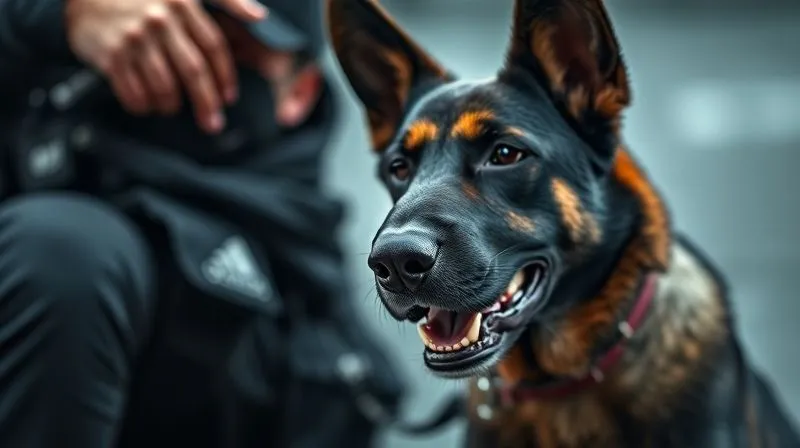
I recall a case where a client was stopped for a minor traffic infraction, and a K-9 was deployed. The dog alerted, leading to a search and the discovery of a small amount of narcotics. During discovery, we meticulously reviewed the K-9's field performance records over the preceding year. We found a startling pattern: the dog had a 60% false positive rate in similar traffic stop scenarios, particularly when the handler had prior knowledge or suspicion of drug activity. This statistical anomaly, combined with inconsistencies in the handler's testimony regarding the dog's alert behavior, allowed us to successfully argue that the K-9's alert did not establish reliable probable cause. The evidence was suppressed, and the case dismissed.
Investigating the Circumstances of the Sniff: Beyond the Dog
A K-9 sniff doesn't occur in a vacuum. The circumstances surrounding its deployment are fertile ground for defense challenges. This involves a deep dive into the initial stop, the detention, and the specific actions of the handler.
- Lawfulness of the Initial Stop: Was there a legitimate, articulable reason for the traffic stop or detention? If the initial stop was pretextual or lacked reasonable suspicion, then all subsequent actions, including the K-9 sniff, are tainted.
- Unreasonable Prolongation of Detention: This is a critical area, especially after Rodriguez v. United States (2015). The Supreme Court clarified that a traffic stop cannot be prolonged beyond the time reasonably required to complete the mission of issuing a ticket for the violation. If the K-9 unit was called, and the sniff occurred *after* the traffic stop's legitimate purpose was or should have been completed, any evidence found is likely suppressible.
- Handler Cues and Indication: Dogs, despite their keen sense of smell, are highly attuned to their handlers. Subtle, unconscious cues from the handler—body language, tone of voice, leash tension—can influence a dog to alert, even if no contraband is present. This is known as 'cuing' or 'leading.'
- Environmental Factors: Consider the weather, wind direction, presence of other strong odors, and distractions at the scene. These can all impact a K-9's ability to accurately detect odors.
- Video Evidence Review: Always request and meticulously review dashcam, bodycam, or any other video footage of the stop and sniff. These videos often reveal critical details about the stop's duration, handler behavior, and the dog's actual performance.
According to research by the American Civil Liberties Union (ACLU) and various academic studies, the potential for handler influence on K-9 alerts is a well-documented concern, underscoring the need for rigorous scrutiny in court. The ACLU has highlighted the high error rates in K-9 drug sniffs, emphasizing that these 'false alerts' contribute significantly to wrongful searches.
The Motion to Suppress: Your Primary Legal Weapon
The vast majority of challenges to K-9 evidence culminate in a Motion to Suppress. This is a formal request to the court to exclude evidence obtained in violation of a defendant's constitutional rights. Success here can often lead to the dismissal of charges.
Key Arguments for a Motion to Suppress K-9 Evidence:
- Lack of Reasonable Suspicion/Probable Cause for Initial Stop: Argue that the initial police encounter was unlawful, rendering all subsequent evidence 'fruit of the poisonous tree.'
- Unreasonable Prolongation of Detention: Demonstrate, often with video evidence and dispatch records, that the K-9 sniff extended the lawful duration of the stop without independent reasonable suspicion for the extension.
- Unreliable K-9 Alert: Present evidence of the K-9's poor training, certification lapses, or a high false positive rate to argue that its alert did not establish probable cause for the search.
- Handler Cuing: Use video analysis and expert testimony (if available) to show that the handler influenced the dog's alert.
- Insufficient Foundation for K-9 Testimony: Argue that the prosecution has not laid a proper foundation for the K-9's reliability, making any testimony about its alert inadmissible.
Discovery and Expert Witnesses: Uncovering the Truth
Thorough discovery is non-negotiable when defending clients against evidence from a flawed K-9 drug sniff search. You cannot challenge what you don't know. Request everything related to the K-9 unit and the incident.
Essential Discovery Requests:
- All K-9 training and certification records, including daily logs.
- The K-9's field performance records, including all deployments, alerts, and whether contraband was found (and what type).
- Handler's training and experience records.
- All police reports, supplemental reports, and witness statements.
- Dashcam, bodycam, and any other surveillance footage.
- Dispatch records, including call times, K-9 unit request, and arrival times.
- Maintenance records for any K-9 equipment (e.g., vehicle, scent kits).
- Departmental policies and procedures regarding K-9 deployment.
In some complex cases, particularly where handler cuing is suspected or K-9 reliability is severely questionable, an expert witness can be invaluable. A K-9 expert can review training protocols, field performance data, and video evidence to provide an independent, authoritative opinion on the dog's reliability or the handler's conduct. As a legal professional, I've found that the testimony of a credible K-9 expert can often be the turning point in a motion to suppress.
Cross-Examination Strategies: Exposing the Flaws
Effective cross-examination of the K-9 handler is crucial. This is your opportunity to highlight inconsistencies, expose weaknesses in the K-9's reliability, and challenge the probable cause for the search. Remember, you're not just cross-examining the handler; you're indirectly cross-examining the dog's performance.
Key Cross-Examination Angles:
- Training Deficiencies: Question the handler on the specifics of the K-9's training. How many hours? What specific scents? What was the K-9's success rate in training? Were there any failures or re-certifications?
- Field Performance Data: Confront the handler with the K-9's false positive rate. Ask about specific instances where the dog alerted but no drugs were found. 'Officer, isn't it true that on [date], your K-9 alerted to a vehicle, but no contraband was located?'
- Handler Cuing: If video evidence suggests cuing, use it. 'Officer, can you explain why your hand moved towards the vehicle just before the K-9 alerted?' or 'Is it possible your body language, even unconsciously, influenced the K-9?'
- Duration of Stop: Pin down the exact timeline. 'Officer, you testified the traffic stop was for a broken taillight. How long did it take you to write that warning/citation?' 'And how long after that was the K-9 deployed?'
- Environmental Factors: Question the handler about wind direction, temperature, and other factors that might affect scent detection. 'Officer, on that day, the wind was blowing [direction], correct? How might that affect the K-9's ability to isolate a scent?'
The goal is to chip away at the narrative of the 'perfect' drug dog and demonstrate that its alert, under the specific circumstances, was not a reliable indicator of probable cause.
Navigating Specific Challenges to K-9 Evidence
Beyond the general strategies, there are specific legal nuances that can be leveraged when defending clients against evidence from a flawed K-9 drug sniff search.
Areas of Specific Challenge:
- The 'Indication' Itself: What constitutes an 'alert'? Is a head turn enough? Or must the dog exhibit a trained final response (e.g., sitting, scratching)? Departmental policy often defines this, and deviations can be challenged.
- Dual-Purpose Dogs: Some K-9s are trained to detect both drugs and explosives. This can complicate matters, as an alert might be for a non-drug odor, yet still trigger a search. The specificity of the alert can be challenged.
- Anticipatory Warrants Based on K-9 Sniffs: If a K-9 sniff is used to establish probable cause for an anticipatory search warrant (e.g., for a package expected to arrive), the reliability of that sniff becomes even more critical.
- Privacy Expectations in Different Contexts: While Caballes addressed traffic stops, K-9 sniffs in other contexts (e.g., outside a home, in a school locker) may be subject to different Fourth Amendment analyses. For instance, a K-9 sniff at the front door of a home requires probable cause, as established in Florida v. Jardines (2013). The Oyez project provides an excellent summary of this landmark case, highlighting the heightened privacy expectations within the curtilage of a home.
- Lack of Standardization: Unlike breathalyzer tests, there's no national standard for K-9 training or certification. This lack of uniformity allows for more rigorous challenges to individual K-9 units' reliability. A National Institute of Justice (NIJ) report emphasizes the need for improved standardization in K-9 training and deployment.
Each of these points represents a potential avenue for defense, requiring a detailed understanding of both the law and the practical realities of K-9 deployment.
Frequently Asked Questions (FAQ)
Question? Can a K-9 sniff be used on my person without my consent or probable cause?
Detailed answer: Generally, no. While a K-9 sniff of an object like a vehicle or luggage in a public place is often not considered a 'search,' a sniff of a person is typically viewed as a more intrusive act. Most courts would require at least reasonable suspicion, and sometimes probable cause, for a K-9 to sniff a person directly. This is a highly fact-specific area, and courts often distinguish between a sniff of your clothing or backpack that you're carrying versus a direct sniff of your body.
Question? What if the K-9 alerts, but no drugs are found? Can that still be used against my client?
Detailed answer: An alert without the discovery of drugs is a 'false positive.' While it doesn't lead to immediate charges related to drug possession, it is crucial evidence for challenging the K-9's reliability in future cases or even in the current case if related evidence was found (e.g., paraphernalia but no actual drugs). A pattern of false positives is a powerful tool for a defense attorney to argue that the K-9's alerts are not reliable indicators of probable cause. It directly undermines the credibility of the K-9 unit.
Question? How long can police detain me for a K-9 sniff during a traffic stop?
Detailed answer: The Supreme Court's ruling in Rodriguez v. United States (2015) is key here. Police cannot extend a lawful traffic stop beyond the time necessary to complete the mission of the stop (e.g., writing a ticket, checking license/registration) solely to conduct a K-9 sniff, unless they develop independent reasonable suspicion of criminal activity during the lawful duration of the stop. There is no set time limit, but any delay must be justified by the original purpose of the stop or new, articulable facts supporting reasonable suspicion. Even a few extra minutes without justification can be grounds for suppression. You can review the full Supreme Court opinion on Rodriguez v. United States here.
Question? Are all K-9 drug sniffs equally reliable, regardless of the agency or dog?
Detailed answer: Absolutely not. K-9 reliability varies significantly. Factors like the dog's breed, individual aptitude, the quality and consistency of its training, the experience of its handler, and the specific policies of the law enforcement agency all play a role. There's no national standard for K-9 certification, meaning that a dog certified in one jurisdiction might not meet the standards of another. This lack of uniformity is precisely why a thorough investigation into the specific K-9's records is so vital for the defense.
Question? Can I request the K-9's training and field records?
Detailed answer: Yes, absolutely. As a defense attorney, you have a right to request these records through the discovery process. Failure by the prosecution to provide complete and accurate K-9 records can be grounds for sanctions, including the exclusion of K-9 evidence. These records are essential for challenging the K-9's reliability and building a robust defense. Be prepared to file motions to compel if the prosecution is resistant.
Key Takeaways and Final Thoughts
- The Fourth Amendment is your foundation: Always scrutinize the legality of the initial stop and the duration of detention.
- K-9 reliability is paramount: Demand and meticulously review all training and field performance records, especially false positive rates.
- Discovery is your weapon: Leave no stone unturned in requesting information about the K-9 unit and the incident.
- Video evidence is crucial: It often reveals handler cues or unlawful prolongation of the stop.
- A Motion to Suppress is your primary tool: A successful motion can dismantle the prosecution's case.
- Consider expert witnesses: A K-9 expert can provide invaluable independent analysis.
Defending clients against evidence from a flawed K-9 drug sniff search requires diligence, a deep understanding of constitutional law, and a willingness to challenge what might initially appear to be unassailable evidence. As an experienced attorney, I can tell you that these cases are winnable. By meticulously investigating every aspect of the K-9's deployment and performance, you can protect your client's rights and ensure that justice is served. Never underestimate the power of a well-prepared and strategically executed defense.
Recommended Reading
- 7 Tactics: Overcoming Federal Preemption in Medical Device Litigation
- Takedown Notices: 5 Legal Steps to Defend Your Content Rights
- 7 Steps to Resolve Unexpected Title Defects & Sell Your Property
- Mastering Racial Gerrymandering Claims: 7 Litigation Strategies for Success
- Prevent UDAAP: 7 Digital Lending Compliance Strategies You Need





Comments
Leave a comment below. Your email will not be published. Required fields marked with *