



How to Appeal an H-1B Visa Denial for a Specialized IT Professional?
For over two decades in immigration law, I've witnessed firsthand the profound impact an H-1B visa denial can have, especially on a highly skilled specialized IT professional. It's not just a bureaucratic setback; it's a disruption to careers, families, and the innovative potential these individuals bring to the U.S. economy.
The crushing news of an H-1B denial can leave employers and beneficiaries feeling helpless, facing uncertainty about their future plans. This is particularly true for those in specialized IT roles, where the unique nature of their skills sometimes clashes with USCIS's strict interpretation of 'specialty occupation' criteria.
In this definitive guide, I will walk you through the intricate process of how to appeal an H-1B visa denial for a specialized IT professional. We'll explore actionable frameworks, dissect real-world scenarios, and arm you with the expert insights needed to navigate this challenging journey and maximize your chances of a successful outcome.
Understanding the Grounds for H-1B Denial
Before you can effectively appeal, you must first understand why the H-1B petition was denied. USCIS provides a detailed denial letter, often referred to as a Notice of Intent to Deny (NOID) if issues were identified prior to denial, or simply a denial notice. This document is your roadmap.
Common reasons for H-1B denials, particularly for specialized IT professionals, often revolve around:
- Specialty Occupation Not Met: The most frequent hurdle. USCIS may argue the position does not require a bachelor's degree or higher in a specific specialty, or its equivalent.
- Employer-Employee Relationship: For third-party placements, USCIS might question if the petitioner maintains sufficient control over the beneficiary.
- Beneficiary Qualifications: Doubts about the IT professional's credentials, especially if they rely on experience equivalency rather than a direct degree.
- Wage Issues: Failure to pay the prevailing wage for the occupation in the specific geographic area.
- Availability of Work: Insufficient evidence of actual work assignments for the entire requested validity period, particularly for consulting roles.
Each of these grounds requires a targeted and evidence-backed rebuttal. Misinterpreting the denial reason is a critical misstep I've seen many make, leading to appeals that miss the mark entirely.
The Administrative Appeal Process: A Roadmap
Once an H-1B petition is denied, the primary recourse is to file an administrative appeal with the Administrative Appeals Office (AAO) within USCIS. This is a crucial step for employers and beneficiaries seeking to overturn an unfavorable decision.
The appeal process is formal and time-sensitive. You typically have 30 days from the date of the denial notice (plus 3 days for mail if received by postal service) to file a Form I-290B, Notice of Appeal or Motion. Missing this deadline is often fatal to the appeal.
When you appeal, you are essentially asking a higher authority within USCIS to review the original decision. The AAO will examine the administrative record that was before the adjudicating officer at the time of the denial. They will determine if the officer made an error of law or fact.
“A well-prepared appeal is not just a re-submission; it’s a strategic legal argument demonstrating where the initial adjudication went wrong, supported by robust evidence and legal precedent.”
It's important to understand that the AAO does not accept new evidence unless it pertains to the conditions that existed at the time the original petition was filed. However, you can submit a legal brief arguing why the previous decision was incorrect based on the existing record and applicable law.
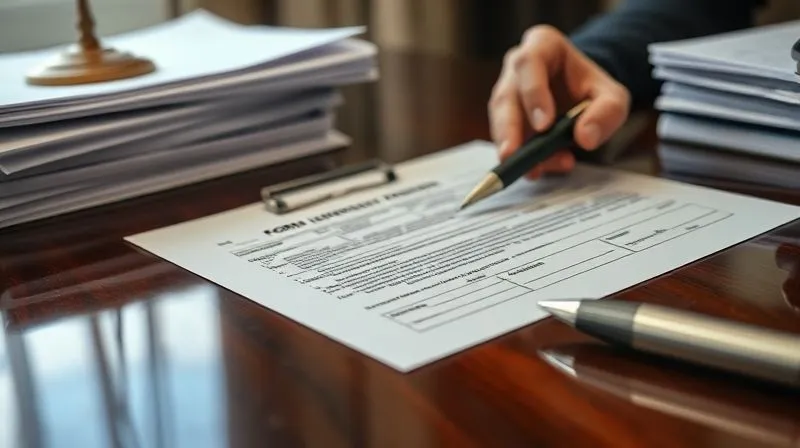
Crafting a Robust Appeal: Addressing the Core Issues
Successfully appealing an H-1B denial, especially for a specialized IT professional, demands a meticulous and strategic approach. This isn't about simply reiterating previous arguments; it's about dissecting the denial, fortifying weak points, and presenting a compelling case to the AAO.
Analyzing the Denial Letter (NOID)
The denial letter is your most important document. It explicitly states the reasons for denial. I always advise clients to read it multiple times, highlighting every specific point of contention raised by USCIS. This forms the blueprint for your appeal.
Focus on identifying the specific regulatory criteria USCIS claims were not met. For a 'specialty occupation' denial, for instance, the officer will likely cite one of the four prongs of the regulatory definition (8 CFR 214.2(h)(4)(iii)(A)). Your appeal must directly address which prong was satisfied and why the officer's conclusion was erroneous.
Gathering Compelling Evidence
This is where the rubber meets the road. Your appeal brief must be a powerful legal argument, but it's only as strong as the evidence supporting it. While generally new evidence isn't accepted, clarification or re-interpretation of existing evidence is key.
- Detailed Job Description: Provide an extremely specific job description, emphasizing the complex, theoretical, and specialized nature of the IT role. Highlight how it requires a bachelor's degree in a specific field (e.g., Computer Science, Information Systems Engineering) and cannot be performed by a generalist.
- Organizational Charts & Project Plans: Illustrate where the IT professional fits within the company structure and the specific projects they will undertake. This helps demonstrate the need for specialized skills and the employer-employee relationship.
- Expert Opinion Letters: Secure letters from university professors, industry leaders, or recognized authorities in the IT field. These letters should attest to the specialized nature of the role and the necessity of a bachelor's degree or higher for its performance.
- Client Letters (for third-party placements): If applicable, letters from end-clients detailing the specific duties, the duration of the project, and the required specialized skills are invaluable.
- Beneficiary's Credentials: If the denial questioned the beneficiary's qualifications, provide detailed transcripts, course descriptions, and letters from previous employers attesting to their specialized experience.
- Industry Documentation: Reference industry standards, O*NET classifications, and Department of Labor (DOL) Occupational Outlook Handbook descriptions that support the 'specialty occupation' claim for similar IT roles. The BLS Occupational Employment Statistics (OES) data can be particularly helpful for prevailing wage arguments.
The Role of Expert Witness Letters
In my experience, a well-crafted expert opinion letter can be a game-changer, especially for 'specialty occupation' denials. These letters come from academics or industry experts who can authoritatively state that the position, as described, is highly specialized and unequivocally requires a specific bachelor's degree or its equivalent.
The expert should meticulously analyze the job duties, the employer's industry, and the beneficiary's qualifications, drawing a clear nexus between the three and the 'specialty occupation' criteria. This provides an objective, authoritative voice to counter USCIS's subjective interpretation.
Case Study: Overturning a "Specialty Occupation" Denial for a Data Scientist
Scenario: “TechSolutions Inc.” filed an H-1B petition for a “Senior Data Scientist” with a Master’s degree in Applied Statistics. USCIS denied the petition, stating the role was not a “specialty occupation,” arguing that data analysis could be performed by individuals with various backgrounds, not necessarily a specific bachelor’s degree or higher in a specialized field.
Our Approach: We meticulously reviewed the denial and identified that USCIS failed to appreciate the depth of statistical modeling, machine learning algorithm development, and predictive analytics required. The initial petition focused heavily on the “data” aspect but not enough on the “scientist” aspect.
Evidence & Argumentation:
- We submitted an enhanced job description, detailing the specific advanced statistical software, programming languages (Python/R for ML), and complex methodologies the role demanded, explicitly linking them to a Master’s level curriculum in Applied Statistics or Computer Science.
- We obtained an expert opinion letter from a university professor of Data Science, who articulated why this specific role, with its advanced requirements, unequivocally necessitated a Master’s degree in a highly specialized field, citing academic curriculum standards.
- We provided internal project documentation from TechSolutions Inc. demonstrating the critical business impact of the data scientist's role, showcasing its complexity and the specialized academic knowledge required to achieve project objectives.
Outcome: The AAO overturned the denial, acknowledging that the comprehensive evidence, especially the expert opinion and detailed job duties, clearly established the position as a specialty occupation. This demonstrated how to appeal an H-1B visa denial for a specialized IT professional effectively by focusing on the 'specialty' aspect.

The Importance of Legal Counsel in H-1B Appeals
While this guide provides a framework, attempting to navigate an H-1B appeal without experienced legal counsel is, in my professional opinion, a significant risk. The intricacies of immigration law, particularly the nuances of AAO precedent decisions and regulatory interpretations, are profound.
An experienced immigration attorney:
- Can accurately interpret the denial letter and identify the strongest legal arguments.
- Knows what kind of evidence is compelling and how to present it effectively.
- Can draft a persuasive legal brief, citing relevant statutes, regulations, and case law.
- Understands the procedural requirements of the AAO and can ensure timely and proper filing.
- Offers strategic advice on alternative options if the appeal is not the best path.
I cannot stress enough the value of having a seasoned professional guide you through this process. It significantly increases your chances of a favorable outcome.
The USCIS website provides details on Form I-290B, but understanding its implications requires legal expertise.
Beyond the AAO: Exploring Other Avenues
What happens if the AAO upholds the denial? While disheartening, it's not always the absolute end of the road. You still have a few potential avenues, though they become increasingly complex and resource-intensive.
- Motion to Reopen or Reconsider: You can file another Form I-290B, but this time as a motion. A Motion to Reopen must present new facts and be supported by affidavits or other documentary evidence. A Motion to Reconsider must establish that the decision was based on an incorrect application of law or policy, and that the decision was incorrect based on the evidence in the record of proceeding at the time of the decision.
- New H-1B Petition: In some cases, if the underlying circumstances have significantly changed (e.g., a new job description, a different client, or the beneficiary obtained additional qualifications), filing a new H-1B petition might be a viable strategy, especially if the denial was based on a highly specific factual scenario.
- Federal Court Litigation: As a last resort, if all administrative remedies are exhausted, it may be possible to file a lawsuit in federal district court to challenge USCIS's decision. This is a complex, costly, and lengthy process reserved for cases where there's a clear abuse of discretion or an error of law by the agency.
Each of these options has its own set of rules, risks, and timelines. Discussing these with your immigration attorney is paramount to determine the most strategic path forward.
Maintaining Status and Future Planning
A denial can have immediate implications for the beneficiary's immigration status. If the H-1B petition was for a change of status, the beneficiary may fall out of status upon denial. If they were already in H-1B status, a denial of an extension or transfer could trigger a period of unlawful presence.
It's critical to understand the '30-day rule' (or grace period) and other potential avenues to maintain lawful status while an appeal is pending or new options are being explored. This might involve:
- Filing an appeal (which generally tolls unlawful presence while pending).
- Filing a new, non-frivolous petition for another status.
- Departing the U.S. to avoid accumulating unlawful presence.
For employers, the denial means the specialized IT professional cannot work for them under H-1B status. Contingency planning is essential, including considering other visa categories if applicable, or preparing for the possibility of the professional needing to leave the U.S.
Common Pitfalls to Avoid in the Appeal Process
Having guided countless employers and specialized IT professionals through this labyrinth, I've observed several recurring pitfalls that can jeopardize an appeal. Avoiding these can significantly improve your chances:
- Missing Deadlines: The 30-day filing window for Form I-290B is non-negotiable. Mark your calendar and prioritize this.
- Submitting Insufficient Evidence: Simply resubmitting the original evidence won't work. You need to provide *more* compelling, specific, and persuasive evidence that directly rebuts the denial reasons.
- Failing to Address All Denial Points: An appeal must systematically address every single reason for denial stated in the USCIS letter. Ignoring even one point can lead to a sustained denial.
- Lack of Specificity: Generic arguments or vague job descriptions will not sway the AAO. Be hyper-specific about the IT professional's duties, the specialized tools used, and the direct link to a specific bachelor's degree.
- Underestimating the 'Specialty Occupation' Bar: USCIS has become increasingly stringent in interpreting this criterion. Don't assume your IT role is automatically a specialty occupation; you must prove it with robust evidence and expert testimony.
- Not Seeking Expert Legal Counsel: As mentioned, the complexity of immigration law and the AAO review process makes professional legal representation almost essential for a strong appeal.
| Denial Reason | Effective Rebuttal Strategy |
|---|---|
| Specialty Occupation Not Met | Provide expert letters, detailed curriculum, industry standards, and specific project descriptions linking duties to a specialized degree. |
| Employer-Employee Relationship (Third-Party) | Submit detailed SOW, client letters, project plans, and comprehensive evidence of petitioner's control over beneficiary's work. |
| Beneficiary Qualifications | Offer detailed transcripts, course descriptions, equivalency evaluations, and letters from previous employers attesting to specialized experience. |
| Prevailing Wage Issues | Submit updated wage surveys, DOL OES data, and evidence of ability to pay the prevailing wage. |
| Availability of Work | Provide comprehensive project timelines, client contracts, letters from end-clients, and detailed work orders for the entire requested period. |

Frequently Asked Questions (FAQ)
Question: Can I continue working while my H-1B appeal is pending? Detailed answer: If you were previously in H-1B status and the denied petition was an extension of stay or a change of employer, you may generally continue to work for up to 240 days or until USCIS renders a decision on the appeal, whichever comes first, provided the appeal was filed before your previous I-94 expired. However, if the denial was for an initial H-1B petition or a change of status, you typically cannot begin or continue employment. This area is highly nuanced and depends heavily on your specific immigration history and the timing of the appeal, making legal consultation essential.
Question: How long does the AAO appeal process typically take? Detailed answer: The processing times for AAO appeals can vary significantly, often ranging from several months to over a year, and sometimes even longer. Factors influencing this include the complexity of the case, the AAO's current caseload, and whether additional requests for information are issued. During this period, the uncertainty can be challenging, which is why having a clear understanding of potential timelines and contingency plans is crucial.
Question: What if the H-1B denial was based on a misinterpretation of my IT skills or project complexity? Detailed answer: This is a common challenge for specialized IT professionals. The appeal strategy must focus on educating the AAO about the true nature of the role. This involves providing highly detailed technical descriptions of your duties, the specific technologies used, the academic theories applied, and expert letters from individuals who can validate the specialized and degree-requiring nature of your work in the IT field. Sometimes, USCIS officers, while knowledgeable in immigration law, may not fully grasp the intricacies of cutting-edge IT roles.
Question: Can my employer file a new H-1B petition while an appeal is pending? Detailed answer: Yes, in certain circumstances, an employer can file a new H-1B petition even while an appeal for a previous denial is pending. This is often considered a 'parallel filing' strategy. However, the new petition must address the issues that led to the previous denial, ideally with new or substantially improved evidence and arguments. It's a strategic decision that should be made in consultation with an experienced immigration attorney, weighing the costs, benefits, and potential risks, as it doesn't automatically negate the appeal process.
Question: Is there a fee waiver available for H-1B appeals? Detailed answer: Generally, fee waivers are not available for Form I-290B, Notice of Appeal or Motion, particularly for employment-based petitions like the H-1B. USCIS fee waiver policies are typically reserved for humanitarian or public interest benefits. Employers or petitioners are expected to pay the required filing fees for H-1B appeals.
Key Takeaways and Final Thoughts
- Act Swiftly and Decisively: The 30-day appeal window is critical. Do not delay in seeking legal counsel.
- Deconstruct the Denial: Understand every specific reason USCIS provided for the denial. This is your target.
- Fortify Your Evidence: Your appeal must be backed by a robust collection of highly specific, compelling, and often third-party validated evidence.
- Harness Expert Opinions: For 'specialty occupation' denials, an expert letter from an academic or industry authority can be incredibly persuasive.
- Engage Specialized Legal Counsel: The complexities of H-1B appeals necessitate the expertise of an experienced immigration attorney.
- Plan for Contingencies: Consider your options beyond the AAO and understand the implications for the beneficiary's status.
Receiving an H-1B denial is undoubtedly a stressful event, particularly for a specialized IT professional whose career trajectory in the U.S. hangs in the balance. However, it is not an insurmountable obstacle. With a clear understanding of the process, meticulous preparation, and the right legal guidance, a successful appeal is absolutely within reach. Remember, resilience and strategic action are your strongest allies in navigating this complex path. I've seen many challenging cases ultimately prevail, and with the right approach, yours can too.
Recommended Reading
- 5 Expert Strategies to Prove Slip Fall Negligence with Scant Evidence
- 5 Strategies: How to Overcome Sovereignty Challenges in Digital Governance?
- 5 Legal Pathways to Exit a Damaging Commercial Partnership Agreement
- 5 Legal Avenues: Challenging Government Internet Blocking Effectively
- Doping Violation? 5 Steps to Prove No Fault in Strict Liability Cases




Comments
Leave a comment below. Your email will not be published. Required fields marked with *