



How to challenge executive overreach citing separation of powers
For nearly two decades, I've navigated the complexities of constitutional law, and I've witnessed firsthand the subtle yet significant ways executive power can expand, sometimes encroaching upon the domains of the legislative and judicial branches. This isn't always malicious, but it can erode the very foundations of our system of checks and balances.
Are you concerned about the increasing scope of executive authority? Do you feel like the balance of power is shifting, potentially leading to decisions made without proper oversight or accountability? Many people feel this way, and the lack of clear avenues for recourse can be incredibly frustrating.
In this guide, I'll provide you with a clear, actionable framework to understand and, when necessary, challenge executive overreach by leveraging the principle of separation of powers. We'll explore legal strategies, analyze real-world examples, and equip you with the knowledge to safeguard constitutional integrity. You'll learn not just *what* the separation of powers is, but *how* it can be used as a shield against potential abuse.
Understanding the Separation of Powers Doctrine
The separation of powers doctrine, enshrined in the U.S. Constitution, divides governmental authority among three distinct branches: the legislative (Congress), the executive (the President), and the judicial (the courts). Each branch has specific, enumerated powers, and is designed to check the power of the other two. This prevents any single branch from becoming too dominant. The genius of this system lies in its inherent tension; each branch is constantly vying for influence, ensuring a dynamic equilibrium that protects individual liberties.
Think of it like a three-legged stool. If one leg is significantly longer than the others, the stool becomes unstable. Similarly, if one branch of government accumulates too much power, the entire constitutional structure is threatened.
Key elements of the separation of powers:
- Enumerated Powers: Each branch has specific powers explicitly granted in the Constitution.
- Checks and Balances: Each branch can limit the power of the other branches.
- Independence: Each branch operates independently, without undue influence from the others.
Identifying Executive Overreach: Warning Signs
Executive overreach occurs when the executive branch exceeds its constitutional authority, infringing upon the powers of the legislative or judicial branches. Recognizing the signs of overreach is the first step in challenging it.
Here are some common indicators:
- Unilateral Action: The President takes significant action without congressional approval or authorization.
- Executive Orders: Excessive reliance on executive orders to bypass legislative processes.
- Impoundment of Funds: The President refuses to spend funds appropriated by Congress.
- Broad Interpretation of Powers: The executive branch interprets its powers expansively, stretching the boundaries of constitutional limits.
- Aggrandizement of Authority: Attempts to increase the power of the executive branch at the expense of the other branches.
It's crucial to distinguish between legitimate exercises of executive power and actions that constitute overreach. For example, issuing an executive order to implement existing legislation is generally considered within the President's authority. However, issuing an executive order that effectively creates new law without congressional approval is a potential instance of overreach.
Legal Avenues for Challenging Executive Overreach
When you suspect executive overreach, several legal avenues can be pursued to challenge it, each with its own strengths and limitations. Choosing the right approach depends on the specific facts and circumstances of the case.
- Judicial Review: This is perhaps the most well-known mechanism. Federal courts, including the Supreme Court, have the power to review executive actions and determine whether they are constitutional. This power is derived from the landmark case of Marbury v. Madison.
- Congressional Action: Congress can pass legislation to limit the President's authority or overturn executive actions. They can also use their oversight powers to investigate potential instances of overreach.
- Impeachment: While a drastic measure, impeachment is a constitutional remedy for removing a President who has engaged in "high crimes and misdemeanors."
- Suing the Government: Individuals or organizations can sue the government, challenging the legality of executive actions that harm them. This often involves claims that the executive branch has violated a statute or constitutional right.
Important Consideration: "Standing" is a crucial legal concept. To bring a lawsuit, you must demonstrate that you have suffered a direct and concrete injury as a result of the executive action you are challenging. Mere disagreement with a policy is not enough.
| Legal Avenue | Mechanism | Pros | Cons |
|---|---|---|---|
| Judicial Review | Lawsuit challenging constitutionality | Independent review, potentially broad impact | Time-consuming, requires standing |
| Congressional Action | Legislation limiting executive power | Can directly curtail executive authority | Requires political consensus, subject to presidential veto |
| Impeachment | Removal from office | Ultimate check on executive power | Highly political, requires significant evidence |
The Role of the Courts: Judicial Review in Action
Judicial review is a cornerstone of the separation of powers. Federal courts, particularly the Supreme Court, act as umpires, ensuring that the executive branch stays within its constitutional boundaries. The process typically begins when a party who has been harmed by an executive action files a lawsuit. The court then examines the action to determine whether it is consistent with the Constitution and applicable laws.
Case Study: Youngstown Sheet & Tube Co. v. Sawyer (1952)
During the Korean War, President Truman ordered the seizure of steel mills to prevent a strike that he believed would jeopardize national defense. The Supreme Court ruled that the President lacked the constitutional authority to take such action, as it was essentially a legislative function. This case is a classic example of the Court upholding the separation of powers.
The Supreme Court's decision in Youngstown Sheet & Tube Co. v. Sawyer established a framework for analyzing executive power, categorizing presidential actions into three zones:
- Zone One: When the President acts pursuant to an express or implied authorization of Congress, his authority is at its maximum.
- Zone Two: When the President acts in the absence of either a congressional grant or denial of authority, he enters a "zone of twilight" in which his power is less certain.
- Zone Three: When the President acts against the express will of Congress, his authority is at its lowest ebb.
This framework remains a guiding principle in separation of powers jurisprudence.

Congress as a Check: Legislative Oversight and Control
Congress plays a vital role in checking executive overreach. Its legislative power, coupled with its oversight functions, provides a powerful tool for holding the executive branch accountable. Congress can pass laws that limit the President's authority, refuse to fund executive initiatives, and conduct investigations into potential abuses of power.
Tools Congress uses to oversee the Executive Branch:
- Power of the Purse: Congress controls the federal budget and can refuse to appropriate funds for executive programs.
- Oversight Hearings: Congressional committees can hold hearings to investigate executive branch actions and demand testimony from executive officials.
- Confirmation Power: The Senate must confirm presidential appointments to key executive positions, providing an opportunity to scrutinize the nominees' qualifications and views.
- Impeachment Power: As mentioned earlier, Congress can impeach and remove the President for "high crimes and misdemeanors."
However, congressional oversight is often hampered by partisan politics. When the President's party controls Congress, oversight efforts may be weakened or suppressed. This underscores the importance of a strong and independent judiciary to serve as a check on both the executive and legislative branches.
According to a study by the Brookings Institution, effective congressional oversight requires bipartisan cooperation and a commitment to transparency.
The Role of Public Opinion and Advocacy
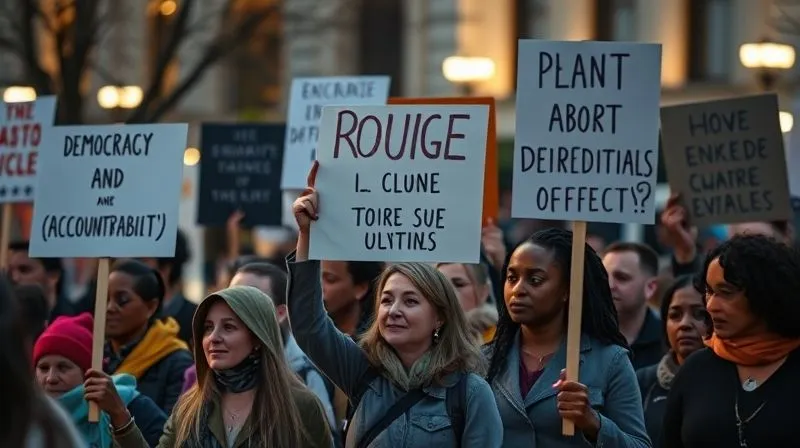
While legal and political mechanisms are crucial, public opinion and advocacy also play a significant role in challenging executive overreach. A well-informed and engaged citizenry can exert pressure on elected officials to uphold the separation of powers and hold the executive branch accountable. Public awareness campaigns, grassroots activism, and media scrutiny can all contribute to shaping public discourse and influencing policy decisions.
How to Get Involved:
- Stay Informed: Follow credible news sources and legal experts to stay abreast of developments related to executive power.
- Contact Your Representatives: Express your concerns to your elected officials in Congress and urge them to take action.
- Support Advocacy Groups: Donate to or volunteer with organizations that advocate for constitutional principles and government accountability.
- Spread Awareness: Share information and engage in discussions with friends, family, and colleagues to raise awareness about executive overreach.
"The price of liberty is eternal vigilance." - Thomas Jefferson
This quote, though centuries old, remains profoundly relevant today. Protecting our constitutional freedoms requires constant vigilance and a willingness to challenge those who would abuse their power.
Mini Case Study: Challenging an Executive Order on Immigration
Case Study: The Hypothetical Case of Executive Order 1234
Imagine President X issues Executive Order 1234, which suspends all immigration from seven specific countries based on national security concerns. This order faces immediate legal challenges, citing violations of due process and equal protection under the Fifth and Fourteenth Amendments. Several civil rights organizations file lawsuits on behalf of individuals affected by the ban, arguing that it is discriminatory and exceeds the President's authority.
The case winds its way through the federal courts, eventually reaching the Supreme Court. The Court must then weigh the President's claimed national security interests against the constitutional rights of the individuals affected by the ban. The Court's decision will have far-reaching implications for the scope of executive power in immigration matters.
In this hypothetical scenario, the legal challenges to Executive Order 1234 represent a real-world example of how the separation of powers can be used to check executive overreach. The courts, acting as an independent check on the executive branch, play a critical role in ensuring that the President's actions comply with the Constitution.
Frequently Asked Questions (FAQ)
What exactly constitutes "executive overreach" and how is it different from legitimate use of executive power? Executive overreach occurs when the executive branch exceeds its constitutional authority, infringing upon the powers of the legislative or judicial branches. It differs from legitimate use of executive power, which involves actions taken within the President's enumerated powers or pursuant to congressional authorization. The line can be blurry, requiring careful analysis of the specific facts and circumstances.
What is the role of the media in holding the executive branch accountable? A free and independent media plays a crucial role in informing the public about executive actions and scrutinizing potential abuses of power. Investigative journalism, fact-checking, and in-depth reporting can expose wrongdoing and hold the executive branch accountable to the public.
How can ordinary citizens effectively challenge executive overreach without resorting to lawsuits? Ordinary citizens can challenge executive overreach through various means, including contacting their elected officials, participating in public protests, supporting advocacy groups, and engaging in informed discussions with others. Public opinion can exert significant pressure on the executive branch and influence policy decisions.
What are the potential consequences of unchecked executive power? Unchecked executive power can lead to abuses of authority, violations of individual rights, and erosion of democratic institutions. It can undermine the rule of law and create a system where the executive branch operates without accountability.
How does federalism, the division of powers between the federal and state governments, relate to the separation of powers in challenging executive overreach? Federalism provides an additional layer of checks and balances. States can challenge federal executive actions that they believe exceed constitutional limits or infringe upon their sovereign powers. This can lead to legal battles between the federal government and individual states, further testing the boundaries of executive authority.
Recommended Reading
- The Definitive Guide: How to Legally Challenge Online Content Removal
- Unraveling Common Law Marriage Asset Division Rules: Your Ultimate Guide
- Avoid Costly Legal Traps: Your Ultimate Guide to Navigating PIP Pitfalls
- 5 Steps to Resolve Construction Change Order Disputes Effectively
- Business Ignoring Your Complaint? Unlock the Ultimate Guide to Get Heard!
Main Points and Final Considerations
- The separation of powers is a fundamental principle of the U.S. Constitution designed to prevent any one branch of government from becoming too powerful.
- Executive overreach occurs when the executive branch exceeds its constitutional authority, infringing upon the powers of the legislative or judicial branches.
- Legal avenues for challenging executive overreach include judicial review, congressional action, and impeachment.
- Public opinion and advocacy play a vital role in holding the executive branch accountable.
- Vigilance and active participation are essential to safeguard constitutional freedoms and prevent abuses of power.
Challenging executive overreach is a complex and ongoing process. It requires a deep understanding of constitutional law, a commitment to democratic principles, and a willingness to stand up for what is right. While the task may seem daunting, remember that each individual action, each voice raised, contributes to the preservation of our constitutional republic. Stay informed, stay engaged, and never underestimate the power of a well-informed and active citizenry.




Comments
Leave a comment below. Your email will not be published. Required fields marked with *