


How to Determine CWA Jurisdiction for Isolated Wetlands?
For over two decades in environmental law, particularly within the labyrinthine corridors of the Clean Water Act (CWA), I've witnessed firsthand the profound challenges and anxieties faced by landowners, developers, and even seasoned environmental consultants when confronted with wetlands. The regulatory landscape is a dynamic, often bewildering terrain, and nowhere is this more acutely felt than in the realm of 'isolated wetlands.'
The core problem, as many of my clients articulate, isn't just the existence of wetlands, but the fundamental uncertainty: "Is this wetland under federal jurisdiction?" This question carries immense weight, dictating everything from project timelines and costs to potential legal liabilities. The stakes are incredibly high, and a misstep can lead to significant delays, substantial fines, or even criminal charges under the CWA. The legal definitions have shifted, interpretations have varied wildly across administrations, and Supreme Court decisions have repeatedly reshaped the very concept of "Waters of the United States" (WOTUS).
In this definitive guide, I'll draw upon my extensive experience to demystify the process. We'll explore the historical context, dissect the pivotal Supreme Court rulings like Rapanos, SWANCC, and the groundbreaking Sackett v. EPA, and provide you with a robust, actionable framework – a 5-step process – to confidently determine CWA jurisdiction for isolated wetlands. This isn't just about understanding the law; it's about equipping you with the expert insights and practical tools to navigate this complex regulatory environment with clarity and compliance.
Understanding the Evolving Landscape of WOTUS
Before we dive into the steps, it's crucial to appreciate the historical flux of what constitutes "Waters of the United States." The CWA's reach hinges entirely on this definition, and for decades, it has been a battleground of legal and political interpretations. Understanding this evolution is key to grasping the current state of isolated wetland jurisdiction.
The Pre-Rapanos Era: Broad Interpretations
Initially, following the passage of the CWA in 1972, federal agencies like the Environmental Protection Agency (EPA) and the U.S. Army Corps of Engineers (USACE) adopted a relatively broad interpretation of WOTUS. This often included wetlands adjacent to tributaries, even if those tributaries were intermittent, and sometimes even wetlands with only a hydrological connection, however tenuous, to traditionally navigable waters. The prevailing thought was to protect the chemical, physical, and biological integrity of the nation's waters comprehensively.
The Rapanos and SWANCC Decisions: Shifting Sands
The Supreme Court began to rein in this broad interpretation with two landmark decisions. First, in 2001, Solid Waste Agency of Northern Cook County (SWANCC) v. U.S. Army Corps of Engineers challenged the "Migratory Bird Rule," which had been used to assert CWA jurisdiction over isolated, non-navigable intrastate waters merely because they were used by migratory birds. The Court held that isolated ponds, not adjacent to open waters and lacking a significant nexus to navigable waters, were not WOTUS. This was a critical first blow to broad jurisdiction over truly isolated features.
Then came Rapanos v. United States in 2006, a deeply fractured 4-1-4 decision that left the legal community scrambling. Justice Scalia, writing for a plurality, argued for a narrow interpretation, limiting WOTUS to "relatively permanent" waters and wetlands with a "continuous surface connection" to them. Justice Kennedy, in his pivotal concurring opinion, proposed the "significant nexus" test: wetlands and non-navigable tributaries are WOTUS if they "significantly affect the chemical, physical, and biological integrity of traditional navigable waters." This test became the dominant framework for assessing jurisdiction for many years, creating a complex, fact-specific analysis.
The Trump and Biden Administrations: Regulatory Whiplash
The post-Rapanos era saw various attempts by different administrations to codify WOTUS. The Obama administration's 2015 Clean Water Rule tried to clarify the significant nexus, expanding jurisdiction. The Trump administration repealed this and replaced it with the Navigable Waters Protection Rule (NWPR) in 2020, which drastically narrowed WOTUS, effectively removing federal protection from many wetlands and ephemeral streams. The Biden administration, in turn, repealed the NWPR and reinstated a definition largely based on the pre-2015 regulations and Justice Kennedy's significant nexus test, while awaiting further Supreme Court guidance.
Expert Insight: "The history of WOTUS isn't just academic; it's a testament to the persistent tension between federal environmental protection and states' rights, property owners' concerns, and economic development. Each shift has created winners and losers, and a fresh wave of uncertainty."
Step 1: Initial Site Assessment and Delineation
Before you can even begin to ponder jurisdiction, you must first accurately identify if you have a wetland at all. This foundational step is non-negotiable and requires adherence to established scientific protocols.
Identifying Wetland Characteristics
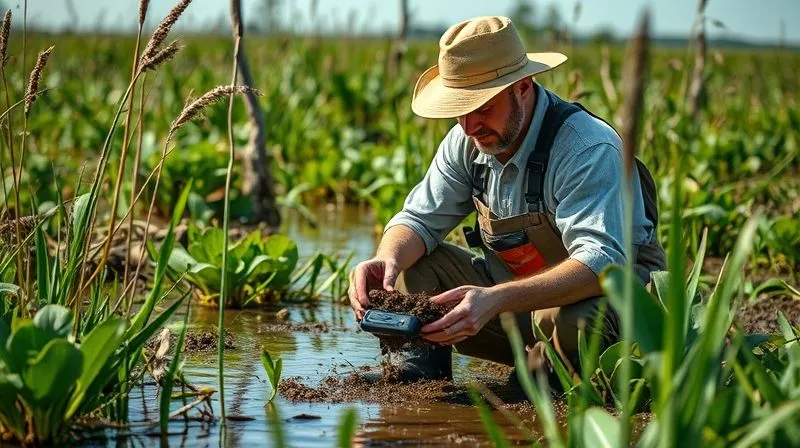
The USACE and EPA define wetlands based on three essential characteristics that must be present under normal circumstances: hydrology (water present for a sufficient period to influence the soil and vegetation), hydric soils (soils that formed under conditions of saturation, flooding, or ponding long enough during the growing season to develop anaerobic conditions), and hydrophytic vegetation (plants adapted to grow in water or wet conditions). A certified wetland delineator will systematically investigate these three parameters across your site.
Mapping the Site and Surrounding Hydrology
Once potential wetlands are identified, the next critical task is to map their boundaries precisely. This involves detailed fieldwork, often using GPS and surveying equipment. More importantly, for isolated wetlands, it means meticulously documenting the surrounding landscape. Are there any ditches, swales, culverts, or other hydrological features, even if they appear dry or intermittent, that could potentially connect the wetland to a larger water body? Aerial photography, topographic maps, soil surveys, and historical data (e.g., old maps, climate data) are invaluable tools here. The goal is to understand the wetland's position within the broader watershed.
Step 2: Analyzing Hydrological and Ecological Connections (The 'Significant Nexus' Test)
For many years, this step was the linchpin for determining jurisdiction over non-traditionally navigable waters and adjacent wetlands. While its direct applicability has been significantly curtailed by Sackett v. EPA for wetlands, understanding its principles remains vital, especially for historic context and potential future regulatory shifts.
Understanding the Kennedy Plurality Opinion
Justice Kennedy's "significant nexus" test, from Rapanos, posited that a wetland or non-navigable tributary is jurisdictional if it "either alone or in combination with similarly situated lands in the region, significantly affects the chemical, physical, and biological integrity of traditional navigable waters." This required a careful, fact-intensive analysis of the function and relationship between the wetland and a downstream navigable water.
Applying the Significant Nexus Standard (Historical Context)
To apply this, agencies looked for evidence of a significant nexus. This wasn't about a direct, continuous surface connection, but a functional one. Factors considered included:
- Hydrologic Connection: How does water flow from the wetland to a navigable water? Is it through ditches, pipes, groundwater, or overland flow during heavy rains?
- Water Quality Functions: Does the wetland filter pollutants, trap sediments, or store floodwaters that would otherwise impact downstream navigable waters?
- Ecological Functions: Does the wetland provide habitat, nutrient cycling, or food sources that are essential for the health of downstream ecosystems, including navigable waters?
- Proximity and Size: While not determinative, larger wetlands closer to navigable waters were more likely to have a significant nexus.
This test often involved hydrological modeling, ecological studies, and expert opinions to demonstrate the cumulative impact of wetlands in a watershed on downstream navigable waters. It was complex, expensive, and often subject to intense litigation.
| Nexus Factor | Assessment Question | Example Evidence |
|---|---|---|
| Hydrologic Connection | Is there evidence of surface or shallow subsurface flow to downstream WOTUS? | Overland flow paths, ditch connections, groundwater monitoring data |
| Water Quality Functions | Does the wetland filter pollutants or retain sediments? | Soil analysis, vegetation type, presence of indicator species |
| Flood Attenuation | Does the wetland store floodwaters, reducing downstream impacts? | Topographic analysis, historical flood data, wetland volume calculations |
| Ecological Support | Does the wetland provide critical habitat for species dependent on downstream waters? | Wildlife observations, species inventories, food web analysis |
Step 3: Navigating the Post-Sackett v. EPA Era
The Supreme Court's unanimous decision in Sackett v. Environmental Protection Agency (2023) fundamentally altered the landscape for CWA jurisdiction over wetlands, especially those considered "isolated." This ruling explicitly rejected the "significant nexus" test as the sole standard for wetlands and returned to a much narrower interpretation based on Justice Scalia's plurality opinion in Rapanos.
The 'Relatively Permanent' and 'Continuous Surface Connection' Standards
The Sackett decision clarified that wetlands are WOTUS only if they meet two stringent criteria:
- They must be adjacent to a traditional navigable water, interstate water, or a relatively permanent body of water (e.g., a river, lake, or stream that flows year-round or continuously during certain seasons).
- They must have a "continuous surface connection" to that adjacent jurisdictional water, making them "indistinguishable" from it. This means there cannot be any barrier (like a berm, dike, or upland area) separating the wetland from the jurisdictional water.
This is a significant departure. The "significant nexus" test, which allowed for functional connections even without a direct surface link, is no longer applicable for determining jurisdiction over wetlands. The Court emphasized that the CWA's reach is limited to "waters" in the ordinary sense of the word, and "adjacent" means directly bordering or touching.
Implications for Isolated Wetlands
The direct implication of Sackett for isolated wetlands is profound: most wetlands that were previously considered "isolated" and potentially jurisdictional under the significant nexus test are now likely outside federal CWA jurisdiction. If a wetland does not have a continuous surface connection to a relatively permanent body of water that is itself a WOTUS, it is no longer federally protected. This includes wetlands separated by a road, a berm, or even a narrow strip of dry land from a jurisdictional water body.
For my clients, this has meant a paradigm shift. What was once a complex, multi-factor analysis has become a much more straightforward, albeit narrower, two-part test for wetlands. The focus is now heavily on the physical, surface-level connection to a clearly jurisdictional water body. This doesn't mean these wetlands are without environmental value, but their federal regulatory status under the CWA has changed dramatically.

Step 4: Leveraging Expert Delineation and Jurisdictional Determinations (JDs)
Given the complexities and the high stakes, attempting to make a jurisdictional determination yourself is a risky endeavor. This is where specialized expertise becomes invaluable.
The Value of a Certified Wetland Delineator
A certified wetland delineator possesses the scientific training and field experience to accurately identify and map wetlands according to the USACE Wetland Delineation Manual and regional supplements. They understand the nuances of hydric soils, hydrophytic vegetation, and wetland hydrology. Their professional report provides a credible, defensible basis for any subsequent regulatory interactions. I always advise my clients that a robust delineation report is the first line of defense and clarity.
Requesting an Approved Jurisdictional Determination (AJD)
Even with an expert delineation, the ultimate authority on CWA jurisdiction rests with the USACE. You can formally request an Approved Jurisdictional Determination (AJD). This is a written, legally binding determination by the USACE regarding the presence or absence of WOTUS on a parcel of land. It specifies the limits of federal CWA jurisdiction and is valid for five years. While the process can be time-consuming, an AJD provides regulatory certainty that is often crucial for project planning, financing, and permitting.
Case Study: Navigating a Complex Isolated Wetland JD
Case Study: How Green Acres LLC Secured Clarity on Their "Isolated" Wetland
Green Acres LLC, a land development company, purchased a 50-acre parcel intending to build a mixed-use community. Their initial environmental assessment identified a 3-acre wetland on the property. Crucially, this wetland was surrounded by uplands and separated by a municipal road and a small, non-perennial ditch from the nearest named tributary, which eventually flowed into a navigable river 5 miles downstream.
Prior to the Sackett decision, Green Acres would have faced a lengthy and uncertain "significant nexus" analysis, potentially requiring extensive hydrological modeling and ecological studies. However, with the new guidance, their experienced wetland consultant, working closely with my legal team, focused on the "continuous surface connection" test.
The consultant meticulously documented the site, demonstrating that the municipal road and the upland strip created a clear physical break. The ditch, while present, was determined to be a non-jurisdictional feature under the new rules. Based on this evidence, Green Acres submitted a request for an AJD to the USACE. The USACE reviewed the documentation, conducted a site visit, and ultimately issued an AJD stating that the 3-acre wetland did not meet the criteria for CWA jurisdiction under the Sackett standard. This clear determination saved Green Acres months of potential delays, hundreds of thousands of dollars in mitigation costs, and provided the certainty needed to proceed with their development plans, albeit still needing to address potential state or local wetland regulations.
Step 5: Documenting Everything and Preparing for Challenges
Thorough documentation is your best friend in environmental compliance. In the event of an inspection, a challenge, or a future regulatory change, a well-organized record can be invaluable.
Building a Robust Record
Keep detailed records of everything: the initial wetland delineation report, all communications with consultants and regulatory agencies (emails, meeting notes, call logs), any permits or approvals, photographs (dated and geo-tagged), maps, and copies of all submitted documents. This comprehensive "paper trail" demonstrates due diligence and provides the factual basis for your jurisdictional determination.
Understanding the Appeals Process
If you disagree with a USACE jurisdictional determination, you have the right to appeal. The USACE administrative appeal process allows for an independent review of the decision. This is another area where experienced legal counsel specializing in environmental law is critical. They can help you understand the grounds for appeal, prepare your arguments, and navigate the procedural requirements, ensuring your case is presented effectively.
Common Pitfalls and How to Avoid Them
- Underestimating State/Local Regulations: Just because a wetland isn't federally jurisdictional doesn't mean it's unregulated. Many states and local municipalities have their own wetland protection laws that can be stricter than federal ones. Always check state and local requirements.
- Ignoring Hydrological Changes: Human activities (e.g., ditching, grading) or natural events (e.g., heavy rainfall, erosion) can alter hydrological connections, potentially changing a wetland's jurisdictional status over time. Regular monitoring and reassessment are crucial.
- Assuming "Isolated" Means "Non-Jurisdictional": While Sackett significantly narrowed federal jurisdiction for isolated wetlands, the term "isolated" itself can be ambiguous. Always conduct a proper assessment to confirm the lack of a continuous surface connection to a jurisdictional water.
- Failing to Document: Lack of comprehensive documentation is a common reason for regulatory headaches. Every step, every finding, every communication should be meticulously recorded.
- Delaying Engagement with Experts: Waiting until a project is well underway to address wetland issues can lead to costly redesigns, delays, or even enforcement actions. Engage wetland delineators and environmental counsel early in the planning process.
The Future of CWA and Isolated Wetlands
While Sackett v. EPA provides a clearer, albeit narrower, framework for CWA jurisdiction over wetlands, particularly isolated ones, the regulatory landscape is never static. Future administrations or even further judicial interpretations could lead to new rules. The ongoing debate highlights the fundamental tension between environmental protection, property rights, and federal versus state authority.
Expert Insight: "The CWA's journey is a perpetual balancing act. For those working with land, the lesson is clear: stay informed, build robust data, and partner with seasoned experts. Proactive compliance is the only sustainable strategy."
Frequently Asked Questions (FAQ)
Q: What exactly constitutes an "isolated wetland" under the CWA in the post-Sackett era? A: In the post-Sackett era, an "isolated wetland" under the CWA would generally be one that lacks a "continuous surface connection" to a traditional navigable water, interstate water, or a relatively permanent body of water. This means there's a physical break, such as an upland area, a dike, or a road, preventing water from flowing directly and continuously from the wetland into a federally jurisdictional water body. Many wetlands that were previously considered "isolated" but had a "significant nexus" are now outside federal CWA jurisdiction.
Q: How does the "significant nexus" test apply to wetlands that don't directly abut a navigable water after Sackett? A: For wetlands, the "significant nexus" test, as applied to the CWA definition of "Waters of the United States," has been explicitly rejected by the Supreme Court in Sackett v. EPA. Therefore, it no longer applies to determining federal jurisdiction over wetlands. The standard is now much narrower, requiring a continuous surface connection to a relatively permanent body of water that is itself a WOTUS. However, the "significant nexus" test may still be relevant for other types of waters, such as tributaries, depending on future regulatory interpretations.
Q: What are the practical implications of the Sackett v. EPA decision for developers and landowners? A: For developers and landowners, the Sackett decision significantly narrows the scope of federal CWA jurisdiction over wetlands. This means many wetlands that previously required federal permits (e.g., Section 404 permits from the USACE) due to a "significant nexus" may no longer need them. This can reduce project costs, timelines, and regulatory burdens. However, it's crucial to remember that state and local wetland regulations may still apply, and these can be equally or more stringent than the federal CWA. A thorough jurisdictional assessment by a qualified expert is still essential.
Q: Can a state have stricter wetland regulations than the federal CWA? A: Absolutely. The Clean Water Act sets a floor, not a ceiling, for environmental protection. Many states have their own robust wetland protection programs and regulations that can be more stringent or cover a broader scope of wetlands than the federal CWA. Even if a wetland is deemed non-jurisdictional under federal law post-Sackett, it may still be protected and regulated under state or local statutes. It is imperative to consult with state and local environmental agencies in addition to federal ones.
Q: What's the difference between a Preliminary Jurisdictional Determination (PJD) and an Approved Jurisdictional Determination (AJD)? A: A Preliminary Jurisdictional Determination (PJD) is an optional, non-binding written indication from the USACE that there "may be" WOTUS on a site. It's often used for projects where the landowner wants to assume jurisdiction and proceed with permitting, avoiding the time and expense of a full AJD. An Approved Jurisdictional Determination (AJD), on the other hand, is a final, legally binding determination by the USACE regarding the presence or absence, and location, of WOTUS on a site. It is valid for five years and provides definitive regulatory certainty, making it the preferred option for most significant projects.
Key Takeaways and Final Thoughts
- The definition of "Waters of the United States" (WOTUS) is highly dynamic and central to CWA jurisdiction.
- The Sackett v. EPA Supreme Court decision (2023) fundamentally narrowed federal CWA jurisdiction over wetlands, rejecting the "significant nexus" test for these features.
- For wetlands to be federally jurisdictional post-Sackett, they must have a "continuous surface connection" to a "relatively permanent" body of water that is itself a WOTUS.
- Accurate wetland delineation by a certified expert is the crucial first step in any jurisdictional assessment.
- Seeking an Approved Jurisdictional Determination (AJD) from the USACE provides the highest level of regulatory certainty.
- Always consider state and local wetland regulations, as they can be broader and stricter than federal requirements.
Navigating CWA jurisdiction for isolated wetlands is undoubtedly complex, but it's not insurmountable. By understanding the evolving legal framework, meticulously documenting your site, and leveraging the expertise of environmental consultants and legal professionals, you can confidently determine the regulatory status of your wetlands. My advice, honed over years in the field, is always to prioritize proactive assessment and robust documentation. This approach not only ensures compliance but also protects your investments and provides the clarity needed to move forward responsibly. The journey through environmental regulations can be challenging, but with the right knowledge and guidance, you can achieve your goals while safeguarding our vital water resources. The EPA's WOTUS website is a valuable resource for updated information, and legal databases like Cornell Law's summary of Rapanos and SCOTUSblog's coverage of Sackett v. EPA provide in-depth legal analysis.
Recommended Reading
- Unveiling the Truth: What is the Plain View Doctrine in Criminal Law?
- 7 Proven Ways: How to Safeguard Senior Assets from Long-Term Care Costs
- 9 Proven Strategies to Avoid Consumer Class Action Lawsuits from Product Defects
- Unlock True Worth: How to Value Intellectual Property for Licensing Success
- Unpaid Alimony: What Happens If Spousal Support Is Not Paid?




Comments
Leave a comment below. Your email will not be published. Required fields marked with *