


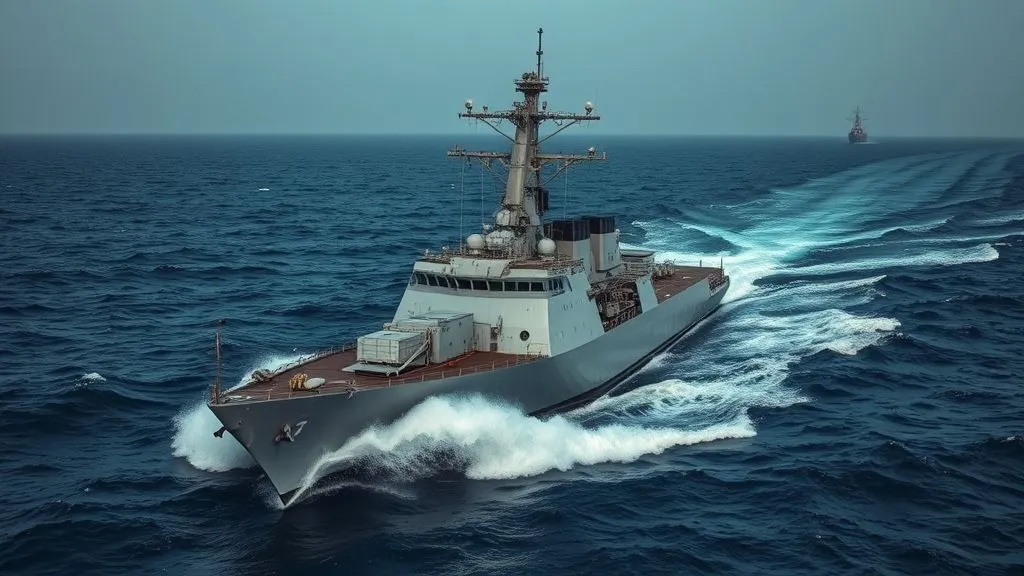
How to Enforce Maritime Security Against State-Sponsored Piracy?
For over two decades navigating the intricate currents of international maritime law, I've witnessed the evolution of threats at sea, but none present a more complex and insidious challenge than state-sponsored piracy. This isn't merely about rogue individuals seeking plunder; it's about geopolitical chess, where sovereign powers leverage illegal acts to project influence, disrupt trade, or test boundaries, often leaving the international community struggling with attribution and response.
The traditional legal frameworks and operational responses designed for conventional piracy often fall short when a state's hidden hand guides the 'pirates.' The lines between piracy, maritime terrorism, and acts of aggression blur, creating a legal labyrinth that complicates everything from hot pursuit to the application of force. This ambiguity is precisely what state sponsors exploit, making effective enforcement incredibly difficult.
In this definitive guide, I will share the multi-faceted approach required to effectively enforce maritime security against state-sponsored piracy. We'll delve into the legal nuances, explore robust operational strategies, and examine the diplomatic and technological levers available, providing actionable frameworks and expert insights drawn from years of experience in this critical domain.
Understanding the Nuance: State-Sponsored vs. Conventional Piracy
The first step in addressing state-sponsored piracy is to understand its fundamental distinction from conventional piracy. Under Article 101 of the United Nations Convention on the Law of the Sea (UNCLOS), piracy is defined as 'any illegal acts of violence or detention, or any act of depredation, committed for private ends by the crew or passengers of a private ship or a private aircraft, and directed on the high seas, against another ship or aircraft, or against persons or property on board such ship or aircraft.' The critical phrase here is 'for private ends.'
State-sponsored piracy, however, involves the direct or indirect involvement of a state. This could range from providing logistical support, intelligence, and safe harbors to overtly directing naval or paramilitary forces to commit acts that, in any other context, would be deemed piracy. The motivation shifts from 'private ends' to national interests, strategic objectives, or economic coercion, often cloaked under the guise of 'private' actors to maintain plausible deniability.
The Legal Labyrinth of Attribution
The primary challenge in combating state-sponsored piracy lies in attribution. Proving a state's direct involvement is exceptionally difficult. States are adept at using proxies, 'ghost fleets,' and deniable assets, making it almost impossible to meet the high evidentiary threshold required for international legal action or the application of state responsibility.
In my experience, the greatest legal hurdle isn't defining the act of piracy, but rather piercing the veil of sovereign immunity to expose the state orchestrating it. This requires an entirely different toolkit than traditional anti-piracy operations.
Furthermore, if acts of piracy are committed by a warship or government ship operated for non-commercial purposes, UNCLOS Article 107 states that only the flag state may exercise jurisdiction. This provides a powerful shield for states wishing to engage in illicit activities at sea without direct international legal repercussions. It's a stark reminder that the existing legal framework was not designed for the complexities of modern hybrid maritime threats.
Strengthening International Legal Frameworks: Beyond UNCLOS
Given the limitations of UNCLOS regarding state-sponsored acts, a crucial pillar in enforcing maritime security against this threat is the evolution and adaptation of international legal frameworks. While UNCLOS remains the foundational document for the law of the sea, its provisions on piracy are geared towards non-state actors.
The Role of UNCLOS and its Limitations
UNCLOS provides the definition and jurisdiction for piracy committed by private actors on the high seas. It grants universal jurisdiction, meaning any state can seize a pirate ship or aircraft, arrest the persons, and decide upon the penalties. However, this universal jurisdiction does not extend to acts committed by state actors, even if those acts mirror piracy.
The Convention does not explicitly address state-sponsored piracy, leaving a significant gap. If a state's warship or government vessel commits such acts, it falls under the purview of state responsibility and potentially the laws of armed conflict, rather than piracy. This distinction is vital because the legal consequences, permissible responses, and avenues for redress are vastly different.
Expanding the Definition and Jurisdiction
To effectively address state-sponsored piracy, the international community must consider:
- Adapting Existing Conventions: Exploring whether conventions like the Rome Statute of the International Criminal Court could be applied, or if existing anti-terrorism conventions could be extended to cover state-sponsored maritime acts.
- Developing New Protocols: A specific protocol addressing state-sponsored maritime crimes, clarifying definitions, attribution mechanisms, and international cooperation obligations. This could establish a lower evidentiary threshold for initial investigation and sanctions.
- Reinterpreting "Private Ends": While challenging, a broader interpretation might consider acts driven by state economic or political goals as not truly "private," thus allowing UNCLOS piracy provisions to apply. This would require significant diplomatic consensus.
The goal is to eliminate the legal grey area that state sponsors currently exploit. For further reading on the foundational principles, consult the official text of the United Nations Convention on the Law of the Sea.
Enhanced Maritime Domain Awareness (MDA) & Intelligence Sharing
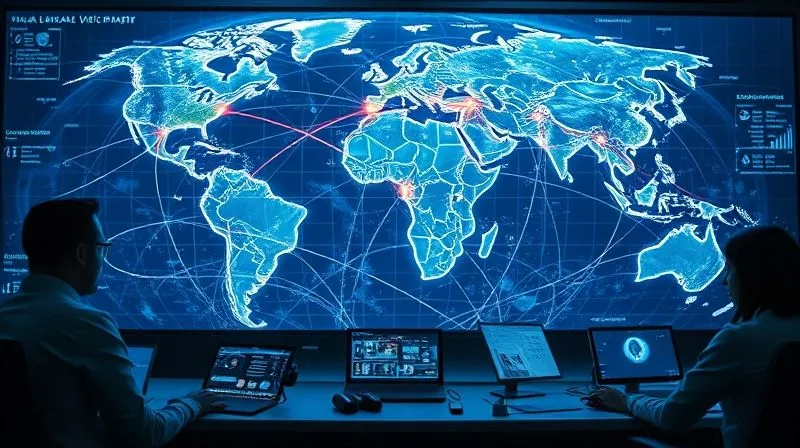
You cannot counter what you cannot see. Enhanced Maritime Domain Awareness (MDA) is the bedrock of any effective strategy to enforce maritime security against state-sponsored piracy. It involves the effective understanding of anything associated with the maritime domain that could impact security, safety, the economy, or the environment.
Leveraging Satellite Technology and AI
Modern MDA relies heavily on cutting-edge technology:
- Satellite Imagery: High-resolution synthetic aperture radar (SAR) and optical satellites can monitor vast ocean areas, identify suspicious vessel movements, and track 'dark vessels' that have turned off their Automatic Identification System (AIS) transponders.
- AIS Data Analytics: While AIS can be spoofed, advanced analytics can detect anomalies in vessel behavior, route deviations, and unusual rendezvous patterns.
- Unmanned Systems: Long-endurance drones (UAVs) and unmanned surface/underwater vehicles (USVs/UUVs) can provide persistent surveillance in high-risk areas, collecting critical intelligence without risking human life.
- Artificial Intelligence & Machine Learning: AI algorithms can process vast amounts of data from various sources (satellite, radar, AIS, open-source intelligence) to identify patterns, predict potential threats, and flag suspicious activities with greater speed and accuracy than human analysts alone.
This technological advantage provides the 'eyes and ears' needed to detect nefarious activities. However, data without context is just noise.
Building Robust Intelligence Networks
Technology must be complemented by human intelligence and robust sharing mechanisms. This includes:
- International Fusion Centers: Establishing and strengthening regional and international maritime information fusion centers where intelligence from various nations can be pooled, analyzed, and disseminated. Examples include the Maritime Security Centre – Horn of Africa (MSCHOA) and the Information Fusion Centre (IFC) in Singapore.
- Open-Source Intelligence (OSINT): Monitoring maritime forums, social media, and local news from coastal regions for early warnings of unusual activities or emerging threats.
- Human Intelligence (HUMINT): Cultivating networks in relevant coastal communities and shipping industries to gather ground-level intelligence on suspicious activities, vessel movements, and potential state affiliations.
- Private Sector Collaboration: Engaging with shipping companies, insurers, and private security firms who often have invaluable on-the-ground information and can share threat intelligence.
Effective intelligence sharing is not just about having the data; it's about having the trust and frameworks to share sensitive information quickly and securely among partners who share common security objectives.
Diplomatic Pressure and Sanctions: The Non-Kinetic Approach
While military responses are often considered for immediate threats, diplomatic pressure and targeted sanctions represent powerful non-kinetic tools to enforce maritime security against state-sponsored piracy. These approaches aim to alter a state's behavior by imposing economic, political, or reputational costs.
Targeted Sanctions Regimes
Sanctions can be highly effective when applied strategically and multilaterally. They can target:
- Individuals: Travel bans and asset freezes on officials or individuals directly involved in planning or executing state-sponsored piracy.
- Entities: Sanctions against state-owned companies, shipping lines, or financial institutions that facilitate or benefit from these illicit activities.
- Sectoral Sanctions: Restrictions on specific industries (e.g., fishing, oil) that are known to be used as fronts or revenue streams for state-sponsored maritime operations.
- Arms Embargoes: Preventing the state from acquiring weapons or dual-use technologies that could be used to support maritime aggression.
The key to effective sanctions is precision and international consensus. Unilateral sanctions often have limited impact, whereas a united front from major economic powers can exert significant pressure.
| Sanction Type | Target | Mechanism | Effectiveness |
|---|---|---|---|
| Asset Freeze | Individuals/Entities | Blocking financial accounts | High, if targets hold foreign assets |
| Travel Ban | Individuals | Denial of entry/visas | Moderate, reputational and personal cost |
| Trade Embargo | State/Specific Sectors | Prohibiting imports/exports | High, but can have humanitarian impact |
| Financial Restrictions | State/Banks | Limiting access to international finance | High, impacts economic stability |
Multilateral Diplomatic Initiatives
Beyond sanctions, sustained diplomatic engagement is crucial. This involves:
- UN Security Council Resolutions: Seeking resolutions that condemn state-sponsored piracy, establish investigative mandates, and authorize specific enforcement measures.
- Regional Organizations: Leveraging organizations like ASEAN, the African Union, or the European Union to build regional consensus and coordinate responses.
- Bilateral Engagement: Direct diplomatic pressure from influential nations to the offending state, highlighting the long-term costs and international isolation associated with such behavior.
- Public Condemnation: Shining a spotlight on the state's actions through international media, human rights organizations, and maritime advocacy groups to generate reputational damage.
The aim is to create an environment where the political and economic costs of engaging in state-sponsored piracy far outweigh any perceived benefits, thereby encouraging a change in behavior. This requires patience, persistence, and a unified international voice.
Developing Robust Naval Deterrence and Response Capabilities
When diplomatic efforts fall short or immediate action is required, robust naval deterrence and response capabilities are indispensable. This pillar focuses on projecting power and readiness to prevent acts of state-sponsored piracy and to interdict them when they occur.
Coalition Operations and Joint Exercises
No single nation can effectively patrol all the world's oceans. Therefore, international cooperation through naval coalitions is paramount:
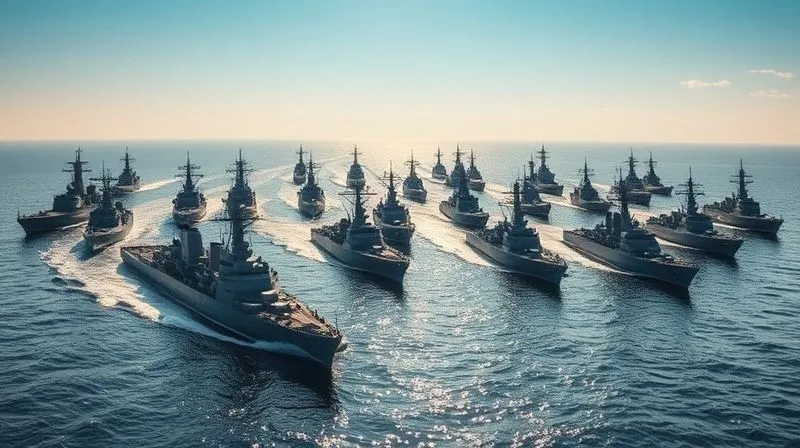
- Standing Naval Forces: Deploying multinational task forces (e.g., Combined Task Force 151 in the Gulf of Aden) to maintain a persistent presence in high-risk areas, deterring potential aggressors.
- Joint Exercises: Conducting regular, complex naval exercises that simulate various scenarios, including interdiction of suspicious vessels, search and rescue, and protection of critical shipping lanes. These exercises enhance interoperability, refine tactics, and demonstrate collective resolve.
- Information Sharing Protocols: Establishing clear and secure channels for sharing real-time intelligence among coalition partners, ensuring a coordinated response to emerging threats.
These collaborative efforts send a clear message: maritime aggression will be met with a unified and capable response. Such collaboration is vital for how to enforce maritime security against state-sponsored piracy effectively.
Rules of Engagement in Contested Waters
The rules of engagement (ROE) are critical, especially when dealing with state-sponsored actors who may operate under the guise of legitimate government vessels. ROE must be:
- Clear and Precise: Providing unambiguous guidance to naval commanders on when and how force can be used, particularly in situations involving suspected state-sponsored vessels.
- Legally Sound: Aligned with international law, including the principles of self-defense, proportionality, and necessity. This is crucial to avoid unintended escalation and legal repercussions.
- Flexible: Adaptable to evolving threat landscapes and varying levels of aggression, allowing for both de-escalation tactics and decisive action when necessary.
Naval forces must be prepared for a spectrum of responses, from hailing and warning to interdiction and, in extreme cases, the use of deadly force, all while adhering strictly to international law. For insights into modern naval strategy, consider resources from institutions like the Council on Foreign Relations on maritime security.
Addressing Sovereign Immunity and Attribution Challenges
The concept of sovereign immunity is a cornerstone of international law, protecting states and their assets from the jurisdiction of foreign courts. However, it also presents a significant hurdle when trying to hold states accountable for acts of piracy they sponsor.
The Veil of State Immunity
When a state-owned or state-operated vessel commits an act of piracy, it is often argued that the vessel and its crew are immune from the jurisdiction of other states. This immunity is particularly strong for warships and government ships used for non-commercial purposes. This legal shield makes direct interdiction and prosecution of state-sponsored actors exceedingly complex, as it can be perceived as an act of aggression against the sovereign state itself.
The challenge lies in distinguishing between a legitimate exercise of state authority and an illicit act cloaked in sovereign privilege. This requires meticulous evidence gathering and a strong international legal consensus on how to interpret and apply sovereign immunity in cases of clear state-sponsored criminal activity at sea.
Unmasking State Sponsorship: Evidence Gathering
Overcoming sovereign immunity necessitates irrefutable evidence of state involvement. This includes:
- Forensic Analysis: Examining recovered equipment, communications, and vessel modifications for clues linking them to state entities.
- Signals Intelligence (SIGINT): Intercepting and analyzing electronic communications to identify command and control structures emanating from state actors.
- Human Intelligence (HUMINT): Gathering testimony from defectors, captured personnel, or informants who can provide direct evidence of state directives.
- Open-Source Intelligence (OSINT): Publicly available information, satellite imagery, and social media analysis can piece together patterns of behavior, logistical support, and operational links to state infrastructure.
The aim is to build a comprehensive case that demonstrates the state's de facto control or direction over the piratical acts, thereby eroding the justification for sovereign immunity.
Case Study: The Shadow Fleet Interdiction
In 2018, a consortium of international maritime agencies faced a persistent challenge from a "shadow fleet" operating in a critical shipping lane. These vessels, outwardly appearing as commercial fishing boats, were systematically harassing and looting cargo ships. Initial investigations pointed to sophisticated coordination, far beyond typical pirate groups.
By leveraging advanced satellite imagery, which tracked the vessels' unusual resupply routes to a secluded, state-controlled port, combined with intercepted communications that revealed command directives from a military frequency, intelligence analysts built a compelling case. Further, forensic analysis of equipment recovered from an interdicted 'pirate' vessel revealed specialized military-grade electronics not available on the open market, traceable to a specific state defense contractor.
This comprehensive intelligence dossier allowed a coalition of nations to present irrefutable evidence to the UN Security Council, leading to targeted sanctions against specific state entities and individuals. The diplomatic pressure, backed by undeniable proof, ultimately forced the sponsoring state to dismantle the shadow fleet and cease its illicit maritime operations, demonstrating how meticulous attribution can overcome the shield of sovereign immunity.
Capacity Building for Vulnerable Coastal States
Often, state-sponsored piracy originates from or operates near coastal states with limited maritime security capabilities. These nations may lack the resources, training, or infrastructure to effectively patrol their waters, monitor their maritime domain, or enforce their own laws. This vulnerability creates fertile ground for state sponsors to operate with impunity.
Training and Equipment Programs
A critical long-term strategy to enforce maritime security against state-sponsored piracy is to empower these vulnerable states. This involves:
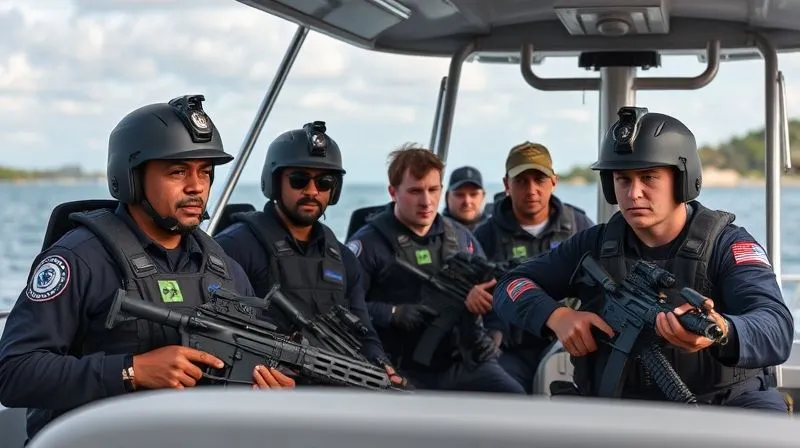
- Naval and Coast Guard Training: Providing comprehensive training programs in maritime law enforcement, interdiction techniques, search and rescue, and rules of engagement.
- Equipment Provision: Supplying patrol boats, surveillance equipment (radars, drones), communication systems, and maintenance support to enhance operational capabilities.
- Legal and Judicial Reform: Assisting in developing robust national maritime laws that align with international standards and strengthening judicial systems to prosecute maritime criminals effectively.
These initiatives not only bolster local security but also create a stronger regional network that can collectively address maritime threats.
Fostering Regional Cooperation
Capacity building should not occur in isolation. It must be integrated into broader regional cooperation frameworks:
- Regional Maritime Security Centers: Supporting the establishment and operation of regional centers for intelligence sharing, coordination of patrols, and joint exercises.
- Information Exchange Agreements: Facilitating formal agreements for the seamless exchange of maritime intelligence and operational data among neighboring states.
- Joint Patrols: Encouraging and supporting coordinated patrols between neighboring states to create a more expansive and effective security presence across shared maritime boundaries.
By strengthening the weakest links in the maritime security chain, the international community can deny state-sponsored pirates safe havens and operational flexibility, making their activities far riskier and less sustainable.
The Future of Maritime Security: Proactive Measures and Emerging Threats
The maritime domain is constantly evolving, and so too are the threats. To effectively enforce maritime security against state-sponsored piracy, we must be proactive, anticipating future challenges and adapting our strategies accordingly. The rise of hybrid warfare and advanced technologies presents both new risks and new opportunities.
Anticipating Hybrid Warfare Tactics
State-sponsored piracy is often a component of a broader hybrid warfare strategy, blurring the lines between conventional conflict, irregular warfare, and economic coercion. Future tactics may include:
- Swarm Attacks: Using numerous small, fast vessels to overwhelm larger naval assets.
- Underwater Sabotage: Targeting critical subsea infrastructure (cables, pipelines) using autonomous underwater vehicles (AUVs) or divers.
- Exploiting "Grey Zone" Operations: Actions that fall below the threshold of armed conflict, making a robust international legal and military response difficult to justify.
Countering these tactics requires investment in advanced defensive technologies, specialized training for naval forces, and a re-evaluation of international legal doctrines to address 'grey zone' aggression.
Cybersecurity in Maritime Operations
The increasing digitalization of shipping and naval operations introduces a new vector for state-sponsored attacks. Cyber threats could:
- Disrupt Navigation: GPS spoofing or jamming, leading vessels off course or into dangerous waters.
- Disable Systems: Hacking into ship's operational technology (OT) to disable engines, communications, or cargo handling.
- Exfiltrate Data: Stealing sensitive cargo manifests, crew information, or naval intelligence.
Protecting maritime cybersecurity is paramount. This involves robust network defenses, regular vulnerability assessments, and comprehensive cyber training for all maritime personnel. The shipping industry must recognize that cyber resilience is now as critical as physical security.
| Threat Category | Specific Threat | Counter-measure |
|---|---|---|
| Hybrid Warfare Tactics | Swarm Attacks | Advanced defensive systems, coordinated response |
| Hybrid Warfare Tactics | Underwater Sabotage | Subsea surveillance, AUV detection |
| Cyber Attacks | GPS Spoofing/Jamming | Redundant navigation systems, hardened receivers |
| Cyber Attacks | OT System Hacking | Network segmentation, intrusion detection systems |

The future of maritime security lies in a holistic approach that integrates advanced technology, adaptive legal frameworks, strong international partnerships, and a deep understanding of evolving threats. For more on this, refer to reports on maritime cybersecurity from the International Maritime Organization (IMO).
Frequently Asked Questions (FAQ)
What makes state-sponsored piracy legally distinct from conventional piracy? The primary distinction lies in the 'private ends' clause of UNCLOS Article 101. Conventional piracy is committed by private actors for private gain. State-sponsored piracy, while appearing similar in action, is directed or supported by a state for national interests, strategic objectives, or economic coercion. This state involvement often invokes sovereign immunity, making traditional anti-piracy legal responses inapplicable and requiring a focus on state responsibility under international law.
Can private maritime security companies (PMSCs) play a role in countering state-sponsored piracy? While PMSCs are effective against conventional piracy, their role against state-sponsored acts is far more ambiguous and legally fraught. Engaging state-sponsored vessels, which may be disguised naval or paramilitary assets, could escalate situations into international incidents. PMSCs operate under strict rules of engagement and national licensing, which typically do not permit engaging sovereign entities. Their role would primarily be defensive, focusing on vessel hardening and crew training, rather than direct interdiction.
What are the biggest challenges in attributing piracy to state sponsorship? The biggest challenges include the high evidentiary threshold required to prove state involvement, the use of proxies and 'ghost fleets' for plausible deniability, the difficulty of collecting intelligence in contested or closed territories, and the legal shield of sovereign immunity. States are adept at concealing their hand, requiring sophisticated intelligence gathering and forensic analysis to build a compelling case.
How effective are economic sanctions alone in combating state-sponsored maritime aggression? Economic sanctions can be a powerful tool, particularly when applied multilaterally and targeted precisely at individuals, entities, or sectors directly involved in or benefiting from state-sponsored piracy. They can inflict significant economic and reputational costs, potentially compelling a state to alter its behavior. However, sanctions alone may not be sufficient without a credible threat of other forms of pressure (diplomatic, military) and may take time to have an effect. Their effectiveness is also reduced if the target state has robust alternative economic partners.
What role does cyber warfare play in the context of state-sponsored maritime threats? Cyber warfare plays an increasingly critical role. State sponsors can use cyber attacks to disrupt navigation systems (GPS spoofing), disable vessel operational technology (OT), compromise maritime communications, or steal sensitive intelligence. These actions can directly facilitate piratical acts, create vulnerabilities for physical attacks, or serve as a form of non-kinetic aggression. Robust maritime cybersecurity is therefore an essential component of defending against modern state-sponsored threats.
Key Takeaways and Final Thoughts
The challenge of how to enforce maritime security against state-sponsored piracy is arguably one of the most complex issues facing international law and naval strategy today. It demands a sophisticated, multi-pronged approach that transcends traditional anti-piracy measures.
- Understanding the Distinction: Recognize that state-sponsored piracy is fundamentally different from conventional piracy, requiring distinct legal and operational responses.
- Strengthening Legal Frameworks: Advocate for the evolution of international law to explicitly address state-sponsored maritime crimes, closing existing loopholes.
- Leveraging MDA & Intelligence: Invest heavily in advanced surveillance technologies and robust intelligence-sharing networks to achieve superior maritime domain awareness.
- Applying Diplomatic & Economic Pressure: Utilize targeted sanctions and multilateral diplomatic initiatives to impose significant costs on offending states.
- Building Naval Capabilities: Maintain strong, interoperable naval deterrence and response forces, prepared to act decisively within clear rules of engagement.
- Overcoming Attribution Challenges: Develop sophisticated methods for evidence gathering to pierce the veil of sovereign immunity and hold states accountable.
- Empowering Vulnerable States: Implement comprehensive capacity-building programs for coastal nations to strengthen regional security.
- Anticipating Future Threats: Proactively address emerging challenges like hybrid warfare tactics and cybersecurity vulnerabilities in the maritime domain.
As I've seen throughout my career, the oceans are a vital artery of global commerce and stability. Protecting them from these increasingly complex threats requires not just vigilance and advanced technology, but also unwavering political will, strong international partnerships, and a commitment to adapting our legal and operational frameworks. The stability of the global maritime order depends on our collective ability to rise to this challenge.
Recommended Reading
- E-Commerce Data Breach Liability: Protecting Your Small Biz
- Unraveling the Mystery: How Does Customary International Law Form?
- Unlock Wealth: How to Qualify for Capital Gains Tax Exemptions
- Is Credit Counseling Required Before Filing Bankruptcy? The Crucial Truth
- 5 Critical Steps: Disclosing Your Invention Without Losing Patent Rights




Comments
Leave a comment below. Your email will not be published. Required fields marked with *