


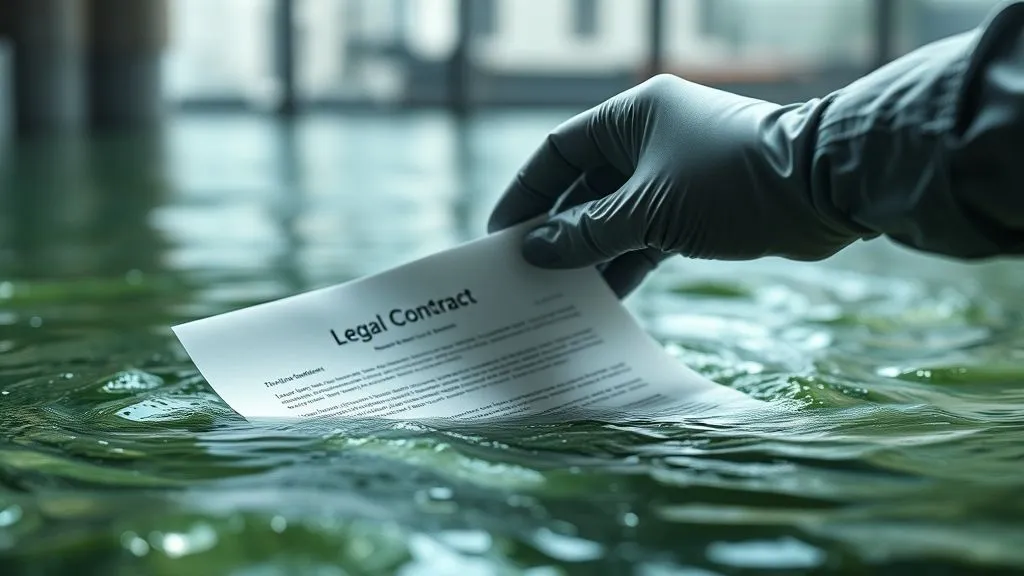
5 Critical Steps: How to Handle Unexpected PFAS Contamination During Property Acquisition?
For over two decades in real estate environmental law, I've witnessed firsthand how unforeseen environmental liabilities can transform promising property acquisitions into financial quagmires, or worse, outright abandonments. The stakes are incredibly high, and the landscape is constantly shifting, often bringing new, complex challenges to the forefront. I've seen countless deals teeter on the brink when unexpected contamination surfaces, and the panic that ensues can be palpable.
Today, one of the most insidious and rapidly evolving threats to property transactions is Per- and Polyfluoroalkyl Substances, or PFAS. These 'forever chemicals' are not just a regulatory concern; they represent a significant financial, legal, and reputational risk. Discovering PFAS contamination during a property acquisition can feel like hitting a brick wall, leaving buyers, sellers, and their counsel scrambling for answers and solutions.
This article isn't about fear-mongering; it's about empowerment. I'll guide you through a practical, five-step framework designed to help you navigate the treacherous waters of unexpected PFAS contamination during property acquisition. We'll explore actionable strategies, real-world considerations, and expert insights to help you mitigate risks, protect your investment, and keep your deals moving forward, even in the face of these formidable environmental challenges.
Understanding the PFAS Threat in Real Estate Transactions
Before we dive into the 'how-to,' it's crucial to grasp the magnitude of the 'what.' PFAS are a group of thousands of man-made chemicals that have been used in industry and consumer products worldwide since the 1940s. Their widespread use in everything from non-stick cookware and water-repellent fabrics to firefighting foams (AFFF) means they are ubiquitous in our environment. The problem? They are incredibly persistent, do not break down easily, and have been linked to various adverse health effects, including cancer, developmental issues, and immune system dysfunction.
From a real estate perspective, this translates into significant challenges. Properties with historical industrial uses, former military sites, airports, or even certain commercial properties (like dry cleaners) may have elevated PFAS levels in soil and groundwater. The regulatory landscape is rapidly evolving, with federal and state agencies increasingly setting stricter limits and classification standards for PFAS, turning what was once an 'unknown' into a very real and actionable liability.
The Expanding Scope of Due Diligence
Traditional environmental due diligence, primarily focused on legacy contaminants like petroleum hydrocarbons and heavy metals, often overlooked PFAS. However, that era is rapidly coming to an end. The increasing awareness, scientific understanding, and regulatory scrutiny around PFAS mean that a standard Phase I Environmental Site Assessment (ESA) might no longer be sufficient to identify potential PFAS risks. Buyers must now demand a more comprehensive and forward-thinking approach to environmental risk assessment.
Expert Insight: In my experience, a proactive and expanded environmental due diligence strategy is no longer optional; it's a fundamental requirement for any prudent property acquisition in today's market. Ignoring potential PFAS risks is akin to buying a property sight unseen in a flood zone – the consequences can be catastrophic.
Step 1: Immediate Response & Initial Assessment Post-Discovery
Discovering unexpected PFAS contamination can trigger a cascade of emotions, from frustration to panic. However, your immediate response is critical. Hasty decisions or a lack of action can significantly worsen your position, both legally and financially.
Halting the Transaction – When to Pause
My first piece of advice when unexpected PFAS contamination is identified is almost always to pause the transaction. This doesn't necessarily mean terminating the deal, but rather putting a temporary halt on closing activities. This pause creates crucial breathing room to assess the situation without the pressure of an impending deadline. It allows all parties to regroup, understand the implications, and formulate a strategic path forward. Attempting to push through without a clear understanding of the contamination's scope and liability can lead to substantial post-closing headaches.
Engaging the Right Experts (Legal & Environmental)
You cannot navigate this alone. The moment PFAS contamination is suspected or confirmed, you need to assemble a specialized team. This team should include:
- Experienced Environmental Legal Counsel: Someone with deep expertise in real estate environmental law and, specifically, PFAS regulations and litigation. They will guide you through liability allocation, contract negotiation, and regulatory compliance.
- Qualified Environmental Consultants: Firms with proven experience in PFAS investigation, sampling protocols, risk assessment, and remediation technologies. Ensure they have the necessary certifications and laboratory partnerships.
- Environmental Insurance Brokers: Specialists who understand the nuances of environmental policies and can advise on coverage for known or unknown PFAS risks.
Expert Insight: Your legal counsel should be the quarterback of this response team. Their role extends beyond mere legal advice; they strategically coordinate the environmental consultants, negotiate with the seller, and protect your interests against potential future liabilities. Don't underestimate the value of this integrated approach.
Step 2: Deep Dive Due Diligence – Phase I & Phase II ESA with a PFAS Lens
Once your expert team is in place, the next step is to conduct a thorough environmental investigation, specifically tailored to PFAS. This often means going beyond the standard ASTM E1527-21 Phase I ESA requirements, which, while foundational, may not adequately address emerging contaminants like PFAS.
Enhanced Phase I Environmental Site Assessments (ESAs)
An enhanced Phase I ESA for PFAS should include a more detailed review of historical property uses, with a particular focus on activities known to involve PFAS. This includes:
- Review of Firefighting Records: Specifically looking for the use of AFFF at airports, fire training facilities, or industrial sites.
- Industrial Processes: Identifying facilities involved in manufacturing textiles, paper, plastics, or metal plating, where PFAS may have been used.
- Waste Disposal Practices: Investigating past disposal methods, including landfills or wastewater treatment facilities, which can be sources of PFAS.
- Adjacent Properties: Assessing the potential for off-site migration from neighboring industrial or commercial operations.
Targeted Phase II ESAs for PFAS
If the enhanced Phase I identifies potential PFAS concerns, a targeted Phase II ESA becomes imperative. This involves physical sampling and laboratory analysis. The key here is precision and adherence to specific PFAS sampling protocols to avoid cross-contamination and ensure accurate results.
- Developing a Sampling Plan: This must be highly specific, identifying sample locations (soil, groundwater, surface water, sediment, air, building materials) based on historical use and geological conditions.
- Specialized Sampling Techniques: PFAS sampling requires strict protocols, including avoiding certain materials (e.g., Teflon-coated equipment, waterproof field books) and using dedicated, PFAS-free equipment.
- Accredited Laboratories: Ensure the laboratory performing the analysis is accredited for PFAS testing and uses EPA-approved methods (e.g., EPA Method 1633, 537.1, 533).
- Data Interpretation: Expert interpretation of the analytical results is crucial to understand the extent, concentration, and potential migration pathways of the PFAS contamination.
Expert Insight: The cost of a thorough PFAS-focused Phase II ESA pales in comparison to the potential liabilities of acquiring a heavily contaminated property unknowingly. Think of it as an investment in certainty and risk mitigation, not an expense.

Step 3: Risk Assessment and Financial Implications
Once the extent of PFAS contamination is understood through the Phase II ESA, the next crucial step is to quantify the associated risks and financial implications. This involves a comprehensive assessment of potential liabilities and a strategic approach to negotiation.
Quantifying the Contamination & Potential Liabilities
This is where the rubber meets the road. Your environmental consultants will help assess:
- Human Health & Ecological Risks: Based on current and future land use, proximity to water sources, and regulatory guidance.
- Remediation Costs: Estimating the cost of cleanup based on the type of PFAS, concentration levels, affected media (soil, groundwater), and available technologies. This can range from tens of thousands to millions of dollars.
- Long-Term Monitoring & Maintenance: Post-remediation, ongoing monitoring is often required, incurring additional costs.
- Legal & Regulatory Fines: Potential penalties for non-compliance with environmental regulations.
- Stigma & Property Value Impact: The market perception of a PFAS-contaminated property can significantly depress its value, even after remediation.
| Cost Category | Typical Range | Description |
|---|---|---|
| Phase II ESA & Delineation | $20,000 - $150,000+ | Detailed sampling, lab analysis, and reporting to define contamination extent. |
| Remediation Design & Implementation | $100,000 - $5,000,000+ | Engineering, permits, and execution of cleanup activities (e.g., excavation, pump & treat, in-situ treatment). |
| Long-Term Monitoring & O&M | $10,000 - $50,000/year | Ongoing groundwater/soil sampling, data analysis, reporting, and maintenance of treatment systems. |
| Legal & Consulting Fees | Varies widely | Counsel for liability allocation, regulatory negotiation, contractual drafting, and expert witness support. |
Negotiating Strategies: Price Adjustments, Indemnities, & Escrows
With the financial implications quantified, your legal counsel can engage in strategic negotiations with the seller. Several tools can be employed:
- Purchase Price Reduction: A direct reduction in the acquisition price to offset anticipated remediation costs and residual liabilities.
- Indemnification Agreements: The seller agrees to indemnify the buyer against future costs and liabilities arising from the pre-existing PFAS contamination. These must be carefully drafted to be enforceable and cover all potential exposures.
- Environmental Escrow Accounts: A portion of the purchase price is held in escrow, released to the buyer to cover remediation costs as they are incurred, or returned to the seller if costs are lower than anticipated.
- Seller-Led Remediation: The seller agrees to conduct and pay for the remediation prior to closing, often under buyer oversight.
Case Study: Apex Holdings & the Former Fire Training Site
Apex Holdings, a commercial developer, was under contract to acquire a large parcel intended for a new logistics hub. During their expedited due diligence, a Phase I ESA indicated a historical fire training facility on a portion of the site. I advised them to immediately commission a targeted PFAS Phase II. The results confirmed significant PFAS contamination in the groundwater and soil. Initial remediation estimates exceeded $2 million, jeopardizing the entire project.
Working closely with Apex's legal team, we negotiated a complex deal structure. The seller agreed to a $1.5 million price reduction and established a $750,000 environmental escrow, managed jointly by both parties, to cover potential cost overruns for a defined period post-closing. Apex also secured a robust environmental insurance policy, which we'll discuss next, to cover any unknown or future PFAS liabilities. This multi-pronged approach saved the deal, protecting Apex from what could have been a debilitating financial burden and allowing the logistics hub development to proceed.
Step 4: Remediation Strategies and Regulatory Navigation
Should you decide to proceed with a contaminated property, understanding the available remediation technologies and the complex regulatory framework is paramount. PFAS remediation is notoriously challenging, often requiring innovative and costly solutions.
Understanding Remediation Technologies for PFAS
Unlike some other contaminants, PFAS are extremely difficult to break down. Current remediation technologies are often expensive and may not achieve complete destruction. Common approaches include:
- Excavation and Off-Site Disposal: Contaminated soil is removed and transported to specialized landfills or incinerators. This is often effective but very costly due to transportation and disposal fees.
- Pump and Treat: Contaminated groundwater is extracted, treated above ground (e.g., using activated carbon, ion exchange resins, or reverse osmosis), and then reinjected or discharged. This can be a long-term process.
- In-Situ Treatment: Technologies that treat the contamination in place, such as injecting chemical oxidants or adsorbents into the subsurface. These are still evolving for PFAS.
- Soil Washing/Stabilization: Techniques to remove PFAS from soil or bind them in place to prevent migration.
Expert Insight: There is no 'silver bullet' for PFAS remediation. The choice of technology depends heavily on the specific type of PFAS, the geology of the site, regulatory requirements, and cost-effectiveness. A multi-barrier approach is often necessary, combining several techniques to achieve acceptable risk levels.
Navigating State and Federal Regulations
The regulatory landscape for PFAS is a moving target. The U.S. Environmental Protection Agency (EPA) is actively working on national drinking water standards, hazardous substance designations under CERCLA, and effluent limitations. Meanwhile, many states have already implemented their own, often more stringent, regulations for PFAS in drinking water, groundwater, and soil. This patchwork of regulations adds significant complexity to remediation and compliance.
Your environmental legal counsel and consultants must be intimately familiar with the specific regulations applicable to your property's location. Compliance involves:
- Permitting: Obtaining necessary permits for remediation activities.
- Reporting: Meeting all state and federal reporting requirements for PFAS releases and remediation progress.
- Negotiating with Regulators: Working with environmental agencies to establish acceptable cleanup levels and secure approval for remediation plans.
For up-to-date information on federal PFAS initiatives, always consult the official source: EPA's PFAS Strategic Roadmap.

Step 5: Mitigating Future Risks – Environmental Insurance & Ongoing Management
Even after extensive due diligence and remediation efforts, residual risks can linger. This is where environmental insurance and robust post-acquisition management plans become indispensable tools for long-term protection.
The Role of Environmental Insurance
Environmental insurance policies are specifically designed to cover environmental risks that standard commercial general liability policies typically exclude. For PFAS, these policies can be critical:
- Pollution Legal Liability (PLL) Insurance: Can cover cleanup costs, bodily injury, property damage, and legal defense costs arising from pollution conditions, including PFAS, both known and unknown, on or migrating from the insured property.
- Remediation Cost Cap (RCC) Insurance: Designed to protect against cost overruns during a known remediation project. If the cleanup costs exceed a predetermined cap, the insurance policy covers the difference.
- Contractor's Pollution Liability (CPL) Insurance: Essential for environmental contractors performing remediation work, covering their pollution liabilities.
Securing the right environmental insurance requires working with a specialized broker who understands the nuances of PFAS risk and can tailor a policy to your specific transaction and property. They can help you navigate the complex terms, conditions, and exclusions that are common in these highly specialized policies. For more insights into environmental insurance, resources from industry leaders like IRMI (International Risk Management Institute) can be very helpful.
Post-Acquisition Environmental Management Plans
Acquiring a property with a history of PFAS contamination, even after remediation, often necessitates ongoing vigilance. A well-structured Post-Acquisition Environmental Management Plan (PAEMP) outlines the procedures for long-term stewardship, monitoring, and compliance.
- Monitoring Programs: Regular sampling of groundwater, soil, or air to ensure remediation effectiveness and detect any new or migrating contamination.
- Institutional Controls: Restrictions on land use (e.g., prohibiting residential development, groundwater use) or engineering controls (e.g., vapor barriers, caps) to prevent exposure.
- Record Keeping: Meticulous documentation of all environmental activities, sampling results, and regulatory communications.
- Emergency Response Plans: Protocols for addressing any unexpected environmental events or regulatory changes.
| Insurance Type | Key Benefit for PFAS | Considerations |
|---|---|---|
| Pollution Legal Liability (PLL) | Covers cleanup and third-party liabilities for both known and unknown PFAS conditions. | Scope of coverage, deductibles, policy term, specific PFAS exclusions. |
| Remediation Cost Cap (RCC) | Protects against cost overruns for a specific, known PFAS remediation project. | Requires detailed remediation plan, often has high premiums, limited to defined project. |
| Contractor's Pollution Liability (CPL) | Covers the environmental contractor's pollution liabilities during remediation work. | Ensures your contractor is adequately insured, reducing your indirect risk. |
Beyond the Transaction: Reputation and Stakeholder Trust
While the immediate financial and legal aspects of PFAS contamination are paramount, I've learned that overlooking the broader implications can be a costly mistake. Your organization's reputation and its relationship with stakeholders – employees, customers, local communities, and investors – can be profoundly impacted by how you manage environmental challenges, especially those as sensitive as PFAS.
A transparent and responsible approach to addressing PFAS contamination can build significant goodwill, even if the situation is challenging. Conversely, perceived secrecy, negligence, or a lack of engagement can lead to public outcry, regulatory scrutiny, and long-term damage to your brand. In today's interconnected world, environmental performance is increasingly scrutinized, and it directly influences investor confidence and market value.
Expert Insight: Environmental stewardship is no longer just a compliance issue; it's a core component of corporate social responsibility and a key driver of long-term business value. How you handle a PFAS contamination issue can define your legacy as an organization.
For further reading on the intersection of business ethics and environmental responsibility, I often refer clients to insights from publications like the Harvard Business Review, which frequently addresses how organizations can build and maintain trust through ethical practices, especially during environmental crises.

Frequently Asked Questions (FAQ)
Is PFAS contamination always a deal-breaker? Not necessarily. While it presents significant challenges, with proper due diligence, expert negotiation, appropriate risk allocation (e.g., indemnities, escrows), and environmental insurance, many deals involving PFAS-impacted properties can still close successfully. The key is understanding the scope, cost, and liability, and structuring the deal to mitigate those risks.
What if the seller refuses to cooperate with further testing? A seller's refusal to cooperate with necessary environmental testing, particularly for emerging contaminants like PFAS, is a significant red flag. In such cases, I would strongly advise a buyer to reconsider the acquisition or, at a minimum, demand very robust contractual protections and a substantial price reduction to account for the unknown risks. Your legal counsel should advise on contractual rights to testing and potential remedies for non-cooperation.
Can I get environmental insurance for existing PFAS contamination? Yes, it is possible to obtain environmental insurance for known PFAS contamination, typically through a Pollution Legal Liability (PLL) policy. However, the insurer will require extensive information regarding the contamination's extent, estimated remediation costs, and the proposed management plan. Premiums can be substantial, and the policy will have specific terms, conditions, and exclusions. Remediation Cost Cap (RCC) policies are also available for known cleanup projects.
How long does PFAS remediation typically take and cost? The duration and cost of PFAS remediation vary wildly depending on the type and concentration of PFAS, the affected media (soil, groundwater, etc.), the size of the contaminated area, the chosen technology, and regulatory requirements. It can range from months to several years, with costs spanning from tens of thousands to multi-million dollars. Long-term monitoring often continues for decades.
What are the legal implications if I unknowingly acquire a PFAS-contaminated property? Acquiring a PFAS-contaminated property unknowingly can expose you to significant legal liabilities under federal and state environmental laws, including potential Superfund (CERCLA) liability if PFAS are designated as hazardous substances. You could be held responsible for cleanup costs, natural resource damages, and third-party claims for property damage or bodily injury. This underscores the critical importance of comprehensive pre-acquisition due diligence and strong contractual protections.
Key Takeaways and Final Thoughts
Navigating unexpected PFAS contamination during property acquisition is undeniably complex, but it is far from an insurmountable obstacle. As an industry specialist, I've seen how preparedness, expert guidance, and a strategic approach can transform a potential deal-breaker into a manageable challenge. Here are the critical takeaways:
- Act Swiftly and Strategically: Pause the transaction and immediately engage specialized environmental legal counsel and consultants.
- Deepen Due Diligence: Conduct enhanced Phase I and targeted Phase II ESAs specifically designed to detect and delineate PFAS.
- Quantify Risks Thoroughly: Accurately assess remediation costs, legal liabilities, and property value impacts.
- Negotiate with Precision: Utilize price adjustments, indemnities, and escrows to allocate risk fairly.
- Secure Long-Term Protection: Leverage environmental insurance and implement robust Post-Acquisition Environmental Management Plans.
The evolving nature of PFAS science and regulation means that vigilance will remain key. By adopting this proactive, expert-driven framework, you can not only mitigate the risks associated with these 'forever chemicals' but also build a reputation for responsible environmental stewardship. Approach each acquisition with diligence, expertise, and a clear strategy, and you'll be well-equipped to handle even the most unexpected environmental challenges that come your way.

Recommended Reading
- Navigating H1B Visa Interviews: 5 Steps to Address Employment Gaps
- 7 Proven Ways: Fund Your Special Needs Trust & Keep Medicaid Benefits
- 7 Strategies: How to Minimize Medical Lien Impact on Settlements
- 7 Legal Tactics: Maximize Severe TBI Settlements for Pedestrians
- Unlocking Your Rights: Can You Sue for Slip and Fall on Public Property?





Comments
Leave a comment below. Your email will not be published. Required fields marked with *