



How to Legally Defend Land Trust from Easement Violation Challenge?
For over two decades navigating the intricate currents of environmental law, especially in land preservation, I've witnessed firsthand the passion and dedication that fuels land trusts. Yet, this noble pursuit often faces unexpected legal squalls, particularly when the very agreements meant to protect land are challenged.
The specter of an easement violation challenge can be daunting for any land trust. It's not just a legal battle; it's a direct threat to years of painstaking work, donor trust, and the ecological integrity you've sworn to protect. These challenges can drain resources, morale, and even public confidence, leaving many wondering: 'Where do we even begin to mount a defense?'
That's precisely why I've distilled my experience into this comprehensive guide. We'll delve deep into the strategic, legal, and practical frameworks essential for land trusts to not only respond but to proactively and robustly defend against easement violation challenges. I'll share actionable insights, drawing from real-world scenarios and established legal precedents, ensuring you're equipped to safeguard your conservation legacy.
Pillar 1: Understanding the Battlefield – The Nature of Easement Violations
Before you can defend, you must fully comprehend what you're defending against. An easement violation isn't always a dramatic act; sometimes, it's a subtle encroachment or a misunderstanding of terms. Recognizing the nuances is your first line of defense.
Defining a Violation
A conservation easement is a legally binding agreement that restricts certain uses of a property to protect its conservation values. A violation occurs when a landowner acts in a way that contravenes these agreed-upon restrictions. This could range from building an unapproved structure to clearing protected vegetation or altering water flow.
Common Types of Infringements
In my practice, I've observed several recurring types of violations. These often include unapproved construction, timber harvesting, agricultural practices that exceed permitted scope, unauthorized dumping, or changes to hydrological features. Each type requires a tailored response, but the underlying principle remains: the easement's terms have been breached.
The Role of Baseline Documentation
Crucial to proving a violation is having impeccable baseline documentation. This comprehensive record, prepared at the time the easement is granted, details the property's condition and conservation values. Without it, demonstrating a change or infringement becomes significantly harder. It's the 'before' picture that makes the 'after' picture legally compelling.
Expert Insight: "Your baseline documentation isn't just a formality; it's the foundational affidavit for all future enforcement actions. Invest in its thoroughness as if your conservation mission depends on it – because it does."
Pillar 2: Proactive Fortification – Building an Impenetrable Defense Before a Challenge Arises
The best defense is often a strong offense, or in this context, a proactive and meticulously planned strategy. I've seen countless land trusts save significant time and resources by laying solid groundwork long before any inkling of a challenge.
Robust Easement Drafting: Precision is Paramount
Ambiguity is the enemy of enforcement. Easement language must be crystal clear, leaving no room for misinterpretation. It should precisely define permitted and prohibited activities, monitoring rights, and enforcement mechanisms. Consult with experienced environmental law attorneys during the drafting phase to ensure every clause is legally sound and enforceable.
Consistent Monitoring and Documentation Protocols
Regular, documented monitoring visits are non-negotiable. These visits not only help detect potential violations early but also create an ongoing record of compliance or non-compliance. Digital photography, GPS coordinates, and detailed written reports from each visit are invaluable. This continuous data collection is the backbone of any future legal defense.

Building Strong Relationships with Landowners
While not a legal shield, a positive relationship with landowners can often prevent challenges from escalating to legal battles. Regular communication, offering educational resources, and fostering a spirit of partnership can resolve minor issues informally. Many landowners are stewards at heart; understanding their intentions can lead to collaborative solutions.
Pillar 3: The Initial Response – When a Challenge Emerges
Despite all proactive measures, a challenge may still arise. How you respond in the immediate aftermath can significantly influence the outcome. Timing, tact, and thoroughness are critical.
Immediate Internal Assessment and Legal Counsel Engagement
The moment you suspect a violation or receive notification of a challenge, convene your internal team. Review all relevant documentation – the easement deed, baseline report, and monitoring records. Simultaneously, engage your legal counsel. An experienced attorney specializing in conservation easements can guide your every step, ensuring compliance with legal procedures and protecting your interests.
Communication with the Alleged Violator
Often, the first step is a formal letter to the landowner, outlining the suspected violation, referencing the specific easement clauses, and requesting a meeting or a cessation of activity. This communication should be firm but professional, aiming for resolution before litigation. Document all correspondence meticulously.
Gathering and Organizing Evidence
This is where your proactive documentation pays dividends. Immediately gather all relevant evidence: photographs (dated and geotagged), monitoring reports, aerial imagery, and any witness statements. Organize this information systematically; a well-structured evidence file is a powerful tool for your legal team.
Here are the key steps for your initial response:
- Verify the Allegation: Cross-reference the reported activity against easement terms and baseline documentation.
- Document Everything: Take new photos, video, and notes of the current site conditions. Interview witnesses if applicable.
- Consult Legal Counsel: Engage an attorney specializing in environmental law and conservation easements immediately.
- Draft Initial Communication: Send a formal letter to the landowner, outlining the violation and requesting a response or cessation of activity.
- Preserve Evidence: Ensure all physical and digital evidence is securely stored and unalterable.
Pillar 4: Strategic Legal Avenues – Navigating Enforcement Options
Once a violation is confirmed and initial attempts at resolution fail, land trusts must consider their formal legal options. These avenues vary in their approach and desired outcomes, and choosing the right one is a strategic decision guided by your legal team.
Negotiation and Mediation: Seeking Amicable Resolutions
Even at a formal stage, negotiation and mediation remain powerful tools. They can be less adversarial, less costly, and often lead to more sustainable outcomes than litigation. A neutral third-party mediator can help facilitate dialogue and explore mutually agreeable solutions, such as restoration plans or compensatory payments. According to the Land Trust Alliance, non-litigation resolution is often preferred for maintaining long-term relationships.
Injunctive Relief: Halting Ongoing Harm
When an ongoing activity is causing irreversible damage, a land trust can seek an injunction from a court. This is a court order requiring the violator to immediately cease the harmful activity. It's a critical tool for preventing further degradation while a more permanent resolution is pursued.
Specific Performance: Compelling Compliance
If the violation involves a failure to act (e.g., failure to remove an unapproved structure) or requires a specific action to restore the property, a court can order specific performance. This compels the violator to comply with the terms of the easement, often through restoration or remediation efforts.
Damage Claims: When Restoration Isn't Enough
In cases where restoration is impossible or insufficient to compensate for the harm, a land trust may seek monetary damages. This could include the cost of restoration, the loss of conservation values, or even punitive damages in egregious cases. Proving damages often requires expert appraisals and ecological assessments.
Here's a comparison of common legal enforcement avenues:
| Option | Primary Goal | Cost/Complexity | Typical Outcome | Speed |
|---|---|---|---|---|
| Negotiation/Mediation | Amicable Resolution, Relationship Preservation | Low to Medium | Restoration, agreement, payment | Medium |
| Injunctive Relief | Halt Immediate Harm | Medium to High | Court order to cease activity | Fast (for temporary injunctions) |
| Specific Performance | Compel Compliance/Restoration | High | Court order for specific actions | Slow |
| Damage Claims | Monetary Compensation | High | Financial award | Slow |
Pillar 5: Evidence is Everything – Proving Your Case
In any legal challenge, the strength of your evidence is paramount. Without clear, compelling proof, even the most righteous cause can falter. This is where meticulous record-keeping and expert collaboration become indispensable.
Leveraging Baseline Documentation and Monitoring Records
As I emphasized earlier, your baseline documentation is the 'before' picture. Your monitoring records provide the ongoing narrative and the 'after' pictures. Together, they form an irrefutable chronological record of the property's condition and any changes that constitute a violation. These documents are often the core of a land trust's defense.
Expert Witnesses: Scientific and Appraisal Support
Legal arguments often require specialized knowledge. Engaging expert witnesses – such as ecologists, hydrologists, foresters, or real estate appraisers – can provide crucial testimony. These experts can quantify environmental damage, assess restoration costs, or evaluate the impact on conservation values, lending significant weight to your claims.
Photographic and Geospatial Evidence
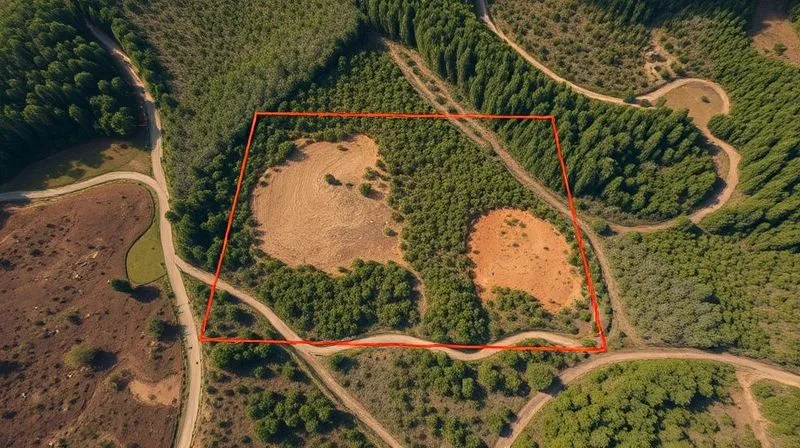
Visual evidence speaks volumes. High-resolution photographs, time-lapse imagery, and aerial or satellite imagery can clearly depict the extent and nature of a violation. Geospatial data, including GPS coordinates and GIS mapping, provides precise locations and measurements, making it difficult for an alleged violator to dispute the facts. This type of evidence is incredibly powerful in court.
Pillar 6: Case Study: Defending Against a Development Encroachment
To illustrate these principles, let me share a fictional, yet highly realistic, scenario I've encountered many times in various forms.
Case Study: The "Greenacre Preserve" Saga
The "Greenacre Preserve Land Trust" held a conservation easement on a 100-acre parcel adjacent to a rapidly developing suburban area. The easement explicitly prohibited any new construction outside a designated building envelope for a single-family home. During a routine monitoring visit, Greenacre's stewardship coordinator discovered that the new landowner had begun clearing a large area of forest and pouring a foundation for a guest house, well outside the approved envelope.
The Challenge: The landowner claimed they were unaware of the specific restrictions, believing the easement only applied to the larger, undeveloped portion of the property, not the existing home site. They challenged Greenacre's right to enforce, arguing ambiguity in the easement's visual maps.
Greenacre's Defense:
- Immediate Documentation: The stewardship coordinator immediately documented the encroachment with dated, geotagged photos and detailed field notes.
- Legal Counsel Engagement: Greenacre's board swiftly engaged their environmental law attorney, who advised on the next steps.
- Baseline and Monitoring Records: The attorney leveraged Greenacre's meticulously prepared baseline documentation, which included detailed maps and narrative descriptions clearly showing the building envelope. Subsequent annual monitoring reports consistently reaffirmed these boundaries.
- Formal Communication: A cease-and-desist letter was issued, citing specific clauses of the easement and demanding an immediate halt to construction.
- Expert Witness: When the landowner continued to dispute the boundary, Greenacre commissioned a licensed surveyor to provide an independent, expert opinion on the precise location of the building envelope as defined in the easement, which corroborated Greenacre's position.
- Mediation Attempt: Greenacre offered mediation, but the landowner declined.
- Seeking Injunctive Relief: With construction continuing, Greenacre filed for an injunction to halt further work, presenting their robust evidence package.
The Outcome: Faced with overwhelming and well-documented evidence, including the baseline report, monitoring photos, and the surveyor's expert testimony, the court granted the injunction. The landowner was compelled to cease construction, remove the unauthorized foundation, and restore the disturbed area at their own expense. This case solidified Greenacre's reputation as a vigilant and effective steward of its easements, demonstrating how to legally defend land trust from easement violation challenge.
Pillar 7: Addressing Common Defenses and Counterarguments
Violators rarely concede immediately. They often employ various legal defenses to challenge your enforcement. Anticipating and preparing for these counterarguments is a hallmark of a robust legal strategy.
Laches and Estoppel: The Danger of Delay
Two common defenses are laches and estoppel. Laches argues that the land trust waited too long to enforce the easement, causing prejudice to the landowner. Estoppel claims the land trust, through its actions or inactions, implicitly allowed the violation. This underscores the absolute necessity of consistent monitoring and timely enforcement. Any delay in responding to a known violation can severely weaken your position. As a legal principle, 'equity aids the vigilant, not those who slumber on their rights.'
Changed Circumstances: When the Landscape Shifts
Sometimes, landowners argue that the original conservation purpose is no longer valid due to changed circumstances (e.g., surrounding development, ecological shifts). While courts are generally reluctant to extinguish easements, this defense requires the land trust to demonstrate the continued relevance and public benefit of the easement's restrictions. Your original intent statement and ongoing ecological assessments become vital here.
Ambiguity in Easement Language
As mentioned, clear drafting is critical. If easement language is genuinely ambiguous, a court might interpret it in favor of the landowner. This highlights why legal review during drafting is non-negotiable and why land trusts should proactively seek to amend or clarify older, less precise easements where possible. This is a common pitfall I've observed that can severely undermine a land trust's ability to legally defend land trust from easement violation challenge.
Funding the Fight: Resources for Legal Defense
Legal battles are expensive. A land trust's ability to mount a robust defense often depends on its financial preparedness. Ignoring this aspect is a critical mistake.
Easement Defense Funds
Many forward-thinking land trusts establish dedicated 'easement defense funds.' These endowments or restricted funds are specifically earmarked for legal costs associated with monitoring, enforcement, and defense of conservation easements. Building such a fund is a strategic investment in the long-term security of your conservation assets.
Pro Bono Legal Assistance
Don't overlook the generosity of the legal community. Many environmental law firms and attorneys are willing to offer pro bono (free) or reduced-fee services to non-profits dedicated to conservation. Building relationships with local legal professionals can provide an invaluable resource when a challenge arises.
Grant Opportunities
Explore grant opportunities from foundations and organizations that support conservation land stewardship and legal defense. Some funders specifically target resources towards strengthening land trust capacity for easement enforcement. Researching these opportunities well in advance can provide a critical financial lifeline.
Here are some funding sources for legal defense:
| Source | Pros | Cons | Best For |
|---|---|---|---|
| Dedicated Defense Fund | Immediate access, controlled by trust, long-term security | Requires significant fundraising upfront | Proactive, long-term stability |
| Pro Bono Legal | Cost-effective, expert legal support | Availability can be limited, less control over counsel choice | Specific cases, limited budget |
| Grants & Foundations | External funding, can cover significant costs | Competitive, application process can be lengthy | Project-specific needs, capacity building |
| General Operating Funds | Flexible | Diverts resources from other programs, unsustainable for large cases | Minor issues, short-term needs |
Building a Coalition: Public Support and Partnerships
Legal defense isn't solely about courtroom tactics; it's also about public perception and community backing. A strong coalition can add immense pressure for a favorable resolution and provide invaluable non-legal support.
Engaging Stakeholders and Community
When a conservation easement is challenged, especially one with significant public value, engaging the local community can be powerful. Public awareness campaigns, community meetings, and local media outreach can generate support for your land trust's position. A unified community voice can influence decisions and demonstrate the broad public benefit of your work. This is particularly true for easements that protect public access or iconic landscapes.
Collaborating with Other Land Trusts and Conservation Groups
You are not alone in this fight. The land trust community is a powerful network. Reach out to other land trusts, state associations, and national organizations like the ConservationTools.org or the Georgetown Environmental Law & Policy Institute. They may offer advice, share lessons learned from similar cases, or even provide amicus curiae (friend of the court) briefs in significant cases. Collaboration strengthens the entire conservation movement.
Expert Insight: "Never underestimate the power of collective impact. A legal battle fought in isolation is far more challenging than one supported by a passionate community and a network of experienced peers. Your conservation mission resonates far beyond your property lines."
Frequently Asked Questions (FAQ)
Question: What is the most common reason land trusts lose easement violation challenges? In my experience, the most common reason is inadequate or incomplete documentation, particularly weak baseline reports or inconsistent monitoring records. Ambiguous easement language also plays a significant role, as it leaves too much room for interpretation and legal maneuvering by the violator.
Question: How long does an easement violation challenge typically take to resolve? The timeline can vary wildly. Minor issues resolved through negotiation might take weeks or a few months. Complex litigation, especially if it involves appeals, can drag on for several years. Factors like court backlogs, the complexity of the violation, and the willingness of parties to settle all influence the duration.
Question: Can a land trust be sued by a landowner for enforcing an easement? Yes, it's possible. Landowners might file counterclaims alleging harassment, breach of contract, or even tortious interference. This is why it's crucial to always act professionally, within the bounds of the easement, and under the guidance of legal counsel. Maintaining impeccable records of all communications and actions is your best defense against such counterclaims.
Question: What happens if a land trust loses an easement enforcement case? If a land trust loses, the court might rule that no violation occurred, or that the land trust is not entitled to the requested relief. This can have serious consequences, including the precedent being set for future violations on that property, financial penalties (e.g., having to pay the landowner's legal fees), and a significant blow to the land trust's reputation and ability to protect other easements. It underscores the importance of careful preparation and strong legal strategy.
Question: Are there insurance options available for land trusts to cover legal defense costs? Some land trusts carry specific insurance policies, often called 'stewardship and defense' insurance, which can help cover legal costs associated with defending easements. These policies are not universally available and vary in coverage, so it's essential to research providers and understand the terms. They are a valuable tool for managing financial risk in enforcement cases.
Key Takeaways and Final Thoughts
- Proactive Documentation is Paramount: Your baseline report and consistent monitoring records are your most powerful legal tools.
- Clear Easement Language: Ambiguity is your enemy; precision in drafting is your ally.
- Engage Expert Legal Counsel Early: Don't navigate complex environmental law alone.
- Strategic Enforcement Options: Understand when to negotiate, mediate, or litigate.
- Build a Strong Coalition: Community and peer support amplify your defense.
- Prepare Financially: Dedicated defense funds are a strategic investment.
Defending a conservation easement against a violation challenge is arguably one of the most critical responsibilities a land trust bears. It's a testament to your unwavering commitment to preserving our natural heritage for generations to come. While the path can be arduous, by meticulously preparing, responding strategically, and leveraging expert insights, you are not just defending a piece of land; you are upholding the very promise of conservation. Stay vigilant, stay informed, and always remember the profound impact of your mission.
Recommended Reading
- Client Misrepresents Assets in Bankruptcy? 5 Steps to Protect Your Case
- 7 Steps: How to Legally Challenge Inequitable Special Education Services
- Challenging Excessive Port Demurrage: 7 Legal Strategies You Need Now
- Mastering Your I-601 Waiver: 7 Steps for Extreme Hardship Claims
- Unmasking Retaliatory Eviction: Your Ultimate Guide to Tenant Rights




Comments
Leave a comment below. Your email will not be published. Required fields marked with *