



How to Legally Enforce Peace Accords Violated by State Parties?
For over two decades navigating the intricate currents of international law, I've witnessed the profound tragedy and immense frustration that arises when hard-won peace accords crumble under the weight of state violations. I recall one particularly poignant negotiation where, after months of painstaking dialogue, a landmark agreement was signed, only for key provisions to be flagrantly disregarded within a year, plunging a fragile region back into uncertainty.
The question then becomes not just if peace can be achieved, but how it can be maintained and, crucially, enforced when parties renege on their commitments. This isn't merely an academic exercise; it's a matter of lives, stability, and the very credibility of international law. When a state party violates a peace accord, it undermines trust, reignites conflict, and challenges the foundational principles of global governance.
In this deep dive, I aim to demystify the complex legal landscape surrounding violated peace accords. Drawing from my extensive experience, I will illuminate the primary legal avenues available, from diplomatic pressure and judicial recourse to the most assertive coercive measures. You'll gain actionable frameworks, real-world insights, and a clear understanding of the instruments at the international community's disposal to compel compliance and uphold the sanctity of peace.
The Grave Reality of Violated Peace Accords
The ink on a peace agreement often dries long before the deep wounds of conflict truly heal. When state parties, for political expediency or strategic advantage, choose to violate these solemn commitments, the consequences are immediate and devastating. I've seen regions that were on the cusp of recovery slide back into violence, trust evaporate, and the hopes of millions dashed.
Violations can manifest in myriad ways: a failure to disarm as agreed, the re-occupation of demilitarized zones, the persecution of returning refugees, or the outright refusal to implement power-sharing arrangements. Each breach, no matter how seemingly minor, chips away at the foundation of the accord. The human cost is immeasurable, leading to renewed displacement, humanitarian crises, and a profound sense of betrayal among affected populations.
Understanding the gravity of these violations is the first step towards effective enforcement. It underscores why the international community, and indeed international law, cannot afford to be passive observers when peace is deliberately undermined. The credibility of the entire international legal system hinges on its capacity to respond meaningfully to such breaches.
Understanding the Legal Framework: Sources of Obligation
Before we can discuss enforcement, we must firmly establish the legal basis for these obligations. Peace accords are not mere political declarations; they are binding instruments under international law, primarily operating as treaties.
Treaty Law and Pacta Sunt Servanda
At the heart of international treaty law lies the fundamental principle of pacta sunt servanda – agreements must be kept. This principle, enshrined in Article 26 of the Vienna Convention on the Law of Treaties, dictates that every treaty in force is binding upon the parties to it and must be performed by them in good faith. A peace accord, once ratified, becomes a legally binding treaty, obligating signatory states to adhere to its terms.
- Binding Nature: Once signed and ratified, a peace accord creates legal obligations for all state parties.
- Good Faith: Parties are expected to implement the accord's provisions with genuine intent, not merely superficial compliance.
- International Responsibility: A violation constitutes a breach of an international obligation, potentially incurring state responsibility.
The United Nations Treaty Collection serves as the global repository for such agreements, underscoring their formal legal status. You can explore the vast array of international treaties and agreements here.
Customary International Law and Jus Cogens
Beyond specific treaty obligations, states are also bound by customary international law, which arises from a general and consistent practice of states followed by them from a sense of legal obligation. Principles like the prohibition on the use of force, the protection of civilians in armed conflict, and the right to self-determination are often rooted in custom.
Furthermore, certain fundamental principles, known as jus cogens (peremptory norms), are considered so fundamental that no derogation is permitted. These include prohibitions against genocide, slavery, torture, and wars of aggression. Violations of a peace accord that involve these crimes carry an even higher degree of international opprobrium and potential enforcement.
UN Charter and Security Council Resolutions
The United Nations Charter itself provides a powerful framework for peace enforcement. Under Chapter VII, the UN Security Council (UNSC) has the primary responsibility for the maintenance of international peace and security. Its resolutions, when adopted under Chapter VII, are legally binding on all UN member states.
"The principle of pacta sunt servanda is not merely a legal technicality; it is the moral bedrock upon which all international cooperation, particularly peace-building, must stand. Without it, every signed agreement is just ink on paper, vulnerable to the whims of political will."
Diplomatic and Political Pathways to Enforcement
Before resorting to more coercive measures, diplomatic and political engagement often provides the initial, and sometimes most effective, avenues for enforcing violated peace accords. These approaches leverage influence, negotiation, and transparency to compel compliance.
Negotiation and Mediation
Re-engaging in dialogue, often facilitated by a neutral third party, can be crucial. Mediation aims to clarify misunderstandings, address new grievances, and find common ground for re-commitment to the accord. I've seen skilled mediators transform seemingly intractable standoffs into renewed pathways for peace.
- Appoint a Special Envoy: The UN Secretary-General or a regional body can appoint a high-level envoy to mediate.
- Convene Emergency Sessions: Bring all parties back to the negotiating table, with international observers.
- Offer Incentives: Link renewed compliance to development aid, trade benefits, or political recognition.
Fact-Finding Missions and Monitoring Bodies
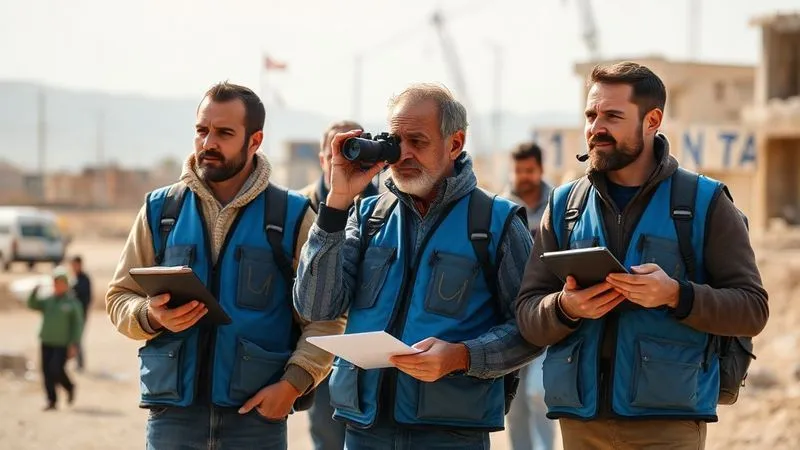
One of the most powerful diplomatic tools is the establishment of independent monitoring mechanisms. These bodies provide impartial, verifiable evidence of violations, which is critical for holding states accountable and preventing misinformation.
Case Study: Monitoring in the Fictional State of Veridia
The post-conflict state of Veridia signed a comprehensive peace accord, but reports of territorial incursions and human rights abuses by one party quickly emerged. The international community, through a regional body, established a robust monitoring mission. This mission, comprised of legal experts, military observers, and human rights specialists, deployed rapidly, gathering irrefutable evidence of violations. Their detailed, impartial reports, disseminated to the UN Security Council and key donor states, became the backbone for subsequent diplomatic pressure and targeted sanctions, demonstrating the power of credible, independent oversight in upholding peace.
This kind of transparent oversight builds trust among the parties (if they are genuinely committed) and provides the international community with the necessary data to act decisively.
Public Condemnation and Naming & Shaming
While often seen as 'soft power,' public condemnation by influential states, international organizations, and human rights groups can exert significant pressure. No state, regardless of its ideology, is entirely immune to the desire for international legitimacy and the avoidance of pariah status. Reports from organizations like Amnesty International or Human Rights Watch, coupled with official statements from major powers, can galvanize public and political will for stronger action.
Judicial and Arbitral Mechanisms: Seeking Legal Redress
When diplomatic efforts falter, or when violations are particularly egregious, legal remedies become paramount. International courts and tribunals offer a structured, impartial means of addressing breaches of international law.
International Court of Justice (ICJ)
The ICJ, the principal judicial organ of the United Nations, can hear disputes between states regarding the interpretation or application of treaties, including peace accords. A state party to an accord can bring a case against another state party for alleged violations.
- Jurisdiction: Requires the consent of both states involved in the dispute. This can be a significant hurdle.
- Enforcement: ICJ judgments are binding, but their enforcement ultimately relies on the UN Security Council, where political considerations can sometimes override legal imperatives.
- Declaratory Judgments: Even without direct enforcement, an ICJ ruling can provide a powerful legal affirmation of a violation, increasing diplomatic pressure.
While the ICJ's role is crucial for clarifying legal obligations, its effectiveness in immediate enforcement of peace accords violated by state parties is often limited by the political will to compel compliance. Learn more about the International Court of Justice and its functions.
International Criminal Court (ICC) and Ad Hoc Tribunals
For violations of peace accords that involve grave international crimes – such as genocide, war crimes, or crimes against humanity – individual leaders and perpetrators can be held accountable. The ICC investigates and prosecutes individuals for these crimes, regardless of their official capacity.
Historically, ad hoc tribunals, like the International Criminal Tribunal for the former Yugoslavia (ICTY) and for Rwanda (ICTR), were established to address specific conflicts. These mechanisms shift accountability from the state to the individual, providing a crucial deterrent against future violations.
Arbitration and Specialized Tribunals
Some peace accords may include provisions for binding arbitration or the establishment of specialized tribunals to resolve disputes arising from their implementation. These mechanisms offer a more tailored and often quicker resolution process, particularly for technical or territorial disputes. Arbitration panels, composed of mutually agreed-upon legal experts, can render decisions that are legally binding on the parties.
"While international courts provide a vital avenue for justice and clarification of law, the enforcement of their judgments, especially against powerful states, remains one of the most persistent challenges in the pursuit of peace."
Sanctions and Coercive Measures: Economic and Military Leverage
When diplomatic and judicial avenues prove insufficient, the international community may resort to more coercive measures, primarily through the UN Security Council, to compel compliance with violated peace accords. These measures aim to impose costs on the violating state, forcing a recalculation of its actions.
Economic Sanctions
Economic sanctions are a common tool, ranging from targeted measures against specific individuals or entities to broader embargoes on trade or financial transactions. The goal is to deprive the violating state of resources or to pressure its leadership through economic hardship.
- Asset Freezes: Targeting the financial assets of individuals or entities responsible for violations.
- Travel Bans: Restricting the movement of key officials.
- Trade Embargoes: Prohibiting the import or export of certain goods, often dual-use items or luxury goods.
- Financial Restrictions: Limiting access to international financial markets or institutions.
While intended to be precise, broad economic sanctions can sometimes have unintended humanitarian consequences, making their design and implementation a delicate balance. Smart sanctions, which target specific individuals, entities, or sectors, are often preferred to minimize harm to innocent civilians.
| Sanction Type | Target | Impact | Enforcement Body |
|---|---|---|---|
| Economic Embargo | State's economy/trade | Broad, can affect populace | UNSC, regional bodies |
| Targeted Sanctions (Smart Sanctions) | Individuals/entities | Specific, less civilian harm | UNSC, states, regional bodies |
| Arms Embargo | Military capabilities | Limits conflict escalation | UNSC, states |
Arms Embargoes
An arms embargo prevents the supply of weapons and related materiel to a violating state or non-state actor. This measure aims to limit their capacity to wage war or continue human rights abuses, thereby enforcing peace accords that typically include demilitarization clauses.
Military Intervention (UN Security Council Authorization)
As a measure of last resort, the UN Security Council can authorize the use of force under Chapter VII of the UN Charter to restore international peace and security. This is typically in response to grave threats, such as widespread atrocities or aggression that destabilizes a region. Any military intervention must be carefully considered, adhere to international humanitarian law, and have clear objectives and exit strategies.
The Role of Regional Organizations and Third-Party Guarantors
The international legal landscape is not solely dominated by the UN. Regional organizations and individual states acting as guarantors often play a critical, often more immediate, role in enforcing peace accords violated by state parties.
Regional Peace and Security Mechanisms
Organizations like the African Union (AU), the European Union (EU), the Organization of American States (OAS), and the Association of Southeast Asian Nations (ASEAN) have developed their own peace and security architectures. These bodies can:
- Deploy Peacekeeping Missions: Often with a stronger mandate for robust action than traditional UN missions.
- Impose Regional Sanctions: Applying economic or political pressure specific to their member states.
- Facilitate Regional Diplomacy: Leveraging closer ties and understanding of local dynamics to mediate disputes.
- Provide Technical Assistance: Aiding in the implementation of peace accord provisions, such as security sector reform or electoral support.
Their proximity and deeper understanding of regional contexts can make them particularly effective in early intervention and monitoring. You can explore more about the role of regional organizations in global governance.
Third-Party Guarantor States
Often, peace accords include clauses where specific powerful states agree to act as guarantors of the agreement. These guarantor states undertake a legal and political obligation to ensure the accord's implementation. Their role can involve:
- Diplomatic Pressure: Directly engaging with the violating party.
- Military Deterrence: Maintaining a presence or readiness to intervene if the accord is breached.
- Financial and Technical Support: Providing resources conditional on compliance.
The effectiveness of guarantor states largely depends on their political will and their strategic interests in the region. Their commitment can significantly bolster the enforceability of a fragile peace.
The Responsibility to Protect (R2P) and Humanitarian Intervention
In the most extreme cases, when a state flagrantly violates a peace accord by perpetrating mass atrocity crimes against its own population, the international community's 'Responsibility to Protect' (R2P) doctrine may come into play. This controversial but crucial principle asserts that sovereignty is not a license to kill, and states have a responsibility to protect their populations from four mass atrocity crimes: genocide, war crimes, ethnic cleansing, and crimes against humanity.
Defining R2P: Pillars and Principles
R2P rests on three pillars:
- The responsibility of each state to protect its populations.
- The responsibility of the international community to assist states in fulfilling this responsibility.
- The responsibility of the international community to intervene in a timely and decisive manner when a state manifestly fails to protect its populations.
When a state party violates a peace accord through actions that constitute these crimes, the international community may consider intervention. Such intervention, however, requires authorization from the UN Security Council under Chapter VII, highlighting the continued centrality of the UNSC in matters of war and peace.
The Threshold for Intervention
The threshold for invoking R2P is exceptionally high, reserved for the most heinous crimes. The decision to intervene militarily is fraught with legal, ethical, and political complexities, requiring careful consideration of proportionality, last resort, and the potential for unintended consequences.
"R2P represents a profound evolution in international law, shifting the focus from state sovereignty as an absolute to sovereignty as responsibility. Yet, its application remains a delicate balancing act, often constrained by geopolitical realities."
Building Domestic Accountability and Sustaining Long-Term Peace
Ultimately, the most durable enforcement of peace accords comes from within the state itself. While international mechanisms are crucial for immediate response, true long-term peace requires building robust domestic institutions and fostering a culture of accountability.
Transitional Justice Mechanisms
Post-conflict societies must grapple with past injustices to build a stable future. Transitional justice mechanisms are crucial for this process:
- Truth Commissions: Investigate past abuses, provide a platform for victims, and establish an official record of events.
- Reparations Programs: Provide material and symbolic redress to victims of human rights violations.
- Prosecutions: Hold perpetrators accountable through national or hybrid courts, reinforcing the rule of law.
- Institutional Reform: Restructure state institutions (e.g., police, judiciary) to prevent future abuses.
These mechanisms help to address the root causes of conflict and build trust between the state and its citizens, making future violations of peace accords less likely.
| Component | Purpose | Example |
|---|---|---|
| Truth Commissions | Establish facts, acknowledge victims | South Africa TRC |
| Reparations Programs | Address harm, restore dignity | German WWII reparations |
| Prosecutions | Hold perpetrators accountable | ICTY, ICTR |
| Institutional Reform | Prevent recurrence | Security sector reform |
Security Sector Reform (SSR)
A reformed, professional, and accountable security sector (military, police, intelligence) is vital for peace. SSR ensures that these forces protect citizens rather than oppress them, aligning their operations with democratic principles and human rights standards. This directly supports the implementation of peace accords related to disarmament, demobilization, and reintegration (DDR) of combatants.
Rule of Law and Institutional Strengthening
Building a strong rule of law, an independent judiciary, and transparent governance structures are foundational. When citizens trust their legal system and institutions, they are more likely to seek redress through legal channels rather than resorting to violence. International assistance in capacity-building for legal professionals, judges, and civil society organizations is often critical in this phase.
Frequently Asked Questions (FAQ)
Q: What is the primary challenge in enforcing peace accords against sovereign states? The primary challenge lies in the principle of state sovereignty. While states are legally bound by treaties, the international system lacks a centralized enforcement authority comparable to domestic legal systems. Enforcement often relies on political will, consensus among powerful states, and the consent of the violating state, which can be elusive.
Q: Can individual leaders be held accountable for violations of peace accords? Yes, absolutely. While the state bears responsibility for treaty violations, individual leaders can be held criminally liable for violations that constitute international crimes, such as genocide, war crimes, crimes against humanity, or the crime of aggression. Mechanisms like the International Criminal Court (ICC) and ad hoc tribunals are designed for this purpose, shifting accountability from the abstract state to concrete individuals.
Q: How do self-executing clauses in peace accords impact their enforceability? Self-executing clauses mean that provisions of the accord can be directly applied in the domestic legal systems of signatory states without further legislative action. This significantly enhances enforceability by allowing individuals or domestic courts to invoke the accord directly. Non-self-executing clauses, conversely, require domestic legislation to be enacted, creating a potential delay or loophole for non-compliance.
Q: What role do non-state actors play in the enforcement or violation of peace accords? Non-state actors, such as armed groups, political factions, or civil society organizations, can play multifaceted roles. They may be signatories to the accord, becoming parties to its implementation. Conversely, some non-state actors can act as 'spoilers,' actively working to undermine the peace process through violence or political obstruction. Civil society, however, often plays a crucial role in monitoring, advocating for compliance, and supporting peace-building efforts from the ground up.
Q: Is there a hierarchy of enforcement mechanisms, or are they all equally viable? There isn't a strict, universally applied hierarchy, but a general progression is often observed. Diplomatic and political measures (negotiation, mediation, monitoring) are typically the first resort. If these fail, judicial avenues (ICJ) or targeted sanctions may follow. Military intervention, usually requiring UNSC authorization, is considered a measure of last resort for the most severe breaches involving threats to international peace and security or mass atrocity crimes. The viability of each mechanism depends heavily on the specific context, the nature of the violation, and the political will of the international community.
Key Takeaways and Final Thoughts
The journey to lasting peace is rarely linear, and the violation of peace accords by state parties remains a persistent challenge in international law. Yet, as I've outlined, the international community is not without recourse. Enforcing these vital agreements requires a multi-pronged, sophisticated approach, leveraging every available legal, diplomatic, and political tool.
- Proactive Monitoring is Key: Early detection of violations through robust monitoring mechanisms is crucial for timely intervention.
- Leverage All Legal and Diplomatic Tools: From quiet diplomacy and mediation to ICJ rulings and targeted sanctions, a comprehensive strategy is essential.
- Prioritize Domestic Accountability: Sustainable peace is built from within, through transitional justice, security sector reform, and strengthening the rule of law.
- International Political Will is Paramount: The effectiveness of any enforcement mechanism ultimately hinges on the sustained commitment and political resolve of influential states and international organizations.
- Focus on the Human Element: Remember that behind every legal clause and diplomatic maneuver are real lives and communities yearning for stability and justice.
As we move forward, the challenge for international legal specialists and policymakers is to continuously adapt and strengthen these enforcement mechanisms. We must strive to build a world where the promise of peace, once signed, is not merely an aspiration, but a legally protected reality for all. The path is arduous, but the pursuit of justice and enduring peace is a moral imperative that we must never abandon.
Recommended Reading
- IRS Business Audit Appeal: 7 Steps to Overturn an Unfavorable Decision
- 7 Legal Steps to Challenge a Sports Federation's Unfair Governance Decision
- 5 Steps to Effectively Appeal a Denied Environmental Permit Application
- Unlock Your Child's Future: How to Request an Independent Educational Evaluation?
- 5 Expert Strategies: Resolving Causation Disputes in Complex Injury Claims




Comments
Leave a comment below. Your email will not be published. Required fields marked with *