


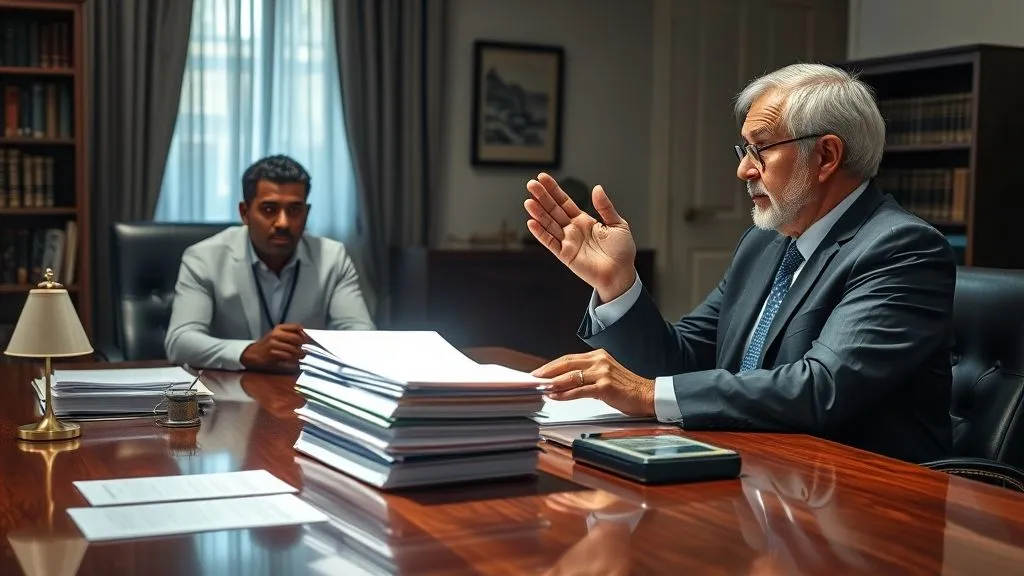
How to mitigate client's past misrepresentation during visa interview?
For over two decades in immigration law, I've witnessed the profound impact a past misrepresentation can have on an individual's dreams of a new life. It's a moment of truth where a seemingly minor omission or an outright false statement from years ago can loom large, threatening to derail an entire immigration journey.
The fear clients express when confronted with their past is palpable. They worry about permanent bars, family separation, and the irreversible damage to their credibility. This isn't just a legal hurdle; it's an emotional crucible that demands not just legal acumen, but also deep empathy and a clear, strategic path forward.
In this definitive guide, I will share the frameworks and actionable strategies I've honed over countless cases to successfully mitigate a client's past misrepresentation during a visa interview. You'll gain insights into legal definitions, waiver complexities, and the meticulous preparation required to transform a potential denial into an approval, promising a real solution to this daunting challenge.
Understanding Misrepresentation: The Legal Landscape
Before we can mitigate, we must first understand the beast. “Misrepresentation” in immigration law is a serious allegation, often leading to a finding of inadmissibility under Section 212(a)(6)(C)(i) of the Immigration and Nationality Act (INA). This section states that any alien who, by fraud or willfully misrepresenting a material fact, seeks to procure, or has sought to procure, or has procured a visa, other documentation, or admission into the United States or other benefit provided under this Act is inadmissible.
In my experience, what often surprises clients is the breadth of what constitutes “misrepresentation.” It’s not just outright lies; it can be an omission of a material fact, a false claim to U.S. citizenship, or even incorrect information provided by a third party if the applicant knew or should have known it was false. The key elements are “willfulness” and “materiality.” A misrepresentation is willful if the applicant knew the statement was false and made it deliberately. It’s material if it was “of such a nature that it is relevant to the alien’s eligibility for the visa,” as defined by the Board of Immigration Appeals.
The consequences of a misrepresentation finding are severe. It typically results in a permanent bar from entering the United States, meaning the individual cannot obtain a visa or adjust status unless they qualify for a waiver. This is why a proactive and highly strategic approach to how to mitigate client's past misrepresentation during visa interview is not just advisable, but absolutely essential.
The Critical First Step: Comprehensive Disclosure and Fact-Finding
The foundation of any successful mitigation strategy lies in absolute transparency and meticulous fact-finding. I cannot stress this enough: you must know every detail of your client’s past, even the uncomfortable ones. Any attempt to conceal or minimize information will invariably backfire.
- Initial Client Intake and Deep Dive Interview: Beyond standard questions, conduct a forensic interview. Ask open-ended questions about every application, every entry, every interaction with immigration authorities. “Tell me about the first time you applied for anything related to the U.S.” “Were there any instances where you were advised to say something specific, or to omit information?”
- Documentary Evidence Review: Collect every single piece of paper related to their immigration history – old visa applications, entry/exit stamps, past denials, prior interviews, police records, tax documents. Cross-reference dates, names, and stated intentions.
- Constructing a Timeline: Create a detailed chronological timeline of your client's immigration journey, highlighting potential discrepancies or instances of misrepresentation. This visual tool helps identify patterns, motivations, and the exact nature of the past misstep.
“The truth, however inconvenient, is your greatest asset. Confronting it head-on allows you to build a defense; avoiding it guarantees vulnerability.”
As an immigration attorney, my role in this phase is akin to that of a detective. I’m not just listening to their story; I’m scrutinizing it, looking for inconsistencies, and trying to understand the context of the misrepresentation. Sometimes, the client themselves may not fully understand the legal implications of their past actions. It’s our job to illuminate these and prepare them for the rigorous scrutiny of the visa interview. This thorough discovery process is the cornerstone of how to mitigate client's past misrepresentation during visa interview effectively.

Developing a Robust Legal Strategy: Waiver Eligibility
Once we have a complete picture of the misrepresentation, the next crucial step is determining eligibility for a waiver. For inadmissibility under INA 212(a)(6)(C)(i), the most common waiver is the I-601 Application for Waiver of Grounds of Inadmissibility. However, not everyone is eligible.
Identifying the Applicable Waiver (e.g., I-601)
The I-601 waiver requires the applicant to demonstrate “extreme hardship” to a qualifying relative – a U.S. citizen or Legal Permanent Resident (LPR) spouse or parent. Importantly, hardship to the applicant themselves is generally not sufficient, nor is hardship to U.S. citizen children, unless it indirectly causes extreme hardship to the qualifying spouse or parent. This distinction is critical and often misunderstood.
The U.S. Citizenship and Immigration Services (USCIS) website provides detailed guidance on the I-601 process, which I highly recommend reviewing regularly as policies can evolve. Understanding the specific requirements and evolving interpretations is paramount.
Proving Extreme Hardship: A Cornerstone of Success
Proving extreme hardship is arguably the most challenging aspect of the I-601 waiver. It’s not enough to simply state that separation would be “hard”; you must demonstrate “extreme” hardship, which is a significantly higher bar. This requires a comprehensive compilation of evidence and a compelling narrative.
I advise my clients to consider various facets of hardship, often categorized as follows:
| Hardship Factor | Description | Evidence Examples |
|---|---|---|
| Medical/Health | Client or qualifying relative has serious medical conditions requiring treatment unavailable in home country, or client provides essential care. | Medical reports, doctor's letters, treatment plans, prescriptions |
| Financial | Significant financial burden on qualifying relative if client is denied visa, including loss of income, property, or increased debt. | Tax returns, bank statements, property deeds, debt statements, employment letters |
| Educational/Career | Disruption to qualifying relative's education or career path due to relocation or loss of client's support. | Enrollment records, employment verification, professional licenses, academic transcripts |
| Psychological/Emotional | Severe emotional distress or psychological impact on qualifying relative due to separation or relocation. | Psychological evaluations, therapist's letters, personal statements, family counseling records |
| Family Ties | Loss of critical family support, care for elderly/young dependents, or disruption of established family unit. | Birth certificates, marriage certificates, affidavits from family members, community letters |
Each hardship factor must be substantiated with robust, independent evidence. For example, a psychological evaluation from a licensed professional detailing the qualifying relative’s depression or anxiety due to potential separation carries far more weight than a simple statement of sadness. The goal is to paint a vivid, undeniable picture of the unique and severe difficulties your qualifying relative would face.
Crafting the Narrative: Honesty, Remorse, and Rehabilitation
Legal arguments alone are often insufficient. To truly mitigate a client’s past misrepresentation during a visa interview, you must craft a compelling narrative that emphasizes honesty, genuine remorse, and rehabilitation. This narrative is woven through the entire waiver application and is crucial for the interview itself.
The Power of a Personal Statement
The client’s personal statement is a critical component. It should be written in their own words, detailing: the circumstances of the misrepresentation, why it occurred (without making excuses), their deep regret, and what they have learned from the experience. This isn’t about blaming others; it’s about taking full responsibility. I often guide clients through multiple drafts, ensuring sincerity and clarity.
For instance, if a client misrepresented their marital status to gain an advantage, their statement should acknowledge the wrongfulness of that action, explain the pressures they felt (e.g., family expectations, financial desperation) without justifying the deceit, and express profound remorse for violating immigration laws. They must articulate how they have changed and why they are now trustworthy.
Evidence of Good Moral Character and Rehabilitation
Beyond remorse, you need to demonstrate that your client has undergone rehabilitation and now possesses good moral character. This can include:
- Community Involvement: Volunteer work, membership in civic organizations.
- Stable Employment History: Proof of consistent work and financial responsibility.
- Educational Attainment: Diplomas, certificates, showing commitment to self-improvement.
- Family Responsibilities: Evidence of being a responsible spouse, parent, or caregiver.
- Character Affidavits: Letters from employers, friends, religious leaders, and community members attesting to their good character and recent positive actions.
Each piece of evidence contributes to a holistic portrayal of an individual who made a mistake, has learned from it, and is now committed to upholding the law and being a productive member of society. This comprehensive approach is vital for how to mitigate client's past misrepresentation during visa interview successfully.

Meticulous Document Preparation and Evidence Gathering
The success of your waiver application, and ultimately your client’s ability to mitigate past misrepresentation during a visa interview, hinges on the thoroughness and organization of your supporting documentation. This is where attention to detail is non-negotiable.
I typically advise clients to gather an extensive portfolio that includes, but is not limited to:
- All prior immigration applications, forms, and correspondence.
- Any documents related to the misrepresentation itself (e.g., the original false statement, if available).
- Proof of relationship to the qualifying relative (birth certificates, marriage certificates, photos, affidavits).
- Comprehensive medical records, psychological evaluations, and letters from healthcare providers for both the applicant and the qualifying relative, detailing specific conditions and prognosis.
- Financial documents: tax returns (past 3-5 years), bank statements, property deeds, mortgage statements, utility bills, debt statements, employment letters, pay stubs, and any evidence of financial support provided by the applicant.
- Educational records: diplomas, transcripts, enrollment verification for qualifying relative.
- Character affidavits from a diverse group of individuals who can attest to the client’s good moral character and the qualifying relative’s dependence.
- Country condition reports: If applicable, reports from reputable organizations (e.g., U.S. Department of State, Human Rights Watch) detailing conditions in the applicant’s home country that would exacerbate the qualifying relative’s hardship upon relocation. This adds significant weight to the hardship claim.
The Role of Expert Opinions
In complex cases, I often recommend incorporating expert opinions. This could be a country conditions expert who can provide an affidavit detailing the specific difficulties a qualifying relative would face if forced to relocate to the applicant’s home country. It might also involve a forensic psychologist who can provide an in-depth assessment of the qualifying relative’s psychological state and the potential for extreme hardship if separated or forced to move. These independent, professional assessments lend significant credibility and weight to the waiver application.
All documents must be meticulously organized, indexed, and translated if not in English, with certified translations. This professional presentation reflects the gravity of the application and aids the adjudicating officer in their review.
Mastering the Interview: Preparation is Paramount
The visa interview is the culmination of all your efforts to mitigate a client’s past misrepresentation. It is often the most stressful part of the process, but with the right preparation, it can be managed effectively. The consular officer’s primary goal is to assess credibility and determine if the applicant is admissible.
- Anticipate Tough Questions: Prepare your client for direct and probing questions about the misrepresentation. They will be asked: “Why did you do it?” “Did you understand the consequences?” “How can we trust you now?”
- Mock Interviews: Conduct several rigorous mock interviews. Recreate the interview environment as closely as possible. Practice answering truthfully, concisely, and with genuine remorse. Emphasize body language – maintaining eye contact, speaking clearly, and showing respect.
- Honesty and Consistency: The client must be absolutely honest and consistent with the information provided in the waiver application. Any deviation can be fatal to the case. If they “forget” a detail that was included in the submitted documents, it can be perceived as further misrepresentation.
- Demeanor: Advise your client to remain calm, respectful, and articulate. Emotional outbursts or defensiveness will not serve them well. They should answer only the questions asked, without volunteering unnecessary information, but also without appearing evasive.
“In a visa interview, your client isn't just answering questions; they're demonstrating character. Honesty, humility, and unwavering consistency are their most powerful advocates.”
Case Study: Maria’s Second Chance
Maria, a client I represented, had previously entered the U.S. using a false name and birthdate on a tourist visa decades ago. She later married a U.S. citizen and had two children. When applying for her green card, this past misrepresentation surfaced. The initial finding was inadmissibility. By meticulously detailing her “extreme hardship” claim – her husband suffered from a chronic heart condition requiring her full-time care, and their U.S. citizen children would face severe psychological distress if separated or uprooted – we built a strong I-601 waiver package. We supplemented this with affidavits from her husband’s doctors, her children’s school counselors, and community leaders attesting to her exemplary character since the misrepresentation. During her interview, Maria’s genuine remorse, her consistent narrative, and her ability to articulate her rehabilitation were pivotal. She received her waiver approval and is now a lawful permanent resident, a testament to the power of thorough preparation and an honest approach to how to mitigate client's past misrepresentation during visa interview.

The Follow-Up: Addressing RFEs and Post-Interview Actions
The process doesn’t necessarily end with the interview. Consular officers may issue a Request for Evidence (RFE) or require additional administrative processing. This phase demands continued diligence and a proactive approach.
Responding to Requests for Evidence (RFEs)
An RFE indicates that the consular officer needs more information or clarification on specific aspects of your application or waiver. This is not a denial, but a critical opportunity to strengthen your case. I approach RFEs as another chance to provide compelling evidence and reinforce our arguments. Ensure your response directly addresses each point raised in the RFE, providing clear, concise, and well-organized documentation. Timeliness is also crucial, as RFEs come with strict deadlines.
For instance, if an RFE requests further proof of the qualifying relative’s financial dependence on the applicant, I would gather updated bank statements, more detailed employment letters from the applicant, and possibly an affidavit from the qualifying relative explaining the financial impact. The key is to be precise and leave no room for ambiguity.
Post-Interview Advocacy
In some cases, especially if a decision is delayed or seems unfavorable, post-interview advocacy may be necessary. This could involve contacting the U.S. Department of State Visa Services through appropriate channels, submitting additional information if a material change in circumstances occurs, or in rare instances, considering legal challenges if there’s an indication of a procedural error or misapplication of law. However, such actions should always be carefully weighed and pursued only after thorough consultation with experienced legal counsel.
Remember, your role as a legal representative doesn't end until a final decision is rendered. Continued vigilance and a readiness to respond to any further inquiries are essential for how to mitigate client's past misrepresentation during visa interview effectively.

When to Seek Specialized Legal Counsel
While this guide provides a comprehensive overview, the complexities of immigration law, particularly concerning misrepresentation and waivers, are immense. I often tell potential clients that attempting to navigate these waters alone is akin to performing surgery on yourself – possible, but incredibly risky and rarely successful.
The legal framework surrounding inadmissibility and waivers is intricate, constantly evolving, and highly discretionary. A slight misstep in understanding the definition of “extreme hardship,” a failure to gather sufficient evidence, or an unprepared interview can lead to a permanent bar from the U.S.
An experienced immigration attorney specializing in waivers brings:
- Expertise: Deep knowledge of the INA, regulations, and case law precedents.
- Strategy: The ability to identify the strongest arguments and anticipate challenges.
- Objectivity: A neutral perspective to assess the case and advise on the best course of action.
- Advocacy: The skill to present a compelling case to immigration authorities.
Don’t underestimate the value of professional guidance when your client’s future is at stake. As the American Bar Association emphasizes, choosing the right legal representation can make all the difference in complex legal matters.
Frequently Asked Questions (FAQ)
Q: What if my client denies misrepresentation initially, but I uncover evidence of it? This is a common and challenging scenario. My approach is to have a frank and empathetic conversation with the client, explaining the severe consequences of continued denial and the legal and ethical obligation to disclose. I emphasize that while the past cannot be changed, the present strategy can be. Building trust is paramount, and sometimes it takes time for clients to fully disclose. I explain that an honest admission, coupled with a well-prepared waiver, is often their only viable path forward, whereas continued denial or obfuscation will almost certainly lead to a denial and a permanent bar.
Q: How long does the waiver process typically take? The processing times for I-601 waivers can vary significantly based on the filing location, case complexity, and current USCIS caseloads. It can range from several months to over a year, or even longer in some instances. I always advise clients to prepare for a lengthy process and to be patient. Regular checks on the USCIS processing times page are essential, but direct inquiries are usually only productive after the posted processing times have been exceeded.
Q: Can a minor’s misrepresentation affect their parents’ immigration? Generally, a minor’s misrepresentation, particularly if committed when they were too young to understand the implications of their actions, may not be held against them in the same way as an adult’s. However, the specifics depend on the age of the minor at the time, the nature of the misrepresentation, and whether the parents were complicit or directed the minor’s actions. If parents knowingly participated or induced the misrepresentation, they could face their own inadmissibility issues. Each case requires a detailed legal analysis.
Q: Is it possible to appeal a misrepresentation finding or waiver denial? Yes, generally, a denial of an I-601 waiver can be appealed to the Board of Immigration Appeals (BIA). However, appeals are complex and require demonstrating that the adjudicating officer made a legal error or abused their discretion. The success rate for appeals can be low, and the process is lengthy. It’s often more strategic to file a new waiver application with stronger evidence and arguments, if possible, rather than pursuing a potentially protracted appeal. This decision should always be made with experienced legal counsel.
Q: What’s the difference between misrepresentation and fraud in immigration law? While often used interchangeably, “fraud” implies an element of deceit with the intent to gain an unlawful benefit, typically involving a more deliberate scheme. “Misrepresentation” can be a broader term, encompassing willful misstatements or omissions that are material, even if the intent to defraud isn’t explicitly proven. However, for INA 212(a)(6)(C)(i), the law refers to “fraud or willfully misrepresenting a material fact,” essentially treating them with similar gravity in terms of inadmissibility. The key is the “willful” and “material” components.
Key Takeaways and Final Thoughts
Navigating the complexities of past misrepresentation in a visa interview is undoubtedly one of the most challenging aspects of immigration law. However, as I’ve outlined, it is not an insurmountable obstacle. With the right approach, a commitment to truth, and expert legal guidance, a positive outcome is often within reach.
- Embrace Full Disclosure: Honesty from the outset is non-negotiable.
- Build a Strong Waiver Case: Focus on demonstrating “extreme hardship” to a qualifying relative with compelling evidence.
- Craft a Narrative of Remorse and Rehabilitation: Show genuine regret and a commitment to good moral character.
- Prepare Meticulously for the Interview: Anticipate questions, practice responses, and maintain a respectful demeanor.
- Seek Expert Counsel: Do not attempt to tackle these complex issues without an experienced immigration attorney.
Remember, your client’s journey is a testament to resilience. My role, and the role of any dedicated immigration professional, is to guide them through the shadows of their past towards the light of a new beginning. By diligently applying these strategies on how to mitigate client's past misrepresentation during visa interview, you empower your clients not just to face their past, but to overcome it and build a future in the United States. Your commitment to truth and thorough preparation is their best hope.
Recommended Reading
- Adoption Disrupted? What Happens Legally If An Adoption Fails
- 7 Critical Steps for Uncovering Hidden M&A Liabilities in Due Diligence
- 7 Critical Contract Drafting Pitfalls Corporate Lawyers Must Avoid
- Unveiling the Power: How Conservation Law Protects Endangered Species
- Shielding Investments: 7 Steps to Protect Assets in Global Disputes




Comments
Leave a comment below. Your email will not be published. Required fields marked with *