


How to Mitigate Litigation Risk for Green Building Performance Claims?
For over two decades in environmental and construction law, I've witnessed firsthand the escalating complexity and potential pitfalls surrounding green building projects. What began as an aspirational movement toward sustainability has matured into a sophisticated industry, but with this growth comes a challenging landscape of performance claims and, unfortunately, litigation. I’ve seen projects lauded for their innovative design turn into legal battlegrounds because the promised energy savings or indoor air quality didn’t materialize as expected.
The core problem lies in the inherent difficulty of measuring and verifying 'green' performance. Unlike traditional construction, where defects are often tangible and easily identifiable, green building claims often hinge on abstract metrics like energy consumption, water efficiency, or occupant comfort – factors that can be influenced by myriad variables outside a builder's direct control. This ambiguity creates a fertile ground for disputes, leading to costly lawsuits, reputational damage, and a chilling effect on future sustainable development.
But it doesn't have to be this way. In this definitive guide, I will share the actionable frameworks and expert insights I've developed over years of navigating these complex cases. We'll explore five critical strategies that, when implemented proactively, can significantly mitigate your litigation risk for green building performance claims, ensuring your projects deliver on their promises without ending up in court.
Understanding the Unique Landscape of Green Building Litigation
Before we dive into solutions, it's crucial to grasp why green building claims present such a distinct legal challenge. It’s not just about a leaky roof; it’s about a building’s operational performance over time, often measured against aspirational targets. This fundamental difference shifts the focus from mere compliance with building codes to adherence to often subjective and sometimes evolving performance criteria.
The Promise vs. Performance Gap
One of the most common drivers of disputes is what I call the "promise vs. performance gap." Developers, designers, and contractors often make representations about a building's green features – whether it's achieving LEED Platinum, reducing energy consumption by X percent, or providing superior indoor air quality. When the building is occupied, and these promises don't fully materialize, owners feel aggrieved. The challenge lies in proving causation: was it a design flaw, a construction defect, occupant behavior, or an issue with the measurement methodology?
Evolving Standards and Certifications
The green building industry is dynamic, with standards like LEED, BREEAM, and WELL continually evolving. A building designed to LEED v3 might be completed when LEED v4.1 is in effect. This creates a moving target for compliance and performance expectations. Ensuring all parties are aligned on the specific version of a standard and its implications is paramount.
"In my experience, the clearer the definitions of 'green' and 'performance' are in your initial contracts, the less room there is for subjective interpretation and subsequent dispute. Ambiguity is the enemy of certainty in green building law."
This dynamic environment necessitates a proactive and adaptable legal strategy, moving beyond traditional construction law paradigms. It requires an understanding not just of legal principles, but also of building science, performance metrics, and the intricacies of green certification systems.
Strategy 1: Fortify Your Contracts with Precision and Foresight
Your contract is your first, and often most critical, line of defense against green building performance claims. I’ve seen countless disputes escalate because of vague, ambiguous, or altogether absent language regarding green performance. A well-crafted contract doesn't just outline responsibilities; it sets clear expectations, defines measurable outcomes, and establishes a roadmap for dispute resolution.
Key Contractual Elements to Prioritize:
- Clear Performance Metrics: Don't just promise 'energy efficiency.' Specify measurable, verifiable metrics, such as a specific EUI (Energy Use Intensity) target, a percentage reduction from a baseline, or a defined water usage target. Link these to specific testing and verification methods.
- Defined Baselines and Verification Protocols: Clearly state the baseline against which performance will be measured (e.g., ASHRAE 90.1-2007, a specific energy model). Outline the exact methods, timing, and responsible parties for commissioning, monitoring, and verification of performance post-occupancy.
- Explicit Warranty Provisions: Green building warranties need to go beyond standard construction warranties. Address the specific green features, their expected lifespan, and the remedies available if performance targets are not met. Consider tiered warranties linked to different performance levels.
- Dispute Resolution Mechanisms: Mandate early dispute resolution processes like mediation or expert determination before resorting to arbitration or litigation. This can save immense time and cost. Specify the qualifications of the mediator or expert (e.g., someone with green building expertise).
- Indemnification and Limitation of Liability: Carefully craft these clauses to allocate risk appropriately among parties. For instance, a designer might warrant that their design, if built correctly, will achieve certain performance, while the contractor warrants the construction quality.
Case Study: How Terra Builders Avoided a Costly Lawsuit
Terra Builders, a mid-sized commercial contractor, was engaged for a new office complex targeting LEED Gold certification and a 40% reduction in energy costs compared to a conventional building. Early in the project, I advised them to implement extremely precise contractual language. Their agreement with the owner stipulated not just the LEED certification level, but also an explicit EUI target, a detailed commissioning plan, and a 12-month post-occupancy energy monitoring period with a defined baseline and acceptable variance. When the owner initially claimed the energy savings weren't met, Terra Builders could point directly to the contract's verification protocols. The independent commissioning agent's report, conducted as per the contract, identified occupant behavior (overuse of supplemental heaters) as the primary driver, not a building defect. Because the contract clearly outlined the monitoring and verification process, and the acceptable variance, a potentially costly lawsuit was averted, saving Terra Builders millions in legal fees and reputational damage.
For further insights into robust contractual frameworks, consider exploring the specialized green building contract documents offered by organizations like the American Institute of Architects (AIA), which often include specific provisions for sustainable projects.
Strategy 2: Implement Robust Documentation and Verification Protocols
In the realm of green building claims, the adage "if it wasn't documented, it didn't happen" is profoundly true. Comprehensive, transparent, and verifiable documentation is your bedrock for demonstrating that green building promises were met, or that any performance shortfalls are attributable to factors outside your control. This goes beyond standard construction logs; it delves into the specifics of green materials, systems, and performance data.
Pre-Construction Documentation
This includes detailed design specifications, energy models, daylighting analyses, and material selection documents. Every decision made to achieve green targets should be recorded, along with the expected performance outcomes. This establishes the initial intent and forms a crucial reference point.
During-Construction Monitoring
Throughout construction, meticulous records of material procurement (e.g., recycled content, regional sourcing), installation of high-performance systems, waste management, and quality control checks specific to green features are essential. Photo and video documentation, alongside daily logs, can prove invaluable in demonstrating adherence to specifications.
Post-Occupancy Performance Verification
This is where the rubber meets the road. Implementing continuous monitoring of energy and water consumption, indoor air quality metrics, and occupant comfort surveys provides real-time data. This data, when properly collected and analyzed, can either validate performance or help pinpoint the root cause of any discrepancies.
Types of documentation that are critical:
- Specifications: Detailed descriptions of green materials, systems, and their installation requirements.
- Submittals: Manufacturer data, certifications (e.g., GREENGUARD for low-VOC materials), and product cut sheets.
- Commissioning Reports: Comprehensive reports verifying that building systems are installed and operating according to design intent.
- Energy and Water Bills: Actual utility data over time, compared against modeled predictions.
- Occupancy Surveys: Feedback from building users on comfort, air quality, and satisfaction with green features.
- Maintenance Records: Proof that green systems (e.g., HVAC, sensors) have been properly maintained.
| Documentation Type | Purpose | Key Stakeholders |
|---|---|---|
| Energy Model | Predict performance, set targets | Architect, Engineer, Owner |
| Material Submittals | Verify green material compliance | Contractor, Architect, Owner |
| Commissioning Report | Verify system installation & operation | Commissioning Agent, Contractor, Owner |
| Post-Occupancy Data | Measure actual performance | Owner, Facility Manager, Consultants |
The Green Building Certification Institute (GBCI) provides excellent resources and guidelines for documentation and verification processes, particularly for LEED-certified projects. Adhering to such guidelines can significantly strengthen your position.
Strategy 3: Proactive Communication and Stakeholder Alignment
Many green building disputes I've handled could have been avoided with better communication and clearer expectation management. Misunderstandings, perceived failures, and a lack of transparency are fertile ground for litigation. Proactive communication means establishing clear lines of dialogue from project inception through post-occupancy, ensuring all stakeholders are on the same page regarding goals, limitations, and responsibilities.
Early and Continuous Engagement
Bring all key parties – owner, developer, architect, engineers, contractor, commissioning agent, and legal counsel – to the table early. Discuss green building goals, potential challenges, and verification methods. This collaborative approach fosters a shared understanding and commitment.
Managing Expectations
Green buildings are complex. It's vital to communicate not just the benefits, but also the nuances and potential variables that can impact performance. For example, explain that actual energy savings can be influenced by occupant behavior or extreme weather events, not solely by the building's design. Set realistic expectations from day one about what is guaranteed and what is an aspiration.
Transparent Reporting
Regularly report on the progress toward green goals during design and construction. Post-occupancy, share performance data transparently with the owner and facility managers. If there are deviations from targets, address them openly, investigate causes collaboratively, and propose solutions. Hiding issues only makes them worse.
"Effective collaboration isn't just a soft skill in green building; it's a critical risk mitigation strategy. When all parties feel heard, informed, and part of the solution, the likelihood of adversarial action diminishes significantly."
By fostering an environment of open dialogue and mutual understanding, you can often de-escalate potential conflicts before they ever reach the stage of formal claims.
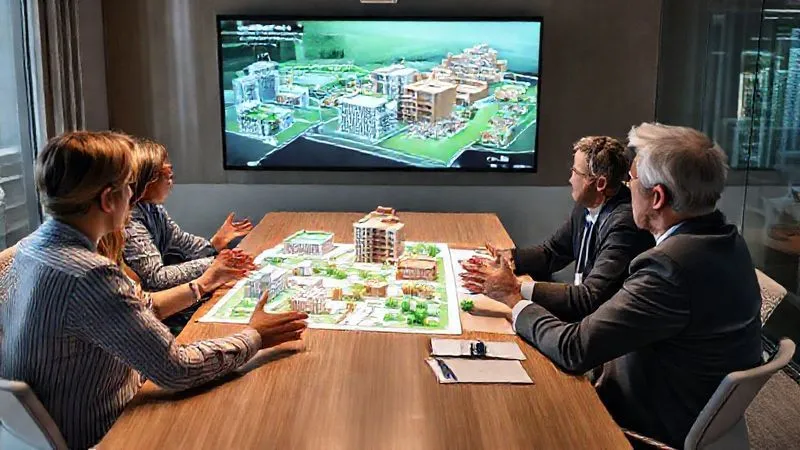
Strategy 4: Leverage Technology for Performance Monitoring and Data Management
In the digital age, relying solely on manual checks or anecdotal evidence for green building performance is a recipe for disaster. Technology offers powerful tools to continuously monitor, analyze, and manage the vast amounts of data generated by high-performance buildings. This data provides irrefutable evidence, which is invaluable in mitigating litigation risk for green building performance claims.
Building Management Systems (BMS)
Modern BMS are central to tracking a building's operational performance. They can monitor everything from energy consumption of HVAC systems and lighting to indoor air quality (IAQ) parameters like CO2 levels and temperature. Ensure your BMS is robust, properly calibrated, and capable of logging data systematically. This real-time data can proactively identify issues and serve as objective evidence if performance is questioned.
Digital Project Management Platforms
Platforms like Procore, Autodesk Construction Cloud, or custom solutions can centralize all project documentation. From design specifications and material submittals to daily logs and commissioning reports, having a single, searchable repository ensures that vital information is never lost and is easily accessible when needed. This transparency builds trust and streamlines dispute resolution.
Data Analytics for Performance Validation
Beyond raw data, employing data analytics tools can transform raw numbers into actionable insights. These tools can identify trends, flag anomalies, and compare actual performance against modeled predictions. If a performance claim arises, sophisticated analytics can help pinpoint the exact cause – be it equipment malfunction, user behavior, or a design flaw – providing a strong factual basis for your defense or for corrective action.
According to a recent study by Deloitte, digital transformation in construction, particularly in data management and analytics, is crucial for improving project outcomes and mitigating risks. Embracing these technologies is not just an efficiency play; it's a strategic legal safeguard.
Strategy 5: Engage Expert Legal and Technical Counsel Early and Often
This might seem self-serving coming from a lawyer, but I cannot overstate the importance of engaging specialized legal and technical expertise throughout your green building project, not just when a dispute flares up. Proactive engagement can prevent problems before they become costly lawsuits.
Specialized Legal Counsel
A lawyer well-versed in environmental law, green building certifications, and construction litigation can help draft robust contracts, advise on risk allocation, and guide you through the complex regulatory landscape. They can identify potential legal vulnerabilities in your project documentation, marketing claims, and performance guarantees long before a claim is filed.
Independent Commissioning Agents
An independent commissioning agent (CxA) is critical for verifying that green building systems are installed and operating as intended. Their reports provide objective, third-party validation of performance. If a dispute arises, their unbiased assessment can be a powerful piece of evidence, often more persuasive than reports generated by parties involved in the construction.
Dispute Resolution Specialists
Having access to mediators or arbitrators with specific expertise in green building technology and law can significantly improve the chances of a fair and efficient resolution outside of court. Their understanding of the technical nuances can help bridge the gap between legal arguments and building science realities.

Navigating Common Pitfalls in Green Building Claims
Even with the best strategies, certain common pitfalls can trip up green building projects. Being aware of these can help you better prepare and avoid them.
The "Greenwashing" Trap
Avoid making exaggerated or unsubstantiated claims about your building's environmental benefits. Regulators and consumers are increasingly scrutinizing marketing language. Ensure all green claims are backed by verifiable data and avoid vague terms that could be misinterpreted as guarantees.
Unrealistic Expectations
Sometimes, owners or tenants may have unrealistic expectations about what a green building can deliver. This often stems from a lack of understanding about the interplay between design, technology, and occupant behavior. Education and clear communication (as discussed in Strategy 3) are key here.
Lack of Clear Baselines
Without a clearly defined baseline for comparison, measuring performance becomes subjective and open to dispute. Always establish and document a specific baseline (e.g., a code-compliant building, a specific energy model) against which actual performance will be assessed.
- Always verify claims: Ensure all marketing and contractual statements about green performance are quantifiable and provable.
- Educate stakeholders: Proactively inform owners and occupants about the building's features and how their actions impact performance.
- Define your baseline: Never assume a baseline; explicitly state and agree upon it in contracts.
Frequently Asked Questions (FAQ)
Q: What's the biggest misconception about green building performance claims? The biggest misconception is often that a certification (like LEED Gold) automatically guarantees specific operational performance metrics (like energy savings). While certifications indicate design intent and adherence to certain standards, actual operational performance can vary greatly due to factors like occupant behavior, maintenance, and external environmental conditions. The certification process verifies design and construction, not necessarily long-term operational performance.
Q: How do evolving standards like LEED v4.1 impact litigation risk? Evolving standards introduce complexity. If a project started under an older version but is completed when a newer, more stringent version is active, there can be confusion or an expectation from the owner that the building should meet the latest standards. This highlights the need for explicit contractual language specifying the exact version of any standard being targeted and the implications of that choice. It also underscores the importance of staying current with industry changes.
Q: Is arbitration always better than litigation for these disputes? Not always, but often. Arbitration can offer several advantages: it's typically faster, less formal, and often allows for the selection of an arbitrator with specific expertise in green building or construction, which can lead to a more informed and equitable decision. However, it usually offers limited rights of appeal and can still be costly. The best choice depends on the specific circumstances of the dispute and should be determined with expert legal counsel.
Q: What role does insurance play in mitigating these risks? Insurance plays a crucial role. Standard professional liability (E&O) and general liability (GL) policies may not fully cover green building performance claims. Specialized "green building professional liability" or "sustainable construction insurance" policies are emerging that specifically address the unique risks associated with performance guarantees, certification failures, and other green claims. It's vital to review your policies with your broker and legal counsel to ensure adequate coverage.
Q: Can existing buildings undergoing green retrofits face similar risks? Absolutely. In fact, retrofits can introduce unique challenges. Measuring performance improvements in existing buildings often requires establishing robust pre-retrofit baselines, which can be difficult with older data. There's also the added complexity of integrating new green systems with existing infrastructure. All the strategies discussed – clear contracts, robust documentation, communication, technology, and expert counsel – are equally, if not more, vital for retrofit projects.
Key Takeaways and Final Thoughts
Mitigating litigation risk for green building performance claims requires a holistic, proactive approach that integrates legal foresight with technical precision and collaborative communication. It's not about avoiding green building; it's about building green intelligently and responsibly.
- Your contract is paramount: Define green performance in clear, measurable terms with explicit verification protocols.
- Document everything: From design intent to post-occupancy data, comprehensive records are your strongest evidence.
- Communicate proactively: Manage expectations and foster transparency among all stakeholders.
- Embrace technology: Leverage BMS and data analytics for continuous, objective performance monitoring.
- Engage experts early: Specialized legal and technical counsel can prevent issues before they escalate.
As the green building sector continues to grow, so too will the scrutiny on its performance. By embedding these strategies into your project lifecycle, you not only protect your investments and reputation but also contribute to the integrity and trustworthiness of the sustainable built environment. Building green is an endeavor worth pursuing, and with the right legal and operational frameworks in place, it can be done with confidence and peace of mind. For more information on advancing sustainable building practices, visit the U.S. Green Building Council (USGBC).
Recommended Reading
- Unlock Financial Freedom: How to Structure Personal Debt to Avoid Bankruptcy
- Unraveling the Legal Implications of Breach in Maritime Contracts: Your Ultimate Guide
- 5 Expert Strategies: Resolving Causation Disputes in Complex Injury Claims
- 7 Steps: How to Appeal an Adverse Regulatory Body Decision Effectively?
- Climate Disclosure Greenwashing: 7 Strategies to Protect Your Reputation




Comments
Leave a comment below. Your email will not be published. Required fields marked with *