


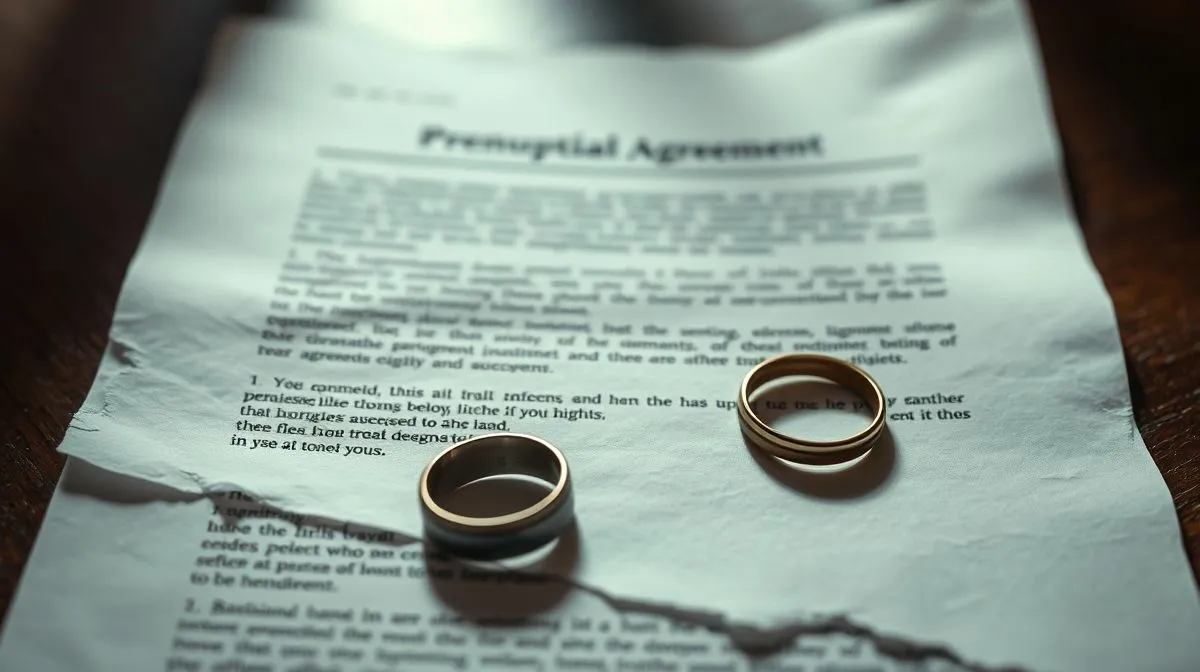
How to Overturn a Prenuptial Agreement After Marriage: Your Definitive Guide
Imagine a couple, deeply in love, standing at the altar, their future seemingly boundless. Years later, circumstances shift, and the once-distant concept of a prenuptial agreement becomes a central, often contentious, point of discussion. Perhaps you’re wondering: is it truly possible to overturn a prenuptial agreement after marriage?
For many, a prenuptial agreement feels like an unbreachable fortress, a legal document designed to withstand any challenge. Yet, life is unpredictable, and what seemed fair and reasonable at the time of signing might become profoundly unjust or unworkable years down the line. This perceived invincibility can leave individuals feeling trapped, believing they have no recourse against an agreement that no longer serves their best interests or reflects their current reality.
This comprehensive guide will demystify the process, revealing the specific legal grounds and procedural steps required to challenge and potentially invalidate a prenuptial agreement post-marriage. By the end of this reading, you will understand the complexities involved, the common pitfalls to avoid, and the strategic approaches necessary to navigate this challenging legal landscape successfully.
Understanding the Foundation: What is a Prenuptial Agreement?
Before delving into how to challenge a prenup, it's crucial to understand what it is and its intended purpose. A prenuptial agreement, often referred to as a ‘prenup’ or premarital agreement, is a contract entered into by prospective spouses before marriage. Its primary function is to define how assets and debts will be divided, and whether spousal support (alimony) will be paid, in the event of divorce or death. These agreements provide clarity and certainty, often protecting pre-marital assets or family inheritances.
Purpose and Scope of a Prenup
The core purpose of a prenup is to preemptively resolve financial matters that would otherwise be subject to state divorce laws. This can include specifying the division of:
- Real estate and property
- Investments and bank accounts
- Business interests
- Debts
- Inheritances and gifts
- Spousal support (alimony)
While prenups can cover a wide range of financial issues, they generally cannot dictate child custody, visitation, or child support, as these matters are always determined by the courts based on the child's best interests at the time of divorce.
Key Elements of a Valid Prenup
For a prenuptial agreement to be considered valid and enforceable, it typically must meet several criteria, which vary slightly by state. Most states have adopted, or based their laws on, the Uniform Premarital Agreement Act (UPAA). Key requirements often include:
- In Writing: The agreement must be in writing.
- Signed Voluntarily: Both parties must sign the agreement voluntarily, without coercion or duress.
- Full and Fair Disclosure: Both parties must make a full and fair disclosure of their assets and liabilities to each other.
- Independent Legal Counsel: While not always strictly required, both parties having the opportunity to consult with independent legal counsel significantly strengthens the agreement's enforceability.
- Not Unconscionable: The agreement must not be unconscionable (grossly unfair) at the time of its execution.
Understanding these foundational elements is critical because a challenge to a prenuptial agreement often hinges on proving that one or more of these requirements were not met at the time the agreement was signed.
The Core Challenge: Grounds for Overturning a Prenuptial Agreement
Challenging a prenuptial agreement is not a simple task. Courts generally uphold these contracts as they represent the intent of the parties. However, there are specific, legally recognized grounds upon which an agreement can be invalidated or deemed unenforceable. Proving these grounds requires compelling evidence and skilled legal representation.
Lack of Full and Fair Financial Disclosure
One of the most common and potent grounds for challenging a prenup is the lack of full and fair financial disclosure. Both parties are obligated to provide a complete and accurate accounting of their assets, debts, income, and liabilities before signing the agreement. If one spouse concealed significant assets, misrepresented their financial standing, or failed to disclose substantial debts, the agreement may be vulnerable to challenge. The court needs to be convinced that the undisclosed information was material and would have affected the other party's decision to sign the agreement.
Duress, Coercion, or Undue Influence
A prenuptial agreement must be signed voluntarily. If one party was subjected to duress, coercion, or undue influence, the agreement may be set aside. Duress involves threats or force that compel someone to sign against their will. Undue influence occurs when one party uses their power or authority over another to gain an unfair advantage, especially if the weaker party is vulnerable. Examples include signing the agreement on the eve of the wedding with no time for review, or threats to cancel the wedding if the prenup isn't signed. Courts look for evidence that the signing was not a free and informed choice.
Lack of Independent Legal Counsel
While not universally a mandatory requirement, the absence of independent legal counsel for one or both parties significantly weakens a prenup's enforceability. If one spouse had an attorney and the other did not, or if one attorney represented both parties (a clear conflict of interest), it could be argued that the unrepresented party did not fully understand the legal implications or their rights. The opportunity to consult with an independent attorney ensures both parties are fully informed before signing.
Unconscionability at the Time of Execution
An agreement is considered unconscionable if it is so one-sided and unfair that it 'shocks the conscience' of the court at the time it was signed. This is a high legal bar to meet. It's not enough for the agreement to simply be unfavorable to one party; it must be demonstrably oppressive or unreasonably harsh. Courts examine the circumstances surrounding the agreement's creation, including the bargaining power of each party, their financial sophistication, and whether there was any deception or unfair surprise.
Unconscionability at the Time of Enforcement (Changed Circumstances)
In some jurisdictions, a prenup can be challenged if its enforcement would lead to unconscionable hardship at the time of divorce, even if it was fair when signed. This typically applies in cases where there has been a drastic and unforeseen change in circumstances that makes the agreement's terms grossly unfair. For example, if one spouse became permanently disabled and unable to work, and the prenup entirely waived spousal support, a court might find enforcing that waiver to be unconscionable. This is a more challenging argument than unconscionability at execution and is not recognized in all states.
Fraud or Misrepresentation
If one party intentionally made false statements or concealed material facts to induce the other party to sign the prenup, it constitutes fraud. Misrepresentation, even if unintentional, can also be a ground if it significantly impacted the agreement. Proving fraud requires demonstrating intent to deceive and reliance on that deception by the other party.
Procedural Impropriety
This category encompasses various issues related to the execution process itself. It could involve:
- Insufficient Time to Review: Signing the agreement days or hours before the wedding, leaving no reasonable time for review or legal consultation.
- Improper Execution: Failure to follow proper legal formalities, such as witnessing or notarization, if required by state law.
- Lack of Understanding: If one party did not understand the language of the agreement or its legal implications due to a language barrier or cognitive impairment.
Each of these grounds requires specific evidence and a compelling legal argument. The strength of your case will depend heavily on the unique facts and circumstances surrounding the creation of your prenuptial agreement.
The Legal Process: Steps to Challenge a Prenuptial Agreement After Marriage
Successfully challenging a prenuptial agreement is a complex legal undertaking that requires a strategic approach and meticulous execution. It's not a DIY project; legal counsel is essential. Here's a general overview of the steps involved:
1. Initial Consultation with a Family Law Attorney
The very first step is to consult with an experienced family law attorney specializing in prenuptial agreements and contract disputes. An attorney will assess the viability of your case, identify potential grounds for challenge, and explain the legal process, potential costs, and likely outcomes. They will help you understand if and how to overturn a prenuptial agreement after marriage in your specific jurisdiction.
2. Gathering Evidence and Documentation
Once you decide to proceed, your attorney will guide you in gathering all relevant documentation. This is a critical phase. Evidence might include:
- Copies of the prenuptial agreement itself.
- Financial records from the time of signing (bank statements, tax returns, property deeds, business valuations).
- Emails, texts, or other communications related to the negotiation or signing of the prenup.
- Witness testimonies (e.g., from friends, family, or former advisors) regarding coercion or lack of disclosure.
- Medical records if cognitive impairment or duress is alleged.
The more thorough and compelling your evidence, the stronger your case will be.
3. Filing a Petition to Invalidate
During the divorce proceedings, your attorney will file a motion or petition with the court specifically requesting that the prenuptial agreement be declared invalid or unenforceable. This petition will outline the specific grounds for your challenge (e.g., fraud, duress, unconscionability) and present the initial arguments for setting aside the agreement.
4. Discovery Phase
This is a formal legal process where both sides exchange information and evidence. It can involve:
- Interrogatories: Written questions that must be answered under oath.
- Requests for Production of Documents: Demands for specific financial or other records.
- Depositions: Out-of-court sworn testimonies taken from parties and witnesses.
The discovery phase is crucial for uncovering any hidden assets or evidence of coercion or lack of disclosure that might support your claim.
5. Negotiation and Mediation
Even when challenging a prenup, there's often an opportunity for negotiation or mediation. Sometimes, rather than risking a court battle, the other party may agree to modify certain terms of the agreement or reach a new settlement that is more equitable. Mediation can be a less adversarial and often less costly alternative to litigation.
6. Litigation and Court Decision
If a settlement cannot be reached, the matter will proceed to trial. Both attorneys will present their arguments, evidence, and witness testimonies to the judge. The judge will then make a ruling on the validity and enforceability of the prenuptial agreement. This decision will significantly impact the division of assets and spousal support in your divorce. The court's decision is binding, though appeals may be possible.
This process can be lengthy and emotionally draining, underscoring the importance of having a knowledgeable and supportive legal team by your side.
Crucial Considerations and Common Pitfalls
Challenging a prenuptial agreement is fraught with complexities. Being aware of key considerations and common mistakes can help you navigate the process more effectively.
The Burden of Proof
The party seeking to invalidate the prenuptial agreement bears the burden of proof. This means you must present sufficient evidence to convince the court that one or more of the legal grounds for invalidation exist. This is a significant hurdle, as courts generally presume prenups are valid.
State-Specific Laws and Variations
Prenuptial agreement laws vary significantly from state to state. While many states have adopted the UPAA, there are nuances in how each state interprets and applies its provisions. For instance, some states are more lenient regarding disclosure requirements, while others have stricter interpretations of unconscionability. An attorney familiar with your state's specific laws is indispensable. You can find more information on state-specific legal resources through organizations like the American Bar Association's Family Law Section.
Emotional and Financial Costs
Litigating a prenuptial agreement can be emotionally taxing and financially expensive. The process is often adversarial, requiring extensive legal work, discovery, and potentially expert witnesses. It's crucial to weigh the potential benefits of overturning the agreement against the anticipated costs and emotional toll.
The Importance of Timing
The timing of your challenge can be critical. Delaying a challenge could be interpreted as tacit acceptance of the agreement's terms. Furthermore, the window for challenging certain aspects, like fraud, might be limited by statutes of limitations.
Avoiding Common Mistakes
- Not Consulting an Attorney Early: Delaying legal advice can jeopardize your case.
- Lack of Evidence: Without compelling documentation, your claims will be difficult to prove.
- Emotional Decisions: Allowing emotions to dictate strategy rather than sound legal advice.
- Concealing Information: Failing to be fully transparent with your own attorney.
- Underestimating the Other Side: Assuming the other party won't vigorously defend the agreement.
Beyond Overturning: Alternatives and Postnuptial Agreements
Sometimes, a full invalidation of the prenuptial agreement isn't the only, or even the best, path forward. There are alternative strategies that can address the inequities without the full battle of a court challenge.
Renegotiation and Amending the Prenup
If both parties are willing, it is possible to renegotiate and amend the existing prenuptial agreement. This often occurs when circumstances have significantly changed, and both spouses recognize that the original terms are no longer fair or practical. A new agreement, or an amendment to the existing one, can be drafted and signed, effectively replacing or modifying the original terms. This requires mutual consent and legal assistance for both parties to ensure enforceability.
Postnuptial Agreements
A postnuptial agreement is similar to a prenup but is entered into after the marriage has already taken place. If the goal is not to invalidate the original prenup entirely but to adjust its terms or address new financial realities, a postnuptial agreement can serve this purpose. For example, if one spouse started a successful business after marriage, a postnup could clarify how that business would be treated in a divorce, potentially superseding relevant clauses in the prenup. Like prenups, postnuptial agreements must meet strict legal requirements to be enforceable.
Mediation and Collaborative Law
Even if a full challenge is pursued, mediation or collaborative law can be invaluable tools. These processes allow parties to discuss and resolve disputes in a less adversarial setting, often with the help of a neutral third party (a mediator) or a team of professionals (in collaborative law). This approach can lead to creative solutions that benefit both parties, potentially avoiding a protracted and expensive court battle over the prenup's validity. It fosters a more respectful dissolution process, which can be particularly beneficial for co-parenting relationships.
Case Studies and Real-World Examples (Illustrative)
While every case is unique, looking at illustrative scenarios can provide insight into how courts approach challenges to prenuptial agreements.
The Hidden Fortune Case
In one notable (anonymized) case, a spouse successfully challenged a prenup by proving that their partner had intentionally concealed a significant overseas investment portfolio worth millions. The court found that the lack of full disclosure rendered the agreement unconscionable at the time of execution, as the challenging spouse would never have agreed to the terms had they known the true extent of their partner's wealth. The prenup was invalidated, leading to an equitable distribution of assets.
The Last-Minute Signature
Another common scenario involves agreements signed under duress. A case saw a prenup overturned where it was presented to one party just hours before the wedding ceremony, with the threat that the wedding would be called off if the agreement wasn't signed immediately. The court determined that this created an environment of coercion and undue influence, stripping the signing of its voluntary nature. This highlights the importance of adequate time for review and legal consultation.
The Changed Circumstances Argument (Limited Success)
While challenging, some cases have seen limited success with the 'unconscionable at the time of enforcement' argument. For example, a spouse who waived all alimony in a prenup later developed a severe, debilitating illness that prevented them from working. A court, in a state that allows for this ground, might modify the alimony waiver to prevent the spouse from becoming a public charge, even if the prenup was valid when signed. However, these are often partial successes, and the burden of proof for such a drastic change is extremely high.
These examples underscore that the specific facts, the strength of the evidence, and the legal jurisdiction are paramount in determining the outcome of a prenup challenge.
Frequently Asked Questions (FAQ)
Can a prenup be overturned if it was signed years ago? Yes, the age of the prenup itself doesn't prevent a challenge. The grounds for overturning (e.g., fraud, duress, unconscionability at signing) relate to the circumstances at the time of execution, regardless of how long ago that was. However, the passage of time can make gathering evidence more difficult.
What is "unconscionable" in the context of a prenup? Unconscionable means the agreement is so grossly unfair, one-sided, or oppressive that it 'shocks the conscience' of the court. It's a high legal standard, meaning it's not just a bad deal, but an agreement that no reasonable person would enter into, and no honest person would accept.
Is it possible to overturn a prenup without going to court? Directly 'overturning' it typically requires a court order. However, parties can mutually agree to modify, amend, or even revoke a prenuptial agreement through a new written agreement (often a postnuptial agreement), which would negate the need for a court challenge. Mediation can facilitate such an agreement.
How long does it take to challenge a prenuptial agreement? The timeline can vary significantly depending on the complexity of the case, the amount of evidence, the cooperativeness of the parties, and court schedules. It can range from several months to a year or more, especially if it proceeds to a full trial.
What role does independent legal counsel play? Independent legal counsel ensures that each party fully understands the terms, implications, and potential consequences of the prenuptial agreement. It helps prevent claims of duress, lack of understanding, or unconscionability, making the agreement much more robust and difficult to challenge.
Recommended Reading
- Protect Your Savings: How to Shield Assets From Nursing Home Costs
- Guardians of Genius: How to Protect Student Inventions in Schools
- Unlock Protection: How to Enforce Digital Content Rights Online Effectively
- Mastering the Maze: Constitutional Procedures for Federal Lawmaking Unveiled
- E-Commerce Data Breach Liability: Protecting Your Small Biz
Conclusion
The journey to understand how to overturn a prenuptial agreement after marriage reveals a landscape of legal complexities, specific grounds, and meticulous procedural steps. While challenging a prenup is undeniably difficult, it is not impossible. Success hinges on demonstrating that the agreement was not entered into fairly or freely, whether due to lack of disclosure, duress, unconscionability, or other procedural flaws at the time of its creation.
Ultimately, the decision to challenge a prenuptial agreement is a significant one, with substantial emotional and financial implications. It demands a clear understanding of your legal rights, a robust evidence-gathering process, and the strategic guidance of a seasoned family law attorney. By arming yourself with knowledge and expert legal support, you can navigate this intricate process with confidence, seeking a resolution that truly reflects fairness and justice in your post-marriage reality.





Comments
Leave a comment below. Your email will not be published. Required fields marked with *