


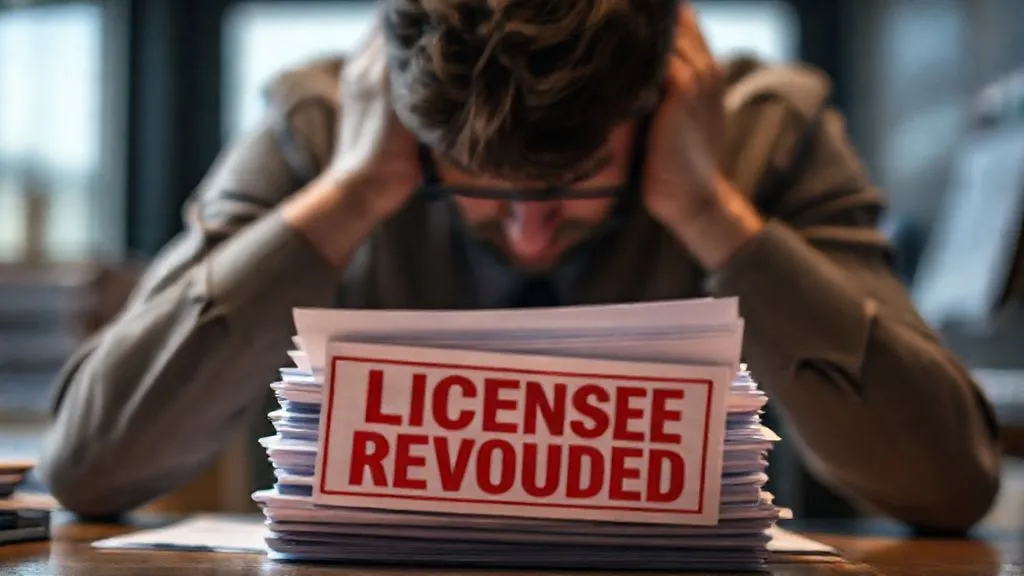
How to Prevent License Revocation After Administrative Non-Compliance?
For over two decades in the intricate world of administrative law and compliance enforcement, I've witnessed firsthand the devastating impact that administrative non-compliance can have on businesses and professionals. It’s a scenario no one wants to face: the threat of license revocation, which can instantly halt operations, tarnish reputations, and lead to significant financial ruin. The stakes couldn’t be higher, and the path to resolution often feels like navigating a dense, unfamiliar legal jungle.
The problem isn't just the initial violation; it's the cascade of consequences that follows, culminating in potential license revocation—a professional death sentence for many. This isn't just about fines or minor penalties; it’s about losing the very authorization that allows you to operate. Many business owners and professionals, caught off guard, make critical mistakes in the immediate aftermath, unknowingly jeopardizing their chances of recovery. The fear, confusion, and lack of a clear strategy often lead to missteps that empower regulatory agencies rather than protect the licensee.
This comprehensive guide is designed to equip you with the expert insights and actionable frameworks necessary to navigate the treacherous waters of administrative non-compliance. You'll learn not just what to do, but *how* to do it, from immediate response strategies to long-term proactive compliance measures. My goal is to empower you with the knowledge to prevent license revocation after administrative non-compliance, drawing on real-world scenarios and battle-tested strategies to safeguard your professional future.
Understanding the Administrative Enforcement Landscape
Before we delve into prevention, it’s crucial to understand the arena you’re operating in. Administrative law governs the activities of administrative agencies of government. These agencies—be they state licensing boards, environmental protection agencies, health departments, or financial regulators—are granted significant power to create, interpret, and enforce regulations pertinent to their specific domains. Their enforcement actions are not merely suggestions; they carry the full weight of the law, and their decisions can directly impact your ability to conduct business or practice your profession.
The powers of these agencies include investigation, adjudication (holding hearings), and rulemaking. When an agency identifies a potential violation, they initiate an enforcement process that can range from informal warnings to formal charges, culminating in potential penalties like fines, probation, suspension, or ultimately, license revocation. Understanding their process, their mandates, and their typical responses to various types of non-compliance is the first step toward crafting an effective defense.
The Spectrum of Non-Compliance
Non-compliance isn't a monolithic concept; it exists on a spectrum, and the agency's response often correlates with the perceived severity and impact of the violation. Understanding where your alleged non-compliance falls can help anticipate the agency's posture and inform your strategy.
- Minor Violations: These might be procedural errors, missed deadlines for non-critical filings, or slight deviations from less significant rules. Often, these result in warnings, small fines, or requirements for immediate correction.
- Moderate Violations: These typically involve more substantive breaches of regulations that could pose a risk, but perhaps haven't caused significant harm. Examples include inadequate record-keeping, minor safety infractions, or failure to implement certain required policies. These can lead to larger fines, probation, or temporary suspension.
- Severe Violations: These are grave breaches that involve significant harm, public endangerment, fraud, repeated non-compliance, or intentional disregard for regulations. These are the violations most likely to trigger license suspension or outright revocation.
In my experience, the administrative enforcement process is often less about punitive action and more about ensuring future compliance and protecting the public interest. However, if not handled strategically, even minor issues can escalate rapidly. Proactive engagement and demonstrating a genuine commitment to remediation are always more effective than passive resistance.
A critical initial step, often overlooked, is to analyze the specific regulation allegedly violated. Is it clear? Is it applicable? Were you given adequate notice? These questions form the bedrock of any defense. Knowing the administrative rules of procedure for the specific agency involved is also paramount, as they dictate timelines, acceptable evidence, and appeal processes.

Immediate Action: What to Do When Non-Compliance is Identified
The moments immediately following the identification of administrative non-compliance are arguably the most critical. Panic is a natural reaction, but it’s also the enemy of effective strategy. Your initial response can significantly influence the agency's perception of your willingness to comply and, ultimately, the severity of the outcome. This is where a clear, decisive action plan becomes your most valuable asset.
Step 1: Acknowledge and Assess
- Do Not Ignore: The absolute worst thing you can do is ignore official communications from a regulatory agency. This signals disrespect, non-cooperation, and can escalate the situation dramatically.
- Identify the Allegation: Carefully read all notices, letters, or charges. Understand precisely what regulation is alleged to have been violated, the date of the alleged violation, and any specific facts cited by the agency.
- Internal Fact-Finding: Conduct an immediate, objective internal review. Gather all relevant documents, communications, and data related to the alleged non-compliance. Interview employees involved, but do so carefully and perhaps with legal counsel present to preserve privilege. Determine the scope, duration, and potential impact of the non-compliance.
Step 2: Cease and Desist (If Applicable)
- Stop the Offending Activity: If the alleged non-compliance is an ongoing activity or practice, take immediate steps to cease it. This demonstrates good faith and can prevent further violations or harm, which agencies view favorably.
- Mitigate Harm: If the non-compliance has caused or could cause harm (e.g., environmental damage, consumer injury), take immediate, reasonable steps to mitigate that harm. Document these actions thoroughly.
Step 3: Secure Legal Counsel Specializing in Administrative Law
- Why it’s Crucial: This is not the time for DIY legal work. Administrative law is a highly specialized field. An attorney experienced in navigating specific agency regulations and procedures can mean the difference between license preservation and revocation. They understand the nuances of agency enforcement, the administrative hearing process, and strategies for negotiation.
- What to Look For: Seek an attorney with a proven track record in administrative law defense, ideally with experience before the specific agency involved in your case. They should be able to explain the process clearly, outline potential outcomes, and develop a robust defense strategy.
- Early Engagement: Engage counsel as early as possible. They can advise on internal investigations, manage communications with the agency, and ensure you don't inadvertently make self-incriminating statements or waive important rights.
| Action Step | Timeline | Impact on Case |
|---|---|---|
| Identify Violation | Immediate (within hours) | Crucial for initial strategy |
| Cease Activity | Immediate | Demonstrates good faith, mitigates ongoing harm |
| Engage Legal Counsel | Within 24-48 hours | Professional guidance, protects rights |
| Preserve Evidence | Ongoing | Foundation for defense, establishes facts |
| Notify Insurer (if applicable) | As per policy | Potential coverage for defense costs |
Building a Robust Defense: Preparing for Agency Interaction
Once the immediate crisis is addressed, the focus shifts to building a comprehensive defense. This phase is about gathering evidence, understanding the root cause of the non-compliance, and preparing to present your case effectively to the agency. Your objective is to demonstrate that you understand the gravity of the situation, are committed to rectifying it, and have a credible plan to prevent recurrence.
Document Everything Meticulously
Documentation is the backbone of any administrative defense. Agencies operate on records, and a well-organized, comprehensive body of evidence can be your strongest ally.
- Chronological Record: Maintain a detailed, chronological record of all communications with the agency, internal actions taken, and evidence gathered.
- Evidence Preservation: This includes emails, internal memos, policies, training records, inspection reports, financial statements, and any other document that can shed light on the alleged non-compliance or your efforts to address it.
- Witness Statements: If applicable, obtain written statements from employees or other individuals who have relevant information. Ensure these are factual and accurate.
Internal Investigation and Root Cause Analysis
Simply fixing the immediate problem isn't enough; agencies want assurance that the issue won't recur. This requires a deeper dive into *why* the non-compliance occurred in the first place.
- Identify Contributing Factors: Was it a lack of training? An outdated policy? Systemic oversight? Human error? Resource constraints? Be honest and thorough.
- Develop Corrective Measures: Based on the root cause analysis, outline specific, measurable, achievable, relevant, and time-bound (SMART) corrective actions. This could involve revising policies, implementing new training programs, upgrading equipment, or restructuring internal processes.
Case Study: How Apex Solutions Navigated a Data Breach Penalty
Apex Solutions, a mid-sized IT firm, faced potential license suspension after a data breach exposed client information, constituting administrative non-compliance under data privacy regulations. Instead of denying culpability, their legal counsel advised a robust internal investigation. They identified that the breach stemmed from an unpatched legacy system and a lack of specific employee training on phishing attacks.
Within weeks, Apex Solutions ceased operations on the vulnerable system, engaged a cybersecurity firm for a forensic audit, and developed a comprehensive corrective action plan (CAP). The CAP included immediate patching, mandatory weekly cybersecurity training for all staff, and a complete overhaul of their data retention policies. They presented this detailed plan, along with evidence of immediate remediation and a commitment to ongoing audits, to the regulatory agency. The agency, impressed by their transparent and proactive approach, ultimately levied a significant but manageable fine instead of license suspension, allowing Apex to continue operations under strict probationary terms.
As this case illustrates, transparency, thoroughness, and a clear commitment to remediation are powerful tools. Agencies are often more interested in compliance and public protection than in simply shutting down an operation.
Negotiation and Remediation: Engaging with the Agency
With a robust defense prepared, the next phase involves direct engagement with the regulatory agency. This is where skilled legal counsel truly shines, as negotiation and the proposal of a comprehensive corrective action plan (CAP) can often prevent the escalation to a formal hearing and, critically, avoid license revocation.
Proposing a Corrective Action Plan (CAP)
A well-crafted CAP is more than just an apology; it's a strategic document that demonstrates your commitment to resolving the non-compliance and preventing future occurrences. It should be presented proactively, ideally before formal charges are filed or as part of an initial response.
- Specific Actions: Clearly outline the specific steps you have taken or will take to rectify the violation.
- Timelines: Provide realistic timelines for the implementation of each action.
- Responsible Parties: Designate individuals or departments responsible for overseeing and completing each action.
- Monitoring & Reporting: Describe how you will monitor compliance with the CAP and how you will report progress to the agency. This might involve regular reports, audits, or site visits.
- Preventative Measures: Emphasize how the CAP addresses the root causes to prevent recurrence.
Seeking Informal Resolution and Settlement
Many administrative cases are resolved through informal conferences or settlement negotiations. Agencies often prefer to avoid the time and expense of formal hearings if they believe compliance can be achieved through other means.
- Informal Conferences: These allow you and your counsel to meet with agency representatives to discuss the allegations, present your defense, and explore potential resolutions. This is an opportunity to show your commitment to compliance and build rapport.
- Settlement Agreements: These are legally binding contracts between you and the agency. They typically involve an admission of certain facts (but not necessarily guilt for the most severe charges), an agreement to implement a CAP, and often a reduced penalty (e.g., a fine instead of suspension, or probation instead of revocation).
Understanding Consent Orders and Stipulations
If a settlement is reached, it will often be formalized through a Consent Order or Stipulation. These documents are legally binding and typically become part of your public record.
- Consent Order: This is an order issued by the agency with your consent, outlining the agreed-upon facts, violations, corrective actions, and penalties.
- Stipulation: Similar to a consent order, a stipulation is an agreement between the parties regarding facts or issues, often leading to a final order.
It's crucial to understand every clause of these documents, as non-compliance with a Consent Order can lead to even more severe penalties, potentially including immediate license revocation without further hearing. Your legal counsel will be indispensable in reviewing and negotiating these terms to protect your interests.

The Formal Hearing: What to Expect and How to Prepare
If informal negotiations fail or if the alleged non-compliance is sufficiently severe, the agency may proceed to a formal administrative hearing. This is akin to a mini-trial, though often less formal than court proceedings, but with significant legal implications. It’s a critical juncture where your ability to prevent license revocation will be directly tested.
Pre-Hearing Procedures: Discovery and Motions
Just like in civil litigation, there's a pre-hearing phase where both sides prepare their cases.
- Discovery: This involves exchanging information and evidence. Your attorney will likely request documents from the agency (e.g., investigative reports, witness statements) and may depose agency witnesses. The agency will also seek information from you.
- Motions: Your counsel may file pre-hearing motions, such as motions to dismiss certain charges, motions to compel discovery, or motions to limit evidence. These can shape the scope of the hearing.
Presenting Your Case: Evidence and Witnesses
At the hearing, you will have the opportunity to present your defense. This involves introducing evidence and calling witnesses.
- Documentary Evidence: This includes all the meticulously gathered documents, policies, training records, and communications that support your defense or demonstrate remediation efforts.
- Witness Testimony: This can include your own testimony, testimony from employees, and crucially, expert witnesses. An expert witness (e.g., an industry specialist, a compliance auditor, a forensic accountant) can provide specialized knowledge to explain complex issues, challenge agency findings, or demonstrate the effectiveness of your corrective actions.
- Cross-Examination: Agency witnesses will be subject to cross-examination by your attorney, and your witnesses will be cross-examined by the agency's counsel. Preparation for testimony is paramount.
The Role of the Administrative Law Judge (ALJ)
The hearing is typically presided over by an Administrative Law Judge (ALJ) or a hearing officer. The ALJ acts as an impartial arbiter, much like a judge in a court of law. They will:
- Oversee the proceedings, ensuring fairness.
- Rule on objections and motions.
- Make findings of fact and conclusions of law.
- Issue a recommended decision or, in some jurisdictions, a final order.
Understanding the specific rules of procedure for hearings before your particular agency, such as those outlined in the Administrative Procedure Act (APA) or state equivalents, is crucial. Your legal counsel will be intimately familiar with these rules.

Post-Decision Strategies: Appeals and Reconsideration
Even if the initial decision is unfavorable, the fight to prevent license revocation isn't necessarily over. Administrative law provides avenues for challenging adverse decisions, offering a crucial lifeline for licensees.
Understanding Your Appeal Rights
Most administrative decisions are subject to review. The process typically involves:
- Agency Review: The initial decision by an ALJ may be a recommendation that is then reviewed by the full agency board or commission. You typically have the right to submit written exceptions or arguments to this reviewing body.
- Judicial Review: If the agency's final decision is still adverse, you generally have the right to seek judicial review in a state or federal court. The court's role is not to retry the case but to determine if the agency's decision was arbitrary, capricious, an abuse of discretion, or not supported by substantial evidence. This is a complex area, and your legal counsel will advise on the likelihood of success and the specific procedures.
Filing for Reconsideration or Judicial Review
The timelines for filing appeals or requests for reconsideration are often very strict and unforgiving. Missing a deadline can irrevocably waive your right to challenge the decision.
- Motion for Reconsideration: This is typically filed with the agency itself, asking them to reconsider their decision based on errors of fact or law, or newly discovered evidence.
- Petition for Judicial Review: This is filed in the appropriate court. It requires a detailed legal brief arguing why the agency's decision should be overturned or remanded for further proceedings.
As noted by legal scholars in administrative law, the standard of review for agency decisions is often deferential, meaning courts typically give agencies considerable leeway unless their actions were clearly outside the bounds of their authority or highly unreasonable. For further reading on the intricacies of judicial review in administrative law, consider resources like the Administrative Law Review.
Reinstatement Procedures (If Revoked)
If your license is ultimately revoked, all hope is not lost, but the path to reinstatement is arduous and often lengthy. Many agencies have specific procedures for applying for reinstatement, which typically require:
- A significant waiting period (e.g., 1-5 years).
- Demonstration of complete rehabilitation.
- Evidence of having addressed all the issues that led to the revocation (e.g., additional education, therapy, financial restitution, new compliance systems).
- A new application process, often including another hearing to prove fitness for licensure.
Reinstatement is never guaranteed and often requires a compelling showing of changed circumstances and a renewed commitment to ethical and compliant practice. This is why preventing license revocation in the first place is always the superior strategy.
Proactive Compliance: The Best Defense is a Good Offense
While the focus of this article has been on responding to existing non-compliance, the ultimate goal for any professional or business is to prevent license revocation through robust, proactive compliance. An ounce of prevention is truly worth a pound of cure, especially when your license is on the line.
Establishing a Culture of Compliance
Compliance shouldn't be seen as a burden but as an integral part of your operational excellence. It starts at the top and permeates through every level of your organization.
- Leadership Commitment: Senior management must visibly commit to compliance, setting the tone for the entire organization.
- Clear Policies and Procedures: Develop clear, concise, and accessible policies and procedures that reflect all relevant administrative regulations. These should be regularly reviewed and updated.
- Open Communication: Foster an environment where employees feel comfortable raising compliance concerns without fear of reprisal.
Regular Audits and Risk Assessments
Don't wait for an agency to find your weaknesses. Proactively identify and address them.
- Internal Audits: Conduct regular internal audits of your operations to ensure adherence to policies and regulations.
- External Audits: Consider engaging independent third-party auditors to provide an objective assessment of your compliance program. Their findings can offer invaluable insights and lend credibility to your efforts.
- Risk Assessments: Periodically assess your operational risks, identifying areas where non-compliance is most likely to occur and prioritizing resources to mitigate those risks. Tools like those discussed by organizations such as the Deloitte Center for Regulatory Strategy can be highly beneficial.
Employee Training and Education
Your employees are on the front lines of compliance. They need to understand the rules and their role in upholding them.
- Comprehensive Onboarding: Integrate compliance training into the onboarding process for all new employees.
- Ongoing Training: Provide regular, mandatory training sessions for all staff, tailored to their specific roles and responsibilities. This should cover relevant regulations, company policies, and the consequences of non-compliance.
- Training Documentation: Maintain meticulous records of all training provided, including attendance, content covered, and assessment results. This documentation is invaluable if an agency ever questions your commitment to compliance.
As I've always preached, prevention is not just cheaper than cure; it's also less stressful, less reputation-damaging, and ultimately, a more sustainable way to operate any business or profession.
By embedding compliance into the fabric of your organization, you not only reduce the risk of administrative non-compliance but also build a more resilient, trustworthy, and successful enterprise. This proactive stance is the ultimate strategy to prevent license revocation after administrative non-compliance, ensuring your ability to continue serving your clients and community.

Frequently Asked Questions (FAQ)
Q: What exactly defines "administrative non-compliance"? Administrative non-compliance refers to the failure to adhere to the rules, regulations, statutes, or orders issued by a governmental administrative agency. This can range from failing to file required reports on time, violating specific operational standards (e.g., health and safety, environmental), misrepresenting information, or engaging in professional misconduct that falls under the purview of a licensing board. The specific definition is always tied to the particular agency and the regulations it enforces.
Q: Can I represent myself in an administrative hearing? While you technically have the right to represent yourself, it is almost universally ill-advised. Administrative hearings, despite being less formal than court trials, are still complex legal proceedings. They involve specific rules of evidence, procedural requirements, and often highly specialized regulatory knowledge. An experienced administrative law attorney understands these nuances, can effectively cross-examine agency witnesses, present your case compellingly, and negotiate favorable settlements. The risk of inadvertently damaging your case by representing yourself is substantial.
Q: How long does the license revocation process typically take? The duration of the license revocation process varies significantly depending on the complexity of the case, the specific agency involved, and the jurisdiction. A straightforward case with a quick settlement might resolve in a few weeks or months. However, if the case proceeds to a formal hearing, appeals, and potential judicial review, it can easily stretch for a year or more. During this time, the uncertainty and legal costs can be immense, underscoring the importance of early and strategic intervention.
Q: What if the non-compliance was unintentional or a genuine mistake? Unintentional non-compliance or a genuine mistake does not automatically absolve you of responsibility, but it can be a significant mitigating factor. Agencies often consider intent when determining penalties. Demonstrating that the non-compliance was an isolated incident, not malicious, and that you've implemented robust measures to prevent recurrence can significantly influence the agency's decision towards a less severe outcome, such as a fine or probation instead of revocation. Full transparency and a credible corrective action plan are essential in such scenarios.
Q: Is it possible to get a revoked license reinstated? Yes, but it is an exceptionally challenging process. Reinstatement is not automatic and is typically only considered after a significant period (often years) has passed since the revocation. You will generally need to demonstrate complete rehabilitation, provide compelling evidence that all issues leading to the revocation have been thoroughly addressed, and often undergo a new application and hearing process. Each agency has its specific reinstatement procedures, which are usually stringent and require a strong showing of renewed fitness for licensure.
Key Takeaways and Final Thoughts
Navigating administrative non-compliance and preventing license revocation is a multi-faceted challenge that demands a strategic, informed, and proactive approach. It's a journey that can feel isolating and overwhelming, but with the right guidance, it's a battle you can win.
- Act Immediately and Strategically: Your initial response sets the tone. Do not delay, and do not ignore official communications.
- Secure Expert Legal Counsel: This is non-negotiable. An administrative law attorney is your most valuable asset in understanding agency procedures and building a robust defense.
- Document Everything: Meticulous record-keeping provides the evidence needed to support your case and demonstrate your commitment to compliance.
- Propose a Robust Corrective Action Plan: Show the agency you understand the problem and have a concrete, actionable plan to fix it and prevent recurrence.
- Embrace Proactive Compliance: The best defense against license revocation is a strong, embedded culture of compliance that identifies and mitigates risks before they escalate.
Remember, the goal of administrative agencies is primarily to protect the public and ensure compliance. By demonstrating your commitment to these principles through your actions, your documentation, and your strategic engagement, you significantly enhance your chances of preserving your license and continuing your professional journey. Stay vigilant, stay informed, and never underestimate the power of a well-executed compliance strategy.
Recommended Reading
- 5 Proven Steps: Resolve International Cargo Damage Disputes Quickly
- Unvested Stock Options in Divorce: 5 Expert Strategies for Fair Valuation
- Wrongful Termination in California: Your Ultimate Guide
- Maximize Severance: 7 Executive Strategies After Unexpected Termination
- Navigating Hostile Takeovers: 5 Critical Challenges for Corporate Secretaries




Comments
Leave a comment below. Your email will not be published. Required fields marked with *