



How to prove causation in complex ecological contamination lawsuits?
For over two decades navigating the intricate currents of environmental law, I've witnessed firsthand the monumental challenge legal teams face when attempting to prove causation in complex ecological contamination lawsuits. It's not merely about identifying a contaminant; it's about drawing an irrefutable line from a specific source to a specific harm, often across vast landscapes and over extended periods.
The core problem lies in the inherent complexity of ecosystems, the latency of environmental damage, and the often-diffuse nature of pollution. Plaintiffs and their legal counsel grapple with scientific uncertainty, the 'background noise' of natural variability, and sophisticated defense strategies designed to sow doubt. This isn't just a legal hurdle; it's a scientific and strategic Everest that demands a multidisciplinary approach.
In this definitive guide, I will share my expert insights and provide you with a robust framework, actionable steps, and real-world strategies to methodically build a compelling case for causation. We'll explore how to leverage cutting-edge science, select the right experts, and construct a narrative that bridges the gap between scientific evidence and legal proof, ultimately arming you with the tools to succeed in even the most challenging environmental litigation.
Understanding the "Causation Conundrum" in Environmental Law
At its heart, proving causation in environmental law requires demonstrating a direct link between a defendant's actions (or inactions) and the ecological harm suffered. Unlike a simple car accident where causation is often clear, ecological contamination cases are fraught with variables. You're not just proving a contaminant exists; you're proving that this specific contaminant, from this specific source, caused this specific damage to this specific ecosystem.
The legal standard for causation typically involves two components: actual cause (or 'but-for' causation) and proximate cause (or legal cause). Actual cause asks whether the harm would have occurred 'but for' the defendant's conduct. Proximate cause considers whether the harm was a foreseeable consequence of the defendant's actions. Both are critical, and both present unique challenges in the ecological context.
The Burden of Proof: A High Bar
The burden of proof rests squarely on the plaintiff, and it is a significantly high bar. You must move beyond mere correlation to demonstrate true causation. This often means disproving alternative theories of harm, accounting for natural ecological fluctuations, and presenting evidence that withstands rigorous scientific and legal scrutiny. Without a meticulously constructed case, even strong suspicions of wrongdoing can crumble under cross-examination.
Expert Insight: In environmental law, we often deal with probabilistic causation rather than absolute certainty. The legal system, however, demands a 'preponderance of the evidence' or even 'beyond a reasonable doubt' in some contexts. Bridging this gap requires not just data, but the ability to articulate scientific probabilities in a legally persuasive manner.
The Foundation: Robust Scientific Data Collection and Analysis
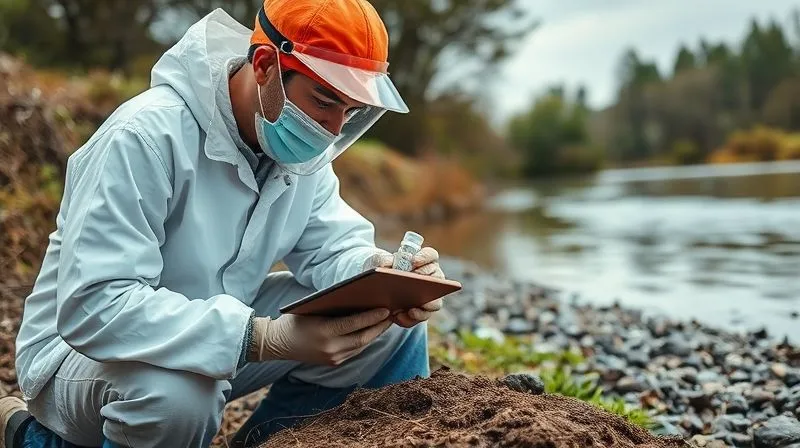
The bedrock of any successful causation argument in ecological contamination lawsuits is unimpeachable scientific data. Without comprehensive, well-documented evidence, even the most compelling legal theories are hollow. This stage is where your scientific team lays the groundwork, often years before a trial.
I've seen countless cases falter because initial data collection was haphazard, lacked proper controls, or failed to establish a robust baseline. You need to understand the 'before' picture to accurately assess the 'after' damage. This includes not only contaminant levels but also ecological health indicators.
Actionable Steps for Data Collection:
- Establish Baseline Conditions: Before any suspected contamination, or as close to it as possible, gather data on the ecosystem's health, biodiversity, water quality, soil composition, and air quality. This provides a crucial point of comparison.
- Systematic Sampling Strategy: Develop a statistically sound sampling plan for all potentially affected media (soil, water, sediment, air, biota). This involves defining sampling locations, depths, frequencies, and parameters, ensuring representativeness and minimizing bias.
- Utilize Certified Laboratories: All samples must be analyzed by accredited laboratories using validated methods. Chain-of-custody protocols are non-negotiable to maintain data integrity and prevent challenges to admissibility.
- Employ Advanced Analytical Techniques: Go beyond basic contaminant identification. Use techniques like gas chromatography-mass spectrometry (GC-MS), inductively coupled plasma mass spectrometry (ICP-MS), and DNA sequencing for microbial communities to get a detailed chemical and biological fingerprint.
- Document Everything: Maintain meticulous records of all sampling activities, field observations, laboratory results, quality assurance/quality control (QA/QC) data, and data interpretation. Transparency and traceability are paramount.
This foundational data isn't just for proving contamination; it's for establishing the *extent* and *nature* of the ecological harm, which directly feeds into damage assessment and remediation strategies.
Establishing Exposure Pathways and Mechanisms
Once you have identified the contaminant and the harm, the next critical step is to demonstrate how the contaminant traveled from its source to the affected ecological receptors. This is the 'exposure pathway' and it's often a complex web of environmental transport mechanisms.
Understanding the physics and chemistry of contaminant movement is vital. Is it airborne? Waterborne? Does it leach through soil? Is it transported via groundwater? Does it bioaccumulate in the food web? Each pathway presents unique challenges and requires specific scientific expertise to model and prove.
Tracing the Contaminant's Journey
I often advise my clients to think of this as environmental detective work. You're following the contaminant's 'footprints' from the point of release to the point of impact. This can involve hydrological modeling for groundwater or surface water flow, atmospheric dispersion modeling for air pollutants, and soil fate and transport modeling for ground contamination. Each model must be robust and defensible.
Case Study: The Green Valley Groundwater Contamination
A small agricultural community, Green Valley, experienced a significant decline in frog populations and unique aquatic plant species in its local wetlands. Initial tests showed elevated levels of a specific pesticide. The challenge was proving the pesticide came from a nearby industrial farm, 'AgriCorp', despite other farms in the area using similar chemicals.
Our team implemented a multi-pronged approach: groundwater monitoring wells were strategically placed to track plume migration; soil core samples were analyzed for historical pesticide usage patterns; and a sophisticated hydrological model was built, demonstrating that AgriCorp's drainage system was the primary source contributing to the wetland's contamination. Furthermore, chemical fingerprinting (discussed next) confirmed the specific pesticide formulation matched AgriCorp's inventory, effectively establishing the exposure pathway and source attribution.
Leveraging Environmental Forensics and Source Attribution
In many complex ecological contamination lawsuits, multiple potential sources of pollution exist, or the defendant claims their contribution is negligible. This is where environmental forensics becomes indispensable. It's the application of scientific principles to identify the source, age, and sometimes even the specific batch of a contaminant.
Think of it as the DNA evidence of environmental pollution. Techniques like isotopic analysis, chemical fingerprinting, and chiral analysis can distinguish between different sources of the same contaminant. For example, lead isotopes can differentiate between lead from industrial emissions versus lead from natural geological sources or even from different historical periods of leaded gasoline use.
Key Insight: Chemical fingerprinting is a game-changer. It allows us to match the unique chemical signature of a contaminant found at the impact site to the signature of a contaminant released from a specific facility. This eliminates doubt and strengthens the causation argument immeasurably.
These advanced techniques require highly specialized experts and state-of-the-art laboratory facilities. The results, when properly presented, can be incredibly powerful in court. According to a primer by the U.S. Environmental Protection Agency (EPA), environmental forensics plays a crucial role in establishing liability and allocating costs in complex contamination cases.
The Role of Expert Witnesses: Bridging Science and Law
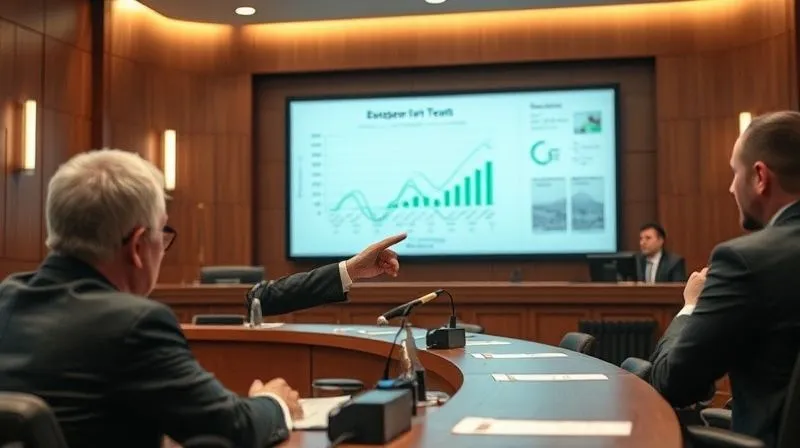
Even with impeccable data and robust scientific models, the information must be translated into a language that judges and juries can understand. This is the pivotal role of expert witnesses. They are the bridge between complex scientific principles and legal standards, explaining intricate concepts clearly and persuasively.
I've learned that selecting the right expert is as crucial as the science itself. An expert must possess not only deep scientific knowledge and credentials but also the ability to communicate effectively, maintain composure under cross-examination, and articulate their findings without jargon. They must be able to withstand challenges to their methodology (e.g., Daubert or Frye standards).
Qualifying and Utilizing Your Scientific Experts
- Identify Diverse Expertise: You will likely need a team of experts: environmental chemists, toxicologists, hydrologists, ecologists, epidemiologists, and potentially engineers. Each brings a unique piece to the causation puzzle.
- Vetting and Selection: Look for experts with extensive experience in litigation, publications in peer-reviewed journals, and a strong track record of clear, unbiased testimony. Check for any potential conflicts of interest.
- Thorough Preparation: Work closely with your experts to ensure they fully understand the legal theories of the case and can tailor their testimony to address specific elements of causation. Help them prepare for direct examination and anticipate cross-examination questions.
- Visual Aids: Encourage experts to use compelling visual aids – charts, graphs, maps, 3D models – to simplify complex data for the court.
An expert who can confidently explain how a specific chemical disrupts endocrine systems in a fish population, or how a particular pollutant alters the microbial community in soil, provides invaluable weight to your causation argument.
Epidemiological and Ecological Studies: Proving Harm
Beyond identifying the contaminant and its pathway, you must demonstrate the actual harm caused to the ecosystem or, in some cases, to human populations reliant on that ecosystem. This is where epidemiological and ecological studies become paramount.
Ecological studies focus on populations, communities, and entire ecosystems. They assess changes in biodiversity, population dynamics of species, shifts in community structure, and alterations in ecosystem functions (e.g., nutrient cycling, primary productivity). These studies often involve long-term monitoring, field experiments, and comparative analyses between contaminated and uncontaminated sites.
Environmental epidemiological studies, while more human-centric, can also provide correlative and sometimes causative evidence relevant to ecological health, particularly when human and ecological receptors share exposure pathways. They look for patterns of disease or adverse health effects in populations exposed to contaminants.
The strength of these studies lies in their ability to detect patterns and establish statistically significant relationships between exposure and effect. However, confounding factors and the long latency periods of some ecological impacts can make direct causation challenging.
Here's a comparison of key aspects:
| Study Type | Primary Focus | Key Methods | Causation Strength |
|---|---|---|---|
| Ecological Studies | Ecosystem health, biodiversity, population dynamics | Field observations, comparative analysis, long-term monitoring, bioassays | Strong for ecosystem-level impacts, correlation to causation often requires additional evidence |
| Environmental Epidemiology | Human health impacts in exposed populations | Cohort studies, case-control studies, cross-sectional studies | Strong for human health, can infer ecological risk if pathways overlap |
For deep dives into methodologies, researchers often consult authoritative sources such as those found in journals like the Environmental Health Perspectives, which regularly publish studies on environmental exposure and health outcomes.
Navigating Legal Causation Standards: A Jurisdictional Overview
While the scientific principles of causation are universal, the legal standards can vary significantly by jurisdiction and the specific environmental statute under which a claim is brought. It's crucial for your legal strategy to align with the specific requirements of the court you are in.
Some statutes, like certain provisions of the Comprehensive Environmental Response, Compensation, and Liability Act (CERCLA), can impose strict liability, meaning causation might be easier to prove by simply linking a party to the release of a hazardous substance at a site that caused response costs. However, common law claims like negligence, trespass, or nuisance often require a more traditional showing of both actual and proximate causation.
Proximate Cause vs. Actual Cause
Actual cause, as discussed, is the 'but-for' test: would the harm have occurred without the defendant's action? Proximate cause is about foreseeability and fairness. Was the harm a reasonably foreseeable consequence of the defendant's conduct? This element often becomes a battleground where defense counsel argues that intervening events, natural disasters, or other unrelated factors broke the chain of causation.
In environmental cases, the long lag times between contamination and observable harm can complicate proximate cause arguments. An experienced environmental law practitioner understands these nuances and can tailor the legal argument to meet the specific jurisdictional demands, often by demonstrating a continuous chain of events or a foreseeable sequence of ecological degradation.
Building a Compelling Narrative: From Data to Decision
Ultimately, all the scientific data, expert testimony, and legal arguments must coalesce into a coherent, compelling narrative. A judge or jury needs to understand not just the facts, but the story of how the contamination occurred, what harm it caused, and why the defendant is responsible. This is where the art of advocacy meets the rigor of science.
I've often found that even the most complex cases can be simplified through effective storytelling, without sacrificing scientific accuracy. It's about guiding the court through the evidence in a logical, step-by-step manner, making the connection between cause and effect undeniable.
Actionable Steps for Narrative Construction:
- Start with the 'Before': Describe the pristine (or relatively healthy) ecological conditions before the contamination, establishing the baseline.
- Introduce the 'Event': Clearly explain the defendant's actions or the release of contaminants, detailing the source.
- Trace the 'Journey': Walk through the exposure pathways, showing how the contaminants moved through the environment.
- Detail the 'Impact': Present the evidence of ecological harm, using vivid descriptions, visual aids, and expert testimony to illustrate the damage.
- Connect the 'Dots': Explicitly link the defendant's actions to the observed harm, using the scientific evidence to solidify the causation argument.
- Articulate the 'Consequences': Explain the broader implications of the harm, including economic, social, and long-term ecological impacts, to underscore the need for justice and remediation.
This narrative approach, supported by robust evidence, transforms abstract scientific data into a relatable and persuasive argument. For more on effective legal storytelling, academic resources such as those published by the Harvard Law School Program on Negotiation often delve into the power of narrative in legal contexts.
Overcoming Defense Strategies: Common Challenges and Counterarguments
Defendants in ecological contamination lawsuits are rarely passive. They employ sophisticated strategies to challenge causation, often focusing on sowing doubt about the plaintiff's evidence. Anticipating and effectively rebutting these common defense arguments is crucial for success.
In my experience, defense tactics frequently revolve around three key areas: alternative sources, natural variability, and the 'de minimis' argument.
Anticipating and Rebutting Defense Claims
- Alternative Sources: Defense counsel will often argue that other potential sources (e.g., historical pollution, other industrial facilities, natural seeps) are responsible for the contamination. Your environmental forensics work and source attribution analysis are your strongest counter here. You must proactively identify and rule out these alternatives with scientific certainty.
- Natural Variability and Background Levels: Ecosystems naturally fluctuate, and some contaminants exist at low 'background' levels. Defense will claim that observed changes are within natural variability or that the contamination is indistinguishable from background. Your robust baseline data and statistical analysis proving significant deviations from the norm are essential.
- De Minimis Contribution: If multiple sources exist, a defendant might argue their contribution was so small as to be 'de minimis' and not causative of the overall harm. This is a complex area, often requiring sophisticated modeling to demonstrate even a small contribution can have a significant cumulative effect or that their specific contribution crossed a critical threshold.
- Intervening Causes: Arguments about subsequent events (e.g., severe weather, other pollution events) breaking the chain of causation require careful analysis of the timeline and the relative impacts of each event.
A proactive approach, meticulously documenting your scientific findings and preparing your experts to address these counterarguments directly, is the best defense against these challenges. It's about having a stronger, more complete scientific story.

The Power of Visual Evidence and Data Visualization
In an era where information overload is common, the ability to convey complex scientific data quickly and effectively through visual means is a superpower in the courtroom. Judges and juries are often not scientists, and abstract numbers or dense reports can be overwhelming. Visual evidence transforms data into digestible, impactful insights.
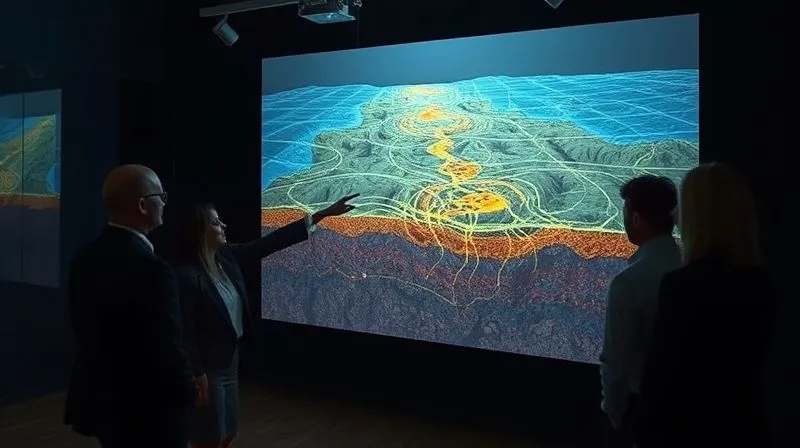
I've seen firsthand how a well-designed map illustrating contaminant plume migration, a timeline showing ecological degradation correlating with a defendant's operations, or a 3D model of a contaminated site can instantly clarify an otherwise obscure scientific concept. These visuals don't just present data; they tell a story in a way that words alone often cannot.
Consider using:
- Geographic Information System (GIS) Maps: To show contaminant distribution, source locations, affected areas, and sampling points.
- Timelines: To illustrate the chronological sequence of events, from contaminant release to observed ecological impacts.
- Graphs and Charts: To display trends in contaminant concentrations, population declines, or other ecological health indicators over time.
- 3D Models and Animations: To visualize complex subsurface contaminant plumes, atmospheric dispersion, or the bioaccumulation process in a food web.
- Before-and-After Photography/Video: Documenting the ecological state before and after the contamination event.
These tools, when integrated into expert testimony, can significantly enhance comprehension and retention of critical evidence, making your causation argument far more persuasive.
Frequently Asked Questions (FAQ)
What is the single biggest hurdle in proving causation in ecological contamination cases? In my experience, the greatest hurdle is disentangling the specific impact of a defendant's contaminant from 'background' environmental conditions and other potential stressors. Ecosystems are complex, and attributing a specific harm to a single cause requires rigorous scientific isolation and statistical proof, often against a backdrop of natural variability or multiple historical inputs.
How important are baseline ecological studies, and what if they don't exist? Baseline studies are critically important as they provide the 'control' data against which contamination effects are measured. Without them, proving causation becomes significantly harder, often relying on historical accounts, proxy data from similar uncontaminated sites, or retrospective modeling. While not impossible, their absence undeniably raises the burden of proof.
Can statistical correlation alone prove causation in environmental law? No, statistical correlation, while a necessary component, is not sufficient to prove legal causation. It indicates a relationship, but it doesn't prove that one factor directly caused another. You need to combine robust statistical correlation with a scientifically plausible mechanism of action, source attribution, and elimination of confounding factors to build a true causation argument.
What if there are multiple potential sources for the same contaminant? How do you prove which one is responsible? This is a common scenario. It requires sophisticated environmental forensics, such as chemical fingerprinting, isotopic analysis, and contaminant transport modeling. These techniques can differentiate between sources, allowing you to attribute specific portions of the contamination, or even the entire plume, to a particular defendant. Expert testimony is crucial in explaining these complex scientific distinctions.
How do you choose the right expert witness for an ecological contamination lawsuit? Beyond credentials, look for an expert who possesses strong communication skills, can simplify complex science for a lay audience, and has experience with litigation processes. They must be able to defend their methodologies and conclusions under intense scrutiny, maintaining objectivity and credibility. A team approach with diverse scientific experts is often most effective.
Key Takeaways and Final Thoughts
Proving causation in complex ecological contamination lawsuits is undeniably one of the most challenging aspects of environmental law. It demands a meticulous, multidisciplinary approach that seamlessly integrates cutting-edge science with astute legal strategy. As an experienced practitioner, I've seen that success hinges on a few critical pillars:
- Foundational Data: Unimpeachable, systematically collected scientific data forms the bedrock of your case.
- Forensic Precision: Leveraging environmental forensics for source attribution can cut through ambiguity.
- Expert Bridge-Building: Skilled expert witnesses are essential to translate complex science into persuasive legal arguments.
- Strategic Storytelling: Weaving a compelling narrative that connects every piece of evidence is paramount for clarity and impact.
- Anticipatory Defense: Proactively addressing and rebutting common defense strategies strengthens your position significantly.
The path to proving causation is arduous, but it is not insurmountable. By embracing a rigorous, scientific, and strategic approach, you can build an undeniable case that not only stands up in court but also delivers justice for the environment and the communities impacted. Remember, every successful ecological causation case sets a precedent, strengthening the future of environmental protection. Your diligence and expertise are vital in holding polluters accountable and safeguarding our planet's delicate ecosystems.
Recommended Reading
- Navigating Impunity: 7 Strategies to Prosecute War Crimes Without State Cooperation
- Critical Evidence Excluded? 7 Steps for License Revocation Hearings
- IRS Audit Aftermath: 7 Steps to Validate Non-Profit Tax Exemption
- Unmasking the Legal Minefield: Higher Ed Accreditation's Hidden Dangers
- Hidden Assets in Family Mediation? 7 Steps to Uncover the Truth



Comments
Leave a comment below. Your email will not be published. Required fields marked with *