


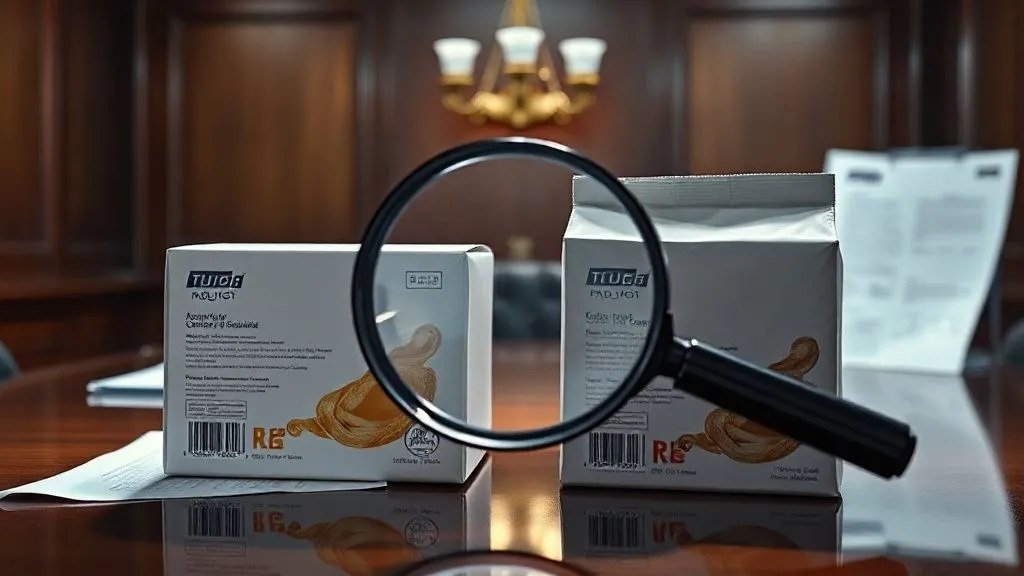
How to Prove Trade Dress Infringement by a Rival Brand?
For over two decades in intellectual property law, I've witnessed countless brands pour their heart and soul into creating a distinctive product identity, only to see it blatantly mimicked by competitors. It's not just frustrating; it's a direct assault on your market position, consumer trust, and the very essence of what makes your brand unique. This isn't merely about a logo; it's about the entire sensory experience your product offers.
The pain of seeing your unique packaging, store layout, or product design—your ‘trade dress’—copied by a rival is palpable. You know it's wrong, but the path to seeking justice can feel complex and daunting. How do you effectively fight back? More importantly, how do you gather the undeniable evidence and build a compelling legal case to prove trade dress infringement by a rival brand?
This comprehensive guide will equip you with the expert framework and actionable steps necessary to prove trade dress infringement. We'll delve into the critical elements, explore real-world scenarios, and provide the strategic insights you need to protect your brand's unique identity, reclaim your market share, and ensure your creative efforts are safeguarded under the law.
Understanding Trade Dress: More Than Just a Logo
Before we dive into the ‘how,’ it's crucial to solidify our understanding of ‘what’ trade dress truly is. In my experience, many clients initially confuse trade dress with trademarks or copyrights, leading to missteps in their protection strategy. While related, trade dress occupies a distinct and powerful niche within intellectual property law.
Trade dress refers to the total image and overall appearance of a product or its packaging, or even the design of a business establishment. It encompasses features such as size, shape, color or color combinations, texture, graphics, and even sales techniques. Think of the distinctive Coca-Cola bottle shape, the unique layout of a Tiffany & Co. store, or the specific ‘look and feel’ of a restaurant chain.
Unlike a traditional trademark, which typically protects a specific word, phrase, logo, or symbol, trade dress protects the aesthetic qualities that identify the source of a product or service. It's about the holistic impression that tells consumers, “This comes from Brand X.” Copyright, on the other hand, protects original works of authorship like literary, dramatic, musical, or artistic works, not functional designs or product identities.
Why does this distinction matter? Because understanding what you’re protecting is the first step in knowing how to prove its infringement. Your brand’s identity is often a complex tapestry of visual and sensory cues, and trade dress is designed to protect that entire tapestry from being unraveled by imitators. It’s a powerful tool for preventing unfair competition and maintaining consumer loyalty.
The Two Pillars of Protectable Trade Dress: Distinctiveness and Non-Functionality
To successfully prove trade dress infringement, you must first establish that your trade dress is, in fact, protectable under the law. This hinges on two fundamental pillars: it must be distinctive and non-functional. Without these two elements, your claim will likely falter, regardless of how similar a rival’s product may appear.
Pillar 1: Distinctiveness – Is Your Trade Dress Unique Enough?
Distinctiveness refers to the ability of your trade dress to identify the source of the product or service. It answers the question: does this particular ‘look’ immediately tell consumers who made it?
There are two primary ways to establish distinctiveness:
- Inherent Distinctiveness: This applies when the trade dress is so unique, unusual, or memorable that it immediately serves to identify the source of the product, even to consumers encountering it for the first time. It doesn't describe the product itself, nor is it a common design in the industry.
- Examples: A highly stylized, abstract bottle shape for a beverage that bears no relation to typical bottle designs; a restaurant's interior design featuring a truly novel combination of colors, textures, and architectural elements that are not common to the industry.
- Secondary Meaning: If your trade dress is not inherently distinctive (e.g., it’s descriptive or somewhat generic), it can still become protectable if it acquires ‘secondary meaning.’ This means that through extensive use, advertising, and public recognition, consumers have come to associate that particular trade dress with your brand as the source of the product.
- Examples: The specific green and yellow color scheme of John Deere farm equipment; the distinctive red sole on Christian Louboutin shoes. These designs might not be inherently unique, but consumers now associate them directly with a single brand.
Proving secondary meaning often requires substantial evidence of consumer perception, such as sales volume, advertising expenditures, consumer surveys, and unsolicited media coverage. My advice is to document every aspect of your brand's marketing and design evolution to build a robust case for distinctiveness.
Pillar 2: Non-Functionality – Is Your Design Purely Aesthetic?
The second pillar, non-functionality, is equally critical. Trade dress protection is granted only to features that are arbitrary and non-functional. This means the design elements you’re seeking to protect must be primarily aesthetic or source-identifying, not essential to the product's use or purpose, or necessary to its cost or quality.
The rationale behind this is simple: intellectual property law generally doesn't allow one company to monopolize functional features, as doing so would stifle competition and innovation. Functional features are typically protected, if at all, by patent law.
To determine functionality, courts often consider several factors:
- Does the design feature make the product work better or cheaper?
- Are there alternative designs available that would achieve the same functional purpose?
- Is the design the result of a comparatively simple or inexpensive method of manufacturing the product?
- Has the applicant advertised the utilitarian advantages of the design?
"A feature is functional if it is essential to the use or purpose of the article or if it affects the cost or quality of the article." - The Supreme Court in Qualitex Co. v. Jacobson Products Co.
For example, if the unique shape of your beverage bottle makes it easier to grip or prevents spillage, a court might deem that shape functional, thus preventing trade dress protection. However, if the shape is purely for aesthetic appeal and doesn't offer a significant utilitarian advantage, it is likely non-functional.
Proving non-functionality often involves expert testimony from industrial designers or engineers who can explain that alternative designs exist or that the design choice was driven by aesthetic, not utilitarian, considerations. It's a nuanced area, and a thorough analysis of your design's purpose is paramount.
The Core Challenge: Proving Likelihood of Confusion
Once you've established that your trade dress is protectable (i.e., distinctive and non-functional), the real battle begins: proving that the rival brand's trade dress creates a likelihood of confusion among consumers. This is the cornerstone of any trade dress infringement claim under the Lanham Act (15 U.S.C. § 1051 et seq.).
The goal is to demonstrate that an appreciable number of ordinary prudent consumers are likely to be misled or confused as to the source, affiliation, or sponsorship of the goods or services due to the similarities between your trade dress and the rival's. Courts typically consider a set of factors to assess the likelihood of confusion, often referred to as the “likelihood of confusion factors” (e.g., the Polaroid factors in the Second Circuit, or similar variations across other circuits). While the exact number and wording of factors can vary by jurisdiction, the underlying principles remain consistent. Here's a systematic approach to addressing them:
- Similarity of the Trade Dress: This is often the most obvious factor. Compare the overall appearance, individual elements (shape, color, texture, graphics), and the “total image” of both products or establishments. Do they create the same general commercial impression? Minor differences might not negate similarity if the overall impression is confusingly alike.
- Similarity of the Goods/Services: Are the products or services offered by both brands similar or complementary? The more similar the offerings, the higher the likelihood of confusion. For instance, two brands with similar trade dress selling energy drinks are more likely to cause confusion than one selling energy drinks and the other selling car parts.
- Similarity of Marketing Channels: Do both brands use similar marketing and advertising channels to reach their target consumers? If they sell in the same stores, advertise in the same magazines, or target the same online demographics, confusion is more probable.
- Degree of Care Likely to be Exercised by Consumers: How discerning are typical consumers of these products? If the product is expensive or requires careful consideration (e.g., a car or a medical device), consumers are expected to exercise a higher degree of care, making confusion less likely. For impulse buys or inexpensive items, the standard of care is lower, increasing the likelihood of confusion.
- Evidence of Actual Confusion: While not strictly necessary, any documented instances of actual confusion are powerful evidence. This could include misdirected customer inquiries, social media posts, or direct testimony from confused consumers. Even a few instances can be highly persuasive.
- Defendant’s Intent in Adopting the Dress: Did the rival brand intentionally copy your trade dress? Evidence of bad faith, such as internal documents showing an intent to mimic, can weigh heavily against them. While direct intent isn't required to prove infringement, it can strengthen your case significantly.
- Strength of the Plaintiff's Trade Dress: How well-known and distinctive is your trade dress? A strong, widely recognized trade dress (especially one with secondary meaning) is more likely to be confused than a weaker, less established one.
- Likelihood of Expansion of the Product Lines: Are both parties likely to expand into each other's product lines or services? If so, this future potential for direct competition can increase the likelihood of confusion.
My strategy has always been to meticulously analyze each of these factors, building a narrative supported by concrete evidence. It's not about proving every single factor, but showing that, on balance, the collective weight of the evidence points strongly to a likelihood of confusion. For a deeper dive into these factors, resources like this article on WIPO's likelihood of confusion analysis can be incredibly insightful.
Gathering Undeniable Evidence: Your Strategic Toolkit
Proving trade dress infringement isn't just about legal arguments; it's fundamentally about presenting compelling evidence. In my practice, I've seen even the strongest cases crumble due to insufficient or poorly organized evidence. This is where your strategic toolkit comes into play.
Documentation is King: Build a Comprehensive Record
The foundation of any strong trade dress claim is meticulous documentation. From the very inception of your brand's unique look, you should be archiving everything:
- Design Schematics and Development History: Keep all early sketches, CAD files, mood boards, and design iterations. These prove originality, the evolution of the design, and often, the non-functional intent behind aesthetic choices.
- Marketing Materials and Advertising Campaigns: Preserve all advertisements, brochures, website screenshots, social media posts, and packaging proofs. These demonstrate how you've consistently presented your trade dress to the public, which is crucial for establishing distinctiveness and secondary meaning.
- Sales Data and Market Reach: Provide detailed sales figures, market share reports, and geographical reach. High sales volume and broad market penetration are strong indicators that your trade dress has achieved significant recognition among consumers.
- Consumer Surveys and Testimonials: While expensive, professionally conducted consumer surveys are often the most direct and powerful evidence of actual confusion or secondary meaning. Additionally, gather any unsolicited customer feedback, emails, or social media comments that indicate confusion.
- Expert Witness Reports: Engage experts in relevant fields such as industrial design, marketing, consumer psychology, or economics. They can provide opinions on distinctiveness, functionality, likelihood of confusion, and potential damages.
Market Surveillance and Competitor Analysis
You can't prove infringement if you don't know it's happening. Proactive market surveillance is vital:
- Regular Monitoring: Routinely check competitor products, new market entrants, and online marketplaces for similar trade dress.
- Purchase Infringing Products: Acquire samples of the rival's product. This allows for direct, side-by-side comparison in court and can reveal details about their manufacturing and marketing.
- Comparison Reports: Create detailed visual comparison reports, highlighting similarities and differences between your trade dress and the alleged infringer's. Use photographs, diagrams, and annotated descriptions.
| Evidence Type | Purpose | Impact |
|---|---|---|
| Design Schematics | Prove originality & development timeline | Establishes priority & distinctiveness |
| Consumer Surveys | Quantify likelihood of confusion | Direct evidence of market impact |
| Sales & Marketing Data | Demonstrate commercial success & secondary meaning | Supports strength of trade dress |
| Infringing Product Analysis | Highlight similarities & functionality | Direct comparison for likelihood of confusion |
| Expert Witness Testimony | Provide specialized analysis & bolster claims | Adds credibility & technical depth to arguments |
Case Study: Apex Beverages vs. AquaBurst – A Tale of Bottle Design
Let me illustrate with a fictional, yet highly realistic, scenario from my experience. Apex Beverages had launched a premium sparkling water in a uniquely sculpted, matte-finish bottle – let's call it the “Zen Wave” bottle. It had a distinctive asymmetrical wave pattern molded into the glass and a unique cap design, all contributing to an elegant, minimalist aesthetic. Apex invested heavily in marketing, associating the Zen Wave bottle directly with its brand identity. Within two years, it garnered significant market share and consumer recognition.
Then, AquaBurst, a new competitor, launched its own premium sparkling water. Their bottle, while not an exact copy, featured a strikingly similar asymmetrical wave pattern, a matte finish, and a cap design that, when viewed quickly, was nearly indistinguishable from Apex's Zen Wave. The overall “trade dress” created a powerful impression of similarity.
To prove infringement, Apex Beverages, with my firm's guidance, took the following steps:
- Established Protectability: We presented Apex's design evolution documents, showing the unique, aesthetic-driven choices behind the Zen Wave bottle (proving non-functionality). We also leveraged extensive sales figures, advertising spend, and media mentions to demonstrate the bottle's strong association with Apex in consumers’ minds, thus establishing secondary meaning.
- Documented Likelihood of Confusion: We conducted a professional consumer survey in key markets. The results were compelling: a significant percentage of respondents mistook the AquaBurst bottle for Apex's, or believed the two brands were affiliated. We also gathered anecdotal evidence from retailers reporting customer confusion.
- Analyzed Marketing & Product Similarity: Both brands targeted the same demographic (health-conscious, affluent consumers) and sold through identical high-end grocery stores and cafes. A side-by-side product comparison visually highlighted the striking similarities in the bottles' overall appearance.
- Investigated Intent: While direct evidence of AquaBurst's intent to copy was hard to find, the sheer degree of similarity, combined with their relatively late entry into a market dominated by Apex's distinctive bottle, suggested a deliberate choice to capitalize on Apex's established trade dress.
The cumulative evidence was overwhelming. Faced with a robust case, AquaBurst ultimately settled, agreeing to redesign their bottle and pay a substantial sum for corrective advertising and damages. This case underscores the power of a meticulously prepared infringement claim, built on solid evidence of distinctiveness, non-functionality, and likelihood of confusion.
Navigating the Legal Process: From Cease and Desist to Litigation
Once you’ve built your evidentiary foundation, the next step is to navigate the legal process. This journey typically begins with an attempt to resolve the matter amicably, but often escalates to formal litigation if the rival brand remains uncooperative.
The Initial Offensive: Cease and Desist Letters
The first formal step is usually to send a cease and desist letter. This is a formal legal document, drafted by your attorney, which:
- Identifies your protected trade dress.
- Explains how the rival brand's product infringes upon it, citing the likelihood of confusion factors.
- Demands that they immediately stop using the infringing trade dress.
- Often proposes a timeline for compliance and suggests potential remedies, such as a product redesign, recall, or monetary settlement.
A well-crafted cease and desist letter, backed by strong evidence, can often resolve the issue without further legal action. It signals your seriousness and can prompt the infringer to rethink their strategy, especially if they weren't fully aware of the legal ramifications or the strength of your case. However, it's crucial that this letter is carefully worded to avoid unintended legal consequences.
Discovery and Expert Testimony
If the cease and desist letter is ignored or if negotiations fail, litigation becomes necessary. The discovery phase of a lawsuit is critical. This is where both parties exchange information and gather evidence through:
- Interrogatories: Written questions that must be answered under oath.
- Requests for Production of Documents: Demands for relevant documents, including design files, marketing plans, sales data, and internal communications that might reveal intent.
- Depositions: Out-of-court sworn testimony taken from witnesses, including company executives, designers, and marketing personnel.
During discovery, my team often uncovers crucial details about the rival's design process, their awareness of your trade dress, and their marketing strategies. This phase is also where expert witnesses truly shine. Design experts can provide detailed comparisons, marketing experts can analyze consumer perception, and economists can quantify potential damages. Their objective, authoritative testimony is invaluable in explaining complex concepts to a judge or jury.
Remedies and Damages: What Can You Achieve?
Successfully proving trade dress infringement can lead to several significant remedies designed to protect your brand and compensate for harm:
- Injunctions: This is a court order prohibiting the infringer from continuing to use the confusingly similar trade dress. This is often the most important remedy, as it stops the ongoing harm to your brand.
- Monetary Damages: You may be awarded damages to compensate for lost profits, the infringer's profits (if proven to be due to the infringement), and in some cases, enhanced damages if the infringement was willful.
- Corrective Advertising: In certain situations, a court might order the infringer to pay for corrective advertising to dispel any lingering confusion among consumers.
- Attorney Fees: In “exceptional cases” (e.g., willful infringement), the court may award you attorney fees, helping to offset the significant costs of litigation.
The goal is always to restore your brand’s distinct identity in the marketplace and ensure that consumers can clearly differentiate your products from those of your rivals. The Lanham Act provides robust protection, but it requires a skilled hand to wield effectively.
Common Pitfalls and How to Avoid Them
While the path to proving trade dress infringement is clear, it's fraught with potential missteps. Based on my years in the field, here are some common pitfalls I've seen brands encounter and how to avoid them:
- Failing to Establish Distinctiveness: Many brands assume their unique look is inherently distinctive without sufficient proof. Always be prepared to demonstrate either inherent distinctiveness or, more commonly, how your trade dress has acquired secondary meaning through market presence and advertising. Don't rely solely on your own perception of uniqueness.
- Overlooking Functionality Arguments: Opposing counsel will almost certainly argue that your trade dress is functional. Proactively gather evidence and expert opinions that clearly demonstrate the non-functional, aesthetic nature of your design elements. If a feature serves a utilitarian purpose, be honest about it and focus on the non-functional aspects of your overall trade dress.
- Insufficient Evidence of Confusion: While actual confusion isn't strictly required, a lack of any evidence of consumer confusion significantly weakens your case. Invest in well-designed consumer surveys or diligently collect anecdotal evidence from customers and retailers.
- Delay in Taking Action: Waiting too long to address an infringement can lead to legal doctrines like laches, where a court may find you have “slept on your rights,” potentially limiting or even barring your remedies. As soon as you suspect infringement, consult with an IP attorney to assess the situation and plan your response. Time is often of the essence.
- Focusing on Minor Similarities: Don't get bogged down in pointing out every minute detail that's similar. The law focuses on the “total image” and “overall commercial impression.” While details are part of this, the cumulative effect on the consumer is what truly matters.
Avoiding these pitfalls requires a proactive, strategic approach and, crucially, the guidance of experienced intellectual property counsel who understand the nuances of trade dress law. This isn't a battle to wage alone.
Frequently Asked Questions (FAQ)
Can a color alone be trade dress? Yes, a single color can function as trade dress if it has acquired secondary meaning and is non-functional. The Supreme Court in Qualitex Co. v. Jacobson Products Co. affirmed that a single color can act as a trademark (and by extension, trade dress) if it identifies and distinguishes a product's source. However, proving secondary meaning for a color alone is often challenging, requiring extensive evidence of consumer association.
What if the rival brand is in a different industry? The likelihood of confusion is generally lower if the rival brand operates in a completely different industry. However, if your trade dress is exceptionally strong and well-known, or if there's a perceived connection or sponsorship (e.g., a luxury brand's trade dress being used by a unrelated, lower-quality product), a claim might still be viable. The key factor remains whether consumers are likely to be confused about the source or affiliation.
How long does trade dress protection last? Unlike patents or copyrights, trade dress protection can potentially last indefinitely, as long as the trade dress continues to be used in commerce and retains its distinctiveness and non-functional characteristics. It does not expire after a set number of years, provided the brand actively maintains its rights.
Is trade dress protection automatic, like copyright? No, trade dress protection is not automatic. While some trade dress can be protected under common law simply by use in commerce if it meets the distinctiveness and non-functionality criteria, formal registration with the USPTO (U.S. Patent and Trademark Office) is highly recommended. Registration provides significant advantages, including nationwide constructive notice of your claim and the ability to sue in federal court.
What's the difference between trade dress and patent protection? Trade dress protects the overall visual impression of a product or its packaging that identifies its source, focusing on non-functional, aesthetic elements. Patent protection, specifically design patents, protects the ornamental design of an article of manufacture, while utility patents protect new and useful processes, machines, articles of manufacture, or compositions of matter, focusing on functional aspects. A single product might have both trade dress and design patent protection for different aspects of its appearance.
Key Takeaways and Final Thoughts
Proving trade dress infringement by a rival brand is a sophisticated legal challenge, but it's an essential one for safeguarding your brand's unique identity and competitive edge. In my years of practice, I've seen firsthand how a well-executed strategy can turn the tide against unfair competition, protecting not just designs, but livelihoods and reputations.
- Understand the Fundamentals: Your trade dress must be both distinctive (inherently or through secondary meaning) and non-functional to be protectable.
- Focus on Likelihood of Confusion: This is the core of your claim. Systematically analyze and gather evidence for each of the relevant factors, demonstrating how consumers are likely to be misled.
- Document Everything: From initial design sketches to consumer surveys, every piece of evidence strengthens your position. Proactive record-keeping is your best defense.
- Act Decisively: Don't delay. Swift, well-considered legal action can prevent further harm and bolster your case.
- Seek Expert Guidance: Trade dress law is complex. Partnering with an experienced intellectual property attorney is crucial for navigating the legal landscape, building a robust case, and achieving a favorable outcome.
Your brand's visual identity is a valuable asset, a silent promise to your customers. When a rival brand attempts to dilute that promise by mimicking your trade dress, you have the right and the means to fight back. Equip yourself with knowledge, gather your evidence, and stand firm in protecting what you've painstakingly built. The legal system is there to support innovation and fair competition, and with the right approach, you can ensure it works for you.

Recommended Reading
- 5 Urgent Strategies: Retain Foreign Talent Before Visa Expiration?
- Employee Refuses ADA Interactive Process? 7 Steps for Employers
- 5 Expert Strategies: Countering 'Reasonable Attempts' in Lemon Law Claims
- Facing Enforcement? Master Your Admin Compliance Response in 7 Steps
- 7 Proven Strategies: Cut Severance Costs, Ensure Legal Compliance



Comments
Leave a comment below. Your email will not be published. Required fields marked with *