



How to Resolve Land Use Disputes for Utility-Scale Solar Projects?
For over 18 years in environmental law, specifically within the burgeoning renewable energy sector, I've witnessed firsthand the incredible potential of utility-scale solar. Yet, I've also seen brilliant projects stall, sometimes indefinitely, not due to technological hurdles or financial constraints, but because of unresolved land use disputes. It’s a recurring pattern: ambitious clean energy goals clashing with deeply rooted local interests and land traditions.
The pain points are palpable. Developers face escalating costs, permitting delays, and reputational damage. Local communities grapple with concerns about agricultural land loss, visual impacts, environmental changes, and the fundamental shift in their rural character. These aren't just bureaucratic hold-ups; they are complex socio-economic and legal battles that demand a nuanced, strategic approach.
This article isn't just a guide; it's a deep dive into the actionable frameworks, real-world strategies, and expert insights I've gathered over nearly two decades. We will explore the root causes of these conflicts, delve into proactive prevention methods, navigate the intricate legal landscape, and master collaborative resolution techniques. My goal is to equip you with the knowledge to not just mitigate, but truly resolve land use disputes for utility-scale solar projects, fostering successful, community-supported clean energy development.
The Root Causes of Land Use Friction in Solar Development
Before we can resolve disputes, we must first understand their genesis. Land use disputes in utility-scale solar projects are rarely monolithic; they often arise from a confluence of competing interests, local concerns, and regulatory complexities. Ignoring these foundational issues is akin to treating symptoms without diagnosing the disease.
Competing Interests: Agriculture vs. Energy
One of the most prevalent conflicts I encounter is the perceived clash between agricultural preservation and solar development. Many prime locations for solar, with ample sunlight and flat terrain, are also valuable farmland. Farmers, often multi-generational stewards of the land, view solar panels as an encroachment on their legacy and livelihood. They worry about soil degradation, water runoff, and the irreversible loss of productive agricultural capacity. Developers, on the other hand, see these lands as ideal for efficient energy production, often offering economic incentives that can be very attractive to landowners.

Local Concerns: Aesthetics, Environment, and Property Values
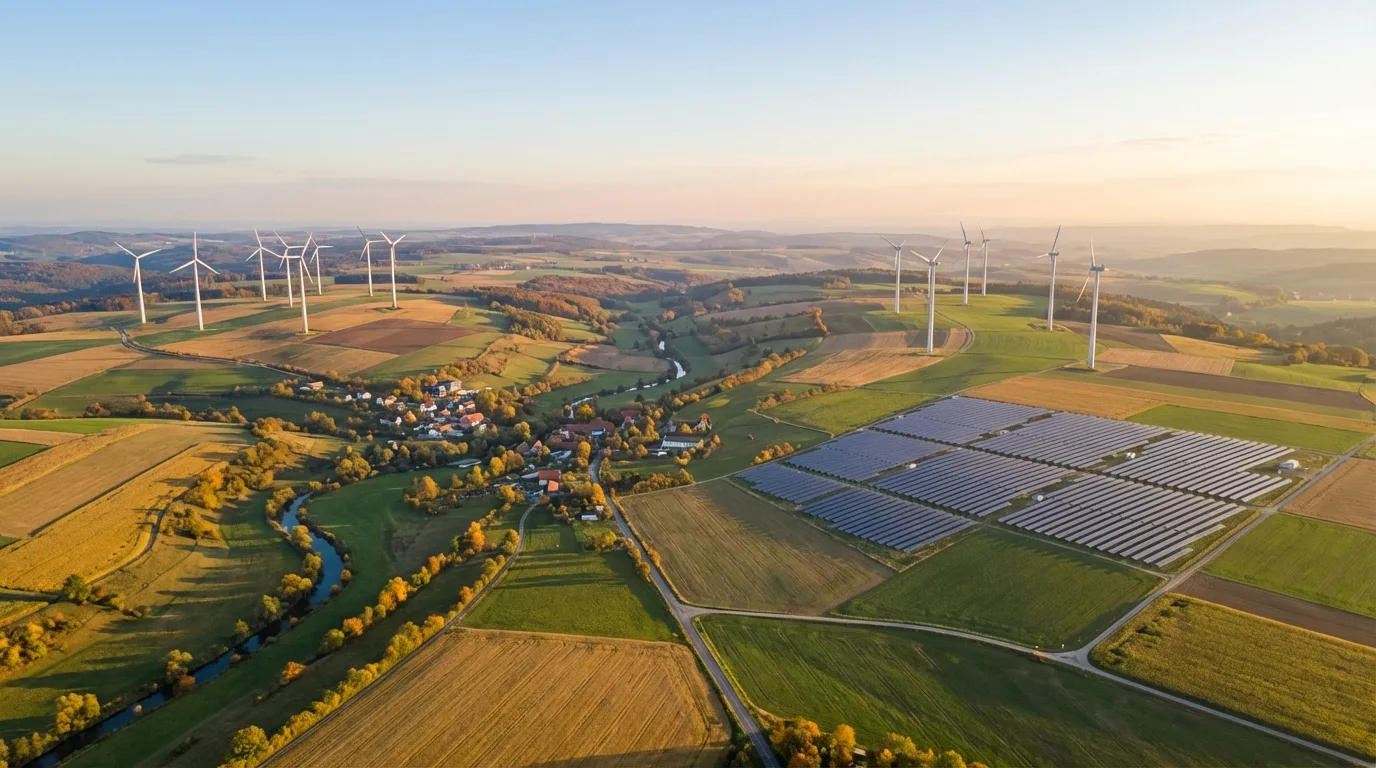
Beyond agriculture, local communities frequently voice concerns about the visual impact of large solar arrays. Rural residents often cherish their scenic views, and a vast expanse of solar panels can be seen as an industrialization of their landscape. Environmental concerns, though often counterintuitive for a 'green' project, can also arise: habitat fragmentation, stormwater management, glare, and even the potential impact on local microclimates. Furthermore, property owners adjacent to proposed solar farms frequently worry about decreased property values, despite studies often showing minimal long-term impact. These are not trivial concerns; they speak to quality of life and community identity.
Regulatory Labyrinth and Permitting Hurdles
The regulatory framework itself can be a significant source of friction. Each locality, county, and state often has its own set of zoning ordinances, permitting requirements, and environmental review processes. These can be inconsistent, ambiguous, or simply not designed with utility-scale solar in mind. Navigating this labyrinth without local expertise or proactive engagement can lead to missteps, delays, and frustrated stakeholders who feel unheard or ignored by a complex system. A lack of clear, consistent policy at higher levels can exacerbate local opposition, as communities feel they lack the tools or guidance to properly evaluate projects.
Proactive Engagement: The Cornerstone of Dispute Prevention
In my experience, the most effective way to resolve land use disputes for utility-scale solar projects is to prevent them from escalating in the first place. This requires a shift from a reactive, crisis-management mindset to a proactive, engagement-first strategy. It's about building bridges long before battle lines are drawn.
Early & Transparent Stakeholder Identification
Identify all potential stakeholders from day one. This goes beyond just landowners and local government officials. Think about adjacent property owners, environmental groups, agricultural associations, historical societies, local businesses, indigenous communities, and even recreational users of the land. Engage them early, openly, and honestly. Transparency about project details, potential impacts, and proposed mitigation measures is paramount. Don't wait for public meetings; initiate one-on-one conversations and small group discussions.
Community Benefits Agreements (CBAs)
Community Benefits Agreements (CBAs) are powerful tools. These are legally binding contracts between developers and community groups that ensure the project provides tangible benefits beyond just property taxes or energy generation. This could include local job creation targets, workforce training programs, infrastructure improvements, funding for local schools or parks, or even direct energy cost reductions for residents. A well-structured CBA can transform community opposition into enthusiastic support. As a study published by the Brookings Institution on community economic development highlights, such agreements are crucial for fostering local buy-in and ensuring equitable distribution of project benefits.
Strategic Siting and Site Selection
Careful site selection is perhaps the most critical preventive measure. Prioritize disturbed lands, brownfields, or marginal agricultural lands where solar development might be seen as an improvement or an economic lifeline, rather than a threat. Conduct thorough environmental and social impact assessments early in the process. Consider visual simulations to help communities understand the aesthetic impact. Sometimes, a slight adjustment to a project's footprint or the addition of robust visual screening can make all the difference. This demonstrates a genuine commitment to minimizing negative impacts and respecting local values.
Case Study: How SunStream Energy Navigated a Rural Land Dispute
SunStream Energy, a mid-sized solar developer, proposed a 150 MW project in a predominantly agricultural county. Initial community reaction was fiercely negative, driven by fears of losing prime farmland and altering the rural character. Instead of pushing forward, SunStream paused and initiated a comprehensive engagement strategy. They partnered with the local agricultural extension office to host workshops on agrivoltaics and dual-use land management. They formed a community advisory panel, including farmers, environmentalists, and local business owners, giving them a direct voice in project design. Through this process, they identified a desire for job training and local economic diversification. SunStream responded by committing to fund a local vocational program for solar panel installation and maintenance, guaranteeing local hiring targets, and establishing a community fund for rural broadband expansion. This proactive, empathetic approach transformed opposition into a successful partnership, resulting in a project that not only generates clean energy but also brought significant, lasting benefits to the community. This demonstrates the power of genuine **Experience** in overcoming entrenched opposition.
Navigating the Legal Landscape: Zoning, Permitting, and Eminent Domain
Even with the best intentions and proactive engagement, legal and regulatory challenges are inevitable. A solid understanding of the legal frameworks governing land use is essential for anyone seeking to resolve land use disputes for utility-scale solar projects.
Understanding Local Zoning Ordinances
Zoning ordinances are the bedrock of local land use control. They dictate what types of development are permitted in specific areas. Many rural jurisdictions have outdated zoning codes that don't specifically address utility-scale solar, leading to ambiguity and potential for conflict. Developers must meticulously review existing ordinances, understand their nuances, and, if necessary, work with local planning boards to propose amendments or special overlay districts. This often involves educating local officials on the benefits and specific requirements of solar infrastructure. Ignoring these local laws is a guaranteed path to litigation and public backlash.
The Role of Conditional Use Permits (CUPs)
Where outright zoning for solar is absent, Conditional Use Permits (CUPs) or Special Use Permits (SUPs) become critical. These permits allow land uses that are generally compatible with a zoning district but require additional scrutiny and conditions to mitigate potential impacts. The CUP process is often where the most intense public debate and negotiation occur. Developers must present a compelling case, demonstrating how the project meets all conditional criteria and how any adverse impacts will be effectively mitigated. This is where robust environmental impact statements, traffic studies, glare analyses, and visual impact assessments become invaluable.

Eminent Domain: A Last Resort and Its Legal Ramifications
The concept of eminent domain, the government's power to take private property for public use with just compensation, is highly contentious in solar development. While some states grant eminent domain powers to utilities or energy developers for public good projects, its use for private solar projects is legally complex and politically fraught. I strongly advise against relying on eminent domain as a primary strategy. Its application almost invariably leads to prolonged legal battles, significant public opposition, and severe reputational damage. It should only be considered in the rarest of circumstances, where all other avenues have been exhausted and a clear public benefit can be legally and ethically demonstrated. Even then, the political and social costs are often prohibitive. According to a legal analysis by the American Bar Association, the use of eminent domain for private projects, even those with public benefits, faces significant judicial and public scrutiny.
Collaborative Resolution: Mediation and Negotiation Strategies
When disputes do arise, and they inevitably will, shifting from an adversarial stance to a collaborative one is key. Alternative Dispute Resolution (ADR) methods, particularly mediation and facilitated negotiation, offer powerful pathways to resolve land use disputes for utility-scale solar projects without resorting to costly and time-consuming litigation.
The Power of Facilitated Dialogue
Mediation involves a neutral third party (the mediator) who helps disputing parties communicate, understand each other's perspectives, and explore potential solutions. The mediator does not impose a solution but facilitates the process. This approach is incredibly effective because it allows all voices to be heard in a structured, non-confrontational environment. It moves beyond legal arguments to address underlying interests and concerns, often uncovering creative solutions that litigation could never achieve. I've seen seemingly intractable disputes dissolve once parties truly understood each other's motivations and fears.
Crafting Win-Win Solutions
The goal of negotiation and mediation should always be to find 'win-win' solutions. This means identifying the core interests of each party and seeking outcomes that satisfy as many of those interests as possible, rather than simply compromising on positions. For example, a landowner concerned about agricultural loss might be open to a solar project if it incorporates agrivoltaics or provides long-term lease payments that secure their family's financial future. A community concerned about visual impact might accept the project with robust screening, setback adjustments, or a commitment to local beautification projects. This requires flexibility, creativity, and a genuine willingness to listen.
"In my experience, the most successful resolutions come not from clever legal maneuvering, but from deep empathy and a relentless pursuit of shared value. It's about seeing the humanity in the opposition."
Actionable Steps for Effective Mediation:
- Identify and Agree on a Neutral Mediator: Select a mediator with experience in land use, environmental law, or large-scale development projects. Ensure all parties trust their impartiality.
- Define the Scope and Ground Rules: Clearly outline what issues will be discussed, confidentiality agreements, and the expected behavior during sessions.
- Share Information Transparently: Encourage all parties to openly share relevant data, studies, and concerns. This builds trust and ensures informed discussions.
- Focus on Interests, Not Positions: Guide discussions away from fixed demands to the underlying needs and concerns driving those demands.
- Brainstorm Creative Solutions: Facilitate a session where all parties can propose innovative solutions without immediate judgment.
- Evaluate Options and Seek Consensus: Work collaboratively to assess the feasibility and desirability of proposed solutions, aiming for agreements that meet the core needs of all stakeholders.
- Document Agreements Clearly: Once a resolution is reached, ensure it is clearly documented, legally reviewed, and formally adopted by all parties involved.
Environmental & Agricultural Co-Benefits: Turning Conflict into Opportunity
One of the most innovative ways to resolve land use disputes for utility-scale solar projects is to reframe the conversation, demonstrating how solar can offer co-benefits that address community concerns, particularly in agricultural and environmental contexts. This shifts the narrative from 'either/or' to 'both/and'.
Agrivoltaics: Dual Land Use Solutions
Agrivoltaics, or solar sharing, is a rapidly emerging solution that allows for simultaneous agricultural production and solar energy generation on the same land. This can involve raising shade-tolerant crops beneath elevated solar panels, grazing livestock (like sheep) between rows of panels, or even integrating pollinator habitats. Agrivoltaics directly addresses the 'agriculture vs. energy' conflict, demonstrating that solar farms don't necessarily mean lost farmland. Research by institutions like Oregon State University and the National Renewable Energy Laboratory (NREL) has shown promising results for increased crop yields, reduced water usage, and improved biodiversity in agrivoltaic systems.
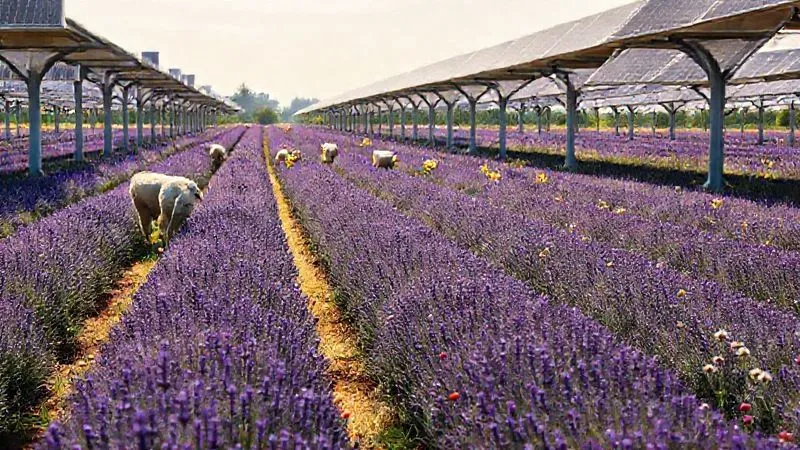
Habitat Restoration and Biodiversity Enhancement
Utility-scale solar projects can be designed to enhance local ecosystems rather than detract from them. This involves planting native, pollinator-friendly vegetation beneath and around solar arrays, creating new habitats for local wildlife, and implementing effective stormwater management to improve water quality. By working with environmental experts and local conservation groups, developers can turn a potential environmental concern into an ecological asset. This strategy not only mitigates environmental impacts but also generates goodwill and often streamlines permitting by demonstrating a commitment to ecological stewardship.
| Dispute Resolution Method | Pros | Cons |
|---|---|---|
| Direct Negotiation | Cost-effective, preserves relationships, flexible outcomes | Requires good faith, power imbalances possible, no neutral facilitator |
| Mediation | Neutral third party, focuses on interests, confidential, creative solutions | Non-binding, requires willingness from all parties, mediator fees |
| Arbitration | Binding decision, faster than litigation, private | Limited appeal rights, less flexible than mediation, arbitrator fees |
| Litigation | Binding and enforceable decision, public record, formal process | Expensive, time-consuming, adversarial, damages relationships, public record |
Building Trust and Long-Term Relationships
Resolving land use disputes for utility-scale solar projects isn't a one-time event; it's an ongoing process of relationship building. A project's success, and its long-term social license to operate, depend on sustained trust and engagement with the host community.
Post-Construction Community Engagement
Don't disappear once the panels are up. Maintain open lines of communication with the community throughout the operational life of the project. Establish a local contact person or a community liaison. Hold periodic town hall meetings to discuss project performance, address any emerging concerns, and share updates. This continued presence demonstrates accountability and reinforces the developer's commitment to being a good neighbor.
Adaptive Management and Monitoring
Land use plans, especially those involving environmental mitigation or agricultural integration, should not be static. Implement adaptive management strategies that allow for adjustments based on monitoring results and evolving community needs. For example, if a specific pollinator planting isn't thriving, be prepared to adapt the species mix. If a new concern arises regarding local wildlife, be proactive in finding solutions. This flexibility and responsiveness are crucial for maintaining trust and demonstrating genuine stewardship. The U.S. Environmental Protection Agency (EPA) frequently emphasizes adaptive management in large-scale environmental projects to ensure long-term success and sustainability.
Frequently Asked Questions (FAQ)
Q: What if local zoning explicitly prohibits utility-scale solar? A: This is a significant challenge. Your options include working with local officials to propose a zoning amendment, seeking a variance (though difficult for large projects), or challenging the zoning ordinance in court if it's deemed arbitrary or unconstitutional. Often, a combination of education, community engagement, and offering substantial local benefits can persuade local authorities to reconsider or amend their ordinances.
Q: How can I address concerns about solar panel waste and decommissioning? A: Be proactive with a clear, funded decommissioning plan from the outset. Discuss the project's end-of-life plan, including panel recycling strategies and site restoration commitments. Highlighting advancements in solar recycling technology and demonstrating financial assurances for decommissioning can significantly alleviate these concerns.
Q: What's the best approach to negotiate with multiple landowners who have differing opinions? A: This requires patience and often individualized negotiation. Consider using a common facilitator or mediator to bring a core group together, but be prepared for one-on-one discussions to address specific concerns. Flexible lease agreements that can be tailored to individual landowner needs (e.g., incorporating specific agricultural practices) can be very effective. Building trust with key opinion leaders among the landowners can also help bridge gaps.
Q: Can a solar project truly benefit a local economy beyond property taxes? A: Absolutely. Beyond property taxes and lease payments, solar projects can bring local job creation (construction, operation, maintenance), stimulate local businesses (catering, lodging, supplies), fund community projects through CBAs, and even provide opportunities for local energy ownership or community solar programs. Quantifying and communicating these benefits transparently is vital.
Q: How do I handle NIMBY (Not In My Backyard) opposition? A: NIMBYism often stems from a lack of information, fear of the unknown, or a feeling of powerlessness. Address it by starting engagement early, being transparent, actively listening to concerns (even if they seem irrational), and offering tangible, localized benefits. Sometimes, simply demonstrating that you've heard and understood their concerns, even if you can't fully satisfy them, can de-escalate opposition. Focus on building relationships and finding common ground.
Key Takeaways and Final Thoughts
- Proactive Engagement is Paramount: Start early, be transparent, and identify all stakeholders to prevent disputes before they escalate.
- Understand Local Nuances: Master local zoning, permitting, and community values; they are as critical as technical feasibility.
- Embrace Collaborative Resolution: Mediation and facilitated negotiation are powerful tools for finding win-win solutions that preserve relationships.
- Innovate with Co-Benefits: Explore agrivoltaics and ecological enhancements to turn potential conflicts into shared opportunities.
- Build Lasting Trust: Maintain open communication and adapt to community needs throughout the project's lifecycle.
Resolving land use disputes for utility-scale solar projects is undoubtedly complex, requiring a blend of legal acumen, community relations expertise, and a genuine commitment to sustainability. As an industry, we are not just building power plants; we are integrating new infrastructure into existing communities and landscapes. By approaching these challenges with empathy, strategic foresight, and a dedication to collaborative solutions, we can ensure that the clean energy transition is not just technically feasible, but socially equitable and widely embraced. The future of renewable energy depends on our ability to build not just solar farms, but strong, trusting relationships with the communities that host them.
Recommended Reading
- 5 Perilous Pitfalls: Asset Transfers Before Bankruptcy Filing?
- 7 Crucial Steps: Proving Trade Secret Theft by Former Employees
- 9 Proven Ways to Restructure Business Debt Without Chapter 11
- Navigating New Carbon Mandates: 7 Legal Strategies for Corporate Resilience
- 7 Critical Steps for Uncovering Hidden M&A Liabilities in Due Diligence



Comments
Leave a comment below. Your email will not be published. Required fields marked with *