



How to Respond to a DOJ Antitrust Subpoena for Your M&A Deal?
For over two decades in corporate law, I've personally witnessed the sheer panic that ripples through an organization when a Department of Justice (DOJ) antitrust subpoena lands on the CEO's desk. It's often delivered at the most critical juncture of an M&A deal, turning what was a triumphant synergy into a potential legal quagmire. The initial shock is palpable – a sense of 'Why us? Why now?' followed by the daunting realization of the immense undertaking ahead.
This isn't just a bureaucratic hurdle; it’s a direct challenge to your deal's viability, demanding an immediate, meticulous, and strategic response. The stakes are incredibly high: a misstep can lead to significant delays, costly litigation, forced divestitures, or even the outright abandonment of your merger or acquisition. Your team, already stretched thin by deal negotiations, now faces the monumental task of navigating complex legal demands, preserving vast amounts of data, and articulating a compelling defense to a skeptical government agency.
In this definitive guide, I will share the battle-tested framework I've developed and refined over years of guiding clients through these treacherous waters. You’ll learn not just what to do, but how to do it – from assembling your specialized task force and implementing an ironclad legal hold to strategically engaging with DOJ officials. My aim is to equip you with the actionable insights and expert strategies necessary to respond effectively to a DOJ antitrust subpoena, safeguard your M&A deal, and emerge with your strategic objectives intact.
Understanding the DOJ's Intent: Why Are They Watching Your Deal?
Before you can effectively respond to a DOJ antitrust subpoena, you must first understand the underlying reasons for its issuance. The DOJ isn’t acting arbitrarily; they are fulfilling their mandate to protect competition and consumers. Your M&A deal has likely triggered specific concerns that warrant a deeper investigation.
The Hart-Scott-Rodino (HSR) Act and Second Requests
Most significant M&A transactions in the U.S. are subject to the Hart-Scott-Rodino (HSR) Antitrust Improvements Act of 1976. This requires parties to file premerger notifications with both the DOJ and the Federal Trade Commission (FTC) if certain size-of-transaction and size-of-person thresholds are met. This initial filing starts a 30-day (or 15-day for cash tender offers/bankruptcy) waiting period, during which the agencies review the proposed transaction for potential antitrust concerns.
A subpoena, often referred to as a "Second Request," is issued when one of these agencies determines that the initial HSR filing raises substantive competitive concerns that cannot be resolved within the initial waiting period. It’s essentially a demand for more information – a lot more. The DOJ is looking for evidence that your proposed merger or acquisition might substantially lessen competition in a particular market, create a monopoly, or harm consumers through higher prices, reduced quality, or stifled innovation.
Key Competitive Concerns That Trigger Scrutiny
- Market Concentration: Will the combined entity control an excessive share of a relevant market, potentially leading to a monopoly or duopoly? The DOJ often uses metrics like the Herfindahl-Hirschman Index (HHI) to assess this.
- Elimination of a Significant Competitor: Is one of the merging parties a "maverick" firm that has historically exerted competitive pressure, and its elimination would allow remaining firms to raise prices or reduce quality?
- Innovation Concerns: In industries driven by R&D, will the merger reduce incentives for innovation or eliminate a nascent competitor that could have become a disruptive force?
- Harm to Buyers/Suppliers: Will the merger give the combined entity undue leverage over its customers or suppliers, leading to unfair terms or reduced choices?
- Coordinated Effects: Will the merger make it easier for remaining firms in the market to coordinate their behavior, rather than compete vigorously?
"In my experience, the DOJ's primary goal isn't to stop deals, but to ensure that market forces remain robust. Your response must demonstrate that your deal aligns with, or at least does not harm, this fundamental principle."
Assemble Your A-Team: The Immediate Response Task Force
The moment a DOJ antitrust subpoena arrives, time becomes your most precious commodity. The very first, non-negotiable step is to assemble a highly specialized and empowered task force. This isn't a job for your general counsel alone; it requires a multi-disciplinary team with clear roles and responsibilities.
Legal Counsel: Your First and Most Critical Call
Your antitrust counsel must be intimately familiar with DOJ procedures, merger review processes, and the specific competitive landscape of your industry. This is not the time for generalists. I always advise clients to engage external antitrust specialists who have a proven track record of successfully navigating Second Requests. They will:
- Interpret the Subpoena: Understand the precise scope, definitions, and deadlines, which are often incredibly broad and aggressive.
- Interface with the DOJ: Act as the primary point of contact, negotiating scope limitations, extensions, and technical details.
- Develop Strategy: Formulate the overarching legal and factual strategy for your response, identifying key themes and potential defenses.
- Manage E-Discovery: Oversee the massive data collection, review, and production process, ensuring compliance and protecting privilege.
Internal Stakeholders: Who Needs to Be Involved?
- In-House Legal Team: To coordinate with external counsel, manage internal communications, and ensure compliance with corporate policies.
- IT/E-Discovery Team: Absolutely critical for identifying, preserving, collecting, and processing electronic data. They are the backbone of your data response.
- M&A Deal Team: Those directly involved in the transaction will have crucial insights into the strategic rationale, market definitions, and competitive analyses.
- Key Executives & Business Leaders: Individuals with deep market knowledge, competitive insights, and strategic decision-making authority will be essential custodians of information and potential witnesses.
- Communications/PR: To manage internal and external messaging, especially if the subpoena becomes public knowledge.

Establishing clear communication channels and a "single source of truth" for all subpoena-related matters is paramount. Confusion and inconsistent messaging can be incredibly damaging.
Implementing a Robust Legal Hold: Preserving Critical Evidence
The moment you receive an antitrust subpoena, your legal obligation to preserve relevant information is triggered. This isn't optional; failure to implement a robust legal hold can lead to severe sanctions, including adverse inferences against your company, fines, and even the dismissal of your deal. This is where your IT and legal teams must work in lockstep.
Understanding the Scope and Trigger
A legal hold – also known as a litigation hold or preservation order – is an internal directive requiring individuals and departments to preserve all potentially relevant information, both electronic and physical, that might be responsive to the subpoena. The scope is often broad, encompassing documents, emails, instant messages, presentations, spreadsheets, databases, and even voicemails related to the merger, competitive dynamics, market conditions, and strategic planning.
The trigger for the legal hold is the receipt of the subpoena. There is no grace period. Your ability to demonstrate that you acted immediately and comprehensively is vital.
Communicating the Hold: Best Practices
Based on my experience, a well-executed legal hold involves these critical steps:
- Identify Key Custodians: Work with legal counsel and the M&A team to identify all individuals – past and present – who possess potentially relevant information. This includes executives, sales, marketing, R&D, finance, and IT personnel.
- Draft a Clear Legal Hold Notice: This document must clearly explain the preservation obligation, define what constitutes "relevant information," list the types of data to be preserved, and prohibit routine deletion or destruction of such data. It should be written in plain language, avoiding excessive legal jargon.
- Distribute and Acknowledge: Send the legal hold notice to all identified custodians. Crucially, require each recipient to acknowledge receipt and understanding of their obligations, typically through an electronic system.
- Implement Technical Safeguards: Your IT team must implement technical measures to prevent the deletion or alteration of data. This includes suspending automated retention policies, archiving relevant email accounts, preserving network drives, and taking snapshots of key systems.
- Conduct Follow-Ups and Training: Regular reminders and, where necessary, targeted training sessions for custodians can reinforce the importance of the legal hold and address any questions or ambiguities.
- Document Everything: Maintain a detailed log of all legal hold activities, including who received the notice, when, and their acknowledgments. This documentation is your defense if the adequacy of your preservation efforts is challenged.
According to the Electronic Discovery Reference Model (EDRM), effective legal hold management is the foundational step for defensible e-discovery. Neglecting this phase is a common and costly mistake.
Navigating the Data Deluge: Scoping and Collection
A DOJ antitrust subpoena typically demands an enormous volume of documents and data. This "Second Request" can easily run into millions of documents and terabytes of data. Successfully navigating this data deluge requires meticulous planning, advanced technology, and a clear understanding of the DOJ's requirements.
Defining Relevant Custodians and Data Sources
Once your legal hold is in place, the next step is to systematically collect the preserved data. Your antitrust counsel will work with the DOJ to "negotiate" the scope of the subpoena, attempting to narrow the definitions of relevant markets, products, services, and timeframes to reduce the burden. Even with successful negotiation, the scope remains substantial.
Key data sources typically include:
- Email Accounts: From identified custodians, including active and archived mailboxes.
- Network Drives/File Shares: Departmental and individual shared drives.
- Collaboration Platforms: Microsoft Teams, Slack, SharePoint, Google Drive, etc.
- Mobile Devices: Text messages, call logs, and documents on company-issued phones.
- Proprietary Databases: CRM, ERP, sales data, pricing models, market research, and competitive intelligence databases.
- Physical Documents: Board meeting minutes, strategic plans, competitive analyses, and investor presentations.
Leveraging Technology for Efficient E-Discovery
Manual collection for a Second Request is practically impossible. This is where advanced e-discovery platforms become indispensable. These tools help to:
- Ingest and Process Data: Standardize vast amounts of disparate data from various sources.
- Deduplicate and De-Nist: Remove exact duplicate files and system files to reduce the review volume.
- Apply Search Terms: Use agreed-upon keywords and phrases (often negotiated with the DOJ) to filter for potentially responsive documents.
- Categorize and Prioritize: Use analytics to identify key documents and insights.
| Data Type | Primary Sources | Key Challenges |
|---|---|---|
| Emails & Attachments | Exchange, Gmail, O365, archived PSTs | Volume, threading, privilege identification |
| Network Drives & Cloud Storage | SharePoint, OneDrive, local servers | Redundancy, access permissions, legacy data |
| Collaboration Tools | Teams, Slack, Zoom chats | Ephemeral data, non-standard formats, context |
| Proprietary Databases | CRM, ERP, Sales Analytics | Data extraction, structured vs. unstructured, PII |
| Physical Documents | Paper files, meeting binders | Scanning, OCR, indexing |
Case Study: How Apex Innovations Streamlined Data Collection
Apex Innovations, a mid-sized tech company, faced a DOJ Second Request for its acquisition of a smaller competitor. The initial subpoena demanded data from 50 custodians over a 7-year period, totaling over 15 terabytes. Instead of a manual, custodian-by-custodian approach, I advised them to implement a phased, technology-driven strategy. They invested in an advanced e-discovery platform, which allowed them to:
- Automate the collection of O365 data, reducing manual effort by 70%.
- Apply iterative search terms and conceptual analytics to identify "hot documents" early, prioritizing review.
- Negotiate with the DOJ to focus on a smaller set of highly relevant custodians and a narrower timeframe after demonstrating the effectiveness of their search protocol.
This approach not only significantly reduced the overall cost of discovery but also allowed them to meet aggressive deadlines, demonstrating good faith and efficiency to the DOJ, ultimately helping to move their deal forward.
Crafting Your Narrative: Strategic Document Review and Production
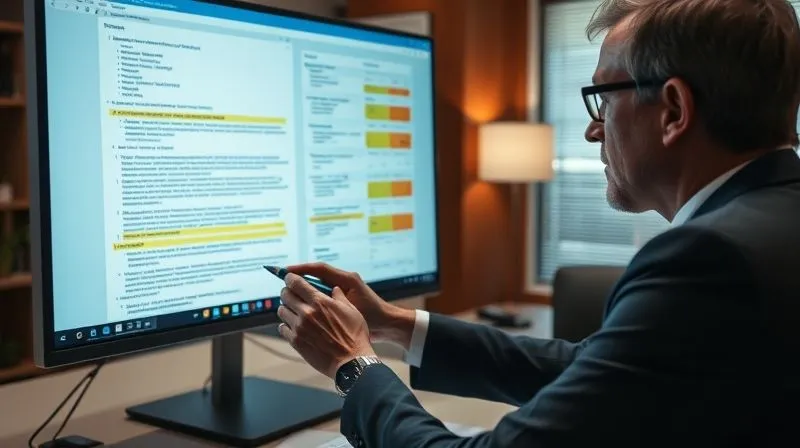
Once the data is collected and processed, the most labor-intensive phase begins: document review. This is where your legal team, often augmented by contract attorneys, meticulously examines every potentially responsive document to determine its relevance, responsiveness, and privilege status. This process is where you truly start to craft the narrative of your deal.
Review Protocols and Quality Control
A well-defined review protocol is essential. Your antitrust counsel will establish guidelines for reviewers, including:
- Relevance Tags: Clearly defining what makes a document "responsive" to the subpoena's requests.
- Confidentiality Designations: Identifying documents that contain sensitive business information requiring protective orders.
- Privilege Codes: Marking documents that fall under attorney-client privilege or attorney work product doctrine.
- Issue Codes: Categorizing documents by key themes or competitive issues identified by the DOJ.
Quality control is non-negotiable. Regular spot checks, second-level reviews by senior attorneys, and consistency checks using analytics are crucial to ensure accuracy and prevent errors. Inconsistent coding or missed privileged documents can have serious repercussions.
Protecting Privilege: Attorney-Client & Work Product
One of the most critical aspects of document review is identifying and protecting privileged communications. The attorney-client privilege protects confidential communications between you and your legal counsel for the purpose of seeking or rendering legal advice. The work product doctrine protects materials prepared in anticipation of litigation. These protections are sacrosanct.
Any document deemed privileged must be withheld from production. Instead, you must create a "privilege log," which is a detailed list of each withheld document, describing its nature, author, recipient, date, and the basis for the privilege claim, without revealing the privileged content itself. This log is provided to the DOJ, who may challenge specific privilege claims. As a leading authority on legal ethics, the American Bar Association's Model Rules of Professional Conduct underscore the profound importance of maintaining client confidentiality and privilege.
Redactions and Production
Sometimes, only parts of a document are privileged or contain highly sensitive, non-responsive information (e.g., personally identifiable information or trade secrets unrelated to the antitrust inquiry). In such cases, redactions – blacking out specific portions of a document – are necessary. Each redaction must be justified and clearly marked.
Finally, the responsive, non-privileged, and appropriately redacted documents are produced to the DOJ in an agreed-upon electronic format, typically TIFF or PDF images with associated metadata. This is a highly technical process that requires careful coordination with your e-discovery vendor to ensure data integrity and compliance with DOJ specifications.
Preparing for Depositions and Interrogatories: Executive Readiness
Beyond document production, the DOJ will almost certainly seek testimony from key individuals within your organization through depositions, and written answers to specific questions via interrogatories. These are high-stakes moments that can significantly impact the outcome of the investigation.
The Importance of Witness Preparation
Preparing witnesses for deposition is an art and a science. It's not about coaching them on what to say, but rather on how to say it – truthfully, clearly, and strategically. I've seen countless cases where unprepared witnesses inadvertently damaged their company's position. Key aspects of witness preparation include:
- Review Key Documents: Witnesses must be familiar with the most important documents they authored, received, or are associated with.
- Understand the DOJ's Theory: Counsel will explain the DOJ's likely competitive concerns and how the witness's testimony fits into the overall narrative.
- Practice Questioning: Conduct mock depositions, complete with direct and cross-examination, to simulate the actual experience.
- Focus on Demeanor and Communication: Teach witnesses to listen carefully, answer only the question asked, avoid speculation, and remain calm and composed.
- Privilege Awareness: Remind witnesses about the attorney-client privilege and when it applies.
The DOJ attorneys are highly skilled and will probe for inconsistencies, admissions, and any information that supports their theory of competitive harm. Thorough preparation is your best defense.
Anticipating Key Questions and Themes
While every deposition is unique, certain themes are common in antitrust investigations:
- Market Definition: How do you define the relevant product and geographic markets? Who are your competitors?
- Competitive Dynamics: How do you compete? What are your strategies for pricing, innovation, and customer acquisition?
- Rationale for the Deal: What are the pro-competitive benefits of the merger? Why is it good for consumers?
- Internal Documents: Be prepared to discuss internal documents (e.g., "hot documents" that might suggest anti-competitive intent or market power).
- Synergies and Efficiencies: How will the merger create efficiencies that benefit consumers?
Interrogatories, while less dynamic than depositions, require equally precise and legally sound answers. They are typically drafted by counsel and reviewed extensively to ensure accuracy and consistency with your overall legal strategy.
Engagement with the DOJ: Negotiation and Advocacy
Responding to a DOJ antitrust subpoena is not a passive exercise; it’s an active process of engagement, negotiation, and advocacy. Your antitrust counsel plays a crucial role in maintaining a constructive dialogue with the government attorneys while fiercely advocating for your deal.
Establishing a Constructive Dialogue
From the moment the subpoena is issued, your counsel will be in regular communication with the DOJ. This dialogue is essential for:
- Scope Negotiations: Working to narrow the scope of the Second Request, reducing the burden of document production.
- Timing and Extensions: Requesting reasonable extensions for complex productions.
- Clarifying Requests: Seeking clarification on ambiguous document requests or interrogatory questions.
- Presenting Your Case: Proactively sharing information and presentations that articulate the pro-competitive benefits of your deal and rebut the DOJ's concerns.
A cooperative, yet firm, approach often yields better results than an adversarial one. The goal is to provide the DOJ with the information they need to understand your deal and alleviate their concerns, without over-producing or making unnecessary concessions.
"Proactive engagement, backed by a strong factual and economic analysis, is key. Don't just respond; educate the DOJ on why your M&A deal is pro-competitive and beneficial. This advocacy can significantly influence their final decision."
Potential Outcomes: Consent Decrees to Litigation
The DOJ's review can conclude in several ways:
- Clearance: The DOJ may close its investigation and allow the deal to proceed without conditions. This is the best-case scenario.
- Consent Decree: If competitive concerns persist, the DOJ may propose a consent decree. This is a legally binding agreement that typically requires the merging parties to take certain actions to remedy the competitive harm, such as divesting specific assets, product lines, or subsidiaries. Negotiating a favorable consent decree is a delicate balance of protecting your strategic interests while satisfying the DOJ's demands.
- Litigation: In rare cases, if the parties cannot reach an agreement on a consent decree, the DOJ may file a lawsuit in federal court to block the merger. This is the most extreme outcome, involving protracted and costly litigation.

Your antitrust counsel will guide you through these potential outcomes, advising on the risks and benefits of each path and helping you make informed strategic decisions.
Post-Response Strategy: What Happens Next?
Even after you've submitted your comprehensive response to the DOJ antitrust subpoena, the process isn't over. The period following your production is often one of continued scrutiny, follow-up questions, and critical decision-making. A robust post-response strategy is essential to manage uncertainties and prepare for potential next steps.
Monitoring the Review Process
The DOJ will now be reviewing the vast amount of information you've provided. This phase can involve:
- Follow-up Questions: Expect additional requests for clarification or further data. These might come in the form of informal inquiries or supplemental document requests.
- Economist Reports: The DOJ’s economic team will analyze the submitted data and your market arguments. Your own economic experts will likely be engaged to prepare reports and rebut the DOJ’s findings.
- Third-Party Interviews: The DOJ may interview your customers, suppliers, and competitors to gather additional perspectives on the market dynamics and potential impact of the merger.
- Internal Deliberations: The DOJ will hold internal meetings and consultations with various divisions to formulate its final recommendation.
Your legal team will continue to monitor these developments closely, proactively addressing new concerns and reinforcing your deal’s pro-competitive narrative. This vigilance ensures that no new issues arise unexpectedly.
Contingency Planning for Deal Delays or Challenges
A Second Request inevitably introduces delays into the M&A timeline. It's crucial to have contingency plans in place for various scenarios:
| Scenario | Potential Impact | Contingency Plan |
|---|---|---|
| Extended Review Period | Increased costs, deal fatigue, financing challenges | Renegotiate deal terms for time, secure bridge financing, update investor relations |
| DOJ Seeks Divestitures | Loss of key assets, reduced synergies, complex integration | Identify potential divestiture buyers, model financial impact, prepare for carve-out process |
| Deal Abandonment Risk | Reputational damage, significant sunk costs, market uncertainty | Develop internal messaging, reassess standalone strategy, prepare for potential litigation |
| Litigation Threat | Protracted legal battle, high legal fees, public scrutiny | Allocate litigation budget, prepare trial team, refine legal arguments |
Open communication with your M&A counterparty is vital during this period. Transparency regarding the DOJ process and potential outcomes can help maintain trust and ensure both parties are aligned on strategy and next steps. Often, the merger agreement itself will contain provisions addressing the allocation of antitrust risk and responsibilities for responding to agency inquiries.
Frequently Asked Questions (FAQ)
How long does a DOJ antitrust review typically take after a subpoena? The timeline for responding to a Second Request is highly variable. While the HSR Act technically allows 30 days after substantial compliance with the Second Request for the DOJ to act, the reality is often much longer. The entire process, from subpoena issuance to resolution, can range from several months to over a year, depending on the complexity of the deal, the volume of data, and the nature of the competitive concerns. Extensions for production are common and often necessary due to the sheer volume of material requested.
Can we continue with our M&A deal during the subpoena response? No. The issuance of a Second Request automatically extends the HSR waiting period until 30 days after both parties have substantially complied with the request (or 10 days for cash tender offers/bankruptcy). This means you generally cannot close your M&A deal until the DOJ has cleared it. Any attempt to "jump the gun" and close before clearance can lead to severe penalties, including civil penalties and court orders to unwind the transaction.
What if we accidentally produce privileged documents? Accidental production of privileged documents is a serious concern. While "clawback" agreements are often negotiated with the DOJ (allowing for the return of inadvertently produced privileged material), they are not foolproof. Such an error can waive privilege, meaning the DOJ can then use that information against you. This underscores the critical importance of robust review protocols, meticulous quality control, and careful privilege logging by experienced antitrust counsel.
What are the biggest mistakes companies make when responding to a subpoena? In my experience, the most common and damaging mistakes include: 1) Delaying the legal hold, leading to spoliation of evidence; 2) Underestimating the scope and complexity of the Second Request; 3) Failing to engage experienced antitrust counsel early; 4) Inconsistent messaging or factual inaccuracies across documents and witness testimony; and 5) An adversarial or uncooperative approach with the DOJ, which can harden their stance.
Is it possible to avoid a second request entirely? While not guaranteed, proactive measures can reduce the likelihood of a Second Request. This includes conducting thorough pre-deal antitrust analyses, identifying potential competitive overlaps early, and strategically structuring the deal or preparing a "white paper" to proactively address potential concerns with the agencies during the initial HSR waiting period. Strong internal competitive analyses and strategic documents that are well-drafted can also help shape the narrative favorably from the outset.
Key Takeaways and Final Thoughts
Responding to a DOJ antitrust subpoena for your M&A deal is undoubtedly one of the most challenging legal and operational undertakings a company can face. It demands immediate action, meticulous attention to detail, and a deep understanding of antitrust law and government processes. However, with the right strategy and expert guidance, it is a challenge that can be successfully navigated.
- Act Immediately: Implement a legal hold the moment the subpoena arrives.
- Assemble an Expert Team: Engage specialized antitrust counsel and involve key internal stakeholders.
- Master Your Data: Leverage technology for efficient, defensible e-discovery and meticulous document review.
- Protect Privilege: Safeguard attorney-client privilege and work product at all costs.
- Prepare Witnesses Rigorously: Ensure executives are ready for depositions and interrogatories.
- Engage Strategically: Maintain a constructive dialogue with the DOJ while advocating fiercely for your deal.
- Plan for Contingencies: Anticipate delays and potential remedies, and communicate openly with your deal partner.
Remember, a DOJ antitrust subpoena is not necessarily a death knell for your M&A aspirations. It's a critical phase that, when managed expertly and strategically, can lead to a successful resolution and the ultimate realization of your deal's strategic value. Approach it with diligence, determination, and the seasoned advice of those who have walked this path countless times, and you will significantly enhance your chances of success.
Recommended Reading
- 7 Legal Strategies: Secure AI-Generated IP from Digital Theft
- Maximize Home Office Tax Deductions: 7 Legal Strategies for Professionals
- Wildcat Strikes: Your 5-Step Legal Response for Unionized Teams
- 5 Legal Steps: Compelling Manufacturers to Honor Ambiguous Warranties
- 7 Legal Remedies for Predatory Lending Victims: Fight Back & Win!



Comments
Leave a comment below. Your email will not be published. Required fields marked with *