



How to Respond to an Administrative Law Violation Notice?
For over two decades in the regulatory compliance and administrative law arena, I've witnessed firsthand the sheer panic and confusion that sweeps over businesses and individuals upon receiving an administrative law violation notice. It often feels like a sudden, unexpected blow from a faceless bureaucracy, leaving many paralyzed and unsure of their next move. This initial hesitation, or worse, an ill-informed knee-jerk reaction, can unfortunately escalate a manageable situation into a costly, protracted legal battle.
The problem isn't just the violation itself, but the overwhelming complexity of administrative procedures and the potential for severe penalties—ranging from hefty fines and license suspensions to operational shutdowns. Many assume immediate guilt or that the system is unchallengeable, overlooking critical opportunities to present their side, mitigate damages, or even overturn the allegations entirely. This feeling of helplessness is precisely what we aim to address.
In this definitive guide, I will share my accumulated wisdom and practical frameworks for effectively navigating an administrative law violation notice. We'll move beyond the fear, providing you with actionable steps, strategic insights, and a clear roadmap to understand, assess, and respond to agency actions. Prepare to transform uncertainty into a well-informed, confident defense, leveraging expert strategies and real-world compliance tactics.
Understanding the Nature of the Violation Notice
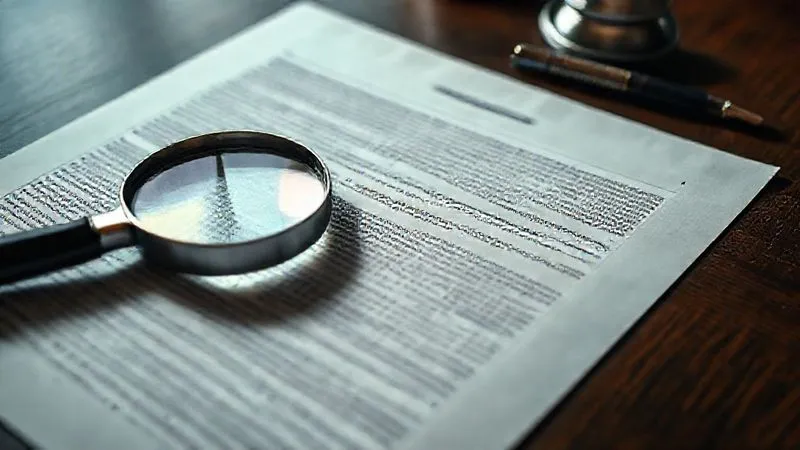
Before any action can be taken, you must thoroughly understand the document in front of you. This isn't merely skimming; it's a deep dive into the specifics. I've seen countless cases where a lack of clarity here led to missteps and wasted resources.
Decoding the Specific Allegations
Every administrative law violation notice will detail the specific statutes, rules, or regulations you are alleged to have violated. Pay close attention to the exact language used. Are there specific dates, times, or locations mentioned? What actions or inactions are being attributed to you or your organization?
- Identify the Legal Basis: Pinpoint the specific administrative code or statute cited.
- Understand the Facts Alleged: Distinguish between factual assertions and legal conclusions.
- Note the Proposed Penalty: What is the agency seeking? A fine, a cease and desist order, license revocation?
Often, the notice will also outline the procedural rights available to you, including deadlines for response and opportunities for hearings. Missing these critical details can severely limit your options.
Identifying the Issuing Agency and Its Authority
Knowing who issued the notice is as crucial as knowing what it says. Different agencies operate under different statutory mandates and have varying levels of enforcement power. Is it a state environmental protection agency, a federal labor board, or a local zoning commission?
Understanding the agency's jurisdiction and its specific regulations is paramount. In my experience, a thorough understanding of the agency's enabling statutes, like the Administrative Procedure Act (APA) at the federal level, can reveal procedural requirements or limitations that work in your favor. This initial research forms the bedrock of your defense strategy.
The Critical First 24-72 Hours: Initial Steps and Assessment
The moments immediately following the receipt of an administrative law violation notice are critical. Your initial actions, or lack thereof, can significantly impact the outcome. This is not the time for rash decisions but for a calm, methodical approach.
Do Not Panic: The Importance of Measured Response
The emotional response to a violation notice can be intense. However, succumbing to panic often leads to impulsive actions, such as immediately admitting fault or providing unsolicited information, which can be detrimental. Take a deep breath. Gather your thoughts. Remember, you have rights and options.
Expert Insight: "The most common mistake I see is reacting without a plan. A measured, strategic response is your strongest defense against administrative overreach or misunderstanding."
Preserving Evidence and Documentation
As soon as you receive the notice, your priority should shift to evidence preservation. This includes all documents, communications, data, and physical evidence related to the alleged violation. Think of it as building your case from day one.
- Secure All Relevant Records: This might include permits, licenses, operational logs, internal policies, training records, emails, and financial statements.
- Interview Key Personnel: Speak with employees who have direct knowledge of the events described in the notice. Document their accounts carefully.
- Photograph or Videotape: If physical conditions are relevant, document them thoroughly with date and time stamps.
- Create a Chronology: Develop a timeline of events leading up to and following the alleged violation. This helps organize your thoughts and identify gaps.
Failing to preserve evidence can leave you vulnerable later. As a seasoned expert, I always advise clients to err on the side of over-documentation.
| Action Step | Priority | Notes |
|---|---|---|
| Review Notice & Deadlines | Immediate | Understand allegations, identify agency, note response timeline. |
| Preserve All Evidence | High | Gather documents, data, communications, physical evidence. |
| Do NOT Admit Guilt | Critical | Avoid spontaneous statements or admissions. |
| Consult Legal Counsel | High | Seek expert advice on agency procedures and defense strategy. |
Strategic Response Pathways: Formal vs. Informal Resolution
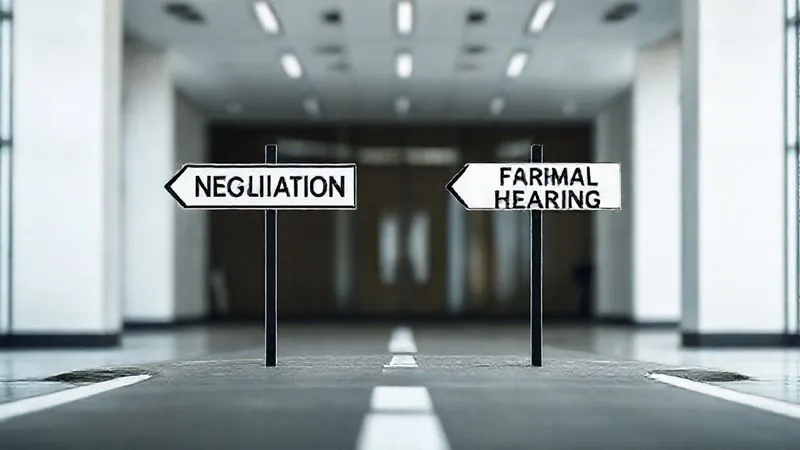
Once you've understood the notice and preserved evidence, the next step is to choose your battleground. You generally have two broad pathways: seeking an informal resolution or preparing for a formal administrative process. The choice depends heavily on the specifics of your case, the agency involved, and your desired outcome.
Informal Resolution: Negotiation and Settlement
Often, the most efficient and cost-effective approach is to attempt an informal resolution. This involves direct communication with the agency to negotiate a settlement, clarify misunderstandings, or demonstrate compliance. It's an opportunity to present your side without the full rigors of a formal hearing.
- Initial Contact: Reach out to the agency contact person identified in the notice.
- Present Your Position: Clearly and concisely explain your understanding of the facts, provide mitigating circumstances, or demonstrate corrective actions already taken.
- Propose Solutions: Offer a compliance plan, a reduced penalty, or an alternative resolution.
- Document Everything: Keep meticulous records of all communications, meetings, and agreements.
In my experience, agencies are often open to negotiation, especially if you present a well-reasoned argument and demonstrate a genuine commitment to compliance. It’s about finding common ground and avoiding unnecessary litigation.
Formal Resolution: Administrative Hearings and Appeals
If informal resolution isn't possible, or if the stakes are too high, you'll likely proceed to a formal administrative hearing. This is a quasi-judicial process, often presided over by an Administrative Law Judge (ALJ), where rules of evidence and procedure apply, though often less strictly than in court.
This pathway involves presenting your case, calling witnesses, cross-examining the agency's witnesses, and submitting legal arguments. It's a more adversarial process that requires careful preparation and often, the assistance of legal counsel. Understanding the specific agency's hearing rules is critical for success.
Building Your Defense: Gathering Evidence and Crafting Your Argument
Whether you pursue informal or formal resolution, a robust defense is paramount. This involves not just collecting evidence but strategically organizing it and constructing a compelling narrative. Think of yourself as a storyteller, presenting your version of events supported by verifiable facts.
Legal Research and Precedent
A significant part of building your defense involves legal research. This means delving into the specific statutes and regulations cited, as well as any relevant agency interpretations, guidance documents, or prior enforcement actions. Are there precedents that support your position or challenge the agency's interpretation?
Understanding how courts and ALJs have interpreted similar provisions can provide powerful leverage. For instance, you might find that an agency's interpretation exceeds its statutory authority or that a penalty is disproportionate to similar past violations. Resources like the Legal Information Institute (LII) at Cornell Law School offer excellent starting points for administrative law research.
Witness Identification and Testimony
Witnesses can be invaluable in corroborating your claims or refuting the agency's allegations. Identify individuals who have direct knowledge of the facts, including employees, contractors, or even customers. Prepare them thoroughly for potential testimony, ensuring they understand the process and the importance of accurate, truthful statements.
In my experience, credible witness testimony can often sway an ALJ, especially when it provides context or explains actions that might otherwise appear to be violations. However, poorly prepared witnesses can inadvertently harm your case, so training is crucial.
Case Study: Navigating a Complex Environmental Violation
Case Study: How GreenTech Solutions Mitigated a Hazardous Waste Fine
GreenTech Solutions, a mid-sized manufacturing firm, received a severe administrative law violation notice from the state's Environmental Protection Agency (EPA) for alleged improper disposal of hazardous waste, carrying a proposed fine of $150,000. The notice cited specific dates and quantities.
Upon receiving the notice, GreenTech immediately engaged legal counsel (a move I highly recommend). Their first step was to halt any further disposal activities and conduct an internal audit. They discovered that a new, inadequately trained employee had indeed misclassified a batch of waste for three days. However, the internal audit also revealed that the waste was quickly identified and correctly re-disposed of within 24 hours of the error, with no environmental harm.
Their defense strategy involved:
- Detailed Documentation: Presenting internal waste manifests, training records, and photos of the corrected disposal.
- Expert Testimony: An environmental consultant testified that the brief misclassification posed negligible environmental risk due to the rapid corrective action.
- Corrective Action Plan: Submitting a revised, mandatory training program for all waste-handling personnel, demonstrating proactive compliance.
Through informal negotiations, GreenTech presented this robust evidence package, emphasizing their swift, voluntary corrective actions and the minimal actual harm. The EPA, impressed by their proactive response and the clear documentation, reduced the fine by 80% to $30,000 and required only an enhanced compliance monitoring period instead of a full operational audit. This demonstrated the power of a well-structured defense and proactive engagement.
The Role of Legal Counsel: When to Engage an Attorney
While this guide provides a comprehensive framework, there are situations where attempting to navigate an administrative law violation notice alone is simply not advisable. In my career, I've seen the stark difference that experienced legal counsel can make.
Expertise in Administrative Procedure
Administrative law is a highly specialized field. Attorneys who regularly practice in this area possess an intimate knowledge of agency-specific regulations, procedural rules, and unwritten expectations that are not readily available to the public. They understand the nuances of due process within the administrative context, which can differ significantly from judicial courts.
An attorney can:
- Interpret Complex Regulations: Translate legal jargon and identify potential defenses you might overlook.
- Manage Deadlines: Ensure all filings and responses are timely and procedurally correct.
- Represent You: Act as your advocate in all communications, negotiations, and hearings.
Mitigating Risks and Costs
The cost of legal counsel can seem daunting, but it's often an investment that prevents far greater expenses in fines, penalties, and operational disruptions. An experienced attorney can often negotiate more favorable settlements, reduce penalties, or even get the violation dismissed entirely, ultimately saving you money and protecting your reputation.
Expert Insight: "Consider legal counsel not as an expense, but as an insurance policy. The upfront cost can prevent catastrophic long-term consequences, especially when your license, livelihood, or business operations are at stake."
Navigating the Administrative Hearing Process
If informal resolution fails, or if the complexity and stakes of your administrative law violation notice demand it, you will likely proceed to a formal administrative hearing. This is a structured process, akin to a court trial but often more streamlined, requiring meticulous preparation.
Pre-Hearing Conferences and Discovery
Before the actual hearing, agencies often schedule pre-hearing conferences. These are opportunities to clarify issues, exchange witness lists and exhibits, and potentially narrow the scope of the dispute. This phase can also involve discovery, where both sides request information and documents from each other.
Active participation in pre-hearing activities is crucial. It helps you understand the agency's case better and prepare your counter-arguments. Failing to engage effectively here can lead to surprises at the hearing itself, which you definitely want to avoid.
Presenting Your Case and Cross-Examination
During the hearing, you (or your attorney) will have the opportunity to present your evidence, call witnesses, and make legal arguments. The agency will do the same. This is where your diligent evidence preservation and strategic defense building truly pay off. Each piece of evidence and every witness testimony should support your overarching narrative.
Cross-examination is also a critical component. You will have the chance to question the agency's witnesses, challenging their testimony and credibility. Conversely, your witnesses will be cross-examined by the agency. Thorough preparation for both direct and cross-examination is paramount for success.

Post-Hearing Actions: Appeals and Compliance Assurance
The administrative process doesn't necessarily end with the hearing decision. Depending on the outcome, you may have further avenues for recourse, and critically, you must ensure future compliance to avoid repeat violations.
Understanding Agency Decisions and Appeal Rights
After the hearing, the Administrative Law Judge (ALJ) will issue a decision. This decision will typically outline the findings of fact, conclusions of law, and the final order or penalty. Carefully review this document to understand its implications. If the decision is unfavorable, you generally have the right to appeal.
Appeals typically proceed through a hierarchical structure: first to a higher administrative body within the agency (e.g., an agency review board), and then potentially to state or federal courts. The grounds for appeal are usually limited to errors of law, abuse of discretion, or findings of fact not supported by substantial evidence. Strict deadlines apply to all appeals, so timely action is essential.
Implementing Corrective Actions and Future Compliance
Regardless of the hearing's outcome, a critical step is to implement any required corrective actions and enhance your overall compliance program. Even if you win, reviewing your internal processes can prevent future administrative law violation notices.
- Review Internal Policies: Update or create new policies to address the root cause of the violation.
- Conduct Training: Ensure all relevant personnel are adequately trained on compliance requirements.
- Implement Monitoring: Establish systems to regularly monitor compliance and identify potential issues early.
- Seek Expert Guidance: Consider engaging a compliance consultant to conduct periodic audits and ensure ongoing adherence to regulatory standards, as highlighted by Harvard Business Review's insights on compliance leadership.
Proactive compliance is always less costly and less stressful than reactive defense. It builds a culture of responsibility and significantly reduces your exposure to future administrative enforcement actions.
Frequently Asked Questions (FAQ)
Q: What if I believe the violation notice is based on incorrect information or a misunderstanding? A: This is a common scenario. Your primary goal should be to gather all evidence that supports your version of events. This includes documents, witness statements, and any data that refutes the agency's claims. Present this evidence clearly and concisely, initially through informal channels, and if necessary, during a formal hearing. Do not assume the agency has all the facts; it's your responsibility to provide them.
Q: Can I represent myself in an administrative hearing? A: Yes, in many jurisdictions and for certain types of administrative hearings, you have the right to represent yourself (pro se). However, administrative law is complex, and agencies have experienced legal counsel. Unless you have significant legal experience, particularly in administrative procedure, I strongly advise against self-representation. The risks of procedural errors or failing to present your case effectively are high, potentially leading to unfavorable outcomes.
Q: What are the typical deadlines for responding to an administrative law violation notice? A: Deadlines vary significantly depending on the issuing agency and the specific regulation. They can range from a few days to 30 or even 60 days. It is absolutely critical to locate and adhere to these deadlines as stated in the notice. Missing a deadline can result in a default judgment against you, forfeiting your right to challenge the violation. Always assume the shortest deadline applies until you confirm otherwise.
Q: What are the potential consequences if I ignore an administrative violation notice? A: Ignoring an administrative law violation notice is perhaps the gravest mistake you can make. It almost invariably leads to a default judgment against you. This means the agency's allegations will be taken as true, and the proposed penalties will be imposed without your input. Consequences can include maximum fines, license suspension or revocation, mandatory operational changes, and even criminal charges in severe cases. Furthermore, ignoring the notice can damage your reputation and make future interactions with regulatory bodies much more difficult.
Q: How can I prevent future administrative law violations? A: Prevention is always better than cure. Focus on establishing a robust compliance culture within your organization. This includes developing clear, written policies and procedures, providing regular and comprehensive employee training, conducting internal audits, staying current with regulatory changes, and maintaining meticulous records. Proactively engaging with regulatory bodies through questions or requests for clarification can also build a positive relationship and prevent misunderstandings.
Key Takeaways and Final Thoughts
Receiving an administrative law violation notice can be daunting, but it is not the end of the road. By approaching it with a clear strategy, a methodical mindset, and the right expertise, you can navigate these challenges successfully. Remember, your response is not just about addressing the immediate issue; it's about protecting your organization's integrity and ensuring its long-term viability.
- Act Swiftly, Not Rashly: Understand the notice thoroughly before taking any action.
- Preserve Evidence Diligently: Your documentation is your strongest ally.
- Explore All Resolution Avenues: Don't underestimate the power of negotiation.
- Seek Expert Counsel: An experienced administrative law attorney is an invaluable asset.
- Prioritize Future Compliance: Use this experience to strengthen your preventative measures.
I've seen countless businesses turn what seemed like an insurmountable challenge into an opportunity for growth and stronger compliance. By following the actionable steps and expert insights outlined here, you are not just responding to an administrative law violation notice; you are asserting your rights, mitigating risks, and building a more resilient future for your operations. Equip yourself with knowledge, act with conviction, and you will emerge stronger.
Recommended Reading
- ESG Regulations & Corporate Legal Strategy: 7 Key Impacts to Know
- Hidden Fees? 7 Steps to Litigate Deceptive Subscription Billing
- Navigating New Carbon Mandates: 7 Legal Strategies for Corporate Resilience
- Unlocking Your Rights: The Crucial Time Limits for Maritime Cargo Claims
- Autonomous Weapons: 7 IHL Strategies to Limit Civilian Harm



Comments
Leave a comment below. Your email will not be published. Required fields marked with *