



How to Shield Personal Assets from Business Debt in Bankruptcy?
For over 20 years in bankruptcy law, I've witnessed countless entrepreneurs pour their heart, soul, and often, their entire life savings into their businesses. It's a journey filled with hope, innovation, and immense risk. The unfortunate truth is that not every venture succeeds, and when a business faces insolvency, the fear of losing everything – the family home, retirement savings, personal investments – becomes a terrifying reality for many.
This fear isn't unfounded. Without proper planning and a clear understanding of the legal distinctions between business and personal finances, the line can quickly blur, leaving personal assets vulnerable to business creditors. I've seen hardworking individuals lose their personal security simply because they weren't aware of the crucial safeguards available or made common, avoidable mistakes.
This comprehensive guide is designed to empower you with the knowledge and strategies necessary to understand how to shield personal assets from business debt in bankruptcy. We'll delve into actionable frameworks, critical legal distinctions, and expert insights drawn from decades of experience, ensuring you're equipped to protect your personal financial future, even if your business faces its toughest challenge.
Understanding the Legal Landscape: Limited Liability and Beyond
The foundation of personal asset protection for business owners often lies in the concept of limited liability. This legal principle is designed to separate the financial obligations of the business from the personal liabilities of its owners. However, it's not an automatic shield; it requires careful adherence to legal formalities and strategic choices.
The Corporate Veil: Your First Line of Defense
When you establish your business as a corporation (C-Corp or S-Corp) or a Limited Liability Company (LLC), you create a separate legal entity. This entity acts as a 'corporate veil' between your business's debts and your personal assets. In theory, if the business goes bankrupt, creditors can only pursue the business's assets, not yours personally.
- Corporations (C-Corp, S-Corp): Owners (shareholders) are generally not personally liable for the company's debts.
- Limited Liability Companies (LLC): Members are typically protected from personal liability for business debts and lawsuits.
"The corporate veil is not an impenetrable fortress; it's a meticulously constructed barrier. Its strength relies entirely on how diligently you maintain its integrity through proper corporate formalities and distinct financial separation." - Industry Expert Insight
Conversely, structures like sole proprietorships and general partnerships offer no such separation. In these cases, your personal assets are directly exposed to business debts, making the choice of business entity a critical first step in asset protection. According to the U.S. Small Business Administration, choosing the right business structure is paramount for liability protection from day one. Learn more about business structures from the SBA.
Strategic Business Structuring: Choosing the Right Entity
Selecting the appropriate legal structure for your business is perhaps the most fundamental decision impacting personal asset protection. It's not a 'set it and forget it' choice; it requires careful consideration of your business goals, risk tolerance, and growth projections.
Key Business Structures and Their Liability Implications:
- Sole Proprietorship: Simple to form, but offers no personal liability protection. Your personal assets are one and the same as your business assets.
- General Partnership: Similar to a sole proprietorship, partners are personally liable for business debts, including those incurred by other partners.
- Limited Liability Company (LLC): Provides personal liability protection, meaning your personal assets are generally shielded from business debts. It also offers flexibility in management and taxation.
- Corporation (C-Corp or S-Corp): Offers the strongest personal liability protection for shareholders. Requires more formal compliance (board meetings, minutes, bylaws) but clearly separates owner assets from business assets.
- Limited Partnership (LP) / Limited Liability Partnership (LLP): LPs have general partners (personally liable) and limited partners (liability limited to investment). LLPs offer some personal liability protection for partners against the acts of other partners.
When advising clients, I always emphasize that the 'best' structure isn't universal. It depends on your specific circumstances. A startup with high potential for lawsuits might lean towards an LLC or Corporation, while a hobby business might start as a sole proprietorship, albeit with higher personal risk.
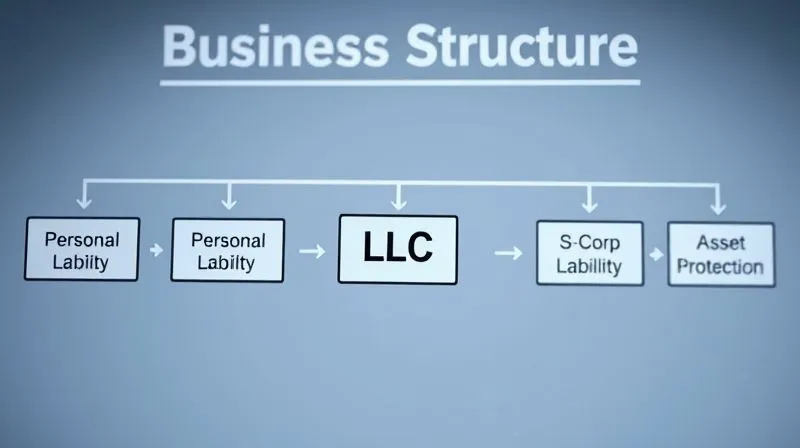
Case Study: The Smith Family's LLC Protection
The Smith family started a small artisanal bakery. Initially, they operated as a sole proprietorship, focusing on getting their delicious bread to market. After a year, I advised them to convert to an LLC. Just six months later, a customer slipped and fell outside their bakery, leading to a significant lawsuit. Because their business was structured as an LLC, the customer could only sue the business, not the Smiths personally. Their family home, savings, and other personal investments remained entirely safe, demonstrating the critical value of proactive structuring.
Personal Guarantees: The Silent Threat and How to Mitigate It
Even with a robust LLC or corporate structure, personal guarantees can completely negate the limited liability protection you've carefully established. A personal guarantee (PG) is a legally binding promise by an individual to repay debt incurred by a business entity. Lenders, especially to small or new businesses, often require PGs because the business itself may not have sufficient credit history or assets to secure a loan.
Understanding the Impact of Personal Guarantees:
- Bypasses the Corporate Veil: When you sign a PG, you are essentially telling the lender, "If my business can't pay, I will." This makes your personal assets fair game for collection if the business defaults.
- Common Scenarios: PGs are frequently required for commercial leases, bank loans, lines of credit, and even supplier agreements.
- Joint & Several Liability: If there are multiple guarantors, lenders often include 'joint and several' liability clauses, meaning each guarantor is individually responsible for the entire debt, not just a portion.
Mitigating the risk of personal guarantees requires strategic negotiation and a clear understanding of the terms. I always advise clients to try and negotiate the scope of the guarantee.
| Strategy | Description |
|---|---|
| Negotiate Limited Guarantee | Limit the amount or duration of the personal guarantee. |
| Seek Co-Signers/Spousal Exclusion | Distribute liability or protect spouse's assets. |
| Increase Business Collateral | Offer more business assets as security to reduce need for PG. |
| Regularly Review & Renegotiate | As business strengthens, seek to remove or reduce PG. |
| Understand the Triggers | Know exactly what events would activate the personal guarantee. |
While avoiding personal guarantees entirely is ideal, it's often not feasible for small businesses. The key is to understand the risks, negotiate the terms, and actively work towards reducing or eliminating them as your business grows stronger. For further reading on negotiating personal guarantees, resources like Forbes offer valuable insights. Read more on personal guarantees in business loans.
Asset Protection Planning: Beyond Business Structures
Even with a solid business structure and careful handling of personal guarantees, further proactive steps can be taken to fortify your personal asset protection strategy. This involves understanding how specific personal assets are treated in bankruptcy and utilizing legal tools designed for their safeguard.
Homestead Exemptions and Retirement Accounts
Many states offer 'homestead exemptions' that protect a portion, or in some cases, the full equity in your primary residence from creditors. The amount varies significantly by state, so it's crucial to understand your local laws. Similarly, qualified retirement accounts, such as 401(k)s and IRAs, often receive significant protection under federal law (ERISA) and state statutes, making them excellent vehicles for safeguarding long-term wealth.
- Homestead Exemptions: Research your state's specific laws regarding the amount of equity protected. Some states offer unlimited protection, while others are quite limited.
- Qualified Retirement Accounts: Funds in ERISA-qualified plans (like 401(k)s, 403(b)s, pension plans) are generally fully protected from creditors. IRAs also receive substantial, though sometimes capped, protection.
- Annuities and Life Insurance: In many states, the cash value of life insurance policies and annuities are exempt from creditors, providing another layer of protection.

Trusts and Other Advanced Strategies
For individuals with substantial assets, irrevocable trusts can be powerful tools for asset protection. Once assets are transferred into an irrevocable trust, they are generally no longer considered your personal property and are therefore shielded from future creditors. However, these strategies are complex and require careful planning with an experienced attorney to avoid issues like fraudulent transfer claims.
Fraudulent Transfers and Commingling: Pitfalls to Avoid
While proactive asset protection is wise, certain actions can undermine your efforts and even lead to legal trouble. Two common pitfalls I've observed are fraudulent transfers and the commingling of personal and business funds.
Fraudulent Transfers: Timing is Everything
A fraudulent transfer occurs when you transfer assets with the intent to hinder, delay, or defraud creditors, or when you transfer assets for less than their fair value while insolvent or becoming insolvent. Bankruptcy courts have the power to 'claw back' such transfers, essentially reversing them and making the assets available to creditors. The look-back period for fraudulent transfers can be several years (often 1-4 years, depending on state and federal law).
"Attempting to move assets out of reach *after* your business is already in distress or facing imminent bankruptcy is a recipe for disaster. It can lead to severe penalties, including denial of bankruptcy discharge and even criminal charges." - Industry Expert Insight
Commingling of Funds: Undermining the Corporate Veil
Commingling refers to mixing personal and business finances. This is a critical mistake that can lead to 'piercing the corporate veil,' a legal action where a court disregards the limited liability protection of an LLC or corporation. If you treat your business and personal finances as one, a court may too. This means:
- Using a business bank account for personal expenses.
- Paying personal bills from the business account without proper accounting (e.g., owner's draws or salary).
- Depositing business revenue into a personal account.
- Failing to keep separate financial records.
Maintaining strict separation is not just good accounting practice; it's fundamental to preserving your personal asset protection. Always use separate bank accounts, credit cards, and meticulously document all transactions between you and your business.
Insurance as a Shield: Business Liability and Key-Person Policies
Beyond legal structures, insurance plays a vital, though often overlooked, role in protecting personal assets. By transferring certain business risks to an insurer, you reduce the likelihood that a business liability will directly impact your personal finances.
Key Insurance Policies for Business Owners:
- General Liability Insurance: Protects against claims of bodily injury or property damage caused by your business operations, products, or services.
- Professional Liability Insurance (E&O): Essential for service-based businesses, covering claims of negligence, errors, or omissions in professional services.
- Directors & Officers (D&O) Insurance: Protects the personal assets of company directors and officers from lawsuits alleging wrongful acts in their management capacity.
- Commercial Property Insurance: Covers damage or loss to business property, preventing a significant capital loss from becoming a personal financial burden.
- Key-Person Insurance: A life insurance policy on critical employees (often the owner). If a key person dies, the policy pays out to the business, helping it survive and avoid a total collapse that could lead to personal financial exposure.
While insurance doesn't directly shield assets in a bankruptcy filing, it acts as a preventative measure. By covering potential large liabilities, it can prevent the business from becoming insolvent in the first place, thus preventing the scenario where personal assets might be at risk. This is a proactive form of risk management that every business owner should consider. As marketing guru Seth Godin often says, "The cost of being wrong is less than the cost of doing nothing." Investing in the right insurance is a crucial 'something'.
Pre-Bankruptcy Planning: Strategic Moves Before the Storm
If your business is facing severe financial distress and bankruptcy seems inevitable, there are legitimate, ethical steps you can take to prepare. This is not about fraudulent transfers, but about making smart, legal decisions that optimize your position before a filing. Engaging a skilled bankruptcy attorney at this stage is absolutely critical.
Legitimate Pre-Bankruptcy Actions:
- Evaluate Business Expenses: Cut non-essential spending. Conserve cash where possible.
- Debt Restructuring & Negotiation: Attempt to negotiate with creditors for lower payments, extended terms, or even partial forgiveness. Sometimes, a workout plan can avert bankruptcy altogether.
- Asset Review: Identify which business assets are encumbered (collateral for loans) and which are unencumbered. Understand how different assets will be treated in bankruptcy.
- Maximize Exemptions: With legal guidance, ensure your personal assets are properly positioned to take advantage of available state and federal exemptions (e.g., ensuring retirement accounts are fully funded up to legal limits).
- Update Records: Ensure all financial records are meticulously updated and accurate. This will be invaluable during the bankruptcy process.

The distinction between legitimate pre-bankruptcy planning and illegal fraudulent transfers is often subtle and depends heavily on intent and timing. This is why legal counsel is indispensable. A seasoned attorney can guide you through the process, ensuring compliance with all laws while maximizing your personal asset protection within legal boundaries.
| Pre-Bankruptcy Action | Goal | Benefit to Personal Assets |
|---|---|---|
| Debt Negotiation | Reduce overall debt burden, avoid filing. | Less personal exposure if guarantees exist. |
| Review & Maximize Exemptions | Protect eligible personal assets. | Shields home equity, retirement funds, etc. |
| Organize Financial Records | Streamline bankruptcy process. | Avoids delays, potential penalties, and challenges to exemptions. |
Navigating Chapter 7 vs. Chapter 11 for Small Businesses
When business bankruptcy becomes a reality, understanding the differences between Chapter 7 and Chapter 11 is crucial, especially concerning how to shield personal assets from business debt in bankruptcy.
Chapter 7 Bankruptcy: Liquidation
For a business, Chapter 7 typically involves liquidating assets to pay creditors. If your business is a sole proprietorship or general partnership, you, as the individual, would file Chapter 7, and your personal assets would be at risk. However, if your business is an LLC or corporation, the business itself files Chapter 7, and your personal assets are generally protected, assuming no personal guarantees or piercing of the corporate veil.
Chapter 11 Bankruptcy: Reorganization
Chapter 11 allows a business to reorganize its debts while continuing to operate. This is more common for larger businesses but can sometimes be an option for small businesses (often referred to as 'Subchapter V' for small business debtors). If you are a sole proprietor, you can file Chapter 11 as an individual, allowing you to reorganize both personal and business debts. For LLCs and corporations, Chapter 11 protects the business, and by extension, helps preserve the value of the owner's investment, potentially preventing a personal financial collapse.
The Role of a Skilled Bankruptcy Attorney
Regardless of the chapter, navigating business bankruptcy is incredibly complex. An experienced bankruptcy attorney is not just an advisor; they are your advocate, guiding you through the legal maze, ensuring compliance, negotiating with creditors, and most importantly, fighting to protect your personal assets within the bounds of the law. Their expertise can mean the difference between losing everything and preserving your financial future.

Frequently Asked Questions (FAQ)
Can an LLC truly protect me from all business debts? An LLC provides significant protection by separating business and personal liabilities. However, it's not absolute. Personal guarantees, fraudulent transfers, and commingling of funds can all lead to 'piercing the corporate veil,' making you personally liable. Adhering to formalities and avoiding these pitfalls is crucial.
What if I signed a personal guarantee for a business loan? Is there any way to protect my personal assets? A personal guarantee makes you personally liable for that specific debt, bypassing the LLC or corporate protection. While full protection is difficult, you might negotiate a limited guarantee, seek co-signers, or, as your business strengthens, renegotiate to have the guarantee removed. In bankruptcy, the lender will pursue your personal assets for the guaranteed debt.
Is it legal to move assets into my spouse's name or a trust before filing for bankruptcy? Moving assets with the intent to defraud creditors or for less than fair market value, especially when insolvency is imminent, is considered a fraudulent transfer and is illegal. Bankruptcy courts have look-back periods (often 1-4 years) to reverse such transactions. Legitimate asset protection planning should be done proactively and well in advance of financial distress, with legal counsel.
How do homestead exemptions work, and can they protect my home from business debt? Homestead exemptions protect a certain amount of equity in your primary residence from creditors. The amount varies widely by state. If your business debt is solely corporate (no personal guarantee) and your corporate veil is intact, your home is generally safe. If you are personally liable, the exemption can protect a portion of your home's value, but not necessarily all of it.
When should I consult a bankruptcy attorney if my business is struggling? As soon as you foresee significant financial difficulty or are considering closing your business. Early consultation allows for strategic pre-bankruptcy planning, exploring all options (debt restructuring, asset protection), and avoiding costly mistakes like fraudulent transfers. Waiting too long can severely limit your options and increase personal exposure.
Recommended Reading
- 5 Ways to Stop Wage Hour Lawsuits: Salaried Employee Misclassification Solved
- Unlocking the Limits: When Can Government Restrict Constitutional Speech?
- Your Urgent Guide: What Happens After a Notice to Appear for Deportation?
- Cracking State Immunity: 5 Ways to Prosecute International Criminals
- 7 Proven Strategies: Business Owners' Guide to Asset Protection from LTC Costs
Main Points and Final Considerations
Navigating the complex intersection of business failure and personal asset protection can be daunting, but with the right knowledge and proactive strategies, you can significantly mitigate your risks. Here are the critical takeaways:
- Choose the Right Business Entity: LLCs and Corporations are fundamental for limited liability protection.
- Beware of Personal Guarantees: They bypass corporate protections; negotiate them carefully.
- Maintain Strict Separation: Never commingle personal and business funds to preserve the corporate veil.
- Utilize Asset Protection Tools: Understand and leverage homestead exemptions, retirement account protections, and potentially trusts.
- Insurance is a Preventative Shield: Adequate business insurance can prevent liabilities from becoming personal crises.
- Plan Proactively, Not Reactively: Implement asset protection strategies well before financial distress.
- Seek Expert Legal Counsel: A seasoned bankruptcy attorney is indispensable for strategic planning and navigating the complexities of insolvency.
Remember, the goal isn't to avoid responsibility, but to ensure that the risks inherent in entrepreneurship don't lead to the complete devastation of your personal financial security. By understanding these principles and acting decisively, you can build a more resilient financial future, allowing you to pursue your entrepreneurial dreams with greater confidence and peace of mind.




Comments
Leave a comment below. Your email will not be published. Required fields marked with *