



How to Successfully Appeal a Denied H1B Visa RFE Decision?
For over two decades in immigration law, I've witnessed the profound impact of an H1B visa denial, especially after a Request for Evidence (RFE) has been meticulously addressed. It's a moment that can feel like a devastating blow, not just to a career but to an entire life plan, filled with uncertainty and disappointment. Many individuals and companies, understandably, feel lost at this juncture, unsure if there's a path forward.
The pain point is palpable: you've invested time, resources, and hope into your H1B petition, diligently responded to an RFE, only to receive a denial notice. This isn't merely a bureaucratic setback; it's a direct challenge to your professional aspirations and, for many, their ability to live and work in the United States. I've seen promising careers stalled and dreams deferred, often because the path to appeal or re-strategize isn't clearly understood.
This article isn't just a guide; it's a roadmap forged from years of navigating complex H1B denials. I will walk you through actionable frameworks, real-world insights, and expert strategies to understand why your RFE was denied, how to meticulously prepare an administrative appeal, and what alternative avenues you can explore. My goal is to empower you with the knowledge and confidence to turn a denied H1B visa RFE decision into a strategic opportunity for success.
Understanding the RFE Denial: Why It Happened and What It Means
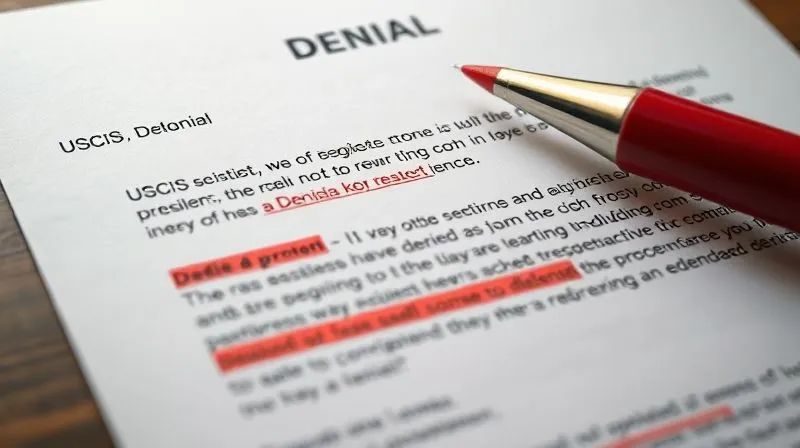
Receiving a denial after responding to an RFE can be incredibly disheartening, but it's crucial to understand that it’s not always the end of the road. In my experience, the first step towards a successful appeal is a deep, dispassionate analysis of the denial letter itself. USCIS provides specific reasons for their decisions, and often, the key to your appeal lies in dissecting these stated grounds.
Common reasons for denial post-RFE often revolve around the petitioner's inability to sufficiently prove: specialty occupation eligibility, the existence of an employer-employee relationship, sufficient wage level, or the validity of the LCA. Sometimes, it’s about the beneficiary's qualifications not meeting the specific requirements for the proposed role. Without a clear understanding of the exact deficiency, any subsequent action will be shooting in the dark.
"Every denial letter tells a story of what USCIS believes was missing or inadequate. Your job, and mine as your counsel, is to listen to that story, identify its flaws, and prepare to tell a more compelling, legally sound narrative."
This initial review is where you identify whether the denial was based on a factual error, a misinterpretation of law, or simply an insufficient presentation of evidence. It's a critical diagnostic phase that dictates your entire appeal strategy. Don't rush this step; it's the foundation of your future success.
The Critical First Step: A Thorough Post-Denial Analysis
Once you have the denial letter in hand, the clock starts ticking. You typically have 30 days from the date of the decision to file an appeal. This narrow window necessitates immediate and strategic action. I always advise clients to gather all previously submitted documentation, including the initial petition, the RFE, and your response to the RFE.
This comprehensive review isn't just about reading; it's about cross-referencing and identifying discrepancies or weaknesses. Did your RFE response directly address every point raised by USCIS? Was the evidence clear and compelling? Were there any new regulations or policy changes that might have influenced the decision? These are the questions an experienced eye will ask.
Key Areas for Post-Denial Analysis:
- Review the RFE and Response: Compare each RFE question to your submitted answer and evidence. Was anything missed or inadequately addressed?
- Examine the Denial Letter: Pinpoint the exact legal and factual basis for the denial. Does USCIS cite specific regulations or policy memoranda?
- Assess New Evidence Potential: Identify any relevant evidence that was not submitted with the initial petition or RFE response, but could strengthen your case.
- Consult with Counsel: An attorney specializing in H1B appeals can provide an objective assessment and identify legal arguments you might overlook.
Remember, the goal here is to build a strong foundation for your appeal by understanding precisely where the previous attempt fell short. This meticulous review process is what separates a hopeful but ultimately fruitless appeal from one with a genuine chance of success.
Crafting Your Appeal: Building a Robust Legal Argument
Filing an appeal with the Administrative Appeals Office (AAO) requires more than just re-submitting old documents. It demands a sophisticated legal argument that directly refutes USCIS's stated reasons for denial. This is where your expertise, or that of your attorney, truly comes into play. The appeal brief must be well-researched, clearly articulated, and supported by relevant legal precedents and factual evidence.
Steps to Building a Strong Appeal Brief:
- Identify Legal Errors: Argue that USCIS made an error in applying the law to the facts of your case. This could involve misinterpreting regulations, misapplying precedent decisions, or failing to consider all submitted evidence.
- Address Factual Misinterpretations: If USCIS misunderstood or overlooked specific facts or evidence, your brief must clearly point this out and provide a more accurate interpretation, backed by the record.
- Present New Evidence (Strategically): While the AAO generally reviews the record as it existed at the time of the denial, new evidence that clarifies existing facts or directly rebuts the denial's basis can sometimes be included. This must be done with extreme care and legal justification.
- Cite Precedent Decisions: Referencing previous AAO decisions or federal court cases that support your interpretation of the law can significantly strengthen your argument. This demonstrates a deep understanding of immigration jurisprudence.
- Structure for Clarity: Organize your brief logically, with clear headings, a concise introduction, detailed arguments, and a strong conclusion.
This is not merely writing a letter; it's constructing a persuasive legal document. It requires precision, a thorough understanding of immigration law, and the ability to anticipate and counter potential arguments from USCIS. I've often seen cases succeed because the appeal brief meticulously dismantled each point of denial with irrefutable legal and factual arguments.
The Power of New Evidence: What to Include and How to Present It
While an appeal generally relies on the existing record, there are instances where submitting new, previously unavailable, or clarifying evidence can be crucial. This is a nuanced area, as the AAO's primary role is to review the decision based on the evidence available to the adjudicator at the time of the denial. However, new evidence that directly addresses the reasons for denial and was genuinely unavailable or overlooked can be powerful.
Examples of Potentially Permissible New Evidence:
- Clarifying Documentation: If a document submitted with the RFE response was ambiguous, a clearer version or an explanatory affidavit from a relevant party (e.g., client letter for a consulting model) could be beneficial.
- Expert Opinion Letters: An independent expert opinion, particularly for specialty occupation arguments, can provide critical third-party validation that was not part of the initial submission.
- Updated Employment Information: If the RFE denial was based on a lack of employer-employee relationship or specific work assignments, a new, more detailed statement of work or client agreement might be relevant.
- Corrective Documentation: If the denial was due to a minor error (e.g., typographical mistake in a degree certificate), corrected documentation can be submitted.
It is imperative that any new evidence directly relates to the grounds of denial and clarifies or strengthens the original petition's claims, rather than introducing entirely new arguments or facts. The presentation must be clear, well-organized, and accompanied by a detailed explanation of its relevance and why it was not previously submitted. This strategic use of new evidence can often be the turning point in a complex appeal.

Case Study: How Apex Solutions Overturned an H1B RFE Denial
Apex Solutions, a growing IT consulting firm, faced an H1B RFE denial for one of their key software engineers. The denial, after an RFE response, centered on the 'employer-employee relationship' and 'specialty occupation' criteria, citing insufficient control over the beneficiary's work at a client site. USCIS argued the evidence didn't clearly demonstrate Apex's ability to hire, pay, and supervise the engineer, or that the role was truly specialized.
Upon receiving the denial, Apex immediately engaged my firm. Our post-denial analysis revealed that while their RFE response included a client letter, it lacked specific details about supervision and the technical complexity of the projects. It also didn't include an expert opinion on the specialty nature of the role within their unique consulting model.
Our Appeal Strategy:
- Detailed Client Affidavits: We obtained more comprehensive affidavits from the client, outlining Apex's direct supervision protocols, performance review processes, and the specific, highly technical tasks the engineer performed, clearly distinguishing them from the client's regular employees.
- Expert Opinion Letter: We secured an opinion from a university professor specializing in computer science, who attested to the advanced, specialized nature of the engineer's role and the industry-standard requirements for such positions.
- Internal HR Documentation: We submitted Apex's internal HR policies, training modules, and performance review forms, demonstrating their clear and consistent exercise of employer control.
- Legal Precedent: Our appeal brief meticulously cited AAO and BIA decisions that clarified the 'employer-employee relationship' in third-party placement scenarios, arguing that Apex met the established criteria.
The result? After a meticulous appeal process, the AAO issued a favorable decision, overturning the denial. This success was a direct outcome of a thorough analysis of the denial reasons, strategic gathering of new, clarifying evidence, and the construction of a robust legal argument that directly addressed and refuted each point of USCIS's initial denial. It saved a critical hire for Apex and prevented a significant disruption to their project pipeline.
Navigating the Administrative Appeal Process (AAO)
The Administrative Appeals Office (AAO) is an appellate body within USCIS that reviews adverse decisions made by USCIS adjudicators. Understanding its function and process is paramount for anyone considering an appeal. The AAO aims to ensure consistent application of immigration laws and policies. Filing an appeal requires Form I-290B, Notice of Appeal or Motion, along with a detailed legal brief and supporting documentation.
Key Aspects of the AAO Process:
- Form I-290B: This form initiates the appeal. It must be filed within 30 days of the denial notice. Be sure to select the correct basis for your appeal (e.g., appeal a negative decision).
- The Appeal Brief: As discussed, this is the core of your appeal. It should clearly state why the original decision was incorrect, citing specific facts and relevant law.
- Supporting Evidence: While new evidence is generally disfavored, if it directly addresses the denial grounds and was previously unavailable, it can be included with a strong justification.
- USCIS Review: Before forwarding to the AAO, the original USCIS office reviews the appeal. They can either overturn their own decision (called a 'certification') or forward it to the AAO.
- AAO Review and Decision: The AAO will review the entire record, including the initial petition, RFE, RFE response, denial, and your appeal brief. Their decision is usually final within the administrative process, though judicial review might be an option.
The AAO process can be lengthy, often taking several months to over a year. Patience, coupled with persistent follow-up, is necessary. The success rate for AAO appeals varies greatly depending on the type of case and the strength of the legal arguments. According to data from the AAO, while many appeals are dismissed, a significant percentage are sustained or remanded, indicating that a well-prepared appeal does have a fighting chance. You can find more detailed information on the AAO process on the USCIS website.
Beyond the AAO: Exploring Further Legal Avenues
What happens if the AAO upholds the denial? While it's a difficult outcome, it's still not necessarily the absolute end of the road. There are a few additional, albeit more complex and resource-intensive, avenues that can be explored. These typically involve moving from administrative review to federal court litigation.
Potential Further Avenues:
- Motion to Reopen/Reconsider: You can file a Form I-290B as a motion to reopen or reconsider with the same USCIS office that issued the denial, or with the AAO if they made the final decision. A motion to reopen must be based on new facts, while a motion to reconsider must be based on an incorrect application of law or policy.
- Federal Court Litigation (Mandamus or APA Claims): If all administrative remedies are exhausted, you may have grounds to file a lawsuit in federal district court. This is typically done under the Administrative Procedure Act (APA) for an 'abuse of discretion' claim, arguing that USCIS's decision was arbitrary, capricious, or not in accordance with the law. A 'mandamus' action might be pursued if USCIS has unreasonably delayed a decision. This is a significant step, requiring experienced litigation counsel.
- New H1B Petition: In some cases, especially if the denial was based on a rectifiable issue and there's time before the next H1B cap season, filing a completely new H1B petition might be a more pragmatic approach than protracted litigation. This allows for a fresh start with all lessons learned from the previous denial.
Each of these options has its own legal standards, procedural requirements, and significant costs. The decision to pursue these avenues should only be made after a thorough consultation with an immigration attorney who has experience in federal litigation or complex H1B re-filings. It's about weighing the likelihood of success against the time and financial investment required.
| Option | Basis | Timeline | Cost Implication | Key Advantage |
|---|---|---|---|---|
| AAO Appeal | Error in law/fact by USCIS | 6-18 months | Moderate | Direct administrative review |
| Motion to Reopen/Reconsider | New facts (reopen) / Legal error (reconsider) | 3-12 months | Moderate | Can be filed with original office or AAO |
| Federal Court Litigation | Abuse of discretion by USCIS | 1-3+ years | High | Independent judicial review |
| New H1B Petition | Fresh start with corrected issues | Next cap season | Moderate | Avoids lengthy appeal process |
Strategic Re-filing: When and How to Re-Submit Your Petition
Sometimes, despite a robust appeal, the best strategy isn't to fight the denial to its bitter end, but to learn from it and re-file a new H1B petition. This is particularly true if the denial highlighted fundamental flaws that are difficult to correct through an appeal, or if the administrative and judicial processes are simply too slow for your immediate needs. Re-filing is often a viable option when the H1B cap is open or if the beneficiary is cap-exempt.
Considerations for Strategic Re-filing:
- Timing: The H1B cap season usually opens in April for petitions requesting an October 1 start date. If your denial occurs well before this, a re-filing might align perfectly.
- Addressing the Root Cause: A re-filed petition must thoroughly address every reason for the previous denial. This isn't just a re-submission; it's a completely new, improved petition.
- Strengthening the Evidence: This is your chance to gather all the evidence you wished you had the first time, including new client letters, expert opinions, detailed job descriptions, and proof of specialty occupation or employer-employee relationship.
- New Job Role/Employer: Sometimes, the denial points to an issue with the specific job role or even the petitioner-employer relationship. Exploring a different, more clearly defined H1B-eligible role, or even a different employer, might be the most effective path.
I've guided many clients through successful re-filings after a denial. The key is to treat the denial as an invaluable learning experience. It provides a clear blueprint of USCIS's concerns, allowing you to build an unassailable case for your next attempt. This path requires a meticulous review of the previous denial, a thorough understanding of current USCIS guidance, and often, a slightly modified approach to the job duties or supporting documentation. Information on H1B wage levels and LCA requirements from the Department of Labor can be crucial for a strong re-filing.
Expert Guidance: The Indispensable Role of an Immigration Attorney
Navigating an H1B RFE denial and subsequent appeal is one of the most complex areas of immigration law. While this guide provides a comprehensive overview, the nuances of each case, the ever-evolving immigration policies, and the intricate legal arguments required demand the expertise of a seasoned immigration attorney. I cannot stress enough how critical professional legal counsel is at this stage.
How an Immigration Attorney Can Help:
- In-Depth Analysis: An attorney can provide an objective, expert analysis of your denial letter, identifying the precise legal and factual weaknesses.
- Strategic Counsel: They can advise on the best course of action – appeal, motion, re-filing, or even exploring other visa options – based on your specific circumstances and the likelihood of success.
- Evidence Gathering: Attorneys guide you on what new evidence is relevant, how to obtain it, and how to present it effectively, ensuring it meets USCIS standards.
- Crafting Legal Arguments: This is where the attorney truly shines. They will draft a compelling legal brief, citing relevant statutes, regulations, and precedent decisions to refute USCIS's denial.
- Representation: They represent you throughout the appeal process, handling all communications with USCIS and the AAO, ensuring all deadlines are met and procedures followed.
- Federal Litigation: If the case moves to federal court, an attorney with litigation experience is absolutely essential.
"An H1B RFE denial is not a DIY project. It's a high-stakes legal challenge that requires a deep understanding of immigration law, policy, and strategy. Investing in expert legal counsel is not an expense; it's an investment in your future."
The cost of an attorney pales in comparison to the potential loss of a career opportunity or the need to leave the U.S. A qualified attorney brings not only legal knowledge but also the experience of having successfully navigated similar complex cases, offering you the best possible chance to overturn a denied H1B visa RFE decision. The American Bar Association provides resources to find qualified legal assistance.
Frequently Asked Questions (FAQ)
Question? What is the typical timeline for an H1B RFE denial appeal with the AAO?
Answer: The AAO appeal process can be quite lengthy. While some cases are resolved within 6-9 months, it's not uncommon for decisions to take 12 to 18 months, or even longer, especially for complex cases or during periods of high caseload. The timeline is highly variable and depends on the complexity of your case, the volume of appeals at the AAO, and the specific adjudicator.
Question? Can I work while my H1B appeal is pending after a denial?
Answer: Generally, no. If your H1B petition was denied and you are no longer in a valid nonimmigrant status, you typically cannot continue to work in the U.S. while your appeal is pending. The '240-day rule' for continued employment only applies when an extension of status has been timely filed and is pending, not after a denial. It's crucial to consult with an attorney immediately to understand your specific status and options to avoid accruing unlawful presence.
Question? Is it better to appeal or re-file a new H1B petition after a denial?
Answer: This is a critical strategic decision that depends on several factors. An appeal is suitable if you believe USCIS made a legal or factual error and you have strong arguments and evidence to support that claim. Re-filing is often better if the denial revealed fundamental weaknesses in the initial petition that are easier to address with a fresh application, or if the H1B cap is open and you can submit a much stronger, new petition. Your immigration attorney will help you weigh the pros and cons based on the specific reasons for your denial, the strength of your new evidence, and timing considerations.
Question? What are the chances of winning an H1B appeal at the AAO?
Answer: The chances of success at the AAO are highly case-specific. While overall AAO statistics might show a significant number of dismissals, well-prepared appeals with strong legal arguments and compelling evidence have a much higher chance of being sustained or remanded. Success hinges on a clear demonstration of USCIS error in law or fact and a meticulously crafted appeal brief. It's not about general odds, but about the specific merits of your case and the quality of your appeal.
Question? Can a denied H1B petition impact future visa applications?
Answer: A denial itself isn't necessarily a permanent black mark, but the reasons for the denial can be. If the denial was due to misrepresentation, fraud, or serious eligibility issues, it could certainly impact future visa applications. However, if it was due to insufficient evidence or a misunderstanding that can be clarified, future applications may not be adversely affected, provided you address the issues. Full disclosure of previous denials is always required in future applications, and it's best to have an attorney review your history before any new filings.
Key Takeaways and Final Thoughts
- Immediate Action is Crucial: The 30-day window for filing an appeal after an H1B RFE denial is non-negotiable. Act swiftly and strategically.
- Thorough Analysis is Paramount: Understand every reason for the denial. Your appeal's strength lies in directly refuting USCIS's stated grounds.
- Build a Strong Legal Argument: An appeal is a legal battle. It requires a well-researched, factually supported, and legally sound brief.
- New Evidence Can Be Strategic: While generally limited, carefully presented new evidence that clarifies or strengthens your original case can be a game-changer.
- Consider All Avenues: From AAO appeals to motions to reopen, and even strategic re-filings, there are multiple paths to explore.
- Expert Legal Counsel is Indispensable: The complexities of H1B appeals demand the specialized knowledge and experience of an immigration attorney.
Receiving a denied H1B visa RFE decision is undoubtedly a challenging moment, but it is rarely the final word. With the right strategy, meticulous preparation, and expert legal guidance, you can effectively appeal the decision, address the underlying issues, and ultimately secure your H1B visa. I've seen countless individuals turn these setbacks into successful outcomes, and with the insights provided here, you too can navigate this complex process with confidence. Don't let a denial define your journey; let it be a catalyst for a stronger, more informed path forward.
Recommended Reading
- Business Ignoring Your Complaint? Unlock the Ultimate Guide to Get Heard!
- H-1B Reforms: 7 Strategies to Future-Proof Your Business Strategy
- 7 Strategic Steps: How to Challenge Foreign Court Jurisdiction Effectively
- Athlete Legal Woes? 7 Steps to Shield Your Brand & Sponsorship
- Client Admits Guilt Privately: 7 Ethical Steps for Defense Lawyers




Comments
Leave a comment below. Your email will not be published. Required fields marked with *