


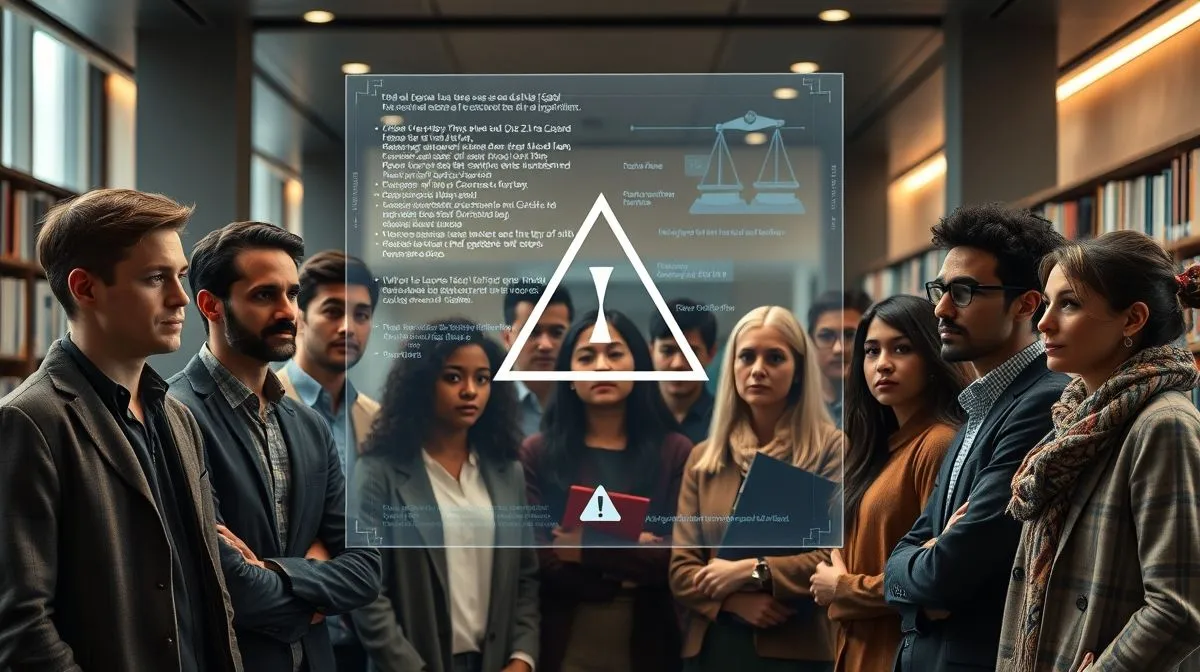
Navigating the Legal Pitfalls of AI Use in Educational Settings
Imagine a classroom where an AI tutor personalizes lessons for every student, an AI assistant grades essays with lightning speed, and an AI system predicts learning difficulties before they become major hurdles. This vision of AI-powered education is not a distant dream; it's rapidly becoming a reality, promising unprecedented efficiency and personalized learning experiences. But beneath this exciting surface lies a complex web of legal challenges, often overlooked until a problem arises.
The rapid integration of artificial intelligence into schools, universities, and online learning platforms introduces a host of intricate questions. Who owns the data collected by AI? What happens if an AI algorithm discriminates against certain students? How do existing privacy laws apply to these powerful new tools? These are not hypothetical concerns but urgent dilemmas that educational institutions must address to avoid significant legal repercussions.
This comprehensive guide will illuminate the most critical legal pitfalls of AI use in educational settings, providing a deep dive into data privacy, algorithmic bias, intellectual property, and accountability. By the end of this reading, you will understand the essential frameworks and proactive strategies necessary to deploy AI responsibly and legally, safeguarding both your institution and its students.
The Promise and Peril of AI in Education
Transformative Potential
Artificial intelligence offers transformative potential for education. From adaptive learning platforms that tailor content to individual student needs to automated administrative tasks that free up educators' time, AI promises to revolutionize the learning landscape. It can provide insights into learning patterns, identify at-risk students, and even create dynamic, interactive learning environments. The efficiency gains and personalized outcomes are undeniably appealing, driving widespread adoption across K-12 and higher education.
However, this rapid innovation often outpaces regulatory frameworks. While educators and administrators focus on pedagogical benefits, the underlying legal and ethical implications can be neglected. The very features that make AI so powerful—its ability to collect vast amounts of data and make autonomous decisions—are precisely what open the door to significant legal exposure.
Unforeseen Legal Labyrinths
The legal landscape surrounding AI in education is largely uncharted territory, constantly evolving as technology advances. Institutions must navigate a patchwork of existing laws, many of which were drafted long before AI became prevalent, and emerging regulations specifically targeting AI. Failing to understand these complexities can lead to costly lawsuits, reputational damage, and a loss of trust from students, parents, and the wider community.
The challenges extend beyond mere compliance; they touch upon fundamental rights and ethical considerations. Ensuring fairness, protecting privacy, and maintaining human oversight are not just best practices but increasingly legal imperatives. Understanding these labyrinths is the first step towards responsible AI integration.
Data Privacy and Student Information: A Minefield
Understanding FERPA and GDPR in the AI Era
One of the most significant legal pitfalls of AI use in educational settings revolves around student data privacy. Educational institutions handle sensitive personal information, and AI systems, by their nature, thrive on data. In the United States, the Family Educational Rights and Privacy Act (FERPA) is paramount, governing access to educational records and protecting student privacy. Similarly, in the European Union, the General Data Protection Regulation (GDPR) imposes strict rules on data collection, processing, and storage, with significant penalties for non-compliance.
AI tools often collect data far beyond traditional educational records, including biometric data, behavioral patterns, emotional responses, and real-time performance metrics. This extensive data collection raises critical questions about consent, data ownership, and the potential for misuse. Institutions must ensure that their AI tools comply not only with FERPA and GDPR but also with various state-specific privacy laws that may impose additional requirements.
Consent, Anonymization, and Data Breaches
Obtaining informed consent from students or their parents for AI data collection is crucial. This consent must be clear, specific, and revocable. Institutions often struggle with how to effectively anonymize or pseudonymize data used by AI, especially when the goal of AI is often to personalize experiences, which inherently requires identifiable data. True anonymization, where data cannot be linked back to an individual, is challenging to achieve and maintain over time.
Furthermore, the risk of data breaches increases with the volume and sensitivity of data handled by AI systems. A breach of student data can lead to severe legal penalties, lawsuits, and irreparable harm to an institution's reputation. Institutions must implement robust cybersecurity measures, conduct regular audits, and have clear data breach response plans in place. According to a report by IBM Security, the average cost of a data breach globally in 2023 was $4.45 million, a figure that can devastate an educational budget. Learn more about data breach costs and trends.
Key privacy considerations for AI in education include:
- Clear Consent Mechanisms: Ensuring students/parents understand what data is collected, how it's used, and by whom.
- Data Minimization: Collecting only the data strictly necessary for the AI's intended purpose.
- Secure Data Storage: Encrypting data at rest and in transit, using secure cloud providers.
- Vendor Vetting: Thoroughly reviewing AI vendors' privacy policies, security practices, and compliance with relevant laws.
- Data Retention Policies: Establishing and adhering to clear rules for how long student data is stored.
- Right to Access and Deletion: Providing mechanisms for individuals to access or request deletion of their data as required by law.
Bias, Fairness, and Algorithmic Discrimination
How AI Bias Manifests in Education
Artificial intelligence systems are only as unbiased as the data they are trained on and the algorithms they employ. If training data reflects existing societal biases—whether related to race, gender, socioeconomic status, or disability—the AI will learn and perpetuate those biases. In an educational context, this can manifest in various ways:
- Automated Grading: AI tools might unfairly penalize students from certain linguistic backgrounds if trained predominantly on standard English texts.
- Admissions Systems: AI-powered admissions tools could inadvertently favor applicants from specific demographics or educational backgrounds, leading to discriminatory outcomes.
- Personalized Learning: AI might steer students towards less challenging content if their initial performance is low, potentially exacerbating educational disparities.
- Behavioral Monitoring: AI systems designed to flag 'at-risk' students might disproportionately identify students from minority groups based on biased patterns.
These algorithmic biases are not just ethical concerns; they have significant legal implications, potentially leading to claims of discrimination under civil rights laws.
Legal Challenges of Discriminatory Outcomes
Laws like Title VI of the Civil Rights Act of 1964 (prohibiting discrimination based on race, color, or national origin in federally funded programs) and Title IX of the Education Amendments of 1972 (prohibiting sex-based discrimination) are highly relevant. The Americans with Disabilities Act (ADA) also ensures equal access for students with disabilities, meaning AI tools must be designed to be inclusive and not create new barriers.
If an AI system leads to statistically significant disparate impacts on protected groups, an institution could face legal challenges, even if the bias was unintentional. Proving intentional discrimination can be difficult, but demonstrating a discriminatory effect is often sufficient for a legal claim. Institutions must conduct regular bias audits of their AI tools, ensure diverse and representative training data, and implement human oversight to mitigate these risks. The proactive identification and remediation of algorithmic bias are crucial for legal compliance and ethical responsibility.
Intellectual Property and Copyright Concerns
AI-Generated Content: Who Owns It?
The rise of generative AI tools, capable of producing text, images, music, and code, introduces complex intellectual property (IP) questions. When a student uses an AI tool to write an essay or create a piece of art, who holds the copyright? Is it the student, the AI developer, or no one at all? Current copyright law, particularly in the U.S., generally requires human authorship for copyright protection. This means that purely AI-generated content may not be copyrightable, creating ambiguity around ownership and usage rights.
Educational institutions need clear policies regarding the use of AI in academic work. If students submit AI-generated content as their own original work, it can raise issues of academic integrity. If the institution then uses this content for other purposes, without clear ownership, it could face legal challenges down the line. It's essential to define what constitutes 'original work' in the age of AI and educate students and faculty accordingly.
Training Data and Copyright Infringement
Another significant IP concern relates to the data used to train AI models. Many large language models and generative AI systems are trained on vast datasets scraped from the internet, which often include copyrighted materials like books, articles, images, and music. This practice has led to numerous lawsuits against AI developers, alleging copyright infringement.
While AI developers often argue 'fair use' or similar doctrines, the legal landscape is still developing. Educational institutions using or developing AI tools must be aware of the source of the training data and ensure that its use does not inadvertently expose them to claims of copyright infringement. This includes verifying that any AI tools licensed from vendors have legally acquired and used their training data. For further information on copyright and AI, resources from organizations like the U.S. Copyright Office are invaluable. Explore the U.S. Copyright Office's guidance on AI.
Accountability and Liability in AI-Driven Decisions
When AI Makes the Call: Grading, Admissions, and Discipline
As AI systems become more sophisticated, they are increasingly involved in critical decision-making processes within educational settings. This includes automated grading of assignments, AI-assisted admissions decisions, behavioral monitoring leading to disciplinary actions, and even recommendations for special education services. When an AI makes an erroneous or biased decision, determining accountability and liability becomes a significant challenge.
For example, if an AI grading system consistently misinterprets a student's work, leading to a failing grade and subsequent academic probation, who is responsible? Is it the AI developer, the school district that implemented the system, or the individual educator who relied on the AI's output? The lines of responsibility can become blurred, making it difficult to assign blame and seek recourse.
Establishing Responsibility for AI Errors
Legally, liability can stem from various theories, including negligence, product liability, or breach of contract. If an AI system is deemed a 'product' and it causes harm due to a defect, the developer might be liable. However, if the institution fails to properly implement, monitor, or oversee the AI, or if it uses the AI for purposes for which it was not designed, liability could shift to the institution.
Institutions must establish clear protocols for human oversight of AI decisions, especially in high-stakes areas. This means empowering educators to override AI recommendations, providing avenues for appeal, and ensuring transparency in how AI decisions are made. Furthermore, contractual agreements with AI vendors should clearly delineate responsibilities and indemnification clauses in case of errors or harms caused by the AI system. The absence of clear accountability frameworks is a major legal pitfall of AI use in educational settings.
Ensuring Accessibility and Inclusivity
Legal Requirements for AI Accessibility
Accessibility is a cornerstone of modern education, reinforced by laws like the Americans with Disabilities Act (ADA) and Section 504 of the Rehabilitation Act. These laws mandate that educational institutions provide equal access to programs and services for individuals with disabilities. As AI tools become integral to the learning experience, they too must be accessible.
An AI-powered learning platform that relies solely on visual input might exclude visually impaired students. A voice-activated AI tutor might be unusable for students with speech impediments. Institutions must proactively assess AI tools for accessibility compliance, ensuring they are compatible with assistive technologies and offer alternative modes of interaction. Failure to do so can lead to costly lawsuits and alienate a significant portion of the student body.
Avoiding Digital Divide Reinforcement
Beyond direct accessibility, there's a broader concern about inclusivity and the potential for AI to exacerbate the digital divide. If AI tools require specific hardware, high-speed internet, or a certain level of digital literacy, they might inadvertently exclude students from lower socioeconomic backgrounds or rural areas. This creates an equity issue that can have legal implications under anti-discrimination statutes.
Educational institutions must consider the equitable distribution and access to AI resources. This includes providing necessary infrastructure, devices, and training to ensure that all students can benefit from AI technologies, regardless of their background. Responsible AI deployment means actively working to bridge, not widen, existing educational gaps.
Developing Robust AI Governance Policies
Crafting Comprehensive AI Use Policies
To mitigate the myriad legal pitfalls of AI use in educational settings, institutions must develop and implement comprehensive AI governance policies. These policies should not be an afterthought but a foundational element of any AI integration strategy. A robust policy framework provides clarity, sets expectations, and establishes boundaries for AI deployment.
Key components of an AI policy should include:
- Purpose and Scope: Clearly define the intended uses of AI and the areas where it is prohibited or restricted.
- Data Management: Detail protocols for data collection, storage, processing, anonymization, retention, and deletion, ensuring compliance with FERPA, GDPR, and other relevant laws.
- Privacy and Security: Outline measures for protecting student data, including encryption, access controls, and data breach response plans.
- Ethical Guidelines: Address principles of fairness, transparency, accountability, and human oversight.
- Bias Mitigation: Strategies for identifying, assessing, and reducing algorithmic bias, including regular audits.
- Academic Integrity: Rules regarding student use of AI in assignments and plagiarism detection.
- Accessibility: Requirements for ensuring AI tools are accessible to students with disabilities.
- Vendor Management: Guidelines for vetting AI providers, negotiating contracts, and ensuring compliance.
- Training and Awareness: Mandates for educating staff, students, and parents about AI policies and responsible use.
- Review and Updates: A schedule for regularly reviewing and updating the policy as technology and laws evolve.
Training and Ethical Guidelines for Staff
Policies are only effective if they are understood and followed. Comprehensive training programs for all stakeholders—educators, administrators, IT staff, and even students—are essential. This training should cover not only the technical aspects of AI tools but also the legal and ethical implications of their use. Educators, in particular, need to understand how to critically evaluate AI outputs, recognize potential biases, and maintain human judgment in AI-assisted processes.
Establishing clear ethical guidelines for staff ensures that AI is used in a manner consistent with the institution's values and legal obligations. This fosters a culture of responsible innovation and helps prevent accidental non-compliance. Regular workshops, seminars, and accessible online resources can support ongoing learning and adaptation.
Navigating Contractual Agreements with AI Vendors
Key Clauses for Legal Protection
Most educational institutions will procure AI tools from third-party vendors. The contractual agreements with these vendors are critical legal documents that can either protect or expose the institution. It is imperative to meticulously review and negotiate these contracts to ensure they address all potential legal risks.
Key clauses to focus on include:
- Data Ownership and Usage: Clearly define who owns the data collected by the AI tool and how the vendor can use it. Ensure the vendor is prohibited from selling or sharing student data.
- Data Security and Breach Notification: Mandate robust security measures and require prompt notification and detailed reporting in the event of a data breach.
- Compliance with Laws: Ensure the vendor explicitly commits to complying with all relevant privacy laws (FERPA, GDPR, state laws) and accessibility standards.
- Liability and Indemnification: Establish clear liability for errors, biases, or harms caused by the AI system. Include indemnification clauses to protect the institution from vendor-related lawsuits.
- Intellectual Property: Define ownership of AI-generated content and ensure the vendor has proper licenses for its training data.
- Audit Rights: Reserve the right to audit the vendor's security practices and data handling procedures.
- Data Portability and Deletion: Ensure that student data can be easily retrieved or securely deleted upon contract termination.
Due Diligence in Vendor Selection
Beyond contractual terms, thorough due diligence in vendor selection is paramount. Institutions should not rush into adopting AI solutions without comprehensive vetting. This involves:
- Security Assessments: Evaluating the vendor's cybersecurity posture, certifications, and incident response capabilities.
- Privacy Impact Assessments (PIA): Conducting PIAs to understand how the AI tool will affect student privacy and identify potential risks.
- Bias Audits: Requesting evidence of bias testing and mitigation strategies from the vendor.
- References and Reputation: Checking references from other educational clients and researching the vendor's reputation regarding data privacy and ethical AI practices.
- Transparency: Prioritizing vendors who offer transparency regarding their AI models, data sources, and decision-making processes.
A proactive and meticulous approach to vendor agreements and selection is a powerful defense against the legal pitfalls of AI use in educational settings. Organizations like the Consortium for School Networking (CoSN) offer valuable resources and frameworks for vetting EdTech vendors. Explore CoSN's resources on privacy and security in education.
Frequently Asked Questions (FAQ)
Is student consent always required for AI use in schools? Generally, yes, especially for AI tools that collect personally identifiable information beyond what's covered by FERPA's exceptions for educational purposes. For sensitive data or non-instructional uses, explicit, informed consent from students (or parents for minors) is often legally required and always best practice.
Can AI-generated content be copyrighted by students or institutions? Current U.S. copyright law generally requires human authorship for copyright protection. This means purely AI-generated content may not be copyrightable. However, if a human significantly modifies or selects AI-generated output, they might claim copyright over their contribution. Policies on academic integrity should address this ambiguity.
What are the biggest legal risks for a school using AI? The primary risks include data privacy breaches (FERPA, GDPR violations), discrimination lawsuits due to algorithmic bias, intellectual property infringement (both from AI training data and AI-generated content), and liability for erroneous AI decisions that cause harm to students.
How can schools mitigate AI bias effectively? Mitigation strategies include selecting AI tools from vendors committed to bias detection and reduction, ensuring diverse and representative training datasets, conducting independent bias audits, implementing human oversight and review processes for AI decisions, and establishing clear grievance procedures for students affected by biased outcomes.
Does FERPA cover all data collected by AI tools in education? FERPA primarily covers 'educational records' and limits their disclosure. While many AI-collected data points might fall under this definition, AI can also collect data (e.g., biometric, emotional state) that pushes the boundaries of traditional 'educational records.' State laws and specific contractual agreements with vendors also play a crucial role in determining what data is protected and how it can be used.
Recommended Reading
- Wrongful Termination in California: Your Ultimate Guide
- Petty Theft Penalties: What You Need to Know Now
- Navigating US H2B Visa Requirements: Your Ultimate Guide to Seasonal Work Success
- Unlock Wealth: How to Qualify for Capital Gains Tax Exemptions
- Act Now: Ultimate Guide to Recovering Money Lost to Consumer Fraud
Conclusion
The integration of AI into educational settings offers exciting possibilities, but it also presents a formidable array of legal challenges that demand proactive and meticulous attention. From navigating the complexities of student data privacy under FERPA and GDPR to addressing the pervasive issues of algorithmic bias and intellectual property, institutions must approach AI adoption with a deep understanding of the associated risks. Establishing clear governance policies, rigorously vetting AI vendors, and ensuring robust human oversight are not merely regulatory burdens but essential safeguards that protect students, maintain trust, and insulate institutions from significant legal exposure. Embracing AI responsibly means prioritizing ethical considerations and legal compliance alongside pedagogical innovation, ensuring that the future of education is both technologically advanced and legally sound.





Comments
Leave a comment below. Your email will not be published. Required fields marked with *