



Overcoming Due Process Denial: Proving Lack of Fair Hearing?
After over two decades navigating the labyrinthine corridors of constitutional law, I've witnessed firsthand the profound despair and the chilling silence that follows a fundamental right being ignored: due process. It's a principle so deeply woven into the fabric of our legal system, yet its denial often leaves individuals feeling isolated and without recourse. I've seen countless cases where a person's life, livelihood, or liberty hung in the balance, not because of their guilt or innocence, but because the process itself was fundamentally flawed.
The feeling of being unheard, of a decision made without a fair chance to present your case, is not just frustrating; it's an affront to justice itself. Whether it's an administrative ruling, a disciplinary action, a governmental benefit termination, or even an academic expulsion, the denial of due process can have devastating personal and professional consequences. It's a battle against a system that, by design, should protect you, but sometimes fails to uphold its most basic tenets.
This isn't just theory; it's a battleground I've helped clients navigate successfully. In this comprehensive guide, I'll share the actionable frameworks, legal insights, and strategic approaches I've honed over years, equipping you to meticulously document, powerfully argue, and ultimately prove a lack of fair hearing, even when the odds seem stacked against you. My goal is to empower you with the knowledge and confidence to effectively challenge a due process denial and ensure your voice is heard.
The Unshakeable Foundation: Understanding Due Process
Before we can discuss overcoming due process denial: proving lack of fair hearing?, we must first firmly grasp what due process truly means. At its core, due process is a constitutional guarantee that ensures fairness and respect for individual rights when the government acts to deprive a person of life, liberty, or property. It's enshrined in both the Fifth Amendment (applying to the federal government) and the Fourteenth Amendment (applying to state and local governments) of the U.S. Constitution.
In my experience, many people mistakenly believe due process is a singular concept. In reality, it has two critical facets: procedural due process and substantive due process. While we'll focus heavily on the procedural aspect for proving a lack of fair hearing, understanding both is crucial for a complete picture. Procedural due process dictates *how* the government must act, ensuring fair methods and procedures. Substantive due process, on the other hand, protects fundamental rights from governmental interference, regardless of the fairness of the procedures used.
As I often tell my clients, due process isn't just a legal term; it's the bedrock of legitimate governance. It's the promise that no government, at any level, can act arbitrarily or capriciously against its citizens without providing a fair and equitable process.
The spirit of due process is to prevent governmental overreach and to safeguard individual liberties. It ensures that decisions affecting fundamental interests are not made in secret, without notice, or without an opportunity for the affected individual to present their side. It's a shield against tyranny and a pillar of a just society.

Dissecting Fair Hearing: What Constitutes Procedural Due Process?
When someone asserts a due process denial, they are most often alleging a violation of procedural due process. This is where the concept of a 'fair hearing' becomes paramount. What exactly does the Constitution demand for a hearing to be considered fair? It's not a one-size-fits-all answer, as the specific requirements can vary depending on the nature of the right at stake and the governmental interest involved. However, certain core elements are almost universally required.
In my practice, I boil it down to a few critical components. First and foremost is adequate notice. This means being informed of the charges or proposed action against you, along with the factual basis and the legal authority for it, in a timely manner. The notice must be specific enough to allow you to prepare a defense. Second is a meaningful opportunity to be heard – not just a chance to speak, but a real opportunity to present your case, explain your side, and challenge adverse evidence.
Another non-negotiable element is an impartial decision-maker. The individual or body making the decision cannot have a personal stake in the outcome or a pre-existing bias against you. The process must also typically allow for the presentation of evidence, including the right to call witnesses and, in some cases, to confront and cross-examine adverse witnesses. Finally, there should be a record of the proceedings and, often, a reasoned decision explaining the basis for the outcome. For further reading on the nuances of procedural due process, I often refer to resources like the Legal Information Institute at Cornell Law School.
| Element of Fair Hearing | Description |
|---|---|
| Adequate Notice | Timely and specific information about charges and legal basis. |
| Opportunity to Be Heard | Meaningful chance to present one's case and challenge evidence. |
| Impartial Decision-Maker | Absence of bias or personal stake in the outcome. |
| Right to Present Evidence | Ability to call witnesses and introduce relevant documentation. |
| Right to Confront Witnesses (in some cases) | Ability to cross-examine adverse parties. |
| Record of Proceedings | Documentation of what transpired during the hearing. |
| Reasoned Decision | An explanation for the outcome based on the evidence presented. |
Identifying the Red Flags: Signs of Due Process Denial
Recognizing a due process denial often comes down to identifying specific departures from the established norms of a fair hearing. Over my career, I've developed a keen eye for these 'red flags' – indicators that the process itself, not just the outcome, may be constitutionally infirm. These aren't always overt acts of malice; sometimes, they are subtle procedural missteps that cumulatively undermine fairness.
Here are some of the most common signs that you might be facing a denial of due process:
- Inadequate or Untimely Notice: You received notice too late to prepare, or the notice failed to specify the charges or the evidence against you.
- Biased Decision-Maker: The person or panel making the decision has a clear conflict of interest, a personal vendetta, or has prejudged your case.
- Denial of Opportunity to Present Evidence: You were not allowed to submit relevant documents, call witnesses, or provide your full testimony.
- Restriction on Cross-Examination: You were prevented from questioning adverse witnesses or challenging the evidence presented against you, especially when credibility is at issue.
- Exclusion of Exculpatory Evidence: Information that could prove your innocence or mitigate your circumstances was arbitrarily kept out of the proceedings.
- Lack of a Clear Record: No transcript, audio recording, or detailed minutes were kept, making it impossible to review what actually happened.
- Arbitrary or Capricious Decision: The final decision appears to be made without any logical connection to the evidence presented, or it contradicts all available facts.
If you observe one or more of these red flags, it's a strong indication that you may be able to argue that your due process rights were violated. Documenting these specific instances is the first critical step in building your case for overcoming due process denial: proving lack of fair hearing?
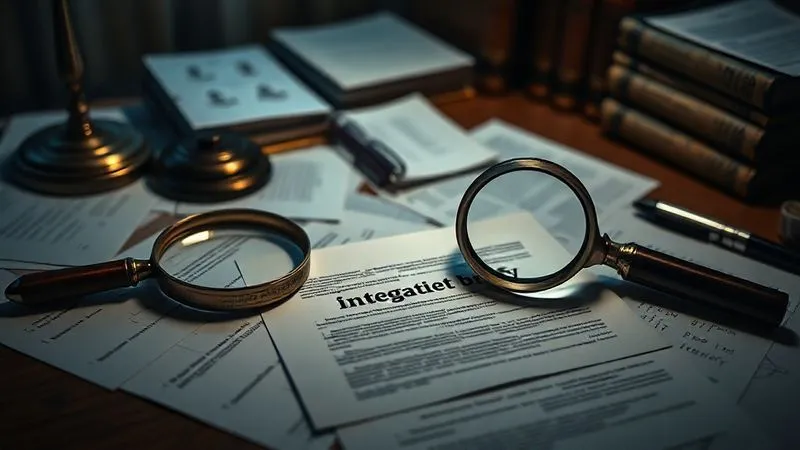
The Investigator's Toolkit: Gathering Evidence to Prove Denial
Proving a lack of fair hearing is fundamentally an exercise in meticulous documentation and strategic evidence gathering. You're not trying to re-litigate the merits of the underlying decision; you're proving that the *process* by which that decision was reached was flawed. This requires a specific type of evidence, and I've found that a structured approach is invaluable.
- Document Everything: This is your golden rule. Keep copies of all correspondence, notices, emails, and any written communications related to the proceeding. If there were verbal communications, make detailed notes immediately afterward, including dates, times, and participants.
- Obtain the Official Record: Request copies of all hearing transcripts, audio recordings, exhibits, and the final decision document. Compare these against your own notes and recollections. Discrepancies can be powerful evidence.
- Identify Specific Procedural Deficiencies: Systematically go through the elements of a fair hearing (notice, opportunity to be heard, impartiality, etc.) and pinpoint exactly where the process fell short. For example, if the notice was vague, highlight the specific ambiguities. If you were denied the right to call a witness, note the date, time, and who denied it.
- Gather Witness Statements/Affidavits: If others observed the procedural unfairness (e.g., a colleague who saw you denied access to a document, or someone who heard a biased comment from a decision-maker), obtain their written statements or affidavits.
- Review Applicable Rules and Regulations: Obtain copies of the administrative agency's or institution's own procedural rules. Often, they fail to follow their *own* established procedures, which can be a powerful argument for due process violation.
Case Study: The License Revocation of Dr. Evelyn Reed
Dr. Evelyn Reed, a physician, faced state medical board proceedings that threatened her license. The board sent a notice alleging professional misconduct, but it was vague, lacking specific dates or patient details. Her request for a continuance to gather evidence was denied, and during the hearing, the board chair, known to have a personal history with Dr. Reed's accuser, frequently interrupted her testimony and disallowed several of her expert witnesses. The final decision was a brief, conclusory statement without reference to the evidence presented.
By meticulously documenting the vague notice, the denial of continuance, the chair's biased conduct (via recorded statements and witness affidavits), and the lack of a reasoned decision, Dr. Reed's legal team successfully argued a severe procedural due process violation. A higher court remanded the case for a new, fair hearing, ultimately saving her license. This case vividly illustrates that the process, not just the outcome, can be challenged effectively.
Crafting Your Argument: Legal Frameworks and Persuasive Narratives
Once you have your evidence, the next crucial step in overcoming due process denial: proving lack of fair hearing? is to construct a compelling legal argument. This is where your expertise in connecting facts to legal standards becomes paramount. Remember, you are not arguing whether the initial decision was *correct* on its merits; you are arguing that the *process* itself was unconstitutional or unlawful.
Your argument should clearly articulate which specific due process rights were violated (e.g., right to notice, right to be heard by an impartial tribunal, right to present evidence). For each alleged violation, you must connect it directly to your documented evidence. For instance, if you claim inadequate notice, cite the date the notice was received, its content, and explain why it was insufficient to allow for preparation. If you allege bias, point to specific statements or actions by the decision-maker that demonstrate partiality.
A persuasive narrative is also vital. While legal arguments are based on facts and law, presenting them in a clear, logical, and compelling story can significantly enhance their impact. Describe the sequence of events, highlighting how each procedural flaw incrementally undermined the fairness of the hearing. Emphasize the impact of these denials on your ability to defend yourself. For guidance on structuring legal arguments in administrative law contexts, resources from organizations like the American Bar Association's Section of Administrative Law and Regulatory Practice can be very helpful.
The most effective due process arguments aren't just a list of grievances; they are a cohesive narrative demonstrating a fundamental breakdown in the principles of fairness. You're painting a picture of injustice, not just reciting legal codes.
Always reference relevant legal precedents. If a court has previously ruled that similar procedural deficiencies constitute a due process violation, cite those cases to bolster your position. This demonstrates that your argument is grounded in established legal principles, not just your personal grievance.
Navigating the Appeals Process: Administrative & Judicial Review
Once you've built your case, the battle for overcoming due process denial: proving lack of fair hearing? often moves into the appeals arena. This typically involves two stages: administrative appeals and, if necessary, judicial review.
First, you must generally exhaust administrative remedies. This means you must pursue all available internal appeals within the agency or institution that made the initial decision before you can take your case to court. Failing to do so can result in your case being dismissed by a court for lack of ripeness. Each agency will have its own specific procedures and timelines for internal appeals, so it's crucial to consult their rules carefully.
If administrative appeals are unsuccessful, or if the agency's final decision still denies your due process rights, you can then seek judicial review in the courts. The standard of review a court applies to administrative decisions varies, but for due process claims, courts typically conduct a more searching inquiry. They will examine whether the agency followed its own rules and, more importantly, whether the procedures afforded met constitutional due process requirements.
Courts will often look for whether the agency's decision was 'arbitrary and capricious,' or whether it was supported by 'substantial evidence.' However, when a due process violation is alleged, the court's focus shifts to the fairness of the process itself. Landmark cases, such as Goldberg v. Kelly (1970), established that certain fundamental due process protections are required even for government benefits. Understanding these precedents is crucial for framing your judicial review petition.

Substantive Due Process: A Parallel, Yet Distinct, Battleground
While our primary focus is on procedural due process—the 'how' of government action—it's important to briefly touch upon substantive due process. As an experienced specialist, I've observed that confusion between these two concepts can sometimes dilute an argument.
Substantive due process protects individuals from governmental overreach that infringes upon fundamental rights, regardless of how fair the procedures used to do so might be. For instance, the right to marry, the right to privacy, or the right to raise one's children are considered fundamental rights protected by substantive due process. If a government action infringes upon one of these rights, the government must show a compelling state interest and that the action is narrowly tailored to achieve that interest.
The key distinction for our current discussion is this: A procedural due process claim asserts that you were denied a fair process (e.g., no notice, biased judge). A substantive due process claim asserts that the government's action itself, even if procedurally fair, violates a fundamental right. While both are vital constitutional protections, when you are trying to prove a lack of fair hearing, your arguments should be squarely focused on procedural deficiencies.
| Aspect | Procedural Due Process | Substantive Due Process |
|---|---|---|
| Focus | Fairness of the process (how government acts) | Protection of fundamental rights (what government acts upon) |
| Question Asked | Was the individual given notice and an opportunity to be heard? | Does the government's action infringe on a fundamental right, regardless of process? |
| Remedy Sought | A new, fair hearing or reversal due to procedural error. | Invalidation of the law or action infringing the right. |
Precedent and Persuasion: Leveraging Case Law
In the legal world, precedent is power. When you are attempting to prove a lack of fair hearing, drawing upon established case law that found due process violations in similar circumstances can significantly strengthen your argument. Courts are bound by the principle of stare decisis, meaning they generally adhere to previous judicial decisions. This makes finding and effectively utilizing relevant precedents a critical skill.
I always advise clients and colleagues to conduct thorough legal research to identify cases where courts have addressed the specific procedural deficiencies you are alleging. For example, if your notice was deemed inadequate, look for cases where similar notices were found to violate due process. If a decision-maker's bias is at issue, find cases that define what constitutes an unconstitutional level of bias.
Don't just list cases; explain *why* they are relevant. Articulate how the facts or legal principles in the precedent case parallel your situation. This demonstrates to the court that your argument is not novel or speculative, but rather grounded in established constitutional jurisprudence. Resources like the Legal Information Institute (LII) are invaluable for accessing case law and legal statutes.
Moreover, consider the jurisdiction. A precedent from the U.S. Supreme Court is binding on all lower federal and state courts. A precedent from your specific federal circuit court or state supreme court is binding on lower courts within that jurisdiction. Understanding the hierarchy of judicial decisions helps you select the most persuasive precedents.
Common Pitfalls and Strategic Safeguards
Even with a strong case for due process denial, missteps can derail your efforts. As an experienced veteran in this field, I've seen countless individuals stumble over common pitfalls. Knowing these traps beforehand allows you to implement strategic safeguards.
- Failing to Exhaust Administrative Remedies: This is perhaps the most common and fatal error. Courts will almost always require you to go through every available internal appeal process before they will hear your case. Document every step of the administrative process you undertake.
- Missing Deadlines: Administrative and judicial processes are rife with strict deadlines. Missing a deadline for an appeal, a response, or evidence submission can permanently bar your claim. Always calendar every deadline and work backward to ensure ample preparation time.
- Lack of Specificity in Arguments: A vague claim of 'unfairness' is rarely successful. Your arguments must be precise, detailing exactly which procedural right was violated, how it was violated, and what evidence supports that claim.
- Focusing on the Merits Instead of the Process: It's natural to want to prove you were 'right' on the underlying issue. However, when arguing due process, your focus must be laser-sharp on the *process* itself. Conflating the two can dilute your argument and confuse the court.
- Not Creating a Clear Record: If you don't document everything, you have no evidence. If the agency doesn't create a record, demand one. Without a clear record, proving what happened (or didn't happen) becomes incredibly difficult.
- Underestimating the Burden of Proof: While the burden of proof for procedural due process violations isn't as high as 'beyond a reasonable doubt,' you still need compelling evidence to demonstrate that the process was fundamentally unfair.
By being acutely aware of these potential pitfalls and diligently applying these safeguards, you significantly increase your chances of successfully overcoming due process denial: proving lack of fair hearing? and securing the justice you deserve.
Frequently Asked Questions (FAQ)
What's the difference between procedural and substantive due process? Procedural due process focuses on the fairness of the methods and procedures used when the government deprives someone of life, liberty, or property (e.g., notice, opportunity to be heard, impartial decision-maker). Substantive due process, on the other hand, protects fundamental rights themselves from government interference, regardless of the fairness of the procedures used (e.g., right to privacy, right to marry). Our discussion on proving a lack of fair hearing primarily concerns procedural due process.
What if I can't afford a lawyer for my due process claim? Legal aid organizations, pro bono programs, and university legal clinics may offer assistance for those who cannot afford an attorney. Some administrative agencies also have ombudsman offices that can help navigate processes. While complex, some individuals choose to represent themselves (pro se), especially in initial administrative hearings, but legal counsel significantly increases the chances of success in more complex cases or judicial review.
How long do I have to challenge a due process denial? The timelines vary significantly depending on the jurisdiction (federal vs. state), the specific agency involved, and the nature of the governmental action. Administrative appeal deadlines can be as short as a few days or weeks. For judicial review, statutes of limitations typically range from 30 to 180 days after a final administrative decision. It is absolutely crucial to identify and adhere to all applicable deadlines immediately.
What types of evidence are most effective in proving a lack of fair hearing? The most effective evidence includes official documents (notices, hearing transcripts, agency rules), personal documentation (detailed notes, emails, correspondence), and witness affidavits. Specific instances of bias, denial of access to evidence, or refusal to allow testimony are particularly powerful. The key is to show a direct link between the procedural deficiency and the undermining of your ability to present your case.
Can due process apply to private organizations? Generally, the constitutional guarantee of due process applies only to actions by government entities (state or federal). Private organizations, such as private employers or private universities, are not typically bound by constitutional due process unless they are acting as a state actor or there's a specific statute or contract that imposes similar fairness requirements. However, many private entities have their own internal grievance procedures that might mirror due process principles.
Key Takeaways and Final Thoughts
Overcoming due process denial: proving lack of fair hearing? is a challenging but achievable endeavor that demands diligence, precision, and a deep understanding of constitutional principles. As I've shared from my own extensive experience, it's not about relitigating the merits of a decision, but rather about meticulously demonstrating that the process itself was fundamentally flawed and unfair.
- Understand the two facets of due process: procedural and substantive.
- Identify the core elements of a fair hearing: notice, opportunity to be heard, and an impartial decision-maker.
- Meticulously document every procedural misstep and gather all relevant evidence.
- Craft a clear, compelling legal argument that links specific procedural flaws to due process violations.
- Navigate administrative and judicial appeals strategically, always respecting deadlines.
- Leverage established legal precedents to strengthen your position.
The journey to reclaim your due process rights can be arduous, but it is a fight worth waging. The principles of fairness and justice are foundational to our society, and your vigilance in upholding them strengthens the system for everyone. Remember, you have a right to be heard, and with the right strategy and evidence, you can ensure that right is honored. Never underestimate the power of a well-documented and thoughtfully argued case.
Recommended Reading
- 5 Strategies: How to Overcome Sovereignty Challenges in Digital Governance?
- Student Protests: 7 Legal Strategies for Safe, Rights-Respecting Management
- Public Disclosure Before Patent? 5 Urgent Steps to Protect Your Invention
- Unlocking Your Rights: Can You Sue for Slip and Fall on Public Property?
- Your US Border Rights: What Non-Citizens Need to Know Now!




Comments
Leave a comment below. Your email will not be published. Required fields marked with *