


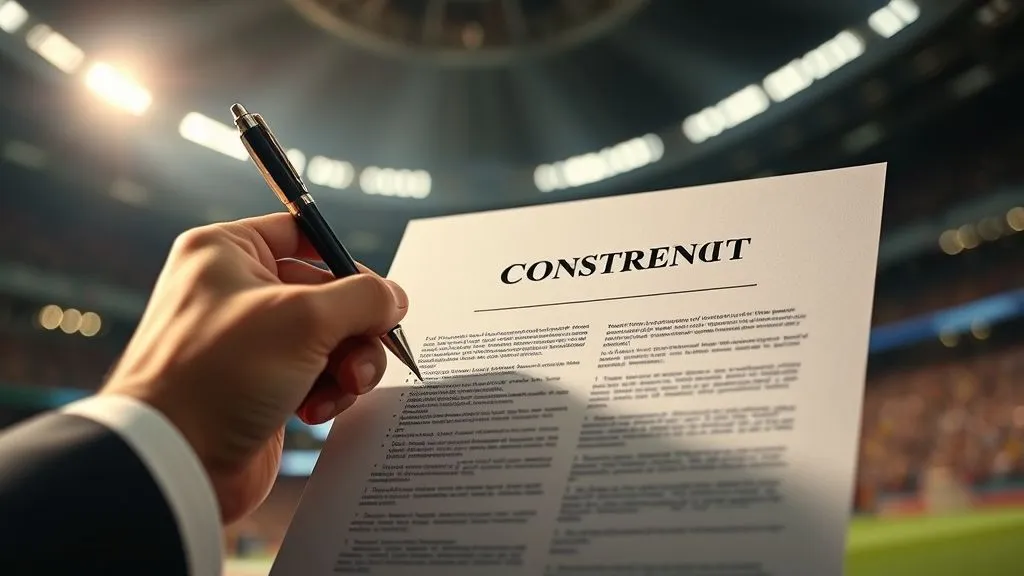
Preventing Athlete Contract Disputes Over Performance Bonuses?
After more than two decades immersed in the intricate world of sports law, specializing in athlete contracts, I've witnessed firsthand the profound impact—both positive and negative—that performance bonuses can have. I've seen promising careers derailed, team morale plummet, and multi-million-dollar relationships irrevocably damaged, all stemming from a seemingly minor disagreement over a bonus clause. It's a common, yet entirely preventable, pitfall.
The core problem isn't usually a malicious intent to deceive; it's often a failure of foresight, clarity, and communication. Vague language, subjective performance metrics, and a lack of defined dispute resolution mechanisms can transform what should be a motivating incentive into a bitter point of contention, leading to costly legal battles and reputational damage for all parties involved.
In this definitive guide, I'll share the frameworks and expert insights I've developed over years of practice. We'll explore actionable strategies, drawing from real-world scenarios, to equip you with the tools necessary for preventing athlete contract disputes over performance bonuses, ensuring they remain a source of motivation and reward, not conflict. My goal is to empower you to draft, negotiate, and manage contracts that stand the test of time and performance.
The Root Cause: Why Performance Bonus Disputes Erupt
In my experience, the genesis of most performance bonus disputes lies in ambiguity. When terms are open to interpretation, or when the measurement of success isn't crystal clear, conflict is almost inevitable. Athletes, agents, and teams often enter into agreements with different understandings of what constitutes 'achieved performance' or 'successful outcome,' only to find these discrepancies surface when money is on the line.
Another significant factor is the rapid evolution of an athlete's career and the sport itself. A bonus clause drafted five years ago might not adequately account for new statistical metrics, changes in team strategy, or unforeseen circumstances like injury or league-wide rule changes. Without regular review and adaptation, these clauses can become outdated, leading to disputes over their applicability or fairness.
"Clarity is not merely a virtue in contract drafting; it is an absolute necessity. Ambiguity is the most fertile ground for disagreement, especially when financial incentives are at stake."
Furthermore, the emotional investment in sports can cloud judgment. Both athletes and teams operate under immense pressure, and when performance-related financial incentives are perceived to be unfairly withheld or interpreted, emotions can quickly escalate, turning a contractual disagreement into a personal battle. This is why a proactive, legally sound approach to bonus structuring is paramount.

Laying the Foundation: Drafting Ironclad Performance Bonus Clauses
The cornerstone of preventing disputes is impeccable contract drafting. It's not enough to simply state 'a bonus for good performance.' Every bonus clause must be meticulously crafted, leaving no room for subjective interpretation. This requires a deep understanding of the sport, the athlete's role, and the specific metrics that genuinely reflect the desired performance.
Objective Metrics vs. Subjective Assessments
One of the most frequent errors I encounter is relying on subjective assessments. Phrases like 'outstanding contribution' or 'significant improvement' are red flags. While some performance aspects might seem hard to quantify, the goal is always to find objective, measurable criteria. For example, instead of 'outstanding defense,' specify 'blocks per game,' 'steal-to-turnover ratio,' or 'defensive rating' as defined by the league's official statistics.
- Define Terms Explicitly: Every term, no matter how common, should be defined within the contract or by clear reference to an official source (e.g., 'goals scored' as per NHL official statistics).
- Quantifiable & Verifiable Metrics: Ensure metrics are numerical, based on official statistics, or clearly observable and auditable events. Avoid qualitative judgments.
- Clear Payout Triggers & Schedules: Specify exactly when the bonus is earned (e.g., 'upon reaching 10 goals in a regular season') and when it will be paid (e.g., 'within 30 days of season conclusion').
- Account for Contingencies: What happens if the athlete is injured? Traded? Retires early? These scenarios must be addressed. Proration, voiding, or specific conditions for partial payment should be outlined.
- Dispute Resolution Mechanism: Include a clear, step-by-step process for resolving any disagreements specific to bonus clauses, starting with negotiation, then mediation, and finally arbitration, before resorting to litigation.
Remember, the more specific you are, the less likely a dispute will arise. Think of it as painting a picture with words, where every detail is precise and leaves no room for misinterpretation. For further reading on robust contract drafting, I recommend exploring resources from reputable legal institutions like the American Bar Association.
The Power of Precision: Defining "Performance" Beyond the Obvious
Performance bonuses aren't just about scoring goals or winning championships; they encompass a wide array of achievements. The key is to tailor these to the athlete's role, potential, and the team's objectives. A midfielder's bonus structure will look vastly different from a striker's, just as a veteran's will differ from a rookie's.
Statistical Bonuses: Clear & Measurable
These are the most straightforward: goals, assists, blocks, saves, batting average, minutes played, etc. The challenge is ensuring these align with the athlete's actual contribution. A high-scoring forward might have a bonus for goals, but what about a defensive forward whose value is in disrupting opponent plays? Their bonus might tie to +/- ratings or specific defensive metrics.
Team-Based Incentives: Navigating Collective Goals
Many bonuses are tied to team success: making the playoffs, winning a division title, or securing a championship. While these foster team cohesion, it's crucial to define the athlete's eligibility. Does an injured player still get a bonus if the team wins? What if they're traded mid-season? These scenarios need explicit clauses.
Incentive Structure Design: A Balanced Approach
A well-designed bonus structure balances individual motivation with team success. It should reward exceptional personal performance while also incentivizing contributions to the collective good. Consider tiered bonuses (e.g., a bonus for 10 goals, a larger bonus for 20 goals) or progressive payouts based on reaching multiple milestones.
| Bonus Type | Example Metrics | Considerations for Clarity |
|---|---|---|
| Statistical (Individual) | Goals, Assists, Points, Saves, Tackles, Blocks, Batting Average, ERA | Source of stats (official league), definition of event, minimum games/minutes played. |
| Team-Based (Collective) | Playoff berth, Division title, Conference championship, League championship | Player eligibility (active roster, injury list), proration if traded, definition of 'winning'. |
| Achievement-Based (Individual) | All-Star selection, MVP award, Golden Glove, Cy Young Award | Official selection criteria, definition of award, timing of announcement. |
The goal is to create a structure where the athlete clearly understands what they need to do to earn additional compensation, and the team knows exactly what they are committing to pay for specific, verifiable outcomes.
Mitigating Risk: The Role of Regular Review and Communication
Even the most perfectly drafted contract can become a source of contention if not managed proactively. Regular review and open communication are critical for preventing athlete contract disputes over performance bonuses from festering into full-blown legal battles. I often advise my clients that a contract is a living document, not a tombstone.
- Annual Performance Reviews (Contractual): Integrate a formal, contractually mandated annual review of bonus clauses. This isn't just about assessing performance but also checking if the clauses themselves remain relevant and fair.
- Proactive Communication Channels: Establish clear lines of communication between the athlete, their agent, and the team's management regarding bonus tracking and potential issues. Don't wait for a dispute to arise.
- Mid-Season Check-ins: For long-term contracts, a mid-season check-in can clarify any misunderstandings about bonus thresholds or performance expectations, allowing for adjustments (with mutual consent) if necessary.
- Documentation of Discussions: Any discussions, clarifications, or agreed-upon amendments regarding bonus terms should be documented in writing, even if informal, to serve as a record.
Case Study: The Pro Basketball Player's Unmet Bonus
A prominent basketball player, let's call him 'Marcus,' had a contract with a significant bonus for 'leading the team in assists.' Midway through the season, the team acquired a new point guard who significantly boosted the team's overall assist numbers, ultimately surpassing Marcus. Marcus's agent argued that the spirit of the clause was to reward Marcus's playmaking, not just a raw statistical number that could be influenced by external factors. The team, however, pointed to the literal wording of the contract. This led to a bitter dispute. Had there been a mid-season check-in or a more nuanced clause (e.g., 'leading the team's forwards in assists' or 'top 10 in league assists'), this conflict could have been entirely avoided. The lack of proactive communication and a clause that failed to anticipate team changes cost both parties significant time and legal fees, ultimately damaging their relationship.
According to a Deloitte report on sports finance, contractual disputes are a growing concern in professional sports, highlighting the need for robust risk management strategies beyond just initial drafting.
Escalation & Resolution: Building Robust Dispute Mechanisms
Despite the best intentions and meticulous drafting, disputes can still arise. The critical difference between a minor disagreement and a prolonged legal battle often lies in the pre-agreed dispute resolution mechanism. As an expert, I always insist on incorporating a tiered approach to conflict resolution directly into the contract.
Pre-emptive Dispute Resolution Clauses
A well-structured contract will outline a clear path for resolving disagreements. This typically involves:
- Negotiation: The first step should always be direct negotiation between the athlete's representative and the team's management. This informal discussion often resolves misunderstandings quickly.
- Mediation: If negotiation fails, the next step should be non-binding mediation. A neutral third party facilitates discussion, helping both sides understand each other's perspectives and find common ground. This is often less adversarial and more cost-effective than arbitration or litigation.
- Arbitration: If mediation is unsuccessful, binding arbitration is usually the preferred method in sports contracts. Both parties present their case to a neutral arbitrator (or panel), whose decision is legally binding. This avoids the public spectacle and lengthy process of court litigation.
- Litigation (Last Resort): Only when all other avenues have been exhausted should litigation be considered. It's expensive, time-consuming, and often results in irreparable damage to relationships.
"The most effective dispute resolution is the one that prevents a dispute from escalating. Early intervention through clear, pre-defined steps saves time, money, and most importantly, relationships."
By defining these steps upfront, both parties commit to a process that prioritizes resolution over confrontation. This not only saves legal fees but also preserves the professional relationship, which is invaluable in the close-knit world of professional sports.

Understanding the Nuances: Agent, Team, and Athlete Perspectives
To truly prevent athlete contract disputes over performance bonuses, one must appreciate the distinct perspectives of all key stakeholders: the athlete, their agent, and the team/organization. Each brings unique priorities and concerns to the negotiation table, and understanding these nuances is critical for crafting mutually beneficial agreements.
The Athlete's Perspective: Security & Reward
For the athlete, performance bonuses represent both potential additional income and validation of their hard work. They seek clarity on what they need to achieve, fairness in how it's measured, and assurance that they will be paid promptly upon meeting the criteria. Their focus is often on individual metrics that directly reflect their on-field contribution and potential for future earnings.
The Agent's Role: Advocacy & Protection
The agent acts as the athlete's primary advocate. Their role is to secure the best possible terms, ensure the contract protects the athlete's interests, and anticipate potential pitfalls. A skilled agent will push for clear, objective bonus clauses, favorable payout schedules, and robust dispute resolution mechanisms. They are also responsible for educating the athlete on the intricacies of the contract.
The Team's Perspective: Motivation & Budgetary Control
For the team, bonuses are a powerful tool for motivating performance and aligning individual goals with team objectives. However, they also need to manage their budget effectively. Teams seek bonus structures that are financially sustainable, tied to tangible results that benefit the organization, and that avoid unforeseen liabilities. They prefer objective, verifiable metrics that limit subjective interpretation.
Effective contract negotiation, therefore, is about finding the sweet spot where all three perspectives converge. It requires empathy, foresight, and a willingness to engage in open, honest dialogue about expectations and risks. As sports marketing guru Seth Godin often emphasizes in his writings on communication, understanding your audience's perspective is paramount to effective interaction, and this certainly extends to contract negotiations.
The complexity of these relationships is further highlighted by organizations like the MLB Players Association, which provides resources on player rights and contract intricacies, underscoring the need for comprehensive representation and understanding.
Leveraging Technology for Transparency: Contract Management Systems
In today's digital age, relying solely on paper contracts and manual tracking is an invitation for error and dispute. Modern sports organizations and agencies are increasingly leveraging technology to enhance transparency and efficiency in contract management, particularly concerning performance bonuses.
Benefits of Centralized Contract Management
Dedicated contract management software can:
- Centralize Information: Store all contract documents, amendments, and related communications in a single, secure database, accessible to authorized parties.
- Automate Tracking: Automatically track performance metrics against bonus thresholds, sending alerts when an athlete approaches or meets a bonus trigger.
- Improve Compliance: Ensure all parties adhere to payment schedules and contractual obligations through automated reminders and workflows.
- Enhance Reporting: Generate comprehensive reports on bonus payouts, budgeting, and potential liabilities, providing a clear financial overview.
This level of technological integration significantly reduces the likelihood of human error, forgotten clauses, or misinterpretations that can lead to disputes. It provides an objective, verifiable record of performance and payment, fostering trust and accountability across the board.

The Evolving Landscape: Adapting to New Performance Metrics
The world of sports is dynamic, and so too are the ways we measure performance. What constituted a 'bonus-worthy' achievement a decade ago might be different today, especially with the rise of analytics, new sports (like esports), and the growing importance of off-field contributions. Preventing athlete contract disputes over performance bonuses means staying ahead of these trends.
For instance, in esports, performance metrics can be incredibly granular, tied to specific in-game actions, win rates, or even streaming viewership numbers. Traditional sports are also embracing advanced analytics, moving beyond basic statistics to more complex efficiency ratings, defensive metrics, and even impact on team chemistry. Contracts must be flexible enough to incorporate these evolving measures or, at the very least, clearly define the methodologies for future adaptations.
"Adaptability is key. A static contract in a dynamic industry is a recipe for future conflict. Build in mechanisms for review and, if necessary, re-negotiation of performance metrics as the sport evolves."
Furthermore, an athlete's value often extends beyond their on-field performance to their brand presence, social media engagement, and community involvement. While these are typically handled through separate endorsement deals, there's a growing trend to link certain 'conduct' or 'brand ambassador' clauses to overall compensation, which can implicitly affect perceptions around performance bonuses. Always consider the holistic value an athlete brings.
Staying informed about these changes, perhaps through industry publications like Harvard Business Review's sports analytics insights, is crucial for drafting forward-thinking contracts.
Frequently Asked Questions (FAQ)
What's the single biggest mistake people make when drafting performance bonus clauses? In my experience, the biggest mistake is a lack of specificity and reliance on subjective language. Using terms like 'significant contribution' or 'excellent performance' without defining the measurable criteria for these terms is a guaranteed path to dispute. Every bonus trigger must be objective, quantifiable, and verifiable.
Can subjective performance aspects, like leadership or team chemistry, be incentivized without causing disputes? It's challenging but possible. Instead of directly tying bonuses to subjective terms, you can incentivize outcomes that are indicators of these qualities. For example, a bonus for a team achieving a certain 'net promoter score' from fan surveys (reflecting positive team image) or a bonus for a captain if the team achieves a specific league-defined 'sportsmanship rating.' The key is to find an objective metric that correlates with the desired subjective outcome.
What role does an athlete's agent play in preventing bonus disputes? An agent is crucial. They are the athlete's primary advocate, responsible for scrutinizing every clause, negotiating favorable and clear terms, and ensuring the athlete fully understands their contractual obligations and potential bonuses. A good agent anticipates potential issues and pushes for robust dispute resolution mechanisms. Their expertise is invaluable in protecting the athlete's financial interests and career stability.
When should mediation be considered for a bonus dispute, and what are its advantages? Mediation should be considered as soon as direct negotiation fails, and before resorting to more adversarial processes like arbitration or litigation. Its advantages include being non-binding (meaning you're not forced to accept an outcome), confidential, generally less expensive, and focused on preserving the relationship. A neutral mediator can help both parties understand each other's perspectives and creatively explore solutions, rather than just determining who is 'right' or 'wrong'.
How do team-based bonuses impact individual contracts, especially for players who contribute but don't hit individual stats? Team-based bonuses are vital for fostering collective success. However, their impact on individual contracts needs careful consideration. For players whose primary value isn't reflected in individual statistics (e.g., defensive specialists, role players), it's essential to ensure their base salary reflects their core value, and team bonuses are structured fairly. Clauses should clearly define eligibility for team bonuses, especially for injured players or those traded mid-season, to avoid disputes.
Key Takeaways and Final Thoughts
- Specificity is Paramount: Vague language is the enemy of clarity. Every bonus clause must be objective, quantifiable, and verifiable.
- Anticipate & Adapt: Foresee potential scenarios (injury, trade, rule changes) and build contingencies into the contract. Be prepared to review and adapt clauses as the sport evolves.
- Communicate Proactively: Foster open dialogue between all parties. Regular check-ins and documentation can prevent minor misunderstandings from escalating.
- Implement Tiered Dispute Resolution: Embed a clear, step-by-step process for resolving disputes, starting with negotiation and moving to mediation or arbitration, to avoid costly litigation.
- Leverage Technology: Utilize contract management systems to track performance, manage deadlines, and ensure transparency.
Preventing athlete contract disputes over performance bonuses isn't just about legal jargon; it's about building trust, fostering transparency, and creating a framework that motivates performance rather than breeding resentment. By applying these expert strategies, you can ensure that performance bonuses fulfill their true purpose: to reward excellence, align incentives, and strengthen the bonds between athletes and organizations. The time and effort invested upfront in crafting ironclad agreements will pay dividends far beyond the financial, securing harmonious and successful partnerships for years to come.
Recommended Reading
- Defiant States & ICJ: 7 Strategies to Enforce Human Rights Judgments
- Cloud Data Privacy: Can You Argue Fourth Amendment Rights Effectively?
- Data Deletion Demands: 7 Steps for Legal Compliance & Trust
- Fix Payroll Tax Errors Before IRS Audit: An Expert's 5-Step Guide
- Unraveling Common Law Marriage Asset Division Rules: Your Ultimate Guide





Comments
Leave a comment below. Your email will not be published. Required fields marked with *