



What are the legal challenges in prosecuting cyber warfare before ICJ?
Navigating the complex landscape of international law to prosecute cyber warfare before the International Court of Justice (ICJ) presents a formidable array of legal hurdles. In my fifteen years specializing in this domain, it has become abundantly clear that the traditional frameworks of international law, while robust, struggle to accommodate the unique characteristics of cyber operations.
The primary and most immediate challenge lies in the ICJ's fundamental principle of jurisdiction based on state consent. Unlike criminal courts, the ICJ cannot unilaterally compel states to appear before it for contentious cases. A state must either agree to a special agreement, be party to a treaty conferring jurisdiction, or have accepted the Court's compulsory jurisdiction under the Optional Clause of the ICJ Statute.
A common mistake I see is underestimating this hurdle; states are notoriously reluctant to consent to ICJ jurisdiction in matters of national security, especially when facing accusations of highly sensitive cyber operations. This means that even if a clear violation of international law could be proven, the case might never even reach the Court's docket without the accused state's explicit agreement.
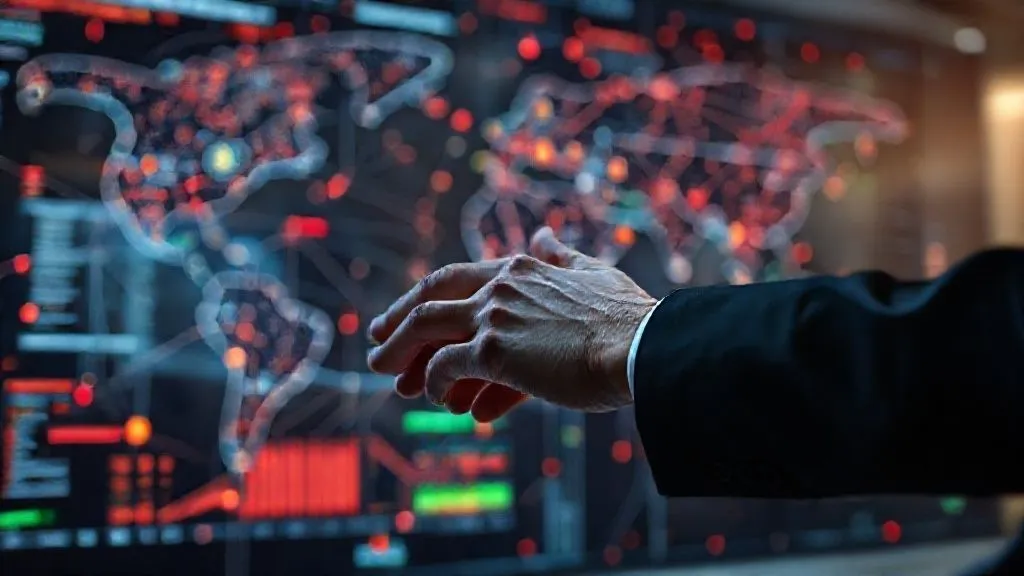
Beyond jurisdiction, the issue of attribution stands as perhaps the most significant practical obstacle. Cyber attacks are inherently designed for anonymity and plausible deniability, utilizing proxies, botnets, and sophisticated obfuscation techniques. Proving definitively that a specific state is responsible for a cyber operation to the ICJ's exacting legal standards is an immense undertaking.
"The digital fog of war is far denser than any battlefield smoke; it's a deliberate design feature, not an accidental byproduct, making state responsibility a labyrinthine puzzle for international lawyers."
The ICJ's standard for attribution, famously articulated in the Nicaragua v. United States case, requires demonstrating "effective control" over the perpetrators, a bar that is incredibly high for non-state actors or loosely affiliated groups. Even highly sophisticated intelligence agencies struggle with definitive, legally admissible attribution, let alone the public presentation of such evidence without compromising sensitive sources and methods.
Another profound challenge is the definition and threshold of "use of force" or "armed attack" in the cyber domain. Article 2(4) of the UN Charter prohibits the threat or use of force, and Article 51 allows for self-defense against an "armed attack." However, these concepts were developed in an era of kinetic warfare, making their application to non-physical cyber operations highly contentious.
The international community largely agrees on a "consequences-based" approach, as detailed in the Tallinn Manual 2.0, meaning a cyber operation must cause effects equivalent to those of a traditional armed attack (e.g., significant physical destruction, injury, or death) to cross the threshold. But what about attacks that cause massive economic disruption, data destruction, or critical infrastructure paralysis without immediate physical damage?
For instance, an attack that shuts down a nation's financial system for weeks or cripples its healthcare infrastructure could have devastating societal impacts without a single bullet fired. Determining if such an event constitutes a "use of force" or merely a violation of sovereignty remains a fiercely debated area of international law, hindering clear pathways for ICJ prosecution.
Furthermore, the evidentiary standards and admissibility before the ICJ pose unique difficulties. Cyber forensic evidence is highly technical, perishable, and often intertwined with national security intelligence. Presenting such evidence in an open court without revealing sensitive state capabilities or intelligence methods is a delicate balancing act, often leading states to withhold crucial information.
The chain of custody for digital evidence, spanning multiple jurisdictions and potentially non-state actors, is incredibly complex to establish and maintain to a standard that would satisfy the ICJ. This practical reality often means that while intelligence agencies might have high confidence in an attribution, converting that into legally sound and admissible proof for a court is a different proposition entirely.
Finally, the rapid evolution of technology far outpaces the development of customary international law. While existing principles of sovereignty, non-intervention, and international humanitarian law are applicable in cyberspace, their specific interpretation and application to novel cyber scenarios are still developing. There is no comprehensive, universally accepted treaty specifically governing cyber warfare, leaving significant gaps.
These legal challenges are not insurmountable, but they demand innovative legal thinking, greater state cooperation, and a willingness to adapt traditional legal paradigms to the realities of the digital age. Without these shifts, prosecuting cyber warfare before the ICJ will remain, in my professional opinion, an aspiration fraught with profound practical and legal difficulties.
Reading Recommendations:
- 7 Legal Steps: How to Dispute Unexpected Port Demurrage Charges Effectively
- The Global Maze: Unraveling Challenges in Enforcing Foreign Judgments Internationally
- The Unseen Fallout: What Happens If You Don't Reaffirm Your Car Loan?
- Grand Jury Subpoena: 7 Urgent Steps When Your Company Receives One
- Protect Your Savings: How to Shield Assets From Nursing Home Costs



Comments
Leave a comment below. Your email will not be published. Required fields marked with *