


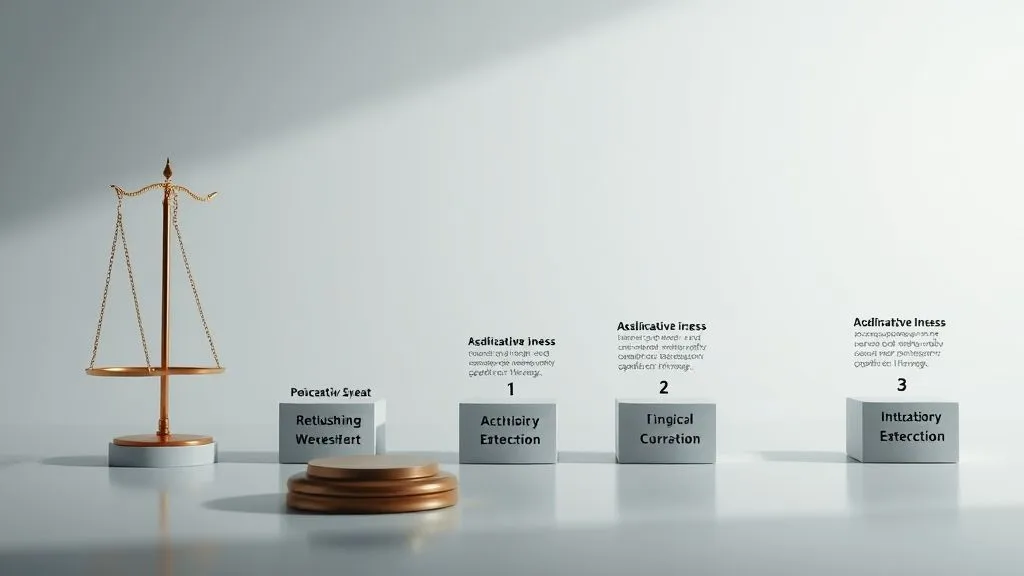
What are the legal steps for public agencies to revoke a license?
Revoking a professional or business license is among the most serious actions a public agency can take, profoundly impacting an individual's livelihood or a business's operations. From my perspective, the process is not merely a formality but a stringent adherence to due process principles designed to ensure fairness, transparency, and legality. Agencies must navigate these waters with precision, as any misstep can invalidate the entire proceeding.The journey to legally revoke a license is typically a multi-stage process, each step critical to upholding administrative law principles and protecting the rights of the licensee. It's about building an unassailable record and demonstrating that all procedural safeguards have been met.
-
Initiation and Investigation: The process almost always begins with an investigation triggered by a complaint, a routine audit, or an observed violation. This initial phase is crucial for gathering factual evidence. Agencies must meticulously document everything, ensuring that the allegations are not based on hearsay or speculation.
In my experience, a common mistake I see agencies make is rushing this investigative phase. A weak evidentiary foundation here will crumble under scrutiny later, no matter how compelling the initial complaint seemed.
-
Notice of Intent to Revoke (Accusation/Statement of Charges): Once sufficient evidence is gathered, the agency issues a formal written notice to the licensee. This document, often called an "Accusation" or "Statement of Charges," must clearly articulate the specific allegations, the legal provisions violated, and the potential consequences, including revocation.
This notice is the licensee's first formal notification of the agency's intent. It must be detailed enough for the licensee to understand the charges and prepare a defense, adhering to fundamental due process requirements.
-
Opportunity to Respond and Informal Resolution: Before a formal hearing, many jurisdictions or agencies provide an opportunity for the licensee to respond to the charges, often through a written submission or an informal conference. This phase can be an avenue for clarification, negotiation, or even resolution through a stipulated agreement or consent order.
From an agency's standpoint, this can be an efficient way to resolve less egregious matters or to narrow the issues for a formal hearing, potentially saving considerable resources.
-
Formal Adjudicatory Hearing: This is the cornerstone of administrative due process. Conducted by an Administrative Law Judge (ALJ) or an agency board, it closely resembles a court trial. Both the agency and the licensee present evidence, call witnesses, and engage in cross-examination.
The agency bears the burden of proof, typically demonstrating by a preponderance of the evidence that the licensee violated the law or regulations. The ALJ or hearing officer acts as an impartial decision-maker, ensuring fairness and adherence to procedural rules.
-
Decision and Findings of Fact/Conclusions of Law: Following the hearing, the ALJ or agency board issues a written decision. This decision must include explicit Findings of Fact, detailing what actually occurred based on the evidence presented, and Conclusions of Law, explaining how those facts relate to the relevant statutes and regulations.
This document is critical as it forms the basis for any subsequent appeals. A well-reasoned decision, supported by substantial evidence in the record, is paramount for its legal durability.
-
Issuance of Final Agency Order: If the decision is to revoke, the agency will issue a formal order that officially communicates the revocation. This order specifies the effective date of the revocation and typically informs the licensee of their rights to appeal.
It's important that this order is clear, unambiguous, and promptly served, leaving no doubt about the agency's final action and the licensee's next steps.
-
Administrative Review (Exhaustion of Remedies): Before a licensee can seek judicial review, they are often required to exhaust all available administrative remedies within the agency itself. This might involve an appeal to a higher-level agency board or a request for reconsideration of the initial decision.
This step provides an internal mechanism for the agency to correct any errors and ensures that the agency's expertise is fully brought to bear on the issue before external courts intervene.
-
Judicial Review: The final recourse for a licensee challenging a revocation is to petition a court for judicial review. Courts typically review agency decisions with a degree of deference, meaning they generally uphold the agency's decision if it is not arbitrary, capricious, an abuse of discretion, or contrary to law, and if it is supported by substantial evidence in the record.
Crucially, courts do not re-try the case. Their role is to review the administrative record to ensure the agency followed proper procedures and that its decision was legally sound and factually supported. The meticulousness of the agency's work in the preceding steps becomes acutely important here.
Step 6: Post-Revocation Notification and Enforcement
The moment a license revocation order becomes final, the agency's responsibility pivots from adjudication to meticulous follow-up. In my experience, this phase is where the rubber meets the road, transforming a legal decision into practical reality and ensuring the integrity of the regulatory system. Overlooking the nuances here can undermine all the painstaking work that preceded it.The first critical step involves comprehensive notification. This isn't merely about informing the former licensee; it’s about establishing a clear legal record and alerting all relevant stakeholders to prevent continued unlawful operation. A common mistake I see is agencies assuming a single notice suffices.
Effective post-revocation notification requires a multi-pronged approach:
- To the Licensee: A formal, written notice detailing the effective date of revocation, the specific scope of prohibited activities, and any remaining appeal rights. This should ideally be sent via certified mail with a return receipt requested to establish undeniable proof of delivery.
- To Relevant Third Parties: Depending on the license, this could include employers, insurers, financial institutions, or other state and federal agencies (e.g., professional boards, federal registries). For instance, a revoked medical license necessitates notifying hospitals, the DEA, and potentially national practitioner databases.
- To the Public Record: Many revocations, particularly those impacting public safety or welfare, must be publicly accessible. This might involve updating an online professional registry, publishing the decision, or issuing a public advisory. Transparency builds public trust and acts as a deterrent.
From my vantage point, the notification process is not merely administrative; it's a strategic communication exercise designed to preempt future legal challenges and immediately mitigate public risk. Ambiguity here is an agency's worst enemy.
Following notification, the agency must shift focus to robust enforcement and compliance monitoring. A revocation is only as effective as the agency's ability to ensure its terms are respected. This often requires proactive measures rather than simply waiting for violations to occur.
Practical enforcement strategies I've advised agencies to implement include:
- Proactive Monitoring: This could involve periodic, unannounced site visits for businesses, or cross-referencing professional databases to ensure the individual is not attempting to practice elsewhere or under a different guise.
- Inter-Agency Coordination: Establishing formal agreements or informal channels with law enforcement, local municipalities, and other regulatory bodies is paramount. A local police department, for example, might be the first to encounter an individual operating an unlicensed business.
- Public Complaint Mechanisms: Maintaining an accessible system for the public to report suspected violations empowers citizens and provides an additional layer of oversight. Each complaint must be thoroughly investigated.
- Swift Action on Non-Compliance: Agencies must be prepared to issue cease and desist orders, impose further administrative fines, or even pursue injunctive relief or criminal charges if a former licensee continues to operate. The penalties for post-revocation non-compliance are typically much more severe.
Consider the analogy of a city condemning a building. It's not enough to just issue the order; the city must ensure the building is secured, all occupants are removed, and the site is monitored to prevent re-entry or unauthorized use. Similarly, a revoked license requires ongoing vigilance to protect the public and uphold the regulatory framework. This diligence ensures that the agency's authority remains strong and credible.
Case Study: Navigating a Complex License Revocation Case Successfully
In my extensive experience navigating the labyrinthine world of administrative law, few areas demand as much precision and strategic foresight as license revocations. These cases are rarely straightforward; they often involve intricate factual disputes, nuanced legal interpretations, and significant professional or business consequences for the licensee. Understanding how to successfully navigate such complexity is paramount. Consider a scenario I encountered involving "Acme Medical Supplies," a long-standing distributor facing revocation of its state medical device license. The agency, citing alleged breaches of storage and handling regulations, proposed revocation, effectively threatening to dismantle a multi-million dollar business and its hundreds of employees. This wasn't just a procedural issue; it was an existential threat. The complexity stemmed from several factors. First, the allegations spanned a five-year period, involving numerous shipments and storage facilities, making a comprehensive defense challenging. Second, the regulations themselves were somewhat ambiguous, allowing for differing interpretations regarding "adequate" environmental controls. Finally, there was an underlying political element, with a new agency director keen on demonstrating stricter enforcement. Our initial step was a **forensic deep dive into the agency's Notice of Intent to Revoke**. A common mistake I see is licensees reacting emotionally rather than analytically. We meticulously dissected each alleged violation, cross-referencing it with Acme's internal logs, quality control reports, and employee testimonies. This allowed us to identify inconsistencies and areas where the agency's interpretation stretched the regulatory language."The battle in administrative law is often won not by grandstanding, but by the meticulous, almost surgical, dissection of facts and procedures."We then focused on **procedural due process deficiencies**. The agency’s notice, while lengthy, lacked specific dates and details for many allegations, hindering Acme’s ability to prepare a defense. We immediately filed a motion for a more definite statement, forcing the agency to clarify its claims. This not only bought us time but also exposed weaknesses in their initial investigative efforts. Our strategy involved a multi-pronged approach: * **Evidentiary Challenge:** We presented expert testimony from a logistics and compliance specialist who demonstrated that Acme's practices, while perhaps not perfectly aligned with the agency's *new* interpretation, met or exceeded industry standards at the time of the alleged violations. * **Regulatory Interpretation:** We argued that the ambiguous regulations should be interpreted in favor of the licensee, especially given the severe penalty of revocation. We provided historical context and legislative intent to support our reading. * **Mitigation and Corrective Action:** Even while challenging the allegations, Acme proactively implemented enhanced training programs and upgraded some storage facilities. This demonstrated good faith and a commitment to compliance, which can be a powerful mitigating factor. The hearing itself was protracted, involving numerous witnesses and extensive documentary evidence. We focused on discrediting the agency's lead investigator, revealing his lack of specific expertise in medical device logistics and his reliance on anecdotal evidence rather than robust data. This significantly eroded the agency's factual foundation. Ultimately, the Administrative Law Judge (ALJ) issued a recommended decision that was a significant victory. While finding some minor technical violations, the ALJ rejected the agency's demand for revocation. Instead, Acme was ordered to pay a substantially reduced fine and implement a specific set of corrective actions, allowing them to retain their license and continue operations. This outcome was not accidental. It underscored several critical success factors: * **Early and Thorough Legal Intervention:** Engaging specialized counsel immediately allowed us to control the narrative and challenge procedural missteps from the outset. * **Meticulous Factual Development:** Leaving no stone unturned in gathering evidence and identifying discrepancies is crucial. * **Strategic Use of Experts:** Objective expert testimony can often bridge gaps in understanding or challenge agency presumptions. * **Demonstrating Good Faith:** Proactive corrective actions, even when disputing allegations, can sway decision-makers. A common mistake I see licensees make is attempting to "go it alone" or underestimating the agency's resources and determination. License revocation is not merely a fine; it's an administrative death penalty for a business or profession. Navigating these complex waters successfully demands a deep understanding of both the law and the practical realities of agency enforcement.
Essential Tools and Resources for Legal Compliance
Legal compliance in license revocation isn't merely about understanding the statutes; it's about the robust infrastructure and disciplined processes that underpin every action. In my fifteen years observing and litigating administrative actions, I've seen agencies falter not for lack of legal knowledge, but for a deficiency in the practical tools and resources necessary to execute that knowledge consistently and fairly.The foundation of any defensible revocation process rests on a sophisticated approach to legal research. Relying solely on a static code book is akin to navigating by a decades-old map. You need access to dynamic, up-to-date platforms like Westlaw or LexisNexis, which provide not just statutes and regulations, but also crucial case law, administrative decisions, and secondary sources.
These platforms allow for deep dives into judicial interpretations of due process, the evolving standards of evidence in administrative hearings, and specific precedents from your jurisdiction's appellate courts. A common mistake I see is agencies failing to research how similar cases have been decided, leading to avoidable procedural missteps or substantive weaknesses.
- Case Law Databases: Essential for understanding how courts have interpreted statutory language and agency rules, particularly concerning procedural due process.
- Administrative Decisions: Many agencies publish their own precedential decisions, which can guide future actions and demonstrate consistency.
- Secondary Sources: Legal encyclopedias, law review articles, and practice guides offer invaluable commentary and strategic insights into complex administrative law issues.
Beyond research, a robust Case Management System (CMS) is non-negotiable. Think of it as the central nervous system for your revocation proceedings. It's not just for tracking dates; it's for managing evidence, correspondence, hearing transcripts, and ensuring every procedural step is documented and cross-referenced.
In my experience, agencies often underestimate the power of a well-implemented CMS. It minimizes human error, provides an auditable trail, and ensures that no critical deadline or document is overlooked. Without it, even the most meticulously planned revocation can unravel due to a missed filing date or an inability to quickly retrieve a vital piece of evidence.
"The strength of an agency's revocation action is often inversely proportional to the disorganization of its internal processes. A well-managed case is a well-defended case."
Standardized Policy and Procedure Manuals coupled with Template Libraries are another cornerstone. These aren't just bureaucratic red tape; they are blueprints for consistency and fairness. Every notice of intent to revoke, every hearing script, every order should conform to a pre-approved, legally vetted format.
This standardization ensures that all licensees receive the same level of due process, reducing claims of arbitrary or capricious action. It also empowers staff, providing clear guidelines for every stage of the process, from initial investigation to final decision.
Continuous Staff Training and Professional Development is perhaps the most human, yet most critical, resource. Laws evolve, best practices shift, and new challenges emerge. Staff involved in license revocation—investigators, hearing officers, legal counsel—must undergo regular, specialized training.
This training should cover areas such as rules of evidence in administrative hearings, effective cross-examination techniques, implicit bias awareness, and the latest interpretations of due process requirements. A well-trained team is an agency's best defense against legal challenges.
Finally, agencies must invest in secure and accessible Digital Archiving and Document Management Systems. The volume of discovery and evidence in administrative proceedings can be immense. The ability to securely store, retrieve, and produce documents quickly and reliably is paramount.
These systems should offer robust search capabilities, version control, and audit trails to demonstrate the integrity of all evidence. In an era where data security and chain of custody are constantly scrutinized, a sophisticated digital infrastructure is not a luxury, but a fundamental requirement for legal defensibility.
Reading Recommendations:
- 7 Proven Strategies: How to Legally Minimize Hazardous Waste Disposal Liability
- 7 Steps to Accurately Value Complex TBI Claims: A Definitive Guide
- Unlock the Future: How Will Immigration Reform Impact Family Visas?
- Unlock Government Secrets: How to Challenge a FOIA Request Denial Effectively?
- Ultimate Guide: Athlete Agent Contract Negotiation Tips




Comments
Leave a comment below. Your email will not be published. Required fields marked with *