


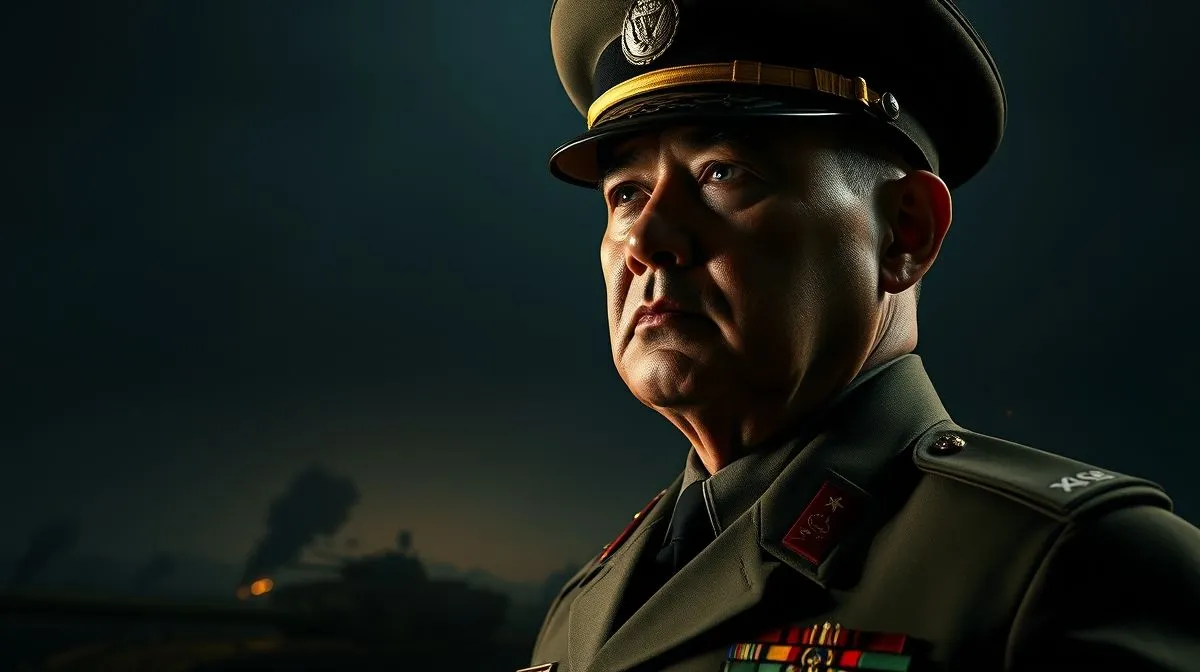
What is Command Responsibility in International Criminal Law?
Have you ever wondered who is truly accountable when atrocities occur during armed conflicts? It's easy to point fingers at the soldiers on the ground, but what about those in command? The principle of command responsibility seeks to address this critical question.
International criminal law (ICL) grapples with the challenge of holding superiors accountable for the crimes committed by their subordinates. This is where the concept of command responsibility, also known as superior responsibility, comes into play. It aims to bridge the gap between the act and the commander.
In this comprehensive guide, we will delve deep into the intricacies of command responsibility in ICL. You'll learn its definition, the elements required to establish it, its significance in prosecuting war crimes and crimes against humanity, and some real-world examples. By the end of this article, you will have a clear understanding of this vital principle.
The Core Principles of Command Responsibility
Command responsibility, at its heart, holds military commanders and other superiors accountable for the crimes committed by their subordinates. It is not about punishing commanders for simply being in charge; it's about holding them responsible for failing to prevent or punish crimes they knew or should have known were being committed.
Key Elements of Command Responsibility
To establish command responsibility, several key elements must be proven:
- Superior-Subordinate Relationship: There must be a clear relationship of authority and control between the superior and the subordinate. This can be de jure (legal) or de facto (actual) control.
- Knowledge: The superior must have known, or should have known, that the subordinates were about to commit, were committing, or had committed crimes. This is often the most challenging element to prove.
- Failure to Act: The superior must have failed to take all necessary and reasonable measures to prevent the crimes or to punish the perpetrators after the fact.
The International Criminal Tribunal for the former Yugoslavia (ICTY) and the International Criminal Court (ICC) have played a crucial role in shaping the understanding and application of these elements. For example, the ICTY case of Prosecutor v. Blaški? significantly clarified the requirements for establishing de facto control.
The Legal Basis for Command Responsibility
The principle of command responsibility is rooted in customary international law and treaty law. Its origins can be traced back to the Hague Conventions of 1907 and the Geneva Conventions of 1949.
Treaty Law and Customary International Law
Article 86(2) of Additional Protocol I to the Geneva Conventions explicitly codifies command responsibility. Customary international law also recognizes the principle, as evidenced by numerous military manuals and national laws.
The Rome Statute of the International Criminal Court (ICC) also incorporates command responsibility in Article 28. This article outlines the specific circumstances under which military commanders and other superiors can be held criminally responsible for the crimes of their subordinates. The ICC's application of Article 28 is critical in modern international criminal justice.
The Importance of Command Responsibility in ICL
Command responsibility is a cornerstone of international criminal law because it addresses a fundamental problem: how to deter and punish those who wield power and influence over others, and who may be complicit in atrocities through their inaction.
Deterrence and Accountability
By holding superiors accountable, command responsibility serves as a powerful deterrent against the commission of war crimes and crimes against humanity. It sends a clear message that those in positions of authority cannot simply turn a blind eye to the atrocities committed by their subordinates.
Furthermore, it ensures that justice is served not only for the direct perpetrators but also for those who enabled or facilitated the crimes through their negligence or willful ignorance. This contributes to a more comprehensive and effective system of international criminal justice. The principle reinforces the idea that accountability extends beyond those who directly pull the trigger.
Challenges in Proving Command Responsibility
Despite its importance, proving command responsibility can be a complex and challenging task. Several obstacles often arise during investigations and trials.
Establishing Knowledge and Control
One of the biggest challenges is proving that the superior knew, or should have known, about the crimes being committed by their subordinates. This often requires gathering intelligence reports, intercepted communications, and witness testimonies. Establishing the chain of command and the extent of the superior's control over the subordinates can also be difficult.
Causation and the 'Necessary and Reasonable Measures' Standard
Another challenge is demonstrating that the superior's failure to act was a direct cause of the crimes. The standard of 'necessary and reasonable measures' is also subject to interpretation, and it can be difficult to determine what actions a superior should have taken in a particular situation. The legal definition of "necessary and reasonable measures" is often debated in international tribunals.
Examples of Command Responsibility in Action
Several high-profile cases have involved the application of command responsibility, illustrating its practical implications.
The Yamashita Case
One of the earliest and most famous examples is the case of General Tomoyuki Yamashita, a Japanese general who was held responsible for atrocities committed by his troops in the Philippines during World War II. He was convicted by a U.S. military tribunal and executed. This case established a precedent for holding commanders accountable for the actions of their subordinates, even if they did not directly order those actions.
The ICTY Cases
The ICTY has also prosecuted several individuals for command responsibility, including senior military and political leaders. These cases have helped to clarify the elements of command responsibility and to establish international standards for accountability. The case of Prosecutor v. Hadžihasanovi? and Kubura is a notable example, addressing the concept of 'should have known'.
Defenses Against Command Responsibility Allegations
Individuals accused of command responsibility may raise various defenses to challenge the allegations against them.
Lack of Knowledge or Control
One common defense is that the superior did not know, and could not have reasonably known, about the crimes being committed. Another defense is that the superior lacked the necessary control over the subordinates to prevent the crimes. These defenses often involve presenting evidence of the superior's efforts to maintain discipline and prevent abuses.
Taking Reasonable Measures
A superior may also argue that they took all necessary and reasonable measures to prevent or punish the crimes. This defense often involves presenting evidence of investigations, disciplinary actions, and other steps taken to address the misconduct of subordinates. The effectiveness of these measures is often scrutinized by the courts.
Frequently Asked Questions (FAQ)
What is the difference between command responsibility and direct responsibility? Command responsibility holds superiors accountable for the crimes of their subordinates when they knew or should have known about the crimes and failed to prevent or punish them. Direct responsibility refers to individual liability for directly committing or ordering the commission of crimes.
What standard of knowledge is required for command responsibility? The superior must have known, or should have known, that the subordinates were about to commit, were committing, or had committed crimes. The 'should have known' standard implies a duty of diligence on the part of the superior to be aware of what is happening under their command.
Can a civilian be held liable under the principle of command responsibility? Yes, command responsibility can extend to civilian superiors who exercise effective control over military or paramilitary forces. The key is the existence of a superior-subordinate relationship and the ability to control the actions of the subordinates.
What are some examples of 'necessary and reasonable measures' a commander should take? These measures can include issuing clear orders prohibiting certain conduct, conducting investigations into alleged abuses, disciplining or prosecuting perpetrators, and providing training to subordinates on the laws of war. The specific measures required will depend on the circumstances of each case.
Recommended Reading
- Age Workplace Discrimination: What is Considered & How to Fight It
- Sue Debt Collector Financial Services? Know Your Rights Now!
- Hidden Signs: Is Elder Abuse by Family Members Happening?
- Tax Audit Triggers in 2024: What You MUST Know to Stay Safe!
- White Collar Crime Penalties: What You Need to Know Now!
Conclusion
What is command responsibility icl? It is a critical principle in international criminal law that holds superiors accountable for the crimes of their subordinates when they fail to prevent or punish those crimes. It is essential for deterring atrocities, ensuring accountability, and promoting justice in armed conflicts. While proving command responsibility can be challenging, its application in international tribunals and national courts has helped to shape and clarify its scope and meaning. By understanding this principle, we can better hold those in power accountable for their actions and contribute to a more just and peaceful world. Learn more about international law at the International Committee of the Red Cross (ICRC) or explore the UN's page on genocide prevention and international law to expand your knowledge.




Comments
Leave a comment below. Your email will not be published. Required fields marked with *