


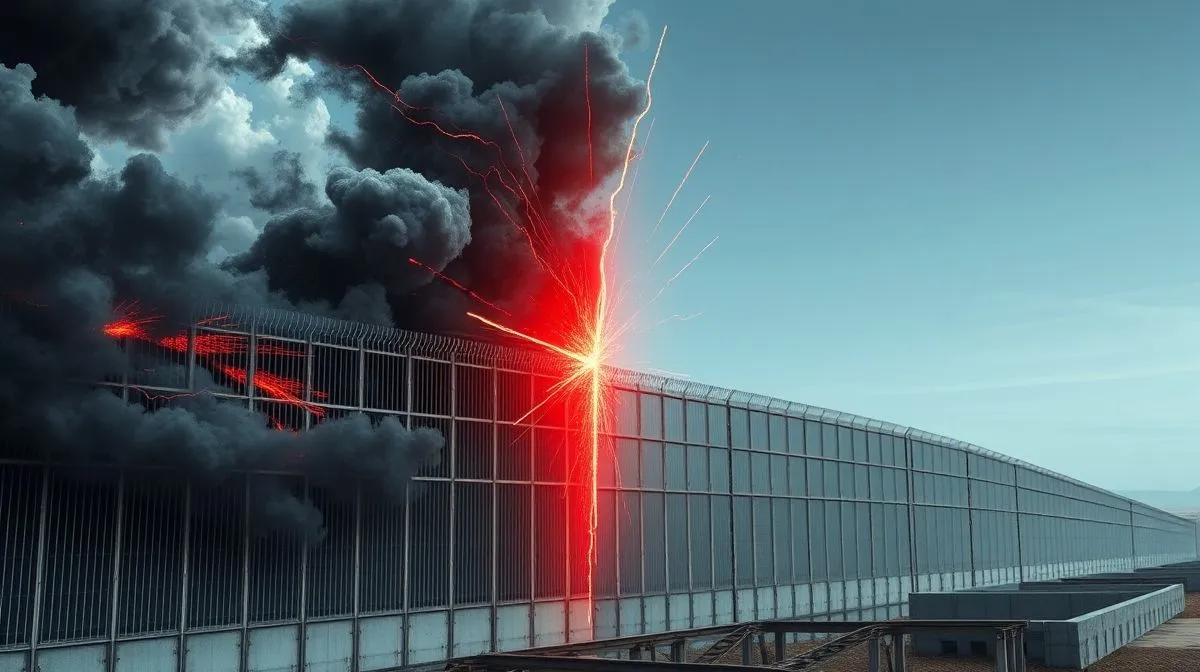
What Legal Mechanisms Exist to Prevent Armed Conflict Escalation?
As an expert in international law for over 15 years, I've observed that the landscape of preventing armed conflict escalation is complex, often resembling a multi-layered, sometimes imperfect, legal scaffolding. It's not a single, monolithic solution, but rather an intricate web of norms, treaties, and institutions designed to de-escalate tensions and avert full-blown hostilities.
At its core, the foundational legal mechanism is the prohibition on the use of force, enshrined in Article 2(4) of the UN Charter. This bedrock principle mandates that all Member States refrain from the threat or use of force against the territorial integrity or political independence of any state, or in any other manner inconsistent with the Purposes of the United Nations.
A common mistake I see is viewing this prohibition as absolute; however, it permits two narrow exceptions: self-defense under Article 51 and collective security actions authorized by the UN Security Council under Chapter VII. These exceptions are critical, as their misinterpretation or abuse can themselves be pathways to escalation, requiring careful legal scrutiny.
Beyond this fundamental prohibition, a suite of mechanisms under Chapter VI of the UN Charter focuses on the peaceful settlement of disputes. These are proactive tools designed to address disagreements before they fester into armed conflict, or to de-escalate them once they begin.
- Negotiation and Good Offices: These are often the first port of call, involving direct talks between parties or assistance from a third party to facilitate communication. Their legal basis stems from the sovereign right of states to resolve their differences peacefully.
- Mediation and Conciliation: Here, a neutral third party actively participates in suggesting terms of settlement, though these recommendations are not legally binding. The effectiveness hinges on the mediator's credibility and the parties' willingness to compromise.
- Inquiry and Fact-Finding Missions: These mechanisms aim to establish the facts of a dispute, which can often be a significant step towards de-escalation by clarifying misunderstandings or debunking false narratives. The UN Secretary-General frequently deploys such missions.
- Arbitration and Judicial Settlement: These involve submitting disputes to a neutral third party for a legally binding decision. The International Court of Justice (ICJ) is the principal judicial organ of the UN, offering states a forum to resolve legal disputes, as seen in cases like the Nicaragua v. United States or the preliminary measures ordered in Ukraine v. Russian Federation.
"In my experience, the true power of peaceful dispute settlement lies not just in its ability to resolve disputes, but in its capacity to build trust and institutionalize dialogue, thereby making conflict escalation less likely in the future."
Another crucial set of mechanisms involves arms control, disarmament, and non-proliferation treaties. These instruments directly address the means by which conflicts escalate, by limiting the spread, production, or use of certain weapons. The Treaty on the Non-Proliferation of Nuclear Weapons (NPT), for instance, aims to prevent the spread of nuclear weapons technology, a key factor in potential global escalation.
Similarly, the Chemical Weapons Convention (CWC) and the Biological Weapons Convention (BWC) legally prohibit entire categories of weapons of mass destruction. Their robust verification and enforcement mechanisms, though not always perfect, serve as a powerful deterrent against their use, which would undoubtedly trigger severe escalatory responses.
During ongoing armed conflicts, International Humanitarian Law (IHL), often referred to as the law of armed conflict, plays a vital, albeit different, role in preventing escalation. While it doesn't prevent the conflict itself, it sets limits on the methods and means of warfare, protecting civilians and those no longer participating in hostilities. Adherence to IHL prevents the conflict from descending into unchecked brutality, which can fuel further cycles of violence and retribution.
The Geneva Conventions of 1949 and their Additional Protocols are the cornerstone of IHL, prohibiting acts like targeting civilians, torture, and the use of certain indiscriminate weapons. Breaches of these laws, particularly grave breaches, are considered war crimes, carrying the potential for international criminal accountability.
Finally, the UN Security Council's Chapter VII powers provide the most robust legal framework for preventing and de-escalating conflicts when peaceful means fail. The Council can authorize a range of measures, from imposing economic sanctions and arms embargoes to authorizing the use of force for collective security purposes, including peacekeeping operations. These resolutions carry binding legal force for all UN Member States.
For example, the Security Council's imposition of sanctions on states or non-state actors, or its authorization of peacekeeping missions with mandates to protect civilians, are direct legal interventions aimed at stabilizing volatile situations and preventing wider escalation. The challenge, as I often explain to my students, lies in the political will of its permanent members to act decisively and without veto.
Essential Tools and Resources for Conflict Prevention
In my extensive experience navigating the complexities of international law, I've learned that preventing armed conflict escalation isn't merely a theoretical exercise; it demands a robust arsenal of practical tools and resources. These are the instruments that practitioners on the ground, diplomats in negotiation rooms, and policymakers in capitals leverage to de-escalate tensions and foster sustainable peace.
One of the foundational elements is the development and deployment of sophisticated Early Warning Systems. These are not crystal balls, but rather intricate networks designed to collect, analyze, and disseminate information about potential conflict hotspots. They scrutinize everything from socio-economic indicators and political instability to hate speech proliferation and troop movements. A common mistake I see is underestimating the human element in these systems; raw data requires expert interpretation to translate into actionable intelligence.
Effective early warning systems typically rely on a combination of resources:
- Satellite Imagery and Geospatial Analysis: Providing objective, real-time data on troop deployments, refugee movements, and infrastructure damage.
- Open Source Intelligence (OSINT): Monitoring social media, local news, and public statements to gauge sentiment and identify emerging narratives.
- On-the-Ground Human Intelligence: Reports from peacekeepers, humanitarian workers, and local civil society actors who possess invaluable contextual understanding.
- Data Analytics and Predictive Modeling: Using algorithms to identify patterns and forecast potential escalation points, though these models must always be viewed critically and informatively, not prescriptively.
Beyond warning, the next critical set of tools resides in Diplomatic and Mediation Toolkits. These are the processes through which states and non-state actors engage to resolve disputes peacefully. In my career, I've observed that the most effective interventions often involve a blend of 'good offices,' mediation, and facilitation.
"True diplomacy, in the face of escalating conflict, is not about finding a perfect solution, but about creating enough space for dialogue to prevent the worst possible outcome. It's an art of the possible, guided by a deep understanding of the impossible."
Specific diplomatic resources include:
- Special Envoys and Representatives: Individuals appointed by the UN Secretary-General or regional organizations (like the African Union or OSCE) to mediate between parties. Their legitimacy and impartiality are paramount.
- Track-Two Diplomacy: Unofficial, non-governmental dialogues that bring together influential individuals from opposing sides to explore solutions away from the public spotlight. This often builds crucial trust.
- Confidence-Building Measures (CBMs): Practical steps taken by parties to reduce suspicion and build trust, such as joint military exercises, data sharing, or cultural exchanges. These are often small but can be cumulatively powerful.
The international legal framework itself serves as a crucial preventative resource. Mechanisms like the International Court of Justice (ICJ) offer states a forum for peaceful dispute resolution through binding judgments or advisory opinions. While often seen as reactive, its very existence and the principle of customary international law it upholds act as a deterrent against unilateral aggression.
Furthermore, the development of international criminal law, particularly through the International Criminal Court (ICC) and ad hoc tribunals, provides a preventative dimension. The threat of individual accountability for war crimes, crimes against humanity, and genocide, while imperfect, aims to deter future atrocities and thereby prevent conflict escalation. It serves as a crucial reminder that leaders are not above the law.
Finally, a cornerstone of sustainable prevention is Capacity Building and Technical Assistance. Many states lack the internal infrastructure, legal expertise, or institutional strength to manage internal tensions or external threats effectively. Providing assistance in areas like rule of law, human rights protection, security sector reform, and democratic governance strengthens a state's resilience against conflict drivers.
This often involves:
- Training Programs: Educating judicial officials, police forces, and civil servants on international humanitarian law, human rights, and effective governance.
- Institutional Reform: Assisting states in drafting robust legal frameworks, establishing independent oversight bodies, and strengthening democratic institutions.
- Peacebuilding Commissions: Bodies like the UN Peacebuilding Commission actively support post-conflict countries to prevent relapse, focusing on long-term stability and development.
Ultimately, these essential tools and resources are interconnected. Their optimal deployment requires coordination, political will, and an unwavering commitment to the principle that preventing conflict is not only morally imperative but strategically prudent, saving countless lives and resources in the long run.
Frequently Asked Questions (FAQ)
In my experience, navigating the complexities of international law to prevent armed conflict escalation often raises more questions than it answers for those not steeped in the field. It’s a dynamic, sometimes frustrating, but ultimately indispensable domain. Let's address some of the most common inquiries I encounter.
How effective are these legal mechanisms truly, given the ongoing conflicts we see globally?
This is perhaps the most frequent and understandable question. It’s crucial to understand that the effectiveness of these mechanisms isn't solely measured by the absence of *all* conflict, but by the prevention of *escalation* and the *mitigation* of its worst effects. Think of it like a public health system: you still have illnesses, but a robust system prevents pandemics and treats outbreaks before they overwhelm. Many successes are invisible – the conflicts that didn't erupt, the disputes that were quietly mediated, the ceasefires that held.
“The true measure of international law’s success in conflict prevention often lies in the silence of wars that never started, rather than the clamor of those that did.”
The UN Charter, for instance, has fundamentally reshaped state behavior, making aggressive war illegal. While violations occur, the legal framework provides a powerful normative barrier and a basis for collective response. Without it, the world would undoubtedly be far more volatile and prone to unchecked aggression. In my view, the very existence and widespread acceptance of these mechanisms act as a constant, if sometimes challenged, deterrent.
Isn't state sovereignty a major impediment to the enforcement of these mechanisms?
Absolutely, the tension between state sovereignty and international intervention is one of the most enduring challenges in international law. Sovereignty grants states exclusive authority over their territory and internal affairs, making external intervention legally problematic without consent or a Security Council resolution under Chapter VII of the UN Charter.
However, it’s not an absolute barrier. States voluntarily enter into treaties and accept the jurisdiction of international courts, thereby consenting to limit aspects of their sovereignty. Furthermore, the concept of Responsibility to Protect (R2P), though controversial in its application, posits that sovereignty entails a responsibility to protect one's own population from mass atrocities, and if a state fails, the international community has a responsibility to act. This represents a significant, albeit evolving, shift in understanding the limits of sovereignty in the face of grave human rights violations.
What are the biggest practical challenges in implementing preventative legal mechanisms?
From an operational standpoint, the challenges are multifaceted:
- Political Will and Veto Power: The lack of political will among powerful states, particularly within the UN Security Council where permanent members hold veto power, can paralyze action even when clear legal grounds for intervention or sanctions exist.
- Information Asymmetry and Attribution: Gathering credible, unbiased information in real-time to assess escalation risks and attribute responsibility is often difficult, especially in complex, multi-actor conflicts.
- Resource Constraints: Preventative diplomacy, mediation, and peacebuilding initiatives require significant financial and human resources, which are often scarce or diverted to crisis response.
- Compliance and Enforcement Gap: Unlike domestic legal systems, international law lacks a centralized enforcement body with universal coercive power. Compliance often relies on self-interest, reputation, and the threat of collective action rather than direct enforcement.
A common mistake I see is focusing solely on the legal text without acknowledging the political realities that shape its application. Law is a tool, but its effectiveness depends heavily on the hands wielding it.
How do non-state actors, such as armed groups or transnational terrorist organizations, fit into this framework?
This is an increasingly critical area. Traditionally, international law primarily regulated states. However, the rise of powerful non-state armed groups (NSAGs) and terrorist organizations has forced a re-evaluation. While they don't possess the same legal status as states, international humanitarian law (IHL) applies to all parties in an armed conflict, regardless of their state or non-state nature.
This means NSAGs are bound by rules on the conduct of hostilities, protection of civilians, and treatment of prisoners. Furthermore, international criminal law can hold individuals from these groups accountable for war crimes, crimes against humanity, and genocide. The challenge lies in enforcement, as engaging directly with these groups often confers a degree of legitimacy, yet ignoring them means losing a crucial avenue for de-escalation and compliance with humanitarian norms. In my professional capacity, I've seen firsthand how engaging with non-state actors, even indirectly, through humanitarian channels, can sometimes be the only way to establish communication and prevent further atrocities.
What role does "soft law" play in preventing conflict escalation, compared to binding treaties?
While often overlooked in favor of "hard law" (binding treaties and customary international law), "soft law" plays a surprisingly vital, albeit indirect, role. Soft law refers to non-binding instruments like declarations, resolutions, codes of conduct, or guidelines. Although not legally enforceable, they carry significant moral and political weight.
Their importance lies in several areas:
- Normative Development: Soft law often precedes hard law, laying the groundwork for future treaties by building consensus around emerging norms and principles. Think of the Universal Declaration of Human Rights, initially soft law, which inspired numerous binding human rights treaties.
- Flexibility and Adaptability: They can be adopted more quickly and easily than treaties, allowing for a more agile response to evolving conflict dynamics and technological advancements.
- Guidance and Best Practices: Soft law provides states with practical guidance on how to implement their hard law obligations, offering benchmarks for responsible state behavior in areas like cybersecurity or the responsible use of AI in warfare.
In my view, dismissing soft law as irrelevant is a mistake. It shapes expectations, influences state practice, and often serves as the initial blueprint for the legal mechanisms that eventually become binding. It's the intellectual ferment from which actionable legal solutions often emerge.
What is the role of the UN Security Council in preventing conflict?
The UN Security Council stands as the cornerstone of the international collective security system, vested with primary responsibility for the maintenance of international peace and security under Article 24 of the UN Charter. In my experience, its role in preventing armed conflict escalation is both profound and frequently misunderstood, often reduced to merely reacting to crises rather than actively averting them.
Its powers are broadly categorized under two crucial chapters of the UN Charter. Chapter VI empowers the Council to recommend procedures or methods of adjustment for disputes whose continuance is likely to endanger international peace and security, focusing on peaceful settlement. This includes fact-finding missions, mediation, and arbitration.
Conversely, Chapter VII grants the Council far-reaching powers to "determine the existence of any threat to the peace, breach of the peace, or act of aggression" and to decide what measures shall be taken to maintain or restore international peace and security. These measures range from non-military actions, like sanctions, to the authorization of military force.
A common mistake I see is to view the UNSC's work as purely reactive. In reality, significant effort is dedicated to preventive diplomacy, often behind closed doors. This involves deploying special envoys, dispatching fact-finding missions to volatile regions, and facilitating dialogue between disputing parties before tensions boil over. The quiet engagement in regions like West Africa during electoral disputes, or sustained efforts in Central Asia, often prevents situations from reaching the public eye as full-blown crises.
One of its most potent tools for prevention under Chapter VII is the imposition of sanctions. These are not merely punitive; they are designed to alter the behavior of states or non-state actors by imposing costs. In my career, I've observed their evolution from comprehensive, often blunt instruments, to highly targeted measures.
- Arms Embargoes: Preventing the flow of weapons to conflict zones, as seen in the Democratic Republic of Congo (DRC) to curb the financing of armed groups.
- Travel Bans: Restricting the movement of individuals responsible for instability or human rights abuses.
- Asset Freezes: Targeting the financial networks of belligerent regimes or terrorist organizations, exemplified by sanctions against al-Qaeda and ISIS.
These measures, while not always perfect, can significantly degrade a party's capacity to wage war and compel them towards negotiation, as was arguably the case in Liberia during its civil conflicts, contributing to the eventual peace processes.
Beyond sanctions, the UNSC mandates peacekeeping operations, which are critical for stabilizing post-conflict situations and preventing relapse, but also for deterring escalation in fragile environments. These missions, comprising military, police, and civilian personnel, operate with the consent of the host state, acting as a buffer between warring factions, monitoring ceasefires, and protecting civilians.
"The blue helmets are often the last line of defense, a tangible manifestation of the international community's commitment to peace. Their mere presence can de-escalate tensions and provide a window for political solutions."
Consider the United Nations Interim Force in Lebanon (UNIFIL), which for decades has maintained stability along the Blue Line, preventing localized skirmishes from escalating into wider regional conflict. Or the multidimensional mission in the Central African Republic (MINUSCA), which, despite immense challenges, works to protect civilians and support political transitions, directly addressing drivers of conflict.
However, the Council's effectiveness is not without its significant challenges. The most prominent is the veto power held by its five permanent members (China, France, Russia, the United Kingdom, and the United States). This single mechanism can paralyze the Council, preventing action even when there is widespread international consensus on the need to intervene.
We saw this starkly in the context of the Syrian civil war, where numerous resolutions aimed at addressing the conflict or ensuring humanitarian access were blocked, leading to devastating consequences. Similarly, the ongoing conflict in Ukraine has exposed the deep divisions within the Council, severely limiting its ability to fulfill its primary mandate. This political reality often overshadows the legal framework, demonstrating that law alone cannot dictate outcomes without political will.
In my view, understanding the UNSC's role requires appreciating this interplay between its immense legal authority and the geopolitical realities that shape its decisions. Its preventive capacity, while often invisible, is vital, and its reactive measures, though imperfect, remain the most powerful tools available to the international community for managing and, ideally, preventing the escalation of armed conflict.
Can international law truly stop a determined aggressor?
In my experience, this is perhaps the most fundamental and often cynical question posed to international legal practitioners. The short answer is nuanced: international law does not physically stop a determined aggressor in the way a border fence or a military blockade might. Its power lies elsewhere, in its capacity to alter the calculus, delegitimize actions, mobilize opposition, and impose long-term consequences. A common mistake I see is viewing international law as a mere set of suggestions. Instead, it functions as a comprehensive normative framework, establishing what is permissible and what is not, and crucially, providing the legal basis for collective action and accountability. Consider this analogy: traffic laws don't physically prevent a drunk driver from getting behind the wheel. However, they establish that such an act is illegal, provide the basis for arrest and prosecution, and create a system of penalties that, over time, deter most people. International law operates similarly on the global stage. The true impact of international law on a determined aggressor manifests in several critical ways: *Delegitimization of Action: An aggressor state, by violating core principles like the prohibition on the use of force (Article 2(4) of the UN Charter), immediately loses its legal and moral standing. This is not trivial; it makes it harder to garner international support, recruit allies, or justify actions to one's own populace.
*Mobilization of International Response: International law provides the legal predicate for the international community to act. For instance, the UN Security Council, under Chapter VII of the UN Charter, can impose sanctions, authorize military force, or establish tribunals. While the veto power can be a significant hurdle, the legal framework remains the foundation for any such action.
*Economic and Diplomatic Isolation: When a state flouts international law, it risks severe sanctions and diplomatic isolation. This can cripple its economy, limit its access to global markets and technology, and erode its influence. The unprecedented sanctions against Russia following its full-scale invasion of Ukraine in 2022, legally justified by clear violations of international law, serve as a potent example.
*Individual Accountability: The long arm of international criminal law means that leaders and commanders responsible for aggression, war crimes, or crimes against humanity can face prosecution by institutions like the International Criminal Court (ICC) or ad hoc tribunals. The threat of arrest warrants, travel bans, and eventual trial can be a powerful deterrent, even if it takes years or decades to materialize.
*Reparations and Long-Term Liability: An aggressor state incurs immense long-term liability for the damage caused. International law dictates that the aggressor must make reparations to the victim state. This can involve rebuilding infrastructure, compensating victims, and returning stolen assets, creating a financial burden that can last for generations.
"International law doesn't just judge; it changes the future. It ensures that even if immediate physical deterrence fails, the aggressor's victory will be hollow, costly, and perpetually tainted by illegitimacy and the specter of future justice."Consider the case of **Iraq's invasion of Kuwait in 1990**. Despite Saddam Hussein's determination, the clear violation of international law led to a unified, legally sanctioned international response through UN Security Council Resolutions, culminating in the expulsion of Iraqi forces. While the political will was present, international law provided the indispensable legitimacy and framework for that collective action. More recently, the ongoing aggression against Ukraine by Russia, a permanent member of the Security Council, highlights both the challenges and the enduring power of international law. Despite the veto preventing direct UNSC action, the legal condemnation has been overwhelming. This condemnation has: *
Justified massive military aid to Ukraine based on the right of self-defense.
*Provided the legal basis for unprecedented economic sanctions.
*Spurred numerous international legal proceedings, including cases before the International Court of Justice (ICJ) and investigations by the ICC, laying the groundwork for future accountability.
While a "determined aggressor" might initially disregard international law, they do so at an ever-increasing cost. The law ensures that their actions are never normalized, that accountability remains a persistent threat, and that the international community has the legal foundation to respond. It may not stop the first punch, but it ensures that the aggressor ultimately pays a heavy, enduring price.What is the difference between jus ad bellum and jus in bello?
In my extensive experience navigating the complexities of international law, one of the most fundamental yet frequently misunderstood distinctions lies between **jus ad bellum** and **jus in bello**. While both are critical pillars governing the use of force, they address entirely separate phases and questions concerning armed conflict.Put simply, **jus ad bellum** dictates *when* a state may legitimately resort to force against another state. It's the law concerning the right to go to war, focusing on the initial decision to engage in armed conflict.
Conversely, **jus in bello** governs *how* warfare is conducted once it has begun. This body of law, also known as International Humanitarian Law (IHL), applies equally to all parties in a conflict, regardless of whether their initial resort to force was lawful.
A common mistake I see, even among seasoned practitioners, is conflating these two. Think of it like this: **jus ad bellum** is akin to getting your driver's license – the legal permission to operate a vehicle. **Jus in bello**, on the other hand, comprises the rules of the road – traffic laws, speed limits, right-of-way – that you must follow *while* driving, irrespective of how you obtained your license.
"The legality of a state's decision to go to war does not, in any way, excuse or condemn its conduct within that war. These are two distinct moral and legal universes."
Let's delve deeper into each, starting with **jus ad bellum**, the 'right to war'.
Historically, under the 'just war' tradition, nations could theoretically justify war on various grounds. However, the modern framework, solidified by the **United Nations Charter**, severely restricts the lawful use of force. Article 2(4) of the Charter is unequivocal: it prohibits the threat or use of force against the territorial integrity or political independence of any state.
There are only two narrow exceptions to this overarching prohibition, which form the core of contemporary **jus ad bellum**:
- Self-defense: Article 51 of the UN Charter permits states to use force in individual or collective self-defense if an armed attack occurs. This right is inherent, but subject to strict criteria, including necessity and proportionality.
- UN Security Council Authorization: The Security Council, acting under Chapter VII of the UN Charter, can authorize the use of force to maintain or restore international peace and security.
In my experience, debates around **jus ad bellum** often revolve around the interpretation of "armed attack" – does it include imminent threats or only actual attacks? What constitutes "collective self-defense"? And when, if ever, is humanitarian intervention without Security Council authorization permissible? These are the high-stakes questions that determine the legality of initiating a conflict.
Now, let's turn to **jus in bello**, the 'law in war', which governs conduct during hostilities. This body of law is designed to minimize suffering and regulate the means and methods of warfare, regardless of the conflict's origins.
The primary sources of **jus in bello** are the **1949 Geneva Conventions** and their **Additional Protocols**, along with the Hague Conventions. These treaties lay down fundamental principles that apply to all parties, state or non-state, involved in an armed conflict.
Key principles of **jus in bello** include:
- Distinction: Combatants must always distinguish between combatants and civilians, and between military objectives and civilian objects. Attacks may only be directed against combatants and military objectives.
- Proportionality: Even against military objectives, an attack is prohibited if the expected incidental harm to civilians or civilian objects would be excessive in relation to the concrete and direct military advantage anticipated.
- Necessity: Military action must be necessary to achieve a legitimate military objective, and the chosen means and methods must be the least harmful to achieve that objective.
- Humanity: This principle prohibits the infliction of unnecessary suffering, ensuring humane treatment for all persons in enemy hands, and banning weapons or methods of warfare that cause superfluous injury.
Consider the Iraq War of 2003. The legality of the invasion itself (the **jus ad bellum** question) was highly contested, with many arguing it lacked explicit Security Council authorization and did not meet strict self-defense criteria. However, once the conflict began, both coalition forces and Iraqi forces were bound by **jus in bello**. This meant that even if the war was deemed illegal in its inception, any atrocities committed, such as the abuse of prisoners at Abu Ghraib or indiscriminate targeting of civilians, constituted violations of **jus in bello** – war crimes – irrespective of the initial legality of the war.
The practical implication of this distinction is profound. A soldier fighting in a war that was illegally started (a **jus ad bellum** violation by their state's leadership) is still obligated to abide by **jus in bello**. If that soldier commits a war crime, they are individually culpable under international law, even if their state's initial decision to go to war was unlawful.
Understanding the independence of **jus ad bellum** and **jus in bello** is not merely an academic exercise; it is crucial for accountability. It ensures that even when states violate the prohibition on the use of force, the rules designed to protect humanity in conflict remain firmly in place, providing a framework for holding individuals and states accountable for their conduct during hostilities.
Reading Recommendations:
- Unmasking the Perils: What Are the Legal Risks of Signing Athlete Contracts?
- IRS Business Audit Appeal: 7 Steps to Overturn an Unfavorable Decision
- Avoid Penalties: How to Report Foreign Assets to the IRS Correctly
- Funding Estate Tax on Illiquid Business Assets: 5 Expert Strategies
- Unearth the Truth: Navigating Legal Challenges of Brownfield Redevelopment
Key Points and Final Thoughts
Having explored the various legal mechanisms designed to prevent armed conflict escalation, it's crucial to understand that these tools are not isolated remedies. No single mechanism acts as a panacea; their true power lies in their synergistic application and the underlying commitment to peace.
In my experience, a common mistake I see is viewing these mechanisms as a checklist rather than an integrated strategy. Think of it like a complex orchestral performance: each instrument (mechanism) has its part, but the harmony and impact emerge from their coordinated play across different stages of a potential conflict.
One of the most critical takeaways, often understated, is the absolute necessity of political will. International law provides the framework, the rules of engagement, and the pathways for peaceful resolution. However, without a genuine, sustained commitment from state actors to adhere to these principles and utilize the available mechanisms, even the most robust legal architecture can falter.
"International law is only as strong as the states that uphold it. Its power is not inherent, but derived from collective resolve and the consistent application of its principles."
Consider the Security Council's use of Chapter VII powers. While legally potent, its effectiveness is frequently hampered by the exercise of veto power, a clear demonstration of how political considerations can, in practice, override legal imperatives and prevent timely intervention.
Furthermore, the emphasis must shift from reactive crisis management to proactive prevention and early warning. Waiting for a conflict to escalate to the brink of war before invoking legal mechanisms is often too late, leaving fewer, more costly, and less effective options. True prevention begins much earlier, in the 'pre-conflict' space.
This early engagement involves a range of activities that should be prioritized:
- Preventive Diplomacy: Utilizing mediation, good offices, and fact-finding missions to address disputes and underlying grievances before they fester into open hostilities.
- Capacity Building: Assisting states in strengthening their rule of law, human rights protections, and democratic institutions, thereby building resilience against internal and external pressures.
- Targeted Sanctions Regimes: Imposing strategic, multilateral measures early to deter aggression or compel compliance, often more effective when applied with clear objectives and a pathway for lifting.
The international legal landscape is also not static. It is constantly evolving, adapting to new forms of conflict and emerging threats, such as cyber warfare, hybrid tactics, and the weaponization of information. Flexibility and continuous adaptation are vital for these mechanisms to remain relevant and effective in a rapidly changing geopolitical environment.
Finally, while the challenges are immense and setbacks are inevitable, the pursuit of preventing armed conflict escalation through legal means is a continuous, long-term endeavor. It demands sustained diplomatic effort, unwavering commitment to multilateralism, and a deep appreciation for the foundational principles of international law.
As practitioners and scholars, our role is not just to interpret the law, but to champion its consistent, equitable application. We must ensure that these hard-won mechanisms are leveraged to their fullest potential in safeguarding global peace and security, understanding that every prevented escalation is a testament to the power of law and collective will.




Comments
Leave a comment below. Your email will not be published. Required fields marked with *