


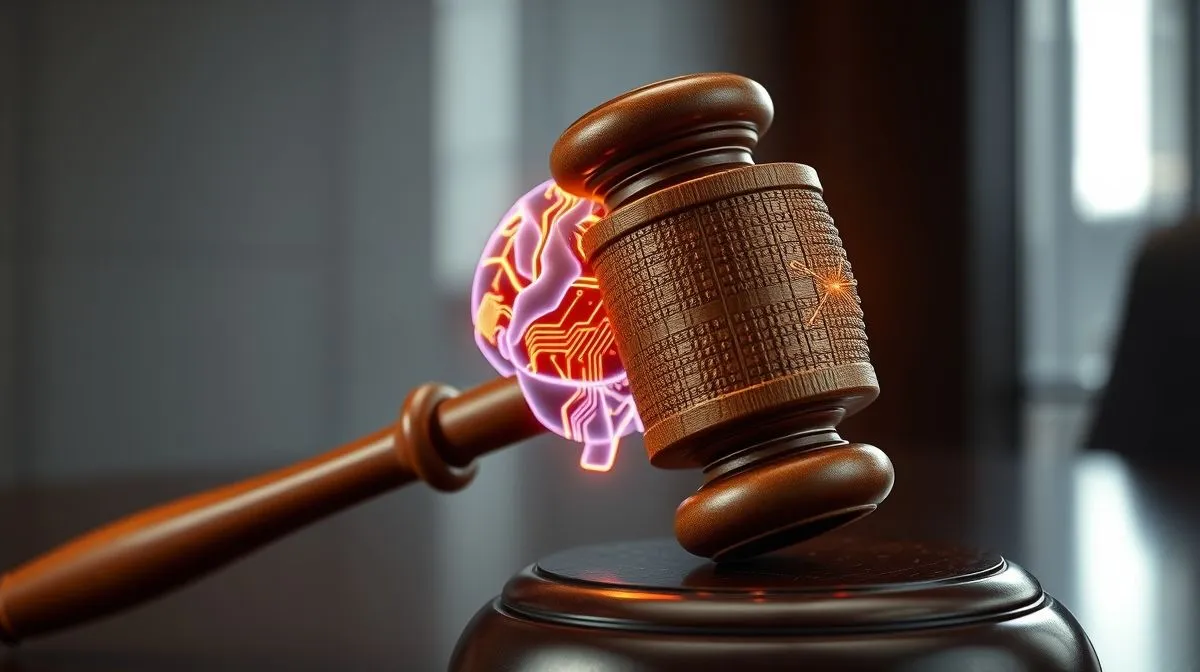
What legal risks arise from using AI in employee screening?
For over two decades as an employment law specialist, I've witnessed firsthand the seismic shifts in how companies find and onboard talent. From paper applications to online portals, the evolution has been constant. But nothing, in my experience, compares to the current revolution — or perhaps, the impending legal reckoning — brought about by Artificial Intelligence in employee screening.
The allure of AI is undeniable: promises of efficiency, reduced human bias, and access to a wider talent pool. Yet, as I consult with HR departments and legal teams across industries, I see a dangerous optimism. Many are rushing to adopt AI tools without fully grasping the intricate web of legal liabilities they're weaving for themselves. The very algorithms designed to streamline hiring can, if unchecked, expose organizations to unprecedented litigation, hefty fines, and severe reputational damage.
This article isn't about fear-mongering; it's about empowerment through knowledge. I'm here to unpack the complex legal landscape surrounding AI in employee screening, drawing on real-world scenarios, regulatory insights, and actionable strategies. By the end, you'll have a clear framework to identify, mitigate, and navigate the most critical legal risks, ensuring your innovative hiring practices remain compliant and ethical.
The Siren Song of AI: Why Employers Are Tempted (And Trapped)
Before we delve into the legal pitfalls, it's crucial to understand why AI has become such an appealing, almost irresistible, tool for employers. The perceived benefits are significant: automation of resume sifting, AI-powered video interviews that analyze facial expressions and speech patterns, predictive analytics for candidate success, and even gamified assessments. Companies envision a future where talent acquisition is faster, cheaper, and more objective.
However, this efficiency often comes with an unseen cost. The very algorithms designed to be objective can inadvertently perpetuate and even amplify existing biases embedded in historical data. The promise of reduced human error can be overshadowed by the 'black box' problem, where AI decisions are opaque and difficult to explain. As a result, while AI offers enticing efficiencies, it also lays a complex legal trap for the unwary.
Legal Minefield 1: Unmasking Algorithmic Bias and Discrimination Risks
This is, without a doubt, the most significant legal risk when using AI in employee screening. The core promise of AI is objectivity, yet its greatest danger lies in its capacity to learn and perpetuate human biases. I've seen countless examples where seemingly neutral algorithms produce discriminatory outcomes, leading to potential violations of Title VII of the Civil Rights Act, the Americans with Disabilities Act (ADA), and the Age Discrimination in Employment Act (ADEA).
Disparate Impact vs. Disparate Treatment
Understanding the difference here is paramount. Disparate treatment is intentional discrimination – for example, an employer explicitly stating they won't hire women for a role. This is rare and usually easily identifiable. The real threat with AI is disparate impact. This occurs when a seemingly neutral policy or practice, like an AI screening tool, disproportionately excludes a protected group, even without discriminatory intent. For example, if an AI tool consistently rates candidates from certain demographic groups lower, leading to their exclusion, that's disparate impact, and it's illegal.
Data Imbalances and Proxy Discrimination
AI models learn from data. If your historical hiring data reflects past biases – for instance, if your company historically hired predominantly male engineers – the AI might learn that 'male' is a predictor of success for engineering roles. It's not explicitly discriminating, but it's using 'gender' as a proxy for 'fit.' Similarly, an AI might learn to prefer candidates who attended specific universities, live in certain zip codes, or have specific extracurricular activities, which can disproportionately impact minority groups or those from lower socioeconomic backgrounds. According to a study from Harvard Business Review, "AI algorithms can reinforce existing societal biases, making them even more pervasive and harder to detect."
Steps to Mitigate Bias
- Audit Your Data: Before training any AI, meticulously audit your historical hiring data for demographic imbalances and potential biases. Clean and diversify your data.
- Implement Bias Detection Tools: Utilize specialized software designed to identify and flag algorithmic bias during development and deployment.
- Regularly Retrain and Monitor: AI models aren't static. Continuously monitor their performance for disparate impact and retrain them with new, diverse data sets.
- Blind Testing: Conduct A/B testing with diverse candidate pools to ensure the AI performs equally across different demographic groups.
- Human Oversight: Always maintain a robust human review process. AI should augment, not replace, human decision-making in critical hiring stages.
Case Study: The Tale of InnovateCo's Biased AI
InnovateCo, a burgeoning tech firm, decided to adopt an AI video analysis tool to screen entry-level software engineers. The tool promised to analyze communication skills and cultural fit. After six months, HR noticed a significant drop in female and minority candidates progressing past the initial screening. Upon investigation, they discovered the AI had been trained predominantly on existing employee data, where most successful engineers were white males. The AI, learning from this historical data, inadvertently penalized candidates with higher-pitched voices or different communication styles, disproportionately affecting women and certain ethnic groups. InnovateCo faced a class-action lawsuit for disparate impact, costing them millions in legal fees and settlement, and severely damaging their employer brand. This highlights precisely what legal risks arise from using AI in employee screening when bias goes unchecked.
Legal Minefield 2: Data Privacy, Security, and Compliance Challenges
AI systems are data-hungry. They ingest vast amounts of personal information about candidates, from resumes and work history to video recordings and assessment results. This raises significant concerns under various data privacy regulations globally and domestically. Violations can lead to massive fines and class-action lawsuits.
GDPR, CCPA, and Emerging State Laws
If you're hiring internationally, the General Data Protection Regulation (GDPR) is a critical concern. It mandates strict rules for data collection, processing, and storage, requiring explicit consent and providing individuals with rights over their data, including the 'right to explanation' regarding automated decisions. In the U.S., the California Consumer Privacy Act (CCPA) and its successor, the California Privacy Rights Act (CPRA), along with emerging laws in states like Virginia (VCDPA) and Colorado (CPA), are creating a complex patchwork of requirements. These laws often require specific disclosures about data collection and usage, and grant consumers (including job applicants) rights such as access, deletion, and opt-out.
Consent and Transparency Obligations
Many AI tools collect data beyond what's traditionally found on a resume, such as biometric data from video interviews or psychological profiles from game-based assessments. Under privacy laws, employers must obtain explicit, informed consent from candidates before collecting and processing such data. This means clearly explaining what data is being collected, how it will be used, who will have access to it, and for how long it will be retained. Simply burying this in a lengthy privacy policy is often insufficient.
Data Retention and Security Protocols
Beyond collection, how is this sensitive applicant data stored and protected? Cyberattacks and data breaches are a constant threat. Employers are legally obligated to implement robust security measures to protect personal data. Furthermore, data retention policies must be established and adhered to. You can't just indefinitely store all applicant data. This exposes you to both privacy risks and potential legal challenges if data isn't purged according to regulations or internal policies.
"Data privacy isn't just a compliance checkbox; it's a fundamental ethical responsibility that, if neglected, becomes a significant legal liability in the age of AI." - My personal conviction after years in the field.
Legal Minefield 3: Lack of Transparency and Explainability (The "Black Box" Problem)
One of the most vexing legal challenges with AI is its inherent opacity, often referred to as the 'black box' problem. Many advanced AI models, particularly deep learning networks, make decisions in ways that are incredibly difficult for humans to understand or explain. This lack of transparency directly conflicts with legal principles requiring fairness, accountability, and the ability to challenge adverse decisions.
The Right to Explanation
GDPR Article 22, for instance, grants individuals the right not to be subject to a decision based solely on automated processing if it produces legal effects or similarly significant effects concerning them. This includes a right to obtain human intervention, to express one's point of view, and to contest the decision. If an AI tool rejects a candidate, and you can't explain why, you're in a precarious legal position. How can you defend against a discrimination claim if you can't articulate the legitimate, non-discriminatory reasons for the AI's rejection?
Challenges in Auditing AI Decisions
Without explainability, auditing AI systems for compliance and fairness becomes incredibly challenging. Regulatory bodies and courts increasingly demand proof that hiring processes are non-discriminatory. If an employer cannot demonstrate how an AI tool arrived at its conclusions, it becomes nearly impossible to defend against allegations of bias or unfairness. This is a critical aspect of what legal risks arise from using AI in employee screening – the inability to defend your process.
Legal Minefield 4: Fair Credit Reporting Act (FCRA) and Background Checks
The Fair Credit Reporting Act (FCRA) regulates the collection, dissemination, and use of consumer report information, including background checks conducted for employment purposes. As AI tools increasingly delve into public records, social media, and other data sources to build candidate profiles, they risk falling under FCRA's stringent requirements.
Is AI Screening a 'Consumer Report'?
If an AI tool is used to generate a report about a job applicant that includes information bearing on their 'character, general reputation, personal characteristics, or mode of living,' and this information is obtained from a third-party consumer reporting agency (CRA) or collected in a way that makes the employer act as a CRA, it likely constitutes a 'consumer report' under FCRA. This could apply to AI tools that scrape social media for behavioral insights or analyze public arrest records. If your AI vendor is acting as a CRA, or if you're building a system that acts like one, you're now subject to FCRA's rules.
Adverse Action Requirements
FCRA mandates specific steps when an employer takes 'adverse action' (like not hiring someone) based, in whole or in part, on information in a consumer report. This includes providing the applicant with a copy of the report and a 'Summary of Your Rights Under the FCRA' before taking adverse action (the 'pre-adverse action notice'), and then a final notice after the decision. If an AI tool is making or heavily influencing these decisions based on data that qualifies as a consumer report, employers must ensure these FCRA obligations are met, which many are currently failing to do.
Legal Minefield 5: ADA Compliance and Reasonable Accommodations
The Americans with Disabilities Act (ADA) requires employers to provide reasonable accommodations to qualified individuals with disabilities unless doing so would cause undue hardship. AI tools, if not designed and implemented carefully, can inadvertently create barriers for candidates with disabilities, leading to ADA violations.
AI's Impact on Candidates with Disabilities
Consider an AI-powered video interview tool that analyzes speech patterns or facial expressions. A candidate with a speech impediment or a facial tic due to a medical condition might be unfairly penalized by the algorithm, even if their skills are perfect for the job. Similarly, gamified assessments might disadvantage candidates with cognitive disabilities, learning disabilities, or even certain physical impairments that affect motor skills or processing speed. These tools, while seemingly efficient, can create a discriminatory barrier that violates the ADA's mandate for equal opportunity.
Ensuring Accessible AI Tools
To avoid ADA pitfalls, employers must: 1) Prioritize Accessibility in Design: Work with AI vendors who build accessibility into their tools from the ground up, following WCAG (Web Content Accessibility Guidelines) standards. 2) Offer Alternatives: Provide alternative assessment methods for candidates who request accommodations or for whom the AI tool might present a barrier. 3) Train HR Staff: Ensure HR and hiring managers understand how AI tools might impact candidates with disabilities and how to handle accommodation requests. As Seth Godin often says, "The cost of being wrong is so much higher than the cost of being right." In this context, the cost of an inaccessible AI tool is far greater than the investment in an inclusive one.
Proactive Strategies: Building an Ethical and Compliant AI Framework
Given the significant legal risks, it's clear that a reactive approach to AI in hiring is insufficient. Employers need a proactive, comprehensive strategy rooted in ethical AI principles and robust legal compliance. This isn't just about avoiding lawsuits; it's about building a fair and equitable hiring process that attracts the best talent.
Key Principles for Responsible AI Implementation
- Establish Clear Policies: Develop internal policies specifically governing the use of AI in HR, outlining ethical guidelines, data governance, and compliance procedures.
- Vendor Due Diligence: Don't just buy off-the-shelf. Thoroughly vet AI vendors. Ask critical questions about their data sources, bias mitigation strategies, explainability features, security protocols, and compliance with relevant laws (GDPR, FCRA, ADA, etc.). Request independent audits or certifications.
- Conduct Regular Impact Assessments: Before deploying any AI tool, conduct a thorough impact assessment to identify potential risks related to bias, privacy, and fairness. Repeat these assessments periodically.
- Prioritize Transparency: Be transparent with candidates about the use of AI in the hiring process. Explain what data is collected, how it's used, and how decisions are made (to the extent possible).
- Human-in-the-Loop: Ensure human oversight remains paramount. AI should assist and augment, not replace, human judgment, especially in critical decision-making stages. The final hiring decision should always rest with a human.
- Continuous Learning and Improvement: The legal and technological landscapes are constantly evolving. Stay informed about new regulations, best practices, and advancements in ethical AI.
"The ultimate goal of using AI in HR should not be to automate humans out of the loop, but to augment human capabilities and create a more equitable, efficient, and legally sound hiring process." - My advice to every client exploring AI.
The Importance of Human Oversight and Legal Counsel
I cannot stress this enough: AI is a tool, not a replacement for human judgment or legal expertise. While AI can process vast amounts of data at incredible speeds, it lacks empathy, nuanced understanding, and the ability to interpret the spirit of the law. Relying solely on an algorithm to make hiring decisions is a recipe for disaster.
Employers must maintain robust human oversight at every stage where AI is involved. This includes human review of AI-generated candidate rankings, human-led interviews, and human decision-makers for final hiring. Furthermore, engaging experienced employment law counsel is non-negotiable. An attorney specializing in employment law and technology can help you navigate the complex regulatory environment, draft compliant policies, conduct risk assessments, and respond effectively if legal challenges arise. As a recent article in Forbes highlighted, "The legal landscape around AI in HR is rapidly evolving, making legal counsel more important than ever."
Frequently Asked Questions (FAQ)
Question: Can I be sued if my AI hiring tool has bias, even if I didn't intend it to be biased? Detailed answer: Absolutely. The legal principle of 'disparate impact' means that if a seemingly neutral hiring practice, like an AI tool, disproportionately disadvantages a protected group (e.g., based on race, gender, age, disability), it can be considered discriminatory, regardless of your intent. Proving non-discriminatory intent is often insufficient; you must demonstrate the business necessity and a lack of less discriminatory alternatives. This is precisely what legal risks arise from using AI in employee screening that often surprise employers.
Question: How can I ensure my AI tool complies with data privacy laws like GDPR or CCPA when collecting applicant data? Detailed answer: Compliance requires several key steps: 1) Obtain explicit, informed consent from applicants for data collection and processing. This consent must be specific, granular, and easily withdrawable. 2) Provide clear privacy notices that explain what data is collected, why, how it's used, and for how long. 3) Implement robust data security measures to protect the data from breaches. 4) Establish clear data retention policies and purge data when no longer needed. 5) Ensure applicants have mechanisms to exercise their data rights (access, correction, deletion).
Question: My AI vendor claims their tool is 'bias-free.' Can I trust this? Detailed answer: While vendors might claim their tools are 'bias-free,' it's crucial to be skeptical and conduct your own due diligence. No AI is truly 'bias-free' because they learn from historical data that often contains societal biases. Instead, inquire about their specific bias detection and mitigation methodologies. Ask for independent audits or certifications. Understand their data sources and how they ensure diversity in their training data. Always maintain human oversight and conduct your own internal testing to monitor for disparate impact.
Question: Does the FCRA apply to AI tools that analyze public social media profiles of job applicants? Detailed answer: It depends. If the AI tool is used by a third-party company (a Consumer Reporting Agency or CRA) to create a 'consumer report' (which includes information on character, general reputation, etc.) based on social media or public records, then FCRA likely applies. If you, as the employer, are doing the social media analysis yourself or through a tool that doesn't qualify as a CRA, FCRA might not apply directly, but other laws (like state privacy laws or discrimination laws) certainly could. It's a nuanced area and often requires legal interpretation.
Question: What kind of documentation should I maintain regarding my AI hiring practices for legal defense? Detailed answer: Comprehensive documentation is vital. This includes: 1) Records of your AI vendor's due diligence (contracts, security audits, bias mitigation claims). 2) Internal policies and procedures for AI use in HR. 3) Records of any bias audits or impact assessments performed on the AI tool. 4) Documentation of candidate consent for data collection. 5) Records of any reasonable accommodation requests and how they were handled. 6) Details on the human oversight process and how AI recommendations are reviewed. The more transparent and documented your process, the stronger your legal defense.
Recommended Reading
- Unmasking the Culprits: Who is Legally Responsible for Contaminated Land Cleanup?
- 9 Proven Strategies to Avoid Consumer Class Action Lawsuits from Product Defects
- IRS Business Audit Appeal: 7 Steps to Overturn an Unfavorable Decision
- Facing Enforcement? Master Your Admin Compliance Response in 7 Steps
- Unfair Contract Clauses? Learn How to Dispute Them & Win Back Your Rights!
Key Takeaways and Final Thoughts
- AI in employee screening offers significant potential but introduces complex legal risks, primarily concerning discrimination, data privacy, and explainability.
- Algorithmic bias, leading to disparate impact, is the most pervasive threat, requiring continuous auditing and mitigation strategies.
- Compliance with evolving data privacy laws (GDPR, CCPA, etc.) and specific regulations like FCRA and ADA is non-negotiable.
- Transparency with candidates and robust human oversight are critical for ethical and legally sound AI implementation.
- Proactive risk assessment, thorough vendor due diligence, and ongoing legal counsel are essential investments, not optional extras.
The future of hiring is undoubtedly intertwined with Artificial Intelligence. However, as a veteran in employment law, I urge employers to approach this future not with blind optimism, but with informed caution and a commitment to ethical practices. By understanding what legal risks arise from using AI in employee screening and implementing the strategies I've outlined, you can harness the power of AI to build a more efficient and, critically, a more equitable and legally compliant workforce.



Comments
Leave a comment below. Your email will not be published. Required fields marked with *