


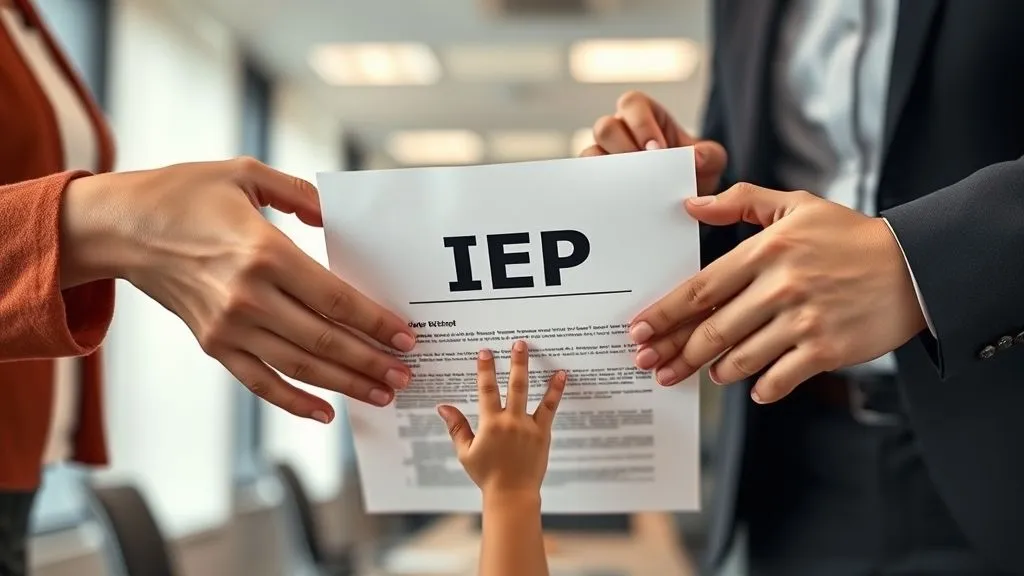
What Legal Steps to Take When Parents Reject a Proposed IEP?
For over two decades in education law, I've witnessed the profound impact that a disagreement over an Individualized Education Program (IEP) can have on a child's educational journey and the family's peace of mind. It's a moment of significant tension, often fueled by genuine concern for the child's future, where parents and school districts find themselves at an impasse.
The rejection of a proposed IEP, while a fundamental parental right, can throw a child's special education services into limbo. It's a deeply frustrating situation for all parties involved – parents who feel their child's needs aren't being met, and school districts striving to provide appropriate services within legal frameworks. The emotional toll can be immense, compounded by the complexity of legal procedures.
This article will serve as your comprehensive guide to understanding what legal steps to take when parents reject a proposed IEP. I'll walk you through the essential frameworks, actionable strategies, and critical insights gleaned from years of navigating these intricate disputes, empowering you to move towards a constructive resolution.
Understanding the Initial Rejection: What Does it Mean Legally?
When parents reject a proposed IEP, it's not merely a 'no'; it's a formal assertion of their rights under the Individuals with Disabilities Education Act (IDEA). This rejection carries significant legal weight and triggers specific obligations for both the parents and the school district.
The Parent's Right to Refuse Consent
Under IDEA, parental consent is paramount. Schools must obtain informed parental consent before conducting an initial evaluation, providing initial special education services, and for certain reevaluations. If parents reject a proposed IEP, they are essentially withholding consent for the specific plan outlined, or for the initial provision of services.
This right to refuse consent is a cornerstone of parental involvement in special education. It ensures that parents are not passive recipients but active partners in their child's educational planning. The school district cannot unilaterally implement an IEP if parents reject it.
Impact of Rejection on Services and the 'Prior Written Notice'
If parents reject an initial IEP (meaning the child has never received special education services), the school generally cannot provide those services. The child will continue to receive education in the general education setting without special education support.
However, if parents reject a *revised* IEP for a child who is already receiving special education services, the situation is different and often less disruptive initially. The existing, agreed-upon IEP remains in effect. This is crucial for continuity of services and is often referred to as the 'stay put' provision, which we'll discuss in more detail shortly.
Upon receiving a rejection, the school district is required to provide the parents with a Prior Written Notice (PWN). This document must explain why the school proposed the IEP, why they rejected the parents' proposals (if any), and outline other options considered. It also informs parents of their procedural safeguards and how to obtain a copy of these rights. The U.S. Department of Education's IDEA website provides extensive resources on these procedural safeguards.
The Critical Role of Communication: Starting Points for Resolution
In my experience, the vast majority of IEP disputes can be resolved through effective communication and a genuine willingness to understand each other's perspectives. Legal steps should always be a last resort, after exhausting all avenues of collaborative dialogue.
Informal Discussions and Negotiation
Before escalating to formal legal processes, I always advise both parents and school personnel to engage in informal discussions. This might involve a phone call with the case manager, a meeting with the special education director, or even a simple email exchange to clarify specific points of disagreement.
Often, rejections stem from misunderstandings, lack of information, or differing interpretations of assessment data. A candid, open discussion can often bridge these gaps. Focus on identifying the core issues: Is it about services, placement, goals, or methodologies?
Requesting an IEP Meeting
If informal discussions don't yield progress, the next step is to formally request another IEP meeting. Parents have the right to request an IEP meeting at any time. This allows for a structured discussion with the entire IEP team present, including relevant school personnel, the child's teachers, and the parents.
During this meeting, parents should clearly articulate their concerns and propose specific changes or alternatives. It's helpful to bring any supporting documentation, such as independent evaluations or medical reports. The goal is to collaboratively revise the IEP to a point where all parties can agree.

Exploring Alternative Dispute Resolution (ADR) Options
When direct communication reaches an impasse, but parties are still open to collaboration, Alternative Dispute Resolution (ADR) offers structured, non-adversarial pathways to resolve disagreements. These options are designed to avoid the cost, time, and emotional strain of a formal legal battle.
Facilitated IEP Meetings
A facilitated IEP meeting involves a neutral, trained facilitator who helps the IEP team communicate effectively and stay focused on developing an agreed-upon IEP. The facilitator doesn't make decisions or offer opinions but guides the discussion, manages conflict, and ensures everyone's voice is heard.
This can be particularly useful when communication has broken down, or emotions are running high. The facilitator creates a safe space for productive dialogue, often leading to breakthroughs that wouldn't occur otherwise.
Special Education Mediation: A Collaborative Path
Mediation is a more formal ADR process where a neutral, impartial mediator helps parents and the school district reach a mutually agreeable resolution. Unlike a facilitator, a mediator might suggest options or reframe issues, but they do not impose a decision.
Mediation is voluntary and confidential. Both parties must agree to participate. If an agreement is reached, it is put in writing and is legally binding. It's often highly effective because it allows both sides to maintain control over the outcome, rather than having a decision imposed by a third party.
- Request Mediation: Either party can request mediation. The school district must inform parents of this option.
- Select a Mediator: A neutral mediator, typically from a state-approved list, is chosen.
- Prepare for Mediation: Both sides gather relevant documents and clearly define their positions and desired outcomes.
- Attend the Session: The mediator guides the discussion, allowing each party to present their views and explore solutions.
- Reach an Agreement: If successful, a written mediation agreement is drafted and signed by both parties, becoming legally binding.
Expert Insight: "Mediation, in my experience, is an underutilized but incredibly powerful tool. It transforms adversarial positions into shared problem-solving opportunities, often leading to more durable and creative solutions than a court order."
When ADR Fails: Initiating Due Process
If informal discussions, facilitated meetings, and mediation do not resolve the dispute, parents have the right to request a due process hearing. This is a formal legal proceeding, similar to a courtroom trial, where an impartial hearing officer makes a binding decision.
Understanding Due Process Hearings
A due process hearing is a legal recourse available under IDEA to resolve disputes between parents and school districts regarding a child's identification, evaluation, educational placement, or the provision of a free appropriate public education (FAPE). It is a significant step, involving legal representation and presentation of evidence.
The burden of proof typically falls on the party initiating the complaint. It's important to understand that due process is an adversarial process, and it can be emotionally and financially taxing. However, it is a vital safeguard for parents when all other avenues have failed.
Filing a Due Process Complaint: Parental Perspective
To initiate due process, parents must file a formal written complaint with their state education agency or local school district, depending on state procedures. The complaint must include specific information:
- The child's name and address.
- The name of the school the child attends.
- A description of the nature of the problem, including relevant facts.
- A proposed resolution to the problem.
Upon receipt of a due process complaint, the school district must send a Prior Written Notice to the parents, acknowledging the complaint and outlining procedural safeguards. Within a specific timeframe (often 15 days), the district must also convene a resolution meeting, an attempt to resolve the dispute without a hearing, unless both parties agree to waive it.
The School District's Response
When a due process complaint is filed, the school district must respond within a specified timeframe (often 10 days). Their response must address the allegations in the complaint. The district will then prepare its case, gathering evidence, identifying witnesses, and often securing legal counsel.
The resolution meeting is a critical step for the district as well. It provides a final opportunity to reach an agreement before the formal hearing process begins. If no agreement is reached at the resolution meeting, the due process hearing proceeds.
| Option | Nature | Outcome | Binding | Cost | Timeline |
|---|---|---|---|---|---|
| Mediation | Voluntary, Collaborative | Mutually Agreed Settlement | Legally Binding (if signed) | Typically Free | Relatively Quick |
| Due Process Hearing | Adversarial, Formal | Hearing Officer Decision | Legally Binding (appealable) | Potentially High (legal fees) | Can Be Lengthy |
The Stay Put Provision: Protecting the Child During Disputes
One of the most critical protections under IDEA when parents reject a proposed IEP and initiate a dispute is the "stay put" provision. This ensures that a child's educational placement and services do not change while the dispute is being resolved.
What is "Stay Put"?
The "stay put" provision, found in 34 CFR §300.518, states that during the pendency of any due process proceedings, unless the parents and the State or local educational agency agree otherwise, the child shall remain in their current educational placement. This means the child continues to receive the special education and related services as outlined in the *last agreed-upon and implemented* IEP.
This provision acts as a safety net, preventing the school from unilaterally changing a child's program simply because parents have raised a dispute. It provides stability for the child and maintains the status quo, allowing the dispute resolution process to unfold without immediate disruption to the child's education.
Exceptions and Limitations
While powerful, "stay put" does have some exceptions. For instance, if a child is removed from school for disciplinary reasons involving drugs, weapons, or serious bodily injury, the "stay put" provision may not apply in the same way, allowing for an interim alternative educational setting. Also, if parents are seeking an *initial* placement in public school special education services, and the school has never provided such services, there might not be a "stay put" placement in the traditional sense.
It's vital for parents to understand that the "stay put" provision applies only to the services and placement in the *last agreed-upon* IEP. If parents reject a *new* IEP and seek different services than those currently provided, "stay put" will keep the child in the *current* services, not necessarily the ones being sought in the dispute.

Preparing for a Due Process Hearing: A Deep Dive
If due process becomes inevitable, thorough preparation is paramount. This phase demands meticulous attention to detail and often requires expert assistance to build a compelling case.
Gathering Evidence and Documentation
The success of a due process hearing often hinges on the quality and quantity of evidence presented. Both parents and school districts must meticulously gather all relevant documentation. This includes:
- All previous IEPs, evaluations (school and independent), progress reports, and report cards.
- Correspondence between parents and school (emails, letters, notes from phone calls).
- Medical records, therapy reports, or private evaluations that support the child's needs.
- Witness statements or testimony from teachers, therapists, or other professionals.
- Any data demonstrating the child's progress or lack thereof under current or proposed services.
Organization is key. Create a chronological binder or digital file system for all documents, making it easy to reference specific items during the hearing. As marketing guru Seth Godin often says, "People don't buy what you do, they buy why you do it." In a due process hearing, the 'why' – the compelling evidence – is what persuades the hearing officer.
Securing Legal Representation
While parents can represent themselves in a due process hearing, it is highly advisable to secure legal representation. Special education law is incredibly complex, with specific procedural requirements, evidentiary rules, and legal precedents. An experienced attorney or advocate specializing in special education law can:
- Help you understand your rights and the legal framework.
- Assist in filing the due process complaint correctly.
- Gather and organize evidence, and identify key witnesses.
- Cross-examine school personnel and present your case effectively.
- Negotiate potential settlements before or during the hearing.
School districts almost always have legal counsel, so having your own representation ensures a level playing field. According to a study published by the Journal of Disability Policy Studies, families with legal representation in special education disputes tend to have more favorable outcomes.
Case Study: Navigating a Due Process Hearing
Case Study: The Martinez Family's Fight for Appropriate Services
The Martinez family had a son, Leo, diagnosed with severe dyslexia. For years, they felt the school's proposed IEPs were inadequate, focusing on general reading support rather than specialized, evidence-based interventions for dyslexia. After repeatedly rejecting proposed IEPs and exhausting mediation, they filed for due process.
Their legal team meticulously compiled Leo's private neuropsychological evaluations, which clearly indicated the need for a specific, intensive multisensory reading program. They also presented testimony from Leo's private tutor, who documented his slow progress with the school's current methods. The school district argued their general education reading curriculum, with pull-out support, was sufficient.
During the hearing, the Martinez's attorney demonstrated how the school's proposed services did not align with Leo's unique needs or the recommendations of experts. The hearing officer, after reviewing all evidence and testimony, ruled in favor of the Martinez family, ordering the school district to provide the specific multisensory reading program and compensatory education for past deficiencies. This resulted in Leo finally receiving the tailored support he desperately needed, leading to significant academic gains within a year.
- Define Your Objectives: Clearly articulate what you want the hearing officer to order (e.g., specific services, placement, compensatory education).
- Identify Key Witnesses: Determine who can provide crucial testimony (teachers, therapists, evaluators, parents).
- Prepare Witness Testimony: Help witnesses organize their thoughts and prepare for direct and cross-examination.
- Create an Exhibit List: Catalog all documents you intend to present as evidence.
- Develop Your Argument: Outline the legal basis for your claims and how your evidence supports them.
- Anticipate Opponent's Arguments: Consider the school district's likely points and prepare rebuttals.

Understanding the Hearing Process and Decision
A due process hearing is a formal administrative proceeding, but it largely mirrors a court trial. Understanding the flow and the implications of the decision is vital for all parties involved.
The Hearing Itself
The hearing is presided over by an impartial hearing officer, who acts much like a judge. Both parties (parents and school district) have the right to:
- Be accompanied and advised by legal counsel or an advocate.
- Present evidence and cross-examine witnesses.
- Subpoena witnesses.
- Obtain a written or electronic verbatim record of the hearing.
- Obtain written findings of fact and decisions.
The hearing typically begins with opening statements from both sides, outlining their case. Witnesses are then called to testify, followed by cross-examination. Expert witnesses may be called to provide specialized opinions. Finally, both sides present closing arguments. The hearing officer controls the proceedings, ensuring fairness and adherence to procedural rules.
The Hearing Officer's Decision
After the hearing concludes, the hearing officer will review all the evidence and testimony. They then issue a written decision, which must include findings of fact and conclusions of law. This decision is legally binding on both parties.
The hearing officer's decision will determine whether the school district has provided FAPE, or if the parents' requests are warranted. The decision might order the school to implement a specific program, provide compensatory education, change a child's placement, or reimburse parents for services they privately obtained. The timeframe for issuing a decision varies by state but is typically within 45 days of the request for a hearing, unless specific extensions are granted.
Appealing a Due Process Decision
If either party is dissatisfied with the hearing officer's decision, they have the right to appeal. The appeal process also varies by state. In some states, the appeal goes to a state-level review panel or officer. In others, the appeal may go directly to state or federal court.
An appeal initiates another legal proceeding, often requiring further legal counsel and potentially incurring additional costs. It's a critical legal step that signifies the dispute is far from over, and again, the "stay put" provision typically remains in effect during the appeal process.
Proactive Strategies for Schools to Minimize Rejection Risks
While parents have the right to reject an IEP, school districts can implement proactive strategies to minimize the likelihood of rejection and foster a more collaborative environment from the outset. This benefits everyone, especially the student.
Building Trust and Transparency
Trust is the foundation of any successful partnership. School districts should prioritize building strong, transparent relationships with parents. This involves:
- Open Communication: Regular, clear, and empathetic communication, not just at IEP meetings.
- Active Listening: Genuinely listening to parental concerns and validating their perspectives.
- Explaining Decisions: Clearly articulating the rationale behind proposed IEP goals, services, and placements.
- Inviting Participation: Ensuring parents feel like valued members of the IEP team, not just attendees.
When parents trust that the school has their child's best interests at heart and values their input, they are far less likely to reject an IEP, even if minor disagreements exist. As an expert in this field, I've observed that a lack of trust is often the silent killer of collaborative IEP processes.
Thorough Assessment and Data-Driven IEPs
A robust and defensible IEP is built upon comprehensive assessments and objective data. Schools should ensure that:
- Assessments are Thorough: All areas of suspected disability are assessed using appropriate, valid tools.
- Data is Clearly Presented: Assessment results and progress monitoring data are communicated to parents in an understandable way.
- Goals are Measurable and Ambitious: Goals are specific, measurable, achievable, relevant, and time-bound (SMART), directly linked to assessment data.
- Services are Evidence-Based: Interventions and services are supported by research and tailored to the child's unique needs.
A well-crafted IEP that clearly demonstrates how the proposed plan addresses the child's needs, backed by solid data, significantly reduces the grounds for parental rejection. The Council for Exceptional Children (CEC) frequently publishes guidelines and best practices for developing high-quality, data-driven IEPs.

Frequently Asked Questions (FAQ)
Question: Can a school implement parts of an IEP if parents only reject certain sections?
Detailed answer: Generally, no. An IEP is considered a single document, and parental consent is usually required for the entire program to be implemented. If parents reject specific sections, the school cannot unilaterally implement the agreed-upon parts while ignoring the rejected ones, especially for an initial IEP. For a revised IEP where services are already in place, the "stay put" provision ensures the child continues with the last agreed-upon services. Any changes require full parental consent or a resolution through mediation or due process.
Question: What's the typical timeline for resolving an IEP dispute through mediation or due process?
Detailed answer: Timelines vary significantly by state and the complexity of the case. Mediation can often be scheduled and completed within a few weeks to a couple of months. Due process hearings are more formal and lengthy. From filing the complaint to a final decision, it can take anywhere from 45 days (the federal guideline) to several months, especially if extensions are granted, or if there's an appeal. The resolution meeting itself usually occurs within 15 days of the complaint.
Question: Are there costs associated with due process hearings, and who covers them?
Detailed answer: While the hearing itself is typically free, the primary costs associated with due process hearings are legal fees for attorneys or advocates, and potentially fees for independent evaluators or expert witnesses. Parents are usually responsible for their own legal fees. However, under IDEA, if parents prevail in a due process hearing or court action, they may be able to recover reasonable attorneys' fees from the school district. This can be a significant factor in deciding to pursue due process.
Question: What if parents reject an initial IEP for a child who has never received special education services?
Detailed answer: If parents reject an initial IEP, the school district cannot provide initial special education and related services to the child. The child will remain in the general education program without special education support. The school district may, however, initiate due process to attempt to override the parents' refusal to consent to services. This is a complex legal area, and the school would bear the burden of proving that their proposed IEP is appropriate and necessary.
Question: How does the "stay put" provision apply if the child is transitioning to a new school or grade level?
Detailed answer: The "stay put" provision generally applies to the child's *current educational placement* and services, regardless of grade level or school. If a dispute arises when a child is transitioning, the child will remain in the last agreed-upon placement until the dispute is resolved. For instance, if a dispute arises over an IEP for a transition from elementary to middle school, the child would continue in their elementary school placement until the matter is settled, unless both parties agree otherwise. This can sometimes create logistical challenges but underscores the protection offered to the child.
Key Takeaways and Final Thoughts
Navigating the legal landscape when parents reject a proposed IEP is undoubtedly challenging, but it is a journey with clear pathways and crucial safeguards designed to protect the child's right to a free appropriate public education. My years in this field have taught me that while the legal framework is complex, the underlying goal for everyone involved is the same: to ensure the best possible educational outcome for the student.
- Prioritize Communication: Exhaust informal discussions and facilitated IEP meetings before escalating.
- Embrace Mediation: Leverage mediation as a collaborative, less adversarial path to resolution.
- Understand Your Rights: Be fully informed about parental rights, procedural safeguards, and the "stay put" provision.
- Prepare Meticulously for Due Process: If due process is necessary, gather all evidence and consider legal representation.
- Focus on the Child: Throughout the process, keep the child's unique needs and educational progress at the forefront.
Remember, the rejection of an IEP is not an endpoint but a critical juncture demanding thoughtful, informed action. By understanding the legal steps available and approaching these challenges with both diligence and a commitment to resolution, parents and school districts can effectively advocate for the student and ultimately achieve an appropriate educational plan. Your perseverance in this process is a testament to your dedication to the child's future, and with the right knowledge, you can navigate these waters successfully.
Recommended Reading
- 5 Crucial Strategies: Navigating EIA Legal Hurdles with Confidence
- Unwind Abusive Tax Shelters: Expert Steps to Avoid an IRS Audit
- Prove Due Process Violations: Your 7-Step Guide to Administrative Appeals
- 7 Steps: What to Do When Executive Misconduct Threatens Reputation
- Dog Bite on Your Property? 7 Legal Duties You MUST Know Now





Comments
Leave a comment below. Your email will not be published. Required fields marked with *