


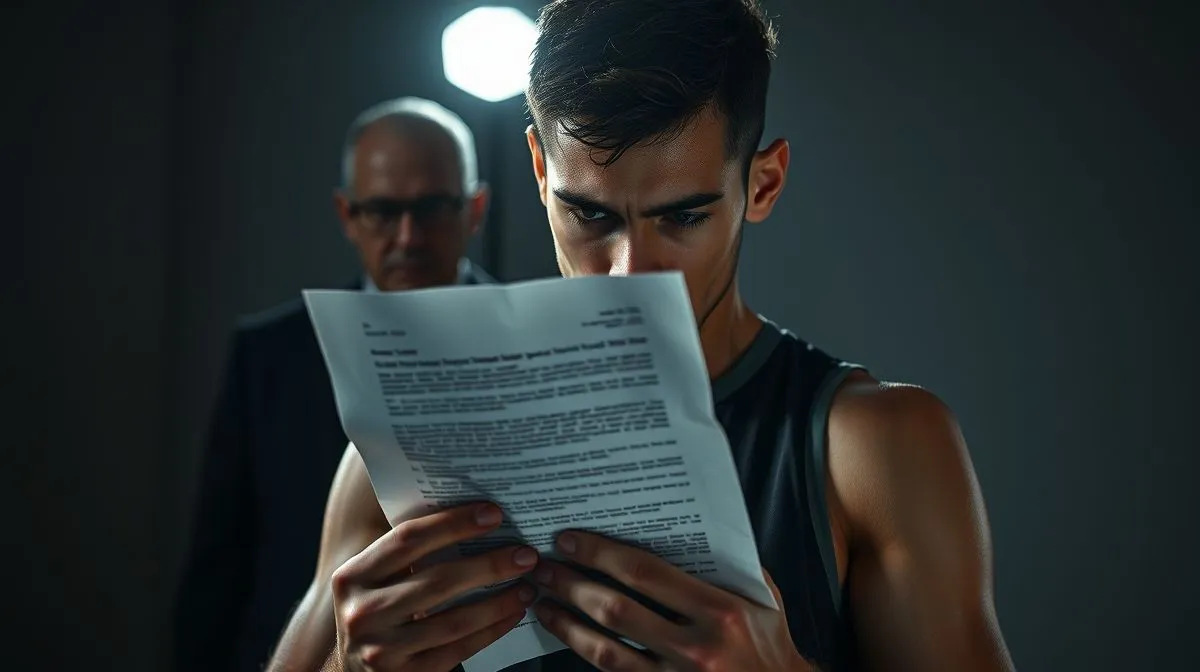
What legal steps to take when player agent misconduct occurs?
In my two decades navigating the intricate and often high-stakes world of sports law, I've witnessed the full spectrum of challenges athletes face. Few are as devastating, however, as the betrayal of trust by a player agent. I've seen promising careers stalled, financial futures jeopardized, and mental well-being shattered, all because an athlete placed their faith in the wrong hands.
The relationship between an athlete and their agent is built on a foundation of trust, a symbiotic partnership designed to maximize an athlete's potential on and off the field. When that trust is breached through misconduct – be it financial malfeasance, conflicts of interest, or outright negligence – it's not just a professional setback; it's a deeply personal wound that can feel overwhelming and isolating.
This isn't just about recovering lost funds or punishing wrongdoing. It's about empowering you, the athlete, to regain control of your career and your life. In this comprehensive guide, I'll walk you through the essential legal steps to take when player agent misconduct occurs, providing you with a clear, actionable framework, drawing on real-world insights, and equipping you with the knowledge to protect your future.
Understanding Agent Misconduct: Defining the Breach of Trust
Before diving into the legal steps, it's crucial to understand what constitutes 'misconduct' in the context of a player agent. It's not just about a bad deal; it often involves a breach of a fundamental legal duty. An agent acts as a fiduciary, meaning they are legally obligated to act solely in your best interest, with utmost loyalty and good faith. When they deviate from this, they cross into the realm of misconduct.
Types of Agent Misconduct
Misconduct can manifest in various forms, some overt, others more subtle. Common examples I've encountered include:
- Financial Mismanagement or Embezzlement: This is perhaps the most egregious, involving the misappropriation of your funds, unauthorized investments, or failure to properly account for your earnings and expenses.
- Conflict of Interest: An agent representing multiple parties with opposing interests without full disclosure and consent, or engaging in business ventures that directly benefit them at your expense.
- Unauthorized Agreements: Signing contracts or making commitments on your behalf without your explicit knowledge or approval.
- Breach of Contract: Failing to fulfill their responsibilities as outlined in your representation agreement, such as failing to diligently seek endorsement deals or properly negotiate contracts.
- Negligence: A lack of due diligence, such as missing critical deadlines, failing to properly vet potential deals, or providing incompetent advice that leads to significant financial or career harm.
- Unethical Recruitment Practices: Violations of league or NCAA rules regarding inducements, benefits, or contact with amateur athletes.
The Fiduciary Duty: Your Agent's Core Obligation
At the heart of most misconduct claims is the violation of an agent's fiduciary duty. This duty requires your agent to:
- Act with undivided loyalty.
- Avoid conflicts of interest.
- Disclose all relevant information.
- Exercise reasonable care and skill.
- Account for all your funds and property.
Understanding this legal bedrock is your first line of defense, as it frames the very nature of the breach you've experienced.
Step 1: Immediate Documentation & Evidence Collection
As a seasoned sports lawyer, I can't stress this enough: the moment you suspect misconduct, your first and most critical action is to meticulously document everything. This isn't about confrontation; it's about building an irrefutable factual record. In legal battles, evidence is king. What you gather now will be the cornerstone of any future claim, whether it's for arbitration, litigation, or a disciplinary hearing.
What to Document and How
- All Communications: Save every email, text message, voicemail, and written correspondence with your agent. If conversations happened in person or over the phone, make detailed notes immediately afterward, including dates, times, attendees, and key points discussed.
- Contracts and Agreements: Gather all copies of your representation agreement, endorsement contracts, playing contracts, and any other agreements signed or negotiated through your agent. Look for specific clauses related to termination, dispute resolution, and commission structures.
- Financial Records: Obtain bank statements, investment reports, tax documents, and any financial statements or summaries provided by your agent. Cross-reference these with your own records and expected earnings. Look for discrepancies, unexplained transactions, or missing funds.
- Witness Accounts: If there are individuals who have direct knowledge of the misconduct (e.g., former teammates, financial advisors, family members), make notes of their potential testimony. Do not pressure them, but understand who might be able to corroborate your claims.
- Third-Party Documentation: Secure any relevant documents from outside sources, such as league records, team payroll statements, or brand partnership agreements that your agent may have been involved in.
Pro Tip: Create a dedicated, secure digital folder for all these documents. Use cloud storage with strong security measures. For physical documents, make high-quality digital scans. Date and timestamp everything you collect or create. The more organized and thorough you are, the stronger your position will be.
Step 2: Reviewing Your Agent Contract & Governing Regulations
Once you have a preliminary collection of evidence, the next crucial step is to thoroughly review the legal framework governing your relationship with your agent. This involves two primary components: your specific representation agreement and the broader regulations imposed by sports bodies and state laws.
Understanding Your Contractual Clauses
Your agent contract is a legally binding document that defines the scope of your agent's duties, their compensation, and the terms of your professional relationship. Pay close attention to these specific clauses:
- Term and Termination: How long is the agreement valid? What are the conditions for early termination by either party? Is there a notice period required?
- Scope of Representation: What specific services is the agent obligated to provide (e.g., contract negotiation, endorsement deals, financial planning)?
- Compensation: How is the agent paid? Is it a percentage of your playing contract, endorsements, or a flat fee? Are there provisions for fees even after termination if deals originated during their tenure?
- Dispute Resolution: Many contracts specify how disagreements will be handled. This often includes mandatory arbitration clauses, which mean you waive your right to sue in court and must resolve disputes through a private arbitrator.
- Governing Law: Which state's laws will govern the contract? This is important as laws regarding agent conduct can vary.
Navigating Governing Bodies and Regulations
Beyond your contract, your agent is likely subject to a complex web of regulations imposed by various entities. These are critical because they often provide additional avenues for recourse or disciplinary action against an agent.
- Player Associations: If you are a professional athlete in a major league (e.g., NFLPA, NBPA, MLBPA, NHLPA), your agent must be certified by that association. These associations have strict rules of conduct, disciplinary procedures, and often provide arbitration services for disputes between players and agents. For instance, the NFLPA Regulations Governing Contract Advisors are extensive and provide clear guidelines on permissible conduct and disciplinary actions.
- State Athletic Commissions/Athlete Agent Acts: Many states have their own laws regulating athlete agents, requiring them to register and adhere to specific ethical standards. These acts often provide for civil penalties or even criminal charges for serious violations.
- NCAA Rules: For collegiate athletes, the NCAA has strict rules regarding impermissible benefits and agent contact, which can impact an athlete's eligibility if violated by an agent.
- International Federations: For athletes in global sports like soccer (FIFA) or basketball (FIBA), international governing bodies also have agent regulations that can be invoked.
Familiarizing yourself with these layers of regulation will illuminate the various pathways available for addressing misconduct and holding your agent accountable.
Step 3: Seeking Specialized Legal Counsel (The Non-Negotiable First Call)
This is arguably the most crucial step you will take. Once you have a basic understanding of the situation and some initial documentation, you absolutely must engage a qualified attorney specializing in sports law. I cannot overstate the importance of this; attempting to navigate the complexities of agent misconduct without expert legal guidance is akin to playing a championship game without a coach.
Why a Sports Law Attorney is Essential
General practice lawyers may understand contract law, but sports law is a niche with unique regulations, industry practices, and power dynamics. A seasoned sports law attorney brings:
- Specific Industry Knowledge: They understand player association regulations, league collective bargaining agreements, state athlete agent acts, and common agent contract pitfalls.
- Experience with Agent Misconduct Cases: They've likely handled similar situations and know the common tactics agents use, as well as the most effective strategies for recovery.
- Negotiation and Litigation Expertise: They can skillfully negotiate with the agent or their counsel, and if necessary, represent you effectively in arbitration or court.
- Protection of Your Rights: They ensure your rights are protected throughout the process and advise you on the best course of action to minimize further damage to your career.
What to Look for in an Attorney
- Demonstrated Experience: Ask about their track record with agent misconduct cases.
- Reputation: Seek referrals from trusted sources within the sports industry.
- Fee Structure: Understand how they charge (hourly, contingency, flat fee) and get it in writing.
- Communication: Choose an attorney who communicates clearly and keeps you informed.
- Empathy: This is a challenging time; you need a lawyer who understands the personal impact.
Your initial consultation with a sports law attorney will be critical. Be prepared to share all your documentation and explain the situation clearly. They will assess the strength of your case, outline your legal options, and advise you on the most strategic path forward.
Step 4: Exploring Dispute Resolution Avenues
With legal counsel by your side, you'll begin to explore the specific avenues for resolving the dispute. The path chosen often depends on your contract, the nature of the misconduct, and the desired outcome. It's rarely a 'one-size-fits-all' situation.
Direct Negotiation & Mediation
Often, the first approach is to attempt a resolution through direct negotiation with the agent or their legal team. This can be less adversarial and potentially quicker. Mediation, where a neutral third party facilitates discussions to help both sides reach a mutually agreeable solution, is also a common step.
- Pros: Can be faster, less expensive, and more private than litigation. Allows for creative solutions.
- Cons: Requires willingness from both parties to compromise. May not be effective if the agent is uncooperative or the misconduct is severe.
Arbitration: The Common Path
As mentioned, many player agent contracts and player association regulations mandate arbitration for disputes. Arbitration is a private process where a neutral arbitrator (or panel) hears evidence and makes a binding decision, similar to a judge. Player associations often provide their own arbitration panels for their members.
- Pros: Generally faster and less formal than court litigation. Decisions are often binding and difficult to appeal. More private than court.
- Cons: Limited appeal options. Discovery (information exchange) may be more limited than in court.
Litigation: When Courts Are Necessary
For some cases, particularly those involving significant financial fraud, a lack of an arbitration clause, or criminal elements, litigation in civil court may be the only recourse. This involves filing a lawsuit and proceeding through the formal court system.
- Pros: Full discovery process allows for extensive evidence gathering. Right to a jury trial (in some cases). Court judgments are legally enforceable.
- Cons: Can be very lengthy, expensive, and public. Emotionally taxing.
Case Study: How Maya Rodriguez Reclaimed Her Future
Maya Rodriguez, a promising young basketball player, discovered her agent had been secretly diverting a portion of her endorsement earnings into a shell company he controlled. Initially, Maya felt paralyzed by the betrayal. After meticulously documenting suspicious transactions and email exchanges, she sought a sports law attorney. Her attorney reviewed her NBPA Standard Player Agent Contract, which mandated arbitration for such disputes. Instead of rushing to court, her legal team first presented a detailed demand letter, backed by undeniable evidence. The agent, faced with the overwhelming proof and the threat of disciplinary action from the NBPA, agreed to mediation. Through a rigorous mediation process, Maya's attorney successfully negotiated the full recovery of her embezzled funds, plus interest, and a significant penalty payment. This outcome avoided a lengthy arbitration battle, protected her public image, and allowed her to focus on her career, demonstrating the power of thorough preparation and strategic dispute resolution.
Step 5: Formal Complaint & Disciplinary Action
Beyond seeking financial recovery or contract termination, you also have the option – and often a responsibility – to report agent misconduct to the relevant professional and regulatory bodies. This step is crucial for holding agents accountable and protecting other athletes from similar harm.
Filing with Player Associations
If your agent is certified by a professional player association (e.g., NFLPA, NBPA, MLBPA), you can file a formal complaint. These associations have robust disciplinary committees that investigate allegations of misconduct. Penalties can range from fines and suspension to permanent decertification, effectively ending an agent's career in that league.
- Process: Typically involves submitting a written complaint with supporting evidence. The association will then initiate an investigation, which may include interviews and hearings.
- Benefit: Provides a powerful deterrent and protects the integrity of the profession. Decisions can often be made more swiftly than court cases.
State Regulatory Bodies
Many states have Athlete Agent Acts that require agents to register and adhere to specific standards. If your agent is operating in a state with such regulations, you can file a complaint with the relevant state agency (often the Secretary of State's office or a specific athletic commission). These bodies can impose civil penalties, revoke licenses, or even refer cases for criminal prosecution if warranted. For example, a significant number of states have adopted or adapted the Uniform Athlete Agents Act (UAAA), which provides a framework for registration and regulation.
Law Enforcement (If Criminal Activity)
In cases where the misconduct involves criminal acts such as fraud, embezzlement, or grand theft, your attorney may advise reporting the matter to local or federal law enforcement agencies. While a criminal conviction won't directly recover your funds (that's a civil matter), it can lead to restitution orders and certainly hold the agent accountable for their illicit actions.
Step 6: Mitigating Damages & Protecting Your Career
While legal action addresses past wrongs, a critical part of the process is looking forward – mitigating any ongoing damages and strategically protecting and rebuilding your career and public image. This holistic approach is what truly allows an athlete to move past the trauma of misconduct.
Public Relations Strategy
Agent misconduct can quickly become public, impacting your reputation and marketability. Work with your legal team and potentially a PR specialist to manage the narrative. This might involve:
- Controlled Disclosure: Deciding what information to release and when.
- Positive Framing: Emphasizing your proactive steps to protect yourself and others.
- Focus on Performance: Reaffirming your commitment to your sport.
As marketing guru Seth Godin often says, "Your brand is the set of expectations, memories, stories and relationships that, taken together, account for a consumer’s decision to choose one product or service over another." For athletes, your brand is paramount. Protecting it after misconduct is vital.
Financial Recovery & Restitution
Beyond initial legal steps, your attorney will work to ensure maximum financial recovery. This can include:
- Direct Restitution: Getting back stolen or mismanaged funds.
- Damages: Seeking compensation for lost earnings, emotional distress, or reputational harm.
- Future Protections: Implementing new financial management structures to prevent future issues.
Securing New Representation
One of the most immediate needs after terminating a problematic agent is finding new, trustworthy representation. This is not a time to rush. Conduct thorough due diligence:
- Seek Referrals: Ask trusted teammates, coaches, or mentors for recommendations.
- Interview Multiple Agents: Don't settle for the first one. Ask tough questions about their experience, client list, fee structure, and conflict-of-interest policies.
- Verify Credentials: Confirm their certification with relevant player associations and state bodies.
- Review Contracts Carefully: Have your attorney scrutinize any new representation agreement before signing.
This is your chance to reset and build a truly transparent and beneficial partnership. As an article in Harvard Business Review highlighted, financial well-being directly impacts performance and long-term stability – a principle that applies just as strongly to professional athletes.
Navigating the Emotional Toll: Beyond the Legal Battle
While we've focused on the concrete legal steps, it's crucial to acknowledge the profound emotional and psychological impact that agent misconduct can have. The betrayal of trust can be deeply traumatizing, leading to feelings of anger, disillusionment, anxiety, and even depression. I've seen athletes struggle with their focus, performance, and overall well-being as they grapple with these issues.
"The legal battle is only half the fight. The other half is reclaiming your peace of mind and rebuilding your trust in the system. Don't underestimate the need for emotional support during this challenging period."
Do not hesitate to seek support from mental health professionals, trusted mentors, family, or friends. Your well-being is paramount. A strong support system can provide perspective, resilience, and the emotional fortitude needed to navigate the demanding legal process and emerge stronger on the other side. Remember, you are not alone in this experience, and there are resources available to help you heal and move forward.
Frequently Asked Questions (FAQ)
Question: Can I terminate my agent contract immediately if I suspect misconduct? Answer: It depends on your specific contract and the nature of the misconduct. Many contracts have specific termination clauses requiring notice or outlining conditions for 'for cause' termination. However, if the agent has committed a material breach of contract or a severe ethical violation (e.g., fraud), you may have grounds for immediate termination. Always consult with your sports law attorney first to ensure you don't inadvertently breach the contract yourself, which could lead to counterclaims. They will guide you on the safest and most legally sound way to proceed.
Question: What if my agent refuses to release my funds or financial documents after termination? Answer: This is a common form of continued misconduct. Your attorney can send a formal demand letter. If the agent still refuses, you can pursue legal action (arbitration or litigation) to compel the release of funds and documents. Player associations also have mechanisms to assist players in recovering funds from decertified or suspended agents. Documentation of all communication attempts and the agent's refusal will be critical evidence in such a case.
Question: How long does a typical agent misconduct case take to resolve? Answer: The timeline varies significantly based on the complexity of the case, the amount of money involved, the agent's willingness to cooperate, and the chosen dispute resolution method. Direct negotiation or mediation might resolve in weeks or a few months. Arbitration can take anywhere from six months to over a year. Full-blown litigation could extend for several years, especially if there are appeals. Your attorney will provide a more specific estimate once they've assessed your particular situation.
Question: Will taking legal action against my agent affect my standing with my team or league? Answer: Generally, no. Teams and leagues understand that agent-player relationships can sour, and they typically support players who are victims of misconduct. In fact, many player associations exist precisely to protect players from such issues. Your focus on legal accountability often demonstrates professionalism and a commitment to your career. However, it's always wise for your attorney to communicate strategically with your team or league if necessary, to manage any potential perceptions.
Question: What are the common outcomes of agent misconduct cases? Answer: Outcomes can range from financial restitution (recovering lost funds or damages), contract termination, and disciplinary action against the agent (fines, suspension, decertification) to public apologies or even criminal convictions in severe cases. The goal is typically to make the athlete whole again financially and professionally, and to ensure the offending agent is held accountable to prevent future harm to others.
Recommended Reading
- Unearth the Truth: Navigating Legal Challenges of Brownfield Redevelopment
- Unlocking Student Records: Can Divorced Parents Get Access?
- Unlock the Power: How Constitutional Amendments Shape Our Democracy Forever
- Unlock Your Cruise Ship Injury Claim: What Evidence Do I Need?
- Protect Your Future: Should Seniors Use a Trust for Medicaid Asset Protection?
Key Takeaways and Final Thoughts
Navigating player agent misconduct is undoubtedly one of the most challenging periods an athlete can face. However, with the right knowledge and strategic steps, it's a battle you can win. Here are the most critical takeaways:
- Document Everything Relentlessly: Your evidence is your most powerful tool.
- Act Swiftly, But Strategically: Don't delay, but don't act impulsively.
- Engage Specialized Legal Counsel: A sports law attorney is your indispensable guide.
- Understand Your Contract & Regulations: Know the rules that govern your relationship.
- Explore All Resolution Avenues: From negotiation to litigation, choose the right path.
- Protect Your Future: Focus on mitigating damages and securing trustworthy new representation.
Remember, the trust you place in an agent is immense, and when it's broken, the impact is profound. But you are not powerless. By taking these decisive legal steps, you can not only reclaim what was lost but also send a powerful message that integrity in sports representation is non-negotiable. Your career, your finances, and your peace of mind are worth fighting for. Take control, seek expert help, and move forward with confidence.




Comments
Leave a comment below. Your email will not be published. Required fields marked with *