



What's the Best Strategy for Challenging Flawed Expert Environmental Data?
For over two decades in the trenches of environmental litigation, I've witnessed firsthand how a single piece of expert environmental data – whether it's a groundwater contaminant model, an ecological risk assessment, or an air quality dispersion study – can make or break a multi-million-dollar case. It’s a high-stakes arena where scientific rigor meets legal strategy, and the integrity of the data presented is paramount. I've seen promising cases crumble because opposing counsel failed to adequately scrutinize seemingly authoritative scientific reports, and conversely, I've guided clients to victory by meticulously dismantling the very foundations of their adversary's expert testimony.
The problem isn't just that flawed data exists; it's that it often comes wrapped in the persuasive packaging of an "expert opinion," presented by individuals with impressive credentials. This can lead to significant injustice, whether it’s an overly burdensome regulatory requirement imposed on a business, an underserved community failing to receive adequate remediation, or a party unfairly held liable for environmental damages. The financial, reputational, and environmental consequences are immense, making the ability to challenge such data not just a tactical advantage, but an ethical imperative.
In this definitive guide, I will share the distilled wisdom from years of navigating these complex waters. We'll delve into a comprehensive, multi-faceted framework, revealing what's the best strategy for challenging flawed expert environmental data. You'll gain actionable insights, learn how to identify critical vulnerabilities, understand the legal standards that govern expert testimony, and discover advanced litigation tactics, all designed to empower you to effectively scrutinize, discredit, and ultimately overcome unreliable scientific evidence in environmental disputes.
Understanding the Landscape: The Crucial Role of Expert Data in Environmental Litigation
Environmental litigation is inherently data-driven. From Superfund cost recovery actions to Clean Water Act enforcement, the courts rely heavily on scientific and technical experts to interpret complex environmental conditions, model contaminant migration, assess damages, and project remediation costs. These experts translate intricate scientific principles into understandable narratives for judges and juries, often shaping the very perception of reality within the courtroom. Their reports and testimony become the factual bedrock upon which legal arguments are built.
The Power and Peril of Scientific Evidence
The power of expert evidence lies in its perceived objectivity and authority. A well-presented expert can lend significant weight to a party's claims, influencing everything from preliminary injunctions to final judgments. However, this power also harbors peril. If the underlying data is flawed, incomplete, or biased, the entire legal edifice built upon it risks collapse. Judges, while gatekeepers of evidence, are not always scientists themselves and may struggle to discern subtle methodological errors or statistical manipulations without robust challenge from counsel. For more insights on the role of experts, see resources from the American Bar Association on Expert Witnesses.
"In environmental law, the battle is often won or lost not on legal precedent alone, but on the strength, reliability, and defensibility of the scientific evidence. Failing to rigorously challenge opposing expert data is akin to fighting a battle with one arm tied behind your back."
My experience has taught me that overlooking the details of an expert's methodology, data collection, or analytical assumptions is a cardinal sin in this field. Even seemingly minor discrepancies can, when strategically exposed, unravel an entire expert opinion. The initial step in developing a robust challenge strategy is to fully appreciate the profound impact that expert data wields and to commit to a meticulous, uncompromising review of every scientific claim.
The Foundation of Challenge: Identifying Common Flaws in Environmental Data
Before you can construct a compelling challenge, you must first know what you're looking for. Flawed environmental data rarely announces itself with a flashing red light. Instead, its weaknesses are often embedded in the details of sampling protocols, analytical methods, statistical interpretations, or even the underlying assumptions of a complex model. Mastering the art of identifying these common flaws is the cornerstone of any effective strategy.
Methodological Errors and Poor Sampling
One of the most frequent vulnerabilities lies in the methodology employed. Environmental data is only as good as the process used to collect it. Common issues include:
- Inadequate Sampling Design: Too few samples, samples collected from unrepresentative locations, or a sampling grid that misses critical areas of contamination.
- Improper Sampling Techniques: Failure to follow established EPA or industry-standard protocols, leading to cross-contamination, volatilization losses, or inaccurate representation of the medium sampled.
- Holding Time Violations: Samples not analyzed within specified regulatory or laboratory holding times, which can compromise analyte integrity.
- Lack of Quality Control/Quality Assurance (QA/QC): Insufficient blanks, duplicates, matrix spikes, or surrogate recoveries, making it impossible to assess data reliability.
Analytical and Interpretive Biases
Even if samples are collected perfectly, analytical errors or biased interpretations can corrupt the data. This includes:
- Laboratory Errors: Equipment malfunctions, calibration issues, detection limit problems, or transcription errors.
- Statistical Misrepresentation: Applying inappropriate statistical tests, drawing conclusions from statistically insignificant data, or cherry-picking data points to support a pre-determined narrative.
- Modeling Assumptions: Environmental models (e.g., groundwater flow, air dispersion) are built on assumptions. If these assumptions are unrealistic, unverified, or biased, the model's outputs will be flawed.
- Confounding Factors: Failure to account for other variables that could influence the environmental conditions being studied, leading to misattribution of cause and effect.
Data Gaps and Insufficient Baselines
Sometimes the flaw isn't what's present, but what's absent. A lack of sufficient historical data, missing parameters, or an incomplete understanding of baseline conditions can render an expert's opinion speculative or unreliable. For instance, asserting new contamination without a clear understanding of pre-existing background levels is a common pitfall. Similarly, drawing conclusions about long-term trends from short-term data can be highly misleading.

My approach has always been to treat every piece of data presented by an opposing expert as a hypothesis, not a fact, until it has withstood rigorous scrutiny against these potential points of failure. This foundational skepticism is crucial.
Pre-Trial Vigilance: The Art of Early Data Scrutiny
The most effective challenges to flawed environmental data begin long before an expert ever steps into a courtroom. Pre-trial vigilance, rooted in thorough discovery and strategic expert engagement, is absolutely critical. This phase is where you lay the groundwork for a successful Daubert challenge or for an devastating cross-examination.
Discovery and Document Review: Digging Deep
Your discovery requests should be expansive and precise. Don't just ask for the expert's report; demand all underlying data, field notes, laboratory reports (including raw data, chromatograms, and calibration logs), QA/QC documentation, chain-of-custody forms, modeling input files, and any communications related to their work. As I often tell my associates, "The devil is always in the details, and the details are in the appendices and email chains."
Reviewing these documents requires a systematic approach:
- Create a Data Inventory: Catalog all data sources, identifying who collected what, when, and how.
- Cross-Reference: Compare the raw data to what's presented in the report. Are there discrepancies? Omissions?
- Check for Gaps: Are there missing periods of data, unexplained blanks, or incomplete records?
- Verify Protocols: Does the documentation confirm adherence to standard operating procedures (SOPs), regulatory guidance (e.g., EPA Quality Assurance Project Plans), or industry best practices?
Engaging Your Own Experts for Peer Review
You cannot effectively challenge complex scientific data without your own scientific firepower. Engage a consulting expert early – someone who can review the opposing expert's work from a purely scientific perspective, without the pressure of testifying. This "shadow expert" can identify technical vulnerabilities that legal counsel might miss. Their insights are invaluable for shaping discovery requests, preparing for depositions, and ultimately, for framing your legal arguments.
This early engagement also helps you understand the nuances of the science involved, allowing you to ask more pointed and informed questions during depositions. Remember, the goal of deposition isn't just to gather information, but to pin down the opposing expert on their methodology, assumptions, and the limitations of their data, creating a record you can use later.
Leveraging Legal Standards: Daubert, Frye, and Beyond
The legal framework for admitting expert testimony is your most powerful weapon against flawed environmental data. Understanding and strategically employing the Daubert Standard (federal courts and many states) or the Frye Standard (some state courts) is fundamental to challenging an expert's scientific reliability.
The Daubert Standard: Gatekeeping Scientific Reliability
Under Daubert v. Merrell Dow Pharmaceuticals, Inc. (1993) and its progeny (Joiner, Kumho Tire), the trial judge acts as a "gatekeeper," ensuring that expert testimony is not only relevant but also reliable. The court considers several non-exhaustive factors:
- Testability: Has the theory or technique been tested?
- Peer Review and Publication: Has it been subjected to peer review and publication?
- Known or Potential Error Rate: What is the known or potential rate of error?
- Existence and Maintenance of Standards: Are there standards controlling the technique's operation?
- General Acceptance: Has the theory or technique been generally accepted in the relevant scientific community?
For environmental data, this means scrutinizing whether the expert's sampling, analytical, and modeling methods align with scientifically accepted principles and have demonstrated reliability in similar contexts. It's about questioning the scientific validity of their entire approach.
The Frye Standard: General Acceptance in the Scientific Community
While less common in federal courts, some states still adhere to the Frye Standard (Frye v. United States, 1923), which focuses solely on "general acceptance" within the relevant scientific community. This standard is generally considered less flexible than Daubert, as it doesn't delve into the specifics of methodology but rather asks whether the scientific principle or discovery from which the deduction is made is sufficiently established to have gained general acceptance in the particular field in which it belongs.
"Choosing between Daubert and Frye, or understanding which applies, dictates your entire strategy. Daubert allows for a deeper dive into methodology, while Frye demands a broader consensus. Knowing your jurisdiction's standard is non-negotiable."
Ultimately, the goal of a Daubert or Frye challenge is to demonstrate that the opposing expert's testimony is based on unsound scientific principles, unreliable methods, or insufficient data, rendering it inadmissible. This can be a game-changer, effectively removing the scientific cornerstone of an opponent's case.
| Standard | Primary Focus | Key Factors | Gatekeeper Role | Application |
|---|---|---|---|---|
| Daubert | Reliability & Methodology | Testability, Peer Review, Error Rate, Standards, General Acceptance | Strong (Judge as active assessor of scientific validity) | Federal courts & majority of states |
| Frye | General Acceptance | Acceptance within relevant scientific community | Limited (Judge defers to scientific community consensus) | Minority of states |
Strategic Cross-Examination: Undermining Credibility and Methodology
Even if a Daubert challenge doesn't fully exclude an expert, a well-executed cross-examination can severely damage their credibility and the weight of their testimony. This is where meticulous preparation meets courtroom artistry, transforming technical flaws into palpable doubt for the trier of fact.
Preparation is Paramount: Knowing Their Report Inside Out
You must know the opposing expert's report, and all supporting documentation, better than they do. Identify every assumption, every data gap, every deviation from standard protocol. Your own consulting expert should help you craft a precise line of questioning designed to expose these weaknesses. Focus on the 'how' and 'why' of their conclusions, rather than just the 'what'.
Targeting Assumptions, Gaps, and Inconsistencies
Cross-examination should systematically attack the pillars of their opinion:
- Assumptions: "Dr. Smith, you assumed a constant contaminant source for your model, correct? Did you verify that assumption with field data?"
- Methodology: "You stated you followed EPA Method 8260, but your lab reports show samples were held for 18 days, exceeding the 14-day holding time. How does that impact data integrity?"
- Data Gaps: "Your groundwater contour map relies on data from only three monitoring wells across a 50-acre site. How can you confidently define flow direction with such limited data?"
- Inconsistencies: Point out where their testimony or report contradicts previous statements, industry standards, or even basic scientific principles.
- Bias: Explore their past affiliations, funding sources, or any history that suggests a potential bias towards one party or outcome.
Case Study: Exposing a Consultant's Oversight
I recall a case involving a former industrial site where the opposing party's expert asserted that a specific plume of contamination was entirely attributable to our client. Their report heavily relied on groundwater modeling. During cross-examination, I focused on their chosen hydraulic conductivity values, which were on the high end of the regional range. I asked, "Dr. Jones, your report uses a hydraulic conductivity of 10^-3 cm/s. Could you confirm that?" He affirmed. "And your own field slug test data, included in Appendix C, shows an average hydraulic conductivity of 10^-5 cm/s, correct?" A pause. "Yes, but that's just a single point..." I interrupted, "So your model, which predicts rapid contaminant migration implicating my client, uses a value 100 times higher than your own site-specific data suggests, without any explanation for this discrepancy, correct?" The air in the courtroom shifted. The expert's credibility was significantly undermined, paving the way for our counter-expert to present a more realistic, slower-moving plume that largely pre-dated our client's involvement.
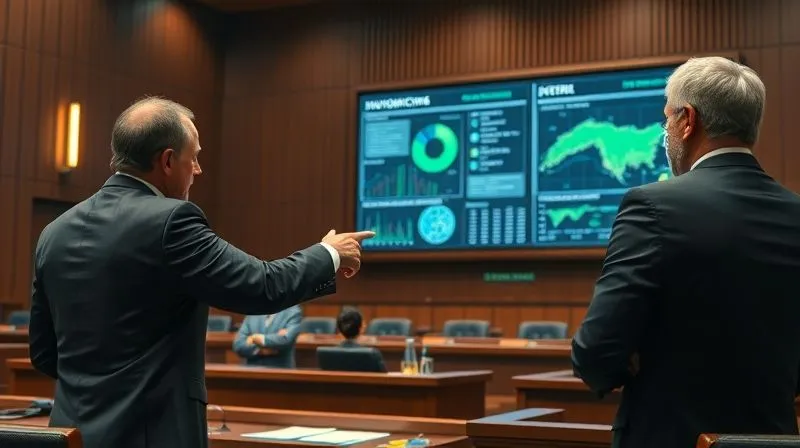
The key is to ask short, leading questions that require a "yes" or "no" answer, slowly building a narrative of doubt around their expertise and the reliability of their findings. The goal is not necessarily to prove them wrong scientifically on the stand, but to expose enough vulnerabilities that their overall opinion loses its persuasive power.
The Power of Rebuttal: Presenting Superior Counter-Evidence
While discrediting an opposing expert is crucial, it's often not enough. A truly robust strategy involves presenting your own compelling, scientifically sound counter-evidence. This not only fills the void created by dismantling the opponent's case but also proactively establishes your own narrative with superior data and analysis. This is where your own expert team shines.
Selecting Your Own Expert: The Gold Standard
The choice of your testifying expert is paramount. They must possess impeccable credentials, significant experience in the specific area of environmental science at issue, and crucially, strong communication skills. They must be able to explain complex scientific concepts clearly, concisely, and persuasively to a lay audience (judge or jury). Look for experts who:
- Have a strong publication record and peer recognition.
- Have prior litigation experience, demonstrating an understanding of courtroom dynamics.
- Are articulate and possess an unflappable demeanor under cross-examination.
- Can identify and articulate the flaws in the opposing expert's work, without appearing overly adversarial.
A good expert doesn't just present data; they tell a coherent, trustworthy story based on that data.
Crafting Compelling Rebuttal Reports
Your expert's rebuttal report should be a masterclass in clarity and scientific rigor. It should directly address and refute the specific flawed aspects of the opposing expert's report, providing alternative, scientifically defensible interpretations or data. The report should:
- Systematically Address Opponent's Flaws: Detail precisely where the opposing expert's data or methodology is deficient, using specific references to their report and your own findings.
- Present Robust Alternative Data/Analysis: Offer your own data, models, or interpretations that are based on superior methodology, more complete datasets, or more appropriate scientific principles.
- Explain the Impact: Clearly articulate how the flaws in the opposing expert's work fundamentally alter their conclusions and how your expert's opinion provides a more accurate and reliable understanding.
- Be Concise and Understandable: While scientifically rigorous, the report should be accessible. Use clear language, effective visuals, and a logical flow.
Remember, your expert isn't just correcting errors; they are building a stronger, more credible narrative that supports your client's position. This often involves commissioning new studies, conducting additional sampling, or re-running models with corrected parameters to generate superior evidence.
Advanced Tactics: Motion Practice and Evidentiary Hearings
Beyond cross-examination, there are specific legal maneuvers that can be deployed to decisively challenge flawed expert environmental data. These advanced tactics, particularly motions in limine and dedicated Daubert hearings, offer strategic opportunities to exclude or severely limit problematic testimony.
Motions in Limine: Excluding Unreliable Testimony
A motion in limine is a pre-trial motion asking the court to exclude certain evidence from being presented to the jury. In the context of expert environmental data, this is often the vehicle for a Daubert or Frye challenge. By filing a motion in limine, you are asking the judge to make a preliminary ruling on the admissibility of the opposing expert's testimony based on its scientific reliability and relevance. This can be a powerful tool, as a successful motion can prevent the jury from ever hearing the flawed data, thereby neutralizing a significant portion of the opponent's case.
To succeed, your motion must:
- Clearly articulate the legal standard (Daubert/Frye) that applies.
- Detail the specific scientific flaws in the opposing expert's methodology, data, or conclusions.
- Support your arguments with affidavits or testimony from your own qualified experts, explaining why the opposing expert's work is unreliable.
- Demonstrate how the unreliable testimony would be unfairly prejudicial or misleading to the jury.
Daubert Hearings: The Decisive Battleground
Often, a motion in limine challenging expert testimony will lead to a Daubert hearing. This is essentially a mini-trial where the judge hears testimony from both sides' experts, specifically on the scientific methodology and reliability of the contested evidence. It's a critical opportunity to:
- Present Your Expert: Your expert can explain the deficiencies in the opposing expert's work and why their own methods are scientifically sound.
- Cross-Examine Opposing Expert: This is a chance to re-emphasize the flaws you identified during deposition, under the direct scrutiny of the judge.
- Educate the Judge: Use this forum to thoroughly educate the court on the complex scientific issues and the specific standards of scientific reliability relevant to environmental data.
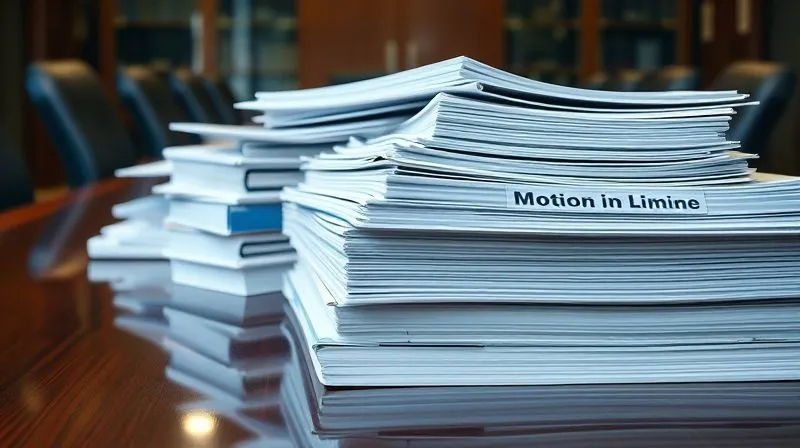
A successful Daubert hearing can lead to the exclusion of the opposing expert's testimony, significantly weakening their case or even leading to a summary judgment in your favor. It underscores the importance of having a robust scientific understanding and a clear legal strategy from the outset.
Ethical Considerations and Professional Responsibility
While the goal is to win, it's paramount to maintain ethical conduct throughout the process of challenging expert environmental data. Our role as legal professionals is to advocate zealously for our clients within the bounds of the law and ethical rules. This means ensuring that our challenges are grounded in legitimate scientific and legal principles, not in frivolous attacks or misrepresentations.
Maintaining Integrity While Challenging
Challenging an expert's data should never devolve into personal attacks. Focus on the science, the methodology, the data, and the conclusions drawn. Your arguments should be based on demonstrable flaws and established scientific standards. Frivolous challenges not only waste court resources but can also backfire, damaging your own credibility with the court. As environmental lawyers, we also bear a responsibility to the scientific process itself, upholding its integrity even as we scrutinize its application in specific cases.
Moreover, when engaging your own experts, ensure they understand their ethical obligations. They must provide an objective, scientifically defensible opinion, even if it doesn't perfectly align with your client's initial hopes. Their credibility is your credibility.
The Long-Term Impact of Credibility
In the specialized world of environmental law, reputation matters immensely. Judges, opposing counsel, and even experts themselves remember lawyers who conduct themselves with professionalism and integrity. A track record of legitimate, well-supported challenges to flawed data builds respect and authority, which can be invaluable in future negotiations and litigation. Conversely, a reputation for baseless attacks can undermine your effectiveness.
Ultimately, the best strategy for challenging flawed expert environmental data is a blend of scientific acumen, legal expertise, meticulous preparation, and unwavering ethical conduct. It's about ensuring that justice is served based on reliable, defensible scientific truth.
Frequently Asked Questions (FAQ)
Q: How do you spot subtle flaws in environmental data versus obvious errors? A: Spotting subtle flaws requires deep technical understanding and a systematic review. Obvious errors might be transcription mistakes or missing data points. Subtle flaws, however, are often embedded in the chosen statistical model, the representativeness of sampling locations, the interpretation of detection limits, or unstated assumptions in a complex environmental model. This is where your own consulting expert becomes invaluable, as they can identify nuances that a layperson or even a generalist attorney might overlook. It often involves comparing the expert's approach against established scientific literature and industry best practices.
Q: What if our budget for counter-experts is limited? A: Budget constraints are a common challenge. In such cases, prioritize. Focus your limited resources on the most critical scientific issues that directly impact liability or damages. Consider engaging a consulting expert for a focused, limited scope review rather than a full-scale rebuttal. Leverage free resources like publicly available EPA guidance documents or academic papers that outline best practices. Sometimes, a well-prepared cross-examination based on the opposing expert's own internal inconsistencies or deviations from widely accepted methods can be effective, even without a full rebuttal expert. Strategic use of discovery to obtain all raw data is also crucial, as it allows for internal scrutiny.
Q: Can a challenge backfire and strengthen the opponent's case? A: Absolutely. A poorly conceived or executed challenge can inadvertently provide the opposing expert an opportunity to re-explain, clarify, or even strengthen their opinion. If your challenge is based on a misunderstanding of the science or a weak argument, the expert will easily deflect it, making their testimony appear more robust. Furthermore, if the judge perceives your challenge as frivolous, it can damage your credibility. This is why thorough preparation, understanding the science, and getting expert input on your challenge strategy are non-negotiable. Don't challenge for the sake of challenging; challenge where there is a genuine, defensible scientific flaw.
Q: What role does judicial expertise play in these challenges? A: Judicial expertise varies significantly. Some judges have a background in science or engineering, which can make them more adept at understanding complex technical arguments. Others may have little to no scientific background. Your strategy must adapt to this. For judges less familiar with scientific concepts, you need to simplify, use clear analogies, and provide ample educational context without being condescending. For more scientifically literate judges, you can delve deeper into the technical nuances. In all cases, your experts must be able to communicate effectively, regardless of the judge's background, and your legal arguments must always translate the scientific issues into understandable legal standards (e.g., relevance, reliability, methodology).
Q: Are there specific types of environmental data more prone to flaws? A: While any data can be flawed, certain types are inherently more complex and thus more susceptible to errors or misinterpretation. Environmental modeling (e.g., groundwater transport, air dispersion, ecological risk models) is often a fertile ground for challenges because models rely heavily on assumptions, input parameters, and algorithms that can be debated. Similarly, historical data reconstruction, where experts attempt to piece together past environmental conditions from limited records, can be prone to speculative assumptions. Data from emerging contaminants or novel analytical methods, where scientific consensus or standard protocols are still evolving, also present unique challenges for reliability and general acceptance.
Key Takeaways and Final Thoughts
Challenging flawed expert environmental data is not merely a reactive measure; it is a proactive, strategic pillar of successful environmental litigation. It demands a blend of scientific literacy, legal acumen, and meticulous preparation. The integrity of the scientific evidence presented in court directly impacts the fairness and outcome of environmental disputes, making your ability to scrutinize and challenge paramount.
- Embrace Early Scrutiny: Begin your data review in discovery, leveraging your own consulting experts to identify vulnerabilities.
- Master Legal Standards: Understand and apply Daubert or Frye to establish the legal framework for challenging reliability.
- Prepare for Cross-Examination: Systematically expose methodological errors, data gaps, and inconsistencies through targeted questioning.
- Build a Strong Rebuttal: Present superior counter-evidence with a highly credible expert to establish your own narrative.
- Utilize Advanced Tactics: Employ motions in limine and Daubert hearings to exclude unreliable testimony.
- Maintain Ethical Conduct: Ground your challenges in legitimate scientific and legal principles, always upholding professional integrity.
The journey through environmental litigation, particularly when grappling with complex scientific data, can be daunting. However, by adopting a systematic and rigorous approach to challenging flawed expert environmental data, you not only protect your client's interests but also uphold the fundamental principles of justice and scientific integrity. Be diligent, be strategic, and never underestimate the power of a well-founded challenge. The environmental landscape, and the legal cases within it, depend on it.
Recommended Reading
- Public Employee Online Speech: 3 Legal Tests You Must Know
- Don't Skip It: What Are the Risks of Skipping a Real Estate Title Search?
- Mastering Design Patent Claims: Enforce Your US IP Rights Effectively
- Ransomware Attack? 7 Legal Steps to Slash Your Liability Risks
- 5 Legal Steps: Recovering Crew Wages from Abandoned Vessels Abroad




Comments
Leave a comment below. Your email will not be published. Required fields marked with *