


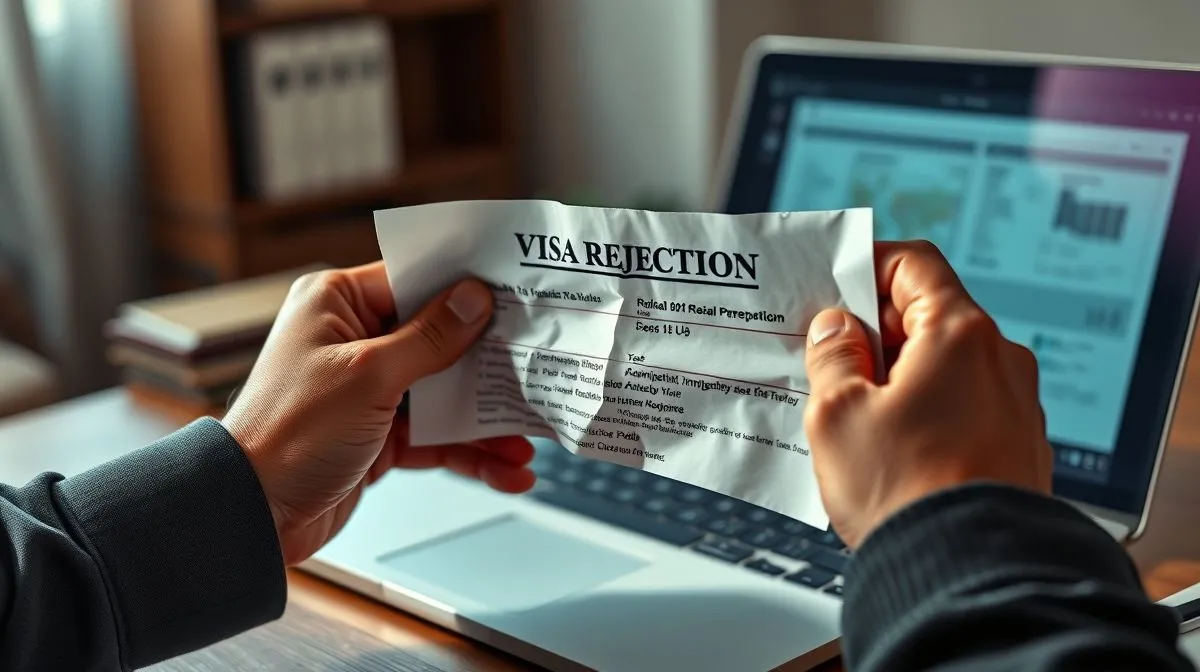
What to Do After a US Visa Application Denial? Your Path Forward
Imagine the scene: months of planning, countless documents gathered, and the nervous anticipation building up to your US visa interview. You walk out, heart pounding, only to receive the crushing news – your application has been denied. The dream of studying, working, or visiting the United States suddenly feels shattered. It's a moment of profound disappointment, often leaving individuals feeling lost and unsure of their next steps.
This disheartening experience is, unfortunately, more common than many realize. Visa denials can stem from a multitude of reasons, some seemingly minor, others more complex. The immediate aftermath often involves a swirl of questions: Why was I denied? Is there anything I can do? Does this mean my dream is over?
This comprehensive guide is designed to be your definitive resource for navigating the challenging landscape of a US visa application denial. We will demystify the reasons behind rejections, outline the precise steps you can take to understand and address the issues, and illuminate the pathways available for reapplication or alternative solutions, empowering you to move forward with clarity and confidence.
Understanding the Denial: Why Was Your Visa Refused?
The first and most crucial step after a US visa application denial is to understand the precise reason for the refusal. Without this clarity, any subsequent action will be based on guesswork, significantly reducing your chances of success. Visa officers are required to provide a reason for denial, typically referencing sections of the Immigration and Nationality Act (INA).
Common Reasons for Denial (INA 214(b), 221(g), etc.)
Most non-immigrant visa denials fall under INA Section 214(b), which states that every applicant is presumed to be an intending immigrant until they prove otherwise. This means the applicant failed to convince the consular officer that they intend to return to their home country after their temporary stay in the U.S. Other common reasons include:
- INA 214(b) - Insufficient Ties: The most common reason. The applicant did not demonstrate sufficient ties to their home country (family, job, property, financial assets) to convince the officer they would return.
- INA 221(g) - Administrative Processing/Missing Information: Your application is incomplete, or the officer requires more information or further administrative processing (security checks, etc.) before a decision can be made. This is not a final denial but a delay.
- INA 212(a) - Ineligibility/Grounds of Inadmissibility: These are more serious reasons and can include a criminal record, previous immigration violations (overstaying a prior visa, illegal entry), health-related grounds, misrepresentation, or fraud.
- Lack of Funds: Failure to prove you have sufficient financial resources to cover your expenses during your stay in the U.S.
- Incomplete Documentation: Not submitting all required documents or submitting incorrect ones.
- Misrepresentation or Fraud: Providing false information or documents during the application process. This can lead to a lifetime ban.
Reading the Refusal Letter or Form
Upon denial, you should receive a refusal letter or form from the consular officer. This document is critical as it usually cites the specific INA section under which your visa was denied. For example, if your letter states 214(b), it means the officer was not convinced you would return home. If it's 221(g), it indicates a need for more information or further review. Understanding this specific code is the cornerstone of planning your next steps.
The Immediate Aftermath: What Not to Do
Facing a US visa application denial is emotionally taxing. It's easy to feel overwhelmed and make impulsive decisions. However, what you do immediately after the denial can significantly impact your future prospects. It's crucial to act strategically and avoid common pitfalls.
Avoiding Panic and Rash Decisions
Resist the urge to panic or immediately reapply without a clear strategy. A hasty reapplication, especially if the underlying issues are not addressed, will likely lead to another denial. Take a step back, review your situation calmly, and gather all the information available about your denial.
Do Not Misrepresent Information
Never, under any circumstances, consider providing false information or documents in a subsequent application. Misrepresentation or fraud is a severe offense under U.S. immigration law (INA 212(a)(6)(C)(i)) and can result in a permanent ban from entering the United States. Even minor discrepancies can be flagged and lead to severe consequences. Always be truthful and accurate in your declarations.
Do Not Immediately Reapply Without Addressing Issues
Unless the denial was due to a simple administrative error or missing document that can be easily rectified, do not reapply the very next day or week. An immediate reapplication without any significant change in circumstances or new, compelling evidence will likely yield the same result. The consular officer will see that the original reasons for denial have not been addressed, and your application will be viewed negatively.
Strategizing Your Next Steps: Reapplication vs. Appeal
Once you understand the reason for your US visa application denial, you can begin to strategize. Your primary options are typically reapplication or, in very limited circumstances, an appeal. The path you choose depends heavily on the specific reason for your initial refusal.
Reapplying for the Same Visa Category
For most non-immigrant visas (like B-1/B-2 tourist visas, F-1 student visas, or H-1B work visas), reapplication is the most common and often only viable path after a denial. There is no statutory waiting period to reapply, but a strategic waiting period is highly advisable. You must address the specific reasons for your previous denial.
- Addressing the Specific Reasons: If denied under 214(b), focus on strengthening your ties to your home country. If it was due to incomplete documents (221(g)), gather all missing paperwork.
- Gathering New Evidence: This is crucial. Simply resubmitting the same application will not work. You need to present new, compelling evidence that directly counters the reason for the previous denial.
- Significant Change in Circumstances: Ideally, you should reapply when there has been a significant change in your circumstances that strengthens your case. This could be a new job, a new property, a marriage, or a new academic acceptance.
- Waiting Period Considerations: While not legally mandated, waiting a few months to a year, especially if you need to build stronger ties or gather new evidence, is often a wise approach. This allows you time to genuinely improve your situation.
When an Appeal is Possible (Limited Cases)
It's a common misconception that you can appeal a non-immigrant visa denial. For most non-immigrant visa cases, there is generally no formal appeal process for a consular officer's decision. Consular officers have broad discretion, and their decisions are considered final under U.S. law, often referred to as 'consular nonreviewability.' However, there are nuances:
- Administrative Processing (221(g)): If your visa was denied under 221(g) and you were asked for more documents or told it's under administrative processing, this is not a final denial. You should submit the requested information promptly.
- Error of Law or Fact: In rare cases, if you believe the consular officer made a clear error of law or fact, you might be able to request reconsideration from the embassy or consulate. This is not a formal appeal but a request for the same consulate to review their decision. This is highly unusual and typically requires strong, undeniable evidence of an error.
- Immigrant Visas: For certain immigrant visa categories, there might be more formal review processes, especially if the denial is based on grounds of inadmissibility that can be waived. This is a complex area and almost always requires legal counsel.
Gathering New Evidence and Strengthening Your Case
The success of your reapplication hinges on your ability to present a significantly stronger case than your previous attempt. This involves meticulously gathering new evidence and clearly demonstrating how you have addressed the initial reasons for denial.
Demonstrating Stronger Ties to Your Home Country
This is paramount for 214(b) denials. You need to show the consular officer that you have compelling reasons to return to your home country after your temporary visit. Examples of strong ties include:
- Employment: A stable job with a letter from your employer confirming your position, salary, and expected return date. If you've recently started a new, better-paying job, highlight this.
- Family: Close family members (spouse, children, elderly parents) remaining in your home country. Marriage certificates, birth certificates, and family photos can serve as evidence.
- Property: Ownership of real estate (house, land) in your home country. Provide property deeds or land titles.
- Financial Assets: Substantial bank accounts, investments, or other financial holdings that demonstrate financial stability and a reason to return. Include bank statements, investment portfolios, and tax returns.
- Social and Cultural Ties: Membership in clubs, religious organizations, or community groups; evidence of ongoing involvement in local events.
- Academic Ties (for students): If you're a student, proof of enrollment in a degree program in your home country that you intend to complete after your U.S. studies.
Addressing Inconsistencies or Missing Information
If your denial was due to inconsistencies in your application or missing information, your reapplication must directly address these. For example:
- If financial proof was insufficient, provide updated bank statements, sponsorship letters, or proof of scholarships.
- If your travel history was questioned, provide clear explanations and supporting documents for all past international travel.
- If there were discrepancies in your application forms, ensure all information is accurate and consistent with your supporting documents.
The Value of a Comprehensive Application Package
Beyond addressing specific issues, a well-organized and comprehensive application package can make a significant difference. While consular officers have limited time, a clearly presented set of documents that immediately supports your claims can be highly beneficial. Organize your documents logically, perhaps with tabs or a table of contents, to make it easy for the officer to review. Ensure everything is legible and translated if necessary.
Seeking Professional Legal Counsel
Navigating the complexities of U.S. immigration law, especially after a visa denial, can be daunting. While not always necessary, consulting an experienced immigration lawyer can significantly improve your chances of success in a reapplication.
When to Consult an Immigration Lawyer
Consider legal counsel if:
- Your denial was based on complex legal grounds (e.g., inadmissibility under INA 212(a)).
- You believe there was a clear error of law or fact in your initial denial.
- You have a complicated personal history (e.g., prior arrests, immigration violations, or complex family situations).
- You are unsure how to address the specific reasons for your denial or how to gather compelling new evidence.
- You are applying for an immigrant visa where appeals or waivers might be possible.
- You need help understanding the intricacies of the law and how it applies to your unique situation.
Benefits of Legal Representation
An immigration lawyer can:
- Analyze the specific reasons for your denial and provide tailored advice.
- Help you identify and gather the most relevant and compelling new evidence.
- Prepare a persuasive legal argument or cover letter to accompany your reapplication.
- Represent you in communication with the U.S. embassy or consulate, if necessary.
- Advise on alternative visa options or strategies you might not be aware of.
- Ensure your application is complete, accurate, and compliant with all regulations, minimizing the risk of further issues.
Finding a Reputable Attorney
When seeking legal counsel, look for an attorney specializing in immigration law. You can find reputable lawyers through organizations like the American Immigration Lawyers Association (AILA) or state bar associations. Verify their credentials, experience, and ensure they are licensed to practice law.
Exploring Alternative US Visa Options or Other Countries
Sometimes, despite your best efforts, reapplying for the same visa type might not be the most viable option, or your circumstances may have changed, opening up new possibilities. It's wise to consider all avenues.
Different Visa Categories You Might Qualify For
A denial for one type of visa doesn't necessarily preclude you from qualifying for another. For instance:
- If your B-1/B-2 tourist visa was denied due to insufficient ties, but you have been accepted into an accredited U.S. university, an F-1 student visa might be a better fit.
- If you have a specialized skill set and a U.S. employer willing to sponsor you, an H-1B or O-1 visa could be an option.
- Consider whether you have a qualifying family member who could petition for an immigrant visa on your behalf.
Research all U.S. visa categories on the official U.S. Department of State website to understand their requirements and determine if any align better with your current situation and long-term goals.
Considering Non-Immigrant vs. Immigrant Paths
It's important to distinguish between non-immigrant visas (temporary stay) and immigrant visas (permanent residency). If your goal is ultimately to live permanently in the U.S., a non-immigrant visa denial might be a sign to explore immigrant visa options if you qualify through family sponsorship, employment, or the Diversity Visa Lottery. The requirements and processes are distinct, and a denial in one category does not automatically prevent success in another, though past immigration history is always considered.
Looking Beyond the US: Other Immigration Dreams
While the focus of this guide is on the U.S., it's also worth considering if your goals can be achieved in other countries. Many nations offer attractive immigration programs for students, skilled workers, or investors. If repeated U.S. visa denials become a persistent barrier, exploring opportunities in Canada, Australia, the UK, or European Union countries might be a pragmatic and fulfilling alternative. This isn't about giving up, but about expanding your horizons and finding the best fit for your aspirations.
Maintaining Records and Documentation
Throughout this entire process, from the initial application to any subsequent reapplication or legal consultation, maintaining meticulous records is paramount. This practice can save you considerable time, stress, and potential complications.
Importance of Keeping All Correspondence
Keep a copy of everything: your initial visa application, all supporting documents, the refusal letter or form, any communication from the embassy or consulate, and records of any legal advice received. This creates a comprehensive paper trail that can be invaluable for future reference, especially if you reapply or consult with an attorney. It helps to track the exact reasons for your denial and the evidence you presented.
Organizing Your Application Materials
Create a dedicated file or digital folder for all your visa-related documents. Organize them logically, perhaps by category (e.g., financial, employment, family, travel history). This systematic approach ensures that you can quickly retrieve any document needed for a reapplication, an attorney consultation, or even for future visa applications to other countries where you might need to disclose prior denials. A well-organized set of documents also reflects your diligence and attention to detail.
Frequently Asked Questions (FAQ)
Can I reapply immediately after a US visa denial? No, it's generally not advisable to reapply immediately. While there's no mandatory waiting period, you should only reapply when you can address the specific reasons for the previous denial with new, compelling evidence or a significant change in circumstances.
Does a US visa denial affect future applications to other countries? Potentially, yes. Most visa applications for other countries will ask if you have ever been denied a visa to any country. You must disclose this information truthfully. While it doesn't automatically mean denial elsewhere, it can sometimes raise questions that you'll need to address.
How long do I have to wait to reapply for a US visa? There's no specific waiting period mandated by law. However, a strategic wait time (e.g., several months to a year or more) is often recommended to allow you to strengthen your ties, gather new evidence, or for your circumstances to genuinely improve.
Is it worth appealing a US visa denial? For most non-immigrant visas, there is no formal appeal process. In very rare cases, if you believe the consular officer made a clear error of law or fact, you might request reconsideration from the consulate. However, reapplication with a stronger case is usually the more practical path.
What if I believe the denial was a mistake? If you genuinely believe the denial was based on a factual error, you can try contacting the embassy or consulate to request a review. Provide clear, concise evidence of the error. However, such requests are rarely successful unless the error is blatant and undeniable.
Recommended Reading
- Ship Collision at Sea: What Happens After Impact? Your Guide
- E-Commerce Data Breach Liability: Protecting Your Small Biz
- Defective Product Injury? How to Sue the Manufacturer and Win
- Unlock Your Cruise Ship Injury Claim: What Evidence Do I Need?
- Product Recall Injuries? Know Your Rights to Compensation Now!
Conclusion
A US visa application denial is undoubtedly a setback, but it is rarely the end of the road. By understanding the specific reasons for your refusal, taking a strategic approach to reapplication, and meticulously preparing new, compelling evidence, you can significantly improve your chances of success. Whether you choose to reapply, explore alternative visa categories, or even consider opportunities in other countries, the key is to approach the situation with informed resolve. Remember, persistence, truthfulness, and strategic planning are your greatest allies in navigating the complexities of immigration. Knowing what to do after a US visa application denial empowers you to transform disappointment into a renewed pursuit of your dreams.




Comments
Leave a comment below. Your email will not be published. Required fields marked with *