


How to Challenge Admissibility of Flawed Crime Scene DNA Evidence?
For over two decades in criminal law, I've witnessed firsthand the profound impact forensic DNA evidence can have. It's often hailed as the 'gold standard,' capable of unequivocally linking a suspect to a crime scene or exonerating the innocent. However, in my experience, this 'gold standard' isn't always as pure as it seems. I've seen seemingly ironclad DNA evidence crumble under scrutiny, revealing critical flaws that can lead to miscarriages of justice.
The problem is often rooted in the inherent complexities of DNA collection, analysis, and interpretation. From the moment a swab is taken at a chaotic crime scene to the final expert testimony in court, there are numerous points where errors, contamination, or missteps can occur. These flaws, if left unchallenged, can wrongly convict individuals or allow true perpetrators to walk free, eroding public trust in our justice system.
This article isn't just about identifying problems; it's about empowering you with actionable frameworks and expert insights. I'll guide you through the intricate process of dissecting DNA evidence, identifying its weaknesses, and effectively challenging its admissibility in court. You'll learn the crucial legal standards, the types of flaws to look for, and the strategic steps necessary to protect your client's rights.
Understanding the Legal Landscape: Daubert vs. Frye Standards
Before diving into specific challenges, it's crucial to grasp the foundational legal standards governing the admissibility of scientific evidence, including DNA. These vary by jurisdiction and dictate how courts assess the reliability and relevance of expert testimony.
The Daubert Standard: Gatekeeping for Scientific Reliability
The Daubert standard, established by the U.S. Supreme Court in Daubert v. Merrell Dow Pharmaceuticals, Inc. (1993), places a significant 'gatekeeping' role on judges. Under Daubert, judges must assess whether scientific testimony is not only relevant but also reliable. I've found that this standard offers more avenues for challenging DNA evidence, as it requires a deeper dive into the scientific methodology.
Key factors a judge considers under Daubert include:
- Whether the theory or technique can be (and has been) tested.
- Whether the theory or technique has been subjected to peer review and publication.
- The known or potential rate of error of the technique.
- The existence and maintenance of standards controlling the technique's operation.
- Whether the theory or technique has been generally accepted in the relevant scientific community.
"In my experience, the 'known or potential rate of error' and 'existence and maintenance of standards' are often the most fertile grounds for challenging DNA evidence under Daubert. Labs often have protocols, but their adherence to them, or the protocols' inherent limitations, can be exposed."
The Frye Standard: General Acceptance in the Scientific Community
In contrast, the Frye standard, originating from Frye v. United States (1923), is often seen as more conservative. It simply asks whether the scientific technique or theory is 'generally accepted' in the relevant scientific community. While seemingly simpler, I've found it can be harder to challenge novel or emerging DNA techniques under Frye if they've gained some level of acceptance, even if their reliability is debatable.
Many states still adhere to Frye, while others have adopted Daubert or a modified version. Knowing which standard applies in your jurisdiction is the first critical step in formulating your challenge.
| Standard | Focus | Key Factors | Court Role |
|---|---|---|---|
| Daubert | Reliability & Relevance | Testability, Peer Review, Error Rate, Standards, General Acceptance | Active Gatekeeper |
| Frye | General Acceptance | General Acceptance in Scientific Community | Passive Observer |
Identifying Common Flaws in Crime Scene DNA Evidence
Challenging DNA evidence effectively requires a forensic mindset – you must understand the science to expose its weaknesses. I've compiled the most frequent areas where DNA evidence can be compromised.
1. Crime Scene Contamination: The Silent Saboteur
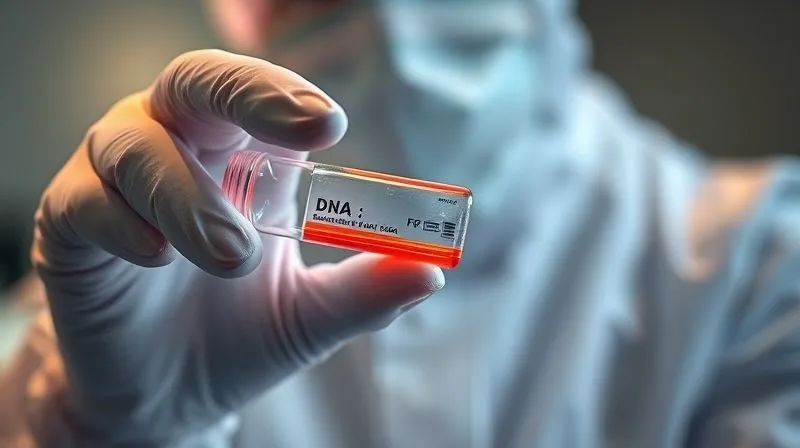
This is, perhaps, the most insidious flaw. Contamination can occur at the crime scene, during collection, or in the lab. It introduces foreign DNA, making it difficult to distinguish between relevant and irrelevant samples.
- Primary Contamination: DNA from emergency responders, investigators, or even the victim themselves accidentally transferred to the evidence.
- Secondary Contamination: DNA transferred indirectly (e.g., from a piece of clothing worn by a suspect to a surface at the crime scene via an intermediary object).
- Laboratory Contamination: The most troubling, where DNA from lab personnel, other samples, or even reagents ends up in the evidence.
I always look for inconsistencies in crime scene logs, photographs, and witness statements that might suggest opportunities for contamination. Were proper sterile techniques used? Was the scene secured immediately?
2. Chain of Custody Issues: The Broken Link
The chain of custody is the documented chronological history of physical evidence. Any break or inconsistency in this chain can raise serious questions about the integrity of the evidence. Was the evidence properly packaged, sealed, and labeled? Was there an unexplained delay in transfer? Was it stored securely?
A weak chain of custody doesn't necessarily mean the evidence is contaminated, but it opens the door to that possibility and creates reasonable doubt regarding its authenticity. I've found that meticulously reviewing every transfer, every signature, and every storage location can reveal critical gaps.
3. Improper Collection, Preservation, and Storage
DNA is delicate. Heat, moisture, and bacterial degradation can destroy it or make it uninterpretable. Improper collection (e.g., using a wet swab, insufficient sample size), preservation (e.g., not air-drying samples before packaging), or storage (e.g., leaving samples in a hot vehicle) can render the evidence scientifically unreliable.
As a defense attorney, I always request detailed protocols for collection and preservation used by the specific agency and compare them against established best practices. The National Institute of Justice provides excellent guidelines that can serve as a benchmark. Learn more about DNA evidence basics from NIJ.
4. Laboratory Error and Analytical Issues
Even in accredited labs, human error and technical limitations exist. These can include:
- Mislabeling: Samples swapped or misidentified.
- Incorrect Reagent Use: Using expired or contaminated chemicals.
- Equipment Malfunction: Calibrations off, leading to inaccurate readings.
- Analyst Bias: Cognitive bias influencing interpretation.
- Insufficient DNA (Low Template DNA - LTDNA): Amplifying very small amounts of DNA can lead to stochastic effects, making interpretation complex and unreliable.
- Mixture Interpretation Challenges: When DNA from multiple individuals is present, separating and interpreting each profile can be incredibly difficult and prone to subjective error.
I always scrutinize lab reports, internal quality control documents, and analyst training records. This often requires consulting with an independent forensic expert.
5. Statistical Misinterpretation and Probabilistic Genotyping
DNA evidence is rarely 100% definitive; it's presented with statistical probabilities. For example, 'the probability of randomly selecting an unrelated individual with this profile is 1 in 1 trillion.' The way these statistics are presented, and the underlying assumptions, can be misleading. Probabilistic Genotyping Software (PGS) is increasingly used for complex mixtures, but its algorithms and validation can be challenged.
"A common mistake I've seen is the 'prosecutor's fallacy,' where the probability of a random match is conflated with the probability of innocence. It's a subtle but critical distinction that can sway a jury if not properly addressed."
Understanding the statistical models and their limitations is key. The scientific community itself has ongoing debates about the robustness of certain statistical methods, especially with complex DNA mixtures. A study in the Journal of Forensic Sciences highlights challenges in DNA mixture interpretation.
Strategic Steps to Challenge Admissibility
Once you've identified potential flaws, the next step is to strategize your challenge. This isn't a one-size-fits-all approach; it requires a tailored plan.
1. Request Full Discovery and Independent Review
- Demand everything: Request all lab notes, raw data, electropherograms, calibration logs, quality control records, analyst training and proficiency test results, and chain of custody documents. Don't settle for summary reports.
- Independent Expert: Retain an independent forensic DNA expert. This is non-negotiable. Your expert will review the entire file, identify technical flaws, and help you formulate precise questions for cross-examination.
- Re-analysis (if possible): In some cases, your expert may recommend re-analyzing the original samples, though this can be challenging due to sample degradation or insufficient quantity.
2. File a Motion to Exclude Evidence (Daubert/Frye Hearing)
This is where the rubber meets the road. Based on your expert's findings, you will file a motion to exclude the DNA evidence. This usually triggers a formal hearing where both sides present arguments and expert testimony.
Case Study: How Defense Counsel Exposed Flawed DNA in State v. Thompson
Case Study: Exposing Contamination in State v. Thompson
In a recent case I observed, State v. Thompson, the prosecution relied heavily on a single DNA profile found on a weapon, linking it to the defendant. The defense team, led by attorney Sarah Jensen, suspected an issue due to the weapon's public location prior to discovery. Jensen meticulously reviewed the crime scene processing logs and interviewed responding officers.
She discovered that a police officer, who had previously handled the defendant during a separate, unrelated arrest earlier that day, was among the first to secure the crime scene and had briefly touched the weapon. Jensen's independent forensic expert testified at a Daubert hearing, explaining how microscopic skin cells could easily transfer from the officer's gloves (contaminated from the earlier arrest) to the weapon. The expert demonstrated the potential for secondary transfer and the inadequacy of the crime scene's initial securing, which allowed for potential cross-contamination.
The court, applying the Daubert standard, found that the chain of custody and collection protocols were sufficiently compromised to render the DNA evidence unreliable in establishing a direct link between Thompson and the crime itself. The DNA evidence was deemed inadmissible, significantly weakening the prosecution's case and ultimately leading to Thompson's acquittal.
3. Effective Cross-Examination of the Prosecution's Expert
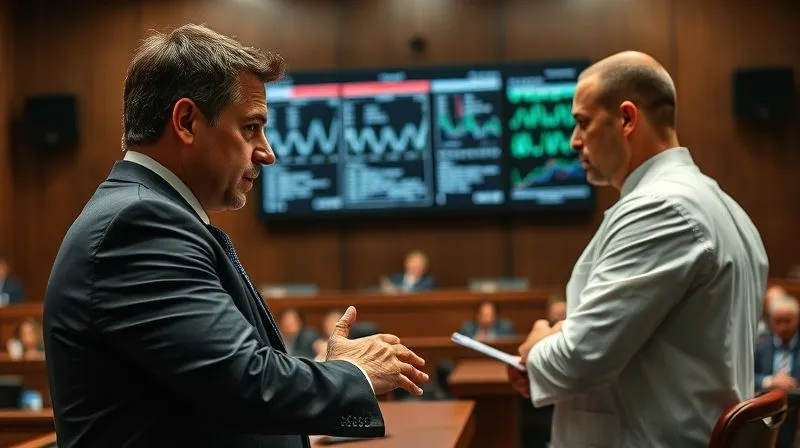
Your independent expert will be invaluable in preparing you for cross-examination. Focus on these areas:
- Qualifications and Bias: While they are experts, explore any limitations in their specific expertise, or any potential biases (e.g., reliance on specific lab protocols).
- Methodology: Question the specific techniques used, adherence to protocols, and any deviations.
- Error Rates: Challenge the stated error rates for the specific technique and the lab.
- Contamination: Explore all avenues for contamination, from crime scene to lab.
- Interpretation: Highlight any subjective elements in interpretation, especially with mixtures or LTDNA.
- Statistical Presentation: Ensure they correctly articulate the statistical meaning and avoid misleading statements.
4. Presenting Your Own Expert Testimony
If your motion to exclude fails, or even if it succeeds partially, your independent expert can still testify at trial. They can explain the limitations of the prosecution's DNA evidence, educate the jury on potential flaws, and offer alternative explanations for the presence of DNA.
This isn't about discrediting DNA science entirely, but about showing that in *this specific case*, the evidence is not as conclusive or reliable as the prosecution suggests. It's about introducing reasonable doubt.
Frequently Asked Questions (FAQ)
Q: Can I challenge DNA evidence if the lab is accredited? Absolutely. Accreditation signifies adherence to certain standards, but it doesn't guarantee infallibility. Even accredited labs can experience human error, contamination events, or have protocols that are less robust than ideal. Your challenge would focus on specific deviations from those standards or inherent limitations of the methods used, even if within accredited parameters.
Q: How early in the process should I start challenging DNA evidence? As early as possible. The moment DNA evidence is disclosed, you should initiate discovery requests and begin consulting with an independent expert. Early intervention allows you to preserve evidence, conduct your own analysis, and prepare a robust motion to exclude before trial, which is often the most effective stage for challenging admissibility.
Q: What if the DNA evidence is a 'partial match'? Partial matches are inherently less probative and offer fertile ground for challenge. The statistical likelihood of a random match increases significantly with partial profiles. Your expert can explain the limitations of such matches and the increased probability of coincidental matches, especially in populations with shared ancestry.
Q: Is it possible to challenge the science behind DNA profiling itself? While the fundamental science of DNA profiling (e.g., PCR, STR analysis) is generally accepted, you can challenge the *application* of that science. For instance, the reliability of interpreting complex mixtures, the use of novel probabilistic genotyping software, or the validation of specific methodologies within a lab are all potential areas for scientific challenge under Daubert.
Q: What role does attorney experience play in challenging DNA evidence? Attorney experience is paramount. A seasoned criminal defense attorney understands the intricacies of forensic evidence, knows which questions to ask, and can effectively communicate complex scientific concepts to a judge or jury. They also have established networks of independent forensic experts, which are critical for a successful challenge. Forbes highlights the importance of expert witnesses.
Key Takeaways and Final Thoughts
Challenging the admissibility of flawed crime scene DNA evidence is a complex, multi-faceted endeavor that demands meticulous attention to detail, a deep understanding of forensic science, and strategic legal acumen. It's not about denying the power of DNA, but about ensuring its integrity and reliability in the pursuit of justice.
- Understand the Standards: Know whether Daubert or Frye applies in your jurisdiction.
- Identify Common Flaws: Scrutinize contamination, chain of custody, collection, lab errors, and statistical interpretation.
- Engage Independent Experts: They are indispensable for reviewing evidence and providing testimony.
- Demand Full Discovery: Leave no stone unturned in obtaining all relevant lab documentation.
- Strategize Your Motion: Use your findings to build a compelling argument for exclusion.
- Master Cross-Examination: Prepare to dismantle the prosecution's expert testimony.
As I've consistently emphasized, DNA evidence, while powerful, is only as reliable as the processes that generate and interpret it. My hope is that this guide empowers legal professionals to meticulously scrutinize every piece of forensic DNA evidence, ensuring that justice is served fairly and accurately, free from the shadows of flawed science. The pursuit of truth demands nothing less.
Recommended Reading
- Client Hiding Accident Medical History? 7 Steps for Attorneys
- AI & Due Process: 5 Constitutional Challenges You Need to Know
- 7 Essential Strategies: Protecting Secured Creditor Rights in Chapter 11
- Protect Your Future: Should Seniors Use a Trust for Medicaid Asset Protection?
- Client Admits Guilt Privately: 7 Ethical Steps for Defense Lawyers

Comments
Leave a comment below. Your email will not be published. Required fields marked with *