



How to Challenge Executive Branch Overreach of Powers?
For over two decades in Constitutional Law, I've observed a recurring tension at the heart of our democratic republic: the delicate balance of power. While a strong executive is often necessary for effective governance, the potential for overreach is ever-present. I've seen countless instances where executive actions, however well-intentioned, push the boundaries of established constitutional authority, creating a ripple effect of uncertainty and concern among citizens and institutions alike.
The problem is clear: when the executive branch exceeds its constitutional mandate, it threatens the very fabric of our system of checks and balances. This overreach can manifest in various forms, from executive orders that bypass legislative processes to aggressive interpretations of statutory authority, leaving many feeling powerless to respond. It erodes trust in government and can undermine fundamental rights, making it a critical issue for any engaged citizen or legal professional.
This article isn't just a theoretical discussion; it's a practical guide. I'll share actionable frameworks, illuminate pivotal case studies, and provide expert insights into the precise legal, legislative, and public avenues available. You'll learn not only *what* executive overreach looks like but, more importantly, *how* to challenge executive branch overreach of powers effectively, drawing on the wisdom of our constitutional framework and modern legal strategies.
Understanding the Foundation: The Separation of Powers Doctrine
Before we delve into strategies for challenging executive overreach, it's crucial to grasp the bedrock principle upon which our government is built: the separation of powers. This doctrine, enshrined in the U.S. Constitution, divides governmental authority into three distinct branches—legislative, executive, and judicial—each with its own specific responsibilities and limitations. The genius of this design, as I've always taught, lies in its inherent tension and mutual accountability.
The Framers, keenly aware of the dangers of concentrated power, deliberately crafted a system where each branch acts as a check on the others. Congress makes laws, the President executes them, and the courts interpret them. This isn't merely an organizational chart; it's a dynamic system designed to prevent tyranny and preserve liberty. When one branch oversteps, it disrupts this delicate equilibrium, necessitating a robust response from the others, or from the people themselves.
"The accumulation of all powers, legislative, executive, and judiciary, in the same hands, whether of one, a few, or many, and whether hereditary, self-appointed, or elective, may justly be pronounced the very definition of tyranny." - James Madison, Federalist No. 47. This timeless warning underpins every discussion of executive power.
Understanding this foundational concept is the first step in identifying and effectively challenging executive branch overreach of powers. It provides the constitutional lens through which all subsequent actions and challenges must be viewed. For a deeper dive into the constitutional framework, I often refer to resources like the Legal Information Institute at Cornell Law School.
Judicial Review: The Courts as Arbiters of Constitutionality
Perhaps the most direct and potent avenue for challenging executive branch overreach of powers lies within the judicial system, through the process of judicial review. This is where the courts, particularly the Supreme Court, exercise their power to determine whether an executive action or order is consistent with the Constitution and statutory law. I've seen firsthand how a well-crafted legal challenge can halt an unconstitutional executive action in its tracks, setting powerful precedents.
The Power of the Judiciary to Invalidate Executive Actions
The concept of judicial review, though not explicitly enumerated in the Constitution, was firmly established in the landmark case of Marbury v. Madison (1803). Chief Justice John Marshall famously declared, "It is emphatically the province and duty of the judicial department to say what the law is." This means that federal courts have the authority to review executive actions and declare them unlawful or unconstitutional. This power is not to be underestimated; it provides a vital safeguard against executive abuses.
Citizens, organizations, and even state governments can initiate legal challenges if they can demonstrate that they have standing – meaning they have suffered a concrete injury caused by the executive action. Cases typically begin in federal district courts and can be appealed up to the Supreme Court. The types of executive actions subject to judicial review are broad, encompassing executive orders, agency regulations, and enforcement actions.
- Challenges to Executive Orders: Arguing that an order exceeds statutory authority or violates constitutional rights.
- Review of Agency Regulations: Contending that regulations are arbitrary, capricious, or outside the scope of congressional delegation.
- Suits Against Enforcement Actions: Claiming selective enforcement or actions that infringe upon due process.
The legal process can be lengthy and expensive, but the impact of a successful challenge is profound. It not only rectifies a specific instance of overreach but also sends a clear message about the limits of executive power, reinforcing the constitutional boundaries for future administrations. This is a primary mechanism for how to challenge executive branch overreach of powers effectively.
Legislative Oversight: Congress's Arsenal of Checks
While the judiciary acts as a reactive check, Congress possesses a proactive and potent array of tools for challenging executive branch overreach of powers. As the branch closest to the people, its role in oversight is paramount. In my experience, a vigilant and unified Congress can be an incredibly effective bulwark against executive encroachment, often preventing overreach before it even reaches the courts.
Congressional Investigations and Hearings
One of Congress's most powerful tools is its investigative authority. Through committees, Congress can conduct hearings, subpoena documents and witnesses, and demand accountability from executive officials. These investigations can expose misconduct, illuminate instances of overreach, and build public pressure for corrective action. I've seen extensive hearings lead to significant policy shifts and even resignations when executive abuses are brought to light.
The Power of the Purse
Congress controls the nation's finances. This "power of the purse" is an immense check on executive power. Congress can refuse to fund executive initiatives it deems inappropriate or unconstitutional, or it can attach specific conditions to appropriations. This is a subtle yet incredibly effective way to influence executive behavior and prevent actions that might otherwise go unchecked. For example, defunding specific programs or positions can directly curtail executive capacity.
Impeachment as a Last Resort
In the most extreme cases of executive overreach or abuse of power, the Constitution grants Congress the power of impeachment. The House of Representatives can vote to impeach a president or other high-ranking executive official for "Treason, Bribery, or other high Crimes and Misdemeanors," and the Senate then conducts a trial. While rare, the mere threat of impeachment serves as a powerful deterrent against egregious executive misconduct.
Legislative Vetoes and Resolutions of Disapproval
Although the Supreme Court has limited the scope of legislative vetoes, Congress can still pass resolutions of disapproval under certain statutes, particularly regarding agency regulations. This allows Congress to nullify rules promulgated by executive agencies that they believe exceed statutory authority or are contrary to legislative intent. It's a faster, more direct legislative response than full repeal.
- Demand Information: Utilize oversight committees to request documents, emails, and internal communications from executive agencies.
- Schedule Hearings: Publicly question executive officials, agency heads, and even the President's cabinet on specific policies or actions.
- Withhold Funding: Use the appropriations process to defund programs or initiatives deemed to be instances of overreach.
- Pass Restrictive Legislation: Enact new laws that explicitly limit executive authority in areas where overreach has occurred.
- Consider Resolutions of Disapproval: Employ the Congressional Review Act to overturn specific executive agency regulations.
For detailed analysis on congressional powers and oversight, the Congressional Research Service offers invaluable reports.
The Role of State Governments: A Decentralized Defense
While often overshadowed by federal interactions, state governments play a crucial, albeit sometimes indirect, role in challenging executive branch overreach of powers. The federal system, with its division of authority between national and state governments, offers multiple points of resistance. I've observed how states, acting as independent sovereigns, can create significant friction against federal executive actions they deem unconstitutional or beyond federal authority.
State-Level Legal Challenges
States frequently initiate lawsuits against the federal government, including the executive branch, arguing that federal actions infringe upon state sovereignty, violate constitutional principles, or exceed Congress's delegated powers. These challenges often target federal regulations, executive orders, or mandates that states believe impose undue burdens or undermine their own legislative authority. This creates a powerful decentralized defense, as a single federal executive action may face dozens of legal challenges simultaneously from various states.
Nullification Debates (Historical Context and Modern Relevance)
Historically, the concept of nullification—where states declare federal laws unconstitutional and unenforceable within their borders—has been a contentious issue. While the Supreme Court has long affirmed federal supremacy, debates over states' rights and resistance to federal mandates persist. Modern manifestations aren't outright nullification but rather legislative actions that refuse to cooperate with or allocate state resources towards implementing federal policies deemed objectionable. These legislative stands, while not legally nullifying federal law, can create practical impediments to executive branch enforcement.
Interstate Compacts and Cooperation
States can also cooperate through interstate compacts or informal agreements to collectively resist federal executive actions. By presenting a united front, states can amplify their voice and increase their leverage in negotiations or legal battles with the federal government. This collective action demonstrates the power of federalism as a check, even if indirectly, on executive power.
| Mechanism | Actor | Scope | Example |
|---|---|---|---|
| Judicial Challenge | States, State Attorneys General | Federal laws/actions, agency regulations | Multi-state lawsuits challenging federal environmental mandates or immigration policies |
| Legislative Resistance | State Legislatures | Non-compliance with federal mandates, refusal to fund | State laws refusing to create databases for federal initiatives or prohibiting state resources for federal enforcement |
| Public Advocacy & Lobbying | State-level NGOs, State Governors | Influencing federal policy, congressional action | State governors testifying before Congress against executive actions, state-led campaigns against federal directives |
| Interstate Cooperation | Groups of States | Collective legal or political pressure | States forming coalitions to file amicus briefs in federal cases or to jointly lobby Congress |
The diversity of state responses ensures that executive overreach rarely goes unchallenged from a federalism perspective. These decentralized efforts are a vital component of how to challenge executive branch overreach of powers within our complex governmental structure.
Public Advocacy and Civil Society: The People's Voice
Beyond the formal mechanisms of government, the power of public advocacy and organized civil society groups represents a crucial, often underestimated, force in challenging executive branch overreach of powers. As a constitutional lawyer, I've repeatedly seen that informed and mobilized citizens can create immense political pressure, compelling elected officials and even the judiciary to act. This is the democratic heartbeat of our system.
Organized Protests and Demonstrations
Mass protests and demonstrations serve as a visible and vocal expression of public dissent. When executive actions spark widespread public opposition, these gatherings can signal to policymakers that a significant portion of the electorate is unhappy. While protests don't directly change laws, they can shift public opinion, influence media narratives, and provide political cover for legislative or judicial action. They underscore the fact that ultimate sovereignty resides with the people.
Media Scrutiny and Whistleblowers
A free and independent press is indispensable in holding the executive branch accountable. Investigative journalism can uncover instances of overreach, corruption, or abuse of power that might otherwise remain hidden. Whistleblowers, often current or former government employees, play a critical role in providing the media and oversight bodies with crucial information. Protecting whistleblowers and fostering a robust journalistic environment are essential for public awareness and accountability.
Grassroots Lobbying and Petitions
Individual citizens and grassroots organizations can engage in direct lobbying efforts, contacting their elected representatives to express concerns about executive actions. Petitions, both online and offline, can consolidate these voices, demonstrating collective opposition. While a single letter might have limited impact, thousands of coordinated communications can influence legislative priorities and encourage congressional action against executive overreach.
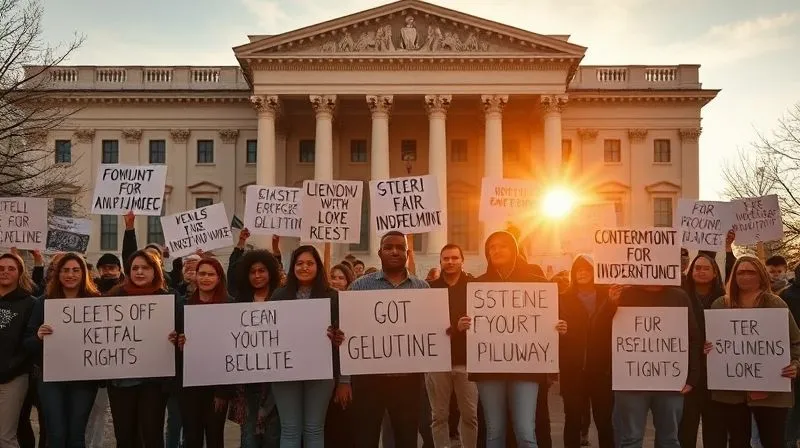
Case Study: The 'Clean Air Now' Coalition vs. Federal Agency X
In 2021, a federal agency issued new regulations impacting industrial emissions that many environmental groups believed bypassed established congressional review processes and infringed on existing environmental protections. The 'Clean Air Now' Coalition, a grassroots organization, mobilized quickly. They compiled detailed scientific evidence, organized peaceful protests across several states, and launched an aggressive media campaign highlighting the potential public health risks. Crucially, they partnered with experienced constitutional lawyers who identified procedural flaws in the agency's rule-making process. This multi-pronged approach led to significant public pressure and eventually, a successful legal challenge that forced the agency to revise its regulations, demonstrating the power of organized public and legal action when executive agencies overstep their mandates.
Organizations like the ACLU and the Brennan Center for Justice are prime examples of civil society groups that consistently work to challenge executive branch overreach of powers through legal action, advocacy, and public education.
International Law and Norms: External Pressure Points
While primarily a domestic concern, challenging executive branch overreach of powers can sometimes involve the realm of international law and norms. This is a more complex and often less direct avenue, but it's one that a savvy strategist shouldn't overlook, particularly in an increasingly interconnected world. The United States, as a signatory to numerous treaties and a participant in various international bodies, is not entirely immune to external scrutiny and pressure.
Treaty Obligations and International Courts
If an executive action appears to violate international treaties to which the U.S. is a signatory (e.g., human rights treaties, environmental agreements), it can become a matter of international concern. While direct enforcement by international courts against a sovereign nation like the U.S. is limited, such violations can lead to diplomatic condemnation, reputational damage, and even economic sanctions from other nations or international bodies. This external pressure can sometimes prompt domestic reevaluation of executive actions.
Soft Power and Diplomatic Pressure
Beyond formal legal avenues, the U.S. executive branch is sensitive to its global standing and "soft power" – its ability to influence through cultural and political appeal. Executive overreach that is perceived as authoritarian, undemocratic, or violative of human rights can significantly damage this standing. Allied nations, international organizations, and global human rights groups can exert diplomatic pressure, issue public statements, and engage in bilateral discussions that encourage a reconsideration of problematic executive actions. This isn't a legal challenge in the traditional sense, but it's a political one with real-world consequences.
Navigating the Legal Landscape: Practical Steps for Citizens
For individuals and groups looking to challenge executive branch overreach of powers, the task can seem daunting. However, with a clear understanding of the landscape and a strategic approach, meaningful action is possible. Here are some practical steps I recommend for those ready to engage.
Identifying Potential Overreach
The first step is to accurately identify what constitutes executive overreach. This requires staying informed about executive orders, agency regulations, and governmental actions. Look for instances where the executive branch appears to be: (1) bypassing congressional law-making, (2) exceeding statutory authority delegated by Congress, or (3) infringing upon constitutional rights (e.g., free speech, due process). Reputable news sources, non-partisan policy think tanks, and legal analyses are invaluable resources.
Consulting Legal Experts
If you suspect executive overreach, consult with legal professionals specializing in constitutional law, administrative law, or civil liberties. An experienced attorney can assess the merits of a potential challenge, advise on standing, and guide you through the complex legal processes. Many public interest law firms and non-profit organizations offer pro bono or low-cost legal assistance for cases with broad public impact.
Supporting Advocacy Groups
Even if you're not in a position to initiate a lawsuit yourself, supporting established advocacy groups is a powerful way to contribute. These organizations often have the resources, expertise, and legal teams necessary to launch significant challenges. Your financial contributions, volunteer efforts, or simply signing petitions can bolster their capacity to fight executive overreach.
- Monitor Executive Actions: Regularly review official government publications like the Federal Register for new executive orders, proposed regulations, and policy changes.
- Educate Yourself and Others: Understand the constitutional principles at stake and share this knowledge within your community. Informed citizens are the first line of defense.
- Contact Elected Officials: Reach out to your congressional representatives to voice concerns and demand oversight of executive actions.
- Document and Report: If you experience or witness an executive action that seems to violate rights or exceed authority, document it thoroughly and report it to appropriate legal or advocacy organizations.
- Join or Support a Coalition: Collective action amplifies individual voices. Joining groups dedicated to constitutional defense can make a significant difference.
Case Study: The Steel Seizure Case (Youngstown Sheet & Tube Co. v. Sawyer)
One of the most profound examples of the Supreme Court checking executive power is the 1952 case of Youngstown Sheet & Tube Co. v. Sawyer, famously known as the "Steel Seizure Case." During the Korean War, President Harry Truman issued an executive order directing the Secretary of Commerce to seize and operate most of the nation's steel mills to avert a strike, arguing it was necessary for national defense. The steel companies immediately challenged this action.
The Supreme Court, in a 6-3 decision, ruled against President Truman, finding that his executive order was an unconstitutional overreach of presidential power. The Court held that the President's authority to seize private property had to stem either from an act of Congress or from the Constitution itself. In this instance, neither was present. Congress had not authorized such a seizure, and the President's inherent constitutional powers as Commander-in-Chief or to "take Care that the Laws be faithfully executed" did not extend to lawmaking.
"When the President acts pursuant to an express or implied authorization of Congress, his authority is at its maximum, for it includes all that he possesses in his own right plus all that Congress can delegate. When the President acts in absence of either a congressional grant or denial of authority, he can only rely upon his own independent powers, but there is a zone of twilight in which he and Congress may have concurrent authority, or in which his distribution is uncertain. When the President takes measures incompatible with the expressed or implied will of Congress, his power is at its lowest ebb, for then he can rely only upon his own constitutional powers minus any constitutional powers of Congress over the matter." – Justice Robert Jackson's concurring opinion in Youngstown, a seminal framework for analyzing executive power.
The Steel Seizure Case remains a cornerstone of constitutional law, providing a critical framework for analyzing the limits of presidential power, particularly when the executive acts without explicit congressional authorization. It serves as a powerful reminder of how to challenge executive branch overreach of powers through judicial review, even in times of national crisis.
Frequently Asked Questions (FAQ)
Q: What precisely defines executive overreach, and how is it different from a legitimate exercise of executive power? Executive overreach occurs when the President or an executive agency acts beyond the scope of authority granted by the Constitution or by Congress. Legitimate executive power, conversely, operates within these defined boundaries. The key distinction often lies in whether an action attempts to create new law (legislative function) or interpret and apply existing law (executive function), especially when Congress has not explicitly authorized such an action. Justice Jackson's framework in Youngstown is often used to assess this.
Q: Can a private citizen directly sue the President for perceived overreach? While a private citizen cannot typically sue the President personally for official actions, they can sue the executive branch (e.g., the specific agency or official responsible for the action) if they can demonstrate "standing." This means proving they have suffered a concrete, particularized injury that is traceable to the executive action and redressable by a favorable court decision. It's usually a challenge against the action itself, not the individual.
Q: How effective is public protest in challenging executive power, given the formal legal and political structures? Public protest, while not a direct legal mechanism, is incredibly effective as a catalyst. It draws media attention, galvanizes public opinion, and signals to Congress and the courts the level of public concern. This pressure can influence legislative action, encourage judicial scrutiny, and compel executive branches to reconsider or modify their policies. It's a vital component of the broader strategy for how to challenge executive branch overreach of powers.
Q: What is the role of the Attorney General in these challenges, given they represent the executive branch? The Attorney General, as the head of the Department of Justice, serves as the chief legal officer of the federal government and represents the executive branch in legal proceedings. When an executive action is challenged, the DOJ, under the Attorney General's direction, defends that action. This highlights the inherent tension: the AG is part of the executive, but also sworn to uphold the Constitution. Their role can be complex, balancing loyalty to the President with fidelity to the rule of law.
Q: Are there historical precedents for successful challenges to executive overreach beyond the Steel Seizure Case? Absolutely. Beyond Youngstown, other notable examples include: the Supreme Court's striking down of portions of the National Industrial Recovery Act (part of FDR's New Deal) in cases like Schechter Poultry Corp. v. United States (1935), finding an unconstitutional delegation of legislative power; and various challenges to presidential war powers, leading to the War Powers Resolution of 1973 (though its constitutionality remains debated), which aimed to reassert congressional authority in committing U.S. forces abroad. These cases illustrate the enduring struggle and the various ways to challenge executive branch overreach of powers.
Key Takeaways and Final Thoughts
Challenging executive branch overreach of powers is not merely an academic exercise; it is a fundamental duty in a constitutional republic. As I've outlined, our system provides a multifaceted arsenal for accountability, drawing on the distinct strengths of the judiciary, the legislative branch, and the collective power of the people. No single mechanism is a panacea, but together, they form a robust defense against unchecked power.
- Judicial Review provides the ultimate legal arbiter of constitutional boundaries.
- Congressional Oversight, through investigations, funding controls, and legislation, offers proactive and reactive checks.
- State Governments contribute a decentralized, federalist resistance to perceived federal overreach.
- Public Advocacy and Civil Society mobilize the crucial element of popular sovereignty and political pressure.
- International Norms can add external diplomatic pressure, impacting global standing.
The fight against executive overreach demands vigilance, understanding, and courage from all citizens. By understanding these mechanisms and actively engaging with them, we not only defend our constitutional principles but also ensure a government that remains accountable to the people it serves. The struggle for balance is perpetual, but with these tools, we are well-equipped to uphold the integrity of our separation of powers for generations to come. Your engagement is not just an option; it's a necessity for a healthy democracy.
Recommended Reading
- 5 Ethical Traps in Green Card Fraud Allegations? Your Guide.
- 7 Pillars: How to Prevent Employees from Infringing Company Copyrights?
- Mastering Complex Whiplash: 7 Steps for Effective Injury Claim Litigation
- Solving Complex Real Estate Boundary Disputes: A 7-Step Expert Guide
- Unveiling Medical Malpractice Settlement Amounts: What You Need to Know





Comments
Leave a comment below. Your email will not be published. Required fields marked with *