


How to challenge questionable forensic evidence in a murder trial?
For over two decades in the demanding arena of criminal law, I've witnessed firsthand the profound impact forensic evidence has on the lives of individuals accused of heinous crimes, particularly murder. It's often presented as infallible, the 'smoking gun' that silences all doubt. Yet, in my experience, even the most seemingly conclusive scientific evidence can harbor critical flaws, leading to devastating miscarriages of justice.
The stakes in a murder trial are immeasurable – freedom, reputation, and sometimes life itself hang in the balance. The reliance on forensic science, while generally beneficial, introduces a complex layer of scrutiny. When that evidence is questionable, whether due to human error, faulty methodology, or outright misconduct, it becomes the defense's paramount duty to dissect it with surgical precision.
This article isn't just a guide; it's a strategic framework, born from years of navigating these treacherous waters. We'll delve into actionable steps, real-world analogies, and expert insights designed to equip legal professionals and concerned individuals with the knowledge to effectively challenge questionable forensic evidence and ensure a fair trial.
The Foundational Pillars of Forensic Evidence Scrutiny
Before diving into specific types of evidence, it's crucial to establish a robust foundation for general scrutiny. This involves understanding the procedural integrity and the scientific admissibility of any evidence presented by the prosecution.
Understanding the Chain of Custody
The chain of custody is the documented chronological history of evidence, detailing its collection, seizure, transfer, analysis, and disposition. Any break or uncertainty in this chain can compromise the evidence's integrity.
In my experience, a meticulously maintained chain of custody is the bedrock of reliable evidence. Without it, even the most compelling scientific findings become suspect due to the potential for tampering or contamination.
Challenging the chain of custody isn't about disproving the science; it's about questioning the process that ensures the evidence presented in court is, in fact, the same evidence collected at the crime scene, untainted and unaltered.
- Obtain All Documentation: Demand every single form, log, and report related to the evidence's handling from collection to lab.
- Identify Every Handler: List every individual who came into contact with the evidence.
- Verify Transfer Protocols: Check if proper sealing, labeling, and transportation methods were followed at each transfer point.
- Note Discrepancies: Look for missing signatures, unexplained delays, incomplete forms, or inconsistencies in descriptions.
- Interview Personnel: If possible, interview officers, evidence technicians, and lab personnel involved in the chain.
The Daubert Standard and Admissibility
The Daubert standard, established by the U.S. Supreme Court in Daubert v. Merrell Dow Pharmaceuticals, Inc. (1993), provides the criteria for admitting expert scientific testimony in federal courts. Many state courts have adopted similar standards, while others still adhere to the older Frye standard.
To be admissible under Daubert, scientific testimony must meet several criteria:
- Testability: Can the theory or technique be tested?
- Peer Review and Publication: Has the theory or technique been subjected to peer review and publication?
- Error Rate: What is the known or potential rate of error for the technique?
- Standards and Controls: Are there standards controlling the technique's operation?
- General Acceptance: Has the technique gained widespread acceptance in the relevant scientific community?
Challenging evidence under Daubert means arguing that the forensic methodology or the expert's application of it does not meet these rigorous scientific standards. This often requires your own expert to articulate the scientific shortcomings of the prosecution's evidence.
Deconstructing Specific Forensic Disciplines: Common Vulnerabilities
Each forensic discipline carries its own set of potential vulnerabilities. Understanding these specific weak points is crucial for effective challenge.
Challenging DNA Evidence: Beyond the Match
DNA evidence is often considered the gold standard, but it's not immune to challenge. A 'match' doesn't always tell the whole story.
- Contamination: DNA is microscopic and easily transferred. Contamination at the crime scene, during collection, or in the lab can lead to misleading results.
- Mixture Interpretation: Samples containing DNA from multiple individuals are notoriously difficult to interpret, leading to subjective analysis and potential errors.
- Laboratory Errors: Mistakes in extraction, amplification, or analysis can occur. Proficiency testing failures, calibration issues, or human error can undermine results.
- Statistical Misinterpretation: The probability statistics associated with DNA matches can be miscommunicated or misunderstood by juries, exaggerating the evidence's weight.
I've seen cases where a 'match' was presented, only for independent review to reveal a complex mixture that significantly altered the statistical probability, or even pointed to another individual's primary presence. Always scrutinize the raw data and the laboratory's interpretation protocols.
Scrutinizing Fingerprint and Impression Evidence
Fingerprint analysis, once considered absolute, has faced increasing scientific skepticism. The process of identifying latent prints involves significant subjective judgment.
- Subjectivity of Analysis: The ACE-V (Analysis, Comparison, Evaluation, Verification) method relies heavily on the examiner's subjective interpretation of ridge characteristics, especially with partial or smudged prints.
- Quality of Latent Prints: Poor quality, smudged, or partial prints increase the likelihood of erroneous identification.
- Examiner Bias: Cognitive bias (e.g., confirmation bias, contextual bias) can influence an examiner's interpretation, especially when presented with other incriminating evidence.
- Lack of Population Data: There's no comprehensive, scientifically validated database to determine the uniqueness of latent prints or their frequency in the population.
Similarly, impression evidence (shoe prints, tire tracks) also involves a degree of subjective comparison and depends heavily on the quality of the impression and the distinctiveness of the features.
Ballistics and Tool Mark Analysis: A Question of Certainty
Ballistics and tool mark analysis attempt to link a specific firearm or tool to a specific mark left at a crime scene. While useful, the claim of absolute individualization is often overstated.
- Lack of Scientific Basis for Individualization: The premise that every firearm leaves unique, identifiable marks on bullets or casings, or that every tool leaves unique marks, lacks robust empirical validation.
- Subjectivity of Comparison: Examiners visually compare patterns, which is inherently subjective and prone to error, especially with worn tools or firearms.
- Database Limitations: While databases exist (like NIBIN), they are primarily for investigative leads, not definitive identifications.
- Changes Over Time: Firearms and tools change with use, wear, and cleaning, altering the marks they leave.
Challenging these areas often involves highlighting the lack of a strong scientific foundation for absolute identification and pointing out the subjective nature of the examiner's conclusions. The National Research Council and the President's Council of Advisors on Science and Technology (PCAST) have both raised significant concerns about the scientific validity of these comparison methods.
Questioning Digital Forensics and Cyber Evidence
In our increasingly digital world, cyber evidence is prevalent. This includes data from computers, phones, cloud services, and networks. Challenges here focus on the technical integrity and interpretation.
- Data Integrity and Authenticity: Was the data acquired forensically soundly, ensuring it hasn't been altered or corrupted? Hash values are critical here.
- Acquisition Methods: Improper seizure or imaging techniques can compromise the evidence.
- Interpretation Errors: Digital data often requires expert interpretation, and conclusions can vary based on the tools used and the expert's assumptions.
- Metadata Manipulation: Timestamps, file creation dates, and other metadata can be altered, either intentionally or unintentionally.
The Role of Independent Forensic Experts and Consultants
In my career, I've found that the single most powerful tool for challenging questionable forensic evidence is the engagement of an independent, highly qualified forensic expert. This isn't just an option; it's a necessity.
Why an Independent Review is Non-Negotiable
Prosecution experts, while often well-intentioned, operate within a system that can foster confirmation bias. An independent expert provides an objective, unbiased review of the evidence, methodology, and conclusions. They are not beholden to the prosecution's narrative.
- Unbiased Evaluation: They approach the evidence with a fresh perspective, free from the pressures or expectations of the prosecuting agency.
- Methodological Scrutiny: They can identify flaws in the prosecution lab's protocols, equipment calibration, or analytical techniques that an attorney might miss.
- Alternative Interpretations: Often, there's more than one scientifically plausible interpretation of forensic data. Your expert can present these alternatives.
- Preparation for Cross-Examination: They can arm you with the precise scientific language and questions needed to effectively cross-examine the prosecution's expert.
Case Study: Dr. Anya Sharma Uncovers Ballistic Flaws
A client, Mr. Thompson, was accused of murder, with the prosecution's primary evidence being a ballistic match between a bullet found at the scene and a firearm recovered from his home. The state's expert testified to a definitive match, claiming unique striations. Our defense team engaged Dr. Anya Sharma, an independent forensic firearms examiner with a Ph.D. in materials science.
Dr. Sharma didn't just review the report; she demanded access to the raw microscopic images, the comparison microscope slides, and the state lab's standard operating procedures. Her meticulous analysis revealed that the 'unique' striations identified by the state's expert were, in fact, common manufacturing imperfections that could be found on bullets fired from a range of similar firearms. Furthermore, she found inconsistencies in the state expert's measurement methodology, which did not adhere to industry best practices.
During a Daubert hearing, Dr. Sharma testified, demonstrating with clear visual aids how the state's expert had overstated the certainty of the match and how their methodology lacked the scientific rigor required. This led the judge to severely limit the state expert's testimony regarding individualization, ultimately creating significant reasonable doubt for the jury.
An independent expert doesn't just poke holes; they offer a scientifically sound counter-narrative, shifting the ground from 'absolute certainty' to 'reasonable doubt.'
Preparing Your Expert for Testimony
Engaging an expert is only half the battle. Preparing them for court is paramount. This includes:
- Thorough Briefing: Ensure they understand the legal context, the prosecution's theory, and the specific points you need them to address.
- Report Generation: Work with them to produce a clear, concise, and scientifically sound report that outlines their findings and conclusions.
- Mock Cross-Examination: Practice their testimony, anticipate prosecution questions, and refine their responses to be both scientifically accurate and understandable to a lay jury.
Leveraging Cross-Examination and Legal Strategy
The courtroom is where the battle over forensic evidence is truly fought. Effective cross-examination and a sound legal strategy are critical.
Exposing Methodological Flaws and Human Error
Cross-examining the prosecution's forensic expert requires deep preparation. Focus on the 'how' – the methods, procedures, and controls.
- Accreditation and Certification: Is the lab accredited? Is the individual analyst certified in their specific discipline? Are their certifications up-to-date? The National Institute of Justice (NIJ) provides guidelines on forensic lab accreditation.
- Proficiency Testing: Does the analyst undergo regular proficiency testing? What were their results? Failures or subpar performance can be highly damaging to their credibility.
- Standard Operating Procedures (SOPs): Did the analyst strictly follow the lab's own SOPs? Any deviation can be a point of attack.
- Equipment Calibration: Was the equipment used properly calibrated and maintained? When was the last calibration?
- Error Rates: What is the known error rate for the specific technique used?
Highlighting Bias and Lack of Objectivity
Forensic scientists, like all humans, can be susceptible to cognitive biases. Highlighting these can undermine the perceived objectivity of their findings.
- Confirmation Bias: The tendency to seek out and interpret evidence that confirms existing beliefs. Was the analyst aware of other incriminating evidence before analyzing the forensic samples?
- Contextual Bias: When extraneous information (e.g., knowledge of a confession) influences an analyst's interpretation of evidence.
- Funding and Relationship Bias: Does the lab or analyst rely heavily on funding or referrals from the prosecuting agency? This can subtly influence their findings. Research on cognitive bias in forensic science highlights these challenges.
By carefully structuring your cross-examination, you can expose how these biases might have influenced the expert's conclusions, even if unintentionally.
Presenting Alternative Explanations
One of the most effective ways to challenge forensic evidence is not just to discredit it, but to offer a plausible alternative explanation for its presence or meaning. This introduces reasonable doubt. For example, if DNA is found, can you show a legitimate, innocent reason for its transfer? If a tool mark is present, can you demonstrate how it might have been made by a different, similar tool?
The Power of Pre-Trial Motions and Hearings
The battle against questionable forensic evidence often begins long before the jury is seated. Pre-trial motions are powerful tools for challenging admissibility.
Motions to Exclude Evidence (Daubert/Frye Challenges)
These motions are designed to prevent scientifically unreliable evidence from ever reaching the jury. A Daubert challenge requires a formal hearing where both sides present expert testimony on the scientific validity of the methods used.
| Criterion | Daubert Standard | Frye Standard |
|---|---|---|
| Scientific Validity | Judge acts as gatekeeper, evaluates methodology (testability, error rate, peer review, acceptance) | Evidence must be generally accepted by the relevant scientific community |
| Role of the Judge | Active gatekeeper, assesses scientific rigor | Passive, defers to the scientific community |
| Scope | Broader, applies to all scientific expert testimony | Narrower, applies primarily to novel scientific techniques |
| Focus | Methodology and principles | Conclusion and acceptance |
If successful, a motion to exclude can dramatically weaken the prosecution's case, sometimes leading to dismissal or a favorable plea bargain. It’s a high-stakes move that demands meticulous preparation and a strong independent expert.
Discovery and Disclosure: Unearthing the Truth
Aggressive and thorough discovery is paramount. Don't just accept summary reports. Demand access to:
- All raw data (e.g., chromatograms, electropherograms, microscopic images).
- Laboratory notes, bench sheets, and internal communications.
- Calibration logs and maintenance records for all equipment.
- Proficiency test results for the specific analyst(s) involved.
- Quality control data and protocols.
- Case files for prior similar analyses conducted by the same analyst.
This deep dive into the prosecution's materials is where many inconsistencies and errors can be uncovered, providing fertile ground for your independent expert and for cross-examination. The American Bar Association provides comprehensive standards on discovery and disclosure in criminal cases.
Building a Comprehensive Defense Narrative
Challenging forensic evidence isn't an isolated task; it must be seamlessly integrated into your broader defense strategy.
Integrating Forensic Challenges into the Overall Case
From your opening statement to your closing argument, the flaws in the prosecution's forensic evidence should be a consistent theme. It informs your theory of the case. For example, if you're challenging DNA, your narrative might be about mistaken identity or contamination. If it's ballistics, it could be about overreaching conclusions and the lack of scientific certainty.
Educating the Jury: Simplifying Complex Science
Forensic science can be incredibly complex. Your role is to simplify it for the jury without oversimplifying the argument. Use analogies, visual aids, and clear, concise language to explain why the prosecution's evidence is unreliable.
- Analogies: Compare the limitations of, say, fingerprint analysis to a puzzle with missing or smudged pieces.
- Visual Aids: Use demonstrative exhibits to show discrepancies in data or illustrate methodological flaws. Your expert can be invaluable here.
- Consistent Messaging: Ensure that every witness and every argument reinforces the message that the scientific evidence is not as conclusive as the prosecution claims.
The goal is to empower the jury to critically evaluate the scientific claims, rather than blindly accepting them as infallible truth.
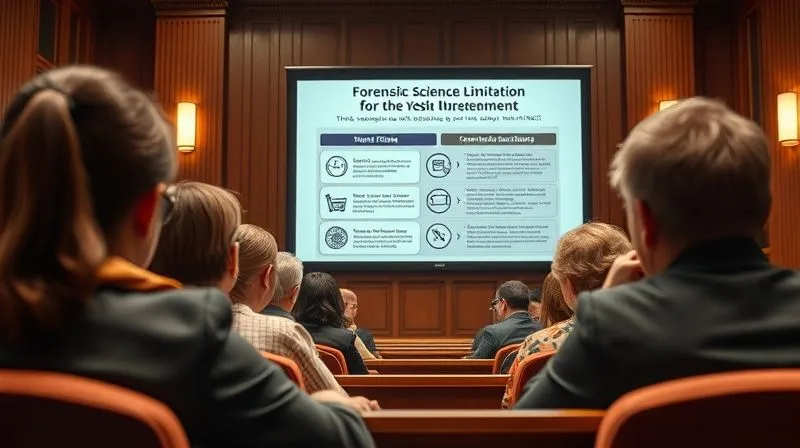
Navigating Ethical Considerations and Professional Responsibility
As defense counsel, our duty to our clients is paramount, but it is also intertwined with our ethical obligations to the justice system.
The Defense Attorney's Duty to Scrutinize
It is not only a strategic imperative but an ethical duty for defense attorneys to thoroughly scrutinize all evidence, especially forensic evidence. This duty stems from the Sixth Amendment right to effective assistance of counsel and the broader pursuit of justice. Failure to challenge questionable evidence can be grounds for ineffective assistance of counsel claims.
The American Bar Association's Model Rules of Professional Conduct emphasize the attorney's duty of competence and diligence, which certainly extends to understanding and challenging scientific evidence. Rule 1.1 on Competence requires a lawyer to provide competent representation, which includes the legal knowledge, skill, thoroughness and preparation reasonably necessary for the representation.
Preventing Wrongful Convictions: A Shared Goal
Ultimately, challenging questionable forensic evidence is a crucial safeguard against wrongful convictions. Organizations like the Innocence Project have highlighted how faulty forensic science is a leading contributing factor to wrongful convictions in DNA exoneration cases. By rigorously challenging such evidence, we not only defend our clients but also contribute to a more just and reliable criminal justice system for everyone.
The pursuit of truth is a collective responsibility. When the scientific evidence is flawed, it imperils not just the accused, but the integrity of the entire system. Our vigilance in this area helps ensure that justice is truly served.
Frequently Asked Questions (FAQ)
Q: Can I challenge forensic evidence if I don't have a lot of money for experts? A: While hiring independent experts can be costly, it's often indispensable. Many jurisdictions provide funds for indigent defense to retain experts, and some experts offer pro bono or reduced-fee services for compelling cases. It's crucial to advocate aggressively for these resources, as the Sixth Amendment guarantees the right to effective assistance of counsel, which includes access to necessary experts.
Q: What's the biggest mistake attorneys make when challenging forensic evidence? A: The biggest mistake I've seen is failing to understand the science deeply enough themselves, or relying solely on the prosecution's expert's report without independent review. You don't need to be a scientist, but you must understand the fundamentals, the methodologies, and the potential pitfalls to effectively guide your own expert and cross-examine the state's.
Q: How do I know if the forensic lab is reputable? A: Reputable labs typically have accreditation from bodies like the American Society of Crime Laboratory Directors/Laboratory Accreditation Board (ASCLD/LAB) or the ANSI National Accreditation Board (ANAB). Inquire about their quality control procedures, proficiency testing results for their analysts, and their adherence to national forensic standards. A lack of accreditation or transparency is a significant red flag.
Q: Can new scientific discoveries invalidate old forensic evidence? A: Absolutely. Forensic science is constantly evolving. What was once considered a reliable method might later be deemed scientifically unsound or have its limitations better understood. New research, particularly from bodies like the National Academy of Sciences, can provide grounds for post-conviction relief or for challenging historical evidence in new trials.
Q: Is it always necessary to hire an independent expert? A: In my firm belief, yes, almost always in serious felony cases involving complex forensic evidence. The prosecution has the resources of the state; the defense needs its own independent scientific voice to ensure a fair fight. Even if you don't call your expert to testify, their insights are invaluable for preparing cross-examination and understanding the nuances of the evidence.
Key Takeaways and Final Thoughts
- Scrutiny is Non-Negotiable: Never accept forensic evidence at face value, no matter how compelling it appears.
- Chain of Custody is Fundamental: A broken chain can invalidate otherwise strong scientific findings.
- Understand Discipline-Specific Vulnerabilities: Each forensic area has unique weaknesses that can be exploited.
- Independent Experts are Essential: They provide objective review, identify flaws, and offer alternative interpretations.
- Leverage Pre-Trial Motions: Daubert/Frye challenges can prevent unreliable evidence from reaching the jury.
- Integrate into Your Narrative: Forensic challenges must be a consistent, coherent part of your overall defense strategy.
- Educate the Jury: Simplify complex science so jurors can critically evaluate the evidence.
Challenging questionable forensic evidence in a murder trial is a demanding, intricate process that requires a blend of scientific understanding, legal acumen, and unwavering dedication. It is a testament to the adversarial system that even the most seemingly conclusive evidence can and must be subjected to rigorous examination. By embracing these strategies and maintaining a steadfast commitment to justice, we can ensure that the scales of justice remain balanced, protecting the innocent and upholding the integrity of our legal system.
Recommended Reading
- Sports Betting Integrity: 7 Legal Ways to Prevent Match-Fixing
- Contested Divorce Trial: How to Prepare and Win Your Case
- Emergency Medicaid Qualification: 7 Legal Steps for Elderly Clients
- Unvested Stock Options in Divorce: 5 Expert Strategies for Fair Valuation
- Secretarial Survival Guide: Duties After a Company Acquisition

Comments
Leave a comment below. Your email will not be published. Required fields marked with *