



How to Counter Comparative Negligence Defenses in Pedestrian Cases?
For over two decades as a personal injury attorney specializing in pedestrian accidents, I've witnessed firsthand the profound injustice when an injured pedestrian, already suffering, is unfairly blamed for their own harm. It’s a common and often devastating tactic by insurance companies: claiming the pedestrian was partially at fault, thereby reducing or even eliminating their rightful compensation.
This insidious defense, known as comparative negligence, can turn an open-and-shut case of driver fault into a complex legal battle. Victims often feel confused, demoralized, and vulnerable, believing they have no recourse when faced with accusations of jaywalking, distraction, or failure to yield.
But here’s the truth: you are not without options. In this definitive guide, I will share the expert strategies, actionable frameworks, and invaluable insights I’ve honed over years in the courtroom, empowering you to effectively counter comparative negligence defenses and ensure your voice is heard, and your rights protected.
Understanding Comparative Negligence: The Legal Landscape
Before we delve into specific countermeasures, it's crucial to grasp the concept of comparative negligence itself. This legal doctrine assigns fault percentages to each party involved in an accident. If you, as the pedestrian, are found to be 20% at fault, your potential compensation could be reduced by 20%. The specifics, however, vary significantly by state.
Most states follow either a pure comparative negligence rule, where you can recover damages even if you are 99% at fault (though your award will be reduced by your fault percentage), or a modified comparative negligence rule. Modified comparative negligence typically comes in two forms: the 50% bar rule or the 51% bar rule. Under the 50% rule, you cannot recover if you are found 50% or more at fault; under the 51% rule, you cannot recover if you are found 51% or more at fault. Understanding your state's specific rules is the first step in building a robust defense.
Expert Insight: Insurance adjusters and defense attorneys wield comparative negligence as a powerful weapon. Their strategy is often to shift blame, even subtly, to minimize their payout. Recognizing this tactic is your first line of defense.
This legal landscape can feel daunting, but it underscores why a proactive and informed approach is essential. For a deeper dive into state-specific comparative negligence laws, I often recommend resources like Nolo's guide on comparative and contributory negligence.
Immediate Actions Post-Accident: Building Your Foundation
The moments immediately following a pedestrian accident are chaotic and traumatic, but the actions you take can be pivotal in countering future comparative negligence claims. This isn't about legal strategy yet; it's about preserving evidence and protecting your health.
- Seek Immediate Medical Attention: Your health is paramount. Even if you feel fine, internal injuries may not be immediately apparent. A prompt medical evaluation creates an official record of your injuries, linking them directly to the accident. Delaying treatment can be used by the defense to argue your injuries weren't severe or weren't caused by the incident.
- Call the Police and File a Report: A police report is an official, objective account of the accident, documenting key details like location, time, parties involved, and initial observations. It can be crucial in establishing the driver's negligence and refuting claims of your fault.
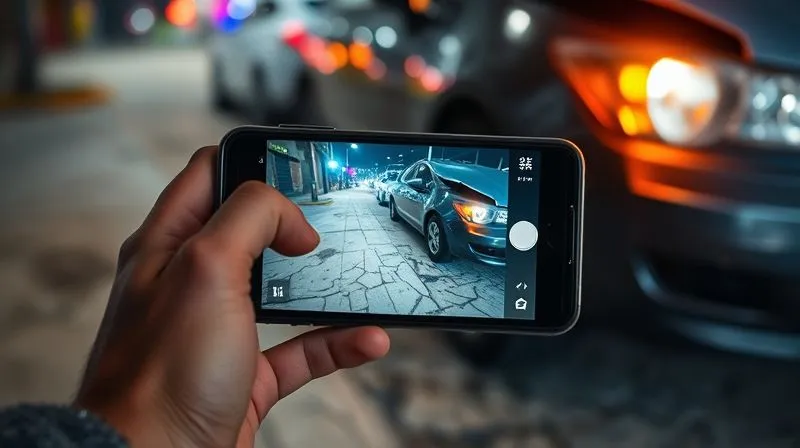
- Gather Evidence at the Scene: If physically able, take photos and videos from multiple angles. Document vehicle damage, road conditions, traffic signals, skid marks, weather, and any visible injuries. Collect contact information from eyewitnesses. This visual and personal testimony can be invaluable.
- Do NOT Admit Fault or Apologize: Even a polite 'I'm sorry' can be twisted by defense attorneys into an admission of guilt. Stick to the facts when speaking with police and avoid speculative statements or apologies.
These initial steps lay the groundwork for a strong case. By meticulously documenting the scene and your injuries, you create an evidentiary trail that makes it harder for the defense to shift blame later on.
The Art of Evidence Collection: Proving the Driver's Sole Negligence
Successfully countering comparative negligence hinges on demonstrating that the driver's actions were the primary, if not sole, cause of the accident. This requires a comprehensive and strategic approach to evidence collection and presentation.
Police Reports and Traffic Citations
While not always conclusive, a police report that attributes fault to the driver or issues a traffic citation (e.g., for speeding, distracted driving, failure to yield) provides strong initial evidence. I always scrutinize these reports for accuracy and completeness, as they often form the basis of early negotiations.
Witness Testimonies: Beyond Eyewitnesses
Eyewitnesses are gold. Their unbiased accounts of the accident can directly refute defense claims. But don't stop there. Consider soliciting statements from:
- Bystanders: Who saw the driver's behavior before the impact?
- Store owners/employees: Who might have security footage or heard the impact?
- First responders: Their observations at the scene can be critical.
Accident Reconstruction Experts: Unveiling the Truth
For complex cases, an accident reconstruction expert is invaluable. These professionals can analyze physical evidence (skid marks, vehicle damage, debris fields), witness statements, and even vehicle black box data to create a scientific, detailed recreation of the accident. Their findings can definitively prove the driver's speed, trajectory, and points of impact, effectively dismantling claims of pedestrian fault.
Surveillance Footage and Dashcam Evidence
In our increasingly surveilled world, video evidence is a game-changer. I always investigate nearby businesses, traffic cameras, and residential security systems for footage. Dashcam footage from the involved vehicle or other vehicles can provide irrefutable proof of what transpired, often showing driver negligence or disproving pedestrian fault.
Medical Records: Documenting Injuries and Causation
While primarily for compensation, comprehensive medical records also indirectly counter comparative negligence. By showing the extent and nature of your injuries, and linking them directly to the accident, it reinforces the severity of the driver's negligent act and the impact it had on your life.
| Evidence Type | Impact on Defense | Countering Negligence |
|---|---|---|
| Police Report | Official account, potential citations, initial fault assessment. | Establishes driver violation, supports pedestrian's claim. |
| Witness Testimony | Unbiased accounts of accident events. | Directly refutes defense narratives, corroborates pedestrian's story. |
| Accident Reconstruction | Scientific recreation of accident dynamics. | Proves driver's speed, reaction time, disproves pedestrian fault with data. |
| Surveillance/Dashcam | Irrefutable visual record of the incident. | Objective proof of driver's actions, pedestrian's conduct. |
Dissecting Defendant's Claims: Common Comparative Negligence Arguments and How to Rebut Them
Defense attorneys have a playbook of common arguments to shift blame onto pedestrians. Anticipating these and preparing a robust rebuttal is key to success.
"The Pedestrian Was Distracted" (Phone, Headphones, etc.)
This is a pervasive defense in the digital age. The argument is that the pedestrian was looking at their phone, listening to music, or otherwise not paying attention. While distraction can be a factor, it rarely absolves the driver entirely.
Rebuttal: I emphasize the driver's paramount duty of care. Drivers operate multi-ton vehicles and have a legal obligation to be constantly vigilant and avoid hazards. Even if a pedestrian is distracted, a diligent driver should still see and react to them. We look for evidence of the driver's own distraction (e.g., phone records, witness statements). Furthermore, we can argue the 'last clear chance' doctrine – the driver had the last opportunity to avoid the collision, regardless of the pedestrian's initial actions.
"The Pedestrian Jaywalked or Crossed Against a Light"
Crossing outside a crosswalk or against a signal is often portrayed as definitive proof of pedestrian negligence. However, this isn't always the case.
Rebuttal: We investigate factors like the driver's excessive speed, failure to yield even when the pedestrian had the right-of-way (or was clearly visible), impaired driving, or other traffic violations. A driver cannot simply hit a jaywalking pedestrian if they had ample time and opportunity to avoid the collision. We also consider visibility conditions, lighting, and line of sight. Was the pedestrian visible enough for a reasonably prudent driver to avoid? Often, the answer is yes.
"The Pedestrian Was Intoxicated or Under the Influence"
If there's any indication of alcohol or drug use by the pedestrian, defense attorneys will seize upon it to argue impaired judgment and fault.
Rebuttal: While intoxication can affect judgment, it does not automatically mean the pedestrian caused the accident. We must establish the independent negligence of the driver. Did the driver fail to maintain a proper lookout? Was the driver speeding? Did they violate any traffic laws? The core question remains: would a sober, diligent driver have been able to avoid the accident, even with an intoxicated pedestrian? The answer is often yes, especially if the driver was also negligent.

Leveraging Legal Doctrines: The 'Last Clear Chance' and 'Sudden Emergency'
Beyond direct evidence, specific legal doctrines can be powerful tools to either shift blame back to the driver or neutralize their defenses.
The 'Last Clear Chance' Doctrine
This doctrine is a potent counter-argument to comparative negligence. It states that even if the pedestrian was initially negligent (e.g., jaywalking), if the driver had the last clear chance to avoid the accident but failed to do so, the driver is held entirely or primarily responsible. This applies when the driver saw, or should have seen, the pedestrian in a position of peril and had sufficient time and opportunity to react but didn't.
To prove this, we rely heavily on accident reconstruction, witness testimony about driver behavior (e.g., no braking, swerving), and expert analysis of reaction times and stopping distances. It's about demonstrating that despite any initial pedestrian error, the ultimate responsibility for the collision lay with the driver's final failure to act.
Challenging the 'Sudden Emergency' Defense
Conversely, drivers sometimes invoke the 'sudden emergency' doctrine, claiming they were faced with an unforeseeable, unexpected situation that forced them to react in a way that led to the accident. This is often used to excuse rapid, uncontrolled maneuvers.
Rebuttal: My approach is to challenge whether the emergency was truly 'sudden' and 'unforeseeable.' Was the driver paying attention? Could they have seen the situation developing? Was their reaction reasonable given the circumstances? Often, what a driver claims was a 'sudden emergency' was actually a situation they should have anticipated and avoided if they were driving attentively and responsibly. We scrutinize whether the driver's own negligence created or contributed to the 'emergency' in the first place.
Case Study: The Case of Maria and the Distracted Driver
Maria was crossing a street mid-block, a common pedestrian behavior, but arguably a form of initial negligence. A driver, Mr. Smith, struck her. The defense immediately claimed 100% comparative negligence due to jaywalking. However, my team discovered surveillance footage from a nearby cafe showing Mr. Smith looking down at his phone for several seconds just before the impact. Our accident reconstruction expert demonstrated that even with Maria crossing mid-block, Mr. Smith had more than enough time and distance to see her and brake safely had he been attentive. By applying the 'last clear chance' doctrine, arguing Mr. Smith's distraction was the direct cause, and leveraging the expert's report, we successfully countered the comparative negligence defense. Maria received 90% of her damages, a significant victory given the initial fault claim against her.
The Role of Expert Witnesses: Bolstering Your Case
In the intricate dance of personal injury litigation, expert witnesses are not just helpful; they are often indispensable, especially when battling comparative negligence claims. Their specialized knowledge can transform ambiguous facts into undeniable truths, lending immense credibility to your narrative.
- Accident Reconstructionists: As discussed, these experts can scientifically recreate the accident, detailing vehicle speeds, impact points, and reaction times. Their findings can definitively prove a driver's negligence or disprove a pedestrian's alleged fault.
- Medical Experts: While primarily focused on injury causation and prognosis, a medical expert can also testify about the immediate impact of the collision, further underscoring the driver's responsibility for the harm caused.
- Traffic Engineers/Human Factors Experts: These professionals can analyze road design, visibility, lighting conditions, and human perception/reaction. They can testify whether a pedestrian was reasonably visible or if the road design contributed to the driver's failure to see the pedestrian, thereby shifting blame away from the pedestrian.
Expert Insight: An expert witness doesn't just present data; they translate complex technical information into understandable testimony for a jury. Their objective, scientific analysis often carries more weight than conflicting eyewitness accounts.
When selecting experts, I prioritize not only their credentials but also their ability to communicate complex information clearly and persuasively. Their testimony can be the lynchpin that secures a favorable outcome. For more on the impact of expert testimony in personal injury cases, consider reviewing articles on legal strategy from reputable sources such as the American Bar Association's resources on expert witnesses.
Negotiation and Litigation Strategies: Advocating for Full Compensation
Once the evidence is meticulously gathered and analyzed, the next phase involves aggressive advocacy, whether through negotiation or, if necessary, litigation. My goal is always to maximize your compensation by dismantling any comparative negligence claims.
Preparing for Deposition and Interrogatories
These formal legal processes are where the defense will attempt to lock you into statements that support their comparative negligence claims. I meticulously prepare my clients, reviewing potential questions about their actions, distractions, and perceptions before, during, and after the accident. The key is to be truthful, consistent, and avoid speculation.
Mediation and Settlement Conferences
These are opportunities to resolve the case outside of court. With compelling evidence and expert reports, we can present a strong argument against comparative negligence, forcing the defense to acknowledge their client's greater fault. A detailed presentation of the evidence often leads to a more favorable settlement offer.
Trial Preparation: Presenting a Cohesive Narrative
If a fair settlement isn't reached, we prepare for trial. This involves developing a cohesive narrative that emphasizes the driver's negligence, the pedestrian's minimal or non-existent fault, and the devastating impact of the injuries. Visual aids, expert testimony, and compelling witness accounts are all crucial in persuading a jury to side with the pedestrian.
| Strategy Phase | Key Action | Goal |
|---|---|---|
| Pre-Litigation | Thorough Evidence Gathering | Build irrefutable case against driver, pre-empt defense claims. |
| Discovery | Deposition/Interrogatory Prep | Prevent self-incrimination, maintain consistent narrative. |
| Negotiation | Aggressive Advocacy in Mediation | Force defense to acknowledge liability, secure fair settlement. |
| Trial | Compelling Narrative & Experts | Persuade jury of driver's sole fault, maximize compensation. |

Frequently Asked Questions (FAQ)
What if I was partially at fault, but the driver was mostly to blame? Even if you bear some responsibility, you may still be entitled to significant compensation, depending on your state's comparative negligence laws. If your state follows a pure comparative negligence rule, you can recover damages no matter your percentage of fault. In modified comparative negligence states (50% or 51% bar), you can still recover if your fault is below the stated threshold. The key is to prove the driver's greater negligence to maximize your recovery.
Can I still get compensation if I was jaywalking? Yes, absolutely. Jaywalking, while potentially a violation, does not automatically absolve the driver of responsibility. Drivers still have a duty to operate their vehicles safely and avoid hitting pedestrians, regardless of where they are crossing. If the driver was speeding, distracted, or otherwise negligent, and had a 'last clear chance' to avoid the accident, you may still have a strong claim.
How important is a police report in countering comparative negligence? The police report is highly important. It's often the first official documentation of the accident and can contain critical information, including witness statements, initial observations, and even traffic citations issued to the driver. While not always conclusive, it provides strong evidence that can be used to support your claim and challenge defense arguments.
What's the biggest mistake a pedestrian can make after an accident that could hurt their case? The biggest mistake is admitting fault or apologizing at the scene. Any statement like 'I'm so sorry, I wasn't looking' can be used by the defense to claim you were negligent. Another critical mistake is delaying medical treatment, as this can allow the defense to argue your injuries weren't severe or weren't caused by the accident.
How long do I have to file a claim after a pedestrian accident? The timeframe for filing a personal injury claim, known as the statute of limitations, varies significantly by state. It can range from one to six years, but typically it is two to three years from the date of the accident. Missing this deadline can permanently bar you from seeking compensation. It's crucial to consult with an attorney as soon as possible to understand the specific deadline applicable to your case.
Key Takeaways and Final Thoughts
Navigating the aftermath of a pedestrian accident, especially when facing comparative negligence defenses, is a challenging journey. However, with the right knowledge and expert legal guidance, you can effectively protect your rights and secure the compensation you deserve.
- Act Immediately: Your actions post-accident are critical for preserving evidence.
- Document Everything: From medical records to photos, every piece of evidence matters.
- Anticipate Defenses: Know the common arguments and prepare strong rebuttals.
- Leverage Legal Tools: Doctrines like 'last clear chance' can be powerful allies.
- Expert Witnesses are Key: Their objective analysis can swing a case in your favor.
- Seek Experienced Counsel: An attorney specializing in pedestrian accidents is your strongest advocate.
Remember, the burden of proof often falls on the defense to establish your comparative negligence. By being proactive, thoroughly prepared, and backed by a seasoned legal team, you can confidently challenge these claims and ensure justice prevails. Don't let unfair blame diminish your recovery; fight for what is rightfully yours.

Recommended Reading
- Contesting Guardianship: How to Protect Your Elderly Parent
- 5 Steps: Resolve Title Issues Threatening Your Property Acquisition
- Moved Interstate? How to Enforce Visitation Rights Effectively
- Online Scam Victim? What To Do After Falling For It (2024 Guide)
- Unlock Your Rights: How to Dispute a Regulatory Body Compliance Order Successfully




Comments
Leave a comment below. Your email will not be published. Required fields marked with *