



How to Determine Jurisdiction for International Disputes?
For over two decades in the intricate world of international law, I've witnessed firsthand the profound impact—both positive and catastrophic—that jurisdictional decisions have on cross-border disputes. Many businesses, even sophisticated ones, often overlook this critical first step, assuming that litigation can simply commence wherever they choose. This oversight, I can tell you, is a common and costly mistake, leading to wasted resources, protracted legal battles, and sometimes, unenforceable judgments.
The problem is multifaceted: the globalized economy means businesses routinely engage with entities across different legal systems, each with its own rules for asserting authority. Without a clear understanding of where and how a dispute can legitimately be heard, companies face immense uncertainty, the risk of parallel proceedings, and the potential for a judgment to be rendered utterly useless when it comes to enforcement.
In this definitive guide, I will share my expert insights and provide you with a robust, actionable five-step framework to determine jurisdiction for international disputes. We’ll delve into the foundational principles of private international law, explore the strategic importance of contractual clauses, navigate the complexities of international conventions, and examine the practical considerations that can make or break your legal strategy. My goal is to equip you not just with information, but with the confidence to make informed, strategic decisions that safeguard your interests in the global arena.
The Foundational Challenge: Understanding Private International Law
Before we dive into the steps, it’s crucial to grasp the bedrock upon which all jurisdictional decisions are built: Private International Law, often referred to as Conflict of Laws. This isn't about disputes between states (that’s Public International Law); it’s about disputes between private individuals or entities that involve a foreign element. Think of it as the traffic cop of international legal interactions, directing which country's laws apply and which country's courts have the authority to hear a case.
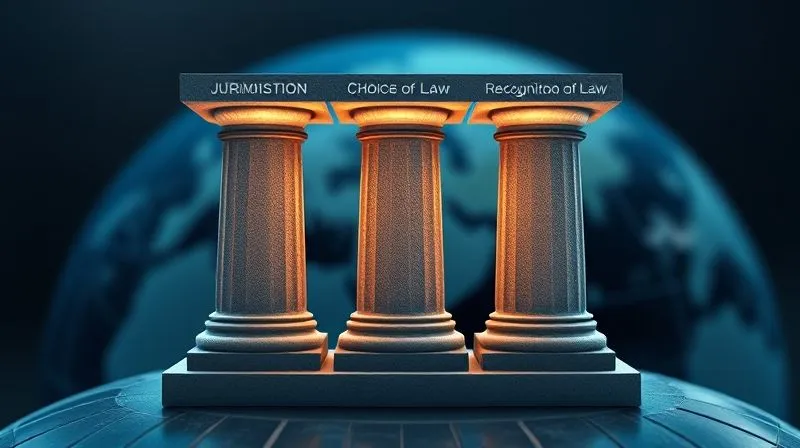
The Three Pillars: Jurisdiction, Choice of Law, and Recognition of Judgments
In my experience, many clients conflate these three distinct but interconnected concepts. Understanding their individual roles is paramount:
- Jurisdiction: This is the fundamental question of whether a particular court or tribunal has the authority to hear a case. It's about the court's power over the parties and the subject matter.
- Choice of Law: Once jurisdiction is established, this determines which country's substantive laws (e.g., contract law, tort law) will be applied to resolve the dispute. A court might have jurisdiction but apply the law of a different country.
- Recognition and Enforcement of Judgments: This refers to the process by which a judgment rendered in one country's court is accepted and enforced by the courts of another country. A judgment is only as good as its enforceability.
"The interplay between jurisdiction, choice of law, and judgment enforcement is the true chess game of international litigation. A win in one arena can be meaningless without a strategic understanding of the others."
Ignoring any one of these pillars can lead to a hollow victory. A judgment obtained in a forum that lacks legitimate jurisdiction, or one that applies an unfavorable law, may prove impossible to enforce where it truly matters. This holistic view is the first step towards a robust international dispute strategy.
Step 1: Contractual Clarity – The Power of Forum Selection Clauses
The easiest and most effective way to determine jurisdiction for international disputes is through a well-drafted contract. I've often said that a good contract is the best insurance policy against future litigation. A forum selection clause (also known as a choice of court clause or jurisdiction clause) specifies in advance which court system will hear any disputes arising from the contract.
Drafting Effective Clauses: What to Include
A vague or poorly worded clause is often worse than no clause at all. I've seen countless disputes arise over ambiguous language. Here's what an effective forum selection clause should typically include:
- Exclusive or Non-Exclusive: Clearly state whether the chosen forum is the *only* place a dispute can be heard (exclusive) or if other courts may also have jurisdiction (non-exclusive). Always aim for exclusive to prevent parallel proceedings.
- Specific Court/Jurisdiction: Name the specific court and country (e.g., "the courts of London, England" not just "English courts"). For federal systems, specify the state/province and federal/state court.
- Governing Law: While distinct from jurisdiction, it's best practice to also specify the governing law for the contract within the same agreement, to avoid a court applying its own law unnecessarily.
- Waiver of Objections: Include language where parties waive any objection to personal jurisdiction or inconvenient forum (forum non conveniens) in the designated court.
- Enforceability: Ensure the chosen forum is one whose judgments are likely to be recognized and enforced in other jurisdictions where the counterparty has assets.
For example, a robust clause might read: "The parties agree that the courts of [City, Country] shall have exclusive jurisdiction to settle any dispute or claim arising out of or in connection with this contract, including its formation, validity, and termination. Each party irrevocably submits to the exclusive jurisdiction of such courts." This level of precision is critical. For further reading on the nuances of these clauses, I recommend consulting resources like the American Bar Association's insights on international contract drafting: American Bar Association - International Law Section.
Step 2: Absence of Agreement – Navigating Default Jurisdictional Rules
What happens when there's no forum selection clause, or it's deemed invalid? This is where the complexity truly escalates. Courts will then resort to their own domestic rules of private international law to determine if they have jurisdiction. These rules vary significantly from country to country, making the landscape treacherous.
Key Principles: Territoriality, Nationality, and Domicile
While specific rules differ, several common principles guide jurisdictional assertions globally:
- Territoriality (Lex Fori): The most common basis. A court asserts jurisdiction if the defendant is located, served with process, or has assets within its territory, or if the cause of action (e.g., the breach of contract, the tortious act) occurred within its borders.
- Nationality: Some countries (e.g., civil law systems) may assert jurisdiction over their own nationals, regardless of where they are located.
- Domicile/Residence: A court may claim jurisdiction over individuals domiciled or habitually resident in its territory, or corporations incorporated or having their principal place of business there.
- Submission/Appearance: A defendant can voluntarily submit to a court’s jurisdiction, or inadvertently do so by appearing in court without properly challenging jurisdiction.
It's vital to remember that a court's assertion of jurisdiction under its own rules doesn't automatically mean other countries will recognize that assertion. This is a common pitfall. The concept of lex fori – the law of the forum – dictates that the court will apply its own procedural rules to determine jurisdiction, even if it later applies another country's substantive law.
| Jurisdictional Basis | Description | Commonality | Enforceability Risk |
|---|---|---|---|
| Defendant's Presence/Service | Defendant is physically located or properly served within the forum state. | High | Low (if properly served) |
| Cause of Action in Forum | The events giving rise to the dispute occurred within the forum state. | Medium-High | Medium |
| Defendant's Domicile/Residence | Defendant is a resident or incorporated in the forum state. | High | Low |
| Assets in Forum | Defendant has property within the forum state (often limited to the value of assets). | Medium | Medium |
| Contractual Agreement | Parties explicitly agreed to jurisdiction in the forum state (forum selection clause). | High | Very Low (if valid) |
Step 3: The Role of International Conventions and Treaties
In an effort to bring some order to the chaotic world of default jurisdictional rules, several international conventions and treaties have been developed. These agreements aim to harmonize jurisdictional rules among signatory states, making it easier to predict outcomes and enforce judgments. As an international law specialist, I cannot overstate their importance; they often provide a clearer path than navigating disparate national laws.
The Hague Conventions: A Harmonizing Force
The Hague Conference on Private International Law (HCCH) has been instrumental in developing multilateral treaties that address jurisdiction and enforcement. Key among these for our discussion are:
- The 2005 Hague Choice of Court Agreements Convention: This is a game-changer. It ensures that exclusive choice of court agreements between parties in civil or commercial matters are respected by courts of signatory states, and that judgments resulting from such agreements are recognized and enforced. If your contract has an exclusive forum selection clause designating a court in a signatory state, this convention provides a powerful tool for predictability and enforcement.
- The 1965 Hague Service Convention: Facilitates the service of judicial and extrajudicial documents abroad, crucial for ensuring due process when initiating international litigation. Proper service is a prerequisite for a court to assert jurisdiction.
- The 1970 Hague Evidence Convention: Streamlines the process for obtaining evidence in civil or commercial matters from abroad.
"International conventions, particularly the Hague Conventions, offer islands of certainty in the vast ocean of global legal systems. Leveraging them is not just smart; it's often essential for successful international dispute resolution."
Beyond the Hague Conventions, regional instruments like the Brussels I Regulation (Recast) in the European Union provide a comprehensive framework for jurisdiction and the recognition and enforcement of judgments among EU member states. If your dispute involves parties within the EU, understanding this regulation is non-negotiable. Always check if the countries involved in your dispute are signatories to relevant conventions; it can significantly simplify your jurisdictional analysis.
Step 4: Assessing Personal Jurisdiction – The 'Minimum Contacts' Standard
In many common law jurisdictions, particularly the United States, the concept of personal jurisdiction is central to determining a court's authority over a defendant. This stems from due process requirements, ensuring that it's fair and reasonable for a court to exercise power over a particular party. The seminal U.S. Supreme Court case, International Shoe Co. v. Washington, established the "minimum contacts" standard: a defendant must have certain minimum contacts with the forum state such that the maintenance of the suit does not offend "traditional notions of fair play and substantial justice."
Specific vs. General Jurisdiction: A Critical Distinction
The minimum contacts analysis typically breaks down into two types of personal jurisdiction:
- Specific Jurisdiction: This arises when the defendant's contacts with the forum state are directly related to the specific cause of action. For example, if a foreign company enters into a contract to sell goods to a buyer in a particular state, and a dispute arises from that contract, the courts of that state may have specific jurisdiction over the foreign company. The key is that the defendant purposefully availed itself of the privilege of conducting activities within the forum state, thereby invoking the benefits and protections of its laws.
- General Jurisdiction: This is a much higher bar. A court has general jurisdiction over a defendant if the defendant's affiliations with the forum state are so continuous and systematic as to render it essentially at home in the forum state. For corporations, this typically means their place of incorporation or their principal place of business. If general jurisdiction exists, the defendant can be sued in that state for any claim, regardless of where the cause of action arose.
Case Study: How Tech Innovators Inc. Faced a Jurisdictional Challenge
Tech Innovators Inc., a software development firm based in Delaware, entered into an online services agreement with Global Solutions GmbH, a German company, to develop a new AI platform. The contract was silent on jurisdiction. When Global Solutions failed to deliver on key milestones, Tech Innovators wanted to sue in Delaware. Global Solutions argued that Delaware courts lacked personal jurisdiction, citing no physical presence, bank accounts, or employees in Delaware. Tech Innovators countered that Global Solutions had actively marketed its services to U.S. companies, specifically targeted Tech Innovators through online outreach, and engaged in extensive virtual meetings and data exchange with Delaware-based personnel. The court ultimately found specific jurisdiction, ruling that Global Solutions had purposefully availed itself of the benefits of doing business with a Delaware entity, and the dispute arose directly from those contacts. This resulted in Tech Innovators being able to pursue its claim efficiently in its home jurisdiction.
Step 5: Practical Considerations and Strategic Maneuvers
Beyond the legal frameworks, practical realities heavily influence the choice of forum. I've seen clients win on legal arguments but lose significantly due to ignoring the practicalities.
Lis Pendens, Anti-Suit Injunctions, and Parallel Proceedings
One of the most vexing issues in international disputes is the risk of parallel proceedings, where the same dispute is litigated in multiple jurisdictions simultaneously. This is inefficient, costly, and can lead to conflicting judgments. Concepts like lis pendens (a pending lawsuit) allow courts to stay or dismiss cases if similar litigation is already underway elsewhere. More aggressively, an anti-suit injunction is a court order prohibiting a party from initiating or continuing litigation in another jurisdiction. Obtaining one is a complex and often contentious strategic maneuver, usually reserved for situations where a clear contractual forum selection clause is being violated.
The Cost-Benefit Analysis: Where to Litigate?
When you have multiple potential forums, a strategic decision is required. Consider:
- Enforceability: Where are the defendant's assets located? A judgment is only valuable if it can be enforced against those assets.
- Costs: Litigation costs (attorney fees, court fees, expert witnesses) vary wildly by jurisdiction. Exchange rates and travel expenses also play a role.
- Speed: Some judicial systems are notoriously slow, others relatively swift.
- Familiarity: Litigating in a system you and your counsel are familiar with often provides an advantage.
- Discovery Rules: Common law systems generally have broader discovery (evidence gathering) than civil law systems.
- Availability of Remedies: What types of damages or injunctive relief are available in each jurisdiction?
- Reputational Impact: The public perception of litigating in certain jurisdictions.
"Determining jurisdiction isn't just a legal exercise; it's a strategic battlefield. The forum you choose can significantly impact the outcome, cost, and ultimate enforceability of your judgment. Always consult with local counsel early on."
This comprehensive analysis often requires collaboration with local legal experts in potential jurisdictions. For deeper insights into international litigation strategy, resources from organizations like the International Chamber of Commerce (ICC) are invaluable: ICC Dispute Resolution Services.
| Consideration | Key Question | Impact |
|---|---|---|
| Enforceability of Judgment | Where are the defendant's assets? | Directly affects ability to collect on a judgment. |
| Legal Costs & Fees | What are the estimated legal expenses in each forum? | Significant financial implications; budget planning. |
| Judicial Efficiency | How long does litigation typically take in this jurisdiction? | Affects business continuity and resource allocation. |
| Discovery & Evidence Rules | How easy/difficult is it to obtain evidence? | Can influence the strength of your case. |
| Availability of Remedies | What types of relief (damages, injunctions) are available? | Determines the potential positive outcome of the dispute. |
| Local Counsel Expertise | Can I find competent local counsel? | Crucial for navigating local laws and procedures successfully. |
Enforcing Foreign Judgments: The Ultimate Test of Jurisdiction
Ultimately, the power to determine jurisdiction for international disputes is only as meaningful as the ability to enforce the resulting judgment. A judgment from one country's court is not automatically enforceable in another. The enforceability depends on a complex web of domestic laws, bilateral treaties, and multilateral conventions.
Reciprocity and Public Policy Exceptions
Most countries require some form of reciprocity – meaning they will only enforce foreign judgments from countries that would similarly enforce their judgments. Additionally, judgments can often be challenged on grounds of public policy (e.g., if the foreign judgment violates fundamental principles of the enforcing state's justice system) or a lack of due process in the original proceedings. This is why proper service of process and ensuring the original court had legitimate jurisdiction are so critical; these issues are often re-examined during enforcement proceedings.
This final stage underscores why the initial jurisdictional analysis is so vital. A strategic choice of forum, guided by the principles we've discussed, significantly increases the likelihood that a favorable judgment will be recognized and enforced where it truly matters – against the defendant's assets. Without this foresight, you might end up with a beautifully crafted judgment that is, unfortunately, just a piece of paper.

Frequently Asked Questions (FAQ)
What if parties have conflicting forum selection clauses in different agreements? This is a nightmare scenario I've encountered. Courts will first try to interpret the clauses to see if one takes precedence (e.g., a specific agreement over a general one). If irreconcilable, the court where the action is first filed might decide based on its own jurisdictional rules, or a court might issue an anti-suit injunction. The best advice is to avoid this through careful contract review.
How does Brexit impact jurisdiction for EU-UK disputes? Brexit significantly complicated this. The UK is no longer bound by the Brussels I Regulation (Recast). While the UK has acceded to the 2005 Hague Choice of Court Agreements Convention, for non-exclusive clauses or in the absence of a clause, determining jurisdiction can be less predictable. Parties now often rely on the Hague Convention or national rules, making careful drafting more critical than ever.
Can an online contract or website terms of service establish jurisdiction? Yes, but it's highly scrutinized. The key is whether the defendant's online activity demonstrates "purposeful availment" of the forum state's market. Passive websites typically don't suffice, but interactive sites allowing transactions or targeted marketing to a specific jurisdiction can. The terms of service must be clearly presented and assented to by the user (e.g., clickwrap agreements).
What's the difference between choice of law and choice of forum? Choice of law determines WHICH country's laws will be applied to resolve the substance of the dispute (e.g., contract validity, liability for damages). Choice of forum (jurisdiction) determines WHICH country's courts will hear the dispute. They are often, but not always, the same. A court in Country A might have jurisdiction but apply the laws of Country B.
When should I seek an anti-suit injunction? An anti-suit injunction is a powerful and often aggressive tool. I typically advise considering it when a clear, exclusive forum selection clause is being disregarded by a party initiating proceedings elsewhere, or when there's a strong risk of vexatious, oppressive, or unconscionable parallel proceedings that threaten the integrity of a chosen forum. It requires strong legal grounds and careful strategic planning, often involving significant legal costs.
Key Takeaways and Final Thoughts
- Proactive Planning is Paramount: The most effective way to manage international jurisdictional challenges is to address them proactively through clear, exclusive forum selection clauses in your contracts.
- Understand the Three Pillars: Always distinguish between jurisdiction, choice of law, and recognition/enforcement of judgments. They are distinct but interdependent.
- Leverage International Conventions: Utilize treaties like the Hague Conventions to bring predictability and enforceability to your cross-border agreements.
- Assess Personal Jurisdiction Carefully: If no agreement exists, understand the 'minimum contacts' standard and the difference between specific and general jurisdiction, especially for common law systems.
- Conduct a Thorough Strategic Analysis: Beyond legal rules, weigh practical factors like costs, enforceability, and judicial efficiency when choosing a forum.
Navigating the complexities of international jurisdiction can seem daunting, but by adopting a structured, informed approach, you can transform potential pitfalls into strategic advantages. Remember, the global legal landscape is dynamic, and staying informed and consulting with experienced international legal counsel early on are your best defenses. Your ability to confidently determine jurisdiction for international disputes will not only protect your interests but also empower your global ventures.
Recommended Reading
- Creditor Ignores Valid Billing Claim? 7 Steps to Assert Your Rights
- 5 Expert Steps: Navigating IRS Payroll Tax Audits to Slash Penalties
- How to Challenge Unconscionable Clauses in Digital Consumer Contracts: 5 Steps
- 5 Steps to Reverse an Agency Decision: Procedural Flaw Checklist
- Founder's Felony? 7 Steps to Shield Your Business & Restore Trust




Comments
Leave a comment below. Your email will not be published. Required fields marked with *