


How to enforce ICJ judgments against non-compliant states?
For over two decades in the intricate world of international law, I've witnessed firsthand the profound aspirations and equally profound frustrations that accompany the rulings of the International Court of Justice (ICJ). There's a palpable sense of triumph when the 'World Court' renders a judgment, a beacon of justice illuminating complex disputes between sovereign states.
However, the real challenge, and frankly, the source of immense consternation for practitioners, academics, and victims alike, often begins precisely at that point: what happens when a state simply refuses to comply? This isn't just a theoretical dilemma; it's a recurring, thorny problem that undermines the very fabric of the international legal order and chips away at public trust in global institutions.
In this definitive guide, I will pull back the curtain on the complex and often disheartening realities of international enforcement. We'll explore the established legal frameworks, dissect the diplomatic and political levers available, and examine the innovative strategies employed to compel adherence. My aim is to provide not just an overview, but a deeply practical understanding of how to enforce ICJ judgments against non-compliant states, offering actionable insights derived from years of navigating these challenging waters.
The ICJ's Authority and Its Inherent Limitation
The International Court of Justice, established in 1945 by the UN Charter, stands as the principal judicial organ of the United Nations. Its judgments are legally binding on the parties to a case, as explicitly stated in Article 59 and 60 of its Statute. When states voluntarily submit to the Court's jurisdiction, they implicitly agree to abide by its decisions.
Yet, the ICJ, unlike domestic courts, lacks its own enforcement arm. It cannot dispatch bailiffs or deploy military forces to compel compliance. This fundamental limitation stems from the principle of state sovereignty, where nations are generally reluctant to cede coercive power to an external authority, even one they have recognized.
“The ICJ's strength lies in its moral authority and the legal obligation it creates, not in its physical capacity to enforce. This distinction is crucial for understanding the enforcement challenge.”
This inherent tension between legal obligation and the absence of direct enforcement mechanisms forms the crux of the problem. It transforms the act of enforcing ICJ judgments against non-compliant states into a complex interplay of law, diplomacy, and political will.
Understanding the Enforcement Framework: UN Charter Article 94
The primary legal pathway for enforcing an ICJ judgment against a recalcitrant state is enshrined in Article 94, paragraph 2, of the United Nations Charter. This article states: "If any party to a case fails to perform the obligations incumbent upon it under a judgment rendered by the Court, the other party may have recourse to the Security Council, which may, if it deems necessary, make recommendations or decide upon measures to be taken to give effect to the judgment."
This provision is the cornerstone of the ICJ's enforcement mechanism. It empowers the aggrieved state to bring the matter before the UN Security Council, a body with significant coercive powers under Chapter VII of the Charter. The Security Council can then consider various actions, ranging from diplomatic pressure to economic sanctions, or even military intervention, though the latter is an extreme rarity in this context.
However, the phrase "if it deems necessary" highlights the discretionary nature of the Security Council's power. Its decisions are fundamentally political, influenced by the geopolitical interests of its permanent members and the broader international context, rather than being a purely automatic legal response to non-compliance. This political dimension often complicates efforts to enforce ICJ judgments against non-compliant states.
The Role of the UN Security Council: A Double-Edged Sword
The Security Council's involvement in ICJ enforcement is arguably the most potent, yet also the most problematic, avenue. On one hand, it possesses the legal authority and capacity to impose sanctions or other coercive measures. Historically, there have been instances where the Security Council has acted, such as in the Lockerbie case (Libya), where it imposed sanctions to compel compliance with an ICJ order.
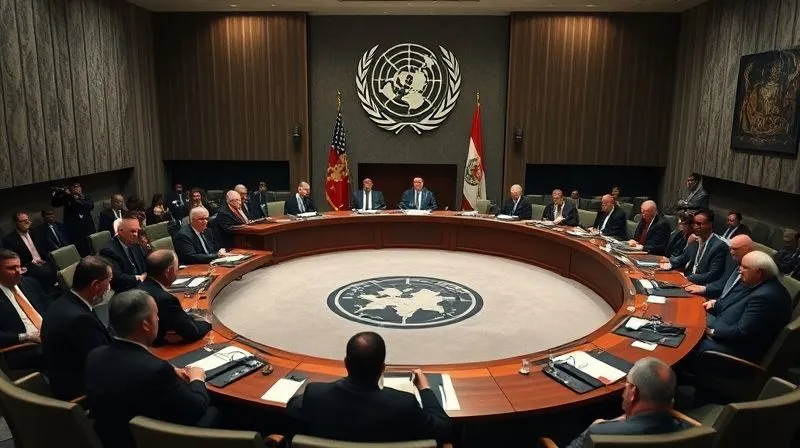
On the other hand, the infamous veto power held by the five permanent members (China, France, Russia, the United Kingdom, and the United States) can effectively paralyze any enforcement action. If a non-compliant state enjoys the political protection of a P5 member, or if its actions align with a P5 member's strategic interests, a resolution to enforce an ICJ judgment can be blocked. This was starkly evident in the Nicaragua v. United States case in the 1980s, where the U.S. ignored the ICJ's judgment, and subsequent attempts by Nicaragua to enforce it through the Security Council were repeatedly vetoed by the United States.
This political reality transforms what should be a straightforward legal obligation into a high-stakes diplomatic chess match. For states seeking to enforce ICJ judgments against non-compliant states, understanding the geopolitical landscape and the interests of the P5 is as critical as understanding the legal arguments.
Diplomatic and Political Pressure: Beyond Legal Mandates
When formal Security Council action is stalled or impossible, states must often resort to a suite of diplomatic and political pressures. These mechanisms, while less direct, can be highly effective over time, leveraging a state's reputation, relationships, and standing in the international community. I've seen how sustained pressure can gradually erode a non-compliant state's resolve.
- Bilateral Engagement: The aggrieved state can engage directly with the non-compliant state, often with the support of friendly third-party nations, to negotiate compliance. This can involve high-level ministerial meetings or discreet back-channel diplomacy.
- Multilateral Condemnation: Raising the issue in other international forums, such as the UN General Assembly, the Human Rights Council, or regional organizations, can generate widespread condemnation. This 'naming and shaming' strategy can damage a state's international standing and make it difficult to pursue other foreign policy objectives.
- Withdrawal of Privileges: Other states or international bodies might withdraw certain privileges or benefits, such as denying visas to officials, restricting trade access, or reducing development aid, as a form of leverage.
- Public Diplomacy: Campaigns targeting the non-compliant state's domestic and international public opinion can be powerful. Highlighting the injustice and the breach of international law can create internal pressure on the government to comply.
Case Study: The Maritime Border Dispute
Consider the fictional case of 'Atlantis' and 'Pacificus,' two island nations involved in a maritime border dispute. The ICJ ruled decisively in favor of Atlantis, but Pacificus, relying on historical claims and rich fishing grounds, refused to withdraw its vessels from the disputed zone. Formal UNSC action was unlikely due to a P5 member's economic interests in Pacificus.
Atlantis, advised by seasoned international lawyers, initiated a multi-pronged diplomatic offensive. They secured resolutions of support from their regional bloc, the 'Oceanic Alliance,' condemning Pacificus's non-compliance. Atlantis also launched a public awareness campaign, highlighting the environmental damage caused by Pacificus's continued fishing operations in the disputed waters, which resonated with international environmental NGOs and sympathetic media. Simultaneously, a key trading partner of Pacificus quietly began delaying negotiations on a crucial trade agreement, citing 'concerns over international legal adherence.' After 18 months of sustained pressure on multiple fronts, Pacificus, facing growing isolation and economic uncertainty, agreed to enter negotiations to implement the ICJ's judgment, albeit with some face-saving concessions on transitional fishing rights.
This case illustrates that patience, persistence, and a diversified strategy are often essential when diplomatic avenues are the primary means to enforce ICJ judgments against non-compliant states.
Countermeasures and State Responsibility: A Complex Path
Beyond diplomatic pressure, international law allows for states to take 'countermeasures' against another state that has breached an international obligation. Countermeasures are essentially acts that would normally be unlawful but are rendered lawful because they are taken in response to a prior internationally wrongful act by another state, with the aim of inducing that state to comply with its obligations.
The concept of countermeasures is codified in the International Law Commission's Articles on State Responsibility for Internationally Wrongful Acts. For a countermeasure to be lawful, it must meet several strict conditions:
- Prior Wrongful Act: There must be a prior internationally wrongful act by the target state (e.g., non-compliance with an ICJ judgment).
- Injured State: Only the injured state (the party in whose favor the ICJ ruled) can take countermeasures.
- Aim to Induce Compliance: The sole purpose of the countermeasure must be to induce the responsible state to comply with its international obligations, not to punish.
- Proportionality: The countermeasure must be proportionate to the injury suffered, considering the gravity of the internationally wrongful act and the rights in question.
- Reversibility: Countermeasures should, as far as possible, be reversible and not affect the performance of obligations under peremptory norms of international law (jus cogens).
- Prior Notification: The injured state must notify the responsible state of its intention to take countermeasures and offer to negotiate, unless urgent measures are necessary.
Taking countermeasures is a risky strategy. Misjudging proportionality or failing to meet other conditions can lead to the countermeasure itself being deemed an internationally wrongful act. It requires careful legal analysis and strategic foresight to avoid escalation or further legal disputes. I've often advised clients that while a powerful tool, it should be wielded with extreme caution and always as a last resort in the toolkit to enforce ICJ judgments against non-compliant states.
Leveraging Regional Organizations and Bilateral Agreements
In the complex landscape of international law, regional organizations and bilateral agreements can offer additional layers of enforcement, often acting as a bridge between purely national efforts and global UN mechanisms. These bodies often have unique leverage over their member states.
For instance, within the European Union, the Court of Justice of the European Union (CJEU) ensures compliance with EU law, and member states are generally highly compliant with its rulings, backed by the integrated legal and economic framework of the Union. While the ICJ is distinct, regional political bodies like the African Union (AU), the Organization of American States (OAS), or the Association of Southeast Asian Nations (ASEAN) can exert considerable peer pressure and diplomatic influence on their members.
Many bilateral treaties also contain specific dispute resolution clauses, sometimes even referencing the ICJ. A state's non-compliance with an ICJ judgment could trigger other provisions in these agreements, leading to suspension of cooperation or other penalties. These regional and bilateral avenues can be particularly effective when the non-compliant state values its standing and benefits within these specific groupings.
| Regional Body | Enforcement Mechanism | Leverage | ||
|---|---|---|---|---|
| European Union | CJEU judgments are directly binding, with financial penalties for non-compliance. | Integrated legal system, economic interdependence, political unity. | ||
| African Union | Peace and Security Council can impose sanctions, diplomatic pressure. | Peer pressure, collective security, development aid coordination. | ||
| Organization of American States | Inter-American Court of Human Rights, diplomatic resolutions, political sanctions. | Shared democratic values, regional cooperation, US influence. | ||
| ASEAN | Consensus-based diplomatic pressure, reputation damage. | Economic integration, collective security dialogue, 'ASEAN Way' of non-interference. | Less coercive than EU, more diplomatic. | Enforcement of ICJ rulings would be indirect, through political pressure. |
As an expert in this field, I always advise exploring these 'closer-to-home' options. They often provide more agile and less politically fraught pathways to encourage compliance compared to the often-gridlocked UN Security Council. They are vital tools when considering how to enforce ICJ judgments against non-compliant states.
The Power of Public Opinion and International Civil Society
In an increasingly interconnected world, the court of public opinion can be a surprisingly powerful force in compelling state compliance. While not a direct legal enforcement mechanism, sustained public pressure can significantly increase the political cost of non-compliance for a state, both domestically and internationally.
International civil society organizations (CSOs), non-governmental organizations (NGOs), human rights groups, and a free press play a crucial role here. They act as watchdogs, meticulously documenting instances of non-compliance and amplifying calls for adherence to international law. By raising awareness, they can mobilize public support, influence policy-makers in other states, and put pressure on governments to act.
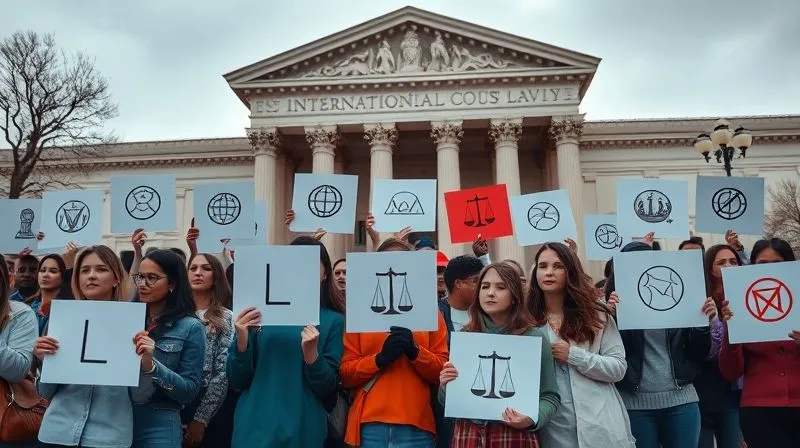
The 'naming and shaming' strategy, especially when backed by credible evidence and compelling narratives, can tarnish a state's reputation, deter foreign investment, and even affect its ability to participate in various international fora. In my experience, no state, regardless of its power, is entirely immune to the long-term corrosive effects of being perceived as an international pariah. This often overlooked avenue can be a critical, albeit slow-burning, component of strategies to enforce ICJ judgments against non-compliant states.
Financial and Economic Sanctions: A Last Resort
When all other avenues have been exhausted, and particularly if the non-compliance poses a threat to international peace and security, financial and economic sanctions may be considered. These are typically imposed by the UN Security Council under Chapter VII of the UN Charter, but can also be unilaterally or multilaterally imposed by individual states or blocs (e.g., the EU, the US).
Sanctions can take various forms:
- Arms Embargoes: Prohibiting the sale or supply of weapons and military equipment.
- Travel Bans: Restricting the movement of key government officials or individuals associated with the non-compliant regime.
- Asset Freezes: Targeting the financial assets of individuals, entities, or the state itself.
- Trade Restrictions: Imposing bans or limitations on imports or exports of certain goods.
- Financial Sanctions: Limiting access to international financial markets and banking systems.
While sanctions can be powerful, they are not without controversy. They often carry significant humanitarian costs, potentially harming the civilian population more than the targeted regime. Moreover, their effectiveness depends heavily on global adherence and the willingness of all major economic players to enforce them. Unilateral sanctions, in particular, can be challenged for their legality under international law if not authorized by the Security Council.
Deciding to impose sanctions is always a grave decision, weighing the objective of compelling compliance against potential unintended consequences. It is a tool of last resort, invoked when the severity of non-compliance warrants such extreme measures in the effort to enforce ICJ judgments against non-compliant states.
Future Prospects: Strengthening the Enforcement Regime
The challenges in enforcing ICJ judgments against non-compliant states are deeply ingrained in the structure of international relations and law. However, this does not mean the situation is static or without hope for improvement. The international community continually debates and seeks ways to strengthen the rule of law globally.
One recurring proposal involves reforms to the UN Security Council, particularly regarding the veto power. Limiting the veto in cases of ICJ enforcement, or requiring a higher threshold for its exercise, could potentially make the Council a more reliable enforcement body. However, such reforms face immense political hurdles and are unlikely in the near future.
Another approach involves encouraging states to accept the ICJ's compulsory jurisdiction more broadly, thereby increasing the number of cases where judgments are rendered and fostering a stronger culture of compliance. Furthermore, the increasing interconnectedness of the world means that states are more sensitive to their international reputation and the economic consequences of being seen as an outlaw state.
Ultimately, the effectiveness of the ICJ, and the broader international legal system, rests on the collective will of states to uphold their commitments. While the path to enforce ICJ judgments against non-compliant states is arduous and often frustrating, every successful instance of compliance reinforces the system and strengthens the rule of law. It's a continuous, evolving struggle, but one that is absolutely vital for a peaceful and just international order.
Frequently Asked Questions (FAQ)
Can a state appeal an ICJ judgment? No, ICJ judgments are final and without appeal. However, a state may request an interpretation of the judgment if there is a dispute as to its meaning or scope (Article 60 of the ICJ Statute). A state can also request a revision of a judgment if a new fact is discovered that was unknown to the Court and the party at the time of the judgment, and if that fact would have been a decisive factor (Article 61 of the ICJ Statute). These are very rare occurrences.
What if the Security Council is deadlocked by a veto? If the Security Council is deadlocked by a veto, the aggrieved state cannot secure a resolution under Article 94(2) of the UN Charter. In such cases, the state must then rely on other strategies, such as diplomatic pressure, unilateral or multilateral countermeasures (if lawful), leveraging regional organizations, or campaigning through international civil society. The 'Uniting for Peace' resolution could theoretically allow the General Assembly to recommend collective measures, but its application to ICJ enforcement is highly contentious and rarely invoked for this purpose.
Are there non-state actors who can help enforce ICJ judgments? While non-state actors (like NGOs or individuals) cannot directly enforce ICJ judgments, they play a crucial indirect role. They can exert significant pressure by advocating for compliance, raising public awareness, documenting violations, and lobbying governments and international organizations to take action. Their work contributes to the 'naming and shaming' aspect and helps to build the political will necessary for states or international bodies to act.
How long does the enforcement process typically take? The enforcement process for an ICJ judgment can vary wildly. While the judgment itself is immediate, securing compliance from a non-compliant state can take months, years, or even decades. The length depends on numerous factors, including the political will of the non-compliant state, the geopolitical interests of major powers, the effectiveness of diplomatic pressure, and the specific nature of the judgment. There is no fixed timeline, and patience is often a prerequisite.
What are the consequences for a state that consistently ignores ICJ rulings? A state that consistently ignores ICJ rulings faces severe long-term consequences. These can include: damage to its international reputation and credibility, making it difficult to secure international agreements or loans; diplomatic isolation; potential targeted sanctions by other states or international bodies; erosion of trust, affecting its ability to participate effectively in international forums; and even the possibility of being perceived as an 'outlaw state,' which can have profound economic and political ramifications. While not always immediate, the cumulative effect can be devastating.
Key Takeaways and Final Thoughts
- ICJ Judgments are Binding, but Enforcement is Complex: The Court lacks its own enforcement arm, relying on the UN Security Council and other mechanisms.
- UNSC Action is Political: Article 94(2) provides a legal avenue, but the Security Council's decisions are subject to the political interests and veto power of its permanent members.
- Diplomacy is Paramount: When direct legal enforcement falters, sustained diplomatic and political pressure, often through multilateral and bilateral channels, becomes crucial.
- Countermeasures are a Risky Tool: States can take lawful countermeasures, but they must adhere strictly to international legal principles to avoid escalation.
- Regional Bodies and Civil Society Help: Regional organizations and the power of public opinion, amplified by NGOs, can significantly influence compliance.
- Sanctions are a Last Resort: Financial and economic sanctions, while powerful, carry significant risks and ethical considerations.
- Persistence is Key: Enforcing ICJ judgments against non-compliant states requires a long-term, multi-faceted strategy and unwavering commitment.
As an expert who has navigated these challenging waters for years, I understand the frustration that arises when a just ruling is met with defiance. Yet, it's precisely in these moments that the resilience and ingenuity of international law practitioners are tested. The journey to compel compliance is rarely straightforward, often demanding a blend of legal acumen, diplomatic finesse, and strategic patience. While no single magic bullet exists, a comprehensive approach, leveraging every available tool—from the formal legal framework to the court of public opinion—offers the best chance of ensuring that justice, however slowly, ultimately prevails. The fight to uphold the rule of law, even against sovereign non-compliance, is a continuous testament to our collective aspiration for a more just and ordered world.
Recommended Reading
- The Ultimate Guide: How to Legally Protect an Invention Without a Patent?
- Beyond Bankruptcy: Uncover Your Debt Relief Options Now!
- AI Art & Copyright: Who Owns What? 5 Key Issues Solved
- 7 Steps: Legally Register Your Commercial Vessel Under a Foreign Flag
- Unmasking Bait and Switch: What Are Your Rights When Businesses Deceive?




Comments
Leave a comment below. Your email will not be published. Required fields marked with *