



How to Evict Squatter Claiming Adverse Possession Rights?
For over two decades specializing in real estate law, I've witnessed the profound distress property owners experience when faced with a squatter, particularly one audacious enough to claim adverse possession. It's not just an inconvenience; it's an assault on your fundamental property rights, a challenge that can feel deeply personal and financially draining.
The legal labyrinth of adverse possession can be intimidating. A squatter, through continuous, open, hostile, and exclusive possession for a statutory period, might genuinely believe they have a claim, turning what should be a straightforward eviction into a complex legal battle. This situation can leave property owners feeling powerless, unsure of their next move, and vulnerable to significant financial loss.
In this definitive guide, I'll walk you through the precise legal frameworks, actionable strategies, and critical preventative measures required to effectively evict a squatter claiming adverse possession rights. We'll explore court procedures, evidence collection, and expert insights drawn from years of practical experience, ensuring you're equipped to reclaim your property with confidence and legal prowess.
Understanding Adverse Possession: The Squatter's Claim
Before you can effectively challenge an adverse possession claim, you must understand its foundational elements. Adverse possession is a legal doctrine allowing a person to claim ownership of land if they have used it openly, hostilely, exclusively, continuously, and actually for a specific statutory period set by state law.
Each of these elements must be met for a squatter's claim to hold water. 'Open and notorious' means their presence is visible and obvious, not hidden. 'Hostile' implies they are there without the owner's permission, treating the land as their own. 'Exclusive' means they are the sole occupier, not sharing it with the true owner or the public. 'Continuous' signifies uninterrupted occupation for the statutory period, which can range from 5 to 30 years depending on the state. Finally, 'Actual' possession means they are physically present and using the property as an owner would.
It's crucial to remember that a squatter's claim of adverse possession, while daunting, is merely a claim until proven in court. It's your legal right and proactive steps that ultimately determine ownership.
A squatter's claim of adverse possession, while daunting, is merely a claim. It's your legal right and proactive steps that ultimately determine ownership.
Immediate Actions: Stopping the Clock and Securing Your Property
When you discover a squatter, especially one hinting at adverse possession, time is of the essence. Swift, legally sound actions can prevent their claim from solidifying and demonstrate your active ownership.
Do Not Engage Physically or Threaten
My first, most critical piece of advice is never to resort to self-help eviction or physical confrontation. This can escalate the situation, potentially leading to criminal charges against you or strengthening the squatter's position in court. Always prioritize your safety and operate strictly within legal boundaries.
Serve a Formal Notice to Quit or Cease and Desist
One of the most effective ways to disrupt a squatter's claim of 'hostile' possession is to formally notify them that they are trespassing. A 'Notice to Quit' or 'Cease and Desist' letter, ideally drafted by an attorney and sent via certified mail, explicitly revokes any implied permission and demands they vacate. This document serves as powerful evidence that their occupation is no longer hostile, breaking a key element of adverse possession.
Document Everything Meticulously
Documentation is your most potent weapon. From the moment you suspect a squatter, begin compiling evidence. This includes dated photographs and videos of the property, any signs of occupation, and the squatter themselves (from a distance, without confrontation). Keep detailed logs of your observations, communications, and any expenses incurred. This visual and written record will be invaluable in court.

Involve Law Enforcement (When Appropriate)
The role of law enforcement in squatter situations can be nuanced. Generally, police are reluctant to get involved in what they perceive as civil disputes, especially if the squatter claims a right to be there. However, if there's clear evidence of trespass *without* any claim of right, or if the squatter is engaging in criminal activity, law enforcement can and should be contacted. An attorney can advise on when and how to engage the police effectively.
The Formal Eviction Process: Navigating the Courts
Once initial steps are taken, the path to evicting a squatter claiming adverse possession rights almost invariably leads to the courthouse. This is where your legal strategy, evidence, and professional representation become paramount.
Consulting a Real Estate Attorney
This is not a do-it-yourself project. An experienced real estate attorney specializing in property disputes and landlord-tenant law is indispensable. They understand the specific adverse possession laws in your state, can draft the necessary legal documents, and represent your interests in court. Choosing the right legal counsel can significantly impact the outcome. For more information on finding qualified legal help, you can visit the American Bar Association's website.
Filing an Unlawful Detainer or Ejectment Action
The specific legal action you'll file depends on your state's laws and the nature of the squatter's claim. An 'unlawful detainer' action is common for landlord-tenant disputes, but an 'ejectment' action is often required when the squatter claims a right to the property, such as adverse possession. Your attorney will determine the correct filing. The process typically follows these steps:
- File Complaint: Your attorney will draft and file a formal complaint with the appropriate court, outlining your ownership and the squatter's unlawful occupation.
- Serve Summons: The squatter must be legally served with the complaint and summons, informing them of the lawsuit and requiring a response. Proper service is critical and often requires a professional process server.
- Court Hearing: If the squatter responds, a court hearing will be scheduled. This is where both sides present their evidence and arguments.
- Judgment: The court will issue a judgment. If in your favor, it will declare your right to possession.
- Writ of Possession: If the squatter still refuses to leave after a judgment, the court will issue a 'Writ of Possession' (or similar document), authorizing law enforcement (usually the sheriff) to physically remove the squatter.
Presenting Your Case: Overcoming the Adverse Possession Defense
In court, your primary goal is to disprove one or more of the five elements of adverse possession. If you can show that the squatter's occupation was not open, not hostile, not exclusive, not continuous, or not actual, their claim fails. This is where your meticulous documentation and legal strategy shine.
Case Study: The Orchard Lane Revival
Mr. Henderson, owner of a rural property, discovered a squatter operating a small farm on a corner of his land, claiming adverse possession after 8 years. The squatter argued 'hostile' and 'continuous' use. Mr. Henderson, with legal counsel, presented evidence: old emails showing he had granted initial *temporary* permission for gardening (disproving hostility), and dated photos proving he had regularly visited and maintained other parts of the property, including clearing brush near the squatter's area (disproving exclusivity and continuous *uninterrupted* use). The court ruled in Mr. Henderson's favor, issuing a Writ of Possession, demonstrating how meticulous documentation and disproving just one element can dismantle an adverse possession claim.
Critical Evidence and Counterarguments
Success in court hinges on robust evidence that directly refutes the squatter's claim. As an experienced legal professional, I can tell you that the details matter immensely when you need to evict squatter claiming adverse possession rights.
Proving Your Ownership and Intent
Your first line of defense is undeniable proof of your ownership. This includes:
- Deeds and Title Documents: Certified copies of your property deed, showing clear chain of title.
- Property Tax Records: Evidence that you have consistently paid property taxes on the land.
- Mortgage Statements: If applicable, these further demonstrate your financial responsibility and ownership.
- Utility Bills: Bills in your name for services to the property (if any).
These documents establish you as the rightful owner, shifting the burden to the squatter to prove their adverse claim.
Disproving the Squatter's Elements
The real battle is often fought by dismantling the squatter's assertion of meeting all five adverse possession criteria. Here’s how you can counter each element:
- Open & Notorious: If the squatter's presence was hidden, clandestine, or not easily discoverable by a reasonable property owner, you can argue this element wasn't met.
- Hostile: This is often the easiest to disprove. If you ever granted the squatter (or a previous occupant) permission to be on the property, even verbally, their possession was not 'hostile.' A formal 'Notice to Quit' also makes future possession non-hostile.
- Exclusive: Did anyone else use the property during the squatter's occupation? Did you, as the owner, visit, maintain, or use any part of the land? Evidence of shared use or your continued presence defeats exclusivity.
- Continuous: If there were any significant breaks in the squatter's occupation for the statutory period, continuity is broken. This could include periods they were absent, or times you re-entered the property to assert ownership.
- Actual: If the squatter's 'occupation' was minimal, fleeting, or didn't involve typical owner-like activities (e.g., building, farming, maintaining), you can argue they never had 'actual' possession.
| Adverse Possession Element | Squatter's Claim | Owner's Counter |
|---|---|---|
| Open & Notorious | Visible, obvious use | Hidden, clandestine use; owner unaware |
| Hostile | Without permission | Permission granted (express or implied) |
| Exclusive | Sole use of property | Owner or others also used property |
| Continuous | Uninterrupted use for statutory period | Breaks in occupation; owner re-entered |
| Actual | Physical occupation, improving land | No significant physical presence or improvements |
The battle against an adverse possession claim is often won not by proving your ownership (which is usually clear), but by meticulously disproving one or more of the squatter's required elements.
Preventing Future Adverse Possession Claims
An ounce of prevention is worth a pound of cure, especially in property law. Proactive measures can safeguard your property against future adverse possession claims and the headache of having to evict squatter claiming adverse possession rights.
Regular Property Inspections
Periodically inspect all your properties, especially vacant land or less frequently visited parcels. Regular visits demonstrate your active ownership and allow you to detect trespassers early. Keep records of these inspections, including dates and observations.
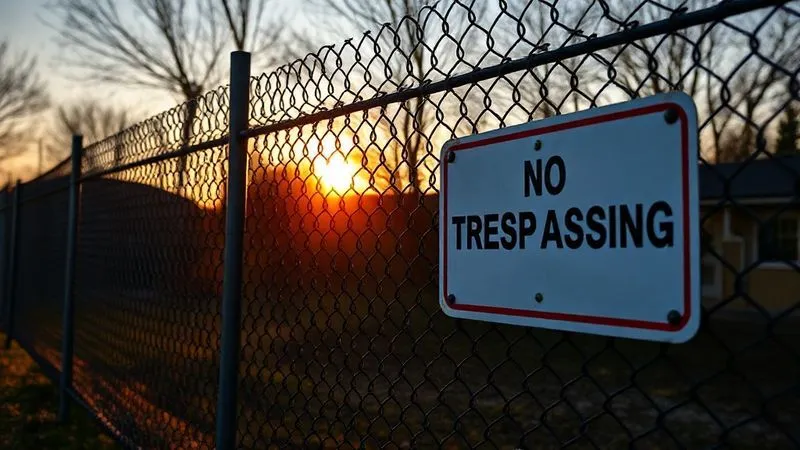
Posting 'No Trespassing' Signs
Clearly visible 'No Trespassing' signs around your property boundaries serve as a formal warning and can help negate a squatter's claim of 'hostile' possession, as it explicitly states they are not welcome. While not a foolproof solution, it adds to your evidence.
Granting Revocable Permission
If you discover someone on your property, and you're not immediately seeking eviction (perhaps they're a neighbor using a shortcut), consider granting them formal, written, and revocable permission to be there. This immediately defeats the 'hostile' element of adverse possession, as they are no longer occupying without your consent. Ensure the permission is time-limited and clearly states it does not convey any property rights.
Fencing and Security Measures
Physical barriers like fences, gates, and locks are practical deterrents. They signal clear property boundaries and make unauthorized entry more difficult. For vacant buildings, boarding up windows and securing all entry points is crucial. These actions demonstrate your intent to control and protect your property.
Utilizing Legal Agreements
For situations where you might allow temporary use of your land (e.g., for hunting, grazing, or parking), always use formal, written agreements. These documents should clearly define the terms of use, state that no ownership rights are conferred, and specify that the agreement is revocable at your discretion. Resources like Nolo's Real Estate Law section offer valuable insights into various property agreements.
Dealing with Difficult Squatters and Post-Eviction Issues
Even after a successful court judgment, the process of reclaiming your property might not be entirely smooth. Anticipating and preparing for potential challenges is key.
Enforcement of the Writ of Possession
If the squatter refuses to leave after the court issues a Writ of Possession, it's the sheriff's department (or equivalent law enforcement agency) that will enforce it. You should never attempt to remove the squatter yourself. Coordinate with the sheriff's office to schedule the eviction. They will physically remove the squatter and their belongings, ensuring the process is conducted legally and safely.
Abandoned Property
Squatters may leave behind personal belongings. State laws dictate how you must handle abandoned property, often requiring you to store it for a certain period and provide notice before disposal. Failure to follow these rules could lead to further legal issues. Your attorney will guide you on the specific procedures in your jurisdiction.
Securing the Property Against Re-entry
Immediately after the squatter is removed, take steps to secure the property. Change all locks, reinforce entry points, and consider installing security cameras or hiring temporary security, especially if the squatter has shown a propensity for re-entry. This is a critical step to prevent a recurrence of the problem and ensure your property remains vacant until you decide its future use. For state-specific guidance on landlord-tenant laws and property rights, consult official government resources, such as your state's court or housing department website.
Frequently Asked Questions (FAQ)
Here are some common questions property owners have when facing an adverse possession claim:
Question: Can I physically remove a squatter claiming adverse possession? No, absolutely not. Attempting self-help eviction, such as physically removing them, changing locks while they're out, or shutting off utilities, is illegal and can lead to severe legal penalties for you, including fines and even criminal charges. You must follow the legal eviction process through the courts.
Question: How long does an adverse possession eviction typically take? The timeline can vary significantly based on your state's laws, court backlogs, and the squatter's willingness to fight the claim. It can range from a few weeks to several months, and in complex cases, over a year. Engaging an attorney early can help streamline the process.
Question: What if the squatter has made improvements to my property? If a squatter has made improvements, some states may require you to compensate them for the 'value added' to the property, even if you win the eviction case. This is often referred to as 'betterment' or 'unjust enrichment.' However, this doesn't grant them ownership and is typically determined by the court.
Question: Does paying property taxes negate an adverse possession claim? Paying property taxes is strong evidence of ownership and often a requirement for an adverse possession claim to succeed in some states (known as 'color of title'). If you, the true owner, are paying taxes, it significantly weakens the squatter's claim, especially if they are not. It demonstrates your continuous assertion of ownership.
Question: Are there any situations where a squatter's adverse possession claim is almost impossible to defeat? While challenging, 'impossible' is a strong word in law. A claim becomes very difficult to defeat if the squatter has demonstrably met all five elements of adverse possession (open, hostile, exclusive, continuous, actual) for the entire statutory period, and you, as the owner, have done nothing to interrupt their claim. This is why early detection and swift legal action are paramount.

Key Takeaways and Final Thoughts
Navigating the complexities of evicting a squatter claiming adverse possession rights can feel like an uphill battle, but it is a fight you can win with the right knowledge and legal support. As an industry specialist, I've seen firsthand how proactive measures and a clear understanding of the law empower property owners to reclaim what is rightfully theirs.
- Act Swiftly: Early detection and immediate, legally sound action are crucial to stopping an adverse possession claim from solidifying.
- Document Everything: Meticulous records, from photos to formal notices, form the backbone of your legal defense.
- Seek Expert Legal Counsel: A qualified real estate attorney is indispensable for navigating state-specific laws and court procedures.
- Disprove Key Elements: Focus your legal strategy on dismantling one or more of the squatter's required elements for adverse possession.
- Prevent Future Claims: Implement regular inspections, clear signage, and formal agreements to safeguard your property long-term.
Remember, your property rights are fundamental. While challenging, the legal system is designed to protect rightful owners. Arm yourself with knowledge, secure expert guidance, and take decisive action. Your diligence and adherence to legal processes will ultimately lead to the successful reclamation of your property and peace of mind.
Recommended Reading
- GDPR Breach? 5 Steps to Legally Mitigate Fines & Protect Your Business
- 5 Crucial Evidence Types: Proving Cohabitation to Reduce Spousal Support
- Is Credit Counseling Required Before Filing Bankruptcy? The Crucial Truth
- Partner Breached? 7 Steps to Legally Exit Your Joint Venture Agreement
- Safeguarding Client Privacy: 7 Strategies Against AI Facial Recognition





Comments
Leave a comment below. Your email will not be published. Required fields marked with *