



How to Legally Challenge Excessive Commercial Property Tax Assessments?
For over three decades in real estate law, I've witnessed firsthand the profound impact that excessive commercial property tax assessments can have on a business's bottom line. It’s not just an annoyance; it’s a silent, insidious drain that can stifle growth, erode profitability, and even threaten solvency. Many property owners simply pay the bill, assuming it’s an unchangeable cost of doing business, but this couldn't be further from the truth.
The pain point is palpable: a sudden, unjustified spike in your property tax bill can throw meticulously crafted budgets into disarray, forcing difficult decisions about operational spending, expansion plans, or even staffing. You feel helpless, perhaps even a little resentful, knowing that your property might be unfairly valued, but unsure of how to fight back against what seems like an impenetrable bureaucratic system.
This comprehensive guide is designed to empower you with the knowledge and actionable frameworks needed to legally challenge excessive commercial property tax assessments. I’ll share expert insights, walk you through the process step-by-step, provide a realistic case study, and offer practical strategies to help you reclaim your financial footing and ensure your commercial property is taxed fairly. This isn't just theory; it's a roadmap forged from years in the trenches of real estate law.
Understanding the Commercial Property Tax Landscape
Before diving into the challenge process, it's crucial to grasp the fundamentals of how commercial property taxes are assessed. Local tax assessors determine the market value of your property, and this valuation directly impacts your tax bill. This valuation is often based on mass appraisal techniques, which, while efficient for municipalities, frequently overlook the unique characteristics or specific market conditions affecting individual commercial properties.
Several factors influence these assessments, including property age, condition, location, income-generating potential, and comparable sales in the area. However, these factors are not always applied accurately or equitably. Assessors might use outdated data, fail to account for deferred maintenance, or inaccurately compare your property to dissimilar ones, leading to an inflated assessment.
Understanding these nuances is your first line of defense. Knowing what criteria are *supposed* to be used helps you identify where the assessment might have gone wrong, laying the groundwork for a successful appeal.
The Critical First Step: Gathering Your Evidence
Challenging an assessment without robust evidence is like bringing a knife to a gunfight. In my experience, the strength of your case hinges entirely on the quality and comprehensiveness of the documentation you present. This isn't just about collecting papers; it's about building an airtight argument.
- Obtain the Assessment Record: Request a detailed breakdown of how your property was assessed from the local tax assessor's office. This document will show the assessor's methodology, comparable properties used, and the valuation components.
- Analyze Property Characteristics: Scrutinize the assessor's description of your property (square footage, number of units, amenities, land size, zoning). Are there any inaccuracies? Even minor errors can impact valuation significantly.
- Gather Income and Expense Statements: For income-producing properties, provide detailed profit and loss statements, rent rolls, and vacancy rates for the past 2-3 years. This data is vital for an income capitalization approach to valuation.
- Collect Comparable Sales Data: Research recent sales of similar commercial properties in your immediate area. Focus on properties that have sold within the last 12-18 months and closely match your property's size, age, use, and condition.
- Document Property Condition Issues: Take high-quality photographs and compile repair estimates for any significant structural issues, deferred maintenance, or functional obsolescence that negatively impacts your property's value.
- Review Lease Agreements: If your property is leased, provide copies of current lease agreements. Unfavorable lease terms or long-term vacancies can justify a lower valuation.
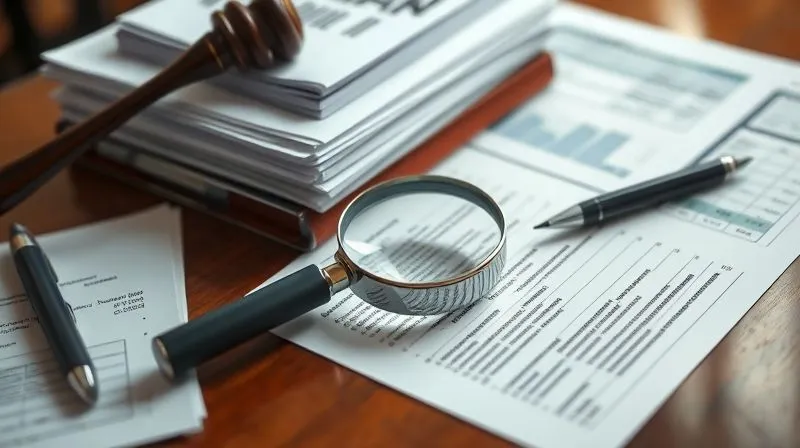
Common Grounds for Challenging an Assessment
With your evidence in hand, you need to articulate the legal basis for your challenge. There are typically three primary grounds on which to argue for a reduced commercial property tax assessment:
1. Overvaluation (Market Value Error)
This is the most common argument: your property's assessed value exceeds its true market value. Market value is generally defined as the most probable price a property would bring in a competitive and open market, assuming reasonable exposure and informed parties. You can demonstrate overvaluation using:
- Comparable Sales: If recent sales of similar properties are significantly lower than your assessed value.
- Income Capitalization: For income-producing properties, if the assessed value doesn't reflect the property's actual or potential net operating income.
- Cost Approach: If the cost to replace your property, minus depreciation, is less than the assessed value.
2. Inequitable Assessment (Uniformity Error)
Even if your property is assessed at or below market value, you might still have a case if it's assessed at a higher percentage of market value than comparable properties in your jurisdiction. This violates the principle of uniformity, which mandates that all properties within a taxing district be assessed similarly. To prove inequity, you'd compare your assessment ratio (assessed value / market value) to those of similar properties.
3. Factual Error
Sometimes, the assessor simply makes a mistake. This could be an incorrect square footage, misclassification of the property type, overlooking a major structural defect, or failing to account for a recent zoning change that diminished value. These are often the easiest errors to rectify, provided you have clear documentation.
Expert Insight: "Never underestimate the power of a well-documented factual error. While complex valuation arguments require expertise, a simple, provable mistake in the assessor's records can often lead to a swift and favorable adjustment, saving you considerable time and expense."
Navigating the Appeals Process: From Informal Review to Formal Hearing
The appeals process generally follows a structured, multi-stage path. While specific steps vary by jurisdiction (county, city, state), the general progression is similar.
Stage 1: Informal Review with the Assessor
Many jurisdictions offer an opportunity for an informal discussion with the assessor's office. This is often the quickest and least costly way to resolve discrepancies. Present your evidence clearly and concisely, highlighting any factual errors or compelling comparable sales. A good relationship with the assessor can sometimes lead to an amicable resolution here.
Stage 2: Formal Administrative Appeal (Board of Equalization/Review)
If the informal review doesn't yield results, the next step is typically a formal appeal to a local or county Board of Equalization or Board of Review. This is a quasi-judicial hearing where you present your case to an impartial panel. You'll need to submit formal documentation, often by a specific deadline, and may be required to testify under oath. This stage often involves:
- Filing a Formal Petition: Complete and submit the required appeal forms by the published deadline.
- Preparing Your Presentation: Organize your evidence, comparable sales, and appraisal reports into a clear, logical presentation.
- Attending the Hearing: Be prepared to explain your position, answer questions from the board, and potentially cross-examine the assessor's representative.
Case Study: How Apex Logistics Reduced Their Tax Burden
Apex Logistics, a regional distribution company, faced a 25% increase in their commercial warehouse property tax assessment, pushing their annual tax bill close to $300,000. Their initial reaction was frustration, but they decided to challenge it. During the informal review, they discovered the assessor had used comparable sales data from properties in a more desirable industrial park, significantly overstating their property's value.
By implementing the evidence-gathering steps I outlined above, Apex Logistics compiled detailed comparable sales from their immediate, less developed industrial zone. They also highlighted the property's specific functional obsolescence – an outdated loading dock design that limited truck accessibility, which the assessor had not accounted for.
At the formal Board of Review hearing, Apex presented an expert appraisal that valued their property 15% lower than the assessor's figure, supported by the hyper-local comparable sales and a detailed cost-to-cure analysis for the loading dock. After a two-hour hearing, the board sided with Apex, reducing their assessment by 18%. This resulted in an annual tax saving of approximately $48,000, which they reinvested into upgrading their fleet, demonstrating the tangible benefits of a well-executed challenge.
The Power of Expert Appraisal and Legal Counsel
While you can navigate the initial stages of an appeal yourself, the complexity often warrants professional assistance. This is where a qualified appraiser and an experienced real estate tax attorney become invaluable assets.
The Role of a Professional Appraiser
A certified commercial appraiser provides an independent, unbiased, and legally defensible valuation of your property. Their report will utilize accepted appraisal methodologies (sales comparison, income capitalization, cost approach) and will be tailored to your specific property and local market conditions. This expert opinion carries significant weight with appeals boards and courts. According to a study by the Appraisal Institute, properties with a professional appraisal are significantly more likely to achieve a favorable outcome in tax appeals.
The Role of an Experienced Real Estate Tax Attorney
An attorney specializing in real estate tax appeals brings a wealth of legal expertise to your case. They understand the specific laws, regulations, and procedural requirements of your jurisdiction. They can:
- Advise on the best legal grounds for your appeal.
- Review and strengthen your evidence.
- Represent you at all stages of the appeal, from informal review to court.
- Negotiate with the assessor's office on your behalf.
- Handle complex legal arguments and procedural nuances.
As marketing guru Seth Godin often says about specialization, in complex matters, you want someone who has 'done this before.' The same applies to real estate tax law; an expert can navigate pitfalls you might not even foresee.
| Service | Benefit 1 | Benefit 2 | Cost Factor |
|---|---|---|---|
| Professional Appraiser | Independent, defensible valuation | Expert testimony | Moderate to High |
| Real Estate Tax Attorney | Legal strategy & representation | Procedural expertise | High (often contingency) |
| Tax Consultant | Process management & data analysis | Market insights | Moderate |
Beyond the Boardroom: Litigation and Advanced Strategies
If your administrative appeal is unsuccessful, you typically have the right to appeal to a higher court or a specialized tax tribunal. This is where legal counsel becomes absolutely essential.
Stage 3: Judicial Appeal (Tax Court or Superior Court)
Appealing to a judicial body is a more formal and often lengthy process. It involves filing a lawsuit, engaging in discovery, potentially depositions, and ultimately, a trial. The burden of proof remains on you, the property owner, to demonstrate that the assessment is incorrect. This stage requires a deep understanding of legal procedure and evidentiary rules, making an attorney indispensable.
Advanced Strategies: Abatement and Exemptions
Beyond challenging the assessment itself, there are other avenues for reducing your property tax burden:
- Property Tax Abatement: Some jurisdictions offer tax abatements to encourage specific types of commercial development or redevelopment, often in economically distressed areas. These provide a temporary reduction or exemption from property taxes.
- Exemptions: Certain types of commercial properties, such as those owned by non-profit organizations, educational institutions, or properties used for specific public purposes, may qualify for full or partial tax exemptions.

Proactive Measures: Preventing Future Excessive Assessments
The best defense is a good offense. Taking proactive steps can help prevent future excessive assessments and reduce the need for annual appeals.
1. Maintain Accurate Records
Keep meticulous records of all property improvements, maintenance, income, and expenses. This documentation will be invaluable if you need to challenge an assessment in the future.
2. Monitor Local Market Conditions
Stay informed about commercial property sales, vacancy rates, and rental trends in your area. This knowledge helps you gauge whether your assessment aligns with current market realities.
3. Engage with the Assessor's Office Annually
Don't wait for a high bill to appear. Request and review your property record card annually. Proactively communicate any changes to your property (e.g., damage, demolition, changes in use) to ensure the assessor's records are accurate.
4. Consider a Property Tax Management Plan
For larger commercial portfolios, consider retaining a property tax consultant or attorney on an ongoing basis to monitor assessments, identify appeal opportunities, and manage the appeal process systematically. This ensures continuous oversight and proactive management of your tax liabilities.
Key Insights from Decades in Real Estate Law
Insight 1: Time is Your Enemy. "The absolute most critical factor in any property tax appeal is adhering to deadlines. Miss a filing date, and your opportunity for that tax year is gone, regardless of how strong your case. Mark your calendar and file early!"
Insight 2: It's Not Personal, It's Business. "Approach the assessor's office professionally and with respect. Their job is to assess properties; yours is to ensure accuracy for your business. An adversarial approach rarely yields positive results. Focus on data and facts, not emotion."
Insight 3: The Smallest Details Matter. "A minor error in square footage, an overlooked easement, or an unrecorded repair can cumulatively shave thousands off your assessment. Be granular in your review of the assessor's data."
Insight 4: Don't Assume. Verify. "Never assume the assessor's data is correct, even if it seems plausible. Always cross-reference their records with your own, and with independent sources like county plat maps or building permits."
Frequently Asked Questions (FAQ)
Q: What are the typical costs associated with challenging a commercial property tax assessment? A: Costs can vary widely. Informal appeals may only involve your time and a few hundred dollars for record requests or minor consultations. Formal appeals involving appraisers and attorneys can range from a few thousand dollars to tens of thousands, especially if it goes to court. Many attorneys work on a contingency basis, taking a percentage of the tax savings achieved. It's crucial to weigh the potential savings against the likely costs.
Q: How long does the appeal process usually take? A: An informal review might be resolved in a few weeks. A formal administrative appeal can take anywhere from 3 to 12 months, depending on the jurisdiction's caseload. Judicial appeals can easily stretch for one to three years, sometimes longer, due to court schedules and discovery processes. Patience is a virtue in this arena.
Q: Can challenging my assessment lead to a higher assessment? A: While technically possible in some jurisdictions, it's rare for an assessment to be raised simply because you filed an appeal, especially if your initial challenge is well-founded and factual. Most appeals processes are designed to correct errors, not to punish property owners. However, if your property was significantly under-assessed and you bring attention to it, a reassessment could occur. This is why a thorough pre-appeal analysis is critical.
Q: What if I miss the appeal deadline? Are there any exceptions? A: Unfortunately, appeal deadlines are almost universally strict and rarely subject to exceptions. Missing a deadline usually means you forfeit your right to appeal for that tax year. In very specific, extreme circumstances (e.g., natural disaster affecting record access, severe illness preventing timely action), some jurisdictions might offer a narrow window for late filings, but these are exceptions, not the rule. Always prioritize deadlines.
Q: Should I hire an attorney or a tax consultant? What's the difference? A: A tax consultant can help with data analysis, market research, and navigating administrative processes. They often have strong relationships with assessors. An attorney provides legal representation, understands complex legal arguments, and can represent you in formal hearings and court. For simpler cases, a consultant might suffice. For complex valuations, legal disputes, or if you anticipate litigation, an attorney is highly recommended. Often, the best strategy involves both – a consultant for the initial data work and an attorney to oversee the legal strategy.
Key Takeaways and Final Thoughts
Navigating the labyrinth of commercial property tax assessments can feel daunting, but it is far from an impossible task. With the right approach, meticulous preparation, and, when necessary, expert guidance, you can successfully challenge excessive assessments and protect your business's financial health.
- Be Proactive: Don't wait for the bill; understand the assessment process and monitor your property's valuation annually.
- Gather Robust Evidence: Your case lives and dies by the quality of your documentation – comparable sales, income data, and property condition reports.
- Understand Your Grounds: Clearly articulate whether your challenge is based on overvaluation, inequity, or factual error.
- Respect Deadlines: The appeal process is unforgiving when it comes to submission dates.
- Leverage Experts: A professional appraiser and a skilled real estate tax attorney can significantly increase your chances of success, especially in complex cases.
Remember, challenging an excessive assessment isn't just about saving money; it's about ensuring fairness and equity within the tax system. By taking a stand, you're not only benefiting your business but also contributing to a more accurate and just assessment process for all. Don't let an unfair tax burden hinder your commercial success; equip yourself with this knowledge and fight for what's right.
Recommended Reading
- 7 Steps: Legally Register Your Commercial Vessel Under a Foreign Flag
- 5 Strategies: Expediting Permits Stalled by Habitat Disputes
- Enforcing Foreign Arbitration Awards Against SOEs: Your 7-Step Guide
- Are Digital Contracts Legally Binding? The Ultimate Guide [2024]
- 5 Proven Steps to Counter False Parental Alienation Claims in Family Court




Comments
Leave a comment below. Your email will not be published. Required fields marked with *