



How to legally challenge new restrictive voter ID laws?
For over two decades in the trenches of constitutional law, particularly within the fraught landscape of voting rights, I've witnessed firsthand the relentless ebb and flow of efforts to expand and restrict access to the ballot box. It’s a perpetual battle, and one of the most insidious tactics I've seen emerge with increasing frequency is the proliferation of new, often highly restrictive, voter ID laws.
These laws, frequently presented under the guise of "election integrity," can subtly but effectively disenfranchise hundreds of thousands, if not millions, of eligible voters. The pain point for many is clear: navigating a bureaucratic maze to secure a specific form of identification that might not be readily available, or even knowing that a new requirement exists until it’s too late. This isn't just an inconvenience; it's a fundamental threat to the democratic principle of universal suffrage, disproportionately affecting the elderly, students, low-income individuals, and minority communities.
In this definitive guide, I will pull back the curtain on the legal strategies, constitutional arguments, and practical steps necessary to effectively challenge these restrictive measures. We’ll delve into the foundational legal precedents, explore the most potent litigation avenues, and equip you with the knowledge to understand precisely how to legally challenge new restrictive voter ID laws, drawing on real-world insights and actionable frameworks.
Understanding the Landscape: The Erosion of Voting Rights
To effectively challenge a problem, one must first understand its roots and current manifestations. The modern era of voter ID laws, while not entirely new, gained significant momentum following the Supreme Court's 2013 decision in Shelby County v. Holder. This ruling gutted Section 5 of the Voting Rights Act of 1965, which had previously required certain jurisdictions with a history of discrimination to "preclear" any changes to their election laws with the Department of Justice or a federal court. The removal of this critical safeguard opened the floodgates for states to enact a variety of restrictive voting measures, including stringent photo ID requirements, with far less federal oversight.
Since Shelby County, we've seen a surge in legislation that, while often framed as common-sense measures to prevent voter fraud, frequently creates significant barriers to voting. These aren't just about showing an ID; they can involve requiring specific types of photo ID (e.g., excluding student IDs), demanding proof of citizenship beyond existing voter registration, limiting the forms of identification accepted, or even imposing fees for obtaining compliant IDs. The common thread is an increased burden on the individual voter.
The impact of these laws is rarely uniform. Research consistently shows that communities of color, young voters, elderly individuals, and those with lower incomes are less likely to possess the specific forms of identification required by these new laws. This creates a disparate impact, effectively suppressing votes from demographic groups that often lean towards certain political affiliations, even if the intent isn't explicitly discriminatory. This is where the legal battle truly begins.
"The right to vote is the most fundamental of all rights, for it is the preservative of all other rights. When we allow barriers to be erected, we erode the very foundation of our democracy." - A core principle I've upheld throughout my career.
The Constitutional Framework: Your Legal Arsenal
Successfully challenging restrictive voter ID laws hinges on a deep understanding of the constitutional and statutory protections designed to safeguard the right to vote. These are the bedrock principles upon which any legal argument must be built.
The Fourteenth Amendment is often a cornerstone of voting rights litigation. Its Equal Protection Clause prohibits states from denying any person within its jurisdiction the equal protection of the laws, meaning that election laws cannot treat similarly situated voters differently without a compelling justification. The Due Process Clause also plays a role, ensuring that the state provides fair procedures when it deprives individuals of life, liberty, or property – and the right to vote, while not explicitly enumerated, is considered a fundamental liberty.
The Fifteenth Amendment directly prohibits states from denying or abridging the right to vote "on account of race, color, or previous condition of servitude." This amendment is crucial when restrictive voter ID laws have a discriminatory effect or intent against racial minorities. Similarly, the Twenty-Fourth Amendment bans poll taxes, an historical barrier to voting that, while seemingly archaic, echoes in any law that imposes a financial burden on obtaining voter ID.
Beyond the Constitution, the Voting Rights Act of 1965 (VRA) remains a powerful tool, particularly Section 2. This section prohibits any voting practice or procedure that results in a denial or abridgment of the right to vote on account of race or color. Crucially, Section 2 does not require proof of discriminatory intent; a showing of discriminatory effect is sufficient, making it a vital avenue for challenging laws that disproportionately impact minority voters.
Key Legal Precedents Shaping Voter ID Challenges
Any legal challenge must contend with established Supreme Court precedent. The landmark case of Crawford v. Marion County Election Board (2008) upheld Indiana’s photo ID law, finding that the state’s interest in preventing voter fraud and enhancing public confidence outweighed the burden on voters. However, the Court also acknowledged that a law could be unconstitutional "as applied" to specific individuals for whom obtaining an ID would be an "undue burden." This leaves a crucial door open for challenges focused on the practical impact of these laws.
Another important case is Arizona v. Inter Tribal Council of Arizona (2013), where the Supreme Court held that states cannot require proof of citizenship beyond what is required by federal law for federal elections. This case underscores the principle of federal preemption, where federal election laws can override state requirements. Understanding these precedents is paramount to crafting a robust legal strategy.
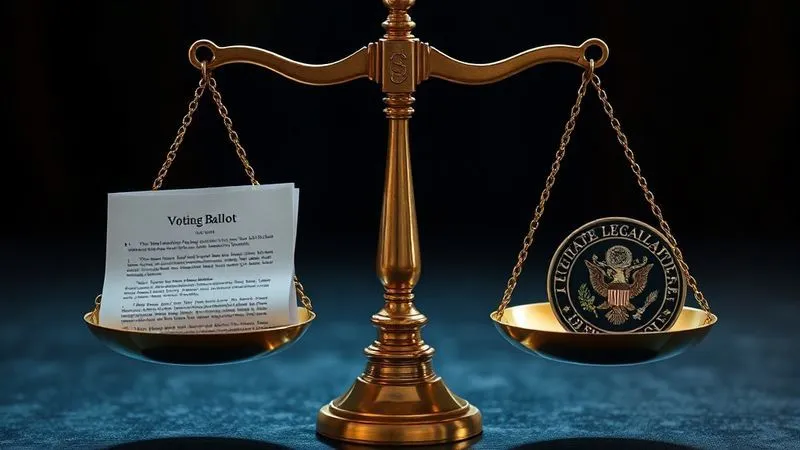
Step-by-Step: Building a Legal Challenge
Challenging a voter ID law is a methodical process that requires careful planning, robust evidence, and a clear legal strategy. It’s not something to be undertaken lightly, but with a structured approach, success is attainable.
Step 1: Documenting Disenfranchisement and Gathering Evidence
The first and most critical step is to gather irrefutable evidence of the law's harmful impact. This means collecting data, anecdotes, and witness statements from individuals who have been or will be disenfranchised by the new voter ID requirements. I've seen countless cases where compelling personal stories, backed by statistical data, truly sway a court.
What to collect:
- Personal Testimonies: Document stories of individuals who lack the required ID, cannot afford to obtain it, or face significant logistical hurdles (e.g., lack of transportation to a DMV, inability to get underlying documents like birth certificates).
- Statistical Data: Work with demographers or political scientists to analyze voter registration rolls and census data. Identify the number of registered voters who do not have the required ID, and analyze this by age, race, income, and geographic location.
- Cost Analysis: Quantify the financial burden of obtaining the required ID, including fees for birth certificates, transportation costs, and lost wages for time taken off work.
- Election Results Analysis: If the law has been in effect for an election cycle, analyze turnout data for communities disproportionately affected.
Collaborating with local community groups, civil rights organizations, and legal aid clinics is invaluable here. They often have established networks for collecting this kind of information and can help identify potential plaintiffs who have standing to sue.
Step 2: Identifying the Specific Legal Harm and Cause of Action
Once you have the evidence, you need to articulate the specific legal harm. Is the law creating an "undue burden" on the right to vote? Does it have a "discriminatory intent" or "discriminatory effect" on minority voters? Is it an "equal protection" violation? Or does it conflict with federal law?
Key causes of action include:
- Violation of the Fourteenth Amendment's Equal Protection Clause (e.g., treating different classes of voters differently without sufficient justification).
- Violation of the Fifteenth Amendment (racial discrimination in voting).
- Violation of Section 2 of the Voting Rights Act (discriminatory effect on protected classes).
- Violation of the First Amendment (if the law chills political participation).
- Violation of state constitutional provisions that often provide broader protections for voting rights than the federal constitution.
A strong legal challenge often combines multiple causes of action to maximize the chances of success. Each claim requires specific elements of proof, so aligning your gathered evidence with these elements is crucial.
Step 3: Choosing the Right Forum – State vs. Federal Courts
Deciding whether to file your challenge in state or federal court is a strategic decision with significant implications. Both have pros and cons, and the optimal choice often depends on the specific nature of the law, the available legal arguments, and the political climate of the judiciary.
| Aspect | Federal Court | State Court |
|---|---|---|
| Jurisdiction | Handles federal constitutional claims, Voting Rights Act | Handles state constitutional claims, state election law challenges |
| Judicial Appointment | Life tenure, appointed by President | Varies by state (election, appointment), often politically influenced |
| Precedent | Bound by Supreme Court and Circuit Court precedent | Bound by state supreme court precedent, can offer broader rights |
| Speed | Can be faster for preliminary injunctions, but appeals can be lengthy | Varies widely by state, some offer expedited election litigation |
| Discovery | Generally broader discovery rules | Discovery rules vary by state |
Federal courts are typically the forum for claims under the U.S. Constitution and the Voting Rights Act. They offer a certain level of independence due to judges' life tenure. However, state courts can be powerful venues, especially if your state's constitution provides more expansive voting rights than the federal Constitution. I’ve seen state supreme courts strike down voter ID laws that might have survived federal scrutiny, demonstrating the importance of exploring all avenues.
Strategic Litigation Avenues Against Restrictive Voter ID Laws
Now, let's dive into the specific legal theories that have proven most effective in challenging restrictive voter ID laws. Each approach has its nuances and evidentiary requirements, but understanding them is key to crafting a winning strategy.
Challenge 1: Undue Burden Claims (Anderson-Burdick Test)
This is perhaps the most common and versatile challenge. Originating from Anderson v. Celebrezze (1983) and refined in Burdick v. Takushi (1992), the Anderson-Burdick balancing test requires courts to weigh the character and magnitude of the asserted injury to the rights protected by the First and Fourteenth Amendments against the precise interests put forward by the State as justifications for the burden imposed by its rule. If a restrictive voter ID law imposes a severe burden on the right to vote, it must be narrowly tailored to serve a compelling state interest. If the burden is less severe, the state's interest need only be reasonable and non-discriminatory.
To succeed here, you must demonstrate:
- Magnitude of the Burden: Show how the law makes it significantly harder for eligible voters to cast a ballot. This includes quantifying the number of people affected, the difficulty in obtaining required IDs (e.g., cost, distance to DMV, lack of underlying documents), and the specific types of IDs excluded.
- Lack of Compelling State Interest: Challenge the state's claimed justification. Often, states cite "preventing voter fraud." You must present evidence that the type of fraud addressed by voter ID laws (in-person impersonation) is exceedingly rare, thereby undermining the "compelling" nature of the state's interest.
- Lack of Narrow Tailoring: Argue that even if there is a legitimate state interest, the law is overly broad and there are less restrictive alternatives available that would achieve the same goal without disenfranchising voters (e.g., provisional ballots, affidavits, free state IDs, broader acceptable ID lists).
Challenge 2: Racial Discrimination (VRA Section 2 & 15th Amendment)
When a voter ID law disproportionately impacts racial or ethnic minority groups, claims under Section 2 of the Voting Rights Act and the Fifteenth Amendment become powerful. As I mentioned, Section 2 is particularly potent because it only requires proof of discriminatory effect, not intent.
Under Section 2, you would typically use the "totality of the circumstances" test, looking at factors such as:
- The extent of any history of official discrimination in the state or political subdivision that touched the right of the members of the minority group to register, to vote, or otherwise to participate in the democratic process.
- The extent to which voting in the elections of the state or political subdivision is racially polarized.
- The extent to which the state or political subdivision has used unusually large election districts, majority vote requirements, anti-single shot provisions, or other voting practices or procedures that may enhance the opportunity for discrimination against the minority group.
- Whether there is a significant disparity between the proportion of minority group members in the population and the proportion of minority group members who have the specific type of ID required.
- The extent to which the political processes leading to the enactment of the challenged voting qualification or prerequisite to voting, or standard, practice, or procedure are not equally open to participation by members of the minority group.
For the Fifteenth Amendment, proving discriminatory intent is usually required, which is a higher bar. This often involves looking at legislative history, statements by lawmakers, and the sequence of events leading to the law's passage. However, a strong showing of discriminatory effect can sometimes serve as circumstantial evidence of discriminatory intent.
Challenge 3: Equal Protection Clause Violations (14th Amendment)
The Equal Protection Clause of the Fourteenth Amendment ensures that all persons similarly situated should be treated alike. In the context of voter ID laws, this means that if a state allows certain forms of ID but excludes others that are equally reliable, it could be an Equal Protection violation. For instance, if a state accepts a concealed carry permit as ID but rejects a state university student ID, despite both being issued by state agencies and requiring verification, this could be challenged.
Courts apply different levels of scrutiny depending on the classification. If the law targets a suspect class (like race) or impinges on a fundamental right (like voting), strict scrutiny applies, requiring the state to show a compelling interest and narrow tailoring. If not, a rational basis review applies, which is a much lower bar for the state to meet. Arguments here often focus on demonstrating that the right to vote is indeed fundamental and that the classification created by the ID law is arbitrary or serves no legitimate state interest.
Challenge 4: Federal Preemption Arguments
Federal preemption arises when a state law conflicts with federal law. As seen in Arizona v. Inter Tribal Council of Arizona, states cannot impose voter registration requirements for federal elections that are more stringent than those mandated by federal law (specifically the National Voter Registration Act of 1993, or "Motor Voter" Act). If a state voter ID law effectively adds requirements to federal voter registration, a preemption challenge could be viable.
Challenge 5: State Constitutional Challenges
Never underestimate the power of state constitutions. Many state constitutions contain explicit protections for the right to vote that are broader or more robust than the federal Constitution. For example, some state constitutions guarantee the right to vote for all citizens who meet basic age and residency requirements, without explicitly allowing for ID requirements. Challenges under state constitutional provisions can sometimes bypass federal precedent like Crawford and lead to more favorable outcomes, particularly in states with a strong tradition of protecting voting rights.
For instance, in states like Pennsylvania or North Carolina, state supreme courts have shown a willingness to interpret their own constitutions to provide greater protections for voters than the federal Constitution. This can be a strategic advantage, especially if the federal judiciary has become more conservative.
The Role of Data and Expert Testimony
In modern voting rights litigation, data is king. Anecdotes are powerful, but they gain immense weight when backed by rigorous statistical analysis and expert testimony. I’ve seen cases turn entirely on the strength of the data presented.
Key areas where data and experts are crucial:
- Demographic Impact Studies: Experts can analyze voter registration databases, census data, and other demographic information to quantitatively demonstrate the disparate impact of a voter ID law on specific racial, ethnic, age, or income groups. They can estimate how many eligible voters lack the required ID.
- Voter Turnout Analysis: Political scientists can analyze historical voter turnout data to show how similar laws have affected participation rates, particularly in affected communities. This helps to counter claims that the law has no real impact.
- Rarity of In-Person Voter Impersonation: Criminologists or election experts can provide testimony on the statistical rarity of the specific type of voter fraud (in-person impersonation) that voter ID laws are supposedly designed to prevent. This directly undermines the "compelling state interest" argument.
- Cost and Accessibility Analysis: Economists or social scientists can quantify the costs (time, money, lost wages) associated with obtaining the required ID, further illustrating the burden on voters.
Working with reputable academics and researchers is crucial. Their credibility and impartiality lend significant weight to your arguments in court. A well-prepared expert witness can dismantle the state's justifications and clearly articulate the harm to the judiciary.
Case Study: How 'Harmony County' Protected its Voters
Let me illustrate the power of a strategic, data-driven approach with a fictional, yet highly realistic, case study. Imagine "Harmony County," a diverse jurisdiction in a state that recently enacted a strict photo ID law, requiring a specific state-issued driver's license or non-driver ID, explicitly excluding student IDs and most federal IDs without an additional proof of address.
Case Study: Harmony County's Fight for Voter Access
Harmony County, with its significant university population and a large elderly community residing in rural areas, quickly recognized the impending disenfranchisement. Working with local civil rights groups, they initiated a two-pronged strategy. First, community organizers meticulously collected hundreds of affidavits from students, seniors, and low-income residents who either didn't have the required ID, couldn't afford the underlying documents (like birth certificates), or lacked transportation to the distant state ID offices. This provided powerful personal narratives.
Second, a team of political scientists and demographers analyzed voter rolls against available ID data, estimating that nearly 15% of registered voters in Harmony County, disproportionately students and elderly citizens, lacked the compliant ID. They further demonstrated that incidents of in-person voter impersonation in the county over the last decade were statistically zero, directly challenging the state's "election integrity" claims. Armed with this robust evidence, a coalition of plaintiffs, including several affected individuals and a local civil rights organization, filed a lawsuit in state court, arguing violations of both the state's constitutional right to vote and the federal Equal Protection Clause.
The legal team successfully argued for a preliminary injunction, highlighting the irreparable harm to voters if the law remained in effect for the upcoming election. They demonstrated that the state's interest was not compelling given the lack of fraud, and that less restrictive alternatives (like allowing a wider range of IDs or using provisional ballots for those without ID) were feasible. The state court, convinced by the overwhelming evidence of undue burden and the lack of a strong state interest, granted the injunction, temporarily blocking the ID requirement. This allowed thousands of Harmony County residents to vote, preserving their fundamental right while the case proceeded to a full trial, which eventually led to the law being struck down as unconstitutional under state law.
"Persistence in the face of injustice, coupled with meticulous evidence gathering and a sound legal strategy, is the bedrock of every successful voting rights battle."
The Importance of Coalition Building and Public Advocacy
Legal challenges to voter ID laws are rarely won in isolation. The most effective campaigns involve broad coalitions of civil rights organizations, community groups, legal experts, and public advocates. This collective power amplifies resources, expertise, and public awareness.
Key partners and strategies for coalition building:
- Civil Rights Organizations: Partnering with national groups like the ACLU, the NAACP Legal Defense and Educational Fund (LDF), and the League of Women Voters provides access to seasoned legal teams, research capabilities, and significant media reach. These organizations have decades of experience in voting rights litigation.
- Community-Based Organizations: Local groups are invaluable for connecting with affected voters, collecting stories, and mobilizing support. They understand the unique challenges faced by their communities.
- Academic Institutions: Universities and research centers can provide expert witnesses, conduct statistical analyses, and offer pro bono legal assistance through clinics.
- Public Advocacy and Media Engagement: While the legal battle plays out in court, a robust public advocacy campaign can educate the public, put pressure on lawmakers, and garner broader support. This involves press conferences, social media campaigns, and op-eds.
I’ve witnessed that a strong public narrative, explaining why these laws are harmful and who they affect, can create a powerful external pressure that complements the internal legal strategy. It’s about winning in the court of public opinion as well as the court of law. This also helps to secure the financial and volunteer resources necessary for prolonged litigation.
Navigating the Appeals Process and Injunctive Relief
Litigation, particularly in high-stakes areas like voting rights, is rarely a one-shot deal. Expect appeals, and be prepared to seek immediate relief to protect voters in upcoming elections. The strategic use of injunctive relief is often the most critical aspect of these cases.
The Power of a Preliminary Injunction
A preliminary injunction is a court order that temporarily blocks the implementation of a law while the full legal challenge proceeds. In voting rights cases, where elections occur on fixed dates, securing a preliminary injunction before an election is often the difference between protecting voters and allowing disenfranchisement to occur. To obtain one, plaintiffs typically must demonstrate:
- A strong likelihood of success on the merits of their claim.
- That they will suffer irreparable harm if the injunction is not granted (i.e., eligible voters will be unable to vote).
- That the balance of equities tips in their favor (the harm to voters outweighs the state's interest).
- That the injunction is in the public interest.
The "irreparable harm" argument is particularly strong in voting rights cases, as a lost vote cannot be recovered. Winning a preliminary injunction is a significant victory, but it is temporary. The case then proceeds to a full trial on the merits, which can be a lengthy process, often involving multiple levels of appeal.
| Action | Pros | Cons |
|---|---|---|
| Seeking Injunctive Relief | Immediately protects voters, prevents irreparable harm, builds momentum for case | High legal bar to meet, temporary victory, can be immediately appealed by state |
| Full Trial on Merits | Permanent resolution, sets binding precedent, thorough presentation of evidence | Can be lengthy and costly, outcomes are not guaranteed, subject to multiple appeals |
| Appeals Process | Can be very time-consuming, expensive, outcomes are uncertain, risk of adverse precedent | Opportunity to overturn unfavorable rulings, clarify legal questions |
The appeals process can be arduous, moving from trial courts to appellate courts, and potentially to the state or U.S. Supreme Court. Expedited appeal schedules are common in election cases due to the time-sensitive nature of elections. Having a legal team prepared for this marathon, not just a sprint, is essential. Understanding the specific appellate procedures for state and federal courts, and having a clear strategy for each level, is a hallmark of experienced voting rights litigators.
For more detailed information on voting rights litigation, organizations like the Brennan Center for Justice offer invaluable resources and analysis. For a comprehensive look at election administration and the challenges of voter ID, I often refer to the work compiled by the U.S. Election Assistance Commission (EAC), which provides valuable state-by-state data.
Frequently Asked Questions (FAQ)
Q1: What is the single biggest hurdle to successfully challenging new restrictive voter ID laws? In my experience, the biggest hurdle is often overcoming the perception that voter ID laws are a necessary and common-sense measure to prevent voter fraud. Courts, and the public, often buy into this narrative without scrutinizing the actual evidence of in-person voter impersonation, which is statistically minuscule. Effectively demonstrating the lack of a compelling state interest (i.e., that the problem the law purports to solve doesn't actually exist to any significant degree) while simultaneously proving the severe burden on legitimate voters is incredibly challenging.
Q2: How long does a typical legal challenge to a voter ID law take? The timeline can vary wildly depending on the jurisdiction, the complexity of the law, and the willingness of parties to appeal. A preliminary injunction can sometimes be secured within weeks or months, especially close to an election. However, a full legal challenge, through trial and multiple levels of appeal, can easily take several years, often extending beyond multiple election cycles. This is why sustained funding and legal commitment are paramount.
Q3: Can individual citizens directly sue over a restrictive voter ID law? Yes, individual citizens who are directly harmed by a voter ID law can sue, provided they have "standing." This means they must demonstrate that they have suffered a concrete and particularized injury caused by the law, and that a favorable court decision would redress that injury. Often, these individual plaintiffs join forces with civil rights organizations or form a class action to strengthen their case and share resources.
Q4: What if a voter doesn't have any of the specific IDs required by a new law? Are there always provisions for them? Not always, and this is precisely where the legal challenges arise. While many restrictive laws include "safety net" provisions (like provisional ballots or affidavit options), these are often poorly publicized, difficult to access, or still require an underlying form of ID within a short timeframe. The effectiveness and accessibility of these provisions are frequently central to arguments about the "undue burden" of the law. The goal of legal challenges is often to ensure that such provisions are genuinely robust and accessible, or to strike down laws that lack them entirely.
Q5: Can a state constitution offer stronger protections against restrictive voter ID laws than the U.S. Constitution? Absolutely. Many state constitutions were drafted with broader language regarding the right to vote or include additional protections not explicitly found in the U.S. Constitution. State supreme courts are often the final arbiters of their state's constitution, and they can interpret these provisions to offer greater safeguards for voters than federal courts might provide under federal law. This is a critical strategic consideration for any legal team.
Key Takeaways and Final Thoughts
Challenging new restrictive voter ID laws is a formidable, yet absolutely essential, undertaking in the ongoing fight for democratic integrity. It demands a deep understanding of constitutional law, meticulous evidence gathering, strategic litigation, and unwavering commitment. As an industry specialist who has navigated these waters for decades, I can attest that success is possible, but it requires a multi-faceted approach.
- Evidence is Paramount: Robust data and compelling personal testimonies are the backbone of any strong case, demonstrating both the burden on voters and the lack of a legitimate state interest.
- Master the Legal Framework: Utilize the Fourteenth and Fifteenth Amendments, Section 2 of the Voting Rights Act, and crucially, state constitutional provisions.
- Strategic Forum Selection: Carefully choose between state and federal courts based on the specific legal arguments and judicial landscape.
- Build Coalitions: Partner with civil rights groups, community organizations, and academic experts to amplify your efforts and resources.
- Seek Injunctive Relief: Prioritize preliminary injunctions to protect voters in immediate election cycles while the broader legal battle unfolds.
The right to vote is not merely a privilege; it is the fundamental right upon which all other liberties rest. When those rights are threatened by restrictive voter ID laws, it is incumbent upon us, as legal professionals and engaged citizens, to stand up and fight. Remember, every successful challenge not only protects current voters but also sets vital precedents for future generations. Your commitment to understanding how to legally challenge new restrictive voter ID laws is a commitment to the very soul of our democracy.
Recommended Reading
- 7 Deceptive Debt Collection Practices: What Federal Law Says You Need to Know
- Unmasking Negligence: How to Prove Your Product Liability Claim & Win Justice
- Reconstructing Accident Scenes: 7 Expert Strategies When Evidence Fades
- 5+ Non-Bankruptcy Routes for Overwhelming Business Tax Debt Relief
- Clean Air Act Enforcement: Your 7-Step Facility Action Plan




Comments
Leave a comment below. Your email will not be published. Required fields marked with *