



How to preserve issues for appeal during a criminal trial?
For over two decades in criminal law, I've witnessed the heartbreaking reality of clients with genuinely meritorious claims find their appeals summarily dismissed. The reason? Not a lack of justice, but a critical procedural misstep: the failure to properly preserve issues for appellate review during the trial itself. It’s a bitter pill to swallow, knowing a reversible error occurred, but the appellate court is powerless to act because the trial record is silent.
This isn't just a technicality; it's the bedrock of appellate jurisprudence. Trial judges aren't mind readers, and appellate courts aren't tasked with re-trying cases from scratch. Their role is to review whether the trial court made legal errors that were properly brought to its attention and preserved for review. Without that diligent preservation, even glaring injustices often remain uncorrected, leaving defendants without recourse.
In this definitive guide, I'll draw upon my extensive experience to provide you with a comprehensive, actionable framework for how to preserve issues for appeal during a criminal trial. We'll delve into the foundational principles, dissect the critical moments for intervention, explore strategic motions, and equip you with the insights necessary to build an ironclad record, ensuring every potential appellate argument stands its best chance.
The Indispensable Foundation: Why the Trial Record Matters Most
Before we dive into the 'how,' it's crucial to grasp the 'why.' The trial record is the appellate court's sole window into what transpired during the trial. It consists of all filed documents, the verbatim transcript of all proceedings (including opening statements, testimony, objections, rulings, jury instructions, and closing arguments), and all admitted exhibits. If an issue isn't clearly articulated and ruled upon within this record, for all intents and purposes, it didn't happen for appellate review.
Appellate courts operate under the presumption that the trial court's proceedings were correct. It is the appellant's burden to demonstrate reversible error, and they can only do so by pointing to specific instances in the record where such error occurred and was properly preserved. This means that a brilliant argument made in a hallway conversation, or a judge's off-the-record comment, holds no weight on appeal. Only what is on the record counts.
Understanding this fundamental principle is the first step toward effective appellate preservation. Every action you take, every word you utter, and every document you file during trial should be viewed through the lens of its impact on the appellate record. This proactive mindset is what separates a seasoned trial attorney from one who inadvertently closes the door to a client's best chance at reversal.
The trial record is not merely a chronicle of events; it is the battleground upon which all future appellate skirmishes will be fought. Its completeness and accuracy are paramount.
Mastering the Art of the Objection: Timeliness, Specificity, and Renewal
The objection is the most fundamental tool for preserving issues. Yet, I've seen countless attorneys fumble this critical skill, turning potentially reversible errors into unreviewable ones. There are two golden rules for objections: they must be timely and specific.
When to Object: The Contemporaneous Objection Rule
Generally, an objection must be made at the earliest possible moment the grounds for the objection become apparent. This is known as the contemporaneous objection rule. If a prosecutor asks an improper question, you must object before the witness answers. If a witness volunteers inadmissible information, object immediately after the statement. Waiting even a few moments can be deemed a waiver.
The rationale is simple: it gives the trial judge an immediate opportunity to correct the error. If the judge can fix it, there's no need for an appeal on that issue. Failing to object contemporaneously deprives the court of this chance and often results in the issue being deemed unpreserved for appellate review, absent a showing of 'plain error' – a very high and rarely met standard.
How to Object: Specificity is King
A general objection, such as 'Objection!' or 'Irrelevant!', is often insufficient. Your objection must state the precise legal ground upon which it is based. For instance, if you believe evidence is inadmissible hearsay, you must say, 'Objection, Your Honor, hearsay, violating Rule [X] of the Rules of Evidence.' If it's prejudicial, 'Objection, Your Honor, unduly prejudicial under Rule 403.' This specificity informs the judge of the exact legal issue and allows the appellate court to review the judge's ruling on that specific point.
Consider this crucial point: if you object on one ground (e.g., relevance) and on appeal argue a different ground (e.g., hearsay), the appellate court will likely deem the new ground unpreserved. You are generally stuck with the specific objection you made at trial.
Common Objections to Master for Appellate Preservation
- Hearsay: Object when an out-of-court statement is offered to prove the truth of the matter asserted.
- Relevance: Object if evidence does not tend to make a fact more or less probable.
- Lack of Foundation: Object if the proponent hasn't shown the witness has personal knowledge or that the evidence is authentic.
- Leading Question: Object on direct examination when a question suggests the desired answer.
- Speculation/Conjecture: Object when a witness is asked to guess or offer an opinion without proper basis.
- Unduly Prejudicial: Object when the probative value of evidence is substantially outweighed by the danger of unfair prejudice.

Strategic Motions: Pre-Trial, During Trial, and Post-Verdict Opportunities
Objections are reactive, but motions are proactive and strategic, offering broader opportunities to preserve issues. Smart trial lawyers utilize a range of motions to shape the trial and lay the groundwork for appeal.
Pre-Trial Motions: Laying the Groundwork
Many critical appellate issues can and should be raised before trial even begins. These include:
- Motions to Suppress Evidence: Challenging the legality of a search, seizure, or confession. If denied, the issue is preserved.
- Motions in Limine: Seeking to admit or exclude certain evidence or testimony before trial. A definitive ruling on a motion in limine generally preserves the issue for appeal, but sometimes a renewed objection at trial is still advisable, especially if circumstances change.
- Motions to Dismiss: Challenging the sufficiency of the indictment or information, or arguing for dismissal based on legal grounds like double jeopardy or speedy trial violations.
Failing to raise these issues pre-trial, when applicable, often constitutes a waiver, preventing appellate review.
Mid-Trial Motions: Directed Verdicts and Mistrials
During trial, specific motions can preserve issues related to the sufficiency of the evidence or egregious errors:
- Motion for Judgment of Acquittal (or Directed Verdict): Made after the prosecution rests, and again after all evidence, arguing that no reasonable jury could find the defendant guilty beyond a reasonable doubt based on the evidence presented. A denial preserves the issue of evidentiary sufficiency.
- Motion for Mistrial: Made when an error is so prejudicial that it cannot be cured by a jury instruction. For example, if a prosecutor makes an improper statement that fundamentally taints the jury. If denied, the issue of incurable prejudice is preserved.
Strategic motion practice is not just about winning at trial; it's about meticulously constructing a record that anticipates and addresses every potential appellate argument.
Jury Instructions: The Unseen Battleground for Appellate Reversal
Jury instructions are often overlooked as a primary source of appellate issues, yet they are incredibly fertile ground for reversal. These are the judge's legal directions to the jury, and if they are erroneous or incomplete, they can fundamentally skew the trial's outcome.
Proposing Instructions
As a defense attorney, you have the right, and often the duty, to propose specific jury instructions that reflect your theory of the case and the applicable law. If the judge refuses to give a properly requested instruction that is supported by the evidence, you must object to that refusal on the record. This creates a preserved issue for appeal.
For example, if your defense is self-defense, and there's evidence to support it, you must propose a self-defense instruction. If the judge rejects it, you object, stating the legal basis for the instruction and how the evidence supports it. This clearly demonstrates to the appellate court that the trial court erred in denying a legally sound instruction.
Objecting to Instructions (or Lack Thereof)
Equally important is objecting to instructions the judge *does* give if they are legally incorrect, misleading, or incomplete. Again, specificity is key. Don't just say, 'I object to instruction number 7.' You must state *why* it's objectionable, citing the specific legal flaw. For example, 'Your Honor, I object to Instruction No. 7 as it incorrectly states the burden of proof for the affirmative defense of duress, placing it upon the defendant rather than requiring the prosecution to disprove it beyond a reasonable doubt.'
Case Study: How Faulty Jury Instructions Led to Reversal
Case Study: State v. Miller – The Misguided Mens Rea
In State v. Miller, Mr. Miller was charged with a specific intent crime. The defense proposed a jury instruction accurately defining the requisite mental state (mens rea) and its application to the facts. The trial judge, however, opted for a generic instruction that failed to clearly articulate the specific intent element, effectively lowering the prosecution's burden. The defense attorney meticulously objected to the judge's proposed instruction, explaining precisely how it deviated from established law regarding specific intent and how it prejudiced Mr. Miller by allowing conviction on a lesser mental state. The attorney also reiterated the request for their own, more accurate instruction. The judge overruled the objection and gave the flawed instruction. On appeal, the appellate court reviewed the preserved objection, agreed the instruction was erroneous and prejudicial, and reversed Mr. Miller's conviction, remanding for a new trial with proper instructions. This case vividly illustrates the power of diligent preservation of jury instruction issues.
Navigating Evidentiary Challenges: Offers of Proof and Limiting Instructions
Evidence is the lifeblood of a trial, and how it's handled is a prime source of appellate issues. Beyond the general rules of objection, two specific mechanisms are critical for preservation: offers of proof and requests for limiting instructions.
Offers of Proof: When Evidence is Excluded
If the trial judge sustains an objection and excludes evidence you sought to introduce, you generally must make an offer of proof. This involves stating for the record what the excluded evidence would have been and why it was relevant and admissible. Without an offer of proof, the appellate court cannot determine if the exclusion was prejudicial, because it doesn't know what evidence was kept out. It's like arguing a door was unjustly closed, but never showing what was behind it.
For example, if you're trying to introduce an alibi witness and the judge sustains a hearsay objection, you would state: 'Your Honor, I offer to prove that if permitted to testify, Ms. Smith would state that she was with the defendant at a location 50 miles away from the crime scene at the exact time the crime occurred, thus directly contradicting the prosecution's timeline. This testimony is not hearsay, as it is offered to establish the defendant's whereabouts, not the truth of any out-of-court statement.' This puts the substance of the excluded evidence squarely on the record.
Challenging Admitted Evidence: Renewing Objections and Limiting Instructions
Conversely, if the judge *overrules* your objection and admits evidence you believe is inadmissible, you may need to renew your objection later if the context changes, or if the court indicated it was provisionally admitted. More importantly, if evidence is admissible for one purpose but not another, you should request a limiting instruction. This instructs the jury to consider the evidence only for its proper, limited purpose.
For instance, if evidence of a prior bad act is admitted for the limited purpose of showing motive (and not propensity), you would request the judge to instruct the jury, 'Ladies and gentlemen, you may consider this evidence only as it relates to the defendant's alleged motive, and for no other purpose.' If the judge refuses to give such an instruction, that refusal is a preserved issue for appeal.
| Evidentiary Challenge | Preservation Method | Purpose |
|---|---|---|
| Evidence Excluded | Offer of Proof | To show appellate court what was excluded and why it was relevant. |
| Evidence Admitted for Limited Purpose | Request Limiting Instruction | To prevent jury from misusing evidence; ensure fair trial. |
| Objection Overruled | Renew Objection (if necessary) | To re-emphasize the objection if context shifts or ruling was provisional. |
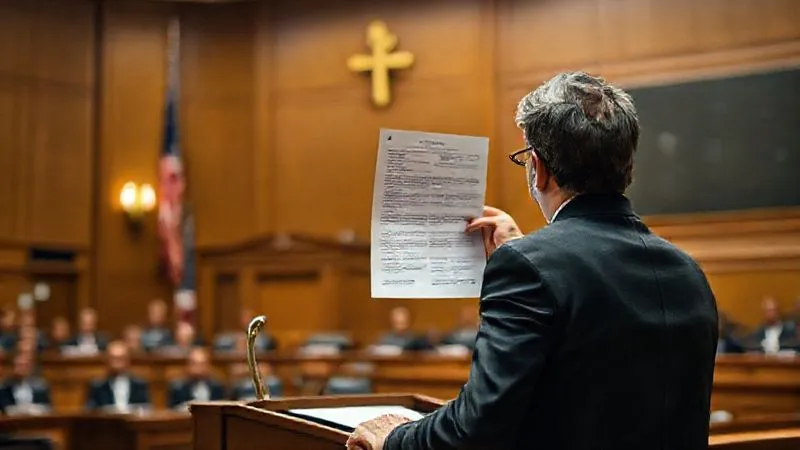
Sentencing: Preserving Discretionary and Enhancement Objections
The trial doesn't end with the verdict; sentencing often presents its own complex set of issues ripe for appeal. It's a distinct phase of the proceedings where specific objections must be made to preserve challenges to the sentence imposed.
Objecting to Sentencing Enhancements
Many jurisdictions have sentencing guidelines or statutes that allow for enhancements based on specific findings (e.g., prior convictions, use of a weapon, leadership role). If the prosecution seeks an enhancement, and you believe the factual basis is insufficient or the legal application is incorrect, you must object. This requires challenging the evidence presented for the enhancement and arguing against its legal applicability. Simply arguing for a lighter sentence is not enough; you must specifically object to the *legal basis* or *factual sufficiency* of any proposed enhancement.
For example, if the state argues for a 'gang enhancement' and the evidence presented is flimsy, you must object that the evidence does not meet the statutory requirements for the enhancement. If the judge overrules, the issue is preserved.
Preserving Challenges to Discretionary Sentences
Even in jurisdictions with broad judicial discretion, a sentence can be appealed if it's found to be 'excessive,' 'unreasonable,' or an 'abuse of discretion.' To preserve such a challenge, you must articulate on the record *why* the proposed sentence is inappropriate, referencing mitigating factors, comparable cases, or the specific circumstances of your client. You can also argue that the judge failed to consider relevant factors or considered irrelevant ones.
A common mistake is simply pleading for leniency. Instead, you need to state, 'Your Honor, we object to the imposition of a consecutive sentence on Count 2, as the facts presented demonstrate a single course of conduct, making a concurrent sentence more appropriate and consistent with the spirit of the sentencing guidelines. A consecutive sentence, in this instance, would constitute an abuse of discretion.' This gives the appellate court a specific legal argument to review.
The Role of Ineffective Assistance of Counsel (IAC) in Appellate Preservation
While often litigated in post-conviction proceedings rather than direct appeal, claims of Ineffective Assistance of Counsel (IAC) are fundamentally tied to the trial record and the preservation of issues. An appellate attorney often must review the trial record not just for preserved errors, but for errors of omission by trial counsel that might constitute IAC.
When IAC Becomes an Appellate Issue
An IAC claim alleges that trial counsel's performance fell below an objective standard of reasonableness and that this deficient performance prejudiced the defendant. This can include failing to investigate, failing to file critical motions, or, most relevant here, failing to make timely and specific objections to preserve issues for appeal. The U.S. Supreme Court's two-prong test from Strickland v. Washington requires proof of both deficient performance and prejudice.
Sometimes, an IAC claim can be raised on direct appeal if the record is sufficiently developed to demonstrate both prongs. More often, it requires an evidentiary hearing in a post-conviction proceeding to introduce evidence outside the trial record regarding counsel's decisions and performance.
Preserving the Record for IAC Claims
Even though an IAC claim might be brought later, the trial attorney's actions (or inactions) during trial form the basis of the claim. Therefore, a trial attorney who is aware of a potential IAC issue (e.g., they know they missed an important objection) should ensure that the record, to the extent possible, reflects the circumstances. This is a delicate balance, as counsel cannot ethically sabotage their own client's case. However, if a serious error occurs, the trial attorney's subsequent actions, such as advising the client of potential IAC, can be relevant.
It's vital for appellate counsel to meticulously review the entire trial transcript, not just for explicit objections, but for instances where objections *should* have been made, or where counsel's actions (or lack thereof) appear objectively unreasonable. This diligent review is the first step in identifying potential IAC claims that can save a conviction, even if other issues weren't perfectly preserved. This highlights the profound responsibility of trial counsel to always have an eye toward the appellate stage.

Beyond the Obvious: Diligence, Documentation, and the Complete Trial Log
While mastering objections and motions is critical, preserving issues for appeal is also about meticulous diligence and comprehensive documentation. The unsung heroes of appellate preservation are the detailed trial log and the complete record.
The Power of the Reporter's Transcript
Every word spoken in court, every objection, every ruling, every jury instruction – it all needs to be captured by the court reporter. Ensure the reporter is clearly capturing everything. If an attorney or witness is speaking too fast, or if multiple people are talking over each other, politely ask for a pause to ensure the record is clear. If you make an objection, ensure the judge's ruling is also clearly on the record. If the judge gives an ambiguous signal, politely ask for a verbal ruling: 'For the record, Your Honor, is that objection sustained or overruled?'
I've seen instances where attorneys have had to reconstruct parts of the record because the reporter missed something critical. While this is possible, it's far more difficult and less reliable than ensuring accuracy in real-time. The court reporter is your ally in building a complete record.
Maintaining a Detailed Trial Log
Beyond the official transcript, maintaining your own detailed trial log or notes is invaluable. This log should include:
- Date and Time: When specific events occurred.
- Witness Name: Who was testifying.
- Specific Testimony: Key quotes or summaries of testimony relevant to potential issues.
- Objections Made: Your specific objection, the grounds, and the judge's ruling.
- Motions Made: The motion, grounds, and ruling.
- Jury Instruction Issues: Proposed instructions, objections to given instructions, and rulings.
- Exhibit Numbers: When exhibits were offered, admitted, or excluded.
- Sidebar Conferences: A brief note about what was discussed, as these often aren't fully transcribed.
This personal log serves as a roadmap for appellate counsel, helping them navigate the often-voluminous trial transcript to pinpoint potential errors. It's an invaluable tool for ensuring no stone is left unturned.
Best Practices for Comprehensive Documentation:
- Pre-Trial Checklist: Develop a checklist of all potential pre-trial motions and objections relevant to your case.
- Trial-Day Checklist: Have a checklist for each day of trial, noting key moments for objections and motions.
- Objection Log: Keep a running log of every objection, its grounds, and the ruling.
- Exhibit Log: Track all exhibits, their status (offered, admitted, excluded), and any related rulings.
- Communicate with Reporter: Build a good rapport with the court reporter; they are essential to your record.
Frequently Asked Questions (FAQ)
What if my objection is overruled? Do I need to re-object? Generally, if your objection is clearly stated and overruled, the issue is preserved. You don't need to re-object to the same line of questioning or the same piece of evidence unless the context changes significantly, or the judge admitted it provisionally. However, if the judge indicated the ruling was provisional or subject to further foundation, a renewed objection might be necessary once the foundation is laid (or not laid). When in doubt, it's safer to err on the side of renewing an objection if the situation evolves.
Can I appeal an issue I didn't object to? In most jurisdictions, no, unless it falls under the very narrow 'plain error' doctrine. Plain error is typically reserved for errors that are obvious, affect substantial rights, and seriously affect the fairness, integrity, or public reputation of judicial proceedings. It's an exception, not a rule, and rarely succeeds. This is why diligent preservation is so critical.
How does plain error doctrine apply? The plain error doctrine allows appellate courts to review unpreserved errors, but it's a high bar. The error must be (1) an 'error' under current law, (2) 'plain' (clear or obvious), (3) affect 'substantial rights' (meaning it affected the outcome of the trial), and (4) seriously affect the 'fairness, integrity, or public reputation of judicial proceedings.' It's not a substitute for proper objection and is used sparingly.
What's the difference between preserving an issue and perfecting an appeal? Preserving an issue refers to making the necessary objections, motions, and offers of proof during the trial court proceedings to ensure that a legal error is properly documented for appellate review. Perfecting an appeal refers to the procedural steps taken *after* a conviction to formally initiate and pursue the appeal in the higher court, such as filing a notice of appeal, designating the record, and filing briefs. Preservation is what you do at trial; perfecting is what you do after.
How important is the trial judge's ruling on an objection? The judge's ruling is paramount. If an objection is sustained, the error is often cured, and there's no issue for appeal (unless the error was so egregious it couldn't be cured). If an objection is overruled, that ruling is what the appellate court will review for legal error. Without a clear ruling on the record, the appellate court cannot determine if an error occurred.
Key Takeaways and Final Thoughts
- The trial record is the exclusive foundation for appellate review; if it's not on the record, it didn't happen for appeal.
- Master the contemporaneous objection rule: be timely and specific with your legal grounds.
- Utilize strategic pre-trial, mid-trial, and post-trial motions to preserve broader issues.
- Pay meticulous attention to jury instructions, proposing correct ones and objecting to erroneous ones.
- Always make an offer of proof when evidence is excluded to show its substance and relevance.
- Diligently preserve sentencing issues by specifically objecting to enhancements or abuses of discretion.
- Maintain a detailed trial log and ensure the court reporter accurately captures all proceedings.
- Understand that while IAC can save an unpreserved issue, it's a difficult path; proactive preservation is always superior.
As a veteran in the trenches of criminal law, I can't overstate the importance of these principles. The difference between a lost cause and a successful appeal often hinges on the painstaking diligence exercised during the trial. By adopting a proactive, appellate-minded approach to every stage of a criminal trial, you are not just representing your client in the present; you are meticulously building their future. Embrace these strategies, and you will dramatically enhance the chances of securing justice, even if it requires a journey to a higher court. Your client's freedom may very well depend on it.
Recommended Reading
- Unmasking the Ghost in the Machine: The Legal Challenges of Attributing Cyber Warfare Attacks
- Target Company Resists DD? 7 Expert Steps to Secure Information
- Eviction Emergency: 5 Steps to Obtain Automatic Stay Relief
- Unlock Justice: The Ultimate Guide to How to Apply for Legal Aid for Family Court Matters
- Land Use Variance: What's Allowed and How to Get Approved?


Comments
Leave a comment below. Your email will not be published. Required fields marked with *