



How to proceed when an elder client with an incomplete estate plan suddenly loses capacity?
For over two decades in elder law, I've witnessed situations that can only be described as heart-wrenching. One moment, a client is lucid, discussing their wishes; the next, an unexpected medical event renders them unable to make critical decisions. It's a sudden, jarring shift that often leaves families, and sometimes even the legal professionals involved, scrambling.
The profound pain point here isn't just the health crisis, but the legal vacuum created when an estate plan is unfinished. Assets become frozen, medical decisions are complicated, and the elder's voice, which was once clear, is now silent. This scenario plunges families into a labyrinth of legal complexities, emotional distress, and financial uncertainty, often at their most vulnerable time.
This article is designed to be your definitive guide through this challenging terrain. I will provide not just legal definitions, but actionable frameworks, real-world insights, and step-by-step guidance derived from years of experience. You will learn how to navigate the immediate aftermath, understand the legal tools available, and protect your elder client's best interests when their estate plan is tragically incomplete.

The Immediate Aftermath: Assessing the Legal Vacuum
When sudden incapacity strikes, the first crucial step is to understand precisely what legal documents, if any, are in place and what remains unfinished. This isn't just about a will; it encompasses healthcare directives, powers of attorney, and trusts.
What to look for:
- Advance Directives: Is there a Healthcare Power of Attorney (HCPOA) or a Living Will? If so, who is named as agent and what are the specific instructions?
- Financial Authority: Is there a Durable Power of Attorney (DPOA) for finances? When was it executed, and is it valid?
- Estate Distribution: Is there a Last Will and Testament? Is it signed, witnessed, and properly executed? What about trusts?
- Beneficiary Designations: Are beneficiaries named on bank accounts, life insurance policies, or retirement accounts? These often bypass wills.
In my experience, even a partially completed document can offer clues or indicate intent, but it usually lacks the legal teeth to be enforceable. The absence of a valid DPOA or HCPOA is particularly problematic, as these are the cornerstones of managing affairs during incapacity.
"The greatest tragedy in elder law isn't just the illness, but the 'what ifs' left behind by an unfinalized plan. Proactive assessment is the only way to mitigate the damage."
Understanding the Core Legal Remedies: Guardianship and Conservatorship
When an elder client loses capacity and lacks valid advance directives, the legal system's primary recourse is often to appoint a guardian (for personal decisions) or a conservator (for financial decisions), or both. These are court-supervised processes that can be lengthy, costly, and emotionally draining.
Guardianship (Person) vs. Conservatorship (Estate)
While often used interchangeably in common parlance, they serve distinct functions:
- Guardianship: A court-appointed individual or entity responsible for the personal care and well-being of the incapacitated person (the ward). This includes making decisions about medical treatment, living arrangements, and daily care.
- Conservatorship: A court-appointed individual or entity responsible for managing the financial affairs and assets of the incapacitated person. This involves paying bills, managing investments, and protecting the estate from waste or exploitation.
The distinction is critical because the scope of authority granted by the court is different. In many states, a single person can serve as both guardian and conservator, but they must fulfill distinct legal duties for each role. The court's primary objective is always the best interest of the incapacitated individual.
| Feature | Guardianship | Conservatorship |
|---|---|---|
| Purpose | Personal care and well-being | Financial management and asset protection |
| Scope of Authority | Medical decisions, living arrangements, daily care | Paying bills, managing investments, real estate transactions |
| Court Oversight | Regular reporting on ward's condition | Annual financial accounting, budget approval |
| Impact on Rights | Can restrict personal liberties | Restricts financial autonomy |
Emergency Powers: When Time is of the Essence
In situations of sudden incapacity, particularly when immediate medical decisions or financial actions are required, there might be a need for emergency intervention. This is not a substitute for a full guardianship or conservatorship but a temporary measure.
Petitioning for Temporary Guardianship/Conservatorship
Most jurisdictions allow for the petition of a temporary guardian or conservator under exigent circumstances. This usually requires:
- Demonstrating Immediate Harm: Evidence that the elder is in imminent danger without intervention (e.g., critical medical decision needed, assets being dissipated).
- Sworn Affidavits: Testimony from doctors, social workers, or family members attesting to the incapacity and the urgency.
- Expedited Hearing: The court will typically schedule a hearing much faster than for a standard petition.
It's vital to remember that these are short-term appointments, often lasting only 30-90 days, designed to bridge the gap until a more permanent solution can be established. This provides a crucial window for legal counsel to gather all necessary information and prepare for the full hearing.
"In crisis, the legal system can move quickly, but only if the petition clearly articulates the immediate threat and provides compelling evidence. Haste without evidence leads to denial."
Navigating the Courts: The Petition Process
The standard process for establishing guardianship or conservatorship is a formal legal proceeding. It’s complex and requires meticulous preparation.
Key Steps in the Petition Process:
- Filing the Petition: A concerned party (often a family member) files a petition with the appropriate probate or family court, requesting the appointment of a guardian/conservator. The petition must detail the alleged incapacity and why the proposed guardian/conservator is suitable.
- Notice to Interested Parties: All close family members, and often the incapacitated individual themselves, must be formally notified of the petition and the upcoming hearing. This ensures due process.
- Medical Evaluation: The court will typically require a comprehensive medical evaluation from a physician, often including a psychological assessment, to confirm the individual's lack of capacity to make decisions.
- Court-Appointed Attorney/Guardian Ad Litem: In many jurisdictions, the court will appoint an attorney or a Guardian Ad Litem (GAL) to represent the best interests of the alleged incapacitated person. Their role is to investigate and report back to the court.
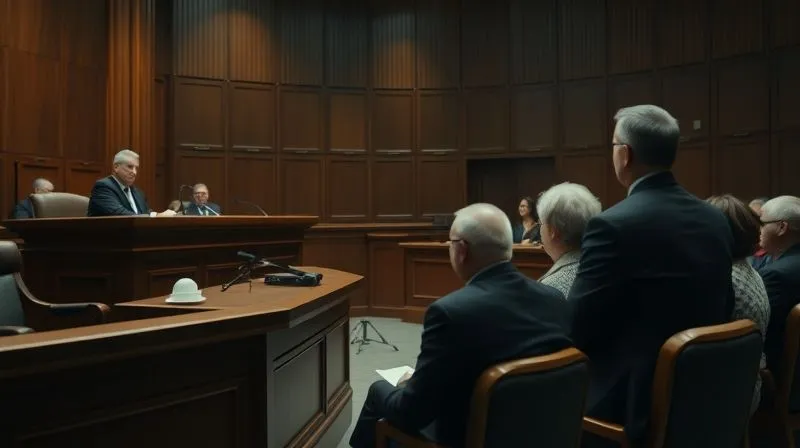
- The Hearing: A formal court hearing where evidence is presented, witnesses testify, and the judge makes a determination regarding incapacity and the suitability of the proposed guardian/conservator.
- Order of Appointment: If incapacity is proven and the proposed party is deemed suitable, the court issues an order appointing the guardian/conservator, detailing their specific powers and responsibilities.
This process can be adversarial if family members disagree on who should serve or if the individual's capacity is disputed. According to the American Bar Association, navigating these proceedings without experienced legal counsel can lead to significant delays and unfavorable outcomes. Learn more about guardianship law from the ABA.
Protecting Assets and Healthcare Decisions: The Fiduciary's Duty
Once appointed, a guardian and/or conservator assumes a significant fiduciary duty. This isn't merely a title; it comes with stringent legal obligations and personal liability.
Responsibilities of a Conservator:
- Inventory of Assets: Within a specified timeframe, the conservator must provide the court with a complete inventory of all the incapacitated person's assets.
- Financial Management: This includes paying bills, managing investments, filing taxes, and making prudent financial decisions. All expenditures must be for the benefit of the incapacitated person.
- Reporting: Regular financial accountings must be submitted to the court, detailing all income and expenses. These are often subject to judicial review.
- Avoiding Conflicts of Interest: The conservator must act solely in the best interest of the incapacitated person, avoiding any personal gain or conflict.
Responsibilities of a Guardian:
- Healthcare Decisions: Making informed medical decisions in consultation with healthcare providers, always striving to align with the incapacitated person's known wishes or best interests.
- Living Arrangements: Determining suitable living arrangements, whether at home with support, assisted living, or a skilled nursing facility.
- Personal Care: Overseeing daily care, nutrition, hygiene, and social engagement.
- Reporting on Well-being: Providing the court with regular updates on the ward's physical and mental health.
Failing to uphold these duties can result in removal by the court, financial penalties, and even criminal charges. The stakes are incredibly high.
The Role of Family and Support Systems
Even when a legal professional is navigating the court process, the role of the family and other support systems remains paramount. Their input, cooperation, and vigilance are critical.
How Families Can Assist:
- Providing Information: Family members often have the most detailed knowledge of the elder's wishes, financial history, and medical background. This information is invaluable for the court and the appointed fiduciary.
- Emotional Support: Navigating incapacity is emotionally taxing. Family provides crucial emotional support for the elder, even if they cannot fully comprehend their situation, and for each other.
- Monitoring and Oversight: While a court-appointed fiduciary is legally bound, a vigilant family can help ensure the elder's best interests are truly being served and report any concerns to the court.
- Care Coordination: Family members often play a direct role in coordinating care, communicating with healthcare providers, and ensuring the elder's daily needs are met, even if a guardian is formally appointed.
Case Study: The Unsigned Trust of Mrs. Eleanor Vance
Problem: Mrs. Eleanor Vance, 88, had meticulously planned her estate, including a complex revocable living trust designed to avoid probate and provide for her special needs grandchild. Unfortunately, she suffered a massive stroke just hours before her scheduled appointment to sign the final trust documents and accompanying pour-over will. Her DPOA and HCPOA were also unsigned. Her only living relative was a niece, Sarah, who lived out of state.
Action Taken: Sarah immediately contacted an elder law attorney. Due to the urgency of Mrs. Vance's medical condition (requiring ventilator support and a feeding tube), the attorney filed an emergency petition for temporary guardianship for healthcare decisions. Simultaneously, a standard petition for conservatorship was initiated to manage Mrs. Vance's substantial financial assets, which were now effectively frozen. The partially drafted trust documents, while legally unenforceable, were presented to the court as strong evidence of Mrs. Vance's intent regarding her estate distribution.
Outcome: The court granted Sarah temporary guardianship, allowing critical medical decisions to be made. After a more extensive conservatorship hearing, Sarah was appointed conservator. While the original trust could not be validated, the court, recognizing Mrs. Vance's clear intent from the unsigned documents, allowed Sarah, as conservator, to petition for a 'substituted judgment' order. This permitted Sarah to create a court-supervised trust that mirrored Mrs. Vance's unsigned document as closely as possible, preserving her wishes and providing for her grandchild, albeit with significant court oversight and legal fees that could have been avoided had the original documents been signed. This case highlights the importance of even incomplete documentation in guiding court decisions, but also the immense cost and complexity of rectifying an unfinished plan.
Preventative Measures: Learning from Crisis
The lessons learned from cases of sudden incapacity with incomplete estate plans are clear: prevention is always the best strategy. As an industry specialist, I cannot stress this enough.
Key Preventative Steps:
- Execute Core Documents: Ensure every elder client has a valid Durable Power of Attorney (DPOA), a Healthcare Power of Attorney (HCPOA), and a Living Will. These are the absolute minimum.
- Complete the Will and Trust: A signed and properly witnessed Last Will and Testament, and any associated trusts, are essential for asset distribution and avoiding probate.
- Regular Review: Estate plans are not static. Life changes, laws change. Encourage annual or biennial reviews to ensure documents remain current and reflect the client's wishes.
- Digital Asset Planning: In today's world, digital assets (online accounts, social media) are increasingly important. Include provisions for their management.
- Communication with Family: Encourage clients to discuss their plans with trusted family members. While not legally binding, it can ease transitions.
As a Forbes article emphasizes, failing to plan is planning to fail, especially when it comes to estate matters. Read more on the cost of not having an estate plan.
Ethical Considerations for the Attorney
When an elder client loses capacity with an incomplete estate plan, the attorney's role becomes acutely sensitive, fraught with ethical obligations. My experience dictates that transparency, diligence, and unwavering commitment to the client's best interests are paramount.
Key Ethical Duties:
- Client-Lawyer Relationship: If the client is incapacitated, the attorney's duty is still to the client, not necessarily to the family members who may be initiating contact.
- Confidentiality: Information gathered during the initial planning phase remains confidential. The attorney must be careful about disclosing this information to family without proper authorization or court order.
- Competence: The attorney must be competent in elder law and guardianship/conservatorship proceedings. If not, they have an ethical duty to associate with competent counsel or decline the representation.
- Avoiding Conflicts: If the attorney previously represented the elder, they must carefully assess if representing a family member in a guardianship petition creates a conflict of interest.
- Acting in Best Interest: Even when the client cannot articulate their wishes, the attorney must strive to act in what they reasonably believe to be the client's best interests, often guided by prior conversations and any existing (even if incomplete) documentation.
The Rules of Professional Conduct, particularly those concerning clients with diminished capacity, provide guidance. Refer to ABA Model Rule 1.14 on Clients with Diminished Capacity.
Frequently Asked Questions (FAQ)
Question: How long does a guardianship or conservatorship process typically take? The timeline varies significantly by jurisdiction and case complexity. An emergency temporary appointment might be granted within days or a week. A full, permanent appointment can take anywhere from 2-6 months, or even longer if there are contested issues or family disputes.
Question: Can an incomplete will or trust be used as evidence in court? While an unsigned or improperly executed will or trust is not legally binding for asset distribution, it can be presented to the court as evidence of the elder's intent. In some cases, courts may consider this 'substituted judgment' to guide decisions if it's clearly in the elder's best interest, as seen in our Case Study, but this is rare and involves significant legal hurdles.
Question: What if family members disagree on who should be guardian/conservator? Family disputes are common and can significantly complicate and prolong the process. The court will hold hearings to consider all candidates and their suitability, ultimately appointing the individual(s) it deems most capable and most aligned with the incapacitated person's best interests, which may not be the family's preferred choice.
Question: Are there alternatives to guardianship/conservatorship if an estate plan is incomplete? In very limited circumstances, if the incapacitated person has minimal assets and only needs basic care, some states might allow for 'small estate' procedures or limited powers. However, for significant assets or complex medical decisions, court intervention is almost always necessary without valid advance directives. This underscores the need for proactive planning.
Question: What are the costs associated with guardianship/conservatorship? The costs can be substantial, including attorney fees for the petitioner, court filing fees, fees for the court-appointed attorney/GAL for the incapacitated person, and potentially the ongoing fees for the guardian/conservator themselves. These costs are typically paid from the incapacitated person's estate, further depleting their resources.
Key Takeaways and Final Thoughts
- Sudden incapacity with an incomplete estate plan creates a legal and emotional crisis that can be devastating for families.
- The absence of valid Durable Powers of Attorney and Healthcare Powers of Attorney necessitates court intervention through guardianship and/or conservatorship.
- These court processes are complex, time-consuming, and expensive, highlighting the critical importance of proactive estate planning.
- Even incomplete documents can sometimes offer clues to an elder's intent, though they lack legal enforceability.
- Attorneys, family members, and fiduciaries must act with diligence, transparency, and unwavering commitment to the incapacitated elder's best interests.
While navigating the aftermath of sudden incapacity with an incomplete plan is undeniably challenging, it is not an insurmountable task. With experienced legal guidance, meticulous attention to detail, and a deep understanding of the legal landscape, it is possible to protect an elder client's assets, honor their presumptive wishes, and ensure their well-being. My hope is that this guide empowers you with the knowledge to act decisively and compassionately in such difficult circumstances, and to advocate tirelessly for the vulnerable individuals we serve.
Recommended Reading
- 7 Steps: Protect Trade Secrets After an Employee Resignation Effectively
- Paternity Suit & Business Assets: 7 Expert Steps to Safeguard Your Future
- 7 Ways to Challenge Novel Forensic Evidence: A Courtroom Guide
- Title 1 Funding: How Does It Really Impact Our Schools?
- Delinquent HOA Assessments: 7 Legal Steps to Recover Funds Urgently





Comments
Leave a comment below. Your email will not be published. Required fields marked with *