



How to Resolve EB-1C RFE for Multinational Manager Petition?
After two decades navigating the intricate currents of U.S. immigration law, especially within the specialized realm of employment-based visas, I've witnessed the profound impact an EB-1C Request for Evidence (RFE) can have on a company's strategic plans and an individual's career trajectory. It's a moment of significant anxiety, often perceived as a roadblock, but in my experience, it's more accurately a detailed inquiry from USCIS seeking clarification and further proof.
The challenge with an EB-1C RFE for a multinational manager or executive petition often stems from a fundamental misunderstanding of USCIS's precise definitions of managerial or executive capacity, or the nuances of qualifying organizations. Companies, eager to bring vital talent to the U.S., sometimes submit petitions with what they believe is ample evidence, only to receive an RFE that questions the very core of their assertion. This can lead to delays, increased costs, and immense stress for both the employer and the beneficiary.
This article is designed to be your definitive guide, offering a strategic roadmap and actionable frameworks to effectively resolve your EB-1C RFE. I will share insights gleaned from countless successful RFE responses, provide a realistic case study, and equip you with the expert knowledge to transform a potential setback into an approved petition. We'll delve into the specific evidentiary requirements and response strategies that USCIS truly seeks.
Understanding the Core of an EB-1C RFE: What USCIS Really Wants
Receiving an RFE is never ideal, but it's crucial to understand it's not a denial. It's an opportunity, albeit a demanding one, to provide additional evidence and arguments that strengthen your case. USCIS issues an RFE when the initial evidence submitted does not fully establish eligibility for the EB-1C classification, or when there are inconsistencies or ambiguities in the documentation.
Common triggers for an EB-1C RFE often revolve around three key areas: establishing the beneficiary's managerial or executive capacity, proving the qualifying relationship between the U.S. and foreign entities, and demonstrating that the foreign entity has been doing business for at least one year. Each RFE is unique, but these categories represent the most frequent points of contention.
In my practice, I've found that USCIS isn't trying to deny your case out of spite; they are simply fulfilling their mandate to ensure that every petition strictly adheres to the legal definitions and evidentiary standards set forth in the Immigration and Nationality Act (INA) and its regulations.
The "Managerial/Executive Capacity" Conundrum
This is arguably the most common and complex area for EB-1C RFEs. USCIS has a very specific definition of what constitutes a manager or executive, and it often differs from how businesses define these roles internally. A first-line supervisor, for instance, who primarily manages a function or a team of non-professional employees, typically does not qualify.
USCIS looks for evidence that the beneficiary:
- Primarily manages the organization, a department, subdivision, function, or component of the organization.
- Supervises and controls the work of other supervisory, professional, or managerial employees, or manages an essential function within the organization, or a department or subdivision of the organization.
- Has the authority to hire and fire or recommend those as well as other personnel actions (such as promotion and leave authorization) if directly supervising other employees; or, if no other employee is directly supervised, functions at a senior level within the organizational hierarchy or with respect to the function managed.
- Exercises discretion over the day-to-day operations of the activity or function for which the employee has authority.
The key here is the word "primarily." If a manager spends most of their time performing the same tasks as the employees they supervise, or if they are primarily engaged in hands-on, non-managerial tasks, the petition will likely draw an RFE. It's about strategic oversight, decision-making, and managing *through* others, rather than direct execution.

Deconstructing Your RFE: A Strategic First Step
The moment an RFE arrives, panic is a natural first reaction. However, a calm, methodical approach is paramount. Your response window is typically limited, often 84 days, so time is of the essence.
Thoroughly Review the RFE Letter
This might seem obvious, but I've seen clients make assumptions without fully dissecting the RFE. Each RFE is different, even for similar cases. USCIS will specifically outline what evidence is missing or what aspect of your petition they find unconvincing. You must address every single point raised.
- Identify Specific Issues: Go through the RFE paragraph by paragraph. Highlight or list every question, concern, and request for additional documentation.
- Understand the Legal Basis: USCIS will often cite specific sections of the INA or regulatory code. Understanding these references can shed light on their interpretation.
- Note Deadlines: Mark the response deadline clearly. Work backward from this date to create a realistic timeline for gathering evidence and preparing the response.
- Categorize Requests: Group similar requests together (e.g., all requests related to managerial capacity, all related to the qualifying organization). This helps in organizing your response strategy.
Engage Expert Counsel Immediately
While some companies might consider handling an RFE internally, especially if they have in-house legal counsel, I strongly advise against it for complex EB-1C RFEs unless that counsel has deep, specialized expertise in immigration law. The nuances of immigration regulations, particularly for EB-1C, are incredibly specific and constantly evolving. An experienced immigration attorney can:
- Provide a seasoned interpretation of the RFE's underlying concerns.
- Strategize the most effective evidentiary response.
- Help gather and organize the voluminous documentation required.
- Draft persuasive legal arguments that directly address USCIS's points.
- Ensure compliance with all procedural requirements.
The stakes are too high to treat an RFE lightly. Seeking expert guidance from a qualified immigration lawyer, perhaps through resources like the American Immigration Lawyers Association (AILA), is an investment that significantly increases your chances of success.
Proving Managerial or Executive Capacity: The Cornerstone of Your EB-1C
As noted, this is where most EB-1C RFEs concentrate their scrutiny. Your response must go beyond generic job descriptions and clearly delineate how the beneficiary's role meets the strict USCIS criteria.
Organizational Structure: Beyond the Org Chart
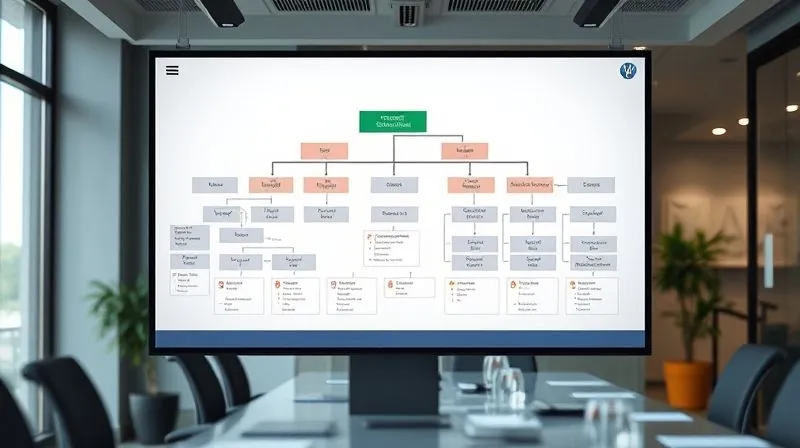
A simple organizational chart showing the beneficiary at the top of a pyramid is rarely sufficient. USCIS wants to understand the *function* of the organization and how the beneficiary fits into its strategic and operational management. They are looking for substantive evidence of managerial authority, not just a title.
- Detailed Organizational Charts: Provide charts for both the foreign and U.S. entities. These charts should clearly show the beneficiary's position, their direct reports (if any), and the reporting structure above and below them. Label positions with actual names and titles, not just placeholders.
- Job Descriptions for Direct Reports: If the beneficiary manages other employees, provide detailed job descriptions for those employees. This helps establish that the beneficiary is managing professionals or other managers, rather than primarily performing the tasks of those they supervise.
- Functional vs. Numerical Hierarchy: Emphasize if the beneficiary manages an "essential function" rather than just a number of employees. For example, a Head of Global Marketing might manage a critical function with a small team, but their strategic oversight qualifies them as a manager.
- Affidavits from Senior Leadership: Obtain detailed affidavits from senior executives in both the U.S. and foreign entities, attesting to the beneficiary's managerial or executive duties, their scope of authority, and their impact on the organization. These should be specific, not boilerplate.
Beneficiary's Role & Responsibilities: Demonstrating Authority
This section is about painting a vivid, evidence-backed picture of the beneficiary's day-to-day and strategic contributions. Focus on the nature of their responsibilities, not just the volume of work.
- Comprehensive Job Descriptions: Re-evaluate and expand the beneficiary's job description. Break down their duties into percentages of time spent on managerial vs. non-managerial tasks, emphasizing strategic planning, decision-making, policy formulation, and oversight.
- Evidence of Decision-Making Authority: Provide examples of significant decisions made by the beneficiary, along with supporting documentation (e.g., meeting minutes, email chains, project proposals approved by the beneficiary).
- Budgetary Authority: Include evidence of the beneficiary's control over significant budgets, including approval limits, budget allocation decisions, and financial reports demonstrating their oversight.
- Performance Review Documentation: If the beneficiary conducts performance reviews for their direct reports, include redacted copies of these reviews to show their supervisory authority.
- Project Plans and Strategic Documents: Submit documents that the beneficiary developed or significantly contributed to, which outline strategic initiatives, operational plans, or new policies.
Case Study: How Tech Innovators Inc. Clarified its CTO's EB-1C Role
Tech Innovators Inc., a rapidly growing software development firm, faced an RFE for their Chief Technology Officer's (CTO) EB-1C petition. USCIS questioned whether the CTO's role was primarily managerial or if he was largely a hands-on developer. The initial petition focused heavily on his technical expertise and project delivery.
The RFE Resolution: My team worked with Tech Innovators to reframe the CTO's role. Instead of highlighting his code contributions, we focused on:
- Strategic Oversight: Documenting his role in setting the company's technological vision, architecture, and long-term product roadmap.
- Managing Through Others: Providing updated organizational charts showing the CTO overseeing three department heads (Software Development, QA, and IT Infrastructure), each with their own teams. We included detailed job descriptions for these department heads, demonstrating they were professional employees.
- Budgetary Control: Submitting evidence of his approval authority for multi-million dollar technology investments and his role in annual budget planning.
- Policy Formulation: Presenting internal policy documents on data security and software development methodologies that he authored and implemented across the organization.
This comprehensive response, with strong affidavits from the CEO and Board members, clearly demonstrated that while the CTO possessed deep technical knowledge, his primary function was strategic management and oversight of critical functions and professional staff. This resulted in the EB-1C petition being approved.
The "Qualifying Organization" Criterion: Addressing Relationship and Operations
Another common RFE area concerns the relationship between the U.S. and foreign entities and their active business operations. USCIS needs to be convinced that a legitimate multinational corporate structure exists.
Demonstrating a Valid Relationship
The U.S. employer must be a parent, subsidiary, affiliate, or branch of the foreign employer. This relationship needs clear, documented proof.
- Corporate Documents: Provide articles of incorporation, bylaws, stock certificates, shareholder agreements, and corporate resolutions that clearly establish ownership and control.
- Annual Reports and Financial Statements: These can show the relationship and financial ties between the entities.
- Intercompany Agreements: Any formal agreements outlining the operational or financial relationship between the U.S. and foreign entities.
- Tax Returns: Consolidated tax returns or evidence of shared tax reporting can be very persuasive.
Active Business Operations
Both the U.S. and foreign entities must be actively engaged in providing goods or services. A mere shell company will not suffice. For the foreign entity, it must have been doing business for at least one year prior to the petition filing.
- Financial Statements: Audited financial statements, profit and loss statements, and balance sheets for both entities.
- Payroll Records: Evidence of employees on payroll for both entities.
- Client Contracts and Invoices: Demonstrate active business transactions.
- Office Lease Agreements: Show physical presence and ongoing operations.
- Marketing Materials: Brochures, websites, and presentations that illustrate the nature of the businesses.
For more detailed guidance on establishing corporate relationships, you might refer to resources from reputable business law firms or organizations that specialize in international corporate structures, such as those found on Forbes Business section.
Sustaining the Multinational Nature: Proving Ongoing Operations
The EB-1C category is for multinational managers, meaning the organization must continue to operate in at least two countries. Maintaining this multinational presence is critical.
Documenting Continuous Business Activities
USCIS wants reassurance that the foreign entity remains a viable, operating business. This is especially true if the beneficiary's transfer is perceived as a critical loss to the foreign entity's operational capacity.
- Recent Financial Statements: Show continued revenue generation and financial health of the foreign entity.
- Updated Employee Rosters: Demonstrate that the foreign entity still has a robust workforce, particularly to backfill the beneficiary's previous role or continue operations effectively.
- Client Lists and Contracts: Proof of ongoing business relationships and projects in the foreign country.
- Tax Filings: Recent tax returns for the foreign entity.
The "One Year Foreign Employment" Requirement
The beneficiary must have been employed abroad by the qualifying organization for at least one continuous year in the three years preceding the filing of the petition (or preceding lawful entry into the U.S. if already here in L-1A status). This needs clear, unambiguous documentation.
- Payroll Records: Detailed payroll stubs, wage statements, and employment verification letters from the foreign employer.
- Foreign Tax Documents: Tax returns from the foreign country that show employment and income.
- Employment Contracts: The employment contract from the foreign entity.
- Affidavits: Sworn statements from HR or senior management at the foreign company attesting to the beneficiary's employment dates and role.
Crafting a Persuasive RFE Response: Beyond Just Submitting Documents
The manner in which you present your evidence is almost as important as the evidence itself. A well-organized, clear, and persuasive response can make all the difference.
The Cover Letter: Your Narrative Blueprint
The cover letter is not just a formality; it's your opportunity to tell a cohesive story and guide the USCIS officer through your evidence. It should be a legal brief, not just a transmittal letter.
- Directly Address Each RFE Point: For every concern raised in the RFE, dedicate a separate section in your cover letter. Quote the RFE's specific language and then provide your detailed response, explaining how the enclosed evidence addresses that point.
- Cross-Reference Evidence: For each argument, specifically refer to the exhibit number where the supporting documentation can be found (e.g., "As demonstrated in Exhibit 3, the organizational chart clearly shows...").
- Legal Arguments: Where necessary, cite relevant statutes, regulations, or administrative precedent decisions (AAO decisions) to support your position, especially regarding the interpretation of managerial capacity.
- Clarity and Conciseness: While detailed, the letter should be clear and easy to follow. Avoid jargon where possible, or explain it.
Organizing Your Evidence: Clarity is Key
USCIS officers review thousands of petitions. Make their job easier, and you increase your chances of a favorable outcome. Disorganized responses can lead to further RFEs or even denials, simply because the officer couldn't find the crucial information.
- Table of Contents and Exhibit List: Begin your response with a comprehensive table of contents and a detailed list of exhibits, making it easy to navigate.
- Tabbed Exhibits: Use clearly labeled tabs for each exhibit. This is a non-negotiable best practice.
- Logical Grouping: Group related documents together. For instance, all documents related to the U.S. entity's financial health in one section, all managerial capacity evidence in another.
- Highlight Key Information: In voluminous documents, consider highlighting (with a non-obstructive marker) the specific sections relevant to an RFE point.
- Avoid Redundancy: While it's important to be thorough, avoid submitting the exact same document multiple times unless it's genuinely needed in different contexts.

| RFE Point | Required Evidence | Submitted Evidence | Explanation/Cross-Reference |
|---|---|---|---|
| Beneficiary's Managerial Capacity (Item 2a) | Detailed job description, org charts for direct reports, performance reviews. | Exhibit 5: Revised Job Description; Exhibit 6: U.S. Org Chart; Exhibit 7: Direct Report Job Descriptions; Exhibit 8: Performance Review Samples. | See Cover Letter Section III.A for detailed argument. |
| Qualifying Relationship (Item 3c) | Stock certificates, intercompany agreements, financial statements. | Exhibit 12: Stock Certificates; Exhibit 13: Intercompany Agreement; Exhibit 14: Audited Financials. | See Cover Letter Section IV.B for detailed argument. |
| Foreign Entity Active Business (Item 4b) | Foreign entity tax returns, payroll records, client contracts. | Exhibit 16: Foreign Tax Returns (2022); Exhibit 17: Foreign Payroll Records (Jan-Dec 2023); Exhibit 18: Key Client Contracts. | See Cover Letter Section V.A for detailed argument. |
The most successful RFE responses are not just collections of documents; they are compelling narratives, meticulously organized, that anticipate and proactively answer every question USCIS might have, leaving no room for doubt.
Common Pitfalls and How to Avoid Them
Even with the best intentions, certain mistakes can jeopardize an RFE response. Being aware of these can help you steer clear of them.
- Insufficient Detail: Providing only generic letters or brief descriptions without specific examples and supporting documentation.
- Failing to Address All Points: Missing even one minor point raised in the RFE can lead to a denial. Every single request must be addressed.
- Generic Evidence: Submitting boilerplate documents that don't specifically relate to the beneficiary's role or the company's unique structure.
- Missing Deadlines: RFEs have strict deadlines. Filing even one day late will result in a denial.
- Inconsistent Information: Providing conflicting information across different documents. USCIS officers are highly skilled at spotting discrepancies.
- Ignoring Previous L-1A History: If the beneficiary was previously in L-1A status, ensuring consistency between the L-1A petition and the EB-1C RFE response is crucial.
Proactive Measures: Strengthening Your Initial Petition
While this article focuses on RFE resolution, the best strategy is to minimize the chances of an RFE in the first place. Learning from RFE patterns can inform stronger initial filings.
- Anticipate USCIS Scrutiny: When preparing an initial EB-1C petition, assume USCIS will be highly skeptical of managerial claims and the qualifying relationship. Over-prepare rather than under-prepare.
- Detailed Organizational Analysis: Conduct a thorough internal review of the beneficiary's role and the company's structure *before* filing. Identify potential weaknesses and gather evidence to preemptively address them.
- Expert Review: Have an experienced immigration attorney review your petition package before submission. Their fresh perspective can catch issues you might have overlooked.
The USCIS Policy Manual, specifically Volume 6, Part F, Chapter 2, provides comprehensive guidance on the EB-1C classification requirements. Regularly consulting official sources like the USCIS Policy Manual can help in understanding the agency's current interpretations and expectations.
Frequently Asked Questions (FAQ)
Q: What if my foreign entity is relatively small, or has only a few employees? Can I still qualify for EB-1C? A: Yes, the size of the foreign entity isn't a direct disqualifier, but it can make proving managerial or executive capacity more challenging. The focus shifts to demonstrating that the beneficiary managed an "essential function" rather than a large team of employees. You'll need compelling evidence that their role was strategic, involved high-level decision-making, and significantly impacted the organization's overall operations or a major component, even if the team was small. Affidavits from senior leadership explaining the critical nature of the function and the beneficiary's autonomy are vital.
Q: Can I appeal if my EB-1C is denied after an RFE? A: Yes, you can appeal a denial to the Administrative Appeals Office (AAO). However, an appeal is a lengthy process, and the success rate can be challenging. Often, if the RFE response did not fully address the issues, it might be more strategic to consult with your attorney about filing a new, stronger petition, especially if new evidence or a clearer strategy emerges. This decision should always be made in close consultation with experienced legal counsel.
Q: How important are organizational charts in an EB-1C petition, especially when responding to an RFE? A: Organizational charts are incredibly important, but they must be detailed and supported by other evidence. They are visual representations of the hierarchy. For an RFE response, ensure your charts clearly depict the beneficiary's position, their direct reports (if any), and the reporting lines. Crucially, they must be accompanied by detailed job descriptions for all positions shown, especially those reporting to the beneficiary, to prove they manage professionals or other managers, not just entry-level staff.
Q: What if my role involves both managerial and hands-on technical tasks? How do I prove "primarily" managerial capacity? A: This is a common challenge. The key is to demonstrate that the *primary* duties (more than 50% of your time) are managerial or executive. Your RFE response must provide a detailed breakdown of your responsibilities, supported by evidence like calendars, project plans, meeting minutes, and affidavits from supervisors or peers, emphasizing the strategic, decision-making, and oversight aspects of your role. Quantify the time spent on managerial tasks versus hands-on tasks, and explain how any technical tasks are incidental to or directly support your high-level managerial function.
Q: How long does an RFE response take for USCIS to process after submission? A: The processing time after an RFE response is submitted can vary significantly based on the USCIS service center, current caseloads, and the complexity of the case. Generally, USCIS aims to issue a decision within 60 days, but it can sometimes take several months. Premium Processing is usually not available for EB-1C petitions at the RFE response stage, but it's important to check current USCIS guidelines. Your attorney can provide more up-to-date estimates based on current trends.
Key Takeaways and Final Thoughts
Navigating an EB-1C RFE for a multinational manager petition is a formidable challenge, but it is far from insurmountable. In my years of practice, I've seen that success hinges on a meticulous, strategic, and evidence-driven approach, coupled with an unwavering commitment to clarity and detail.
- Deconstruct the RFE: Understand every single point USCIS raises.
- Prioritize Managerial Capacity: This is often the most scrutinized area; provide overwhelming evidence.
- Document Everything: From organizational charts to financial statements, leave no stone unturned.
- Craft a Persuasive Narrative: Your cover letter and organization of evidence are critical.
- Seek Expert Counsel: An experienced immigration attorney is your most valuable asset.
Remember, an RFE is an invitation to tell your story more completely and persuasively. By approaching it with a clear strategy, robust evidence, and expert guidance, you can transform this hurdle into a successful outcome, paving the way for critical talent to contribute to your organization's success in the United States. Don't be discouraged; be strategic, be thorough, and you will prevail.
Recommended Reading
- 7 Proactive Steps: Minimizing Concussion Liability for Youth Sports?
- 9 Steps to Safeguard Against Forced Labor Allegations in Sourcing
- 7 Critical Steps: Navigating Board Member Duties in Corporate Insolvency
- 7 Legal Steps: How to Respond to a Major Corporate Ethics Breach?
- Unlock Stability: What Are the Steps in Business Financial Reorganization?





Comments
Leave a comment below. Your email will not be published. Required fields marked with *