



How to Resolve Title Defects Delaying Commercial Property Sale?
For over two decades in commercial real estate law, I've witnessed countless deals teeter on the brink of collapse, not due to market fluctuations or buyer cold feet, but because of an insidious, often overlooked culprit: title defects. These hidden flaws in a property's ownership history can derail months of negotiation, costing sellers significant time, money, and immense frustration. It's a scenario I’ve seen play out in every market cycle, and it’s always preventable, or at least resolvable, with the right approach.
The pain points are palpable: a closing date looms, contracts are signed, and then, a routine title search unearths an unreleased lien, an undisclosed easement, or an heirship issue from decades past. Suddenly, your lucrative commercial property sale is put on hold, potentially jeopardizing other investments or business plans. The clock is ticking, and every day of delay translates directly into lost opportunity and increased carrying costs. It's a stressful situation that demands immediate, expert intervention.
This article is your definitive guide to navigating this complex terrain. Drawing from my extensive experience, I will provide you with a robust framework, actionable strategies, and real-world insights on how to resolve title defects delaying commercial property sale. We'll explore proactive measures, common defect types and their specific cures, the indispensable role of legal and title professionals, and even when to consider litigation. My goal is to equip you with the knowledge to transform potential deal-breakers into manageable hurdles, ensuring your commercial property transactions close smoothly and efficiently.
1. Understanding the Anatomy of a Commercial Title Defect
Before we can resolve a title defect, we must first understand what it is and why it matters. A title defect is essentially any legal claim, encumbrance, or flaw that could prevent a property owner from having a clear, marketable title. In commercial real estate, the stakes are significantly higher than in residential transactions, given the substantial financial investments and complex operational implications involved. A clear title assures the buyer that they are acquiring full ownership rights without any hidden liabilities or challenges to their possession.
I've often explained to clients that a property title is like a historical ledger. Every transaction, every mortgage, every lien, every easement, every probate action, and every survey ever recorded against that property becomes an entry. A defect is simply a smudge or a missing entry in that ledger, making the ownership chain unclear or disputable. These smudges can range from minor clerical errors to severe issues like fraudulent conveyances, each carrying the potential to halt a sale indefinitely.
Understanding the common types of defects is the first step toward effective resolution. These often include:
- Unreleased Mortgages or Liens: A prior mortgage or mechanic's lien that was paid off but never formally released from public record.
- Boundary and Survey Errors: Discrepancies between property lines described in different documents or physical encroachments.
- Easements and Rights-of-Way: Undisclosed rights of others to use a portion of the property, which could impact development or access.
- Probate and Heirship Issues: Gaps in the chain of title due to improper probate proceedings or unknown heirs.
- Forged or Fraudulent Documents: Instances where a deed or other legal document was falsified.
- Errors in Public Records: Simple clerical mistakes by county recorders.
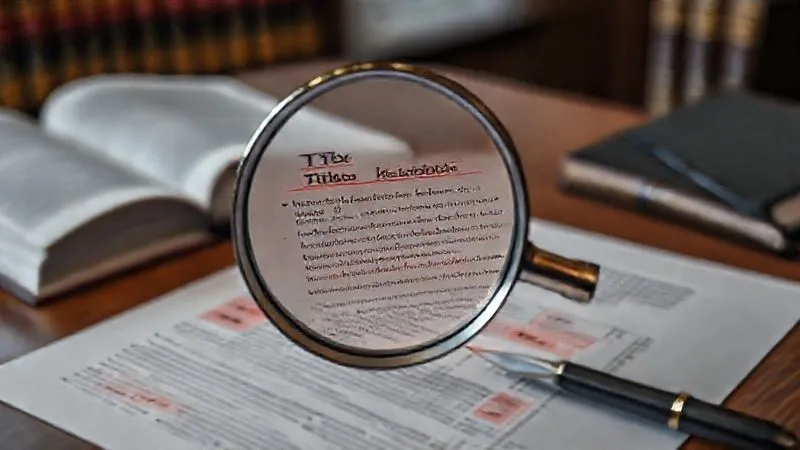
2. The Critical Role of a Thorough Title Search and Due Diligence
The foundation of any successful commercial property transaction lies in meticulous due diligence, with the title search being paramount. This isn't just a formality; it's a deep dive into the property's legal history. In my practice, I always emphasize that a comprehensive title search, conducted by an experienced title company, is the best defense against unforeseen title defects. It's the moment when potential problems are unearthed, giving you the opportunity to address them before they become deal-breakers.
A good title search goes beyond simply checking the current owner. It traces the property's ownership back through decades, sometimes even a century, examining every recorded document: deeds, mortgages, liens, judgments, probate records, tax records, and more. The output is a 'title commitment' or 'preliminary title report,' which outlines the current ownership, any existing liens or encumbrances, and requirements that must be met before a title insurance policy can be issued. This report is where title defects first become visible.
Actionable Steps for Due Diligence:
- Engage a Reputable Title Company: Choose a title company with extensive experience in commercial transactions, as they understand the unique complexities.
- Review the Title Commitment Meticulously: Don't just skim it. Work with your attorney to scrutinize every exception and requirement listed. This is where you identify potential issues.
- Obtain a Current Survey: A new survey can identify discrepancies in boundaries, encroachments, or unrecorded easements that wouldn't appear in public records.
- Verify Zoning and Land Use: Ensure the property's intended use aligns with local zoning ordinances. While not strictly a title defect, zoning issues can impact marketability.
- Environmental Assessments: For commercial properties, Phase I and Phase II environmental site assessments are crucial to identify potential contamination liabilities, which could indirectly affect title marketability.
"In commercial real estate, proactive due diligence isn't an expense; it's an investment that prevents catastrophic losses down the line. A dollar spent on a thorough title search today can save you ten thousand in litigation tomorrow."
3. Common Title Defects and Their Specific Resolutions
Once a title defect is identified, the next step is to strategize its resolution. The approach varies significantly depending on the nature of the defect. My experience has taught me that a systematic, legally sound strategy is key to how to resolve title defects delaying commercial property sale effectively.
Unreleased Mortgages and Liens
This is perhaps one of the most common and often easiest defects to resolve. It occurs when a mortgage or lien was paid off but the lender or lienholder failed to record a 'satisfaction of mortgage' or 'lien release' with the county recorder. The public record still shows the encumbrance, making the title appear unmarketable.
Resolution: The primary solution is to contact the original lender or their successor (if the loan was sold) and request a formal release. If the original entity no longer exists, or if they are unresponsive, your attorney might need to pursue a 'quiet title action' or seek a court order compelling the release. In some cases, a title insurance company might be willing to 'insure over' the defect if they are comfortable with the evidence of payment.
Easement and Boundary Disputes
These defects arise when there's a dispute over the exact location of property lines or when a third party has a right to use a portion of the property (an easement) that isn't clearly defined or recorded. These can significantly impact development plans or access.
Resolution: A new, accurate survey is often the starting point. If an encroachment is discovered, negotiation with the encroaching party to remove the structure, obtain an easement, or purchase the disputed land is common. For ambiguous easements, a 'declaratory judgment' action can clarify rights. Sometimes, a 'boundary line agreement' can be negotiated and recorded between adjacent property owners. According to the American Land Title Association (ALTA), clear definitions of easements are critical for commercial property development.
Probate and Heirship Issues
These are often complex, stemming from a previous owner's death without proper probate, or with unknown or unlocated heirs. This creates a gap in the chain of title, as ownership was never legally transferred.
Resolution: This typically requires formal probate proceedings to be initiated, even if years after the original owner's death. This involves identifying all legal heirs, having the court officially transfer ownership, and then recording the new deed. If heirs are unknown or unlocatable, a quiet title action is often necessary to obtain a court order confirming the current owner's title against all potential claims.
Forged Documents and Fraudulent Conveyances
These are the most severe and malicious defects. A fraudulent deed or mortgage can completely invalidate a property transfer. While rare, they require immediate and aggressive legal action.
Resolution: This almost always necessitates a quiet title action to have the fraudulent document declared null and void by a court. Law enforcement may also be involved. Title insurance is invaluable here, as it would typically cover the legal costs and potential losses associated with defending against such claims. As Nolo Legal Encyclopedia often highlights, proving fraud requires substantial evidence and expert legal representation.
Case Study: Resolving a Complex Easement Dispute for 'Apex Logistics Hub'
A client, Apex Logistics, was under contract to purchase a 50-acre parcel for a new distribution center. During due diligence, the title commitment revealed an old, vaguely worded agricultural easement granting a neighboring farm (long defunct) 'the right to traverse the eastern boundary for access to irrigation.' While seemingly minor, Apex's development plans included significant construction on that exact boundary, and the ambiguity of the easement posed a major risk.
The Challenge: The original farm had been subdivided multiple times, and the current owners of the adjacent parcels were unaware of the easement or its implications. The title insurer was unwilling to 'insure over' it without clarification, effectively halting the sale.
My Approach:
- Historical Research: We delved into historical records, including old aerial photographs and county land use maps, to understand the original intent and practical use of the easement.
- Neighbor Engagement: I initiated discussions with all current owners of the subdivided neighboring parcels. We explained Apex's development plans and the potential impact of the ambiguous easement.
- Negotiated Release: After several meetings, we negotiated a formal 'Easement Release Agreement' with all affected neighbors. They agreed to release their rights to the old agricultural easement in exchange for Apex granting a clearly defined, non-exclusive utility easement along a different, less critical boundary. This was a win-win: Apex got clear title for their development, and the neighbors gained guaranteed utility access.
- Recording: The new easement release and utility easement were promptly recorded, clearing the title.
The Outcome: The sale closed on time. Apex Logistics was able to proceed with its development without fear of future legal challenges related to the easement. This case exemplifies how proactive communication, historical investigation, and creative negotiation can resolve even complex title defects.
4. Leveraging Legal Expertise and Title Insurance
When you're facing a title defect, you're not just dealing with a legal problem; you're dealing with a complex historical puzzle that has significant financial implications. This is precisely why the expertise of a seasoned real estate attorney and a robust title insurance policy are non-negotiable assets. I've often seen sellers try to navigate these waters alone, only to find themselves drowning in paperwork and legal jargon.
The Indispensable Role of a Real Estate Attorney
Your real estate attorney acts as your advocate, investigator, and negotiator. They will:
- Interpret the Title Commitment: Translate the often-dense legal language of the title commitment into understandable terms, identifying the exact nature and severity of any defects.
- Conduct Further Investigation: If a defect is complex, your attorney can perform additional research, review historical documents, and consult with land surveyors or other experts.
- Formulate a Resolution Strategy: Based on the defect, they will advise on the most efficient and cost-effective path to resolution, whether it's obtaining releases, negotiating with third parties, or initiating litigation.
- Negotiate on Your Behalf: They can negotiate with lienholders, adjacent property owners, or heirs to secure necessary releases or agreements.
- Draft and Review Legal Documents: Ensuring all curative documents (releases, affidavits, new deeds) are legally sound and properly recorded.
- Represent You in Court: If a quiet title action or other litigation becomes necessary, your attorney will represent your interests vigorously.

Title Insurance: Your Ultimate Safety Net
While a title search identifies known defects, title insurance protects against *unknown* defects that might emerge after the sale. For commercial transactions, both a lender's policy (required by the lender) and an owner's policy (highly recommended for the buyer) are crucial. As per the National Association of Realtors (NAR), title insurance is a fundamental component of protecting property rights.
How Title Insurance Helps with Defects:
- Pre-Policy Curation: The title company's efforts to clear defects *before* issuing a policy are part of their risk assessment. They will often assist in obtaining releases or resolving minor issues.
- Post-Closing Protection: If a defect that was *not* discovered during the title search emerges after the closing (e.g., a forged deed from a distant past, an unknown heir), the title insurance policy will defend the owner's title and/or compensate for losses up to the policy amount.
- Defense Costs: The policy covers the legal costs of defending your title against covered claims.
| Defect Type | Resolution Strategy | Typical Timeframe | Cost Implication |
|---|---|---|---|
| Unreleased Mortgage | Obtain formal release from lender/successor | 2-6 weeks | Low (administrative fees) |
| Boundary Dispute | New survey, negotiation, boundary agreement | 1-3 months | Moderate (survey, legal fees) |
| Probate/Heirship Issue | Formal probate, quiet title action | 6-18 months | High (legal fees, court costs) |
| Fraudulent Deed | Quiet title action, police report, title insurance claim | 6-24 months | Very High (legal fees, potential loss of property without insurance) |
5. Expediting Resolution and When Litigation Becomes Necessary
Time is always of the essence in commercial real estate. Delays can lead to lost opportunities, increased carrying costs, and even the collapse of a deal. Therefore, developing an efficient strategy to expedite the resolution of title defects is paramount. However, there are instances where amicable resolution isn't possible, and litigation, specifically a quiet title action, becomes the only viable path.
Strategies for Expedited Resolution
My approach to resolving title defects delaying commercial property sale quickly involves:
- Prioritize and Triage: Not all defects are created equal. Work with your attorney to prioritize defects based on their severity, impact on marketability, and ease of resolution. Tackle the 'low-hanging fruit' first to build momentum.
- Clear Communication: Maintain open and transparent communication with the buyer, their attorney, and the title company. Keep them informed of progress and realistic timelines. This builds trust and manages expectations.
- Proactive Outreach: Don't wait for others. If a release is needed, proactively contact the lienholder. If a survey is required, commission it immediately.
- Escrow Solutions: For minor, easily quantifiable defects (e.g., a small outstanding utility bill that needs to be paid and released), consider an escrow agreement at closing. A portion of the sale proceeds can be held in escrow until the defect is formally cleared, allowing the sale to proceed.
- Indemnification Agreements: In some cases, for defects that pose a very low risk but are difficult to formally clear (e.g., an ancient, unused right-of-way), the seller might offer an indemnification agreement to the buyer, backed by the seller's assets, to protect against future claims. This requires careful legal drafting and risk assessment.
When a Quiet Title Action is Unavoidable
Sometimes, despite all efforts, a title defect cannot be resolved through negotiation or administrative means. This is often the case with complex heirship issues, fraudulent deeds, or when previous lienholders are defunct or unresponsive. In these situations, a 'quiet title action' becomes necessary. This is a lawsuit filed in court to establish a party's title to real property against any and all adverse claims.
Key Aspects of a Quiet Title Action:
- Legal Process: It's a formal legal proceeding where the court examines all claims to the property and issues a judgment declaring who legally owns the property and what encumbrances, if any, are valid.
- 'Quiet' the Title: The goal is to 'quiet' any lingering doubts or challenges to the title, making it clear and marketable.
- Parties Involved: All parties who might have an interest in the property (known and sometimes unknown heirs, previous lienholders, etc.) are typically named as defendants or given notice.
- Time and Cost: Quiet title actions can be lengthy (months to over a year) and expensive, involving court fees, legal research, and attorney's fees. However, for a high-value commercial property, the cost is often justified to secure a clear title.
While it's a measure of last resort, a quiet title action provides a definitive legal resolution that no amount of negotiation can achieve for certain types of defects. It's a powerful tool in the arsenal of how to resolve title defects delaying commercial property sale when all other avenues are exhausted. For more information on legal recourse, resources like the American Bar Association offer insights into property law litigation.
Frequently Asked Questions (FAQ)
What is the typical timeframe to resolve a title defect? The timeframe varies wildly depending on the defect's complexity. Simple issues like obtaining a mortgage release might take a few weeks. More complex issues like probate or a quiet title action can range from six months to over a year. Early identification and proactive legal action are key to minimizing delays.
Can I sell a commercial property with a known title defect? Legally, you can attempt to sell it, but practically, it's extremely difficult. Most buyers, especially commercial buyers and their lenders, will require clear, marketable title. A buyer might consider it only if the defect is minor, clearly understood, and they receive significant compensation or a robust indemnification. Even then, securing financing would be a major hurdle. It's always best to resolve the defect pre-sale.
What's the difference between a title commitment and a title insurance policy? A title commitment is a preliminary report issued after a title search, outlining the current state of the title, any defects found, and the conditions that must be met to issue a title insurance policy. The title insurance policy is the actual contract of indemnity, issued after closing, which protects the insured (buyer or lender) against financial loss due to covered title defects that existed but were unknown at the time of closing.
What if the title defect involves a deceased previous owner? This usually means there's a gap in the chain of title because the property was never properly transferred out of the deceased owner's name. Resolution typically requires initiating or reopening a probate case for the deceased owner to legally transfer the property to their heirs or to the current seller. If heirs are unknown or uncooperative, a quiet title action may be necessary to clear the title.
Are there any title defects that are impossible to resolve? While extremely rare, some defects can be exceptionally challenging, if not practically impossible, to resolve without disproportionate cost or time. Examples might include a property built entirely on land that was fraudulently conveyed and the rightful owner is actively asserting their claim. However, with sufficient legal expertise and resources, most title defects, even complex ones, can eventually be resolved or mitigated to allow a sale. Title insurance plays a crucial role in managing the risks of even these extreme scenarios.
Key Takeaways and Final Thoughts
Navigating the complexities of title defects in commercial property sales can feel daunting, but with the right knowledge and expert guidance, it is entirely manageable. My overarching advice, honed over years in this specialized field, is to prioritize proactive due diligence and never underestimate the value of seasoned legal counsel and robust title insurance.
- Early Detection is Key: A thorough title search and survey are your first line of defense. Uncover defects early, before they become urgent.
- Understand the Defect: Each defect type requires a specific resolution strategy. Don't apply a one-size-fits-all approach.
- Leverage Expertise: Your real estate attorney is your invaluable partner in interpreting, strategizing, negotiating, and, if necessary, litigating.
- Title Insurance is Essential: It protects against unforeseen defects, providing peace of mind and financial security for both buyers and lenders.
- Be Proactive and Patient: While expediting the process is important, some resolutions require time. Maintain clear communication and a systematic approach.
The journey to resolve title defects delaying commercial property sale can be intricate, but it is a journey with a clear path to resolution. By arming yourself with the insights shared here, you are not just reacting to problems; you are strategically clearing the way for successful, secure commercial property transactions. Don't let a historical anomaly derail your future gains. Take control, seek expert help, and ensure your commercial deals close with confidence and a clear title.
Recommended Reading
- Legal Aid Exhausted? 7 Steps to Advise Family Clients Effectively
- 5 Proven Strategies to Challenge Cruise Forum Clauses After Injury
- 5 Legal Strategies to Mitigate Diplomatic Immunity Abuse by Foreign Officials
- The Secret Edge: How to Identify Strong Evidence for Trade Secret Litigation?
- Navigating Constitutional Evolution: 7 Interpretive Keys to Reconcile Norms




Comments
Leave a comment below. Your email will not be published. Required fields marked with *