


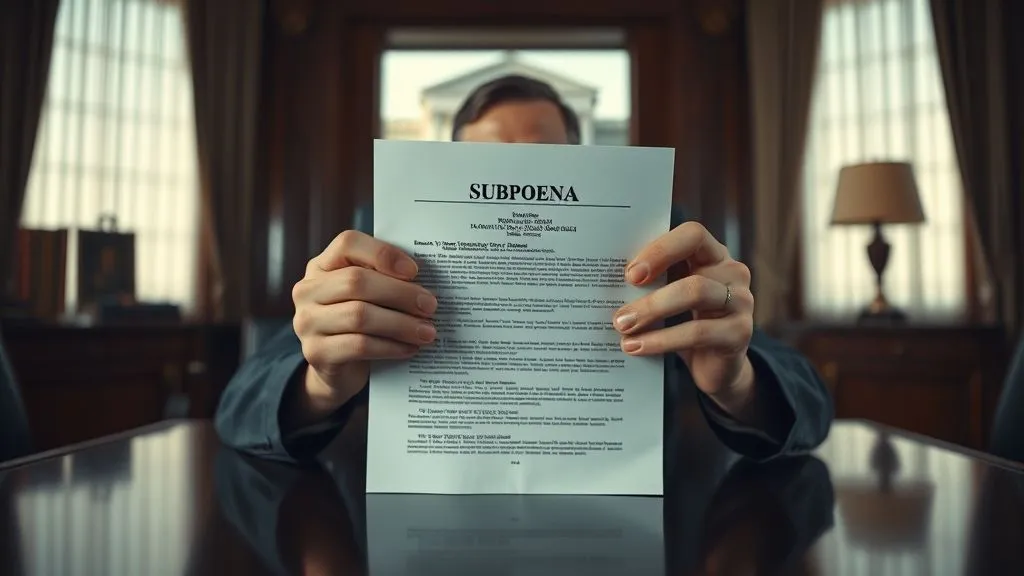
How to Respond to a DOJ Subpoena for White Collar Crime Evidence?
For over two decades in the trenches of criminal law, particularly within the complex and often unforgiving realm of white-collar defense, I've witnessed firsthand the sheer panic and paralysis that grips individuals and corporations upon receiving a Department of Justice (DOJ) subpoena. It arrives, often without warning, a stark, official document that instantly shifts your world, transforming routine business operations into a minefield of potential legal jeopardy. The initial instinct might be to ignore it, to destroy evidence, or to over-disclose in a desperate attempt to appear cooperative – all grave errors that can escalate a serious situation into a catastrophic one.
The problem is profound: a DOJ subpoena isn't merely a request; it's a legal command backed by the immense power of the federal government. It demands evidence, documents, and sometimes even testimony related to alleged white-collar offenses, ranging from fraud and embezzlement to insider trading and antitrust violations. Missteps in your response can lead to charges of obstruction of justice, spoliation of evidence, or even perjury, turning a challenging investigation into a criminal indictment. The stakes are incredibly high, impacting not just your financial well-being but your reputation, your freedom, and the very future of your business.
This article is designed to be your definitive guide, born from years of navigating these treacherous waters. I will walk you through a structured, strategic framework on how to respond to a DOJ subpoena for white collar crime evidence, drawing on practical insights, real-world analogies, and the critical legal principles necessary to protect your interests. You'll learn not just what to do, but why, equipped with actionable steps, a fictional case study, and expert advice to navigate this daunting challenge effectively and responsibly.
1. The Immediate Aftermath: Don't Panic, Engage Expert Legal Counsel
The moment a DOJ subpoena lands on your desk, or that of your company, is not the time for solo heroics. It's the moment to take a deep breath and immediately engage experienced white-collar criminal defense counsel. I've seen countless individuals and businesses make the irreversible mistake of trying to handle this themselves, believing they can talk their way out of it or that their innocence will speak for itself. This is rarely the case.
The Critical First Call: Your Legal Team
Your first and most crucial action is to contact an attorney specializing in federal white-collar defense. This isn't a job for your general corporate counsel or a local litigator. You need someone intimately familiar with federal investigations, grand jury procedures, and the specific nuances of white-collar crime. They understand the DOJ's tactics, the legal precedents, and how to negotiate with federal prosecutors.
- Immediate Notification: Inform only essential personnel (e.g., CEO, General Counsel, Head of Compliance) of the subpoena's receipt.
- Engage Counsel: Retain an attorney specializing in federal white-collar defense *immediately*. This establishes attorney-client privilege, protecting your communications.
- Internal Communication Halt: Instruct all employees not to discuss the subpoena or related matters internally or externally, except through or with legal counsel.
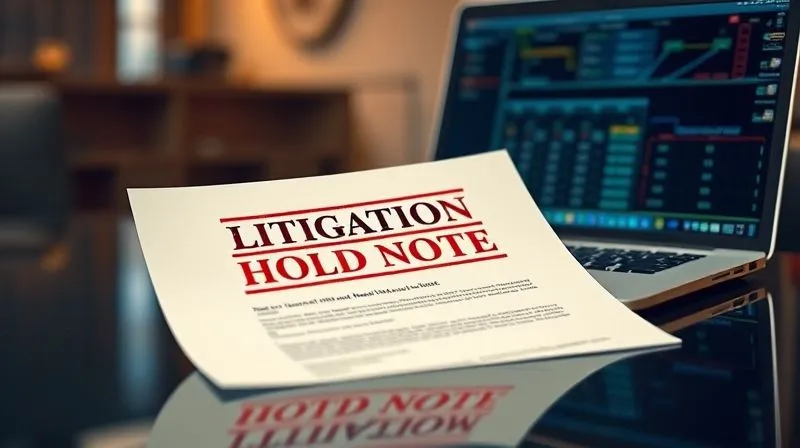
Preserving Evidence: The Litigation Hold
A subpoena often triggers an immediate and unyielding obligation to preserve all potentially relevant documents and electronically stored information (ESI). Failure to do so can lead to severe sanctions, including charges of obstruction of justice or spoliation of evidence – a criminal offense in itself.
Expert Insight: "The single biggest mistake I see clients make is failing to implement an immediate and comprehensive litigation hold. In the eyes of the DOJ, even inadvertent destruction of evidence can be seen as an attempt to impede an investigation."
- Issue a Formal Litigation Hold: Your legal counsel will help you draft and disseminate a formal, written litigation hold notice to all relevant employees, departments, and custodians.
- Identify Data Sources: Work with IT to identify all potential sources of relevant ESI, including emails, servers, cloud storage, personal devices used for business, and communication platforms (e.g., Slack, Teams).
- Suspend Routine Deletion Policies: Ensure all automatic deletion, archiving, or overwriting protocols are temporarily suspended for relevant data.
2. Understanding the Subpoena's Scope and Demands
Once counsel is engaged and preservation measures are underway, the next critical step is to thoroughly analyze the subpoena itself. These documents are often broad, complex, and intentionally vague, requiring careful interpretation by experienced legal professionals.
Deciphering the Language of a Federal Subpoena
A DOJ subpoena will specify the issuing authority (e.g., a specific U.S. Attorney's Office, a Grand Jury), the return date (when documents are due or testimony is required), and the categories of documents or information sought. It will also typically include a 'Schedule A' or 'Attachment A' detailing the specific requests.
- Grand Jury Subpoena: Often indicates a criminal investigation is underway. Grand jury proceedings are secret.
- Civil Investigative Demand (CID): Used by some agencies (e.g., DOJ Antitrust Division) in civil investigations, but can lead to criminal referrals.
- Target vs. Subject vs. Witness: Your counsel will help determine if you or your entity are a 'target' (likely to be indicted), a 'subject' (conduct is within scope of investigation), or a 'witness' (possesses relevant information).
Identifying the Target and Subject Matter
The subpoena often provides clues about the nature of the investigation. Look for specific statutes cited (e.g., 18 U.S.C. § 1341 for mail fraud), specific individuals or entities named, and the timeframes for which documents are requested. This helps narrow down the scope and understand the potential allegations.
| Aspect of Subpoena | Key Action | Importance |
|---|---|---|
| Issuing Authority | Identify U.S. Attorney's Office/Division | Indicates jurisdiction & potential focus |
| Return Date | Note deadline; assess feasibility | Strict compliance required; extensions possible |
| Document Categories | Map requests to internal data sources | Defines scope of production |
| Timeframe | Establish start and end dates for data collection | Limits search parameters |
| Individuals/Entities Named | Identify key custodians and potential targets | Helps understand investigation's focus |
3. Navigating Document Production: Process and Pitfalls
The bulk of responding to a DOJ subpoena for white collar crime evidence often involves the meticulous and often overwhelming task of document production. This is where precision, organization, and a deep understanding of legal privilege are paramount.
The E-Discovery Challenge
Modern white-collar investigations are dominated by electronically stored information (ESI). This encompasses everything from emails and instant messages to financial spreadsheets, databases, and metadata. The volume can be staggering, and the technical challenges immense.
- Forensic Collection: Engage forensic E-discovery specialists to defensibly collect ESI. This ensures data integrity and prevents spoliation claims.
- Processing and Review: Utilize specialized E-discovery platforms to process, de-duplicate, and review documents. Technology-Assisted Review (TAR) can be invaluable for large datasets.
- Responsiveness Determination: Each document must be reviewed to determine if it falls within the scope of the subpoena's request.
Privilege and Work Product Protections
Not all responsive documents must be produced. The attorney-client privilege protects confidential communications between you and your lawyer, and the attorney work product doctrine protects materials prepared in anticipation of litigation. These protections are sacrosanct and must be vigorously asserted.
Expert Insight: "Waiving privilege, even inadvertently, can have devastating consequences. Establish a rigorous privilege review process with your counsel to identify and log every privileged document."
- Privilege Log Creation: For every document withheld on grounds of privilege, a 'privilege log' must be created. This log typically describes the document (date, author, recipient, general subject matter) and states the basis for withholding it.
- Redactions: In some cases, portions of documents can be redacted if they contain privileged information or information outside the subpoena's scope, rather than withholding the entire document.
- Clawback Agreements: Your counsel may negotiate a 'clawback agreement' with the DOJ, allowing for the retrieval of inadvertently produced privileged documents without waiving privilege.
4. Witness Interviews and Testimony: Preparing for Scrutiny
A subpoena may not just demand documents; it may compel individuals to testify before a grand jury or in a proffer session with prosecutors. This is a high-stakes moment, requiring extensive preparation and a clear understanding of one's rights.
Preparing for Grand Jury Appearances
Grand jury proceedings are secret, and witnesses are typically not allowed to have their attorney present in the room during testimony, though they can consult with counsel outside. This makes preparation absolutely critical.
- Thorough Preparation: Your attorney will prepare you extensively, reviewing relevant documents, anticipating questions, and advising on how to answer truthfully while protecting your rights.
- Understanding the Grand Jury's Role: Grand juries determine if there's probable cause to issue an indictment. They are not a trial.
Understanding Your Rights (Fifth Amendment)
The Fifth Amendment right against self-incrimination is paramount. If your testimony could potentially incriminate you, you have the right to assert this privilege. This is a complex decision that must be made in close consultation with your attorney.
Case Study: How 'Apex Innovations' Navigated Witness Testimony
Apex Innovations, a mid-sized tech company, received a DOJ subpoena related to alleged anti-competitive practices. The subpoena sought documents and grand jury testimony from their Head of Sales, Ms. Chen. Initially, Ms. Chen was confident she had nothing to hide and wanted to 'just tell the truth.' Her experienced white-collar defense attorney, however, knew the risks. They spent days meticulously preparing, reviewing every email, every sales call record, and every meeting minute relevant to the investigation. During preparation, they identified a seemingly innocuous email chain where Ms. Chen had, under pressure from a superior, used ambiguous language that *could* be misinterpreted as collusive, even though her intent was innocent. Her attorney advised her on how to clarify this context if asked, and also on her Fifth Amendment rights should the questioning veer into genuinely self-incriminating territory. Ultimately, Ms. Chen testified, providing clear, factual answers and carefully explaining the context of the problematic email, avoiding misinterpretation. The careful preparation prevented her from inadvertently creating an appearance of guilt and significantly contributed to the DOJ deciding not to pursue charges against her personally.
5. Negotiating with the Department of Justice
Responding to a DOJ subpoena isn't always a purely adversarial process. There's often room for negotiation regarding the scope of the demands, the timeline for production, and even the format of documents.
Strategies for Scope Reduction
DOJ subpoenas are frequently overly broad, requesting vast categories of documents that may not be directly relevant or are unduly burdensome to produce. Your counsel can engage with the assigned Assistant U.S. Attorney (AUSA) to narrow the scope.
- Specificity Challenges: Argue for more specific document categories or narrower date ranges.
- Burden Argument: Demonstrate that certain requests are unduly burdensome or disproportionate to the likely relevance of the information.
- Phased Production: Negotiate to produce documents in phases, prioritizing the most critical or easily accessible information first.
Proactive Engagement vs. Adversarial Stance
The approach to the DOJ can vary. Sometimes, a cooperative, transparent approach, coupled with strong legal advocacy, is most effective. Other times, a more aggressive stance is warranted, particularly if the DOJ's demands are unreasonable or infringe on rights.
Expert Insight: "While cooperation can be beneficial, it must always be strategic. Never waive rights or compromise your defense simply to appear 'cooperative' without a clear understanding of the implications and potential benefits."
For more detailed insights into the DOJ's policies on cooperation, you can refer to the DOJ's Corporate Enforcement Policy, which outlines the benefits of timely and voluntary self-disclosure, full cooperation, and timely and appropriate remediation.
6. Maintaining Business Continuity Amidst Investigation
A white-collar investigation, particularly one involving a DOJ subpoena, can be incredibly disruptive to business operations. It's crucial to manage the internal and external fallout while ensuring compliance.
Internal Communications and Employee Morale
Rumors and anxiety can spread quickly. Employees may feel targeted, worried about their jobs, or unsure of what they can or cannot say. Clear, legally vetted internal communications are vital.
- Controlled Messaging: Work with legal counsel to craft appropriate internal communications, emphasizing the company's commitment to compliance and cooperation, while also reminding employees of the litigation hold and the importance of directing all inquiries to legal counsel.
- Employee Support: Be mindful of employee morale. While you cannot discuss the specifics of the investigation, maintaining a supportive work environment is important.
Public Relations and Reputation Management
Leaks or public knowledge of a DOJ investigation can severely damage a company's reputation, affecting stock prices, customer trust, and partnerships. A proactive, carefully managed public relations strategy is essential.
- Crisis PR Team: Engage a specialized crisis public relations firm that has experience with federal investigations.
- Controlled External Messaging: All external communications must be coordinated and approved by legal counsel to ensure they are accurate, legally sound, and do not inadvertently compromise the defense.
- Stakeholder Management: Consider how to communicate with investors, customers, and business partners, again, always through the lens of legal and PR counsel.
7. Common Mistakes to Avoid When Responding to a Subpoena
Having navigated countless federal investigations, I've observed recurring errors that can turn a challenging situation into a dire one. Avoiding these pitfalls is as crucial as taking the right steps.
- Ignoring the Subpoena: This is perhaps the gravest error. Ignoring a federal subpoena is a criminal offense (obstruction of justice) and will almost certainly lead to more severe consequences.
- Destroying or Altering Evidence: Any attempt to destroy, modify, or conceal documents or ESI after receiving a subpoena is a criminal act of spoliation and obstruction of justice.
- Speaking to Investigators Without Counsel: Federal agents are highly skilled at eliciting information. Never speak to them without your attorney present. Anything you say can and will be used against you.
- Disclosing Information to Unauthorized Parties: Discussing the subpoena or the investigation with colleagues, friends, or family can compromise the investigation, waive privilege, or lead to allegations of witness tampering.
- Incomplete or Inaccurate Document Production: Failing to conduct a thorough search for responsive documents or intentionally submitting incomplete or false information can lead to obstruction charges.
- Underestimating the Seriousness: A DOJ subpoena for white collar crime evidence is not a minor inquiry. Treat it with the utmost seriousness and respect for the federal government's authority.
Expert Insight: "The cost of non-compliance or mishandling a federal subpoena far outweighs the investment in expert legal counsel. It's an insurance policy against potentially life-altering consequences."
Frequently Asked Questions (FAQ)
What is the difference between a subpoena for documents (subpoena duces tecum) and a subpoena for testimony (subpoena ad testificandum)? A subpoena duces tecum requires you to produce specified documents, ESI, or other tangible evidence. A subpoena ad testificandum requires you to appear and give sworn testimony, typically before a grand jury or in a deposition. Often, a single subpoena will include both demands. Your attorney will clarify which type you've received and what specific actions are required.
Can I refuse to comply with a DOJ subpoena? Generally, no. A federal subpoena is a court order, and refusal to comply without a valid legal basis (such as asserting a valid privilege like the Fifth Amendment or attorney-client privilege) can lead to civil contempt charges, fines, or even imprisonment. Your attorney can, however, negotiate the scope or timing of the subpoena.
What if the subpoena asks for documents I don't have or that are outside the requested timeframe? You are only required to produce documents that are in your possession, custody, or control and that fall within the specified scope and timeframe. Your attorney will communicate any unavailability of documents to the DOJ, often with an affidavit explaining the diligent search conducted. Never create documents to fulfill a request or falsely claim possession.
How long does a DOJ white-collar investigation typically last after a subpoena is issued? The duration varies widely depending on the complexity of the case, the volume of evidence, and the number of individuals or entities involved. Some investigations can conclude in a few months, while others can drag on for several years. Your legal counsel can provide a more realistic estimate based on the specifics of your situation and their experience with similar cases.
Will the DOJ know if I delete emails or documents after receiving a subpoena? Yes, it is highly likely they will. Federal investigators have sophisticated forensic tools to recover deleted data, even from wiped hard drives or servers. Furthermore, any attempt to destroy or conceal evidence after a subpoena is received constitutes obstruction of justice, a serious felony. It is critical to implement an immediate and comprehensive litigation hold.
Key Takeaways and Final Thoughts
Receiving a DOJ subpoena for white collar crime evidence is undoubtedly one of the most stressful and challenging experiences a person or company can face. However, it is not a death knell. With the right strategy, expert legal guidance, and a disciplined approach, you can navigate these treacherous waters and protect your interests.
- Act Immediately, but Strategically: Panic is your enemy. Engage specialized counsel without delay.
- Preserve Everything: Implement a robust litigation hold to prevent any accidental or intentional destruction of evidence.
- Understand the Demands: Work with your attorney to meticulously analyze the subpoena's scope and implications.
- Meticulous Production: Approach document and ESI production with precision, leveraging technology and protecting privileges.
- Prepare for Testimony: If called to testify, prepare exhaustively with your counsel and understand your constitutional rights.
- Strategic Engagement: Negotiate with the DOJ where possible, always with your legal defense in mind.
- Maintain Control: Manage internal and external communications to preserve business continuity and reputation.
In my experience, those who approach a DOJ subpoena with a clear head, a strong legal team, and an unwavering commitment to a structured, compliant response are far more likely to achieve a favorable outcome. Remember, this is a marathon, not a sprint. Stay informed, stay composed, and trust in the process guided by your expert counsel. Your future depends on it.
Recommended Reading
- H-1B Expiring, No Green Card? 7 Emergency Paths to Stay in the US
- 7 Urgent Legal Steps: Protecting IP in Corporate Carve-Outs
- 7 Immediate Legal Steps After a Toxic Spill: Avoid Severe Penalties
- Cruel & Unusual Punishment: What Exactly Does it Mean?
- Client Hiding Accident Medical History? 7 Steps for Attorneys


Comments
Leave a comment below. Your email will not be published. Required fields marked with *