



How to Suppress Evidence from an Illegal Home Search Motion: Your Expert Guide
For over two decades in the trenches of criminal law, I've witnessed firsthand the profound distress and injustice people experience when their most fundamental constitutional rights are trampled. The sanctity of one's home is a cornerstone of American liberty, and when that sanctuary is invaded by an illegal search, the consequences can be devastating, leading to wrongful charges and a profound sense of violation.
The problem is stark: illegally obtained evidence, if not properly challenged, can be used against you, potentially leading to convictions based on unconstitutional actions. Many individuals, overwhelmed by the legal system, don't realize the powerful tools at their disposal to fight back, chief among them being a motion to suppress evidence. This isn't just a technicality; it's a critical defense mechanism.
In this definitive guide, I will walk you through the intricate process of how to suppress evidence from an illegal home search motion. Drawing on my extensive experience, I’ll provide you with actionable frameworks, crucial insights, and practical steps to challenge unlawful police conduct and safeguard your future. You’ll learn not just what to do, but why it’s essential at every turn.
Understanding the Fourth Amendment: Your Shield Against Unlawful Searches
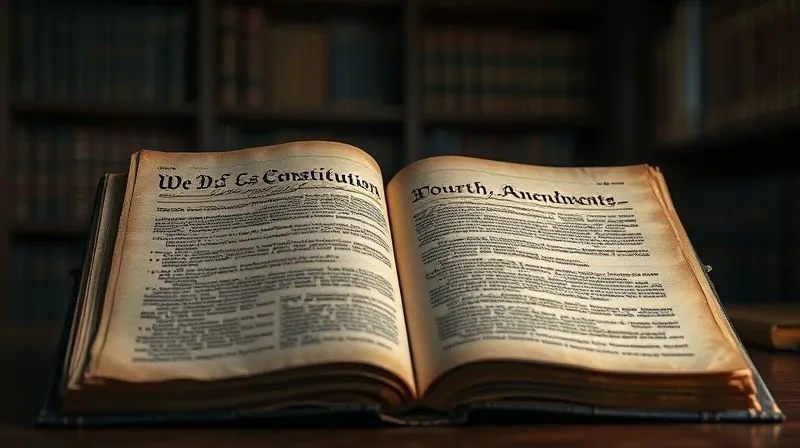
At the heart of any discussion about illegal searches lies the Fourth Amendment to the U.S. Constitution. It’s a succinct yet incredibly powerful protection, stating: “The right of the people to be secure in their persons, houses, papers, and effects, against unreasonable searches and seizures, shall not be violated, and no Warrants shall issue, but upon probable cause, supported by Oath or affirmation, and particularly describing the place to be searched, and the persons or things to be seized.”
What this means in practice is that you have a reasonable expectation of privacy, especially within your home. Law enforcement generally cannot enter your home, search your belongings, or seize your property without a warrant issued by a judge, based on probable cause. This “probable cause” isn’t just a hunch; it’s a legal standard requiring specific, articulable facts that would lead a reasonable person to believe a crime has been committed or evidence of a crime exists in the place to be searched.
Expert Insight: Your home is not just a dwelling; it’s a constitutionally protected zone. Any intrusion without proper legal justification is a direct assault on your fundamental rights, and the legal system provides avenues to challenge such violations.
The Fourth Amendment isn't absolute, and there are specific, limited exceptions to the warrant requirement, which we’ll delve into. However, the default position is that a warrant is required. Knowing this foundational principle is the first step in understanding when your rights may have been violated.
The Exclusionary Rule and "Fruit of the Poisonous Tree" Doctrine
So, what happens if law enforcement *does* conduct an illegal search and finds incriminating evidence? This is where the Exclusionary Rule comes into play. Developed by the Supreme Court, this rule dictates that evidence obtained in violation of a defendant's Fourth Amendment rights is generally inadmissible in a criminal prosecution. Its purpose is to deter police misconduct and uphold constitutional protections.
Beyond the direct evidence, there's a related concept known as the “Fruit of the Poisonous Tree” doctrine. This extends the exclusionary rule to evidence that is indirectly derived from an illegal search or seizure. Imagine the illegal search as the “poisonous tree”; any evidence discovered as a result of that illegal search, no matter how remote, is considered the “fruit” and is also inadmissible. This doctrine prevents law enforcement from using information gained from an illegal act to then obtain further evidence.
For example, if an illegal search of your home uncovers a diary that then leads police to a hidden stash of contraband elsewhere, both the diary and the contraband could be suppressed. Understanding these two powerful legal principles is crucial for anyone considering how to suppress evidence from an illegal home search motion, as they form the bedrock of your legal argument. For a deeper dive into these concepts, you can refer to authoritative legal resources like the Legal Information Institute at Cornell Law School.
Identifying an Illegal Home Search: Key Indicators
Recognizing an illegal search isn't always straightforward. It requires a keen understanding of legal thresholds and exceptions. Here are the primary indicators that an illegal home search may have occurred:
Lack of a Valid Search Warrant
The most common violation is a search conducted without a warrant. A valid search warrant must meet specific criteria:
- Probable Cause: It must be based on a sworn affidavit demonstrating probable cause that evidence of a crime will be found at the specified location.
- Neutral and Detached Magistrate: It must be issued by a neutral judge or magistrate, not by law enforcement themselves.
- Particularity: It must “particularly describe” the place to be searched and the “persons or things to be seized.” A general warrant giving police carte blanche is unconstitutional.
- Timeliness: Warrants are usually “stale” after a certain period (often 10 days), meaning the information supporting probable cause is no longer fresh.
Exceeding Warrant Scope
Even with a valid warrant, police are limited by its scope. They can only search the areas and seize the items specifically described in the warrant. If a warrant authorizes a search for a stolen television, police cannot typically open small jewelry boxes or look in drawers too small to contain a TV. Any evidence found outside the scope of the warrant, unless falling under a recognized exception, may be subject to suppression.
Warrantless Searches: Exceptions and Limitations
While warrants are the general rule, the Supreme Court has carved out several narrow exceptions where a warrantless search may be permissible. However, these exceptions are strictly construed:
- Consent: If you voluntarily and intelligently consent to a search, police don't need a warrant. Crucially, consent can be withdrawn, and it must not be coerced.
- Exigent Circumstances: This refers to emergency situations where there's an immediate threat to life, property, or a risk of evidence being destroyed or escaping. “Hot pursuit” of a fleeing suspect is a common example.
- Plain View: If officers are lawfully present in an area and observe incriminating evidence “in plain view,” they can seize it without a warrant.
- Search Incident to Lawful Arrest: When someone is lawfully arrested, officers can search the arrestee's person and the area within their immediate control to prevent the destruction of evidence or to ensure officer safety.
Expert Insight: Police often push the boundaries of these exceptions. A critical part of your defense will be challenging whether the circumstances truly met the strict legal definition for a warrantless search.
| Scenario | Legality | Action |
|---|---|---|
| Police enter home without warrant, no emergency | Likely Illegal | File motion to suppress |
| Police search a locked safe not listed in warrant | Likely Illegal | File motion to suppress |
| Police ask to search, you say 'yes' | Potentially Legal | Challenge voluntariness of consent |
| Police chase suspect into your home, see drugs | Potentially Legal (Exigent/Plain View) | Challenge exigent circumstances |
Step-by-Step: Preparing Your Motion to Suppress Evidence
Successfully filing a motion to suppress requires meticulous preparation and a deep understanding of legal strategy. Here’s how I approach this critical phase:
Step 1: Document Everything Immediately
After an encounter with law enforcement, especially one involving a search, every detail matters. The more information you can recall and document, the stronger your position will be. This includes:
- Dates and Times: Record the exact date and time of the police interaction and search.
- Officers Involved: Note names, badge numbers, or physical descriptions of all officers present.
- What Was Said: Recall every word exchanged between you, your family members, and the police. Who said what? Was consent requested? Was it given?
- Actions Taken: Detail every action taken by the police – where they searched, what they touched, what they seized.
- Items Seized: Make a list of everything taken by the police.
- Witnesses: Identify anyone else who was present and witnessed the search.
- Physical Evidence: Document any damage to your property or anything left behind by the police.
Step 2: Secure Expert Legal Counsel
This is not an area for self-representation. The nuances of Fourth Amendment law are complex, constantly evolving, and require specialized expertise. An experienced criminal defense attorney will:
- Understand the specific legal precedents in your jurisdiction.
- Know how to effectively challenge police testimony.
- Have the resources to investigate the facts of your case.
- Be skilled in drafting compelling legal arguments.
The choice of attorney can make or break your case. I always advise seeking counsel immediately; delays can prejudice your defense. Organizations like the National Association of Criminal Defense Lawyers (NACDL) can be a resource for finding qualified attorneys.
Step 3: Thoroughly Review Discovery Materials
Once your attorney is on board, they will obtain “discovery” from the prosecution. This includes all evidence the state intends to use against you, such as:
- Police reports and affidavits.
- Body camera and dash camera footage.
- Witness statements.
- Forensic reports.
- Search warrant applications and the warrant itself (if one existed).
Your attorney will meticulously analyze these materials, comparing them against your documented recollection and looking for inconsistencies, omissions, or outright falsehoods that can be used to challenge the legality of the search.
Step 4: Identify Specific Fourth Amendment Violations
Based on the review of all evidence, your attorney will pinpoint the exact constitutional violations. Was there no probable cause for the warrant? Did the police exceed the warrant’s scope? Was consent coerced? Were exigent circumstances truly present? Each of these questions leads to a specific legal argument that forms the basis of your motion to suppress. This requires a deep understanding of case law and statutory interpretation, as discussed in many academic legal journals.
Step 5: Draft a Compelling Motion
The motion to suppress is a formal legal document filed with the court. It must:
- Clearly state the factual basis for the search.
- Identify the specific constitutional provision violated (e.g., Fourth Amendment).
- Cite relevant case law (precedents) that support your argument.
- Explain why the evidence should be suppressed under the Exclusionary Rule and/or Fruit of the Poisonous Tree doctrine.
- Request a hearing where evidence and arguments can be presented.
This document is your formal challenge to the state’s evidence and must be drafted with precision and persuasive legal reasoning.
Building Your Case: Arguments and Precedents
Once the motion is filed, the real legal battle begins. Your attorney will use various strategies to argue for suppression, often leveraging specific legal precedents.
Challenging Probable Cause
If a warrant was issued, your attorney might argue that the affidavit supporting it lacked sufficient probable cause. This could mean the information was stale, unreliable (e.g., from an uncorroborated anonymous tip), or simply insufficient to establish a reasonable belief that evidence of a crime would be found.
Attacking Warrant Validity
Even if probable cause existed, the warrant itself might be flawed. Issues could include a lack of particularity (too vague about what to search for or where), errors in the address, or improper execution (e.g., police failing to “knock and announce” as required).
Arguing Lack of Consent or Coercion
If the police claim you consented to the search, your attorney will challenge the voluntariness of that consent. Factors like age, education, intelligence, whether you were informed of your right to refuse, and the presence of coercive police tactics (e.g., threats, prolonged detention) are all relevant. The prosecution bears the burden of proving that consent was freely and voluntarily given.
Exigent Circumstances Debunked
When police claim exigent circumstances justified a warrantless entry, your attorney will scrutinize whether a genuine emergency existed. Was there truly an immediate risk of harm or evidence destruction? Often, police actions might not meet the high bar required for this exception.
Expert Insight: The burden of proof in a suppression hearing generally rests with the prosecution to demonstrate that the search was lawful. This is a critical advantage for the defense.
The Suppression Hearing: What to Expect
A suppression hearing is essentially a mini-trial focused solely on the legality of the search and seizure. Both sides will present evidence and arguments.
During the hearing, your attorney will call witnesses, which may include you, other witnesses to the search, and potentially even the police officers involved. The officers will be cross-examined rigorously about their actions, their justification for the search, and any discrepancies in their reports or testimony. Body camera footage and other evidence will be presented to support your arguments.
The judge acts as the arbiter, listening to testimony, reviewing evidence, and applying legal principles. They will ultimately decide whether the search was lawful and whether the evidence obtained should be suppressed. This decision can be a pivotal moment in your case, often determining its entire trajectory.

Case Study: The State v. Jenkins - Overturning an Unlawful Search
Case Study: The State v. Jenkins - Overturning an Unlawful Search
Let me share a fictional, yet highly realistic, scenario that illustrates the power of a well-executed motion to suppress. Mr. Jenkins, a 45-year-old father of two, was charged with possession of illegal narcotics after police entered his home without a warrant. The police claimed they received an anonymous tip about drug activity and, upon approaching the house, smelled marijuana, creating “exigent circumstances.”
My defense team immediately filed a motion to suppress. During discovery, we noted inconsistencies in the police report regarding the strength and proximity of the alleged smell. We also reviewed neighborhood surveillance footage, which showed police lingering outside Mr. Jenkins’ home for an extended period *before* claiming to smell anything, suggesting they were fishing for a reason to enter.
At the suppression hearing, we cross-examined the officers, highlighting the lack of corroboration for the anonymous tip and challenging the “exigent circumstances” claim. We argued that a mere smell, without more, especially after a period of surveillance, did not constitute an immediate emergency justifying a warrantless entry. The judge, after careful consideration of the evidence and precedents, agreed that the police had failed to meet the strict burden for exigent circumstances. All evidence obtained during the warrantless search was suppressed.
This ruling meant the prosecution had no admissible evidence to proceed, and the charges against Mr. Jenkins were subsequently dropped. This case vividly demonstrates how a thorough investigation, a robust legal argument, and expert representation can successfully challenge unlawful police conduct and protect an individual’s rights and freedom.
Common Pitfalls and How to Avoid Them
Even with a strong case, certain missteps can jeopardize your motion to suppress. I’ve seen these pitfalls derail otherwise winnable cases:
- Not Documenting Details: Failing to write down everything immediately after the incident can lead to forgotten details or inaccuracies, weakening your testimony.
- Speaking to Police Without Counsel: Anything you say can be used against you. Never give statements or answer questions about the search without your attorney present.
- Missing Deadlines: Motions to suppress have strict filing deadlines. Missing these can waive your right to challenge the evidence.
- Incomplete Discovery Review: Rushing through or overlooking details in police reports or footage can lead to missed opportunities for impeachment or identifying inconsistencies.
- Lack of Specificity in Motion: A vague motion that doesn't clearly articulate the legal grounds for suppression is unlikely to succeed.
- Underestimating the Prosecution: Prosecutors will vigorously defend the legality of police actions. Your defense must be equally robust.
To avoid these pitfalls, proactive engagement with your attorney and meticulous attention to detail are paramount. Trust your legal team and follow their guidance precisely.
Frequently Asked Questions (FAQ)
Question: What if the police had a warrant, but I believe it was invalid? Even with a warrant, you can challenge its validity. Grounds for challenge include a lack of probable cause in the affidavit, errors in the warrant’s description of the place or items, or if the warrant was “stale” (too old). Your attorney will scrutinize the warrant and the underlying affidavit for any legal deficiencies.
Question: Can evidence be suppressed even if the police acted in "good faith"? The “good faith” exception to the exclusionary rule generally applies when officers reasonably rely on a facially valid warrant that is later found to be defective. However, this exception has limitations. It doesn't apply if the warrant was based on an affidavit that the officer knew was false or recklessly disregarded the truth, or if the warrant was so facially deficient that no reasonable officer would rely on it. Your attorney will argue against the application of the good faith exception if applicable.
Question: How long does the suppression process take? The timeline for a motion to suppress can vary significantly depending on the complexity of the case, court schedules, and the specific jurisdiction. It typically involves filing the motion, a response from the prosecution, and then a hearing. This process can take anywhere from a few weeks to several months, and sometimes longer if there are appeals.
Question: What's the difference between a motion to suppress and a motion to dismiss? A motion to suppress focuses specifically on excluding illegally obtained evidence from being used at trial. If successful, it can severely weaken the prosecution's case. A motion to dismiss, on the other hand, seeks to terminate the entire case or specific charges, often because there's insufficient evidence to proceed (especially if a motion to suppress was successful), or due to other procedural defects. A successful motion to suppress often leads to a motion to dismiss.
Question: What if I consented to the search under duress or misunderstanding? If your consent was not truly voluntary and intelligent, it can be challenged. Factors like threats, intimidation, misrepresentation by officers, your age, mental state, and whether you were informed of your right to refuse consent are all considered. The prosecution must prove your consent was voluntary beyond a reasonable doubt, which can be difficult if duress is demonstrated.
Key Takeaways and Final Thoughts
Successfully navigating how to suppress evidence from an illegal home search motion is a formidable task, but it is one that can profoundly impact the outcome of your criminal case. It’s a testament to the enduring power of our constitutional protections and the crucial role of a vigilant defense.
- Your Rights Are Paramount: The Fourth Amendment is your bulwark against unlawful government intrusion.
- Document Everything: Meticulous record-keeping is your first line of defense.
- Expert Counsel is Non-Negotiable: A skilled criminal defense attorney is your most valuable asset.
- Challenge Every Inconsistency: The legal system provides avenues to question police conduct.
- The Exclusionary Rule is Powerful: Illegally obtained evidence should not be used against you.
Remember, the legal journey can be daunting, but you don't have to face it alone. By understanding your rights, acting decisively, and securing expert legal representation, you can effectively challenge an illegal home search and protect your freedom. Stand firm, and fight for justice.
Recommended Reading
- 7 Steps: Urgent Challenge to Agency Audit Findings & Win
- 5 Critical Steps: How to Challenge a Trademark Refusal & Protect Your Brand Name?
- Audit Uncovers Critical Compliance Gap? Your 7-Step Action Plan
- Cross-Border Divorce & Business Assets: 7 Critical Protection Steps
- 5 Global Tax Hacks: Structure International Profits, Minimize Burden




Comments
Leave a comment below. Your email will not be published. Required fields marked with *