



Legal Strategies for Defending Against Prosecutorial Misconduct?
For over two decades in the trenches of criminal defense, I’ve witnessed the profound impact of prosecutorial misconduct – not just on cases, but on the lives of individuals and the very fabric of justice. It’s a harsh reality that while prosecutors are tasked with seeking justice, not merely convictions, the pressure to win can sometimes lead to shortcuts, oversights, or even deliberate violations of due process.
The problem is insidious: when a prosecutor oversteps their ethical and legal boundaries, it can undermine the presumption of innocence, taint evidence, deny a fair trial, and ultimately lead to wrongful convictions. The stakes couldn't be higher, and a defense attorney's vigilance is the last line of defense against such abuses of power. My empathy lies with every client whose fundamental rights are jeopardized by an overzealous or unethical prosecution.
In this definitive guide, I will share the battle-tested legal strategies I’ve employed to identify, challenge, and ultimately defend against prosecutorial misconduct. We’ll delve into actionable frameworks, explore real-world scenarios, and arm you with the expert insights needed to safeguard your client's future and uphold the integrity of the justice system.
Understanding the Landscape: What Constitutes Prosecutorial Misconduct?
Before we can defend against it, we must first understand what prosecutorial misconduct truly is. It's not merely an error in judgment or a mistake; it's an intentional or reckless disregard for legal and ethical obligations that undermines the fairness of a criminal proceeding.
Defining the Boundaries: Intent vs. Impact
While intent can be difficult to prove, the impact of a prosecutor's actions on a defendant's rights is often the guiding principle. Misconduct can manifest in various stages of a case, from investigation and discovery to trial and even post-conviction proceedings. It's about protecting the integrity of the adversarial system.
Common Forms of Misconduct
- Brady Violations: Failing to disclose exculpatory evidence to the defense, as mandated by Brady v. Maryland. This is arguably one of the most damaging forms of misconduct.
- Giglio Violations: Failing to disclose evidence that would impeach the credibility of a prosecution witness. This is a specific subset of Brady.
- Improper Arguments: Making inflammatory statements, appealing to juror prejudice, or misstating the law during opening statements or closing arguments.
- Witness Coaching or Intimidation: Influencing witness testimony or discouraging defense witnesses from testifying.
- Introduction of False Evidence: Knowingly presenting false testimony or evidence to the court.
- Discovery Abuse: Deliberately withholding or delaying the production of discoverable materials.
- Selective Prosecution: Prosecuting an individual based on discriminatory grounds rather than legitimate law enforcement objectives.
“A prosecutor’s primary duty is not to convict, but to see that justice is done.” This timeless principle from the ABA Model Rules of Professional Conduct underscores the unique ethical obligations prosecutors bear. When these are breached, the system falters.
Strategy 1: Meticulous Discovery and Evidence Scrutiny
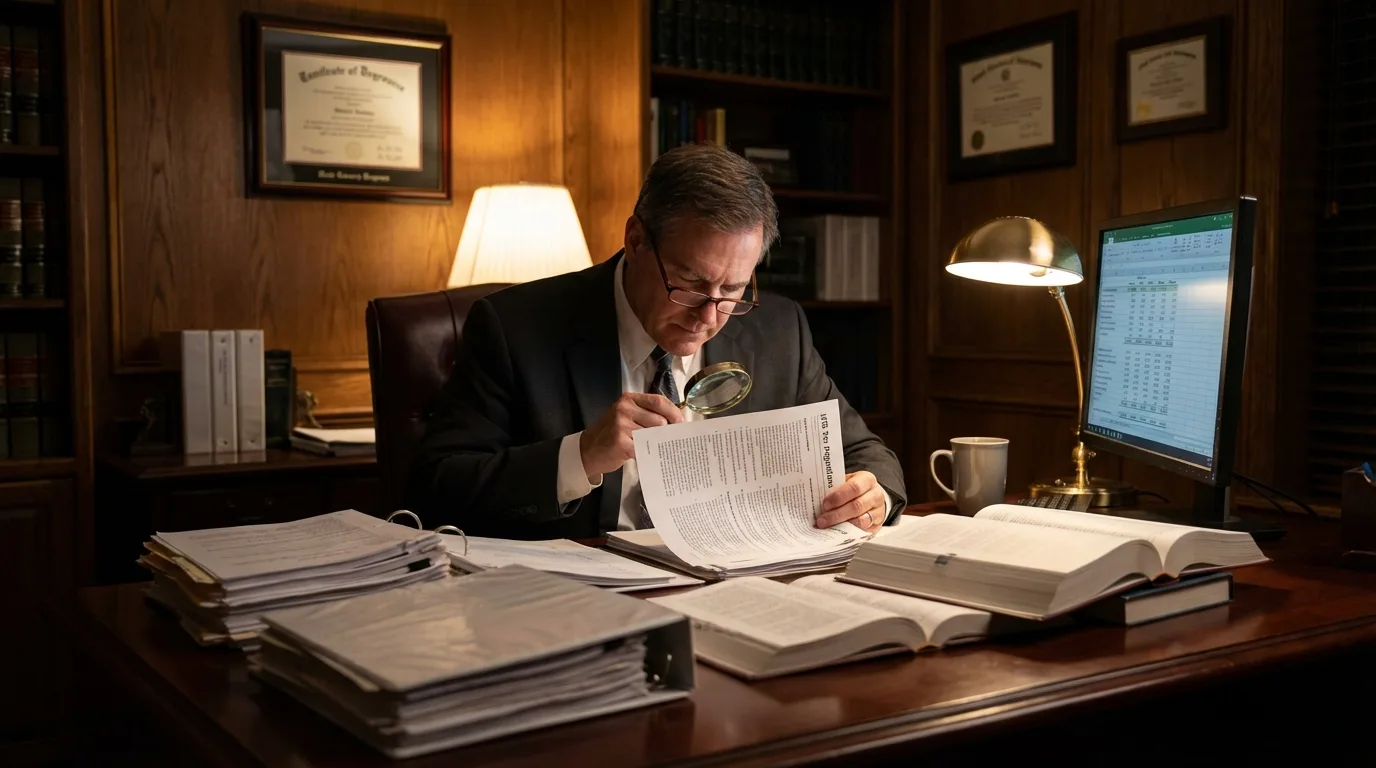
The bedrock of any effective defense against prosecutorial misconduct begins with an exhaustive review of discovery. As a defense attorney, I treat every piece of discovery as a potential clue, a breadcrumb leading to inconsistencies or withheld information. This isn't just about reading; it's about active investigation.
- Demand Comprehensive Discovery: Don't settle for boilerplate. File specific, detailed discovery requests encompassing all evidence, witness statements, police reports, forensic analyses, interview notes, and even internal communications related to the case.
- Cross-Reference and Corroborate: Compare witness statements against each other, against police reports, and against physical evidence. Look for discrepancies, omissions, and changes in narrative over time. These can reveal areas where information might be suppressed or manipulated.
- Analyze for Exculpatory and Impeachment Material: Proactively search for evidence that tends to negate guilt or reduce punishment (Brady material) and any information that could undermine the credibility of prosecution witnesses (Giglio material). This includes prior bad acts of witnesses, plea deals, or inducements.
- Document Everything: Maintain a meticulous record of all discovery received, dates of receipt, and any deficiencies or delays. This documentation is crucial if you later need to file a motion asserting discovery abuse.
I recall a case where a seemingly innocuous police report footnote, when cross-referenced with another officer's bodycam footage, revealed a critical piece of exculpatory evidence that had been deliberately omitted from the main report. This detail was a game-changer.

According to a study published in the National Registry of Exonerations, a significant percentage of wrongful convictions involve some form of official misconduct, often stemming from suppressed evidence. This highlights the critical importance of aggressive discovery review.
Strategy 2: Aggressive Pre-Trial Motions and Hearings
Pre-trial motions are your first and often most powerful weapon against prosecutorial misconduct. These are not mere formalities; they are strategic maneuvers designed to expose and remedy abuses before they can irrevocably harm your client's case. I've found that early intervention is often the most effective.
Motions to Compel Discovery
If the prosecution fails to provide required discovery, a motion to compel forces their hand. Detail what is missing, why it's relevant, and the legal basis for its production. This puts the court on notice of potential misconduct.
Motions to Suppress Evidence
If evidence was obtained illegally (e.g., unlawful search, coerced confession) or tainted by misconduct (e.g., suggestive identification procedures), a motion to suppress can prevent its admission. This often involves an evidentiary hearing where you can cross-examine officers and other witnesses.
Motions for Sanctions or Dismissal
For egregious or repeated misconduct, seek sanctions against the prosecution or, in severe cases, dismissal of the charges. While dismissal is rare, it is a powerful remedy when a defendant’s due process rights have been irrevocably prejudiced. I once secured a dismissal after demonstrating a pattern of the prosecution deliberately withholding Brady material across multiple defendants in similar cases, showing a systemic issue rather than an isolated mistake.
Case Study: The Case of the Missing Lab Report
My client, Mr. Henderson, was charged with drug possession. The prosecution relied heavily on a field test. Despite repeated requests, the official lab report was never provided. After filing a motion to compel, the report finally surfaced – it indicated the substance was not a controlled substance. The prosecution had known this for weeks. We immediately filed a motion to dismiss based on egregious Brady misconduct. The court, seeing the deliberate withholding of exculpatory evidence, granted the dismissal. This proactive pre-trial litigation directly protected Mr. Henderson from a wrongful conviction.
Strategy 3: Witness Examination and Impeachment
The courtroom is a stage where truth is sought, and witness testimony is central to that quest. When prosecutorial misconduct involves witness issues, such as coaching or failing to disclose impeachment material, rigorous cross-examination becomes paramount. My goal is always to expose inconsistencies and bias.
Effective cross-examination techniques include:
- Leading Questions: Control the narrative and elicit specific "yes" or "no" answers.
- Using Prior Inconsistent Statements: Confront witnesses with their own words from earlier reports, interviews, or grand jury testimony that contradict their current testimony. This is often where Giglio violations become apparent.
- Highlighting Bias or Motive: Expose any reason a witness might have to lie or shade their testimony, such as plea deals, immunity agreements, or personal animosity.
- Challenging Perception and Memory: Question the witness's ability to accurately perceive or recall events, especially under stress or over time.
I've often found that a meticulous comparison of witness statements from different stages of the investigation can reveal prosecutorial influence or suppression of crucial details. Here's an example of how such a comparison might look:
| Witness | Initial Statement (Day 1) | Trial Testimony (Month 6) | Discrepancy/Potential Misconduct | |
|---|---|---|---|---|
| Officer Smith | Saw suspect near the scene, no weapon observed. | Saw suspect fleeing the scene, believed he had a dark object in hand. | Addition of 'dark object' without prior mention, raising questions of coaching or leading. | |
| Victim's Friend, Jane Doe | Victim mentioned a dispute over money earlier that day. | Victim never mentioned any disputes, seemed happy. | Direct contradiction, potential suppression of motive for alternative suspect, or witness influence. | |
| Forensic Tech, Dr. Lee | DNA sample inconclusive for suspect. | DNA sample showed 'weak association' with suspect. | Shift from 'inconclusive' to 'weak association' without new data, potentially misleading jury. | |
| Confidential Informant | Provided information on drug deal location. | Did not testify, identity protected. | Lack of opportunity to cross-examine informant on credibility, prior record, or inducements – potential Giglio issue if not disclosed. | Defense filed motion to compel CI identity or dismiss. |
Strategy 4: Objecting and Preserving the Record During Trial
During trial, prosecutorial misconduct can erupt rapidly, often through improper questioning, comments, or presentation of evidence. Your immediate and precise response is critical, not just for the current proceeding but for any potential appeal. This is where your courtroom agility truly matters.
- Timely Objections: You must object to misconduct as soon as it occurs. Delay can waive the issue for appeal. State the specific legal ground for your objection clearly (e.g., "Objection, Your Honor, improper vouching," "Objection, Your Honor, speculation," "Objection, Your Honor, refers to matters outside of evidence").
- Request for Curative Instruction: If your objection is sustained, immediately request the judge to instruct the jury to disregard the prosecutor's improper statement or question. This attempts to mitigate the prejudice.
- Motion for Mistrial: For severe and incurable misconduct that has irrevocably prejudiced your client's right to a fair trial, move for a mistrial. Be prepared to argue why a curative instruction is insufficient. This is a high bar, but sometimes necessary.
- Make an Offer of Proof: If the judge sustains a prosecution objection to your attempt to introduce evidence that would expose misconduct, make an offer of proof. This involves stating for the record what the evidence would have shown and why it was admissible, preserving the issue for appeal.
- Document Everything: Ensure the court reporter is accurately capturing all objections, rulings, and arguments. If necessary, ask for a sidebar to discuss sensitive issues outside the jury's hearing.
“The preservation of error is the cornerstone of appellate review. If it’s not on the record, it didn’t happen.” This adage underscores why every objection, every motion, and every argument must be meticulously documented in the trial transcript for future challenges.
Strategy 5: Leveraging Expert Witnesses and Independent Investigations
Sometimes, exposing prosecutorial misconduct requires more than just legal arguments; it demands specialized knowledge and independent verification. This is where expert witnesses and private investigators become invaluable assets in your defense arsenal.
Consider the following applications:
- Forensic Experts: If the prosecution relies on dubious forensic evidence, an independent forensic expert can re-examine the data, challenge methodologies, or highlight errors that the prosecution may have overlooked or deliberately ignored. This can expose misconduct related to the presentation of false or misleading evidence.
- Eyewitness Identification Experts: If there are issues with suggestive identification procedures (e.g., tainted lineups or photo arrays), an expert on human perception and memory can explain to the jury how such procedures can lead to false identifications, potentially revealing police or prosecutorial misconduct in the investigation phase.
- Computer Forensics Experts: In cases involving digital evidence, an expert can uncover metadata manipulation, deleted files, or other digital footprints that indicate evidence tampering or non-disclosure.
- Independent Investigators: A private investigator can re-interview witnesses, uncover new witnesses, or find physical evidence that the prosecution either missed or chose to suppress. Their fresh perspective can often reveal what was purposefully hidden.

I worked on a complex fraud case where the prosecution presented a spreadsheet as definitive proof of my client's culpability. Our independent forensic accountant quickly identified several manipulated entries and a hidden tab that completely exonerated my client, demonstrating a clear attempt by the prosecution to present misleading evidence.
Strategy 6: Pursuing Remedies Post-Conviction
The fight against prosecutorial misconduct doesn't necessarily end with a conviction. If misconduct significantly prejudiced your client's trial, there are powerful post-conviction remedies available to seek justice. This requires a thorough understanding of appellate procedure and post-conviction relief statutes.
Motions for New Trial
If newly discovered evidence of prosecutorial misconduct comes to light after conviction but within a certain timeframe (often days or weeks), a motion for a new trial can be filed. This motion argues that the misconduct prevented a fair trial and that a new trial is warranted in the interest of justice.
Habeas Corpus Petitions
For misconduct that violates constitutional rights (e.g., due process, fair trial), a state or federal habeas corpus petition can challenge the lawfulness of detention. This is often the avenue for relief when Brady or Giglio violations are discovered years after a conviction. It requires demonstrating that the misconduct had a material impact on the verdict.
Appeals based on Misconduct
Many instances of prosecutorial misconduct that were properly objected to and preserved on the record during trial can form the basis of a direct appeal. The appellate court will review the trial record to determine if the misconduct occurred, if it was properly preserved, and if it prejudiced the defendant to the extent that reversal of the conviction or a new trial is required. This is why meticulous record-keeping during trial (Strategy 4) is so vital.
As the U.S. Supreme Court has repeatedly affirmed, the government has an obligation to ensure a fair trial, and violations of that obligation, particularly through the suppression of exculpatory evidence, cannot stand. The pursuit of post-conviction relief is a testament to the enduring commitment to correcting injustice.
Strategy 7: Ethical Complaints and Professional Accountability
While the primary goal is always to protect your client, addressing prosecutorial misconduct also involves a broader responsibility to uphold the integrity of the legal profession. In egregious cases, ethical complaints against the prosecutor can be a necessary step, though it should be approached with careful consideration.
- Reporting to the State Bar Association: If a prosecutor's actions violate the Rules of Professional Conduct, you can file a formal complaint with the state bar association. This can lead to investigations, disciplinary actions, or even disbarment in the most severe cases.
- Reporting to the Attorney General's Office or Justice Department: In federal cases, or in state cases involving systemic issues, reporting to higher prosecutorial authorities can sometimes prompt internal investigations or policy changes.
- Public Awareness: In some instances, bringing public attention to patterns of prosecutorial misconduct (while carefully respecting client confidentiality) can be a powerful tool for accountability and reform.
It's important to note that filing an ethical complaint is a serious step and should not be done lightly or for tactical advantage alone. It should be reserved for genuine and provable ethical breaches. However, when warranted, it serves as a critical mechanism for ensuring professional accountability and deterring future misconduct. The following table summarizes the various avenues for challenging misconduct and their typical timing:
| Action Type | Timing | Goal | Key Benefit | |
|---|---|---|---|---|
| Pre-Trial Motion (e.g., to Compel, to Suppress, to Dismiss) | Before trial begins | Prevent evidence admission, compel disclosure, or dismiss charges due to misconduct. | Proactive, can prevent unfair trial. | |
| Objection/Motion for Mistrial | During trial | Preserve record, seek curative instruction, or terminate trial due to severe prejudice. | Immediate response, protects appellate rights. | |
| Motion for New Trial | Post-conviction (short window) | Seek new trial based on newly discovered misconduct or severe trial error. | Opportunity to rectify injustice quickly. | |
| Direct Appeal | Post-conviction (within appellate deadlines) | Challenge conviction based on preserved trial errors, including misconduct. | Reversal or new trial for prejudicial errors. | |
| Habeas Corpus Petition (State/Federal) | Post-conviction (longer window, often years) | Challenge detention based on constitutional violations, often including severe Brady/Giglio. | Last resort for correcting fundamental injustices. | |
| Ethical Complaint (Bar Association) | Anytime misconduct is discovered and provable | Professional discipline for the prosecutor. | Accountability, deterrence, broader systemic reform. | Separate from client's case, but can support arguments of misconduct. |
Building a Culture of Vigilance: Proactive Defense
Ultimately, defending against prosecutorial misconduct isn't a reactive endeavor alone; it's about fostering a proactive, vigilant defense strategy from the moment you take a case. This involves more than just individual actions; it's about team culture and continuous learning.
- Team Approach: Encourage every member of your defense team – paralegals, investigators, junior attorneys – to be on the lookout for red flags. A fresh pair of eyes can often spot what a seasoned attorney might miss amidst the pressures of a case.
- Continuous Education: Stay abreast of new court rulings, changes in discovery rules, and evolving interpretations of prosecutorial ethics. The legal landscape is always shifting, and your knowledge must evolve with it.
- Thorough Documentation: Beyond documenting discovery, meticulously log every communication with the prosecution, every court appearance, and every strategic decision. This creates an unassailable record.
- Mentorship and Peer Review: Discuss complex cases and potential misconduct issues with trusted colleagues. Sometimes, an outside perspective can illuminate a path forward or confirm your suspicions.
I've always taught my junior attorneys that our role isn't just to represent a client, but to be a guardian of the system itself. By diligently pursuing fairness and transparency, we not only protect our clients but also contribute to a more just legal environment for everyone.

Frequently Asked Questions (FAQ)
How common is prosecutorial misconduct? While hard data is difficult to quantify due to underreporting and varying definitions, studies by organizations like the Center for Prosecutor Integrity and the National Registry of Exonerations indicate it's more prevalent than many realize. It ranges from minor discovery errors to deliberate suppression of evidence or false testimony, impacting thousands of cases annually.
What is a Brady violation and how do I prove it? A Brady violation occurs when the prosecution fails to disclose material exculpatory evidence to the defense. To prove it, you typically need to show that the evidence was favorable to the accused, that the prosecution suppressed it (either willfully or inadvertently), and that prejudice resulted because the evidence was 'material' – meaning there's a reasonable probability that, had the evidence been disclosed, the result of the proceeding would have been different. This often requires comparing what was provided in discovery with what was later discovered.
Can a case be dismissed due to prosecutorial misconduct? Yes, but it's a rare and high bar. Dismissal is typically reserved for severe, repeated, or egregious misconduct that has irreparably prejudiced the defendant's right to a fair trial, and where no lesser remedy (like a new trial or suppression of evidence) can cure the harm. The court must find that the misconduct was so pervasive it undermined the fundamental fairness of the entire proceeding.
What if the judge ignores my claims of misconduct? If your claims of misconduct are ignored by the trial judge, it's crucial to ensure your objections and arguments are meticulously preserved on the record. This allows you to raise the issue on appeal. An appellate court may find that the trial judge erred in failing to address or remedy the misconduct, potentially leading to a reversal of the conviction or an order for a new trial. You must exhaust all remedies at the trial level to preserve the issue for higher courts.
Is it risky to accuse a prosecutor of misconduct? Accusing a prosecutor of misconduct is a serious charge and should be done with a strong factual and legal basis. While it can create tension with the prosecutor, your ethical duty is to your client. The risk lies in making unsubstantiated claims, which can damage your credibility. However, when misconduct is evident, making the accusation is not only justified but often essential to protect your client's rights and the integrity of the justice system. Always be prepared to back up your claims with evidence.
Key Takeaways and Final Thoughts
- Vigilance is Non-Negotiable: Prosecutorial misconduct can manifest in many forms, and a defense attorney must be perpetually alert, from discovery through appeal.
- Documentation is Your Shield: Meticulous record-keeping of discovery, communications, and objections is paramount for preserving issues for appeal and proving misconduct.
- Proactive Strategy Wins: Aggressive pre-trial motions and independent investigations are often the most effective ways to expose and remedy misconduct early.
- Ethical Duty to Justice: Beyond your client, you have a duty to uphold the integrity of the legal system, which sometimes means challenging those who abuse their power.
- The Fight Continues: Post-conviction remedies offer crucial avenues for rectifying injustices caused by misconduct, even years after a conviction.
Defending against prosecutorial misconduct is one of the most challenging, yet profoundly important, aspects of criminal defense. It demands courage, meticulous attention to detail, and an unwavering commitment to justice. Remember, every time you successfully challenge an abuse of power, you not only protect an individual's rights but strengthen the very foundations of our legal system. Stay diligent, stay strategic, and never stop fighting for fairness.
Recommended Reading
- Defend Against Carbon Greenwashing Lawsuits: 7 Legal Strategies
- Proving Implicit Bias: 7 Strategies for Equal Protection Challenges
- Can Force Majeure Excuse Commercial Lease Payments? Your 7-Point Legal Guide
- Student Loan Discharge: What is Undue Hardship? Your 3-Test Guide
- 7 Proven Strategies to Mitigate Federal Drug Mandatory Minimums

Comments
Leave a comment below. Your email will not be published. Required fields marked with *