


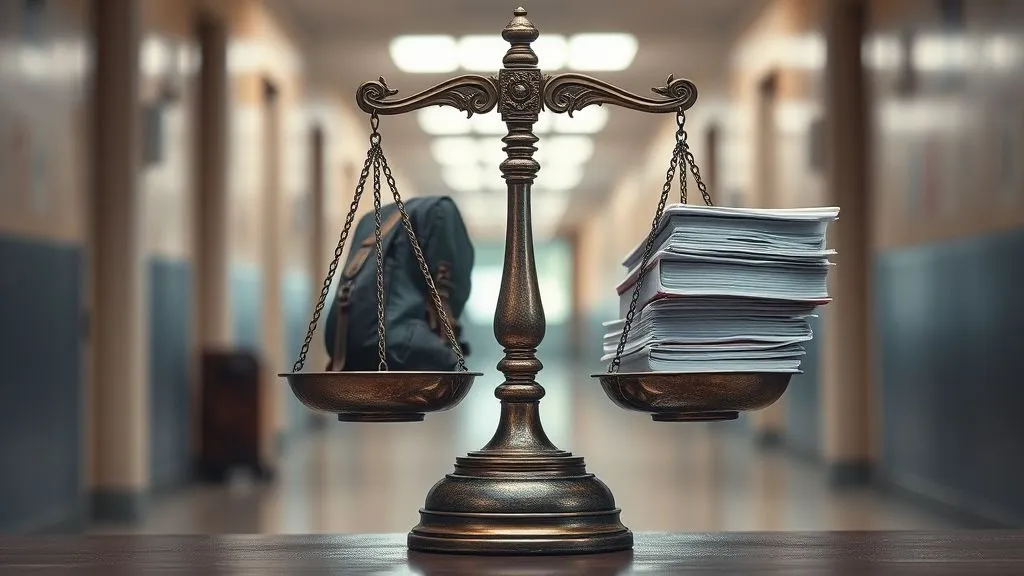
Preventing Student Fourth Amendment Violations During School Searches
For over two decades in education law, I’ve witnessed the often-strained tension between ensuring a safe school environment and upholding students' fundamental constitutional rights. It's a delicate balance, and unfortunately, well-intentioned actions can sometimes lead to significant legal missteps, especially concerning student searches.
The problem is pervasive: school administrators, under pressure to maintain order and address threats, may inadvertently cross legal lines, leading to allegations of Fourth Amendment violations. This not only erodes trust within the school community but can also result in costly litigation, reputational damage, and a fundamental disservice to the students we're meant to protect. It's a pain point I've seen play out in countless districts, leaving everyone feeling vulnerable.
This article isn't just a recitation of legal statutes; it's a deep dive into actionable frameworks, real-world scenarios, and expert insights designed to empower school leaders. My goal is to equip you with the knowledge and practical strategies necessary for preventing student Fourth Amendment violations during school searches, fostering a culture of compliance, and ultimately, protecting both your students and your institution.
Understanding the Fourth Amendment in the School Context
At its core, the Fourth Amendment to the U.S. Constitution protects individuals from unreasonable searches and seizures. In the adult world, this generally means law enforcement needs 'probable cause' and often a warrant to conduct a search. However, as I've repeatedly emphasized to school districts, the school environment presents a unique legal landscape.
The landmark Supreme Court case, New Jersey v. T.L.O. (1985), significantly altered the application of the Fourth Amendment within schools. The Court recognized that maintaining discipline and order in schools requires a certain degree of flexibility for administrators. Consequently, it established a less stringent standard for school officials than for law enforcement.
Instead of 'probable cause,' school officials only need 'reasonable suspicion' to conduct a search. This distinction is absolutely critical for preventing student Fourth Amendment violations during school searches. It acknowledges the unique role of educators as both guardians and enforcers, but it doesn't grant them carte blanche.
Expert Insight: The Fourth Amendment in schools isn't about eliminating searches, but ensuring they are conducted 'reasonably' under the specific circumstances, balancing student privacy with legitimate school safety concerns. This balance is the cornerstone of compliant practices.
Understanding this foundational principle is the first step toward building robust, legally sound search protocols. It’s about being proactive rather than reactive, ensuring every action aligns with established legal precedent. Failing to grasp this distinction is where many schools first encounter legal trouble.
The 'Reasonable Suspicion' Standard: A Nuanced Application
The 'reasonable suspicion' standard, as established in T.L.O., is often misunderstood. It's not a gut feeling or mere conjecture; it's a specific legal threshold. For a search to be permissible, two conditions must be met:
- Justification at its inception: Was there reasonable grounds for suspecting that the search would turn up evidence that the student has violated or is violating either the law or the rules of the school? This often comes from specific, articulable facts and rational inferences.
- Reasonable in scope: Were the measures adopted 'reasonably related to the objectives of the search' and 'not excessively intrusive in light of the age and sex of the student and the nature of the infraction'? The intensity of the search must match the severity of the suspected offense.
I've guided countless administrators through this nuance. 'Justification at its inception' means you can't search a locker on a hunch. You need some specific, credible information. For instance, if a reliable student reports seeing another student selling drugs from their backpack, that could constitute reasonable suspicion for a backpack search.
The 'reasonable in scope' element is equally vital. If you suspect a student has a vape pen in their pocket, a full strip search is clearly excessive and would be a textbook Fourth Amendment violation. The scope of the search must be tailored to the object of the search and the level of suspicion.
Consider the difference between a general suspicion of drug use in a school versus specific intelligence about a particular student possessing contraband. The former might justify a general drug education program, but not an individualized search. The latter, if specific and credible, could justify a targeted search. This delicate balance is key to understanding the T.L.O. precedent.

Case Study: How Northwood High Enhanced Search Compliance
Northwood High School, a district I advised several years ago, faced a growing problem with inconsistent search practices. Administrators, often acting on vague tips, were conducting overly broad searches, leading to numerous parent complaints and a looming lawsuit threat. Their student handbook vaguely referenced 'school safety' but lacked clear search protocols.
By implementing the structured approach I advocated, Northwood High achieved a remarkable turnaround. First, we conducted intensive training sessions for all staff, focusing specifically on the two-pronged 'reasonable suspicion' test. We used fictional scenarios and role-playing to illustrate appropriate and inappropriate search scopes.
Next, the school developed a detailed, publicly accessible policy outlining specific procedures for locker, backpack, and electronic device searches, including documentation requirements. They established a clear escalation protocol, requiring a second administrator's approval for more intrusive searches.
Within a year, parent complaints regarding searches dropped by 80%, and the school successfully defended two minor challenges by demonstrating strict adherence to their new, legally compliant procedures. This proactive approach not only prevented student Fourth Amendment violations during school searches but also significantly rebuilt trust within their community.
Establishing Clear School Search Policies and Protocols
One of the most effective strategies for preventing student Fourth Amendment violations during school searches is to have comprehensive, clearly articulated policies and protocols in place. Ambiguity is the enemy of compliance. These policies should be readily available to all staff, students, and parents.
Training and Awareness
It's not enough to simply have a policy; staff must be thoroughly trained on it. In my experience, ongoing, scenario-based training is far more effective than a one-time lecture. This training should cover:
- The 'Reasonable Suspicion' Standard: Deep dive into its application in various school contexts.
- Specific Search Scenarios: How to handle locker, backpack, person, and electronic device searches.
- Documentation Requirements: Emphasizing the importance of logging every search, including the basis for suspicion, items found, and witnesses present.
- Student Rights: What students should be informed of during a search, and their right to refuse certain intrusive searches in the absence of specific justification.
- Escalation Procedures: When to involve law enforcement and understanding the difference in legal standards.
Regular refreshers are crucial, especially as new legal precedents emerge or as staff turnover occurs. An informed staff is your best defense against inadvertent violations.
Documenting Procedures
I cannot stress enough the importance of meticulous documentation. Every search, regardless of outcome, should be recorded. This includes:
- Date, time, and location of the search.
- Name of the student(s) searched.
- Names of staff conducting and witnessing the search.
- Specific facts leading to reasonable suspicion.
- Scope of the search (e.g., backpack, locker, outer clothing).
- Items found (or not found).
- Any disciplinary action taken.
- Communication with parents/guardians.
This documentation serves as vital evidence if a search is later challenged. It demonstrates that the school acted responsibly and within legal parameters. Lack of documentation often leaves schools vulnerable, even if the search itself was justified. For more on best practices, review resources from organizations like the National School Boards Association.
Navigating Specific Search Scenarios: From Lockers to Digital Devices
The application of 'reasonable suspicion' varies depending on the type and intrusiveness of the search. School policies must provide clear guidance for each scenario to avoid common pitfalls in preventing student Fourth Amendment violations during school searches.
Locker and Desk Searches
Students generally have a reduced expectation of privacy in lockers and desks provided by the school. Many schools clearly state in their student handbook that lockers are school property and may be searched at any time. However, even with such policies, an individualized reasonable suspicion is usually still preferred, especially if the search is targeting a specific student for contraband.
Random, generalized locker searches are often permissible if the school has a policy stating lockers are school property and subject to search, and the search is for legitimate school purposes (e.g., ensuring cleanliness, looking for general contraband). However, targeting a specific student's locker still generally requires reasonable suspicion related to that student.
Personal Property and Bag Searches
Searches of personal items like backpacks, purses, or outer clothing require a stronger showing of reasonable suspicion targeting the individual student. The key is to narrow the search to the suspected area. If a student is suspected of having a weapon in their backpack, the search should focus there, not on their person or other belongings.
I advise schools to always have a second staff member present as a witness during personal property searches. This adds a layer of transparency and protection for both the student and the staff.
Cell Phone and Digital Device Searches
This is an evolving area of law, and one where schools often face significant challenges. Courts generally recognize a higher expectation of privacy in personal electronic devices. While schools may have policies regarding cell phone use on campus, searching the *contents* of a student's phone (texts, photos, apps) typically requires a very strong, individualized reasonable suspicion directly linking the phone's contents to a violation of law or school rules.
For instance, if a student is suspected of cyberbullying, and there's credible evidence that the phone contains direct evidence of that bullying, a search might be justified. However, a general search of a phone for a minor infraction (e.g., using it in class) is highly unlikely to be deemed reasonable in scope. The Supreme Court's ruling in Safford Unified School District v. Redding (2009) emphasized the need for searches to be 'reasonably related to the objectives of the search' and 'not excessively intrusive,' a principle that extends strongly to digital devices.

Drug-Sniffing Dog Searches
The use of drug-sniffing dogs in schools is generally permissible, but with caveats. A dog sniffing the air around lockers or cars in a parking lot is typically not considered a 'search' under the Fourth Amendment, as it's not intrusive. However, if a dog 'alerts' on a specific locker or vehicle, that alert can provide the reasonable suspicion needed to then search that specific item.
Direct, unannounced searches of students' persons by drug dogs are far more problematic and generally considered unconstitutional without individualized reasonable suspicion. Policies must clearly delineate the permissible scope of K-9 unit involvement.
| Search Type | Standard for Individualized Search | Privacy Expectation | Key Consideration |
|---|---|---|---|
| Locker/Desk | Reasonable Suspicion | Low (often school property) | School policy, general or targeted? |
| Backpack/Personal Item | Reasonable Suspicion | Medium | Scope must match suspicion |
| Cell Phone/Digital Device | High Reasonable Suspicion | High | Direct link to offense, minimal intrusion |
| Student's Person (Pat Down) | High Reasonable Suspicion | Very High | Only if suspected danger or contraband on person |
Implementing Proactive Measures to Safeguard Student Rights
Beyond compliance, true leadership in this area involves proactive measures that foster a culture of respect for student rights. This goes a long way in preventing student Fourth Amendment violations during school searches before they even become a possibility.
Fostering a Culture of Trust
When students feel respected and trust school administration, they are often more likely to report concerns or even self-disclose issues. A punitive, overly aggressive approach to discipline, especially regarding searches, can breed resentment and distrust, making students less likely to cooperate or feel safe. I've observed that schools with strong, positive relationships between staff and students experience fewer incidents requiring intrusive searches.
Open communication, clear expectations, and consistent application of rules contribute significantly to this trust. Educating students about their rights, while also explaining the school's need for safety, helps them understand the framework within which decisions are made.
Expert Insight: A school's most powerful tool in preventing Fourth Amendment violations isn't just legal knowledge, but a pervasive culture of respect and trust. This preventative approach minimizes the need for contentious searches in the first place.
Regular Policy Review and Legal Updates
Education law is not static. Court decisions, legislative changes, and societal shifts (like the increased reliance on digital devices) constantly reshape the legal landscape. School search policies that were compliant five years ago might be outdated today.
I strongly recommend that schools establish a schedule for reviewing their search policies, ideally annually or bi-annually. This review should involve legal counsel, school administrators, and potentially even student and parent representatives. Staying abreast of developments is crucial for continuous compliance and for preventing student Fourth Amendment violations during school searches.

When Things Go Wrong: Addressing Alleged Violations
Despite the best intentions and robust policies, allegations of Fourth Amendment violations can still arise. How a school responds to these allegations is critical, not only for legal defense but for maintaining community trust.
Internal Review Processes
Upon receiving an allegation of an improper search, schools must have a clear, fair, and prompt internal review process. This process should:
- Take all allegations seriously: Dismissing concerns out of hand only escalates the situation.
- Gather facts thoroughly: Interview all parties involved (student, staff, witnesses) and review all documentation (search logs, incident reports).
- Maintain objectivity: The review should aim to determine what happened, not to justify pre-existing actions.
- Determine if a violation occurred: Based on the facts and legal standards.
- Implement corrective action: If a violation is found, this could include additional staff training, policy revisions, or disciplinary action for staff, depending on the severity.
Transparency, to the extent legally permissible, is vital. It demonstrates accountability and a commitment to upholding student rights.
Communication with Parents and Legal Counsel
When an allegation arises, clear and empathetic communication with parents is paramount. While schools should avoid admitting guilt prematurely, they should communicate that the concern is being taken seriously and an investigation is underway. Legal counsel should be involved early in this process, especially if the allegation is serious or if litigation seems likely. They can provide guidance on communication, internal investigations, and potential legal defenses. For further reading on responding to legal challenges, consult resources from organizations such as the ACLU (American Civil Liberties Union).
Frequently Asked Questions (FAQ)
Question? What exactly constitutes 'reasonable suspicion' for a school search, and how does it differ from 'probable cause'?
Answer: 'Reasonable suspicion' in a school context means a school official has specific, articulable facts that, combined with rational inferences, lead them to believe a search will uncover evidence of a violation of school rules or the law. It's a lower standard than 'probable cause,' which requires a higher likelihood (more than 50%) that a crime has been committed or evidence will be found, typically used by law enforcement and often requiring a warrant. For schools, reasonable suspicion is a balance between student privacy and the need to maintain a safe learning environment.
Question? Can school administrators search a student's cell phone or personal electronic devices?
Answer: Searching student cell phones is a complex and evolving area. Generally, students have a higher expectation of privacy in their digital devices. While a school may have rules about phone use, searching the *contents* (texts, photos, apps) typically requires a strong, individualized reasonable suspicion that the phone itself contains evidence of a serious violation of school rules or the law, and the search must be narrowly tailored to that suspicion. Broad, exploratory searches are generally not permissible. It's crucial for schools to have clear policies and to consult legal counsel before conducting such intrusive searches.
Question? What if a student refuses to comply with a school search?
Answer: A student's refusal to comply with a legitimate, justified search based on reasonable suspicion can itself be considered a violation of school rules and may lead to disciplinary action. However, school officials should never use physical force to conduct a search. If a student refuses, the school should document the refusal, inform parents, and consider disciplinary consequences for insubordination. If there's an immediate threat to safety, law enforcement may need to be involved, at which point the legal standard shifts to their requirements (probable cause, warrants).
Question? What are the potential legal consequences for a school district if a student's Fourth Amendment rights are violated during a search?
Answer: The consequences can be significant. They can include civil lawsuits seeking monetary damages for constitutional rights violations, injunctions preventing future similar searches, and attorney's fees. Beyond legal costs, there's significant reputational damage, erosion of trust within the school community, and potential federal oversight if patterns of violations are found. It's far more cost-effective and ethically sound to prevent violations than to defend against them.
Question? How often should a school's search policies be reviewed and updated?
Answer: I strongly recommend that school search policies be reviewed at least annually, or at minimum, every two years. This allows schools to incorporate new legal precedents, address changes in technology (like new forms of digital devices), and adapt to evolving student behaviors. Regular review ensures policies remain current, compliant, and effective in protecting both student rights and school safety. Engaging legal counsel in this review process is highly advisable.
Key Takeaways and Final Thoughts
Preventing student Fourth Amendment violations during school searches isn't just a legal obligation; it's a moral imperative that underpins the trust and safety of our educational environments. As an experienced specialist, I've seen firsthand that proactive measures, clear policies, and thorough training are the bedrock of compliance.
- Understand the 'Reasonable Suspicion' Standard: It's the core legal principle differentiating school searches from law enforcement searches.
- Develop and Disseminate Clear Policies: Ambiguity leads to errors. Ensure everyone knows the rules.
- Prioritize Ongoing Training: Equip staff with the knowledge and confidence to act lawfully.
- Document Everything: Meticulous records are your best defense.
- Foster a Culture of Trust: A positive school climate can reduce the need for intrusive searches.
- Stay Current with Legal Developments: Education law is dynamic; policies must evolve.
- Address Allegations Systematically: A fair, transparent internal review process is crucial.
By embracing these principles, school leaders can confidently navigate the complexities of student searches, upholding constitutional rights while maintaining a secure and productive learning atmosphere. This isn't just about avoiding lawsuits; it's about building a foundation of respect and legality for the students who entrust their well-being to us every day. Let's work together to ensure our schools are places where safety and rights coexist harmoniously.
Recommended Reading
- Hidden Fees? 7 Steps to Litigate Deceptive Subscription Billing
- Originalism & AI: 5 Principles for Interpreting Novel Tech Cases
- Ultimate Guide: Athlete Agent Contract Negotiation Tips
- 7 Strategies: Justifying Risky Reaffirmation Agreements to Judges
- 5 Steps to Challenge Police Report Bias After a Motorcycle Accident



Comments
Leave a comment below. Your email will not be published. Required fields marked with *