


How to Challenge Police Report Bias After a Motorcycle Accident?
For over two decades in personal injury law, specifically representing motorcyclists, I've witnessed firsthand how a seemingly minor detail or a subtle turn of phrase in a police report can dramatically alter the course of a case. It's a harsh reality, but often, the narrative presented by law enforcement after a motorcycle accident isn't always fair or fully accurate.
Many motorcyclists face an inherent bias, sometimes unconscious, from the moment an accident scene is assessed. Preconceived notions about riders, the 'invisible rider' phenomenon, or a lack of specialized understanding of motorcycle dynamics can lead to reports that inadvertently (or sometimes overtly) place undue blame on the motorcyclist. This isn't just frustrating; it can severely jeopardize your personal injury claim, impacting your ability to recover compensation for medical bills, lost wages, and pain and suffering.
I’m here to tell you that a police report, while influential, is not the final word. In this comprehensive guide, I will share the actionable strategies, expert insights, and frameworks I’ve developed over years of practice to effectively challenge police report bias after a motorcycle accident. You’ll learn how to meticulously scrutinize reports, gather compelling counter-evidence, and leverage legal expertise to ensure your side of the story is heard and justly represented.
Understanding the Root of Police Report Bias in Motorcycle Accidents
Before we can challenge bias, we must understand where it originates. It’s rarely malicious, but rather a complex interplay of societal perceptions, training gaps, and the chaotic nature of accident scenes.
The "Invisible Rider" Phenomenon
One of the most pervasive issues is the "invisible rider" phenomenon. Drivers of larger vehicles often claim they "didn't see" the motorcycle, even when the rider was clearly visible. This perception can inadvertently influence an officer's interpretation of events, leading them to prioritize the statements of the car driver over the motorcyclist, or to frame the accident in a way that implies the motorcyclist should have been more visible or defensive. Studies by organizations like the National Highway Traffic Safety Administration (NHTSA) often highlight driver inattention as a major factor in multi-vehicle motorcycle crashes, yet this is frequently overlooked in initial reports.
Preconceived Notions and Stereotypes
Let's be frank: motorcyclists sometimes battle negative stereotypes. The image of the reckless thrill-seeker or the "outlaw" can subtly color an officer's perception. This implicit bias can lead to assumptions about speed, lane splitting, or overall rider behavior, even without concrete evidence. An officer might be quicker to note "excessive speed" for a motorcycle than for a car, or describe a rider's actions in a more pejorative light.
Lack of Specialized Training
Most police officers receive general accident investigation training. However, the dynamics of a motorcycle crash are fundamentally different from those involving two cars. Factors like counter-steering, lean angles, target fixation, and the unique physics of a two-wheeled vehicle are often not fully understood by officers without specialized training. This lack of expertise can lead to misinterpretations of skid marks, impact points, and rider actions, ultimately skewing the report's conclusions.
Expert Insight: "The immediate aftermath of an accident is critical. What happens and is documented (or not documented) in the first hour can dictate the entire narrative of your case. Don't underestimate the power of those initial observations."
Immediate Actions at the Scene: Laying the Groundwork
What you do immediately after an accident, if you are physically able, is paramount. This isn't just about safety; it's about proactively collecting evidence that can later counter any potential bias in the official report.
- Prioritize Medical Attention: Your health is always first. If injured, seek medical care. However, if conscious and able, try to gather some initial information.
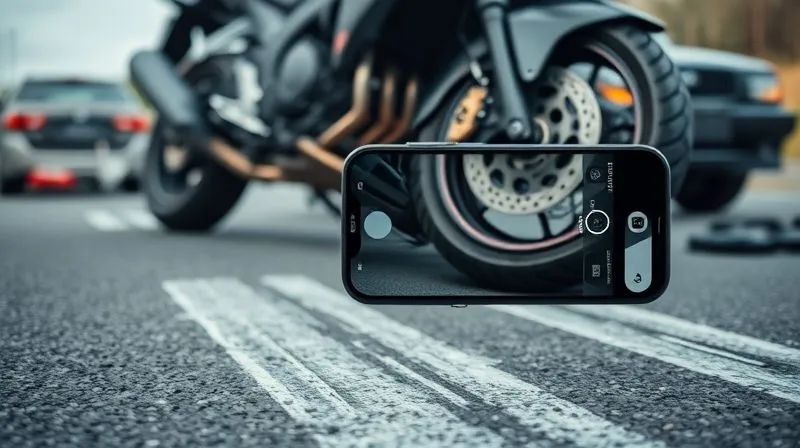
- Document Everything with Photos and Videos: This is your most powerful tool against bias.
- Identify and Secure Witness Information: Independent witnesses are invaluable.
- Do NOT Admit Fault: Even a casual "I'm so sorry" can be misconstrued as an admission of guilt.
- Cooperate, But Be Concise: Provide factual information to the police, but avoid speculation or lengthy explanations.
Step-by-Step Documentation at the Scene:
- Take Extensive Photographs: Use your phone to take dozens of photos from multiple angles. Capture the position of all vehicles before they are moved, road conditions (potholes, debris), traffic signs, skid marks, vehicle damage, and your injuries. Pay close attention to the point of impact and any relevant road features.
- Video the Scene: A short video walkthrough can capture the overall environment and context that static photos might miss. Narrate what you see if appropriate, but focus on objective observations.
- Get Witness Contact Info: Don't rely solely on the police to do this. Ask passersby, nearby business owners, or anyone who saw the incident for their names, phone numbers, and email addresses. Get their perspective if they're willing to share it.
- Note Officer Details: Get the name and badge number of the investigating officer.
- Observe the Other Driver: Note their demeanor, any signs of impairment, or statements they make.
Remember, your camera is your objective witness. It captures reality without interpretation, a crucial asset when challenging a biased narrative.
Scrutinizing the Police Report: What to Look For
Once the police report is available (usually within a few days or weeks), obtain a copy immediately. This document is a critical piece of evidence in your personal injury claim, and a thorough review is non-negotiable.
Factual Errors vs. Interpretive Bias
Distinguish between outright factual errors and subtle interpretive bias. Factual errors are easier to challenge (e.g., incorrect date, time, location, vehicle descriptions, or misidentification of parties). Interpretive bias is more nuanced; it’s about the language used, the emphasis placed, or the conclusions drawn.
Omissions and Incomplete Information
Does the report mention all witnesses you identified? Does it accurately describe the road conditions you observed? Is there any mention of the other driver's cell phone use if you saw it? Omissions can be as damaging as outright inaccuracies, as they create an incomplete picture of the accident.
Officer's Subjective Language
Pay close attention to the language. Are objective observations mixed with subjective opinions? For example, "Motorcyclist appeared to be speeding" is subjective and biased, while "Witness stated motorcyclist was traveling at an estimated 60 mph in a 45 mph zone" is an objective report of a statement, even if the statement itself might be inaccurate.
| Aspect of Report | Potentially Biased Language | Objective Factual Language |
|---|---|---|
| Description of Motorcyclist | Rider, likely distracted, swerved suddenly. | Motorcyclist reported swerving to avoid obstacle. No direct evidence of distraction noted. |
| Cause of Accident | Motorcyclist failed to yield to vehicle. | Vehicle A turned left into path of oncoming Motorcycle B. Both parties claim right-of-way. |
| Road Conditions | Road was clear, rider should have seen. | Road surface dry. Minor debris noted in lane of travel. |
| Injuries | Minor scrapes, refused ambulance. | Rider sustained visible abrasions, declined immediate ambulance transport, stating intent to seek private medical care. |
Gathering Counter-Evidence: Building Your Case
Challenging a police report isn't about simply saying it's wrong; it's about providing compelling, verifiable evidence that contradicts or clarifies the report's content. This is where your proactive efforts and a skilled legal team truly shine.
Independent Witness Statements
These are gold. If you collected witness information at the scene, your attorney can follow up to get formal, recorded statements. An unbiased third-party account can directly refute an officer's potentially biased interpretation, especially if the witness saw something the officer missed or misinterpreted.
Accident Reconstruction Experts: Your Secret Weapon
This is where deep expertise comes into play. An accident reconstructionist is a highly specialized professional who can analyze physical evidence (skid marks, vehicle damage, debris fields, road geometry, traffic camera footage) to scientifically determine how an accident occurred. They can often uncover details and dynamics that a general police officer might overlook or misinterpret, especially concerning motorcycle physics. Their findings, presented as expert testimony or a detailed report, can powerfully challenge a biased police report. I've seen countless cases where an expert's analysis completely overturned an initial police finding of fault. For example, organizations like the National Association of Accident Reconstruction Specialists (NAARS) provide resources for finding qualified professionals.
Medical Records and Injury Documentation
Your injuries themselves can be powerful evidence. If the report downplays your injuries, but your medical records show extensive trauma consistent with a severe impact, this discrepancy can highlight a factual error or an underestimation of the accident's severity. Detailed documentation of all treatments, diagnoses, and prognoses is crucial.
Dashcam/Helmet Cam Footage
In today’s world, dashcams and helmet cams are increasingly common. If you or the other driver had one, this footage is irrefutable. It provides an objective, real-time account of the accident, eliminating speculation and bias. This is the ultimate piece of counter-evidence, often leading to immediate corrections or dismissals of biased claims.
Case Study: How John's Helmet Cam Changed Everything
John, a client of mine, was involved in a motorcycle accident where a car made an unprotected left turn in front of him. The initial police report, influenced by the car driver's emotional testimony and a lack of clear skid marks, suggested John might have been speeding or riding recklessly, contributing to the collision. The officer's notes included phrases like "rider failed to react in time." This was deeply concerning for John's personal injury claim.
Fortunately, John had a helmet-mounted camera. The footage clearly showed the car driver suddenly turning without signaling, leaving John no time to react. It also showed John's speed was well within the legal limit. We presented this video evidence to the police department and the insurance companies. The police report was subsequently amended to reflect the car driver's sole fault, and the insurance company quickly moved to settle, acknowledging the irrefutable evidence. This resulted in John receiving full compensation for his extensive medical bills, lost wages, and pain and suffering, which would have been severely compromised without the objective footage.
The Formal Challenge: Steps to Dispute the Report
Once you have gathered your counter-evidence, it's time to formally challenge the police report. This process typically involves working with your attorney.
- Consult with Your Attorney: This is the first and most critical step. Your personal injury attorney will review the report, your evidence, and advise on the best course of action. They understand the legal implications and the specific procedures for challenging police reports in your jurisdiction.
- Request a Correction or Amendment: Your attorney will typically draft a formal letter to the law enforcement agency that prepared the report. This letter will clearly outline the specific inaccuracies or omissions, supported by your compelling counter-evidence (photos, witness statements, expert analyses, video footage).
- Meet with the Investigating Officer: In some cases, your attorney might arrange a meeting with the investigating officer. This provides an opportunity to present your evidence directly and explain why the report needs to be amended. A calm, evidence-based discussion is key.
- Escalate if Necessary: If the officer is unwilling to amend the report despite clear evidence, your attorney may escalate the request to a supervisor or the department's internal affairs division. While challenging, persistence is vital.
- Understand the Limitations: It's important to note that not all police reports can or will be amended, especially concerning subjective interpretations. However, even if the report isn't formally changed, your collected counter-evidence remains crucial in court or during settlement negotiations. It allows your attorney to effectively argue against the report's conclusions. For further reading on disputing police reports, Nolo offers helpful insights here.
The Role of Your Attorney
Your attorney is your advocate in this process. They know the legal system, how to present evidence effectively, and how to negotiate with insurance companies and, if necessary, litigate in court. They will handle all communication with the police department and the opposing parties, ensuring your rights are protected and your case is built on the strongest possible foundation.
Expert Insight: "A police report is evidence, but it's not the only evidence. Your attorney's job is to ensure all available evidence, especially that which challenges bias, is presented forcefully."
Leveraging Legal Counsel: Why an Attorney is Indispensable
While you can initiate some steps yourself, the complexity of challenging a police report and navigating a personal injury claim after a motorcycle accident makes a skilled attorney indispensable. They bring a level of expertise and authority that individual claimants simply cannot match.
Navigating Bureaucracy and Legal Procedures
The legal system is intricate, and challenging official documents like police reports involves specific procedures, deadlines, and legal precedents. An experienced personal injury attorney understands these nuances. They know which forms to file, whom to contact, and how to present your case in a way that resonates with legal authorities and insurance adjusters. They can cut through red tape and prevent common procedural missteps that could harm your claim.
Expert Negotiation and Litigation
Insurance companies often rely heavily on police reports, especially if they appear to favor their insured. A biased report can be a significant hurdle in settlement negotiations. Your attorney will use your counter-evidence to directly challenge the insurance company's position, demonstrating the flaws in the police report and the strength of your own case. If a fair settlement cannot be reached, they are prepared to take your case to court, where they can present your evidence and expert testimony to a judge or jury, ensuring your story is fully heard. For more information on finding qualified legal representation, resources like the American Bar Association can be helpful.
Preparing for the Long Haul: Persistence and Patience
Challenging a police report, especially when bias is involved, is rarely a quick fix. It requires persistence, meticulous documentation, and often, a degree of patience. But the payoff – a fair and just outcome for your personal injury claim – is immeasurable.
Understanding the Limitations of Amendments
Even with compelling evidence, some police departments might be reluctant to formally amend a report, particularly if it involves an officer's subjective judgment. This doesn't mean your efforts are in vain. The act of challenging, and the strong counter-evidence you've built, still serve as powerful tools for your attorney in negotiations and litigation. The report, after all, is just one piece of evidence among many.
The Report as One Piece of Evidence
It's crucial to remember that while a police report is important, it is not the ultimate determinant of fault in a personal injury case. In court, all evidence is considered: witness testimony, accident reconstruction analyses, medical records, photographs, videos, and yes, the police report. Your attorney's job is to present a comprehensive narrative that, even if the police report is imperfect, clearly establishes the true sequence of events and liability.
Frequently Asked Questions (FAQ)
Can a police report be changed or amended after it's filed? Yes, it is possible, but not always easy. Factual errors (like incorrect names, dates, or vehicle information) are generally easier to correct than an officer's interpretation of fault or subjective observations. You'll need compelling evidence to support your request for an amendment, and it's best done with the assistance of an attorney.
What if the investigating officer refuses to amend the report despite clear evidence? If the officer is unwilling to make changes, your attorney can escalate the matter to their supervisor or the department's internal affairs. Even if the report isn't formally amended, your collected counter-evidence (witness statements, expert reports, photos/videos) remains vital and can be used to challenge the report's conclusions in court or during settlement negotiations. The report is just one piece of evidence.
How much does an accident reconstruction expert typically cost, and is it worth it? The cost of an accident reconstruction expert can vary widely, from a few thousand to tens of thousands of dollars, depending on the complexity of the case. While it's a significant investment, for serious motorcycle accidents where fault is disputed or the police report is biased, their scientific analysis can be invaluable. Their findings can often be the decisive factor in proving your case and securing substantial compensation, making the investment well worth it in many situations. Your attorney can often help front these costs or arrange for payment from a settlement.
Is it worth challenging a minor inaccuracy in a police report? Absolutely. Even seemingly minor inaccuracies can contribute to a biased narrative, especially when combined. For example, an incorrect speed estimate or a misdescription of road conditions, while minor on its own, can be used by insurance companies to downplay your claim or assign partial fault. It's always best to address any inaccuracies with your attorney.
Does police report bias always mean the motorcyclist is assigned fault? Not always directly, but it can strongly influence the perception of fault. Bias often manifests in language that subtly shifts responsibility, overlooks contributing factors from other drivers, or exaggerates perceived errors by the motorcyclist. This can lead to an unjust assignment of partial or full fault, which is why challenging it with strong counter-evidence is so crucial for protecting your rights and claim.
Key Takeaways and Final Thoughts
Navigating the aftermath of a motorcycle accident, especially when facing a biased police report, can feel overwhelming. However, as an experienced industry specialist, I want to empower you with the knowledge that you are not without recourse. Challenging a police report is a critical step in protecting your rights and ensuring a just outcome for your personal injury claim.
- Be Proactive at the Scene: Document everything immediately with photos, videos, and witness contacts.
- Scrutinize the Report: Look for both factual errors and subtle interpretive biases in the language.
- Gather Counter-Evidence: Leverage independent witnesses, accident reconstruction experts, medical records, and any available footage.
- Engage Legal Counsel: An experienced personal injury attorney is your strongest advocate in challenging reports and navigating the legal landscape.
- Be Persistent: The fight for justice can be a marathon, not a sprint.
Remember, a police report is a foundational document, but it is not infallible. With diligence, compelling evidence, and the right legal guidance, you can effectively challenge bias, correct inaccuracies, and ensure that your motorcycle accident story is told accurately and fairly. Don't let an unfair report dictate your future; fight for the justice you deserve.
Recommended Reading
- 7 Steps: Minimize Legal Risk from Consumer Credit Billing Errors?
- 5 Legal Steps: Hospital Ignores Living Will? Your Recourse.
- Dog Bite on Your Property? 7 Legal Duties You MUST Know Now
- 5 Legal Steps: Compelling Social Media to Remove Counterfeit Goods
- Creditor Ignores Valid Billing Claim? 7 Steps to Assert Your Rights



Comments
Leave a comment below. Your email will not be published. Required fields marked with *